AWS CEO Matt Garman says AI should not replace junior devs, warns of threats to talent pipelines


2 Sources
2 Sources
[1]
AWS CEO Matt Garman Doesn't Think AI Should Replace Junior Devs
Amid the breathless coverage and relentless AI hype of recent years, one of the world's biggest tech companies -- Amazon -- has been notably absent. Matt Garman, the CEO of Amazon Web Services, is looking to change that. At the recent AWS re:Invent conference, Garman announced a bunch of frontier AI models, as well as a tool designed to let AWS customers build models of their own. That tool, Nova Forge, allows companies to engage in what's known as custom pretraining -- adding their data in the process of building a base model -- which should allow for vastly more customized models that suit a given company's needs. Sure, it doesn't quite have the sexiness of a Sora 2 announcement, but that's not Garman's goal: He's less interested in mass consumer use of AI and more interested in enterprise solutions that'll integrate AI into all of AWS's offerings -- and have a material impact on a corporate P&L. For this week's episode of The Big Interview, I caught up with Garman after AWS re:Invent to talk about what the company announced, whether he feels behind in the AI race, how he thinks about managing huge teams (and managing internal dissent), and why he's not convinced that AI is (or should be) the great job thief of our era. Here's our conversation. This interview has been edited for length and clarity. KATIE DRUMMOND: Matt Garman, welcome to the Big Interview. MATT GARMAN: Thank you. Thanks for having me. We always start these conversations with some very quick questions, like a warmup. Are you ready? We have a big S3 bucket sometimes that goes around, so we'll call it that. Sorry, what is an S3 bucket? An S3 bucket is like a thing that you store your S3 objects in, but we actually have a large foam big bucket that walks around and actually looks like a paint bucket. So you do have a mascot. Well, S3 has a bucket, it has a mascot. It's probably the closest we have, and I like it. What's the most expensive mistake you've ever made? Personally or professionally? That's a good question. Personally, the most expensive mistake I ever made was playing basketball too long and I tore my Achilles. So that cost me about nine months of being able to walk. I probably should have known that into my thirties I was well past basketball-playing age. I lost a little bit of time there.
[2]
AWS CEO says replacing young employees with AI is 'one of the dumbest ideas' -- and bad for business: 'At some point the whole thing explodes on itself' | Fortune
Anthropic CEO Dario Amodei has warned of AI displacing entry-level workers, and Ford CEO Jim Farley said the tech will wipe out half of white-collar jobs, but Amazon Web Services (AWS) CEO Matt Garman has a wildly different take on young workers' fate in the age of AI. Earlier this year, Garman said replacing junior software developers with AI was "one of the dumbest things I've ever heard," and it's a point he stands by. In an interview with WIRED published on Tuesday, Garman said displacing junior engineers and employees with new tech is a bad business move. Entry-level workers are usually paid the least, meaning getting rid of their positions first in favor of higher-paid senior talent is not a cost-effective strategy, he noted. Moreso, these fresh-faced young workers are likely recent college graduates with energy, excitement, and deep familiarity with AI tools. Eliminating them, in Garman's eyes, would be myopic. "At some point that whole thing explodes on itself," Garman said. "If you have no talent pipeline that you're building and no junior people that you're mentoring and bringing up through the company, we often find that that's where we get some of the best ideas." "You've gotta think longer term about the health of a company," he added. "And just saying 'OK great, we're never going to hire junior people anymore,' that's just a nonstarter for anyone who's trying to build a long-term company." A Stanford University study published in August suggested AI is already starting to have its way with entry-level workers. The research revealed that "the AI revolution" is having a "significant and disproportionate impact on entry-level workers in the U.S. labor market," particularly 22- to 25-year-old software engineers and customer service agents. Despite Garman's adamance on AI not replacing young workers, Amazon's own automation advancements have coincided with the company laying off thousands of employees this fall. The tech giant announced in October it would slash 14,000 jobs, mostly middle management positions. Earlier this year, Amazon laid off a smaller portion of workers from divisions including AWS, its Wondery podcast division, and the consumer devices unit. Rather than attribute the axings to AI, Amazon instead said the layoffs were part of an effort to make the business more efficient after a period of growth, as well as resolve cultural mismatches that emerged in the workforce. "The announcement that we made a few days ago was not really financially driven, and it's not even really AI-driven, not right now at least," CEO Andy Jassy said at the time. "It's culture." Still, AI advancements are poised to impact Amazon's workforce. The memo outlining the fall layoffs cites the transforming technology of AI as the impetus for improving workflows with leaner teams. A June memo from the company said AI efficiency gains will "reduce our total corporate workforce," and a New York Times investigation published in October reported Amazon had a lofty goal to automate 75% of its work, translating to about 600,000 jobs the tech giant would not ultimately need to hire for. AWS did not immediately respond to Fortune's request for comment. Garman isn't naive to the workplace upheaval AI could bring. He predicted the technology will initially create a burst of new jobs, as well as reduce several roles, but he was certain that AI would ultimately transform the nature of work. "One of the things that I tell our own employees is 'Your job is going to change.' There's no two ways about it," he told WIRED. The 49-year-old AWS CEO said employees have the potential to have more impact and responsibilities as a result of AI, but it will require learning news skills, as well as organizing teams differently. While entry-level workers should not be the primary victims of AI's workplace shake-ups, other jobs and industries will be impacted, Garman noticed. "If they don't, they'll most likely get left behind by people who move faster and do change," he said. "There is going to be some disruption in there for sure. Like there is no question in my mind."
Share
Share
Copy Link
Amazon Web Services CEO Matt Garman pushes back against AI replacing entry-level workers, calling it short-sighted and bad for business. Despite warnings from other tech leaders about AI displacing junior employees, Garman argues that eliminating young workers threatens talent pipelines and long-term company health, even as Amazon pursues aggressive automation goals.
AWS CEO Challenges Industry Narrative on AI Displacing Entry-Level Workers
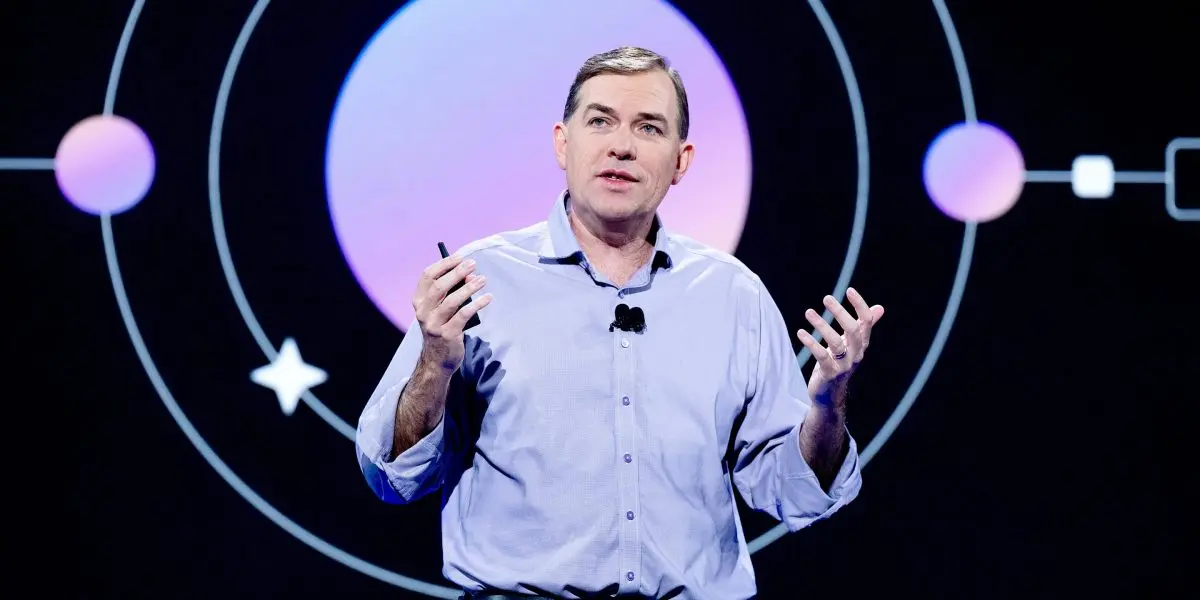
Matt Garman, the CEO of Amazon Web Services, has taken a contrarian stance in the heated debate over AI transforming job roles across the tech industry. While leaders like Anthropic CEO Dario Amodei warn of AI displacing entry-level workers and Ford CEO Jim Farley predicts the technology will eliminate half of white-collar jobs, Garman maintains that replacing young employees with AI represents "one of the dumbest ideas" he's encountered
2
. Speaking at the recent re:Invent conference and in a subsequent interview with WIRED, the 49-year-old executive outlined why he believes junior developers and entry-level employees remain critical to building sustainable organizations1
.
Source: Fortune
Garman's argument centers on both economic logic and organizational health. Entry-level workers typically earn the lowest salaries, making their elimination in favor of retaining higher-paid senior talent a counterintuitive cost-cutting strategy. More importantly, these fresh-faced young workers often arrive as recent college graduates bringing energy, excitement, and native familiarity with AI tools that older employees may lack. "At some point that whole thing explodes on itself," Garman told WIRED. "If you have no talent pipeline that you're building and no junior people that you're mentoring and bringing up through the company, we often find that that's where we get some of the best ideas"
2
.The Contradiction Between Vision and Reality at Amazon
Garman's defense of junior employees arrives amid a complex reality at the tech giant. Amazon announced in October it would slash 14,000 jobs, primarily targeting middle management positions. Earlier in the year, additional layoffs hit divisions including Amazon Web Services, the Wondery podcast division, and consumer devices units
2
. While Amazon CEO Andy Jassy attributed these workforce reductions to cultural mismatches rather than automation, internal memos tell a different story. A June memo acknowledged that AI efficiency gains would "reduce our total corporate workforce," and a New York Times investigation revealed Amazon's ambitious goal to automate 75% of its work, potentially eliminating the need to hire for approximately 600,000 positions2
.This tension between Garman's public statements and Amazon's automation trajectory reflects broader uncertainty in the labor market. A Stanford University study published in August found that "the AI revolution" is already having a "significant and disproportionate impact on entry-level workers in the U.S. labor market," particularly affecting 22- to 25-year-old software engineers and customer service agents
2
.AWS Focuses on Enterprise Solutions While Acknowledging Workforce Transformation
At the re:Invent conference, Garman announced frontier AI models and Nova Forge, a tool enabling AWS customers to engage in custom pretraining by adding their own data during base model development. This enterprise solutions approach reflects Garman's belief that AI's real value lies not in consumer applications but in integration across AWS offerings with material impact on corporate bottom lines
1
. Rather than compete with flashy consumer AI announcements, Garman aims to embed AI throughout Amazon Web Services' infrastructure.Yet Garman doesn't deny that AI will fundamentally alter how people work. "One of the things that I tell our own employees is 'Your job is going to change.' There's no two ways about it," he acknowledged. He predicts AI will initially create a burst of new positions while reducing others, but employees must learn new skills and organizations must restructure teams. Those who adapt will gain expanded impact and responsibilities, while those who resist change risk being left behind by faster-moving competitors. "There is going to be some disruption in there for sure. Like there is no question in my mind," Garman stated
2
.Related Stories

Long-Term Company Health Depends on Talent Pipelines
Garman's core message emphasizes that long-term company health requires sustained investment in developing future leaders. "You've gotta think longer term about the health of a company," he explained. "And just saying 'OK great, we're never going to hire junior people anymore,' that's just a nonstarter for anyone who's trying to build a long-term company"
2
. This perspective positions talent pipelines as strategic assets rather than expendable costs, even as automation pressures mount across industries. Whether Amazon and other tech companies will follow this philosophy as AI capabilities accelerate remains an open question that will shape the workforce for years to come.References
Summarized by

Navi
Related Stories
AWS CEO Matt Garman Criticizes Replacing Junior Staff with AI, Emphasizes Long-Term Talent Development
20 Aug 2025•Technology

AWS CEO Matt Garman declares AI agents bigger than internet as Amazon stakes claim in AI race
02 Dec 2025•Technology

AWS CEO Matt Garman Emphasizes Continuity and AI Integration Amid Return-to-Office Push
31 Oct 2024•Business and Economy

Recent Highlights



Recent Highlights
Today's Top Stories









Your Daily Dose of Curated AI News
Don’t drown in AI news. We cut through the noise - filtering, ranking and summarizing the most important AI news, breakthroughs and research daily. Spend less time searching for the latest in AI and get straight to action.

