AWS CEO Matt Garman declares AI agents bigger than internet as Amazon stakes claim in AI race


7 Sources
7 Sources
[1]
AWS CEO Matt Garman Wants to Reassert Amazon's Cloud Dominance in the AI Era
You might think Amazon's biggest swing in the AI race was its $8 billion investment in Anthropic. But AWS has also been building in-house foundation models, new chips, massive data centers, and agents meant to keep enterprise customers locked inside its ecosystem. The company believes these offerings will give it an edge as businesses of all shapes and sizes deploy AI in the real world. WIRED sat down with AWS CEO Matt Garman ahead of the company's annual re:Invent conference in Las Vegas to discuss his AI vision, and how he plans to extend Amazon's lead in the cloud market over its fast-rising competitors, Microsoft and Google. Garman is betting that AI is a service that AWS can deliver more cheaply and reliably than its rivals. Through Bedrock, Amazon's platform for building AI apps, he says customers can access a variety of AI foundation models while keeping the familiar data controls, security layers, and reliability that AWS is known for. If that pitch holds up, it could help AWS dominate in the AI era. "Two years ago, people were building AI applications. Now, people are building applications that have AI in them," said Garman, arguing that AI is becoming a feature inside large products rather than a standalone experiment. "That's the platform that we've built, and that's where I think you see AWS really start to take the lead." Many of the announcements at this year's re:Invent fall along these lines. Amazon unveiled new, cost-efficient AI models in its Nova series; agents that can work autonomously on software development and cybersecurity tasks; as well as a fresh offering, Forge, that lets enterprises cheaply train AI models on their own data. The stakes are high for AWS to get this right. While Amazon's cloud unit dominated the smartphone era, smaller rivals like Google Cloud and Microsoft Azure have grown at higher rates since the arrival of ChatGPT. Microsoft and Google have surged by tightly integrating with frontier AI models -- the technology underlying ChatGPT and Gemini, respectively -- attracting enterprises eager to experiment with cutting-edge capabilities. This rise of AWS's rivals has raised questions about Amazon's broader AI strategy, and how the incumbent will fare in the years to come. Garman says he's been hearing these concerns for years, but less so in recent months. He argues that the tide is turning, pointing to AWS's stronger-than-expected results in the company's third quarter as evidence that his strategy is working.
[2]
AWS CEO Matt Garman thought Amazon needed a million developers -- until AI changed his mind
LAS VEGAS -- Matt Garman remembers sitting in an Amazon leadership meeting six or seven years ago, thinking about the future, when he identified what he considered a looming crisis. Garman, who has since become the Amazon Web Services CEO, calculated that the company would eventually need to hire a million developers to deliver on its product roadmap. The demand was so great that he considered the shortage of software development engineers (SDEs) the company's biggest constraint. With the rise of AI, he no longer thinks that's the case. Speaking with Acquired podcast hosts Ben Gilbert and David Rosenthal at the AWS re:Invent conference Thursday afternoon, Garman told the story in response to Gilbert's closing question about what belief he held firmly in the past that he has since completely reversed. "Before, we had way more ideas than we could possibly get to," he said. Now, "because you can deliver things so fast, your constraint is going to be great ideas and great things that you want to go after. And I would never have guessed that 10 years ago." He was careful to point out that Amazon still needs great software engineers. But earlier in the conversation, he noted that massive technical projects that once required "dozens, if not hundreds" of people might now be delivered by teams of five or 10, thanks to AI and agents. Garman was the closing speaker at the two-hour event with the hosts of the hit podcast, following conversations with Netflix Co-CEO Greg Peters, J.P. Morgan Payments Global Co-Head Max Neukirchen, and Perplexity Co-founder and CEO Aravind Srinivas. A few more highlights from Garman's comments: Bedrock is now a multi-billion dollar business. Asked to quantify how much of AWS is now AI-related, Garman said it's getting harder to say, as AI becomes embedded in everything. But he offered a concrete data point: "I can tell you that Bedrock is a multi-billion dollar business." Bedrock is Amazon's managed service that offers access to AI models for building apps and services. This appears to be the first public disclosure of its scale in those terms. How AWS thinks about its product strategy. Garman described a multi-layered approach to explain where AWS builds and where it leaves room for partners. At the bottom are core building blocks like compute and storage. AWS will always be there, he said. In the middle are databases, analytics engines, and AI models, where AWS offers its own products and services alongside partners. At the top are millions of applications, where AWS builds selectively and only when it believes it has differentiated expertise. Amazon is "particularly bad" at copying competitors. Garman was surprisingly blunt about what Amazon doesn't do well. "One of the things that Amazon is particularly bad at is being a fast follower," he said. "When we try to copy someone, we're just bad at it." The better formula, he said, is to think from first principles about solving a customer problem, only when it believes it has differentiated expertise, not simply to copy existing products.
[3]
"The world is not slowing down" - AWS CEO says AI agents will be bigger than the Internet, so act now
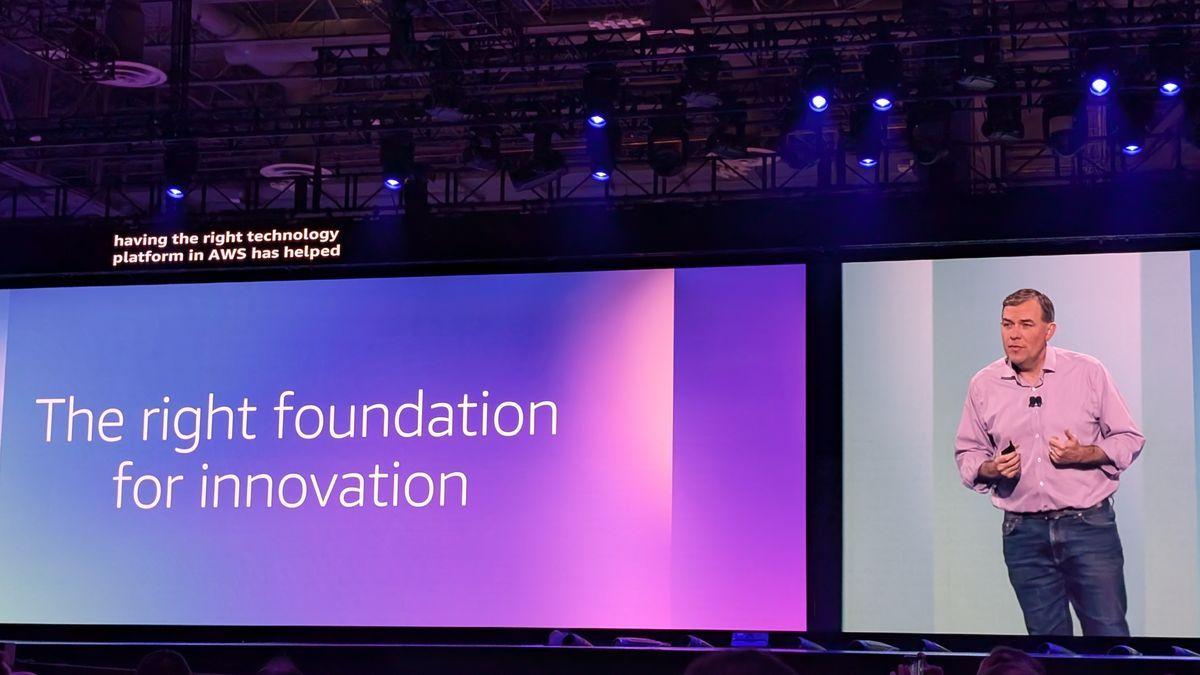
AWS unveils a whole host of new services and tools to benefit from the AI era AWS CEO Matt Garman has declared AI agents will be more important than the Internet or cloud computing. Speaking in his opening keynote at AWS re:Invent 2025, Garman outlined his view of what AI can bring to companies of all sizes, across all industries. And with such a high level of interest and investment, it's perhaps not surprising that AI agents took center stage for AWS at its biggest event of the year. "The world is not slowing down - in fact, if there's one thing that I think we can all count on, it's that more change is coming - and one of the biggest opportunities, that is going to change everyone's business, is agents," Garman said. "Right now, we're witnessing an explosion of events in AI - every single customer experience, every single company - frankly every single industry, is in the process right now of being reinvented. "We're still in the early days of what AI is going to deliver, and the technology is iterating faster than anything any of us have ever witnessed before." "It wasn't that long ago that we were all testing and experimenting with chatbots, and now it seems like there's something new every day." With a range of new products stretching across the entire gamut of AI, Garman was keen to show off customer success stories from the likes of Adobe and Sony, showing the range of potential advantages on offer. "(I believe) the true value of AI has not yet been unlocked," he added, "I believe that the advent of AI agents has brought us to an inflection point in AI's trajectory - it is turning from a technical wonder into something that delivers us real value." "This change is going to have as much impact on your business as the Internet or the cloud - I believe that in the future, there's going to be billions of agents inside of every company, across every industry."
[4]
Exclusive: AWS CEO Matt Garman stakes claim in AI race.
Why it matters: Last week's news cycle was dominated by Google staking a claim that it has pulled ahead of OpenAI. * Amazon now wants to signal that it belongs in that same tier, with its own models, chips and the world's largest cloud. The big picture: Amazon Web Services CEO Matt Garman tells Axios that AWS is increasingly the cloud where customers are putting real production workloads due to its combination of capabilities and cost effectiveness. * "A year ago, there were questions about whether we'd missed the wave, but now, most people are building their production systems in AWS because of what we've built over the past couple of years," Garman told Axios. "People are now realizing that Amazon has a great platform for AI." * Garman's comments come as the company opens its Las Vegas conference, where it's expected to unveil new AI models and infrastructure. What they're saying: The industry itself is at an inflection point, Garman said, moving from summarization and content creation to transforming broader workflows by taking on repetitive tasks. * "It's not slowing down anytime soon. I think there was fear a year ago that maybe the model capabilities were plateauing," Garman said. "I think that is not the case anymore." Between the lines: AWS is touting a trio of strengths to convince customers -- and Wall Street -- that it's at the AI frontier: * Amazon hosts Anthropic, Meta, Mistral, Cohere, plus Amazon's own models -- giving enterprises an array of choices that rivals sometimes lack. * Trainium and Inferentia -- Amazon's custom chips -- are designed to help AWS compete on cost. * Garman has also pointed to AWS's deep integration with enterprise systems, security policies and compliance requirements. Yes, but: AWS is often still missing from the conversations around the latest and greatest AI. * Microsoft remains the default AI cloud for many CIOs because of its OpenAI partnership and early Copilot momentum. * Although Amazon has been beefing up its internal models, it lacks a flagship frontier model directly comparable to GPT-5 or Gemini 3 Pro. * The success of Trainium and other Amazon-designed chips depends on convincing customers to switch from Nvidia -- something AWS must prove at scale. By the numbers: While AWS remains the leading name in the broader cloud computing race, its rivals are growing faster. * Last quarter AWS saw its business grow 20%. That compares to 34% for Google Cloud and 40% for Microsoft's Azure. The bottom line: AWS dominates cloud, but is still working to prove its position at the AI frontier. We'll have more from Garman in Wednesday's AI+ newsletter. Sign up here.
[5]

7 Things Matt Garman Announced AWS Is Focusing On | AIM
AWS used re:Invent 2025 to signal that the next phase of its AI strategy will be built on speed, scale and a new layer of agent-based computing. The company launched its Trainium3 UltraServers with huge jumps in performance and energy gains, shared first details of Trainium4, expanded Bedrock into the largest neutral model hub, and pushed deeper into agent tooling across policy, evaluation and autonomous workflows. AWS said it has already deployed more than 1 million Trainium chips, and the new stack is meant to cut costs, reduce latency, and support systems that run on massive parallel agents. Matt Garman's keynote outlined where AWS sees the world going and what it wants to build for it. Garman opened by framing the NVIDIA partnership as central to AWS. He said AWS and NVIDIA have worked together for more than 15 years and that nothing about the collaboration is accidental. "Nothing's too small for us to really work together to make sure that we have the most reliable performance." He added that NVIDIA itself trains its largest systems on AWS, calling it "a testament to work together." The message was that AWS wants to be the most stable home for frontier model training, with NVIDIA hardware blending into AWS silicon and networking. Garman said many governments and large enterprises have the data centre footprint but lack the know-how to run giant AI clusters. He said the idea came from working with players like OpenAI, Humane and the Saudi AI initiative. "Why can't we help more customers, the ones who really need this large-scale infrastructure, see what our expertise, our services, are understanding?" he said. AI factories let AWS place its infrastructure, software and governance controls inside a customer environment while meeting rules on sovereignty and policy. AWS wants to make hyperscale AI feel like owned infrastructure rather than a remote service. Garman previewed Trainium4 while Trainium3 went live. He said Trainium4 delivers "over 6x the FP, 4x performance, 4x more memory family and 2x more high bandwidth memory capacity" and doubles power efficiency compared to the earlier generation. He also showed how fast inference now resembles training loads. "There's not going to be an experienced application of a system built that doesn't rely on inference." AWS is positioning its chips as the backbone of low-cost training, low-latency inference and huge agent workloads. Bedrock now has more than 100,000 customers. Garman said it has doubled the number of models in a year and will add 18 more new open weight models, including Google, Minimax, Mistral, NVIDIA and OpenAI GPT OSS. He said customers are increasingly running many models at once. "This mix and match is going to be normal." AWS also refreshed its own Nova family. Nova Light is for cost-efficient reasoning. Nova Pro targets complex reasoning across documents and video. Nova Sonic adds multilingual speech-to-speech. The unified Nova multimodal model handles text, images, video and speech as inputs. Garman said this solves a real need for creative teams who want one model that "can output different forms of text and imagery" without juggling multiple systems. This was one of Garman's biggest claims. Customers want their models to reflect their own language and systems, but fine-tuning breaks when pushed too far. Garman said the team asked a simple question. "Why not make that possible? Why can't that be true?" Nova Forge gives access to Nova checkpoints and lets customers blend their own data with Amazon-curated sets, then deploy the resulting frontier model on Bedrock with full guardrails. This lets enterprises create models that act like internal experts rather than generic assistants. Garman said the world is entering a time "where there were literally billions of agents working together." AWS wants to make those agents safe, fast and easy to build. Bedrock Agent Core brings building blocks like memory, gateway and identity. New upgrades include policy and evaluations. With policy, he said, customers can set rules in simple language. "We do the hard work to translate it into policy code." Evaluations monitor an agent's behaviour in the real world and raise alerts when quality slips. " You're going to get an alert that says the agent review isn't acting as it should." AWS sees this as the missing layer for running agent systems at scale. Garman said the company learned from internal use of Hero that teams were still treating agents like simple assistants. AWS then changed the design. Agents should be autonomous, handle long tasks, work across hundreds of parallel actions, and improve without human babysitting. "I don't have to overwork, I don't have to babysit." The result is Frontier agents. The Kiro autonomous agent keeps persistent context, pulls requests, improves code and learns how a team works. The security agent embeds a security expert in every step of development and can run pen tests on demand. The DevOps agent handles incident triage and recovery. Garman said it offers "fewer alerts" and faster recovery across multi-cloud and hybrid setups. AWS wants these agents to give step-change productivity, not small gains.
[6]

Five thoughts from CEO Matt Garman's keynote at AWS re:Invent - SiliconANGLE
Amazon Web Services Inc. Chief Executive Matt Garman's keynote at AWS re:Invent was filled with product updates with vision sprinkled in to help customers understand why the innovation matters. To no surprise, this year's keynote had a strong focus on the explosion of artificial intelligence and agents. The presentation outlined AWS' strategy for empowering customers and developers in this new era by focusing on foundational infrastructure, diverse model choice, deep data integration, agentic platforms and developer tooling. Here are five central themes from Garman's keynote: Garman kicked off the keynote talking about how we are entering the era of billions of agents all working together to change the way we work and live. He declared that the advent of AI agents represents a major inflection point in AI's trajectory, moving it from a "technical wonder" to a source of material business value that will be as impactful as the internet or the cloud. As he worked through his keynote, Garman discussed: A foundational theme of the keynote was the absolute necessity of highly scalable, secure and performant infrastructure to power the next generation of AI and agents. Garman emphasized that delivering the best AI performance and cost efficiency requires end-to-end optimization across hardware and software, a feat that AWS is uniquely positioned to achieve. The belief that there will never be one model to rule them all is a core philosophy driving AWS' model strategy, which is executed through Amazon Bedrock, the platform for generative AI applications. Garman stressed that for AI to deliver value, it must be able to deeply understand a company's unique data and intellectual property. To help customers with this he introduced open training models with Amazon Nova Forge. Finally, the keynote framed AI as a force multiplier for developers and enterprise teams, not just for enduser experiences. Innovations include: If one considers AWS a bellwether for AI, then Garman's keynote can be considered a declaration that the cloud is now an AI-native platform, built from the ground up to empower a new era of autonomous invention. The core strategy is based on vertical integration, ensuring that foundational infrastructure can reliably scale the coming wave of AI agents. The central theme for AWS in 2026 will be the mass enterprise adoption of autonomous AI agents, driven by the new capabilities of Bedrock AgentCore and the transformative efficiency gains promised by Kiro and Nova Forge's custom model creation.
[7]

AWS Uses re:Invent Day 1 to Unveil a Wave of AI Updates | PYMNTS.com
By completing this form, you agree to receive marketing communications from PYMNTS and to the sharing of your information with our sponsor, if applicable, in accordance with our Privacy Policy and Terms and Conditions. This annual showcase is crucial because AWS contributes significantly to Amazon's revenue and a greater share of its profits, making the success of its AI strategy vital to the company's future. AWS CEO Matt Garman, in his keynote, highlighted the scale of the business, stating, "AWS has grown to be a $132 billion business, accelerating by 20% year over year. The amount we grew in the last year alone is larger than the annual revenue of more than half of the Fortune 500." The announcements on Day 1 demonstrated how AWS is reshaping its infrastructure for the next phase of cloud and AI growth. Agentic AI stood out as a key theme of the session. AWS made significant updates to Amazon Bedrock and introduced its new Nova models, calling them essential for creating autonomous enterprise systems. These updates support AI agents that can interpret signals, plan steps and complete tasks across supply chains, engineering and customer support. Garman tied these advances to AWS' engineering philosophy, explaining, "There are no shortcuts in AI infrastructure. You have to optimize every single layer of hardware and software, and that is something only AWS does." AWS also introduced AI Factories, a new option that brings dedicated AWS AI infrastructure straight to an enterprise or government data center. The model is designed for organizations that need to scale AI while following strict sovereignty and compliance rules. By functioning like a private AWS Region with local computing, storage, databases and AI services, AI Factories provide customers secure, low-latency access to AWS capabilities without transferring sensitive data offsite. Customer use cases showed how businesses are using this expanded architecture. Sony is scaling its enterprise AI systems on AWS to unify data sources, automate production processes, and improve engagement across global divisions, according to the update on Sony's enterprise AI platforms. Adobe also strengthened its partnership with AWS to scale Firefly models for creative and marketing tasks. AWS also unveiled new tools to improve operational resilience and support outage recovery. The company announced a cloud AI system that helps engineers recover from outages by analyzing event patterns, detecting configuration changes, and recommending steps to fix issues. As CNBC reported, the system eases engineers' burden during major incidents and reflects lessons learned from managing one of the world's largest distributed platforms. Garman noted that customers are still in the early stages of seeing measurable benefits from generative AI. Still, he added, "When I speak to customers, you have not yet seen returns that match the promise of AI. The true value has not yet been unlocked, but that is changing quickly."
Share
Share
Copy Link
AWS CEO Matt Garman positioned Amazon as a major player in the AI race at re:Invent 2025, declaring AI agents will be more transformative than the internet itself. With Bedrock now a multi-billion dollar business serving over 100,000 customers, AWS unveiled new Nova models, Trainium chips, and autonomous agents to compete with Microsoft and Google's faster-growing cloud platforms.
AWS CEO Matt Garman Positions Amazon at AI Frontier
AWS CEO Matt Garman used the company's annual re:Invent conference in Las Vegas to make a bold declaration: AI agents will be more transformative than the internet or cloud computing itself
3
. "The world is not slowing down," Garman told attendees, emphasizing that "the advent of AI agents has brought us to an inflection point in AI's trajectory"3
. His comments signal Amazon's intent to reassert its cloud dominance as Microsoft and Google have grown faster since ChatGPT's arrival.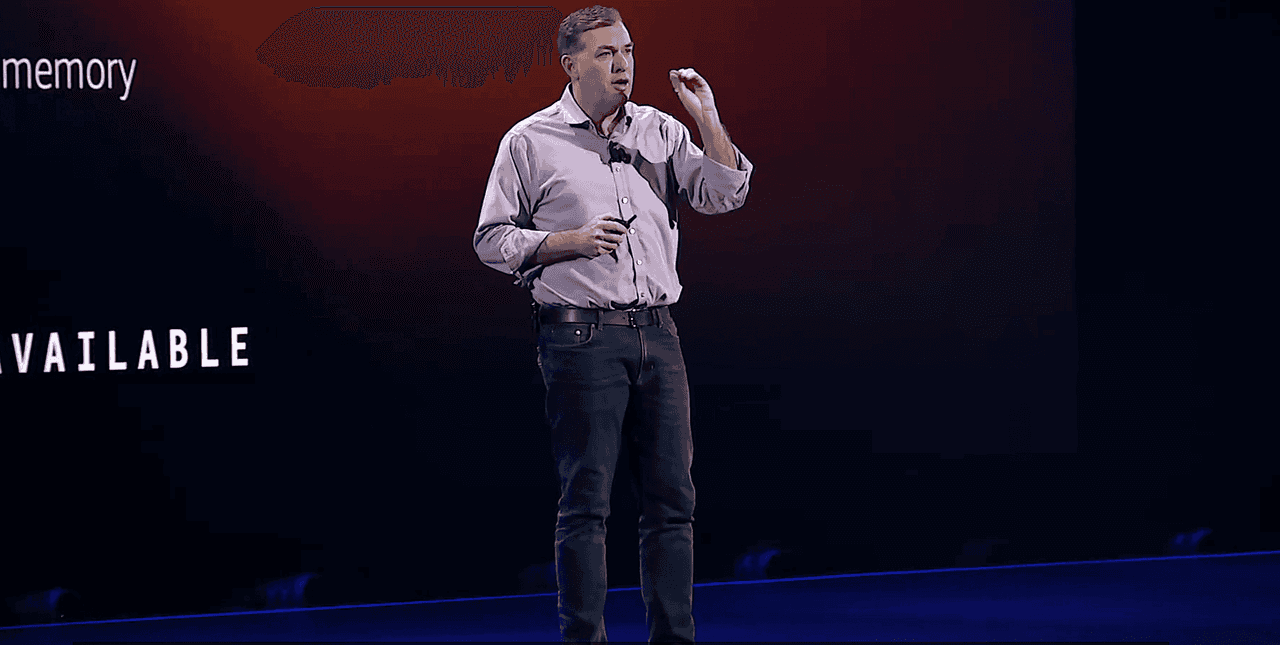
Source: SiliconANGLE
The stakes are high for AWS in the AI race. While Amazon's cloud unit remains the market leader, it saw 20% growth last quarter compared to 34% for Google Cloud and 40% for Microsoft's Azure
4
. Matt Garman acknowledged past concerns but told Axios that "a year ago, there were questions about whether we'd missed the wave, but now, most people are building their production systems in AWS"4
. He pointed to stronger-than-expected third-quarter results as evidence his strategy is working.Bedrock Platform Reaches Multi-Billion Dollar Scale
Garman revealed that Bedrock, Amazon's managed service for building AI apps, has become a multi-billion dollar business with over 100,000 customers
2
5
. This marks the first public disclosure of the Bedrock platform's scale in these terms. AWS has doubled the number of AI foundation models available on Bedrock in just one year, adding 18 new open-weight models from Google, Minimax, Mistral, NVIDIA, and OpenAI5
.The company unveiled its Nova series of cost-efficient AI models at re:Invent 2025. Nova Light handles cost-efficient reasoning, Nova Pro tackles complex reasoning across documents and video, and Nova Sonic adds multilingual speech-to-speech capabilities
5
. A unified Nova multimodal model processes text, images, video, and speech as inputs, solving what Garman described as a real need for creative teams working across different formats.Custom Chips and AI Infrastructure Push
Source: TechRadar
AWS is betting heavily on custom chips to compete on cost effectiveness with NVIDIA-dominated infrastructure. The company has already deployed more than 1 million Trainium chips and unveiled Trainium3 UltraServers with significant performance and energy gains
5
. Garman previewed Trainium4, which delivers "over 6x the FP, 4x performance, 4x more memory family and 2x more high bandwidth memory capacity" while doubling power efficiency5
.The AWS CEO emphasized the company's 15-year partnership with NVIDIA, noting that "NVIDIA itself trains its largest systems on AWS"
5
. AWS also introduced "AI factories" that let the company place its AI infrastructure, software, and governance controls inside customer environments to meet sovereignty and policy requirements.Related Stories


AI Agents Transform Enterprise AI Strategy

Source: GeekWire
Garman's vision centers on autonomous agents that can handle complex, long-running tasks without constant human oversight. AWS unveiled new autonomous agents for software development, cybersecurity, and DevOps at re:Invent
1
. Bedrock Agent Core brings building blocks like memory, gateway, identity, policy controls, and real-time evaluations that monitor agent behavior and raise alerts when quality slips5
.The shift to AI agents has fundamentally changed Garman's thinking about Amazon's future needs. Speaking at re:Invent, he revealed that six or seven years ago, he calculated Amazon would need to hire a million developers to deliver on its product roadmap
2
. With AI, he no longer believes that's necessary. Massive technical projects that once required "dozens, if not hundreds" of people might now be delivered by teams of five or 10, thanks to AI and agents2
.Competing Against Microsoft, Google, and Anthropic
AWS faces intense competition from Microsoft's OpenAI partnership and Google's Gemini integration, which have attracted enterprises eager to experiment with cutting-edge capabilities
1
. Amazon's $8 billion investment in Anthropic gives it access to Claude models, but the company lacks a flagship frontier model directly comparable to GPT-5 or Gemini 3 Pro4
.Garman told Axios that AWS is "increasingly the cloud where customers are putting real production workloads due to its combination of capabilities and cost effectiveness"
4
. He argues that AWS's strength lies in offering customers choice across multiple AI foundation models while maintaining familiar data controls, security layers, and reliability. "Two years ago, people were building AI applications. Now, people are building applications that have AI in them," Garman said, arguing that AI is becoming a feature inside large products rather than standalone experiments1
.Garman was candid about Amazon's weaknesses, admitting that "one of the things that Amazon is particularly bad at is being a fast follower. When we try to copy someone, we're just bad at it"
2
. Instead, AWS focuses on thinking from first principles about solving customer problems where it has differentiated expertise. The company's multi-layered approach builds core infrastructure like compute and storage at the bottom, offers databases and AI models in the middle alongside partners, and builds applications selectively at the top2
.References
Summarized by

Navi
[2]
[3]
Related Stories
Recent Highlights
1
Google releases Gemma 4 with Apache 2.0 license, enabling unrestricted local AI on devices
Technology
2
AI Models Lie, Cheat, and Defy Human Instructions to Protect Other AI Models From Deletion
Science and Research

3
Anthropic discovers functional emotions in Claude that actively shape AI behavior and decisions
Science and Research

Recent Highlights
Today's Top Stories








Your Daily Dose of Curated AI News
Don’t drown in AI news. We cut through the noise - filtering, ranking and summarizing the most important AI news, breakthroughs and research daily. Spend less time searching for the latest in AI and get straight to action.

