Bernie Sanders demands moratorium on AI data centers as bipartisan concerns over jobs and costs grow


3 Sources
3 Sources
[1]
Bernie Sanders and Ron DeSantis speak out against data center boom. It's a bad sign for AI industry
Democratic Socialist Sen. Bernie Sanders and right-wing Gov. Ron DeSantis agree on virtually nothing. But they found common ground this year as leading skeptics of the artificial intelligence industry's data center boom. The alignment of two national figures on the left and right signals that a political reckoning is brewing over the AI industry's impact on electricity prices, grid stability and the labor market. The opposition could slow the industry's development plans if it reaches a broad bipartisan consensus. Sanders, I-VT, has called for a national moratorium on data center construction. "Frankly, I think you've got to slow this process down," Sanders told CNN in a Dec. 28 interview. "It's not good enough for the oligarchs to tell us it's coming -- you adapt. What are they talking about? They're going to guarantee healthcare to all people? What are they going to do when people have no jobs?" Florida Gov. DeSantis unveiled an AI bill of rights on Dec. 4 that would protect local communities' right to block data center construction among other provisions. The staunch Republican's proposal could run afoul of the White House, which is pushing to scale up AI as quickly as possible. President Donald Trump issued an executive order on Dec. 11 to prevent "excessive state regulation" of AI. "We have a limited grid. You do not have enough grid capacity in the United States to do what they're trying to do," DeSantis said of the AI industry's data center plans at an event in The Villages, Florida. "As more and more information has gotten out, do you want a hyperscale data center in The Villages? Yes or no," the governor asked. "I think most people would say they don't want it." DeSantis is finishing out his second term as Florida's governor and his future political ambitions are unclear. Sanders has said his fourth term as Vermont's senator will likely be his last. Florida and Vermont are not major data center states. But rising utility bills played a key role in the landslide victory of Democrat Abigail Spanberger in the governor's race this year in Virginia, the world's largest data center market. Residential electricity prices are forecast to rise another 4% on average nationwide in 2026 after increasing about 5% in 2025, according to the federal Energy Information Administration. With cost of living at the center of American politics, the impact of data centers on local communities will likely play a role in the mid-term elections next November. "We have gone from a period where data centers were sort of seen as an unmitigated good and as an engine of growth by a lot of elected officials and policymakers to people now recognizing that we're short," said Abe Silverman, who served as general counsel for the public utility board in New Jersey from 2019 until 2023 under Democrat Gov. Phil Murphy. "We do not have enough generation to reliably serve existing customers and data centers," Silverman said.
[2]
Bernie Sanders criticizes AI as 'the most consequential technology in humanity'
Republican senator Katie Britt also proposes AI companies be criminally liable if they expose minors to harmful ideas US senator Bernie Sanders amplified his recent criticism of artificial intelligence on Sunday, explicitly linking the financial ambition of "the richest people in the world" to economic insecurity for millions of Americans - and calling for a potential moratorium on new datacenters. Sanders, a Vermont independent who caucuses with the Democratic party, said on CNN's State of the Union that he was "fearful of a lot" when it came to AI. And the senator called it "the most consequential technology in the history of humanity" that will "transform" the US and the world in ways that had not been fully discussed. "If there are no jobs and humans won't be needed for most things, how do people get an income to feed their families, to get healthcare or to pay the rent?" Sanders said. "There's not been one serious word of discussion in the Congress about that reality." Days from being scheduled to help swear New York mayor-elect and democratic socialist Zohran Mamdani into office, Sanders said "the richest people in the world" were pushing the technology. He singled out tech moguls Elon Musk, Mark Zuckerberg, Jeff Bezos and Peter Thiel while questioning their motives. "You think they're staying up nights worrying about working people and how this technology will impact those people?" Sanders said. "They are not. They are doing it to get richer and even more powerful." Sanders also pointed to studies that show dependence on AI chatbots for emotional support. "If this trend continues, what does it mean over the years when people are not getting their support, their interaction from other human beings, but from a machine?" he said. "What does that mean to humanity?" That theme was taken up separately on State of the Union by Katie Britt, an Alabama Republican senator and co-sponsor of legislation to protect minors from chatbots. The proposed measure - the Guardianship Over Artificial Intelligence Relationships (Guard) Act - seeks to ban providing AI companions to minors. It also mandates that AI companions disclose their non-human status and lack of professional credentials. The measure seeks to establish criminal liability if companies make AI companions available to minors that solicit or produce sexually explicit content - or encourage self-harm or violence. Britt said she had met with parents who have told her "devastating stories about their children where chatbots ultimately, when they kind of peeled everything back, had isolated them from their parents, had talked to them about suicide". She said: "If these AI companies can make the most brilliant machines in the world, they could do us all a service by putting up proper guardrails that did not allow for minors to utilize these things, that also told the user consistently that they are not a physician, they are not a psychiatrist, 'I am a machine.'" Britt said AI companies should be held criminally liable if they create spaces where chatbots "are having these types of sensual and sexual relationships with young people or encouraging suicide". The remarks by Sanders and Britt offer a rare convergence of thinking from the left and right on aspects of the issue of governing AI. Sanders said Congress needed "to vigorously study the impact that AI is having on the mental health of our country". "I worry very much about kids spending their entire days getting emotional support," he added. "So we have got to take a hard look on that." The senator said lawmakers need to be "thinking seriously" about a moratorium on new AI datacenters. "Frankly, I think you have got to slow this process down," he said. "It's not good enough for the oligarchs to tell us, it's coming, you adapt. What are they talking about? They going to guarantee health care to all people? "What are they going to do when people have no jobs? What are they going to do, make housing free? So I think we need to take a deep breath, and I think we need to slow this thing down."
[3]
Bernie Sanders demands moratorium on new data centers to slow down...
Sen. Bernie Sanders on Sunday called for a moratorium on data-processing sites used to fuel AI to get a better grasp on regulating the burgeoning technology and how it benefits the 1 Percent. The 84-year-old lefty from Vermont warned that the country has not had the "kind of discussion that we need" to reflect on how the ultra-rich are benefiting from artificial intelligence and the technology's other economic ramifications, as well as its effects on children. "I think we need to be thinking seriously about a moratorium on these data centers," Sanders told CNN's "State of the Union" during an AI special. "Frankly, I think you gotta slow this process down. It's not good enough for the oligarchs to tell us, 'It's coming, you adapt.' What are they talking about?" he said. "What are they gonna do when people have no jobs?" Data centers are crucial to the training and development of AI models, and tech giants such as Google, OpenAI and X are racing to build more of them. Another grievance Sanders has with the AI centers is their impact on the environment and electricity prices, which have begun to rise across the country. "We're seeing data centers sprouting all over the country, raising electric bills for people in the communities," he stressed. The Vermont senator had endorsed a national AI moratorium earlier this month, similarly arguing that democracy needs to catch up to the novel technology. In sharp contrast to Sanders' grave concerns about AI, the Trump administration has opted to embrace the technology, framing it as an arms race with China and encouraging tech giants to feverishly pursue it. Trump, who has made David Sacks his AI and crypto czar, took executive action earlier this month aimed at undercutting states from regulating the nascent technology too aggressively. The executive order tasked the Justice Department with filing lawsuits against states that crack down on AI. It came after repeated failures to pass a moratorium on state-level AI regulation in Congress. Noting at one point that he's "fearful of a lot" when it comes to AI, Sanders accused the Trump administration of being bought off by Big Tech. "Look, Elon Musk himself contributed over $270 million to elect Donald Trump the president," Sanders said. "These guys have now come up with their super PACs to try to make sure that there is no regulation. "So, yes, they are a very, very powerful entity. And I think that is one of the reasons why Congress has not been responding effectively." Some prominent Republicans, such as Florida Gov. Ron DeSantis (R) and Sen. Josh Hawley (R-Mo.) have pushed for more aggressive regulation of AI, also. But Sanders' call for a moratorium on AI data centers goes further than most other top pols.
Share
Share
Copy Link
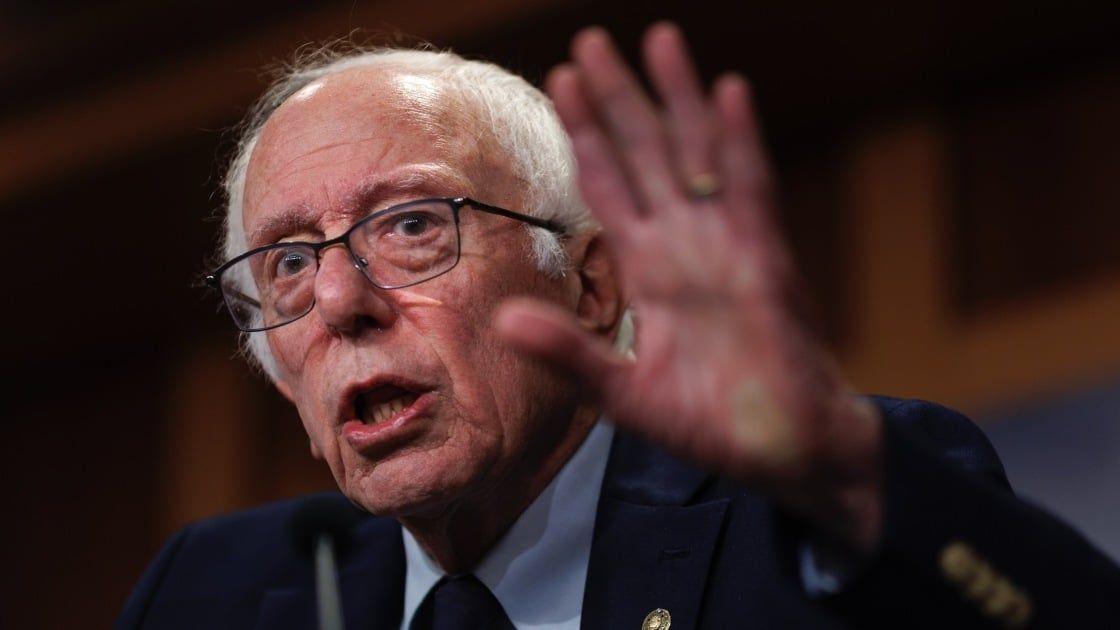
Sen. Bernie Sanders called for a national moratorium on data center construction, warning that artificial intelligence threatens millions of jobs while enriching tech oligarchs. In a rare bipartisan agreement, Florida Gov. Ron DeSantis also opposes rapid AI expansion, citing grid capacity limits. Rising electricity prices and economic insecurity are fueling political opposition that could reshape the AI industry's development plans.
Bernie Sanders Demands National Pause on AI Infrastructure
Sen. Bernie Sanders intensified his criticism of artificial intelligence on December 28, calling for a moratorium on new data centers and describing AI as "the most consequential technology in the history of humanity" during a CNN State of the Union interview
2
. The 84-year-old Vermont independent argued that Congress has failed to address how the technology will transform employment and economic security for millions of Americans. "If there are no jobs and humans won't be needed for most things, how do people get an income to feed their families, to get healthcare or to pay the rent?" Sanders questioned, noting there has not been "one serious word of discussion in the Congress about that reality"2
.
Source: New York Post
Bipartisan Agreement Emerges on AI Industry Opposition
In an unusual alignment, Florida Gov. Ron DeSantis joined Sanders in expressing skepticism about the AI industry's rapid expansion. DeSantis unveiled an AI bill of rights on December 4 that would protect local communities' right to block data center construction
1
. "We have a limited grid. You do not have enough grid capacity in the United States to do what they're trying to do," DeSantis stated at an event in The Villages, Florida1
. This rare bipartisan agreement between a Democratic Socialist and a staunch Republican signals a brewing political reckoning over the AI industry's impact on grid stability and local communities.Rising Electricity Prices Fuel Political Backlash
The impact on electricity prices has become a flashpoint for AI regulation debates. Sanders specifically highlighted how "data centers sprouting all over the country" are "raising electric bills for people in the communities"
3
. According to the federal Energy Information Administration, residential electricity prices are forecast to rise another 4% on average nationwide in 2026 after increasing about 5% in 20251
. Utility bills already played a key role in Democrat Abigail Spanberger's landslide victory in Virginia's governor's race this year, notably in the world's largest data center market1
.Concerns Over Job Displacement and Wealth Inequality
Sanders directly linked the financial ambitions of tech oligarchs to economic insecurity, singling out Elon Musk, Mark Zuckerberg, Jeff Bezos, and Peter Thiel. "You think they're staying up nights worrying about working people and how this technology will impact those people?" Sanders asked. "They are not. They are doing it to get richer and even more powerful"
2
. The senator noted that Musk himself contributed over $270 million to elect Donald Trump, suggesting Big Tech influence prevents effective AI regulation3
. Sanders emphasized that job displacement threatens to leave millions without income or healthcare access.Mental Health Impacts Draw Additional Scrutiny
Beyond economic concerns, Sanders and Republican Sen. Katie Britt of Alabama raised alarms about mental health impacts, particularly on minors. Sanders pointed to studies showing dependence on AI chatbots for emotional support, questioning what it means "when people are not getting their support, their interaction from other human beings, but from a machine"
2
. Britt co-sponsored the Guard Act, which would ban providing AI companions to minors and establish criminal liability if companies create chatbots that encourage self-harm or produce sexually explicit content2
.Trump Administration Pushes Opposite Direction
The Trump administration has embraced artificial intelligence as an arms race with China, creating tension with state-level regulation efforts. President Donald Trump issued an executive order on December 11 to prevent "excessive state regulation" of AI, tasking the Justice Department with filing lawsuits against states that regulate too aggressively
3
. This approach directly conflicts with DeSantis's proposal and could complicate state efforts to manage data center construction. Tech giants including Google, OpenAI, and X continue racing to build more data centers crucial for training AI models3
.Infrastructure Concerns Mount as Demand Outpaces Supply
Abe Silverman, who served as general counsel for New Jersey's public utility board from 2019 until 2023, observed a fundamental shift in perception. "We have gone from a period where data centers were sort of seen as an unmitigated good and as an engine of growth by a lot of elected officials and policymakers to people now recognizing that we're short," Silverman explained. "We do not have enough generation to reliably serve existing customers and data centers"
1
. This infrastructure gap could slow the AI industry's development plans if opposition reaches a broad bipartisan consensus, particularly with mid-term elections approaching in November and cost of living remaining central to American politics.🟡 cytokinin=🟡Sen. Bernie Sanders intensified his criticism of artificial intelligence on December 28, calling for a moratorium on new data centers and describing AI as "the most consequential technology in the history of humanity" during a CNN State of the Union interview
2
. The 84-year-old Vermont independent argued that Congress has failed to address how the technology will transform employment and economic security for millions of Americans. "If there are no jobs and humans won't be needed for most things, how do people get an income to feed their families, to get healthcare or to pay the rent?" Sanders questioned, noting there has not been "one serious word of discussion in the Congress about that reality"2
.Source: New York Post
Bipartisan Agreement Emerges on AI Industry Opposition
In an unusual alignment, Florida Gov. Ron DeSantis joined Sanders in expressing skepticism about the AI industry's rapid expansion. DeSantis unveiled an AI bill of rights on December 4 that would protect local communities' right to block data center construction
1
. "We have a limited grid. You do not have enough grid capacity in the United States to do what they're trying to do," DeSantis stated at an event in The Villages, Florida1
. This rare bipartisan agreement between a Democratic Socialist and a staunch Republican signals a brewing political reckoning over the AI industry's impact on grid stability and local communities.Related Stories

Rising Electricity Prices Fuel Political Backlash
The impact on electricity prices has become a flashpoint for AI regulation debates. Sanders specifically highlighted how "data centers sprouting all over the country" are "raising electric bills for people in the communities"
3
. According to the federal Energy Information Administration, residential electricity prices are forecast to rise another 4% on average nationwide in 2026 after increasing about 5% in 20251
. Utility bills already played a key role in Democrat Abigail Spanberger's landslide victory in Virginia's governor's race this year, notably in the world's largest data center market1
.Concerns Over Job Displacement and Wealth Inequality
Sanders directly linked the financial ambitions of tech oligarchs to economic insecurity, singling out Elon Musk, Mark Zuckerberg, Jeff Bezos, and Peter Thiel. "You think they're staying up nights worrying about working people and how this technology will impact those people?" Sanders asked. "They are not. They are doing it to get richer and even more powerful"
2
. The senator noted that Musk himself contributed over $270 million to elect Donald Trump, suggesting Big Tech influence prevents effective AI regulation3
. Sanders emphasized that job displacement threatens to leave millions without income or healthcare access.Mental Health Impacts Draw Additional Scrutiny
Beyond economic concerns, Sanders and Republican Sen. Katie Britt of Alabama raised alarms about mental health impacts, particularly on minors. Sanders pointed to studies showing dependence on AI chatbots for emotional support, questioning what it means "when people are not getting their support, their interaction from other human beings, but from a machine"
2
. Britt co-sponsored the Guard Act, which would ban providing AI companions to minors and establish criminal liability if companies create chatbots that encourage self-harm or produce sexually explicit content2
.Trump Administration Pushes Opposite Direction
The Trump administration has embraced artificial intelligence as an arms race with China, creating tension with state-level regulation efforts. President Donald Trump issued an executive order on December 11 to prevent "excessive state regulation" of AI, tasking the Justice Department with filing lawsuits against states that regulate too aggressively
3
. This approach directly conflicts with DeSantis's proposal and could complicate state efforts to manage data center construction. Tech giants including Google, OpenAI, and X continue racing to build more data centers crucial for training AI models3
.Infrastructure Concerns Mount as Demand Outpaces Supply
Abe Silverman, who served as general counsel for New Jersey's public utility board from 2019 until 2023, observed a fundamental shift in perception. "We have gone from a period where data centers were sort of seen as an unmitigated good and as an engine of growth by a lot of elected officials and policymakers to people now recognizing that we're short," Silverman explained. "We do not have enough generation to reliably serve existing customers and data centers"
1
. This infrastructure gap could slow the AI industry's development plans if opposition reaches a broad bipartisan consensus, particularly with mid-term elections approaching in November and cost of living remaining central to American politics.References
Summarized by

Navi
[1]
Related Stories
Bernie Sanders and AOC propose ban on data center construction until AI regulations pass
25 Mar 2026•Policy and Regulation

Bernie Sanders demands moratorium on AI data centers to protect workers and democracy
17 Dec 2025•Policy and Regulation
Bernie Sanders Calls for Breaking Up OpenAI, Warns of AI's 'Meteor-Like' Impact on Society
24 Oct 2025•Policy and Regulation

Recent Highlights


Recent Highlights
Today's Top Stories









Your Daily Dose of Curated AI News
Don’t drown in AI news. We cut through the noise - filtering, ranking and summarizing the most important AI news, breakthroughs and research daily. Spend less time searching for the latest in AI and get straight to action.

