Bitcoin Miner Cango Sells $305M in BTC to Fund Strategic Pivot Into AI Computing


3 Sources
3 Sources
[1]
Bitcoin Miner Cango Dumps $305 Million in BTC to Fuel AI Pivot - Decrypt
Shares are down around nearly 3% on the day, and 62% over the last six months. Publicly traded Bitcoin miner Cango (CANG) parted ways with 4,451 BTC this weekend, raising approximately $305 million as it aims to fuel its expansion into providing compute power for the artificial intelligence (AI) boom. The firm used all of the proceeds to repay a portion of a Bitcoin-collateralized loan. "The company is executing a strategic pivot by utilizing its globally accessed, grid-connected infrastructure to provide distributed compute capacity for the AI industry," Cango said in a statement. In addition to the sale, the firm also announced Jack Jin, formerly of video conferencing software firm Zoom, as its new CTO to help build out its AI business line. Shares in the Dallas-based mining firm are down nearly 3% following the news, recently changing hands below $0.95. Shares have fallen 62% in the last six months. While other publicly traded Bitcoin miners, like Bitfarms, have signaled a complete departure from mining, Cango intends to continue using resources to mine Bitcoin alongside its growing AI compute business. "Cango remains committed to its mining operations, with a continued focus on enhancing mining economics and seeking an optimal balance between hashrate scale and operational efficiency," the firm's announcement reads. "The company will be guided by a disciplined framework for asset allocation in pursuit of long-term value creation." The firm, which says it operates over 40 sites across four distinct geographic regions, mined nearly 500 BTC in January, according to its most recent monthly production update. It also sold 550 BTC or about $39 million worth of BTC during the month, leaving it with 7,474.6 BTC or about $528 million worth at the close of January. At the time of the sale, Cango CEO Paul Yu telegraphed that the firm would be offloading more Bitcoin in the future. "Starting this month, we will selectively sell a portion of newly mined Bitcoin to support the expansion of our inference platform and other near-term growth initiatives," said Yu in a statement. "This tactical flexibility will allow us to seize new business opportunities and manage our liquidity with greater agility." A representative for the firm did not immediately respond to Decrypt's request for comment. Bitcoin is down around 0.2% in the last 24 hours, recently changing hands at $70,727. The top crypto asset is down nearly 10% in the last week and is 44% off its October all-time high of $126,080, though it has partially recovered since dipping to nearly $60,000 last week.
[2]
Bitcoin miner Cango sells $305M BTC to cut leverage and fund AI pivot
Bitcoin miner Cango has sold 4,451 Bitcoin on the open market, generating net proceeds of about $305 million it says were used to partially repay a Bitcoin‑collateralized loan and to strengthen its balance sheet. The company said Monday that the transaction, approved by its board after a review of "current market conditions," is intended to reduce financial leverage and provide additional capacity to fund its planned expansion into artificial intelligence (AI) and high‑performance computing (HPC) infrastructure. Cango said that the "strategic pivot" meant utilizing its "globally accessed, grid-connected infrastructure" to provide distributed compute capacity for the AI industry, and that the initiative would be implemented through a phased roadmap. The sale follows a disposal of 550.3 BTC, with Cango selling more Bitcoin (BTC) than it produced in January to support its near‑term growth initiatives after extreme cold and blizzards reduced uptime during the month. According to the company's Feb. 3 update, Cango's Bitcoin reserves stood at 7,474.6 BTC at the end of that month, down from 7,528.3 BTC at the end of December 2025, before the additional 4,451 BTC transaction further reduced its holdings. Cango's decision reflects a broader shift among Bitcoin miners as they look to diversify revenue streams by supplying power and data center capacity to AI and HPC customers. Other large mining‑linked groups are signing long‑term contracts to supply GPU‑based cloud capacity for artificial intelligence and HPC using power and data center infrastructure that was originally built for Bitcoin mining. Bitcoin miner Iren, for example, agreed a five‑year, $9.7 billion deal with Microsoft in November 2025 to provide AI computing power from its Texas campus, committing hundreds of megawatts of capacity to contracted GPU hosting while continuing to operate one of the industry's largest Bitcoin mining fleets. These developments are taking place as post‑halving economics tighten across the sector in 2025. Cointelegraph Research data shows hashprice falling to multi‑year lows and network difficulty at record highs, as heavily compressed margins saw many miners operating close to breakeven at prevailing prices and cost levels.
[3]
Cango Secures Big Cash Infusion In Accelerated Pivot To AI-Distributed Computing - Cango (NYSE:CANG)
Image Credit: Bamboo Works The company said that two of its directors will purchase an additional $65 million worth of its stock, a week after it sold more than half of its bitcoin holdings Key Takeaways: Cango announced that two of its directors have agreed buy $65 million worth of its stock to help finance its accelerating move into distributed computing The company has been lowering its bitcoin mining activity amid a rapid decline in prices for the cryptocurrency Cango largely abandoned its original business as a Chinese car trader over a year ago, and initially moved aggressively into bitcoin mining. In a campaign to diversify its business, the company announced plans last year for another move into high-performance distributed computing. It has now begun to accelerate that move, including the establishment of a new, U.S.-based company headed by an industry veteran who is already building up a team in the state of Texas, according to an announcement last week. Now, the company is further shoring up its finances with the latest fundraising from its non-executive Chairman Jin Xin, as well as board member Chang-Wei Chiu, who is chief investment officer of Antalpha Ventures, a Singaporean firm tied to Enduring Wealth Capital Ltd., Cango's largest shareholder. At the same time, Cango announced the closing of a previously announced $10.5 million share sale that will boost Enduring Wealth Capital's stake in the company to 4.71% from a previous 2.81%. But more importantly, the purchase involving Class B shares with super voting rights will give Enduring Wealth Capital 49.7% of Cango's voting rights, just shy of a 50% majority and assuring its ability to control the company. "The company intends to use the proceeds from the Class B investment and the proposed Class A investments to support its expansion into AI and computing infrastructure, while further strengthening its balance sheet," Cango said. Stock volatility Even before the bitcoin volatility, Cango previously announced plans to complement its mining operation, with a current 50 EH/s of capacity, with the development of a related high-performance computing (HPC) business for AI users. Both bitcoin mining and HPC require very high levels of computing power and, consequently, are huge power consumers. Cango plans to leverage its growing expertise in managing such complex operations at its mining facilities to offer similar services to other customers with similar needs. The biggest emerging group in that area is the growing number of companies using AI. In its announcement last week, Cango outlined a three-stage plan to accelerate its move into high-performance computing, starting with a hybrid approach utilizing its leased space in mining centers on four continents as well as a facility it purchased in the U.S. state of Georgia. The company plans to deploy AI computing nodes across its more than 40 globally accessed sites to provide inference computing capacity to small and medium-sized businesses. Over the medium term, Cango plans to develop and deploy a proprietary software platform to manage and integrate its distributed computing capacity. And over the long term, it plans to scale up its model to become a "mature global AI infrastructure platform." Benzinga Disclaimer: This article is from an unpaid external contributor. It does not represent Benzinga's reporting and has not been edited for content or accuracy. Market News and Data brought to you by Benzinga APIs To add Benzinga News as your preferred source on Google, click here.
Share
Share
Copy Link
Publicly traded Bitcoin miner Cango has offloaded 4,451 BTC worth approximately $305 million to fuel its expansion into AI and high-performance computing. The Dallas-based firm used proceeds to repay a Bitcoin-collateralized loan while securing an additional $65 million capital infusion from directors. Despite shares falling 62% over six months, Cango plans to maintain Bitcoin mining operations alongside its new AI infrastructure business.
Cango Executes Major BTC Sale to Support AI Infrastructure Expansion
Publicly traded Bitcoin miner Cango has made a decisive move away from pure cryptocurrency mining, selling 4,451 BTC over the weekend to generate approximately $305 million in net proceeds
1
. The Dallas-based firm used the entire amount to partially repay a Bitcoin-collateralized loan, reducing financial leverage while positioning itself for a strategic pivot into artificial intelligence and high-performance computing (HPC) infrastructure2
. This transaction follows an earlier disposal of 550.3 BTC in January, when Cango sold more Bitcoin than it produced to support near-term growth initiatives after extreme cold and blizzards reduced mining uptime during that month2
.
Source: Benzinga
The company's board approved the transaction after reviewing current market conditions, signaling a calculated response to challenging post-halving economics that have compressed margins across the mining sector
2
. At the end of January, Cango's Bitcoin reserves stood at 7,474.6 BTC, worth approximately $528 million, before the additional 4,451 BTC sale further reduced its holdings1
. Shares in Cango dropped nearly 3% following the announcement and have fallen 62% over the last six months, recently trading below $0.951
.Strategic Pivot Into Artificial Intelligence and Distributed Computing
Cango is executing a strategic pivot by leveraging its globally accessed, grid-connected infrastructure to provide distributed compute capacity for the AI industry
1
. The company operates over 40 sites across four distinct geographic regions, positioning it to deploy AI computing nodes across its existing footprint1
. To lead this transformation, Cango appointed Jack Jin, formerly of video conferencing software firm Zoom, as its new CTO to help build out its AI business line1
.The firm has outlined a three-stage plan to accelerate its move into AI-distributed computing, starting with a hybrid approach utilizing leased space in mining centers on four continents as well as a facility it purchased in Georgia
3
. Over the medium term, Cango plans to develop and deploy a proprietary software platform to manage and integrate its distributed computing capacity, with a long-term vision to scale up and become a mature global AI infrastructure platform3
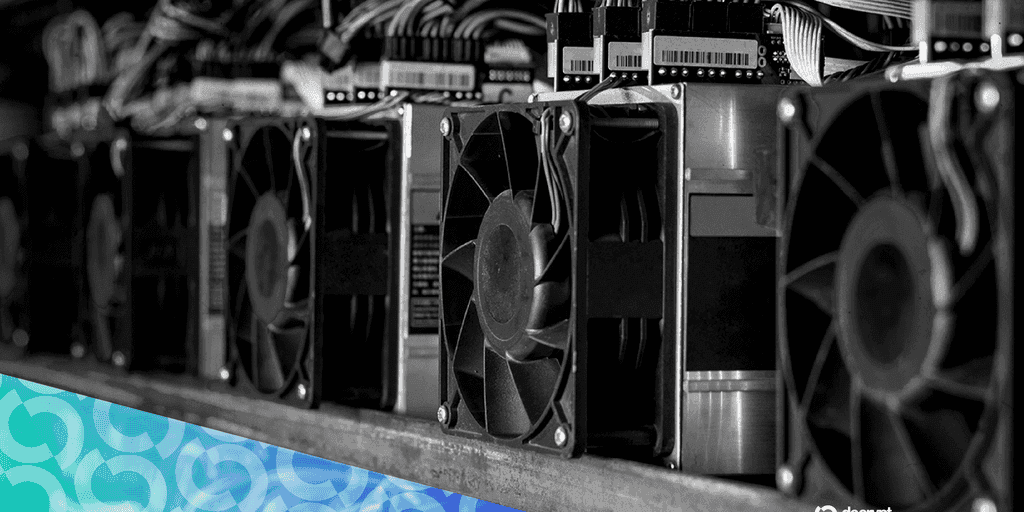
. Both Bitcoin mining and HPC require very high levels of compute power and are significant power consumers, allowing Cango to leverage its growing expertise in managing such complex operations3
.
Source: Decrypt
Capital Infusion Strengthens Balance Sheet for AI Expansion
Beyond the BTC sale, Cango announced that two of its directors have agreed to purchase $65 million worth of its stock to help fund AI pivot initiatives
3
. Non-executive Chairman Jin Xin and board member Chang-Wei Chiu, who serves as chief investment officer of Antalpha Ventures, are leading this capital infusion3
. Simultaneously, Cango closed a previously announced $10.5 million share sale that boosted Enduring Wealth Capital's stake in the company to 4.71% from 2.81%3
. The purchase involving Class B shares with super voting rights will give Enduring Wealth Capital 49.7% of Cango's voting rights, just shy of a 50% majority and ensuring its ability to significantly influence company decisions3
.Related Stories

Bitcoin Mining Operations Continue Amid Industry-Wide Challenges
Despite the aggressive push into AI, Cango remains committed to its Bitcoin mining operations, maintaining a focus on enhancing mining economics and seeking an optimal balance between hashrate scale and operational efficiency
1
. The firm mined nearly 500 BTC in January, demonstrating continued activity in the sector1
. CEO Paul Yu signaled this dual approach in January, stating that the company would selectively sell a portion of newly mined Bitcoin to support the expansion of its inference platform and other near-term growth initiatives, providing tactical flexibility to seize new business opportunities and manage liquidity with greater agility1
.This strategy differs from some competitors like Bitfarms, which have signaled a complete departure from mining
1
. Instead, Cango is diversifying revenue streams while maintaining its mining presence, a reflection of broader industry trends as post-halving economics tighten across the sector in 20252
. Research data shows hashprice falling to multi-year lows and network difficulty at record highs, with heavily compressed margins leaving many miners operating close to breakeven at prevailing prices2
.Industry Trend: Miners Pivot to Supplying Power and Data Center Capacity
Cango's decision reflects a broader shift among Bitcoin miners looking to leverage existing infrastructure for AI applications. Other large mining-linked groups are signing long-term contracts to supply GPU-based cloud capacity for artificial intelligence and HPC using power and data center infrastructure originally built for Bitcoin mining
2
. Bitcoin miner Iren, for example, agreed to a five-year, $9.7 billion deal with Microsoft in November 2025 to provide AI computing power from its Texas campus, committing hundreds of megawatts of capacity to contracted GPU hosting while continuing to operate one of the industry's largest Bitcoin mining fleets2
. These developments signal a fundamental shift in how mining companies view their assets and future growth opportunities, with infrastructure becoming as valuable as the cryptocurrencies they mine.References
Summarized by

Navi
Related Stories
Bitfarms Abandons Bitcoin Mining for AI Infrastructure in Major Industry Pivot
14 Nov 2025•Business and Economy
Bitdeer liquidates entire Bitcoin treasury to fund AI and high-performance computing expansion
23 Feb 2026•Business and Economy

CleanSpark Pivots to AI Infrastructure with $1.15B Fundraise and Texas Data Center Expansion
04 Nov 2025•Business and Economy

Recent Highlights
1
Tennessee Teens Sue Elon Musk's xAI Over Grok AI-Generated Child Abuse Images
Policy and Regulation

2
Pentagon designates Palantir Maven AI as core US military system in major defense shift
Technology

3
Supermicro Co-Founder Indicted in $2.5 Billion Nvidia AI Chip Smuggling Scheme to China
Policy and Regulation

Recent Highlights
Today's Top Stories












Your Daily Dose of Curated AI News
Don’t drown in AI news. We cut through the noise - filtering, ranking and summarizing the most important AI news, breakthroughs and research daily. Spend less time searching for the latest in AI and get straight to action.

