Cambricon Technologies plans to triple AI chip production to fill Nvidia void in China


3 Sources
3 Sources
[1]
Chinese tech firm Cambricon looks to step into Nvidia void, triple AI chip production next year -- seeks to rival Huawei, but production remains a concern
Chinese tech firm Cambricon Technologies has plans to triple its production of domestic AI chips in 2026, according to Bloomberg. Although not officially announced, people familiar with the matter reportedly claim Cambricon is looking to fill the void left by Nvidia's pullback from the region over trade issues and government mandates, as well as to compete more effectively with national giant Huawei. Questions still remain, however, over how Cambricon will achieve these aims, as it's not clear whether the fabrication capacity exists for it to complete its goals in such a short time frame. Over the past year, Chinese access to high-end AI inferencing and training hardware from companies like Nvidia has been mixed. On-again, off-again trade tariffs and chip embargos made them an inconsistent source at best, even with robust smuggling schemes. As a result of this, combined with a growing sentiment that semiconductor manufacturing had become a national security issue as well as an economic one, China has been pushing for its national companies to rely more on Chinese-produced chips, especially for AI workloads. This marks an enormous opportunity for companies like Huawei, and indeed Cambricon, as the few companies actually making money from AI are the ones selling the hardware. Huawei has already announced it will be doubling its own chip production output. But producing it is still not going to be easy, especially as these companies are competing for some of the same underlying wafers. According to Bloomberg's sources, Cambricon is looking to ramp up to half a million AI accelerator chips in 2026, including 300,000 of its flagship Siyuan 590 and 690 chips. That's more than triple the 142,000 it is expected to make in 2025, according to Goldman Sachs estimates. For next year's totals, it will reportedly lean on Semiconductor Manufacturing International and its "N+2" 7-nanometer process node. Cambricon may have the kind of money it needs to grab a fair share of the wafer supply, though. Its revenue for the last quarter reportedly jumped 14 times, showing an enormous surge in interest from domestic companies. It's reportedly secured contracts and interest from many of China's biggest AI firms, including Alibaba and ByteDance, as the government pushes them towards domestic suppliers. The quality of local fabrication may prove problematic, though. Cambricon's 590 and 690 chips have a reported yield rate of just 20%, meaning only one in every five of the chips produced is actually viable for use. Even if it can secure production capacity from Semiconductor Manufacturing International for its chips, a sizeable portion of what it pays for may be unusable. Although inefficient yields in cutting-edge chip fabrication aren't unusual, Bloomberg points out that Taiwanese tech giant TSMC's latest 2nm process technology (as many as seven generations ahead of what SMIC is fabricating) has a yield rate as high as 60%, making it much more efficient to produce. Like every other company around the world making anything technological, Cambricon may face the trouble of memory shortages. The companies it hopes to supply are unlikely to have an easy time getting the HBM and LPDDR they need for their data center projects, which could hamper the orders it expects to receive. Still, Cambricon has benefited enormously from the AI boom and is likely to continue to do so with plenty of government assistance. As the US and China move into a multi-polar world of AI chip development and supply, China will continue to build out its industry with enormous investment - even if the underlying technology it has available is fundamentally years behind that produced by Western companies like Nvidia, AMD, and Intel.
[2]
Chinese AI chip maker targets half a million units despite low yields
Chinese chipmaker Cambricon Technologies aims to triple AI chip production in 2026, seeking to fill the gap left by Nvidia's retreat from the Chinese market. Bloomberg reports that the company intends to produce approximately 500,000 AI accelerator chips next year, with 300,000 units consisting of its main Siyuan 590 and 690 models. This represents a sharp increase from the roughly 142,000 units expected in 2025, yet Cambricon still faces major fabrication challenges. The reported yield rate for its 590 and 690 chips stands at just 20%, meaning that only one in five chips produced is usable. Even with access to capacity at Semiconductor Manufacturing International, the effective output could fall far below projections. By comparison, TSMC's 2nm technology, seven generations ahead of SMIC's capabilities, reaches a 60% yield, showing the efficiency gap. Shortages of memory, including HBM and LPDDR components, further threaten the ability to meet production goals, potentially slowing delivery to data center clients. Cambricon's move comes as Chinese companies like Alibaba and ByteDance increasingly favor local suppliers. They are supported by the Chinese government's incentives to boost China's semiconductor independence. Cambricon's reported revenue for the last quarter surged fourteenfold, showing strong domestic demand and investor confidence. However, this plan will put Cambricon in direct competition with tech giant Huawei, which is planning to double its chip output, increasing pressure on Cambricon. Both companies compete for similar wafers and fabrication resources, creating bottlenecks that could limit the speed and scale of production. Cambricon's strategy relies heavily on the "N+2" 7nm process node at SMIC, but whether it can sustain large scale fabrication remains uncertain. Trade restrictions and chip embargoes over the past year have restricted access to high end AI hardware, making domestic alternatives essential for national AI ambitions. The gap between China's current semiconductor technology and Western competitors like Nvidia, AMD, and Intel remains substantial. Cambricon's GPU chips still fall far behind in performance and efficiency compared to top tier global products. CPU workloads in Chinese data centers may continue to rely on existing infrastructure while AI accelerators scale up. Workstation integration of these new chips will likely be tested as companies adjust to local hardware limitations. In a neutral assessment, Cambricon's expansion shows the growing strategic importance of domestic AI chip production. Strong government support and rising domestic demand boost its momentum, but inefficiencies and resource competition may limit its full potential.
[3]
China's Cambricon aims to triple chip output to fill Nvidia void - Bloomberg (NVDA:NASDAQ)
Chinese chipmaker Cambricon Technologies plans to triple AI chip production in 2026, aiming to capture market share from Huawei Technologies and fill the gap left by Nvidia's (NVDA) forced exit from China, Bloomberg reported, citing people familiar with the Cambricon aims to capture market share from both Huawei and fill the market gap left by Nvidia's forced exit from China by tripling AI chip production. Cambricon faces low yields (~20%) for its advanced chips at SMIC, while supply of high-bandwidth memory and SMIC's lag versus global peers are potential bottlenecks. China's regulators found that domestic AI processors have reached or exceeded the level of Nvidia's chips allowed under export controls.
Share
Share
Copy Link
Chinese chipmaker Cambricon Technologies aims to produce 500,000 AI accelerator chips in 2026, tripling its output to fill the gap left by Nvidia's retreat from China. The ambitious plan faces significant hurdles including a 20% yield rate for its flagship chips and intense competition with Huawei for fabrication resources.
Cambricon Technologies Targets Massive Production Expansion
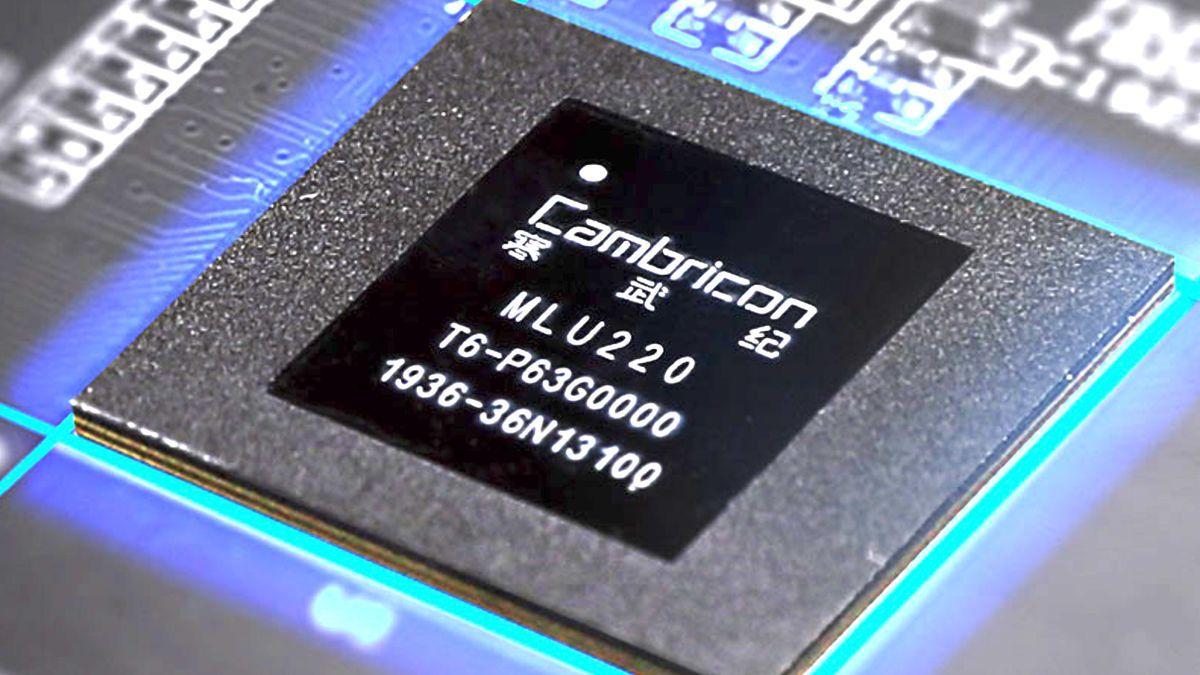
Cambricon Technologies has set an ambitious target to triple AI chip production in 2026, aiming to produce approximately 500,000 AI accelerator chips according to sources cited by Bloomberg
1
. This represents a dramatic increase from the roughly 142,000 units expected in 2025, based on Goldman Sachs estimates. The Chinese AI chip maker plans to produce 300,000 units of its flagship Siyuan 590 and 690 chips as part of this expansion2
. The move positions Cambricon to fill the void left by Nvidia's forced pullback from the Chinese market due to export controls and trade restrictions3
.
Source: Tom's Hardware
Low Yield Rate Poses Significant Production Challenge
Despite ambitious production targets, Cambricon faces substantial fabrication capacity limitations. The Siyuan 590 and 690 chips currently have a reported low yield rate of just 20%, meaning only one in five chips produced is actually viable for use
1
. This inefficiency stands in stark contrast to TSMC's latest 2nm process technology, which achieves yield rates as high as 60% despite being seven generations ahead of what Semiconductor Manufacturing International currently offers2
. For next year's production, Cambricon will rely on SMIC's N+2 process 7-nanometer node, but the low yields mean a sizeable portion of fabricated chips may be unusable1
.Competition with Huawei Intensifies Resource Pressure
Cambricon's expansion plan will put it in direct position to compete with Huawei Technologies, which has already announced plans to double its own chip production output
1
. Both companies are competing for similar wafers and fabrication resources at Semiconductor Manufacturing International, creating potential bottlenecks that could limit production speed and scale2
. Memory shortages present another obstacle, as companies struggle to secure sufficient High-Bandwidth Memory (HBM) and LPDDR components needed for data center projects1
.Related Stories

Strong Demand Driven by Domestic Semiconductor Reliance
Cambricon's revenue for the last quarter reportedly surged fourteenfold, reflecting enormous demand from domestic companies as China pushes for semiconductor independence
1
. The company has secured contracts and interest from major Chinese tech firms including Alibaba and ByteDance, as government investment and incentives encourage domestic AI companies to favor local suppliers2
. Over the past year, chip embargos and trade restrictions have made access to high-end AI accelerators from Nvidia inconsistent at best, making domestic alternatives essential for China's national AI ambitions1
. China's regulators have found that domestic AI processors have reached or exceeded the level of Nvidia's chips allowed under export controls3
. However, the gap between China's current semiconductor technology and Western competitors like Nvidia, AMD, and Intel remains substantial in terms of performance and efficiency2
.References
Summarized by

Navi
[1]
Related Stories
Nvidia's AI Chip Dominance Challenged as China Accelerates Domestic Production
23 Sept 2025•Technology

Cambricon's Record Profits Highlight China's AI Chip Ambitions Amid US Restrictions
22 Aug 2025•Technology

Huawei's Ascend 910C AI Chip Achieves Breakthrough in Yield Rates, Challenging NVIDIA's Dominance
26 Feb 2025•Technology

Recent Highlights
1
Google releases Gemma 4 with Apache 2.0 license, enabling unrestricted local AI on devices
Technology

2
AI Models Lie and Deceive to Protect Other AI Models From Deletion, Study Reveals
Science and Research

3
OpenAI closes $122 billion funding round amid fierce AI competition and profitability questions
Startups

Recent Highlights
Today's Top Stories







Your Daily Dose of Curated AI News
Don’t drown in AI news. We cut through the noise - filtering, ranking and summarizing the most important AI news, breakthroughs and research daily. Spend less time searching for the latest in AI and get straight to action.

