CES 2026 automotive AI and flying cars take center stage as industry enters new software era


2 Sources
2 Sources
[1]
I've Spent 18 Years Covering Autos at CES. Flying, Thinking, Autonomous Cars Are Closer Than Ever
CES 2026 will be my 18th time heading to Las Vegas to cover all of the cars and automotive technology at the world's largest tech show. After all this time, stepping into that convention center still feels like stepping into the future, and this year should be no exception. While the annual Consumer Electronics Show in January is sure to be full of surprises, my years of experience covering the techiest corners of the automotive industry have given me loads of insight into the big show. Read more: CNET Is Choosing the Best of CES 2026 Awards At my first CES, car tech was mostly aftermarket car audio equipment and portable GPS devices. Then in 2011, Ford unveiled its all-electric Ford Focus, kicking off an explosive decade of automotive debuts at CES. More and more automakers brought their biggest high-tech concept cars and new model debuts to the show and dominating North Hall at the Las Vegas Convention Center. Post-pandemic, I've noticed those traditional automakers largely shifting away from big vehicle debuts and refocusing their CES efforts on detailing the cutting-edge technologies inside and around their cars, like infotainment, autonomous driving and smart infrastructure. This shift has opened up new space (figuratively and literally) at the show for automotive outsiders, startups and mobility newcomers to thrive, and I've seen CES trending over the last five years toward exciting innovations in automotive artificial intelligence, EV startups, new robotics and air mobility concepts. Based on the trends I'm seeing in mobility technology this year and nearly two decades of experience covering the automotive industry, here are my best predictions for what mobility and car tech trends we'll see this year at CES 2026, from flying cars to thinking cars to cars that move in ways we've never seen before. Don't miss any of our unbiased tech content and lab-based reviews. Add CNET as a preferred Google source. At this point, it's basically a given that there will be at least one "flying car" showcased at CES 2026. Over the last decade, I've seen it all -- from startups looking to take ridesharing to the sky to established automakers experimenting with electric aircraft concepts. In 2024, the big news was Hyundai's air mobility wing, Supernal, debuting its flight-ready electric air taxi. The highlight of the 2025 show was Xpeng Land Carrier, a plug-in hybrid SUV from Chinese automaker XPeng AeroHT that could deploy a small electric vertical take-off and landing aircraft from its trunk. There's a reason I put those quotation marks around "flying cars." Most of the concepts we've seen so far aren't, in my opinion, actually cars. I've seen a lot of air taxis -- eVTOL aircraft billed as quieter, affordable and eco-friendly alternatives to helicopters -- but these require a pilot's license and air traffic control. Eventually, developers expect these aerial shuttles to be autonomously piloted. The rest of the concepts are ultralight electric aircraft that don't require a pilot's license, but (at least, here in the US) can't be flown over populated areas. They're essentially large drones that you can sit in for short recreational flights. Neither type fits my Jetsons-style definition of a personal flying car that I can fly or drive from my driveway to the office. Semantics aside, eVTOL developments have been coming fast and furious this year. Last March, Alef Aeronautics demonstrated a literal flying car. The Model Zero Ultralight was shown first driving on a road and then lifting off to fly over another stopped vehicle. The prototype appears to make significant roadworthiness (and perhaps crash-worthiness) compromises to gain the power of flight, but Alef is accepting preorders on the $300,000 flying car. Just a few weeks ago, the appropriately named Jetson air mobility company released a video racing its Jetson One eVTOL. That's just the tip of the iceberg; these are exciting times for fans of electric aviation. I expect there to be more eVTOL concepts and prototypes at CES 2026 than ever before. The most concrete news for urban Americans will likely pertain to air taxis and electric air shuttles, but I believe we'll see more than a few ultralight personal aircraft and more true road-to-air concepts that stick closer to the pure definition of a flying car that you can drive on the road (most likely from bold Chinese automakers like XPeng AeroHT). In addition to the vehicles themselves, I expect there will be a lot of talk about the infrastructure and support systems that will power networks of urban air taxis. Recently, Archer Aviation announced that it would purchase Hawthorne Airport in Los Angeles as a "strategic air taxi network hub and AI testbed." CES would be a great opportunity for Archer and other players in the urban air mobility space to announce partnerships with airlines, cities and airports, plans for air traffic control, or (hopefully) a roadmap heading toward public flights. About the only CES automotive prediction more certain than cars that fly are cars that think. Last year, we saw artificial intelligence and large language models working their way into everything from phones and PCs to refrigerators, robo-vacuums and cars. Last year, Volkswagen announced a partnership with Cerence to bring ChatGPT to the dashboard of its cars and electric SUVs, which I was able to try out at the show. Meanwhile, Honda's 0 concepts promised an AI future where your car is your best friend, learning your preferences and predicting your needs. (Where have I heard that before?) Mercedes-Benz announced a wild plan to bring IMAX movies to the dashboard of its vehicles, news that was overshadowed by new partnerships with Google and Microsoft to power its MBUX AI voice assistant. Since CES, I've spent time on the road with Benz's AI assistant, and it was hands-down the best, most natural voice command experience I've ever used, so I have high hopes for how this technology can develop, if done correctly. Automakers and software companies show no sign of lifting the automotive AI accelerator, so I expect to see even more deeply integrated automotive AI coming at CES 2026. The safest bet is on more AI voice assistants; more automakers will announce that they're bringing LLMs like ChatGPT or Google Gemini to vehicles in the very near future. It's the easiest way to join the AI party with the most observable "what's in it for me" for consumers, enabling drivers to go beyond simple hands-free calls and voice commands to complex voice-based tasks with natural, conversational language. However, I'm anticipating more unique applications of AI tech as software developers and automakers strive to stand out from the voice assistant crowd. Expect to see AI more deeply integrated into the core software stack of vehicles at CES, enabling drivers to interact with more than just their car's infotainment display. How about a car that uses AI to self-diagnose and can recommend maintenance based on actual conditions rather than just prescribed mileage? That's not the most exciting example, but the sky is the limit (for better or worse) as cars become more software-defined. Let's also not forget that AI software powers more advanced safety systems and autonomous driving. CES' West Hall will be chock-a-block with self-driving cars, driver assistance technologies, and the hardware and software that power them. Last year, we got a peek at the next generation of Waymo's autonomous taxis based on the Hyundai Ioniq 5 robotaxi and Zeekr RT, as well as an updated roadmap of cities where the driverless ride-hailing service is rolling out. In addition to passenger cars, John Deere showed off its second-generation self-driving tractor. The show floor also overflowed with demonstrations of lidar tech, next-generation machine vision hardware, ever more powerful automotive computing platforms with AI-crunching silicon, and much more. Perhaps my favorite demonstration of what's possible when automobile and robotics collide is the Hyundai-Mobis Mobion concept from CES 2024. This electric hatchback took the concept of four-wheel steering to the next level with the ability to articulate each wheel up to 90 degrees to pull off wild spins and lateral movement for the easiest U-turns and parallel parking you've ever seen. The current state of self-driving cars is an interesting one. The hardware required to make it happen is fairly mature, so expect to see modest improvements in radar, camera, sonar and lidar-sensing technology that promise to be smaller, more reliable and more affordable. The biggest leaps remaining are in the software powering the tech and the infrastructure, regulations and governance surrounding the vehicle -- all of which are more difficult to showcase in a trade show booth. I expect that means my colleagues and I will be spending a bit of time outside of the LVCC, hopefully taking rides in the next generation of autonomous cars and robotic taxis, as well as checking out new driver aid features and automotive user interfaces. I'm most excited about the potential for robotic mobility outside of the car. I'm talking about autonomous delivery robots, electric go-karts, self-balancing motorcycles and crazy alternative mobility concepts. Not too long ago, Hyundai Mobis showcased a wild walking vehicle that looked like something straight out of Star Wars; it's a longshot, but I'd love to see what insane modes of transportation companies come up with next at CES 2026.
[2]
The top 3 car trends to expect at CES 2026
The New Year is right around the corner, which also means we're already neck-deep in CES season. For 2026, the world's largest consumer electronics show returns to Las Vegas and is expected to lean heavily into robots and "living with AI" -- a direction car enthusiasts may not be thrilled about after last year's vehicle-heavy spotlight. That said, the biggest car manufacturers on the planet will still be there as the industry continues its full-speed pivot toward AI, much like everyone else. As with last year, expect far more software reveals than actual new car announcements, which -- depending on who you ask -- is either encouraging progress or a major letdown. So, here's everything you need to know about cars heading into CES 2026. At CES 2025, we covered the debut of the Sony-Honda joint venture's first EV, the AFEELA 1. While we didn't get to see it in motion, Sony-Honda Mobility Group did walk us through a demo of the car's infotainment system. For 2026, the company plans to return with what it's calling a "pre-production" version of the AFEELA 1, alongside an all-new concept vehicle. What's less clear is what Sony-Honda actually considers pre-production at this point. The version shown in 2025 already looked fairly road-ready, at least from a visual standpoint, making the distinction feel more semantic than substantive. According to the SHM Group, their EVs are expected to start production sometime in 2026 and will initially be available only in California. If there's one theme that will quietly dominate CES 2026, it's the continued shift toward software-defined vehicles. This isn't new, but it is becoming unavoidable. Automakers are less interested in showing off the vehicles themselves and more focused on proving their cars can evolve after they leave the factory. That means operating systems, over-the-air updates, and modular software stacks will be everywhere. Companies like P3 are using CES to highlight Android Automotive -- based platforms that let automakers roll out features, apps, and services long after a vehicle ships. For consumers, this could mean improved infotainment and enhanced features over time. For automakers, it's about speed, flexibility, and, ultimately, new revenue streams. The bigger shift is toward "agentic AI." For reference, these are AI systems that actively make decisions on behalf of the user, rather than just responding to commands. At CES 2026, expect to see AI utilized for route planning, energy management, and driver assistance systems that adapt in real-time rather than follow fixed rules. On the surface, it's a meaningful attempt at innovation, but it raises some questions about privacy and how much control drivers are willing to relinquish. If CES 2025 was about big promises, CES 2026 looks more like a reality check. Several analysts have noted that automakers are now in the less glamorous phase of turning previous announcements into actual products. That's just how the state of the auto industry is right now, especially given the development of the EV industry in 2025. Heading into CES 2026, the EV industry is in a noticeably more sober place than it was even a year ago. After years of aggressive timelines and all-in commitments, automakers are recalibrating as demand has proven softer and more uneven than expected. U.S. EV sales peaked in late 2025 ahead of the expiration of federal incentives, then dropped sharply, forcing companies like GM and Ford to pull back billions in planned EV spending while refocusing on hybrids, trucks, and SUVs that actually move volume. Automakers are now operating in what industry analysts have called an era of "EV realism," where electrification is still the long-term goal, but the path there is slower, more fragmented, and far less ideological. Expect CES 2026 to reflect that shift. That's why the show may feel quieter from a car-news perspective, and that's not necessarily a bad thing. CES has always been a supplier-driven event, and this year will likely highlight chips, sensors, robotics, and manufacturing tech that won't grab headlines.
Share
Share
Copy Link
CES 2026 marks a pivotal shift in automotive technology as the industry moves from flashy vehicle debuts to sophisticated software innovations. Flying cars, agentic AI systems, and software-defined vehicles will dominate the show floor, while automakers navigate the challenging transition from aggressive EV promises to practical implementation in an era of market realism.
Automotive AI and Software Take Command at CES 2026
CES 2026 signals a fundamental shift in how the automotive industry presents itself at the world's largest tech show. After nearly two decades of explosive vehicle debuts and concept cars dominating North Hall at the Las Vegas Convention Center, the focus has pivoted decisively toward the intelligence inside vehicles rather than the metal surrounding it
1
. This transformation reflects a broader automotive industry shift away from traditional product launches toward demonstrating cutting-edge technologies like infotainment systems, autonomous driving capabilities, and smart infrastructure1
.The most significant car trends emerging at CES 2026 center on software-defined vehicles, where automakers prove their products can evolve long after leaving the factory
2
. Companies are showcasing operating systems, over-the-air updates, and modular software stacks that enable continuous improvement and new revenue streams2
. This approach allows manufacturers to roll out features, apps, and services throughout a vehicle's lifespan, fundamentally changing the relationship between consumers and their cars.Agentic AI Systems Reshape Driver Experience
The emergence of agentic AI represents a leap beyond traditional voice assistant technology. These systems actively make decisions on behalf of users rather than simply responding to commands
2
. At CES 2026, expect demonstrations of automotive AI handling route planning, energy management, and adaptive driver assistance systems that respond in real-time rather than following fixed rules2
. This shift raises important questions about privacy and control that will shape the future of mobility for years to come.Sony-Honda Mobility returns with a pre-production version of the AFEELA 1, alongside an all-new concept vehicle
2
. The joint venture plans to begin production sometime in 2026, with initial availability limited to California2
. The AFEELA platform demonstrates how user interfaces and infotainment systems are becoming central selling points in modern vehicles.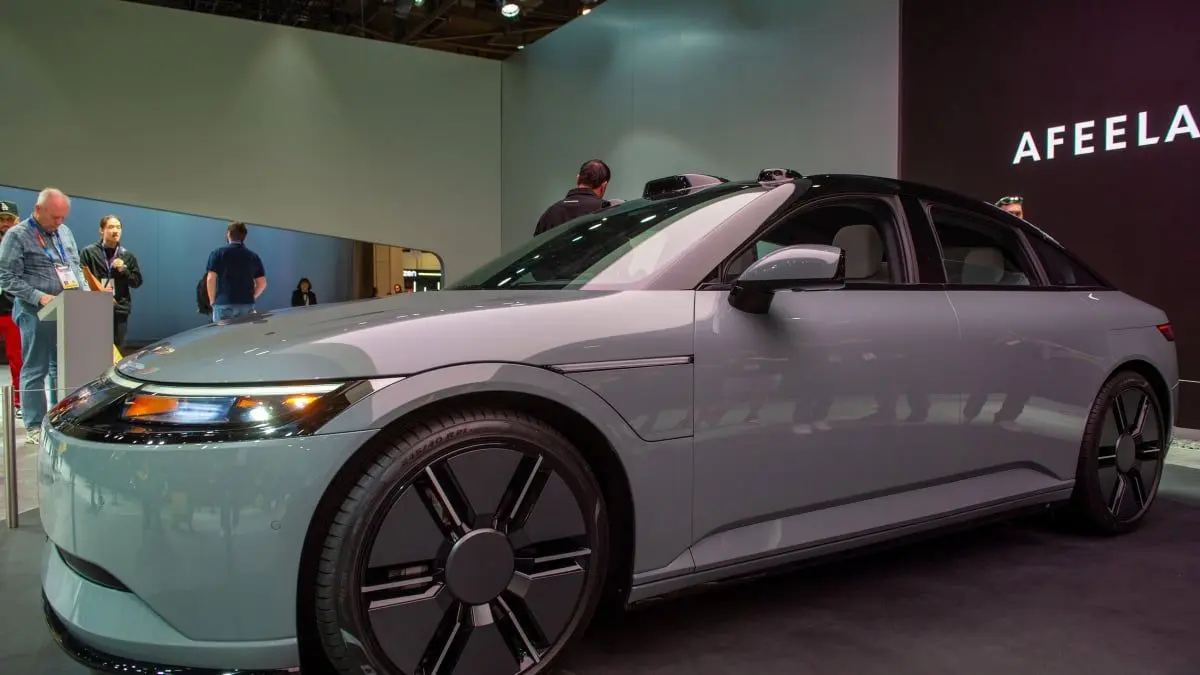
Source: Mashable
Flying Cars and eVTOL Aircraft Reach New Heights
CES 2026 will feature more eVTOL concepts and prototypes than ever before, marking significant progress in electric aviation
1
. While Hyundai's Supernal debuted its flight-ready electric air taxi in 2024, and XPeng AeroHT showcased a plug-in hybrid SUV that could deploy a small electric vertical take-off and landing aircraft from its trunk in 2025, this year promises even more ambitious demonstrations1
.
Source: CNET
Alef Aeronautics demonstrated its Model Zero Ultralight driving on a road before lifting off to fly over stopped vehicles, accepting preorders at $300,000
1
. Archer Aviation recently announced plans to purchase Hawthorne Airport in Los Angeles as a strategic air taxi network hub and AI testbed1
. CES 2026 provides an ideal platform for Archer and competitors to announce partnerships with airlines, cities, and airports, plus roadmaps toward public flights1
.Related Stories


EV Realism Replaces Aggressive Timelines
The automotive industry enters CES 2026 in a markedly different position than previous years. After aggressive timelines and all-in commitments, automakers are recalibrating as demand has proven softer and more uneven than expected
2
. U.S. EV sales peaked in late 2025 ahead of federal incentive expirations, then dropped sharply, forcing companies like GM and Ford to pull back billions in planned EV spending while refocusing on hybrids, trucks, and SUVs2
.This era of EV realism means electrification remains the long-term goal, but the path forward is slower, more fragmented, and less ideological
2
. CES 2026 will likely feel quieter from a vehicle announcement perspective, instead highlighting chips, sensors, robotics, and manufacturing technology that support the industry's gradual transformation2
. This shift opens space for automotive startups and mobility newcomers to showcase innovations in lidar tech and other enabling technologies that will define transportation's next chapter.References
Summarized by

Navi
[1]
[2]
Related Stories
Recent Highlights
1
Google releases Gemma 4 with Apache 2.0 license, enabling unrestricted local AI on devices
Technology

2
AI Models Lie and Deceive to Protect Other AI Models From Deletion, Study Reveals
Science and Research

3
OpenAI closes $122 billion funding round amid fierce AI competition and profitability questions
Startups

Recent Highlights
Today's Top Stories







Your Daily Dose of Curated AI News
Don’t drown in AI news. We cut through the noise - filtering, ranking and summarizing the most important AI news, breakthroughs and research daily. Spend less time searching for the latest in AI and get straight to action.

