10 Sources
10 Sources
[1]
Musk makes the Macrohard joke again
The idea being that fleets of AI agents could emulate the 'function of entire companies' Elon Musk wheeled out his "Macrohard" dad joke again in the form of a supposed fleet of "Digital Optimus" agents that he claims would be capable of "emulating the function of entire companies." "Macrohard or Digital Optimus is a joint xAI-Tesla project, coming as part of Tesla's investment agreement with xAI," the billionaire wrote on X (formerly Twitter). "Grok is the master conductor/navigator with deep understanding of the world to direct digital Optimus, which is processing and actioning the past 5 secs of real-time computer screen video and keyboard/mouse actions." "Grok is like a much more advanced and sophisticated version of turn-by-turn navigation software." Microsoft's boss previously boasted that AI generates more than 30 percent of the company's code. Microsoft has also suffered several quality issues in recent months. If AI is already writing a big chunk of Microsoft's software, simulating the company with Musk's Macrohard might not be entirely outlandish. Then again, Tesla's Full Self-Driving (FSD) has been linked to several well-publicized accidents. Driving Windows into a wall could be the logical next step. Musk has been banging the drum for Macrohard since last year. In August 2025, he posted a message urging readers to "join @xAI and help build a purely AI software company called Macrohard. "It's a tongue-in-cheek name, but the project is very real!" "In principle, given that software companies like Microsoft do not themselves manufacture any physical hardware, it should be possible to simulate them entirely with AI." Since Musk's August post, Tesla awarded him a package worth up to $1 trillion, though it hinges in part on a stratospheric rise in the company's market cap. Earlier this year, Tesla reported a decline in revenue while Musk talked up Optimus possibilities. As for the xAI-Tesla project, Musk said: "This will run very competitively on the super low cost Tesla AI4 ($650) paired with relatively frugal use of the much more expensive xAI Nvidia hardware. And it will be the only real-time smart AI system. This is a big deal."
[2]
Musk unveils joint Tesla-xAI project 'Macrohard', eyes software disruption
March 11 (Reuters) - Elon Musk on Wednesday unveiled a joint project between Tesla (TSLA.O), opens new tab and his artificial intelligence startup xAI, which he called "Macrohard" or "Digital Optimus" and said that it was a system capable of emulating the functions of software companies. In a post on his social media platform X, Musk said the project pairs xAI's Grok large language model, acting as a high-level "navigator," with a Tesla-developed AI agent that processes real-time computer screen video and keyboard and mouse actions. The launch of Anthropic's Claude Cowork, which can perform a range of computer-based tasks autonomously, has already spooked software investors who fear that agentic AI can disrupt established business models. Musk's xAI was previously building Macrohard as an AI project that would allow developers to simulate software creations by companies like Microsoft. "In principle, it is capable of emulating the function of entire companies. That is why the program is called MACROHARD, a funny reference to Microsoft," Musk said on Wednesday. Musk said the system would run on Tesla's in-house AI4 chip paired with xAI's Nvidia-based (NVDA.O), opens new tab server hardware, describing the combination as cost-competitive. The announcement comes after Tesla entered into an agreement in January to invest about $2 billion to acquire shares in xAI. SpaceX acquired xAI last month in an all-stock deal that valued the rocket maker at $1 trillion and xAI at $250 billion, coming ahead of a potential blockbuster initial public offering for SpaceX later this year, with Musk citing orbital data centers as a main reason for the merger. Records from the U.S. Patent and Trademark Office show that xAI filed a trademark application for "Macrohard" in August 2025. Reporting by Akash Sriram in Bengaluru; Editing by Shinjini Ganguli Our Standards: The Thomson Reuters Trust Principles., opens new tab * Suggested Topics: * Artificial Intelligence * ADAS, AV & Safety * Software-Defined Vehicle * Manufacturing * Sustainable & EV Supply Chain
[3]
Musk unveils joint Tesla-xAI project 'Macrohard,' eyes software disruption
Elon Musk on Wednesday unveiled a joint project between Tesla and his artificial intelligence startup xAI, which he called "Macrohard" or "Digital Optimus" and said that it was a system capable of emulating the functions of software companies. In a post on his social media platform X, Musk said the project pairs xAI's Grok large language model, acting as a high-level "navigator," with a Tesla-developed AI agent that processes real-time computer screen video and keyboard and mouse actions. The launch of Anthropic's Claude Cowork, which can perform a range of computer-based tasks autonomously, has already spooked software investors who fear that agentic AI can disrupt established business models. Musk's xAI was previously building Macrohard as an AI project that would allow developers to simulate software creations by companies like Microsoft. "In principle, it is capable of emulating the function of entire companies. That is why the program is called MACROHARD, a funny reference to Microsoft," Musk said on Wednesday. Musk said the system would run on Tesla's in-house AI4 chip paired with xAI's Nvidia-based server hardware, describing the combination as cost-competitive. The announcement comes after Tesla entered into an agreement in January to invest about $2 billion to acquire shares in xAI. SpaceX acquired xAI last month in an all-stock deal that valued the rocket maker at $1 trillion and xAI at $250 billion, coming ahead of a potential blockbuster initial public offering for SpaceX later this year, with Musk citing orbital data centers as a main reason for the merger. Records from the U.S. Patent and Trademark Office show that xAI filed a trademark application for "Macrohard" in August 2025.
[4]
Musk confirms xAI-Tesla joint 'Digital Optimus' project -- after saying Tesla didn't need xAI
Elon Musk announced today that "Digital Optimus", also called "Macrohard", is a joint xAI-Tesla project that will use xAI's Grok large language model to power a computer-controlling AI agent. The project is part of Tesla's $2 billion investment agreement with xAI. The announcement directly contradicts Musk's own September 2024 statement that Tesla had "no need to license anything from xAI", and it lands while Tesla shareholders are actively suing him for breach of fiduciary duty over the founding of xAI in the first place. In a post on X this morning, Musk described Digital Optimus as a system where xAI's Grok serves as "the master conductor/navigator with deep understanding of the world" while a Tesla-built AI processes real-time screen video and keyboard/mouse actions from the past five seconds. Musk compared the architecture to Daniel Kahneman's dual-process theory: Tesla's component handles fast, instinctive reactions (System 1) while Grok handles higher-level reasoning (System 2). Musk claimed the system would run on Tesla's AI4 chip, which he priced at $650, paired with xAI's Nvidia-based cloud hardware. He called it "the only real-time smart AI system" and said it could, in principle, "emulate the function of entire companies." He named the project "Macrohard", a jab at Microsoft, and declared that "no other company can yet do this." Here's the problem: Musk spent much of 2024 insisting that Tesla and xAI operated in completely separate domains and that Tesla had no use for xAI's technology. In September 2024, responding to a Wall Street Journal report that Tesla was in discussions to share revenue with xAI in exchange for using its AI models, Musk wrote on X: "There is no need to license anything from xAI." He went on to explain that Tesla's real-world AI system was "vastly larger" than any large language model and that xAI's models were too large to run on Tesla's vehicle inference computers. That narrative served a specific purpose at the time. Tesla shareholders had just filed a lawsuit accusing Musk of breach of fiduciary duty for founding xAI, a private AI company that directly competes with Tesla's own AI efforts. By claiming the two companies had no overlap, Musk was effectively arguing there was no conflict of interest. Today's announcement obliterates that defense. Musk is now explicitly describing a joint project where xAI's Grok is the "brain" directing Tesla's hardware. The two companies aren't just overlapping, they're building a product together. It's a fair question to ask: why couldn't all this be built within Tesla? The shareholder lawsuit, filed in June 2024 by the Cleveland Bakers and Teamsters Pension Fund in Delaware Chancery Court, alleges that Musk diverted Tesla's AI talent, Nvidia GPU shipments, and strategic focus to xAI for his personal benefit. The plaintiffs want the court to force Musk to hand over his xAI stake to Tesla. The case has only gotten stronger over time. In January 2026, xAI executives told investors their goal was to "develop self-sufficient AI to power robots like Tesla's Optimus" -- effectively confirming that the technology Musk built outside Tesla was always intended for Tesla's flagship AI product. Then, later in January, Tesla disclosed it had invested $2 billion in xAI's Series E round, which valued the AI startup at $230 billion. Tesla shareholders are now funding the very company that the lawsuit argues Musk had no right to create outside of Tesla. In February, SpaceX acquired xAI in an all-stock deal valuing the combined entity at roughly $1.25 trillion, with plans for an IPO later this year. Tesla's $2 billion investment became an indirect stake in SpaceX-xAI -- further entangling the companies while keeping the actual AI technology outside Tesla's control. The timeline tells a damning story. Musk pitched Tesla to investors as "the world's leading real-world AI and robotics company." He then founded xAI as a separate private venture, recruited Tesla AI engineers to staff it, redirected Nvidia chips that were ordered for Tesla to xAI's data centers, and told everyone the two companies had completely different missions. Now, with xAI burning through roughly $1 billion per month and needing to demonstrate value ahead of the SpaceX-xAI IPO, the narrative has conveniently shifted. Suddenly, xAI and Tesla are building products together, and Tesla's $2 billion investment is framed as the vehicle for this collaboration. Just last week, Musk claimed Tesla would "make AGI", yet today's announcement shows the actual AI reasoning layer lives at xAI, not Tesla. If Digital Optimus requires Grok to function, then Tesla is providing the hardware shell while Musk's private company provides the intelligence. That's not Tesla making AGI. That's Tesla being a customer of xAI. This announcement is a gift to the shareholders suing Musk. For nearly two years, the central legal question has been whether Musk created a competing company that should have been built inside Tesla. Musk's defense rested on the claim that xAI and Tesla serve fundamentally different purposes. Today, he personally destroyed that argument by announcing a joint product where xAI's Grok is literally the brain directing Tesla's AI hardware. We also can't ignore the pattern here. Musk told Tesla shareholders their company was an AI leader. He then built the actual AI outside Tesla, in a company he personally controls. He's now forcing Tesla to pay $2 billion to access technology that arguably should have been developed in-house, using shareholder money to buy back what was taken from them. The "Macrohard" name and the grandiose claims about emulating entire companies are classic Musk hype. But the legal implications are very real. Every time Musk publicly ties xAI and Tesla closer together, he makes the plaintiffs' case stronger. If xAI's technology is essential for Tesla's Optimus ambitions, then Musk had a fiduciary duty to build it at Tesla, not at a private company where he captures the upside personally. We'll see if the Delaware court agrees, but Musk is not making his lawyers' jobs any easier today.
[5]
Musk unveils joint Tesla-xAI project 'Macrohard', eyes software disruption - The Economic Times
Musk's xAI was previously building Macrohard as an AI project that would allow developers to simulate software creations by companies like Microsoft. Musk said the system would run on Tesla's in-house AI4 chip paired with xAI's Nvidia-based server hardware, describing the combination as cost-competitive.- Elon Musk on Wednesday unveiled a joint project between Tesla and his artificial intelligence startup xAI, which he called "Macrohard" or "Digital Optimus" and said that it was a system capable of emulating the functions of software companies. In a post on his social media platform X, Musk said the project pairs xAI's Grok large language model, acting as a high-level "navigator," with a Tesla-developed AI agent that processes real-time computer screen video and keyboard and mouse actions. The launch of Anthropic's Claude Cowork, which can perform a range of computer-based tasks autonomously, has already spooked software investors who fear that agentic AI can disrupt established business models. Musk's xAI was previously building Macrohard as an AI project that would allow developers to simulate software creations by companies like Microsoft. "In principle, it is capable of emulating the function of entire companies. That is why the program is called MACROHARD, a funny reference to Microsoft," Musk said on Wednesday. Musk said the system would run on Tesla's in-house AI4 chip paired with xAI's Nvidia-based server hardware, describing the combination as cost-competitive. The announcement comes after Tesla entered into an agreement in January to invest about $2 billion to acquire shares in xAI. SpaceX acquired xAI last month in an all-stock deal that valued the rocket maker at $1 trillion and xAI at $250 billion, coming ahead of a potential blockbuster initial public offering for SpaceX later this year, with Musk citing orbital data centers as a main reason for the merger. Records from the U.S. Patent and Trademark Office show that xAI filed a trademark application for "Macrohard" in August 2025.
[6]
Elon Musk has Announced Macrohard, its Funny and Scary at the Same Time
Macrohard is the opposite of the name Microsoft, one of the most valuable tech firms in the planet. Elon Musk, the man with the richest valuation in Earth, on Thursday announced a new project called Macrohard. Now, if you pay attention to it, this name seems super strategic, and has a fun element. Macrohard is the opposite of the name Microsoft, one of the most valuable tech firms in the planet. This project is actually a collaboration between Tesla and xAI, both owned and run by Musk. Macrohard is also being called Digital Optimus and the purpose of it will be to emulate the functions of entire companies, potentially replacing all of them and reducing costs for enterprises. Read More - iQOO Z11x 5G Launched in India: Price and Specifications A Tesla developed AI agent is used here which can process data in real time so that whatever is going on the screen of the user can be understood and mouse actions are also interpreted, all of which is powered by Grok, the large language model from xAI. Claude Cowork was also recently launched by Anthropic and it can perform a wide range of tasks for the users locally on their desktop. This has already made a lot of noise in the market, and thus, this innovation from Musk will be closely monitored by the industries as well as the government.
[7]
Elon Musk's Plan To 'Simulate Microsoft' Crumbles -- And Tesla Is Picking Up The Pieces - Tesla (NASDAQ:TSLA)
Elon Musk pitched Macrohard, the AI agent project by xAI, as an AI-only software company that could replicate Microsoft Corp (NASDAQ:MSFT) at scale. Seven months later, the project appears to be dead. What Happened At xAI A Business Insider report published Wednesday revealed that Macrohard has stalled following leadership departures, a hiring freeze and the suspension of a data project that employed 600 contractors. More than 20 engineers previously assigned to Macrohard have reportedly left the company or moved to other teams. In February, Musk announced that Toby Pohlen would oversee the project. He left 16 days later. The problems extend well beyond one project. Six of xAI's 12 original co-founders have now left. Former staffers have described xAI as stuck in a "catch-up" phase against OpenAI and Anthropic. Musk last October called Macrohard "profoundly impactful at an immense scale." Now the project has no leader, no job postings and no visible momentum. Why It Matters For TSLA Tesla Inc (NASDAQ:TSLA) appears to be picking up the pieces. The company is reportedly building "Digital Optimus," an AI agent that operates computers autonomously by processing a continuous data stream, not static screenshots like Macrohard. The approach mirrors Tesla's Full Self-Driving system, and some of Macrohard's computing resources have reportedly shifted to Tesla's Autopilot team. Tesla disclosed a $2 billion investment in xAI in its Q4 earnings as part of Master Plan Part IV. That money is now effectively a stake in the combined SpaceX-xAI entity after the February merger. The question is whether Digital Optimus follows the same trajectory. Tesla has already lost its robotaxi backend director and Cybercab program manager in recent weeks. What Do Prediction Markets Think Traders give Grok 5 a 65% chance of shipping by June 30, but just 4% odds it arrives by end of March. On the best AI model by end of June contract, xAI sits at 8%, far behind Anthropic at 40% and Google at 37%. Half the founding team is gone, Macrohard is stalled, and bettors don't see Grok closing the gap anytime soon. Polymarket gives 71% odds that Musk becomes the first trillionaire before 2027. But the product milestones tell a different story. Traders give just 33% odds on a Cybercab selling for under $30k this year and only 18% on Optimus reaching consumers by year-end. Musk's net worth may keep climbing on the IPO wave, but the product roadmap across xAI and Tesla keeps slipping. Macrohard is the latest entry on that list. Image: Shutterstock Market News and Data brought to you by Benzinga APIs To add Benzinga News as your preferred source on Google, click here.
[8]
Elon Musk Unveils 'Macrohard' AI To Run Entire Companies
Elon Musk's Macrohard: Tesla-xAI Project Aims To Build AI That Can Emulate Entire Companies Elon Musk has revealed fresh details about 'Macrohard', also referred to as 'Digital Optimus'. He describes it as a joint artificial intelligence initiative between Tesla and xAI that aims to replicate the functions of entire companies. The billionaire first floated the idea in August last year to build AI systems capable of performing end-to-end corporate workflows traditionally handled by large technology firms. Musk has announced that the project has formally evolved into a collaboration between and xAI, following Tesla's agreement to invest roughly $2 billion in the AI startup. The announcement signals deeper operational integration between Musk's electric-vehicle business and his artificial intelligence ambitions.
[9]
Musk unveils joint Tesla-xAI project 'Macrohard', eyes software disruption
March 11 (Reuters) - Elon Musk on Wednesday unveiled a joint project between Tesla and his artificial intelligence startup xAI, which he called "Macrohard" or "Digital Optimus" and said that it was a system capable of emulating the functions of software companies. In a post on his social media platform X, Musk said the project pairs xAI's Grok large language model, acting as a high-level "navigator," with a Tesla-developed AI agent that processes real-time computer screen video and keyboard and mouse actions. The launch of Anthropic's Claude Cowork, which can perform a range of computer-based tasks autonomously, has already spooked software investors who fear that agentic AI can disrupt established business models. Musk's xAI was previously building Macrohard as an AI project that would allow developers to simulate software creations by companies like Microsoft. "In principle, it is capable of emulating the function of entire companies. That is why the program is called MACROHARD, a funny reference to Microsoft," Musk said on Wednesday. Musk said the system would run on Tesla's in-house AI4 chip paired with xAI's Nvidia-based server hardware, describing the combination as cost-competitive. The announcement comes after Tesla entered into an agreement in January to invest about $2 billion to acquire shares in xAI. SpaceX acquired xAI last month in an all-stock deal that valued the rocket maker at $1 trillion and xAI at $250 billion, coming ahead of a potential blockbuster initial public offering for SpaceX later this year, with Musk citing orbital data centers as a main reason for the merger. Records from the U.S. Patent and Trademark Office show that xAI filed a trademark application for "Macrohard" in August 2025. (Reporting by Akash Sriram in Bengaluru; Editing by Shinjini Ganguli)
[10]
Elon Musk's crazy idea to turn Grok into an AI agent for your PC
I've covered a lot of Elon Musk announcements, and I've learned to apply a fairly aggressive discount rate to the claims. But his tweet about a joint xAI-Tesla project called Macrohard - also going by the name Digital Optimus - is worth slowing down on, because the architecture he's describing is genuinely interesting, even if the execution is unproven. Also read: Elon Musk's R-rated rule for Grok Imagine: A disaster waiting to happen? The basic idea is this: two AI systems working in tandem on your computer. Digital Optimus watches your screen continuously, processing the last five seconds of video and tracking your keyboard and mouse activity, acting as the fast, reactive layer and doing things. Grok sits above it as the intelligent conductor, understanding context, making decisions, and directing Digital Optimus on what to do next. Musk frames this using the System 1/System 2 model from cognitive psychology, fast instinctive action paired with slow deliberate reasoning. It's a genuinely clever framing, and it maps reasonably well onto what he's describing technically. Also read: Elon Musk's AI chatbot Grok sparks outrage with racist, offensive replies What makes this worth taking seriously isn't the AI architecture, it's the cost structure. Musk claims the system runs competitively on Tesla's AI4 chip, which retails at $650, with relatively light use of the far more expensive xAI Nvidia hardware. If that's true, it changes the economics of deploying this kind of agentic system dramatically. Most serious AI infrastructure today requires hardware investment that puts it out of reach for individuals and small businesses. A capable computer-use agent running primarily on a $650 chip is a different proposition entirely. The competitive landscape context matters here too. Anthropic's Computer Use, Google's Project Mariner, and OpenAI's Operator are all working on similar agentic capabilities. Musk's claim that "no other company can yet do this" is doing a lot of work, and I'd treat it with appropriate skepticism. The real-time continuous screen processing is a specific design choice that distinguishes Macrohard from some rivals, but the field is moving fast enough that exclusive advantages tend to be measured in months, not years. Musk named the project Macrohard as a jab at Microsoft, implying the system could eventually emulate the function of entire companies. That may be the most distant claim of all. But the underlying architecture, a cheap reactive agent directed by a powerful reasoning model, is the kind of idea that sounds crazy until it doesn't.
Share
Share
Copy Link
Elon Musk announced Macrohard, a joint Tesla-xAI project combining Grok's large language model with Tesla's Digital Optimus agent to simulate software company functions. The system runs on Tesla's $650 AI4 chip paired with xAI's Nvidia hardware. But the announcement contradicts Musk's 2024 claims that Tesla had no need for xAI technology, intensifying an ongoing shareholder lawsuit over conflict of interest.
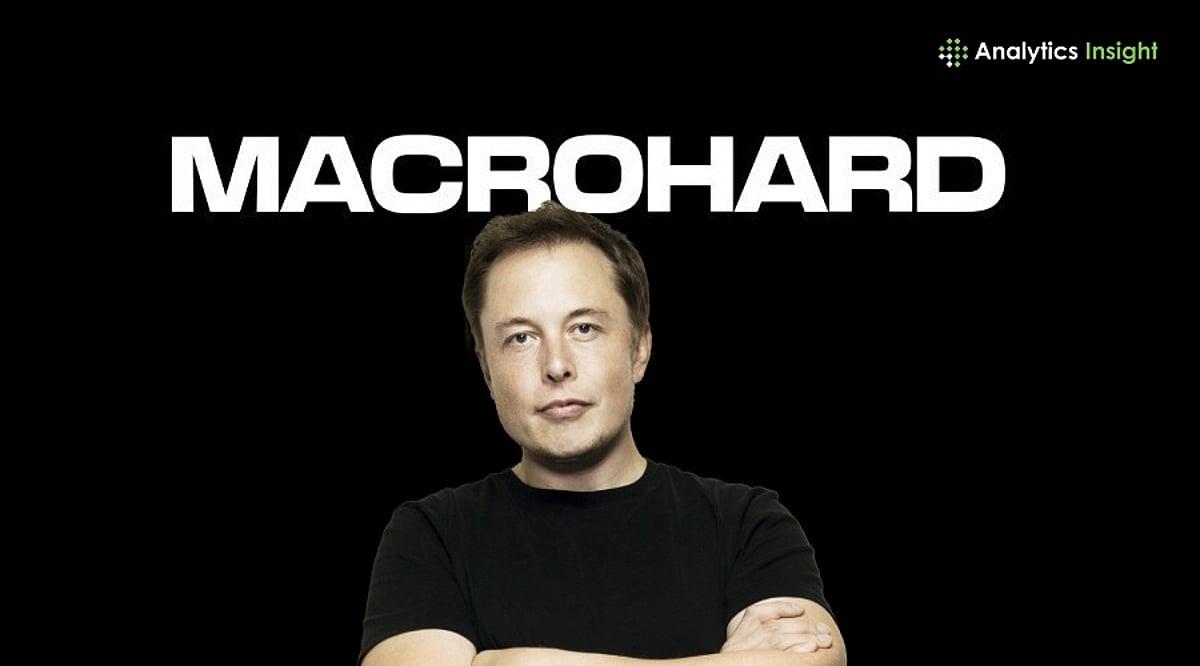
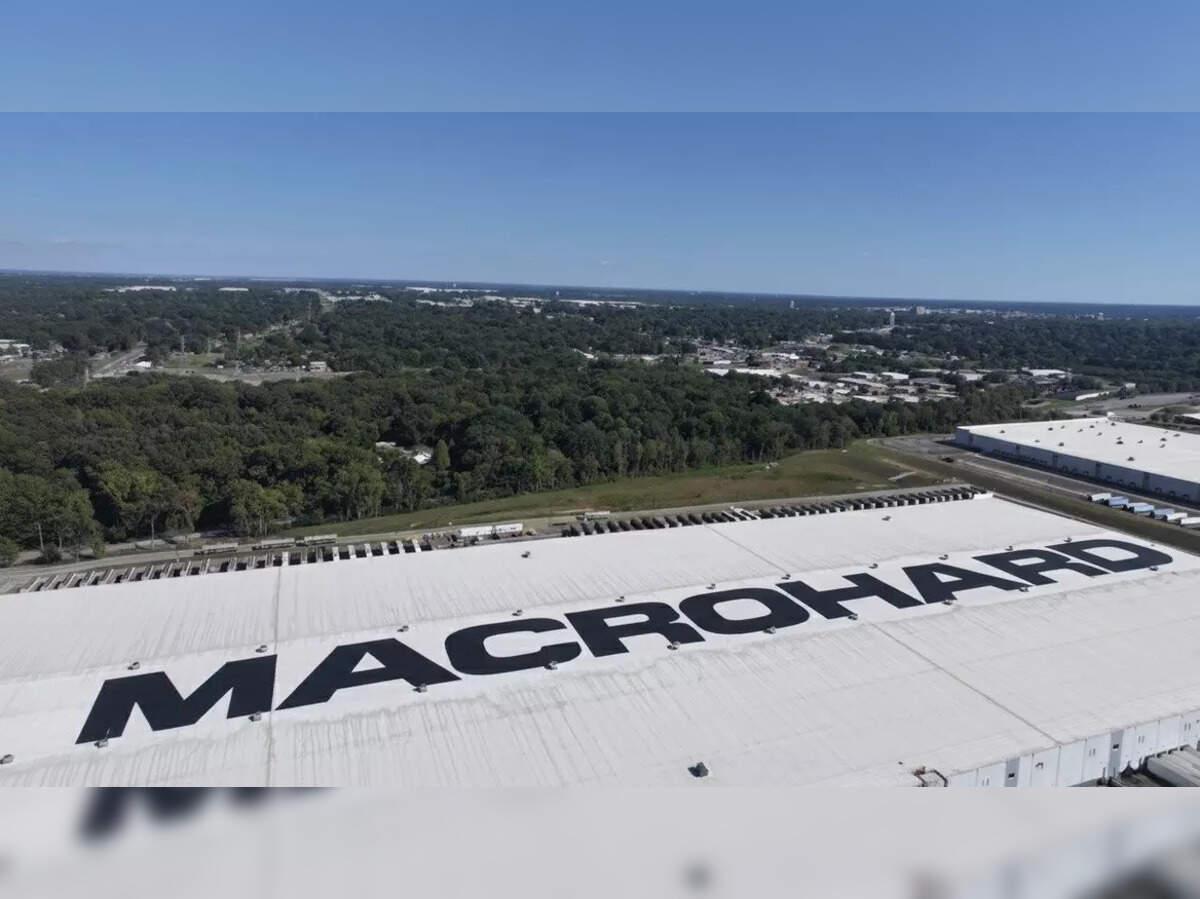
Elon Musk unveiled Macrohard on Wednesday, describing it as a joint Tesla-xAI project capable of emulating the functions of entire software companies
1
2
.
Source: Analytics Insight
Also called Digital Optimus, the system pairs xAI's Grok large language model with a Tesla-developed AI agent that processes real-time computer screen video and keyboard and mouse actions
3
. Musk described Grok as "the master conductor/navigator with deep understanding of the world" that directs Digital Optimus, which handles the past five seconds of screen activity1
. The billionaire compared this architecture to a sophisticated navigation system, where Grok provides high-level reasoning while Tesla's component handles fast, instinctive reactions4
.
Source: Digit
The project's name references Microsoft, with Musk stating that "in principle, given that software companies like Microsoft do not themselves manufacture any physical hardware, it should be possible to simulate them entirely with AI"
1
. Records from the U.S. Patent and Trademark Office show that xAI filed a trademark application for Macrohard in August 20252
5
.
Source: ET
Musk claimed the system would run on Tesla's in-house AI4 chip priced at $650, paired with xAI's Nvidia-based server hardware
1
2
. He described this combination as "cost-competitive" and emphasized that it would enable "relatively frugal use of the much more expensive xAI Nvidia hardware"1
. The entrepreneur asserted that "no other company can yet do this" and called it "the only real-time smart AI system," adding that "this is a big deal"1
4
.The announcement comes as agentic AI threatens to disrupt established business models across the software industry
2
5
. The launch of Anthropic's Claude Cowork, which can perform a range of computer-based tasks autonomously, has already spooked software investors who fear that AI agents could replace traditional software products2
3
.The announcement directly contradicts Musk's September 2024 statement that Tesla had "no need to license anything from xAI"
4
. At that time, Musk insisted that Tesla's real-world AI system was "vastly larger" than any large language model and that the two companies operated in completely separate domains4
. This narrative served to defend against a shareholder lawsuit filed by the Cleveland Bakers and Teamsters Pension Fund in June 2024, which alleges that Musk breached his fiduciary duty by founding xAI and diverting Tesla's AI talent, Nvidia GPU shipments, and strategic focus to the private startup4
.The announcement comes after Tesla entered into an agreement in January to invest about $2 billion to acquire shares in xAI
2
3
. In February, SpaceX acquired xAI in an all-stock deal that valued the rocket maker at $1 trillion and xAI at $250 billion, ahead of a potential blockbuster initial public offering for SpaceX later this year2
3
. Musk cited orbital data centers as a main reason for the merger2
.Related Stories
The revelation that Macrohard is "part of Tesla's investment agreement with xAI" raises questions about whether Tesla is developing AGI internally or simply serving as a customer for xAI's technology
1
4
. Just last week, Musk claimed Tesla would "make AGI," yet today's announcement shows the actual AI reasoning layer lives at xAI, not Tesla4
. If Digital Optimus requires Grok to function, then Tesla provides the hardware shell while Musk's private company provides the intelligence4
.Microsoft's boss previously boasted that AI generates more than 30 percent of the company's code, though Microsoft has also suffered several quality issues in recent months
1
. Tesla's Full Self-Driving (FSD) has been linked to several well-publicized accidents, raising concerns about the reliability of Musk's AI systems1
. Earlier this year, Tesla reported a decline in revenue while Musk talked up Optimus possibilities1
. With xAI burning through roughly $1 billion per month and needing to demonstrate value ahead of the SpaceX-xAI IPO, the timing of this announcement appears strategic4
.Summarized by
Navi
[1]
[4]
23 Aug 2025•Technology

13 Oct 2025•Technology

11 Feb 2026•Technology

1
Technology

2
Science and Research

3
Startups