ChatGPT Traffic Drops 22% as Gemini Gains Ground in Escalating AI Competition


5 Sources
5 Sources
[1]
ChatGPT vs Gemini Traffic Trend in 2025 Shows Why OpenAI Raised Code Red
While the AI race continues in Silicon Valley, ChatGPT and Gemini have emerged as two AI platforms which are a cut above the rest. OpenAI's AI chatbot was a pioneer in the space, and had the advantage of establishing itself in the market before anyone else had a chance. On the other hand, things went poorly for Google in the initial days (the Bard fiasco and the image generation controversy), but Gemini has also made a strong recovery. In 2025, website traffic data highlights that Google's AI is now eating into ChatGPT, likely owing to the former's strong distribution network. ChatGPT vs Gemini Traffic Trend Spell a Potential Disaster for OpenAI In a post on X (formerly known as Twitter), Similarweb shared the "generative AI website worldwide traffic share" data. The web traffic analytics platform revealed how the footfall for various AI websites changed over the course of the last 12 months, or the entirety of 2025. One of the biggest takeaways was the decline of ChatGPT's traffic share, which dropped from 86.7 percent to 64.5 percent. During the same period, Gemini made quick headway, jumping from a meagre 5.7 percent to 21.5 percent share of the global traffic. Apart from them, Grok and DeepSeek, which were not even on the map before 2025, managed to capture 3.7 percent and 3.4 percent of the traffic share, respectively. Anthropic's Claude saw a marginal growth of 0.5 percent, whereas Microsoft's Copilot was near-stagnant with a drop of 0.4 percent. However, these numbers only matters for OpenAI and Google, since both companies massively push their AI websites. All other platforms' primary access is elsewhere -- Grok has strong integration with X, Claude primarily operates as an app, and Copilot is integrated across Windows and Microsoft 365 suite of products. OpenAI losing nearly 20 percent of its web traffic in 12 months could be one of the reasons why CEO Sam Altman reportedly declared a code red to the employees in November 2025, keeping any non-ChatGPT projects on an indefinite halt. The declaration was made right after Google released Gemini 3 Pro, which significantly outperformed GPT-5.1 on most benchmarks. Later in December, OpenAI released GPT-5.2 AI model to even the playing field. The concern is understandable. OpenAI cannot compete with Google's enormous resources and the massive distribution network it has built across its Workspace apps, Android, Search. The website was the only democratised space where both companies could go head-to-head. However, if individuals are migrating from ChatGPT to Gemini's website, Altman-led company needs to innovate, and fast.
[2]
OpenAI vs Google: ChatGPT's daily visits fall 22%, Gemini holds steady - The Economic Times
ChatGPT's average daily visits fell 22% over the past six weeks, with its seven-day average dropping from around 203 million to about 158 million. The decline has come even as Gemini's usage has remained largely flat, helping narrow the gap between the two consumer AI platforms, which together serve hundreds of millions of users globally.Traffic to OpenAI's ChatGPT has declined sharply in recent weeks, even as Google's Gemini has held steady, according to data from Similarweb, a web traffic measurement firm. ChatGPT's average daily visits fell 22% over the past six weeks, with its seven-day average dropping from around 203 million to about 158 million. The decline has come even as Gemini's usage has remained largely flat, helping narrow the gap between the two consumer AI platforms, which together serve hundreds of millions of users globally. According to Similarweb's analysis, between December 7, 2025, and January 3, 2026, ChatGPT recorded around 200 million daily visits through much of December, but traffic fell to about 158 million in early January. In contrast, Gemini's traffic remained stable at around 55-60 million daily visits during the same period. Industry experts point to Google's distribution strength as a key factor behind Gemini's steady usage. "Google does not necessarily need to out-innovate the competition, but needs to out-distribute it," Jaspreet Bindra, cofounder of AI & Beyond, told ET. "It is now doing that and leveraging distribution. Gemini is embedded into search (through AI overviews and the AI mode), Workspace, Android, and the OS-level experience, so users bump into Gemini without having to go to a separate site or app." Bindra added that distribution is becoming a core moat in the consumer AI race. The narrowing Gemini-ChatGPT gap, he said, shows that superior reach across search, operating systems, email, and productivity tools can offset even a technical lag, at least in consumer usage metrics. Also Read: Sam Altman acknowledges 'economic headwinds' for OpenAI as Google's AI gains pace Gemini rises as ChatGPT stays flat While ChatGPT continues to remain the default AI interface globally, data suggests that its growth curve has flattened in recent weeks. Gemini ate up 31-33% of ChatGPT's traffic in early December, rising to around 39-40% by the end of the month, according to Similarweb. The data also suggests that Gemini users are fewer, but more engaged. For Gemini, the average visit duration stood at 7 minutes 20 seconds, ahead of ChatGPT's 6 minutes 32 seconds. Gemini users viewed 4.3 pages per visit, compared with 3.8 pages on ChatGPT, indicating deeper interaction per session. Analysts say that ChatGPT's recent decline can be viewed through two lenses. The first is a seasonal slowdown during the December holiday period, when overall online activity often softens. The second is Gemini's growing appeal, following the rollout of its latest model upgrade in November 2025 and the release of new features mid-December, which have drawn positive feedback from users. Viren Inaniyan, cofounder of Asva AI, said, "ChatGPT's drop was expected as they had their last release on December 11." Earlier in December, Open AI CEO Sam Altman had declared a "code red" as it faced intense competition from Gemini. During its launch, Google said the new Gemini model can help users understand text, images, video, and audio more quickly. The new model can analyse visual content, interpret audio, and assist with complex questions. The new Gemini 3 Flash model can perform a range of tasks, including creating apps using Canvas, generating images with Nano Banana, conducting deep research, and explaining concepts using Guided Learning. Users can also experiment with agent-like shopping experiences. Google says Gemini 3 Flash runs up to three times faster than Gemini 2.5 Pro. Other AI models remain on edge Other AI models are also seeing traction. According to Similarweb, Perplexity.ai recorded 154.9 million visits (2.19% share), Grok has 247 million visits (3.51%), and DeepSeek recorded 282 million visits (4%) in the month of December. Experts tracking the sector said demand for large language models is broadening rather than collapsing. They noted that general-purpose AI tools such as ChatGPT and Gemini continue to see widespread adoption, even as competition intensifies. Adoption is shifting from a 'toy' phase to infrastructure, Bindra said. "Increased integration into operating systems and productivity suites shows that LLMs are becoming embedded into everyday tools, which favours incumbents with large platforms such as Google, Microsoft, and Meta, as much as or more than standalone destinations," he added. "When users experience something that feels better, even marginally, they are willing to try it. You can clearly see that behaviour in usage patterns," Srikanth Velamakanni, cofounder & CEO of Fractal Analytics, said. He added that from a consumer point of view, it's good that companies are competing fiercely, offering incredibly powerful AI tools at around $20 a month.
[3]
ChatGPT Sees 22% Traffic Drop as Gemini 3 Rollout Reshapes AI Demand
ChatGPT's 7-Day Average Visitors Fell to 158M, While Gemini Now Nears 40% of Its Web Audience New web traffic figures signal a slowdown in OpenAI's ChatGPT momentum in the consumer AI market. Meanwhile, policy shifts and large acquisitions show how quickly distribution and product strategy can change as rivals release new models. The shifts also raise questions about retention and stickiness. Companies now compete on reach, reliability, and convenience. Analysts also note limits in the numbers. SimilarWeb data reflects desktop and mobile web activity, not native app usage. It also counts visits rather than unique people. For that reason, comparisons should focus on direction, not absolutes.
[4]
Sam Altman's problem: Apple's Gemini pick for Siri disempowers ChatGPT
Sam Altman's OpenAI code red gets platform power reality check Apple didn't just announce its new AI partner in Google and Gemini models this week, it dealt a body blow to OpenAI and Sam Altman. When Apple said its next-gen Foundation Models will be based on Google's Gemini and cloud tech, powering future Apple Intelligence features, and the long-promised, personality-filled Siri upgrade due later in 2026, it must've given Sam Altman some serious pause. Sam Altman's fear about an ascendant Google, where Gemini starts to match and even outperform ChatGPT models, seems to be coming true faster than anyone would've thought. That Apple's ecosystem would be the key battleground for this fight between OpenAI and Google must've been on very few bingo cards for 2026, if any. Because since WWDC 2024, ChatGPT has been Apple's sanctioned external GenAI brain - where Siri could hand off tougher questions to OpenAI, but only after asking you first. Hence, the Apple-Google announcement changes that exclusive equation for Sam Altman and ChatGPT. Also read: Apple turns to Google Gemini to fix Siri's long-standing AI problems: Here's why Make no mistake, Apple isn't merely "also supporting" Gemini, it's putting Gemini under the floorboards. In the joint language of the two companies, it leaves no doubt whatsoever that Apple's next-gen foundation models are built on Google's Gemini plus cloud infrastructure. For OpenAI, the sting is painful. It isn't just Sam Altman's pride that took a hit, but also ChatGPT's future distribution - the boring but crucial part of tech that decides who wins after the demos stop dazzling. On that front, Siri sits on a huge scale across the globe. Apple says it now has more than two billion active devices, which means the assistant you open by accident is the assistant you end up trusting in the future. In hindsight, Google understood this long ago, of course, which is why the Gemini 3 launch in November 2025 felt less like a model release and more like an invasion plan - Gemini everywhere, immediately, across consumer apps and enterprise pipes. We can now guess that Sam Altman, by most accounts, saw this Google Gemini wave coming. In December, reports described an internal "code red" at OpenAI, where he asked everyone to pause everything else, and devote energies towards making ChatGPT faster, sturdier, more personal, and ship like your lunch depends on it. OpenAI even answered with a sprint, as the GPT-5.2 launch was framed as part of that "code red" push to counter Gemini 3. But Apple's move is a reminder that cutting edge innovation can still be insufficient. You can build the best brain in the room but still sit in the dark if someone else controls the light switch. Just to be clear, Apple isn't exiling ChatGPT. The earlier integration remains, largely as an opt-in escalation path for complex requests - in short, useful but no longer central. The centre of gravity shifts to Gemini, and gravity is what creates habits. If Siri becomes meaningfully better with Gemini, most people won't care which model is inside. They'll just thank the heavens that Siri finally works - which would be a huge achievement for frustrated iPhone users, believe me. For Sam Altman, the headache is that this isn't a one-off product skirmish. It's a lesson in how AI is being sold in 2026 - not so much as a standalone app you choose, but as a default upgrade to familiar digital habits. The Apple-Gemini deal is the year's first clean, sharp attack on OpenAI's early GenAI lead it has enjoyed for over two years. But the ChatGPT juggernaut most definitely seems to be slowing down, proof that the AI race is widening from model quality to ecosystem engagement. And if 2024-2025 was about who has the best chatbot, it looks like 2026 will be about who gets to be the chatbot you never bothered to download. In which case, I hope Sam Altman has his aspirin handy.
[5]
ChatGPT traffic drops 22 pct after Gemini 3 launch as AI competition heats up: All details
The dip has sparked fresh debate over shifting user preferences as competition in generative AI intensifies. OpenAI's ChatGPT seems to be under pressure in the ongoing AI race ever since Google introduced its Gemini 3 Pro model. The new web traffic data has suggested a dramatic drop in user visits in the past few days. As per the figures from analytics firm SimilarWeb, highlighted by Menlo Ventures partner Deedy Das on X, ChatGPT's seven-day average traffic has fallen by around 22 per cent over the past six weeks. It further added that the average number of visitors reportedly declined from around 203 million to nearly 158 million during this period. While the dip coincides with the holiday season, typically a slower phase for online activity, the timing has drawn attention because the rival platforms have not seen a similar slowdown. Das also stated that Google's Gemini, currently ChatGPT's biggest consumer-facing competitor, has maintained stable traffic over the same timeframe and now commands close to 40 percent of ChatGPT's audience size. The contrast has fuelled speculation that users may be actively testing alternatives as competition in generative AI heats up. Data from SimilarWeb indicates that ChatGPT's dominance has been gradually eroding over the past year as more players gain visibility. Platforms such as Gemini and xAI's Grok have steadily expanded their user bases, while newer entrants and open-source models have further fragmented attention. It could be a possible reason why OpenAI CEO Sam Altman has declared a code situation in an internal memo to employees. In the internal memo, he also paused multiple projects and asked the teams to focus on improving the products. Neither OpenAI nor Google has publicly commented on the latest traffic data. However, with multiple major AI releases packed into a short span, we expect user engagement figures to remain volatile.
Share
Share
Copy Link
OpenAI faces mounting pressure as ChatGPT's daily visits plummet from 203 million to 158 million over six weeks, while Google's Gemini maintains stable traffic. The shift prompted Sam Altman to declare a code red, pausing non-ChatGPT projects as Google leverages its distribution network across Search, Android, and Workspace to close the gap in the consumer AI market.
ChatGPT vs Gemini Traffic Reveals Shifting Consumer AI Market Dynamics
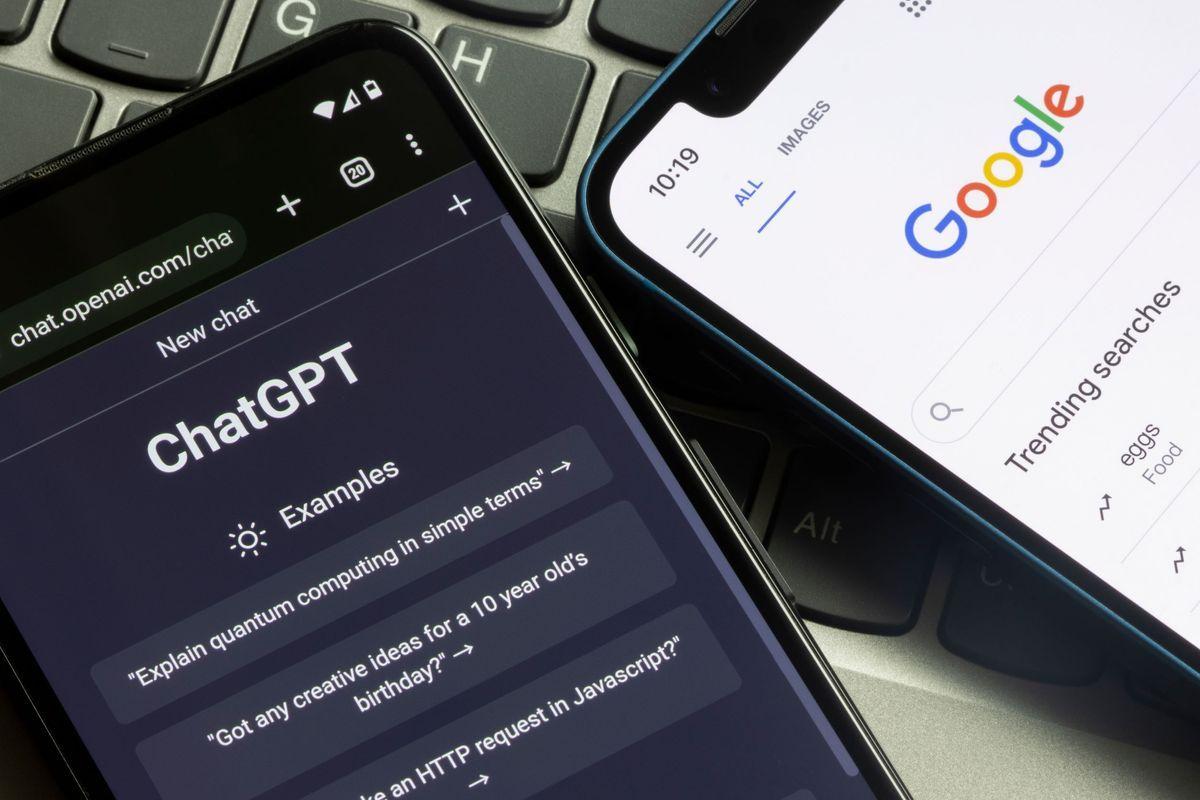
The consumer AI market is witnessing a dramatic shift as ChatGPT traffic experiences a sharp decline while Google's Gemini holds its ground. According to web traffic data from Similarweb, ChatGPT's seven-day average daily visits dropped 22% over the past six weeks, falling from approximately 203 million to around 158 million between December 7, 2025, and January 3, 2026
2
. During this same period, Gemini's traffic remained largely flat at 55-60 million daily visits, effectively narrowing the gap between the two platforms2
.The ChatGPT traffic drop represents more than a seasonal slowdown. Over the entire year of 2025, OpenAI's market share plummeted from 86.7% to 64.5%, while Gemini surged from a mere 5.7% to 21.5% of global generative AI website traffic
1
. This shift in user preferences signals that Google's AI is successfully eating into OpenAI's once-dominant position, with Gemini now commanding close to 40% of ChatGPT's web audience by early January2
.
Source: Gadgets 360
Google Distribution Network Powers Gemini's Steady Performance
The OpenAI vs Google battle increasingly hinges on distribution strength rather than pure innovation. Google's distribution network spans Search, Android, Workspace, and operating system-level experiences, ensuring users encounter Gemini without visiting a separate site or app. "Google does not necessarily need to out-innovate the competition, but needs to out-distribute it," explained Jaspreet Bindra, cofounder of AI & Beyond. This ecosystem integration gives Google a structural advantage that OpenAI struggles to match.
Web traffic data reveals that Gemini users demonstrate deeper engagement despite smaller overall numbers. The average visit duration for Gemini stands at 7 minutes 20 seconds compared to ChatGPT's 6 minutes 32 seconds, while Gemini users view 4.3 pages per visit versus 3.8 for ChatGPT
2
. This user engagement pattern suggests that platform power and convenience are reshaping how people interact with large language models.Sam Altman Code Red Reflects OpenAI's Strategic Pressure
The mounting AI competition prompted Sam Altman to reportedly declare a code red to OpenAI employees in November 2025, placing non-ChatGPT projects on indefinite halt
1
. The declaration came immediately after Google released Gemini 3 Pro, which significantly outperformed GPT-5.1 on most benchmarks1
. OpenAI responded in December with the GPT-5.2 AI model to level the playing field, but the traffic trends suggest the damage was already underway.
Source: Digit
The concern extends beyond model performance. OpenAI cannot compete with Google's enormous resources and the massive distribution network built across its ecosystem. The website represented the only democratized space where both companies could compete head-to-head, making the ChatGPT traffic drop particularly alarming for the Altman-led company
1
.Related Stories
Apple Intelligence Deal Compounds OpenAI's Distribution Challenges
OpenAI's distribution struggles intensified when Apple announced that its next-generation foundation models would be based on Google's Gemini and cloud technology, powering future Apple Intelligence features and the long-promised Siri upgrade due later in 2026
4
. This decision represents a significant blow to OpenAI, which had been Apple's sanctioned external GenAI partner since WWDC 2024.Apple sits on a scale of more than two billion active devices globally, meaning Siri's default AI brain will reach hundreds of millions of users without them needing to download anything
4
. While ChatGPT remains available as an opt-in escalation path for complex requests, the center of gravity has shifted to Gemini. This shift illustrates how AI competition in 2026 focuses less on who builds the best chatbot and more on who becomes the default option users never bothered to download.Broader Generative AI Market Shows Fragmentation
The generative AI market is fragmenting beyond the ChatGPT vs Gemini battle. According to Similarweb, Grok captured 3.7% and DeepSeek secured 3.4% of traffic share in 2025, despite not being on the map before
1
. In December alone, Perplexity.ai recorded 154.9 million visits (2.19% share), Grok had 247 million visits (3.51%), and DeepSeek logged 282 million visits (4%)2
.
Source: Analytics Insight
Experts tracking the sector note that demand for large language models is broadening rather than collapsing. "Adoption is shifting from a 'toy' phase to infrastructure," said Bindra. "Increased integration into operating systems and productivity suites shows that LLMs are becoming embedded into everyday tools, which favours incumbents with large platforms such as Google, Microsoft, and Meta"
2
. Srikanth Velamakanni, cofounder and CEO of Fractal Analytics, added that when users experience something that feels better, even marginally, they are willing to try it, as clearly visible in current usage patterns2
.Analysts caution that Similarweb data reflects desktop and mobile web activity, not native app usage, and counts visits rather than unique people
3
. The numbers should focus on direction rather than absolutes, but the trend remains clear: market share is shifting as distribution strength and ecosystem integration become the deciding factors in AI competition. For OpenAI, the path forward requires innovation at speed while finding new distribution channels to counter Google's structural advantages across the consumer AI landscape.References
Summarized by

Navi
[3]
Related Stories
Google's Gemini closes gap with ChatGPT as AI chatbot race intensifies and regulators circle
10 Dec 2025•Technology
Google's AI Renaissance: Alphabet Races Toward $4 Trillion Valuation as Gemini 3 Sparks Market Surge
24 Nov 2025•Business and Economy
Google Unveils Gemini 3 AI Model with Record-Breaking Performance and New Coding IDE
19 Nov 2025•Technology

Recent Highlights
1
Meta unveils Muse Spark AI model as Superintelligence Labs makes its debut
Technology

2
Anthropic restricts Mythos AI model release, citing unprecedented cybersecurity capabilities
Technology

3
Anthropic sends Claude AI to psychiatrist, discovers functional emotions that shape behavior
Science and Research

Recent Highlights
Today's Top Stories









Your Daily Dose of Curated AI News
Don’t drown in AI news. We cut through the noise - filtering, ranking and summarizing the most important AI news, breakthroughs and research daily. Spend less time searching for the latest in AI and get straight to action.

