ChatGPT Dominates AI Market: OpenAI's Quest to Become the Next Google


3 Sources
[1]
OpenAI wants to be your next Google -- here's how close it is
OpenAI and its ChatGPT platform have been growing by leaps and bounds since launching nearly three years ago. And CEO Sam Altman hasn't been shy about wanting to supplant tech giants like Google. Altman wants ChatGPT to become as ubiquitous Google, where you use it because it's there and easy to
[2]
ChatGPT juggernaut takes aim at Google's crown
Why it matters: OpenAI aims to replicate the insurmountable lead that Google built beginning in the early 2000s, when it became the world's largest search engine. The dream: Everyone uses it because everyone's using it. The big picture: This fight is about winning two interrelated wars at once --
[3]
ChatGPT Is Eating the Internet: OpenAI Commands 80% of AI Market - Decrypt
Traditional sectors are hemorrhaging users: freelance platforms down 14%, educational sites down 19%, and Chegg collapsed 64% as students turn to AI. The latest traffic data from Similarweb reveals an uncomfortable truth about the generative AI market: While the world debates which AI model is
Share
Copy Link
OpenAI's ChatGPT has emerged as the dominant force in the AI market, commanding 80% of all generative AI traffic and posing a significant challenge to Google's search dominance.
ChatGPT's Meteoric Rise
OpenAI's ChatGPT has emerged as the undisputed leader in the generative AI market, commanding a staggering 80% of all generative AI traffic. With 5.5 billion visits in May 2025, ChatGPT has surpassed 500 million weekly active users, solidifying its position as the go-to AI assistant for hundreds of millions of users worldwide
3
. This rapid growth has positioned OpenAI as a formidable challenger to tech giants like Google, with CEO Sam Altman openly expressing his ambition to make ChatGPT as ubiquitous as Google's search engine1
.
Source: Axios
The Battle for AI and Search Dominance
The competition between OpenAI and Google is not just about AI supremacy but also about winning the search war. OpenAI sees Google as its most significant rival due to the latter's vast access to data, research talent, and current dominance in traditional search
2
. However, recent studies suggest that people are increasingly turning to AI tools like ChatGPT for better search experiences, potentially chipping away at Google's stronghold1
.Market Dynamics and Competitor Landscape
While ChatGPT leads the pack, other AI platforms are struggling to keep up:
- Google's Gemini: Despite its integration across Google's ecosystem, Gemini attracted 527.7 million visits, barely edging out some competitors
3
. - Anthropic's Claude: Despite technical superiority and backing from major tech companies, Claude attracted less than 100 million visits in May 2025
3
. - DeepSeek: A Chinese startup that has shown remarkable growth, increasing from 33.7 million monthly users in January to 436 million visits by May
3
.
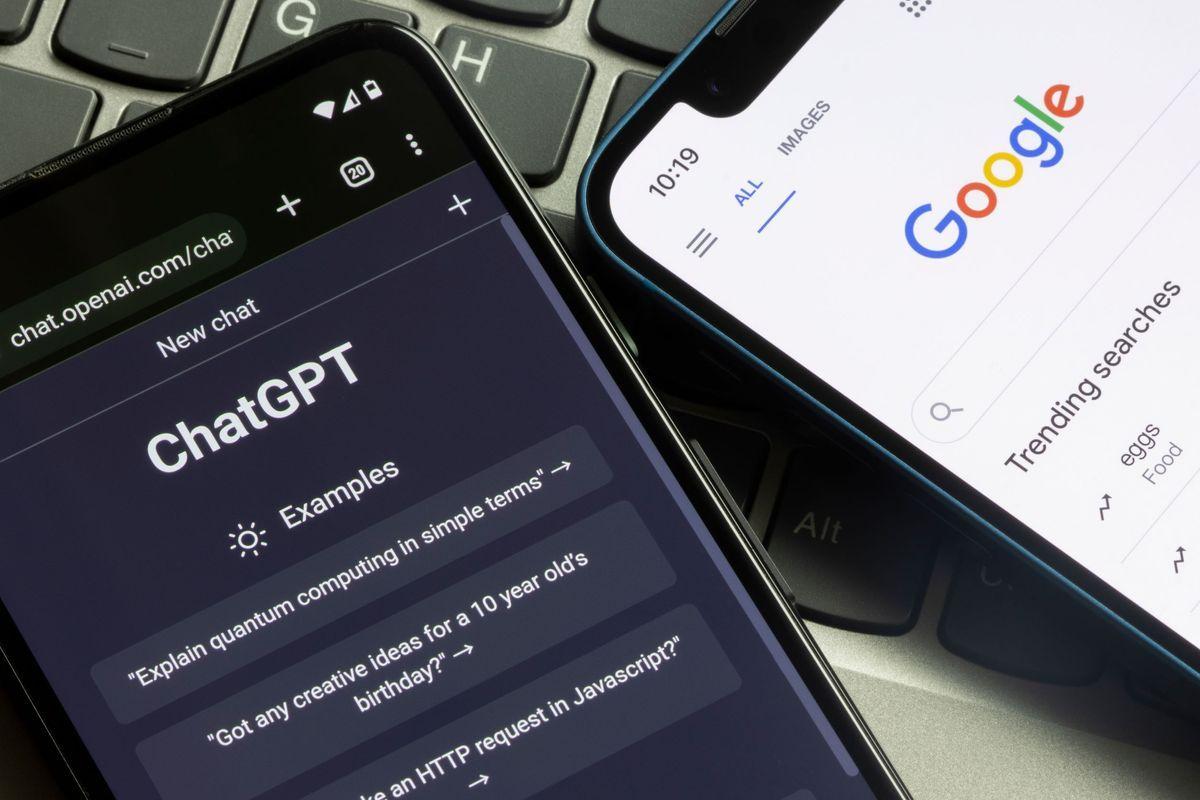
Source: Tom's Guide
Impact on Traditional Sectors
The rise of AI, particularly ChatGPT, is causing significant disruptions in various industries:
- Educational sites have seen a 19% decline in traffic
3
. - Chegg, a popular homework help platform, experienced a 64% collapse in traffic as students turned to AI for assistance
3
. - Freelance platforms like Fiverr have seen a 14% drop in traffic
3
.
On the other hand, DevOps and code completion tools have surged 41% year-over-year, while voice generation platforms grew by 14%
3
.OpenAI's Strategy and Future Plans
OpenAI is focused on locking users into its ecosystem, making it harder for them to switch to other platforms. This strategy includes allowing users to create custom GPTs, store previous research in memory, and build routines around ChatGPT
2
. The company is also accelerating its pace of innovation, with plans to release powerful new models aimed at bringing AI capabilities to healthcare, the auto industry, and science2
.Related Stories
The "Gentle Singularity" and AI Optimism
Sam Altman, in his essay "The Gentle Singularity," presents a bullish perspective on ChatGPT and AI. He envisions a future where humans merge with machines to cure diseases, invent new energy sources, and create high-bandwidth brain-computer interfaces
2
. This optimistic view aligns with OpenAI's positioning as a leader in AI adoption and innovation.Conclusion
As ChatGPT continues to dominate the AI market, it's clear that OpenAI has successfully captured user adoption on a massive scale. While technical superiority remains important, ChatGPT's success demonstrates that being useful and accessible to users is paramount in the AI race. As traditional sectors face disruption and competitors struggle to catch up, OpenAI's vision of becoming the next Google seems increasingly plausible, reshaping the digital landscape in the process.

Source: Decrypt
References
Summarized by

Navi
Related Stories
ChatGPT's Explosive Growth: 2.5 Billion Daily Prompts Challenge Google's Dominance
22 Jul 2025•Technology
ChatGPT market share slips below 50% as Claude and Gemini close the gap on OpenAI
12 Jun 2026•Business and Economy
Google's AI Renaissance: Alphabet Races Toward $4 Trillion Valuation as Gemini 3 Sparks Market Surge
24 Nov 2025•Business and Economy
Recent Highlights



Recent Highlights
Today's Top Stories








Don’t drown in AI news. We cut through the noise - filtering, ranking and summarizing the most important AI news, breakthroughs and research daily. Follow topics that matter to you and stay ahead.


