Humanoid robots perform kung fu at China's Spring Festival Gala, drawing 23 billion views


10 Sources
10 Sources
[1]
Humanoid robots show off creepily impressive kung-fu moves during Lunar New Year festival in China
Improvements to the AI that powers Unitree's H2 and G1 humanoid robots, alongside mechanical upgrades, have resulted in a dazzling kung-fu demonstration. Humanoid robots have taken part in the world's first fully autonomous martial arts performance to mark the Lunar New Year. In new footage from the 2026 Spring Festival Gala in Beijing, Unitree Robotics' G1 and H2 machines can be seen performing complex acrobatics and wielding weapons. The machines performed several world firsts, Unitree representatives said in a statement, including the first continuous freestyle table-vaulting parkour, the first launched aerial flip with a maximum height approaching approximately 10 feet (3 meters), and a two-step wall-assisted backflip. The two robot models were also equipped with new dextrous hands to support the rapid switching between different body positions and transitions between tricks, as well as to grapple surfaces and handle martial arts props. The robots' performance is a marked improvement on demonstrations at the same festival in 2025, where the machines looked stiff and clumsy, with clunky transitions between different routines. Company representatives said the improvements result from artificial intelligence (AI) improvements alongside new lidar (light detection and ranging) processing, alongside mechanical upgrades to the robots themselves. They represent an advancement in the field of embodied AI, in which scientists attempt to give robots tools to better understand and navigate the physical world. "The performance draws its inspiration from a tribute to traditional Chinese martial arts," Unitree representatives said in a technical blog post. "The concept centers on fusing the martial arts spirit with modern technology, using robotic performances to present the power and beauty of Wushu [the Chinese term for martial arts] while conveying the message of cultural inheritance and innovation. It aims to showcase Chinese Kung Fu culture alongside technological progress to the world." Company engineers had been preparing for the performance since November 2025. Scientists pretrained a stunt-motion model using extensive training data from an array of stunts, which subsequently improved the standard of fine-tuning to get the robots up to speed. They also upgraded the cluster control platform -- a system for coordinating dozens of robots at once that involves network communication, different operating systems, embedded devices and software engineering elements. This allowed for end-to-end automation, from AI-planned choreography planning to the real-time multirobot coordination, with millisecond-level synchronization. In terms of robotic motion, the engineers ensured that the robots could navigate their environment, which involved a lidar-based localization algorithm that could improve how accurately they positioned themselves. Another pretrained high-speed-movement model then ensured they could track their target positions stably and quickly and complete the desired movement with human-like gaits. The machines' design also played a role in the improvements. The engineers upgraded the motors to boost maximum performance and then configured them to adapt to the new movements. Examples of specific improvements include higher power density for core joint motors, optimized limb robustness, and more dextrous hands. Although the martial arts display was designed primarily for entertainment, company representatives said the movements and actions demonstrate real-world utility. For example, the cluster control platform could be a key step in enabling several robots to coordinate within a variety of environments without human intervention.
[2]
When robots outshine humans, I have to ask: Are we ready?
If you tuned in to China's 2026 CCTV Spring Festival Gala looking for traditional lion dances and nostalgic tunes, you may have done a double-take when what greeted you was a squad of humanoid robots performing kung fu, synchronized moves, and comedy sketches with more precision than most of us manage during family reunions. It was not just spectacle; it was industrial policy with flair This year's gala, which is China's equivalent of the Super Bowl meets cultural heritage broadcast, featured everything from high-speed martial arts sequences to choreographed routines done by humanoid robots from leading local makers like Unitree Robotics, Galbot, MagicLab and Noetix. Watching them flip, strike poses, and dance isn't just futuristic entertainment; it's a deliberate signal about where Chinese tech wants to sit at the global table. Just last year, robot appearances were charming but clunky: think awkward "dances" that needed human help to keep upright. Instead, this year, they executed complex actions; backflips, martial arts inspired routines, even comedic timing that was surprisingly sharp for machines. C lips of the robots went viral almost immediately, flooding social platforms and dominating international tech feeds. Chinese state media and commentators have leaned into the moment as proof of rapid progress in humanoid robotics, placing it squarely within China's "AI+manufacturing" industrial ambitions. While some viewers showered praise on the displays, others grumbled that the new lineup made the gala feel more like CES Lite than a cosy celebration of culture, and yes, robots "stealing the Year of the Horse thunder" is now a real complaint. The optics are unmistakable. China's robotics sector, already responsible for a lion's share of worldwide humanoid robot production, is eager to tell a simple story: we don't just build hardware in factories, we animate it with AI brainsthat can perform with finesse. Whether it's a crowd-pleasing kung fu sequence or a scripted comedy routine, these robots have become ambassadors of technological prowess on very prime cultural real estate. But let's not overstate their practical chops just yet. Despite impressive stage routines, robotics experts point out that most current humanoids are still best at pre-programmed movements and lack true autonomous adaptability in unpredictable environments. In other words, they're amazing performers on cue, not yet ready to be your personal caregiver or industrial line worker without a lot more training and development. Still, the spectacle accomplishes something important: it thrusts humanoid robots into the public imagination while signalling to investors, startups and rival nations that robot development is now prime time tech theatre, not just a research lab curiosity. Whether you see this as a fun blend of culture and innovation or a high-stakes display of national tech strategy, China's robotics presence at the gala is now part of a broader conversation about where AI embodied in hardware might go next. It's less about whether robots will "replace us" and more about how they're being introduced into narratives that billions of people watch together, shaping perceptions and expectations about the future. China's robots danced their way into billions of screens this Lunar New Year, and they did it with style, precision, and a well-timed cultural wink.
[3]
Bigger than the Super Bowl -- futuristic humanoid robots dominate China's most-watched TV show and leap ahead of the Tesla Optimus
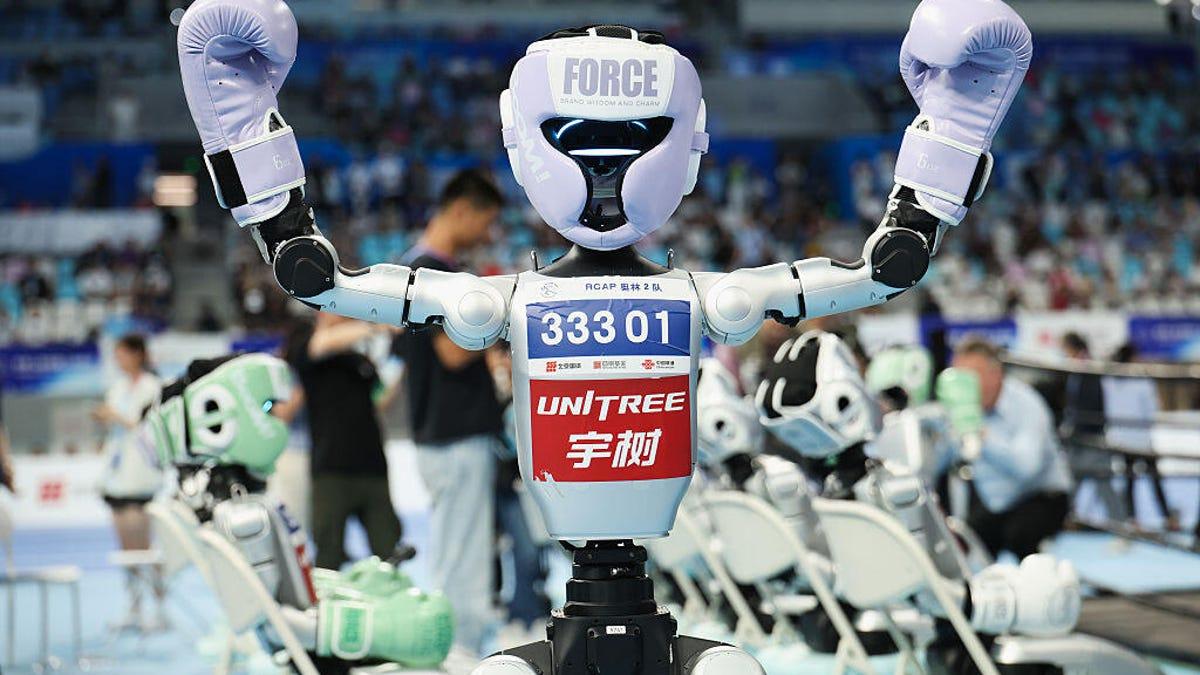
* Humanoid robots starred during China's Spring Festival Gala performance * The event is China's most-watched TV show and got 23 billion views * Some of the robots on show now have order backlogs as interest soars China gave the world a glimpse of its latest humanoid robots at its 2026 Spring Festival Gala on Monday - and the show was so impressive that many of its robo-stars now reportedly have order backlogs. The Spring Festival Gala airs annually on the eve of the Lunar New Year and is China's most-watched TV show. The state-owned broadcaster, China Central Television, claimed the show got an incredible 23 billion views across all platforms. To put that in context, Super Bowl LX drew 137.8 million live viewers on NBCUniversal platforms, with its halftime show garnering 4 billion views in the first 24 hours. It was no coincidence that kung fu robots were the centerpiece of this year's show. China is entering the first year of its next five-year plan, and robotics has been highlighted as a major growth engine. That meant the stage was set for the likes of Unitree Robotics, the country's biggest robot maker, to show how far it is now ahead of the likes of Tesla. The Unitree G1 robot was the viral breakout from the performance, with its martial arts antics (see the video below) so athletic that many suspected the videos were AI-generated. In reality, the G1 is an expensive, high-end humanoid that was able to flourish in a very controlled environment. That hasn't stopped interest from spiking after its kung fu showcase. The G1 costs about 85,000 yuan in China (about $12,300 / £9,100 / AU$17,400), so it isn't exactly a consumer impulse buy. Yet the South China Morning Post claims that the earliest delivery dates for the G1 have been pushed back to early March and that its product page has been creaking under the weight of interest. The more interesting robot, if a slightly less athletic one, is arguably the Noetix Bumi. The child-sized robot appeared in a comedy sketch at the Spring Festival Gala and costs only 10,000 yuan ($1,450 / £1,070 / AU$2,050), so similar to a high-end smartphone. It was again apparently the subject of high interest at the retailer JD.com, and its delivery date has now been pushed back to late April. Neither of these robots is shattering sales records, but they are part of a trend of humanoids shuffling ever closer towards the mainstream. The South China Morning Post again claims that Unitree aims to ship 20,000 humanoids this year, around four times more than in 2025. Elon Musk, meanwhile, recently said at the World Economic Forum in Davos that Tesla will begin selling its Optimus humanoid robot "probably sometime next year". By that point, they may well have some catching up to do. Waiting for the 'embodied intelligence' breakthrough The big question with all of these humanoid robots remains what they're actually for and who they'll serve. Consumers are still interested spectators rather than buyers, with Unitree Robotics getting most of its investment from industrial giants and venture capital firms. Rivals like UBTech have struck deals to have their humanoid robots at border crossings, which, as we've previously mused, isn't a dystopian nightmare at all. Wherever they ultimately live their lives, Unitree thinks the game-changer for robots isn't their impressive athleticism but their minds. The company's CEO and founder, Wang Xingxing, recently talked up the potential of 'embodied intelligence', which is a robot's ability to learn by physically interacting with its environment rather than being trained like today's AI models. "If there are breakthroughs in embodied AI models and robotics technology that can truly be applied at scale in the coming years, the heat could be 100 or even 1,000 times higher than it is now," Wang told China's CCTV state broadcaster. "I believe this will far surpass the mobile internet era." That's a big claim, but those breakthroughs are also a big 'if'. As impressive as the Unitree G1's acrobatics currently are, they remain something of a flashy tech demo. But 2026 and the Year of the Fire Horse could yet blaze a trail for that truly big robotics leap - and if that happens, the likes of Tesla could be left fighting for a podium place. Follow TechRadar on Google News and add us as a preferred source to get our expert news, reviews, and opinion in your feeds. Make sure to click the Follow button! And of course, you can also follow TechRadar on YouTube and TikTok for news, reviews, unboxings in video form, and get regular updates from us on WhatsApp too.
[4]
China's dancing robots: how worried should we be?
Eye-catching martial arts performance at China gala had viewers and experts wondering what else humanoids can do Dancing humanoid robots took centre stage on Monday during the annual China Media Group's Spring Festival Gala, China's most-watched official television broadcast. They lunged and backflipped (landing on their knees), they spun around and jumped. Not one fell over. The display was impressive, but prompted some to wonder: if robots can now dance and perform martial arts, what else can they do? Experts have mixed opinions, with some saying the robots had limitations and that the display should be viewed through a lens of state propaganda. Developed by several Chinese robotics firms, the robots performed a range of intricate stunts, including kung fu, comedy sketches and choreographed dance moves alongside human performers. Clips circulating online quickly drew comparisons with last year's lunar new year broadcast, which also featured dancing robots but with noticeably simpler movements. Kyle Chan, an expert in China's technology development at Brookings Institution, a policy organisation in Washington DC, said Beijing uses these public robot performances to "dazzle domestic and international audiences with China's technological prowess". "Unlike AI models or industrial equipment, humanoid robots are highly visible examples of China's technological leadership that general audiences can see on their phones or televisions," he said. Pointing to intensifying competition in the tech space between China and the US, Chan added: "While China and the US are neck-and-neck on AI, humanoid robots are an area where China can claim to be ahead of the US, particularly in terms of scaling up production." Georg Stieler, the head of robotics and automation at the global technology consulting firm Stieler Technology and Marketing, also emphasised the symbolism of China's prime time broadcast. "What distinguishes the gala from comparable events elsewhere is the directness of the pipeline from industrial policy to prime-time spectacle," Stieler said in a statement. Comparing this year's performances with last year's - when viewers saw "fundamentally a single choreographic mode" with limited motions including walking, twisting and kicking - Stieler said one key signal of China's robot progress is "the ability to run large numbers of near-identical humanoids in synchronised motion with stable gaits and consistent joint behaviour". But Stieler also noted: "Stage performance does not equate to industrial robustness, yet." He said what the robots did was the result of being trained for a routine "hundreds or thousands of times - you could not just tell them to change direction or do something completely different". "These dance motions involve very little environmental perception and are essentially imitation learning plus a balance-keeping controller. That has little bearing on reliability in unstructured environments, a prerequisite for factory-grade deployment. Also the progress in dexterity is not as fast as in locomotion," he added. The unveiling of China's latest generation of robots underscores the country's broader technological ambitions. By the end of 2024, China had registered 451,700 smart robotics companies, with a total capital of 6.44tn yuan (approximately $932.16bn), according to state data. Major government projects such as Made in China 2025 and the 14th Five-Year Plan, have made robotics and AI key Beijing priorities. Morgan Stanley projects that China's humanoid sales will more than double to 28,000 units in 2026; and Elon Musk has said he expects his biggest competitor to be Chinese companies as he pivots Tesla toward a focus on embodied AI and its flagship humanoid Optimus. "People outside China underestimate China, but China is an ass-kicker next level," Musk said last month. Marina Zhang, a technology professor at the University of Technology Sydney, said that such a visible showcase likely hints at a new phase in China's manufacturing masterplan, "where robotics becomes a linchpin in the shift from low-cost assembly to high-end, smart manufacturing".
[5]

Chinese Robots Can Now Run Up Walls
While humanoid robots have a long way to go to prove useful in our day-to-day lives, they've at least made leaps and bounds in showing off their agility on stage. Case in point, the televised Spring Festival Gala put on by the state-run China Media Group over the weekend featured an impressive synchronized martial arts routine. Organizers were even confident enough to put the well-being of children on the line, having young performers spar with a small army of nunchuck- and spear-wielding Unitree G1 robots. At one point, several of the robots can be seen performing a wall flip, an impressive feat that involves them literally running up a temporary wall on stage. (You can check it out for yourself at the 3:16 mark in the video embedded below.) It's a dazzling performance, showcasing how far the country's robotics industry has come in a few short years, a massive surge in interest that has even led to the country's regulators warning of an impending bubble as an influx of robotics companies risks crowding one another out. Users on social media immediately noticed an enormous technological leap, comparing this year's performance to a far less impressive appearance a mere year ago, which saw less sophisticated humanoid robots awkwardly shuffling on stage while waving red handkerchiefs. "Humanoids bundle a lot of China's strengths into one narrative: AI capability, hardware supply chain, and manufacturing ambition," Beijing-based tech analyst Poe Zhao told Reuters of the performance. "They are also the most 'legible' form factor for the public and officials." Whether the rest of the world, including Elon Musk's Tesla, which is developing its own Optimus robot, can keep up with China remains to be seen. For one, Optimus robots still heavily rely on human remote operators. "By far, the biggest competition for humanoid robots will be from China," Musk told investors during an earnings call earlier this year. "China is good at manufacturing, and also in AI, judging from open models." "To the best of my knowledge, we don't see significant competition outside of China," he added. "People outside of China underestimate China, but China's an ass-kicker next-level." However, whether all of that martial arts expertise can be translated into actually-useful skills -- arming robots with nunchucks isn't exactly going to give China an edge on the battlefield, the workforce, or domestic labor -- is still a wide-open question. Robotics companies are struggling to get their humanoid robots to adjust to the messy reality of daily life on the fly, and are only starting to make some progress. In other words, while having robots sparring with children live on stage as part of a well-rehearsed choreography is unquestionably impressive, reliably doing chores around the house could prove far more difficult in the long run -- even for China. "Cool," one Reddit user commented on the latest martial arts performance. "Can I please get one that just cleans my house and does the laundry?"
[6]

These dancing robots stole the show at Beijing's Lunar New Year fair
Developed by Chinese startups such as Booster Robotics, the AI-powered machines are part of a technology-themed temple fair in China. Humanoid robots are taking centre stage at Lunar New Year celebrations in Beijing, where they're performing lion dances, playing competitive football and preparing traditional snacks ahead of the Spring Festival. At a mall in western Beijing, 95-centimetre-tall robots rehearsed in colourful lion costumes, drawing crowds of onlookers. The performances are part of a technology-themed temple fair returning for a second year, showcasing China's advances in artificial intelligence. The robots - developed by startups including Booster Robotics - are taking part in fully autonomous 3v3 football matches. "It is an AI environment, which means, once the whistle sounds, the remote control will all be put aside and all its decision-making and motion control are made by the robots themselves. There will also be teamwork. For example, a robot will be the goalkeeper, and the remaining robots will pass the ball to it, so this group decision-making is actually made by themselves," said Ren Zixin, the director of marketing at Booster Robotics. The machines are also performing traditional dances using motion-control training. "Lion dance performance is carried out through action collection. Robots had been made to watch a lot of videos to learn the action, and then we pre-programmed robot, so when they come on stage, performance action is designed and the quality of the show is guaranteed." China has been scaling up its efforts to develop better robots that can perform different activities, powered by artificial intelligence and with less human intervention. Organisers say the fair reflects this ambition. "Technology is developing faster and becoming more advanced every day. As long as we keep up with this trend, our temple fair will continue to evolve and rise with the times," said Qiu Feng, the fair organiser. Some parents at the fair said that while technology was impressive, emotional connection remains at the heart of the New Year celebration. "I think in terms of technology, they can do many things even better than human beings," one parent said. "But when it comes to emotion - what people now call emotional value - robots may not be able to replace humans anytime soon."
[7]

China's humanoid robots take center stage for Lunar New Year showtime
BEIJING -- China's most-watched TV show, the annual CCTV Spring Festival gala, on Monday showcased the country's cutting-edge industrial policy and Beijing's push to dominate humanoid robots and the future of manufacturing. Four rising humanoid robot startups -- Unitree Robotics, Galbot, Noetix and MagicLab -- demonstrated their products at the gala, a televised event and touchstone for China comparable to the Super Bowl for the United States. The program's first three sketches prominently featured humanoid robots, including a lengthy martial arts demonstration where over a dozen Unitree humanoids performed sophisticated fight sequences waving swords, poles and nunchucks in close proximity to human children performers. The fight sequences included a technically ambitious one that imitated the wobbly moves and backward falls of China's "drunken boxing" martial arts style, showing innovations in multi-robot coordination and fault recovery -- where a robot can get up after falling down. The program's opening sketch also prominently featured ByteDance's AI chatbot Doubao, while four Noetix humanoid robots appeared alongside human actors in a comedy skit and MagicLab robots performed a synchronized dance with human performers during the song "We Are Made in China." The hype surrounding China's humanoid robot sector comes as major players including AgiBot and Unitree prepare for initial public offerings this year, and domestic artificial intelligence startups release a raft of frontier models during the lucrative nine-day Lunar New Year public holiday. Last year's gala stunned viewers with 16 full-size Unitree humanoids twirling handkerchiefs and dancing in unison with human performers. Unitree's founder met President Xi Jinping weeks later at a high-profile tech symposium, the first of its kind since 2018. Xi has met five robotics startup founders in the past year, comparable to the four electric vehicle and four semiconductor entrepreneurs he met in the same timeframe, giving the nascent sector unusual visibility. The CCTV show, which drew 79% of live TV viewership in China last year, has for decades been used to highlight Beijing's tech ambitions, including its space program, drones and robotics, said Georg Stieler, Asia managing director and head of robotics and automation at technology consultancy Stieler. "What distinguishes the gala from comparable events elsewhere is the directness of the pipeline from industrial policy to prime-time spectacle," Stieler said. "Companies that appear on the gala stage receive tangible rewards in government orders, investor attention, and market access." "It's been just one year -- and the performance jump is striking," said Stieler, adding that the robots' impressive motion control showed Unitree's focus on developing robot "brains" -- the AI-powered software that enables them to complete fine motor tasks that can be used in real-world factory settings. Behind the spectacle of robots running marathons and executing kung-fu kicks and backflips, China has positioned robotics and AI at the heart of its next-generation AI+ manufacturing strategy, betting that productivity gains from automation will offset pressures from its aging work force. "Humanoids bundle a lot of China's strengths into one narrative: AI capability, hardware supply chain, and manufacturing ambition. They are also the most 'legible' form factor for the public and officials," said Beijing-based tech analyst Poe Zhao. "In an early market, attention becomes a resource." China accounted for 90% of the roughly 13,000 humanoid robots shipped globally last year, far ahead of U.S. rivals including Tesla's Optimus, according to research firm Omdia. Morgan Stanley projects that China's humanoid sales will more than double to 28,000 units this year. Elon Musk has said he expects his biggest competitor to be Chinese companies as he pivots Tesla toward a focus on embodied AI and its flagship humanoid Optimus. "People outside China underestimate China, but China is an ass-kicker next level," Musk said last month.
[8]

China's humanoid robots take centre stage for Lunar New Year showtime
China's most-watched TV show, the CCTV Spring Festival Gala, highlighted its leadership in humanoid robots. Several Chinese startups demonstrated advanced robots, showcasing the nation's manufacturing prowess. China's most-watched TV show, the annual CCTV Spring Festival gala, on Monday showcased the country's cutting-edge industrial policy and Beijing's push to dominate humanoid robots and the future of manufacturing. Four rising humanoid robot startups - Unitree Robotics, Galbot, Noetix and MagicLab - demonstrated their products at the gala, a televised event and touchstone for China comparable to the Super Bowl for the United States. The programme's first three sketches prominently featured humanoid robots, including a lengthy martial arts demonstration where over a dozen Unitree humanoids performed sophisticated fight sequences waving swords, poles and nunchucks in close proximity to human children performers. The fight sequences included a technically ambitious one that imitated the wobbly moves and backward falls of China's "drunken boxing" martial arts style, showing innovations in multi-robot coordination and fault recovery - where a robot can get up after falling down. The programme's opening sketch also prominently featured Alibaba's AI chatbot Doubao, while four Noetix humanoid robots appeared alongside human actors in a comedy skit and MagicLab robots performed a synchronised dance with human performers during the song "We Are Made in China". The hype surrounding China's humanoid robot sector comes as major players including AgiBot and Unitree prepare for initial public offerings this year, and domestic artificial intelligence startups release a raft of frontier models during the lucrative nine-day Lunar New Year public holiday. Last year's gala stunned viewers with 16 full-size Unitree humanoids twirling handkerchiefs and dancing in unison with human performers. Unitree's founder met President Xi Jinping weeks later at a high-profile tech symposium - the first of its kind since 2018. Xi has met five robotics startup founders in the past year, comparable to the four electric vehicle and four semiconductor entrepreneurs he met in the same timeframe, giving the nascent sector unusual visibility. The CCTV show, which drew 79% of live TV viewership in China last year, has for decades been used to highlight Beijing's tech ambitions, including its space programme, drones and robotics, said Georg Stieler, Asia managing director and head of robotics and automation at technology consultancy Stieler. "What distinguishes the gala from comparable events elsewhere is the directness of the pipeline from industrial policy to prime-time spectacle," Stieler said. "Companies that appear on the gala stage receive tangible rewards in government orders, investor attention, and market access." China's strengths Behind the spectacle of robots running marathons and executing kung-fu kicks and backflips, China has positioned robotics and AI at the heart of its next-generation AI+ manufacturing strategy, betting that productivity gains from automation will offset pressures from its ageing workforce. "Humanoids bundle a lot of China's strengths into one narrative: AI capability, hardware supply chain, and manufacturing ambition. They are also the most 'legible' form factor for the public and officials," said Beijing-based tech analyst Poe Zhao. "In an early market, attention becomes a resource." China accounted for 90% of the roughly 13,000 humanoid robots shipped globally last year, far ahead of U.S. rivals including Tesla's Optimus, according to research firm Omdia. Morgan Stanley projects that China's humanoid sales will more than double to 28,000 units this year. Elon Musk has said he expects his biggest competitor to be Chinese companies as he pivots Tesla toward a focus on embodied AI and its flagship humanoid Optimus. "People outside China underestimate China, but China is an ass-kicker next level," Musk said last month.
[9]

How China's humanoid robots trained in parkour and martial arts for viral Lunar New Year gala performance - VnExpress International
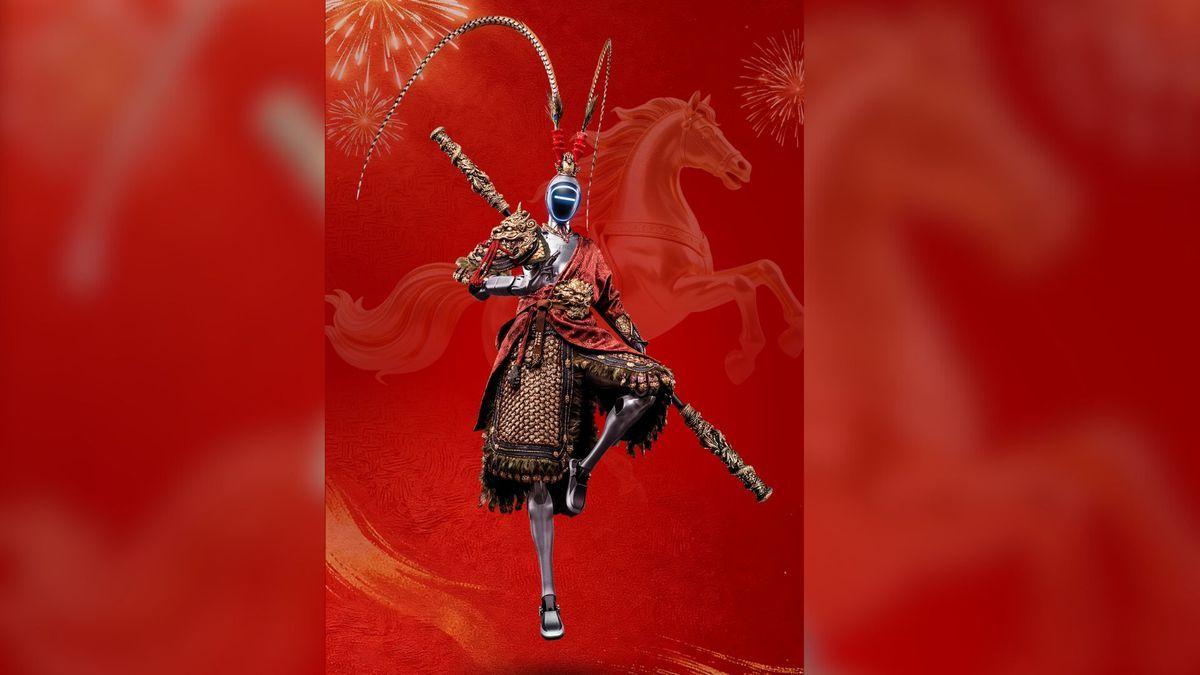
China's humanoid robots underwent rigorous training in advanced skills such as parkour, acrobatics and martial arts ahead of their viral appearance at the Lunar New Year gala. In a video released by Sina, the robots are seen undergoing intensive training, mastering acrobatic moves and balance exercises, mimicking human movements before performing at the CCTV Spring Festival Gala on Lunar New Year Eve on Feb. 16. These robots were developed by four leading Chinese tech companies: Unitree Robotics, Galbot, Noetix, and MagicLab. The performance, featuring a blend of martial arts by humanoid robots and kung fu artists, quickly went viral on social media, amassing over 23 billion views across all domestic platforms, according to CGTN. CyberRobo, a user on platform X, shared the four-minute video, calling the performance "absolutely insane." On Weibo, many users praised the remarkable progress of humanoid robots, noting how much they had improved in just one year. At the New Year gala last year, Unitree's robots could only walk gently and perform simple moves like arm swings with scarves. According to Unitree, its robots set multiple world records with the New Year gala performance. The event marked the first-ever robot flip to exceed a height of three meters and the first continuous one-legged flip, including two powerful pushes off a wall before the flip. Unitree's robots also executed for the first time an Airflare, one of the most difficult breakdancing moves, completing 7.5 rotations. Additionally, these robots were equipped with a new rapid clustering positioning system, achieving speeds of up to 4 meters per second. The robots also showcased their ability to coordinate real-time movements among dozens of units, minimizing synchronization delays. By combining AI algorithms with 3D LiDAR, they accurately positioned themselves after rapid, unstable movements, preventing motion errors and ensuring consistency throughout the performance. In addition to their athletic performances, Unitree's humanoid robots, dressed as the mythical Chinese character Monkey King, stunned the crowd. They performed iconic movements from the character and even appeared with a cloud carried by a robot dog.
[10]
China's Lunar New Year humanoid robot dance goes viral with 23 billion views - VnExpress International
A humanoid robot dance performance featured in China's Lunar New Year gala has gone viral, drawing more than 23 billion views within just three days. On Feb. 16, Lunar New Year's Eve, China Media Group aired its annual Spring Festival Gala, the country's largest televised event. Leading humanoid robot startups, Unitree Robotics, Galbot, Noetix, and MagicLab, showcased their robots at the gala, performing kung fu moves, flips, spins, and synchronized jumps alongside human dancers, as reported by Reuters. Their stable movements, balance, and precise coordination made the performance the most talked-about segment of the show. As of Feb. 18, the event had amassed 23.063 billion views across all domestic platforms, a 37.3% increase compared to last year, according to CGTN. The average number of concurrent viewers was 325 million per minute, with a peak of over 400 million. Live television accounted for 79.29% of the national viewership share, the highest in 13 years. On digital platforms, live and on-demand views reached 16.207 billion, a 49% increase year-on-year. Nearly 2,000 topics related to the gala trended, generating over 27.12 billion reads. Content on AI and humanoid robots accounted for 20.99% of total engagement, a 5.4-fold increase from the previous year, illustrating the rising interest in tech-driven performances. Globally, the gala was reported in 85 languages and broadcast in 98 countries. CGTN recorded 2.309 billion readers and 843 million video views. According to The Guardian, the complex robot movements, such as kung fu and synchronized flips with human artists during prime-time television, showcase China's latest advances in humanoid robotics, especially as the global AI competition intensifies. Kyle Chan, a technology researcher at the Brookings Institution, noted that the elaborate performances serve a symbolic purpose: they highlight China's domestic robot production capabilities and reinforce the message that China is rapidly advancing in the high-tech race. Zilan Qian, a fellow at the Oxford China Policy Lab, suggested that the widely watched robot performances could help foster a more "techno-optimistic" public, driving faster AI adoption and innovation in China. However, some experts caution that while the stage performance was meticulously programmed and rehearsed, it does not necessarily indicate that robots are ready to adapt flexibly to industrial or everyday life settings.
Share
Share
Copy Link
China showcased its latest humanoid robots at the 2026 Spring Festival Gala, where machines from Unitree Robotics and other firms performed complex martial arts routines, backflips, and synchronized moves. The broadcast drew 23 billion views across all platforms, far surpassing last year's clunky demonstrations. The display signals China's ambitions in AI and robotics manufacturing, though experts note the robots excel at pre-programmed performances rather than real-world adaptability.
Humanoid Robots Take Center Stage at China's Most-Watched Broadcast
China's 2026 Spring Festival Gala transformed into a showcase for the nation's robotics industry, with humanoid robots from Unitree Robotics, Galbot, MagicLab, and Noetix performing intricate kung fu routines, acrobatics, and comedy sketches. The annual broadcast, which China Central Television claims drew 23 billion views across all platforms, featured machines executing backflips reaching heights of approximately 10 feet, wall-assisted flips, and continuous freestyle table-vaulting parkour
1
3
. The spectacle marks a dramatic leap from last year's Spring Festival Gala, where robots appeared stiff and awkward, shuffling across stages with limited motions4
.The Unitree G1 robot emerged as the viral breakout star, with its martial arts demonstrations so athletic that viewers initially suspected AI-generated footage. Priced at approximately 85,000 yuan ($12,300) in China, the G1 now faces delivery delays pushed back to early March due to surging interest
3
. The more affordable Noetix Bumi, a child-sized robot featured in comedy sketches at just 10,000 yuan ($1,450), has seen its delivery timeline extend to late April3
.AI and Engineering Breakthroughs Power Synchronized Moves
Unitree representatives attribute the performance improvements to advances in AI alongside mechanical upgrades and enhanced lidar processing. Engineers spent months since November 2025 preparing, pretraining a stunt-motion model using extensive training data from an array of stunts
1
. The robots received upgraded motors for higher power density, optimized limb robustness, and new dextrous hands to support rapid position switching and prop handling1
.The cluster control platform upgrade enabled end-to-end automation from AI-planned choreography to real-time multirobot coordination with millisecond-level synchronization
1
. Georg Stieler, head of robotics and automation at Stieler Technology and Marketing, noted that "the ability to run large numbers of near-identical humanoids in synchronised motion with stable gaits and consistent joint behaviour" signals genuine progress4
. However, he cautioned that "stage performance does not equate to industrial robustness," as these movements result from training routines "hundreds or thousands of times"4
.Technological Prowess Meets Industrial Policy
The kung fu performance represents more than entertainment—it's a deliberate signal of China's manufacturing and AI ambitions. Kyle Chan, an expert in China's technology development at Brookings Institution, explained that Beijing uses these public robot performances to "dazzle domestic and international audiences with China's technological prowess"
4
. The timing aligns with China entering the first year of its next five-year plan, where robotics has been highlighted as a major growth engine3
.By the end of 2024, China had registered 451,700 smart robotics companies with total capital of 6.44 trillion yuan (approximately $932.16 billion)
4
. Morgan Stanley projects that China's humanoid sales will more than double to 28,000 units in 20264
. Unitree Robotics aims to ship 20,000 humanoids this year, approximately four times more than in 20253
.Related Stories
Embodied Intelligence: The Next Frontier
Unitree CEO Wang Xingxing emphasized that embodied intelligence—a robot's ability to learn by physically interacting with its environment rather than traditional AI training—represents the true game-changer. "If there are breakthroughs in embodied AI models and robotics technology that can truly be applied at scale in the coming years, the heat could be 100 or even 1,000 times higher than it is now," Wang told China's CCTV state broadcaster
3
.Yet experts note current limitations. Robotics specialists point out that most humanoids excel at pre-programmed movements but lack true autonomous adaptability in unpredictable environments
2
. The robots remain "amazing performers on cue, not yet ready to be your personal caregiver or industrial line worker without a lot more training and development"2
.Technological Competition Intensifies
Elon Musk acknowledged China's lead during an earnings call, stating "by far, the biggest competition for humanoid robots will be from China"
5
. He noted that "people outside of China underestimate China, but China's an ass-kicker next-level"4
. Tesla Optimus robots still heavily rely on human remote operators, with Musk saying the company will likely begin selling its humanoid "probably sometime next year"3
.Chan added that "while China and the US are neck-and-neck on AI, humanoid robots are an area where China can claim to be ahead of the US, particularly in terms of scaling up production"
4
. The spectacle thrusts humanoid robots into public imagination while signaling to investors and rival nations that robot development has moved from research labs to prime-time technology theater2
. Whether these acrobatic capabilities translate into practical applications—from factory automation to household chores—remains the critical question as the robotics industry navigates between impressive demonstrations and real-world utility5
.References
Summarized by

Navi
[1]
[2]
[4]
[5]
Related Stories
Humanoid robots take center stage at China's Lunar New Year gala as Beijing pushes AI dominance
09 Feb 2026•Entertainment and Society
AI Meets Tradition: China's Lunar New Year Celebration Showcases Robotic Innovations
02 Feb 2025•Technology

China Dominates Humanoid Robots Shipments, Outpacing Tesla and US Rivals in 2025
09 Jan 2026•Technology

Recent Highlights


Recent Highlights
Today's Top Stories








Your Daily Dose of Curated AI News
Don’t drown in AI news. We cut through the noise - filtering, ranking and summarizing the most important AI news, breakthroughs and research daily. Spend less time searching for the latest in AI and get straight to action.

