Humanoid robots take center stage at China's Lunar New Year gala as Beijing pushes AI dominance


6 Sources
[1]
China's humanoid robots ready for Lunar New Year showtime
BEIJING, Feb 16 (Reuters) - China's most-watched TV show, the annual CCTV Spring Festival gala, will be viewed later on Monday as a showcase for the country's cutting-edge industrial policy and Beijing's push to dominate humanoid robots and the future of manufacturing. Four rising humanoid robot
[2]
People -- and robots -- are getting ready to celebrate the Lunar New Year in China
BEIJING (AP) -- It's not just people -- in China, the robots are also getting ready to celebrate the Lunar New Year. Friday was dress rehearsal day for four cute humanoid robots, each about 95 centimeters (3 feet) tall at a mall in western Beijing. Curious onlookers stopped to watch. Each robot
[3]
People -- and Robots -- Are Getting Ready to Celebrate the Lunar New Year in China
BEIJING (AP) -- It's not just people -- in China, the robots are also getting ready to celebrate the Lunar New Year. Friday was dress rehearsal day for four cute humanoid robots, each about 95 centimeters (3 feet) tall at a mall in western Beijing. Curious onlookers stopped to watch. Each robot
[4]
Chinese robot makers ready for Lunar New Year entertainment spotlight
On Sunday, Shanghai-based robotics start-up Agibot live-streamed an almost hour-long variety show featuring its robots dancing, performing acrobatics and magic, lip-syncing ballads and performing in comedy sketches. Other Agibot humanoid robots waved from an audience section. In China, humanoid
[5]

China's humanoid robots take centre stage for Lunar New Year showtime
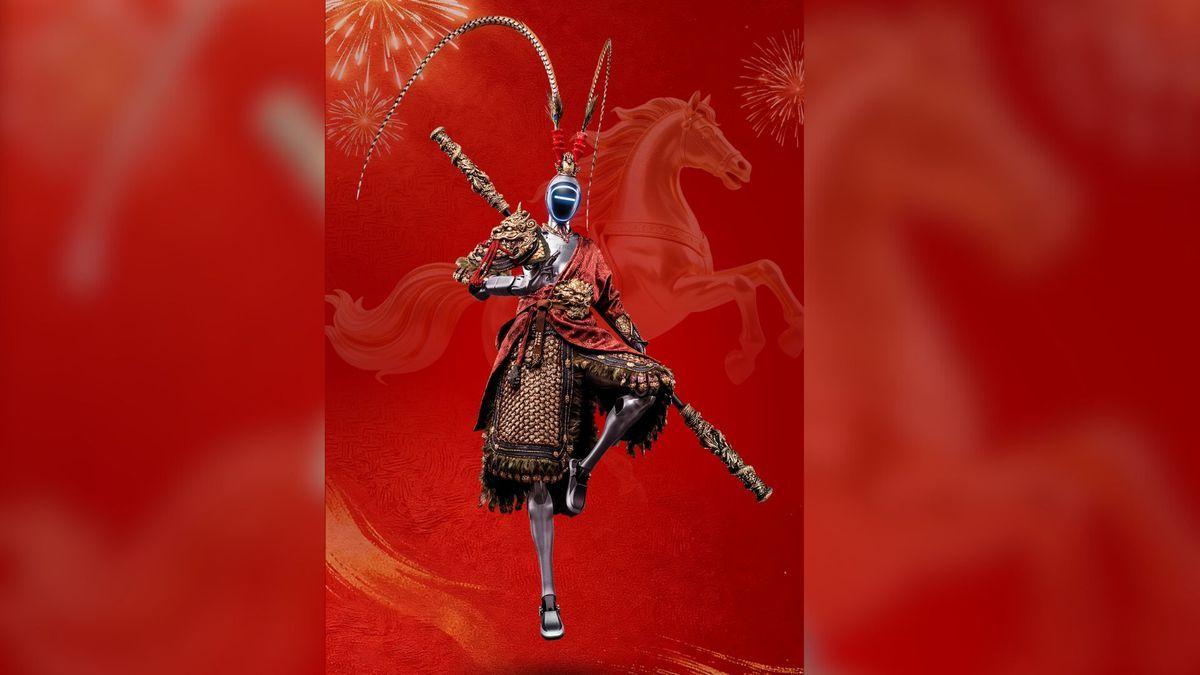
China's most-watched TV show, the annual CCTV Spring Festival gala, on Monday showcased the country's cutting-edge industrial policy and Beijing's push to dominate humanoid robots and the future of manufacturing. Four rising humanoid robot startups - Unitree Robotics, Galbot, Noetix and MagicLab -
[6]

Chinese robot makers ready for Lunar New Year entertainment spotlight
BEIJING, Feb 8 (Reuters) - In China, humanoid robots are serving as Lunar New Year entertainment, with their manufacturers pitching their song-and-dance skills to the general public as well as potential customers, investors and government officials. On Sunday, Shanghai-based robotics start-up
Share
Copy Link
China's CCTV Spring Festival gala featured humanoid robots from four startups performing martial arts and synchronized dances. The showcase highlights Beijing's industrial policy to dominate robotics and manufacturing, with China accounting for 90% of the 13,000 humanoid robots shipped globally last year. Morgan Stanley projects Chinese humanoid sales will more than double to 28,000 units this year.
Humanoid Robots Dominate China's Most-Watched TV Event
China transformed its annual CCTV Spring Festival gala into a showcase for humanoid robots and the nation's ambitions in AI-powered manufacturing. Four Chinese robotics startups—Unitree Robotics, Galbot, Noetix, and MagicLab—demonstrated their latest creations during the televised event, which drew 79% of live TV viewership in China last year
1
. The gala, comparable to the Super Bowl for the United States, featured over a dozen Unitree humanoids performing sophisticated martial arts sequences with swords, poles, and nunchucks in close proximity to human children performers5
. The technically ambitious demonstrations included imitations of China's "drunken boxing" style, showcasing advancements in robotics through multi-robot coordination and fault recovery capabilities that allow robots to stand up after falling down.
Source: Market Screener
China's Humanoid Robot Sector Gains Unprecedented Visibility
The Lunar New Year entertainment spotlight reflects Beijing's industrial policy to position robotics and AI at the heart of its next-generation manufacturing strategy. President Xi Jinping has met five robotics startup founders in the past year, comparable to the four electric vehicle and four semiconductor entrepreneurs he met in the same timeframe, giving the nascent sector unusual visibility
1
. Last year's gala stunned viewers with 16 full-size Unitree humanoids twirling handkerchiefs and dancing in unison with human performers, and Unitree's founder met Xi weeks later at a high-profile tech symposium—the first of its kind since 2018. "What distinguishes the gala from comparable events elsewhere is the directness of the pipeline from industrial policy to prime-time spectacle," said Georg Stieler, Asia managing director and head of robotics and automation at technology consultancy Stieler. "Companies that appear on the gala stage receive tangible rewards in government orders, investor attention, and market access"1
.
Source: ET
Chinese Robotics Startups Prepare for Market Expansion
The hype surrounding the sector comes as major players including AgiBot and Unitree prepare for initial public offerings this year
1
. Shanghai-based AgiBot live-streamed its own hour-long variety show featuring robots dancing, performing acrobatics and magic, lip-syncing ballads, and appearing in comedy sketches, drawing an estimated 1.4 million viewers on Douyin4
. The performance employed over 200 robots and was streamed across multiple platforms including RedNote, Sina Weibo, and TikTok. State-run Securities Times reported that Agibot opted out of the CCTV gala to focus spending on research and development, though the company demonstrated two robots to Xi during a visit in April last year4
.Related Stories

AI Powers Autonomous Decision-Making in Humanoid Robots
Beyond the spectacle of dancing and martial arts performances, Chinese robotics startups are rapidly developing AI capabilities for autonomous decision-making. "It is an AI environment, which means, once the whistle sounds, the remote control will all be put aside and all its decision-making and motion control are made by the robots themselves," said Ren Zixin, director of marketing at Booster Robotics
2
. The company displayed around 20 humanoid robots performing tasks like dancing and playing soccer. At technology fairs around Beijing, robots demonstrated practical skills including stacking blocks, skewering hawthorn berries onto sticks for traditional sweets, and executing complex movements with less human intervention2
. "This year, the number of our robots has increased a lot," said Qiu Feng, a member of the organizing committee. "They will perform dance, martial arts, Peking Opera, poetry and soccer."
Source: AP
The Future of Manufacturing and Global Competition
China accounted for 90% of the roughly 13,000 humanoid robots shipped globally last year, far ahead of U.S. rivals including Tesla Optimus, according to research firm Omdia
1
. Morgan Stanley projects that China's humanoid sales will more than double to 28,000 units this year. Elon Musk has acknowledged the competitive threat, saying he expects his biggest competitor to be Chinese companies as he pivots Tesla toward a focus on embodied AI and Optimus. "People outside China underestimate China, but China is an ass-kicker next level," Musk said last month5
. Beijing-based tech analyst Poe Zhao explained the strategic importance: "Humanoids bundle a lot of China's strengths into one narrative: AI capability, hardware supply chain, and manufacturing ambition. They are also the most 'legible' form factor for the public and officials. In an early market, attention becomes a resource"1
. China has positioned robotics at the heart of its AI+ manufacturing strategy, betting that productivity gains from automation will offset pressures from its ageing workforce. Real-world deployment remains limited to demonstration projects, with companies like Galbot securing contracts with battery giant CATL and UBTech winning government investment for humanoid robots in logistics roles at a border crossing with Vietnam1
.References
Summarized by

Navi
Related Stories
Humanoid robots perform kung fu at China's Spring Festival Gala, drawing 23 billion views
17 Feb 2026•Technology
China Dominates Humanoid Robots Shipments, Outpacing Tesla and US Rivals in 2025
09 Jan 2026•Technology

China's Humanoid Robots Claim 97% of Global Market as Embodied AI Shifts from Spectacle to Scale
19 Aug 2026•Technology

Recent Highlights



Recent Highlights
Today's Top Stories







Don’t drown in AI news. We cut through the noise - filtering, ranking and summarizing the most important AI news, breakthroughs and research daily. Follow topics that matter to you and stay ahead.


