Commonwealth Fusion Systems installs first reactor magnet, partners with Nvidia on digital twin


4 Sources
4 Sources
[1]
Commonwealth Fusion Systems installs reactor magnet, lands deal with Nvidia | TechCrunch
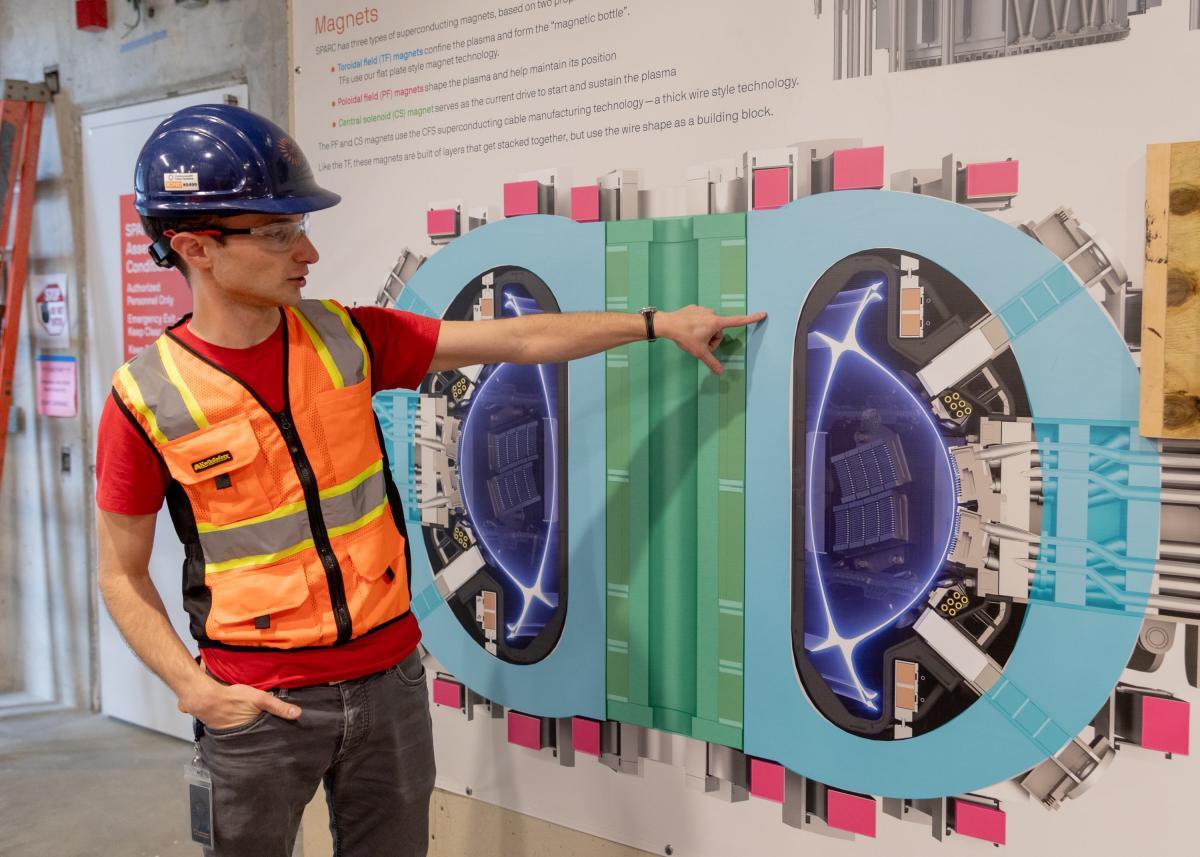
Commonwealth Fusion Systems (CFS) said on Tuesday at CES 2026 that it had installed the first magnet in its Sparc fusion reactor, the demonstration device that it hopes to turn on next year. The magnet is the first of 18 that, when the reactor is complete, will create a doughnut-like shape that will produce a powerful magnetic field to confine and compress superheated plasma. If all goes well, that plasma will release more energy than it takes to heat and compress it. After decades of promise and delay, fusion power appears to be just around the corner -- CFS and its competitors are locked in a race to deliver the first electrons to the grid sometime in the early 2030s. If it pans out, fusion power could unlock nearly limitless clean energy in a package that resembles a traditional power plant. Key components of Sparc's magnets have been completed, and the company expects to install all 18 by the end of the summer, said Bob Mumgaard, CFS' co-founder and CEO. "It'll go bang, bang, bang throughout the first half of this year as we put together this revolutionary technology." When installed, the D-shaped magnets would sit upright on a 24-foot wide, 75-ton stainless steel circle known as a cryostat, which was set in place last March. The magnets themselves weigh about 24 tons each and can generate a 20 tesla magnetic field, about 13 times stronger than a typical MRI machine. "It's the type of magnet that you could use to, like, lift an aircraft carrier," Mumgaard said. To hit that strength, the magnets will be cooled to -253˚ C (-423˚ F) so they can safely conduct over 30,000 amps of current. Inside the doughnut, plasma will be burning at more than 100 million degrees C. To work out as many kinks as possible before Sparc is turned on, CFS said on Tuesday that it is working with Nvidia and Siemens to develop a digital twin of the reactor. Siemens is supplying the design and manufacturing software, which will help the company collect data to feed it into Nvidia's Omniverse libraries. That won't be CFS' first simulation -- the company has already been running numerous simulations to predict the performance of various parts of the reactor -- but the existing efforts provide results in isolation, Mumgaard said. With the digital twin, he said, "these are no longer isolated simulations that are just used for design. They'll be alongside the physical thing the whole way through, and we'll be constantly comparing them to each other." The hope is that CFS can run experiments or tweak parameters in the digital twin before applying them to Sparc itself. "It will run alongside so we can learn from the machine even faster," he said. Building Sparc has been a costly endeavor. CFS has raised nearly $3 billion to date, including an $863 million Series B2 round in August that included investments from Nvidia, Google, and nearly three dozen other investors. The company's first commercial-scale power plant, Arc, will be the first of its kind. As a result, it will likely cost another several billion dollars, CFS estimates. Mumgaard hopes that digital twins and AI technology will help the company deliver fusion power to the grid sooner than later. "As the machine learning tools get better, as the representations get more precise, we can see it go even faster, which is good because we have an urgency for fusion to get to the grid," he said. Follow along with all of TechCrunch's coverage of the annual CES conference here.
[2]
This fusion energy startup aims to use AI to speed breakthroughs
Why it matters: Fusion, the energy that powers stars, has long had unrealized potential to provide vast swaths of clean, stable electricity for the AI boom and to cut emissions. Driving the news: Commonwealth Fusion Systems (CFS), leveraging data from Siemens and an AI platform from Nvidia, is creating what it calls a "digital twin" of its demonstration machine to speed progress toward commercial fusion. * "CFS will be able to compress years of manual experimentation into weeks of virtual optimization using the digital infrastructure developed by Nvidia and Siemens," said Bob Mumgaard, co-founder and CEO of CFS. * By creating a digital twin of its Boston-area demonstration facility, CFS will be able to more quickly test, in the digital version, things that traditionally required testing in the hardware version, Mumgaard said. The big picture: Tuesday's news offers a concrete example of AI's potential to accelerate energy innovation -- one of the forces undergirding the AI energy boom, alongside surging power demand. Inside the room: The announcement was made on the main stage of the Consumer Electronics Show in Las Vegas, with Mumgaard joined by Nvidia CEO Jensen Huang and Siemens CEO Roland Busch. * "Fusion is debuting at CES," Mumgaard said on a call with reporters Monday. * It's a shift, he said, that shows "fusion is no longer a science project -- it's actually the next big thing in tech." What they're saying: "The large tech companies are pulling forward innovation across several areas," said Charles Boakye, an equity analyst for sustainability and transition at Jefferies, in an email to Axios. * He cited demand-response technology and large electricity load flexibility solutions. Where it stands: CFS aims to hit a key technical milestone in 2027 -- generating net energy at its demonstration machine -- before producing commercial-scale fusion energy in the early 2030s. Reality check: Mumgaard declined to specify how much time this type of AI application could accelerate those timelines. * "There's this general accelerant that happens," Mumgaard said, while acknowledging it's "not as confident an answer of, 'Oh, it'll save three months.' " * But he said hindsight will show a "meaningful" acceleration of the process. Flashback: Tuesday's news follows another in October where Google DeepMind announced it is partnering with CFS to accelerate one particular part of the demonstration plant regarding the physics of plasma. * If Tuesday's digital twin is the virtual airplane, the DeepMind partnership is more like a co-pilot, a CFS spokesperson said. Follow the money: Both Nvidia and Google are investors in CFS. What we're watching: CFS also announced it has installed the first of 18 huge magnets required of the demonstration facility. * These aren't your everyday fridge magnets. They each weigh 24 tons -- about as much as four adult African elephants. What's next: The rest are on a schedule to be installed throughout the first half of this year.
[3]
Fusion power nearly ready for prime time as Commonwealth builds first pilot for limitless, clean energy with AI help from Siemens, Nvidia | Fortune
Fusion power industry leader Commonwealth Fusion Systems is building its first demonstration plant utilizing the same process that fuels the sun, and now it's partnering with Siemens and Nvidia to use AI to eventually help power the AI boom. Essentially marking the debut of fusion power at CES 2026 in Las Vegas, Commonwealth CEO Bob Mumgaard joined Siemens CEO Roland Busch during his Jan. 6 keynote to tout their teamwork and the ambitious plans for consistent, clean power without radioactive waste, intermittency issues, or the dependence on foreign supply chains. "AI factories and data centers require gigawatts of electric power," Busch said on stage. "What if we had an energy source that was clean, safe, affordable, and practically limitless?" Backed by Nvidia, Google, Mitsubishi, Bill Gates, and more, Commonwealth Fusion Systems (CFS) leads the nascent fusion sector in funding, contracts, and has the advantage of being founded earlier than most in 2018 through a spinoff from the Massachusetts Institute of Technology. "Fusion is no longer a science project; it's actually the next big thing in tech," Mumgaard said. CFS is currently building its SPARC demonstration project outside of Boston, and just installed the first of 18 high-temperature, D-shaped superconducting magnets that power the machinery. The magnets that CFS manufactures are theoretically strong enough to lift an aircraft carrier out of the water, Mumgaard said. SPARC will nearly be completed by the end of 2026 and will produce its first plasma energy in 2027. "The main argument against fusion is making it work, and that's why we're building SPARC and showing that it can work," Mumgaard told Fortune in an interview prior to the keynote. "That will be a big moment for fusion overall, not just for us." If SPARC succeeds, CFS' first commercial fusion plant, ARC, is slated to be built and to come online in the early 2030s just outside of Richmond, Virginia. If all goes as planned, the 400-megawatt plant would become the world's first fusion plant providing steady power to the grid -- enough to power about 300,000 homes. Whereas traditional nuclear fission energy creates power by splitting atoms, fusion uses heat to create energy by melding them together. In the simplest form, it fuses hydrogen found in water into an extremely hot, electrically charged state known as plasma to create helium -- the same process that powers the sun. When executed properly, the process triggers endless reactions to make energy for electricity. But stars rely on overwhelming gravitational pressure to force their fusion. Here on Earth, creating and containing the pressure needed to force the reaction in a consistent, controlled way remains an engineering challenge. CFS is now working with Nvidia Omniverse AI tech and Siemens industrial software to create a digital twin of the SPARC project to experiment, process data, and answer questions without having to open up the physical machinery. CFS also works with Google DeepMind AI systems. CFS likens DeepMind to a co-pilot and the Nvidia digital twin to the virtual airplane. "The way to think about it is that the physical world and the digital world are increasingly merging, and we're increasingly able to get the best out of both sides," Mumgaard said, arguing that he's optimistic the digital twin tech will accelerate the development of ARC. There is of course competition, including even from the Trump family. In December, the Trump Media & Technology Group and fusion developer TAE Technologies announced an unexpected $6 billion merger to become the first fusion player to go public -- soon owned in part by the Trump family -- on a belief that an influx of capital will speed up the launch of fusion power on the grid. The deal is for a so-called merger of equals with Trump Media, which will become a Truth Social media, cryptocurrency, and fusion power conglomerate. "Having a public fusion company was something I think the industry always expected to happen. I don't think anyone had it on their bingo card for it to happen quite this way. But it's good to have one, and I wish them success," Mumgaard told Fortune. "With the Trump connection, fusion has been bipartisan, and we'd like to make sure it stays bipartisan." CFS also is racing against others competitors such as Helion -- backed by OpenAI's Sam Altman and SoftBank -- which aims to build a fusion plant east of Seattle to power Microsoft data centers. CFS is the leader in the most common form of fusion tech -- the oddly named "tokamak." The tokamak -- shortened from toroidal chamber magnetic -- relies on its powerful magnets. The design essentially involves a massive, doughnut-shaped machine that traps the plasma in a high-temperature, superconducting magnetic field. The running joke is that fusion power is mythical and it's always 30 years away. Not so any longer, Mumgaard said, even if it will still take a couple of decades before fusion is a key player in the global power grid. "Parts are arriving and it's being assembled," Mumgaard said of SPARC. "It's a complicated Lego set, but we have a good set of instructions and a good set of people that will put it together."
[4]
CES 2026: Fusion reactor breakthrough presents solution for AI's power crisis
At CES 2026, US-based power company Commonwealth Fusion Systems (CFS) announced the installation of the initial magnet for its Sparc fusion reactor. This magnet is the first of 18 planned units that will combine to contain and pressurize extreme temperature plasma. Bob Mumgaard, CEO of CFS said they are eyeing integration of the full magnetic array sometime this year, so they can activate the device in 2027. Their goal is to achieve a net energy gain, which is when the fusion process can generate more power than it consumes, paving the way for commercial fusion energy by 2030. Mumgaard further said that CFS is working with Nvidia and Siemens to build a digital twin of the fusion reactor. Siemens will provide the design and manufacturing software, while Nvidia is providing its Omniverse virtual platform for the digital twin. CFS has so far raised $3 billion from multiple investors including Nvidia and Google. It aims to generate power from its first commercial power plant, Arc, by 2030. Sparc's fusion reactor is part of a global push by big tech firms to switch to green sources of energy to power the AI datacentres and to get their climate goals back on target. According to the International Energy Agency (IEA), the worldwide electricity consumption of datacenters will more than double by 2030, reaching 945 TWh, which is more than Japan's total power consumption. While Meta and Google have pledged to achieve net zero emissions across their value chain by 2030, Microsoft aims to be carbon negative by 2030 (removing more carbon than it emits) and Amazon has committed to reach net zero by 2040. However, their self-imposed climate goals have gone off track due to the growing demand for compute power to support the generative AI boom. Meta's carbon footprint has increased by 38% in 2024, according to Meta's sustainability report. Similarly, Google's carbon emissions have grown by 65% between 2019 and 2025, according to a 2025 report by Kairos Fellowship, a non-profit. In her keynote at CES 2026, AMD CEO Lisa Su said around 5 billion people will be using AI by 2030 and to meet that demand AI companies will need 10 yottaflops of compute power. "A yottaflop is a one followed by 24 zeros. So, 10 yottaflop flops is 10,000 times more compute than we had in 2022, added Su. How datacentres are reviving nuclear energy Big and other AI companies are exploring multiple green energy sources to cut their dependence on fossil fuels. For instance, Meta is working to integrate more green energy sources including solar, wind, and geothermal to meet its datacentre energy needs. Nuclear energy is another energy source that is on top of the list of every big tech firm. Microsoft has partnered with Constellation Energy to restart a unit at Pennsylvania's Three Mile Island plant, while Amazon has acquired a nuclear-powered data center from Talen Energy. Meta has signed a 20-year deal with Constellation Energy for 1,121 MW of emissions‑free nuclear energy from their Clinton Clean Energy Center plant. Google has also signed a deal to buy nuclear energy generated by multiple small modular reactors (SMRs). The reactors will be developed by Kairos Power, which aims to get the first of them up and running by 2030. Additional reactors will be deployed by 2035. SMRs are smaller in size and have a modular design, which allows it to be constructed in less time and deployed in multiple locations. The expansion of nuclear energy infrastructure has met with backlash in the US from local population and climate activists. Their concerns stem from the previous disasters at nuclear power plants in Chernobyl in 1986 and more recently at Fukushima in 2011. According to the World Nuclear Industry Status Report 2024, nuclear energy's share of the total global energy production has declined from 17.5% in 1996 to 9.15% in 2023 due to high production costs and construction delays. Experts warn that SMRs that Google and Amazon are trying to develop have been tested before in the US and Germany. Each of these small reactors have suffered failures and shutdowns on several occasions. That said, CFS' Sparc fusion reactor that was announced at the CES is a fusion-based device, while SMRs are fission based nuclear reactors. Most of the fusion-based reactors across the globe are still in experimental phase and are yet to become commercially viable. There are also talks about transforming decommissioned coal plants into nuclear power plants to accelerate deployment and cut construction costs by using the existing infrastructure. According to a US' Department of Energy study, 36 US states have decommissioned coal sites for 128-174 GW of nuclear capacity plants, saving up to 35% on construction costs.
Share
Share
Copy Link
Commonwealth Fusion Systems installed the first of 18 magnets for its Sparc fusion reactor at CES 2026, marking a key milestone toward achieving net energy gain by 2027. The company announced partnerships with Nvidia and Siemens to create a digital twin of the reactor, aiming to compress years of experimentation into weeks and deliver limitless clean energy for powering AI datacenters by the early 2030s.
Commonwealth Fusion Systems Advances Sparc Fusion Reactor Construction
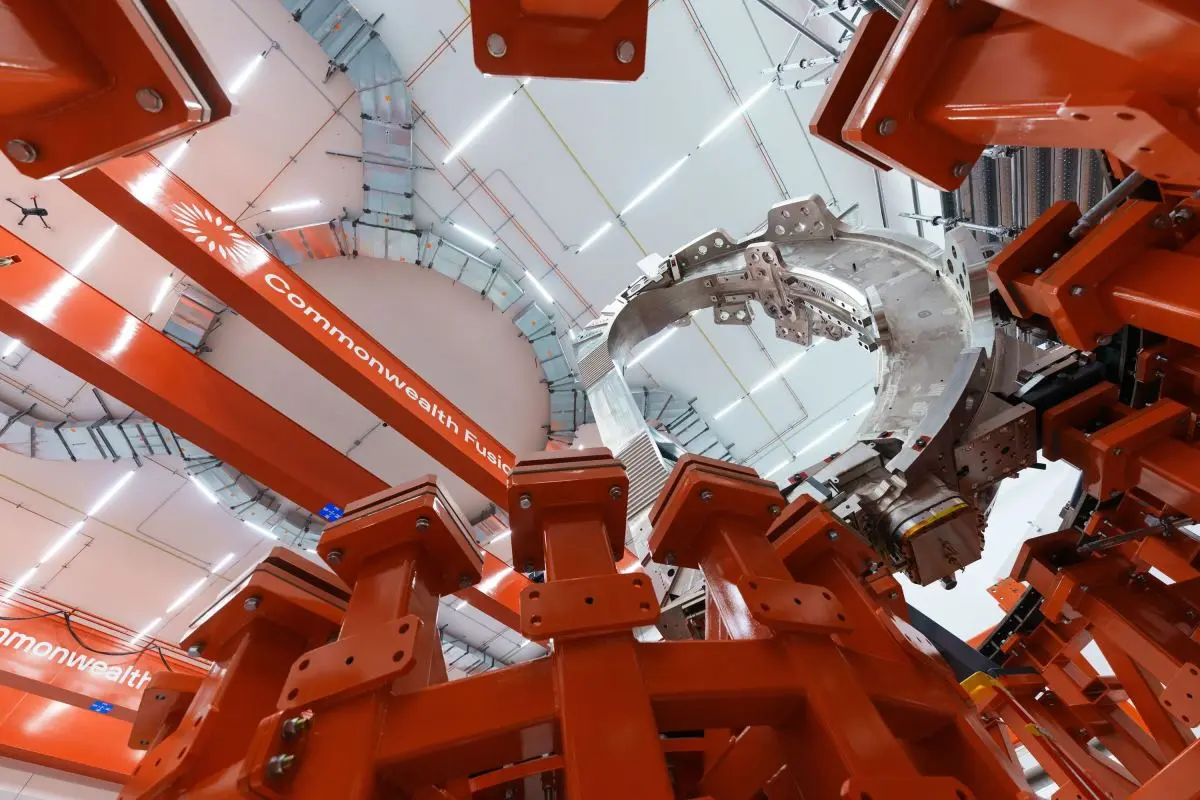
Commonwealth Fusion Systems announced at CES 2026 that it successfully installed the first magnet in its Sparc fusion reactor, a demonstration device the company plans to activate in 2027
1
. The magnet represents the initial component of 18 D-shaped superconducting magnets that will form a doughnut-like structure designed to confine and compress superheated plasma1
. Bob Mumgaard, co-founder and CEO of Commonwealth Fusion Systems, expects all 18 magnets to be installed by the end of summer 2026, stating the installation will proceed rapidly throughout the first half of the year1
.
Source: TechCrunch
Each magnet weighs approximately 24 tons—comparable to four adult African elephants—and can generate a 20 tesla magnetic field, roughly 13 times stronger than a typical MRI machine
1
2
. The magnets will be cooled to -253°C (-423°F) to safely conduct over 30,000 amps of current, while the plasma inside burns at more than 100 million degrees Celsius1
. The magnets sit upright on a 24-foot wide, 75-ton stainless steel cryostat that was positioned last March1
.
Source: Axios
AI and Digital Twin Partnership to Accelerate Fusion Development
Commonwealth Fusion Systems revealed a partnership with Nvidia and Siemens to develop a digital twin of the Sparc fusion reactor, marking a concrete example of how AI can accelerate energy innovation
2
. Siemens is supplying the design and manufacturing software, while Nvidia provides its Omniverse platform to create the virtual replica1
4
. The announcement was made on the main stage at CES in Las Vegas, with Mumgaard joined by Nvidia CEO Jensen Huang and Siemens CEO Roland Busch2
.Mumgaard explained that the digital twin will enable the company to compress years of manual experimentation into weeks of virtual optimization, allowing CFS to test parameters and run experiments before applying them to the physical reactor
2
1
. Unlike previous isolated simulations used solely for design, the digital twin will run alongside the physical machine continuously, enabling constant comparison and faster learning1
. This partnership follows an October announcement where Google DeepMind partnered with Commonwealth Fusion Systems to accelerate specific aspects of plasma physics—if the digital twin is the virtual airplane, the DeepMind partnership functions as the co-pilot, according to a CFS spokesperson2
3
.Fusion Energy Breakthroughs Target Net Energy Gain by 2027
Commonwealth Fusion Systems aims to achieve a critical technical milestone in 2027 by generating net energy gain at its demonstration machine—producing more energy than it consumes to heat and compress the plasma
1
2
. The Sparc fusion reactor, being constructed outside Boston, will produce its first plasma energy in 2027 and will be nearly complete by the end of 20263
4
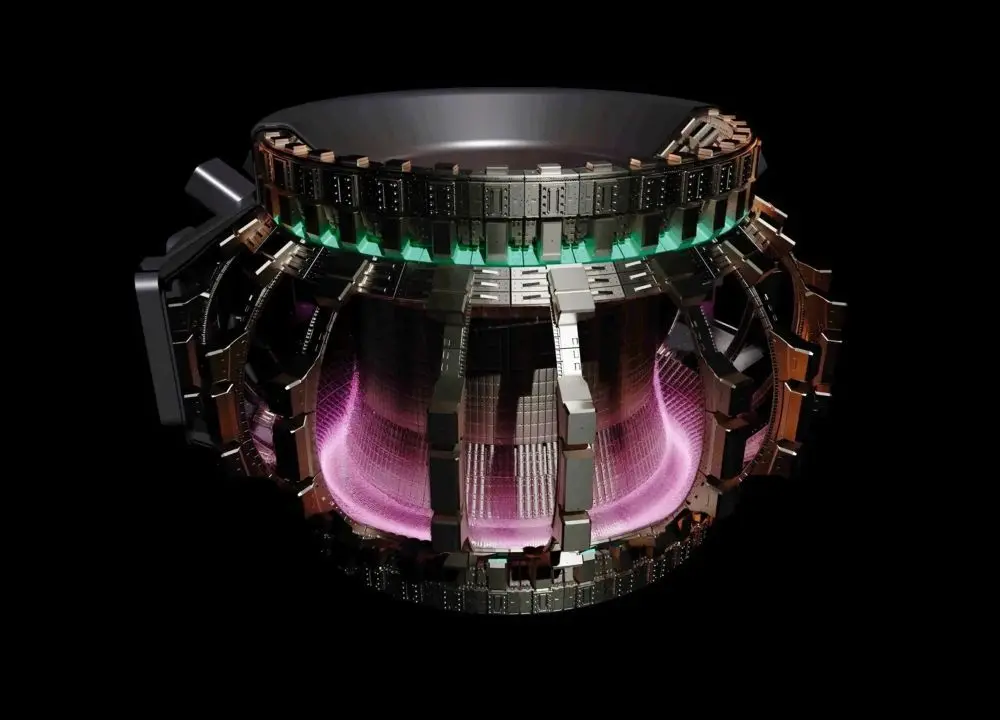
.The company utilizes tokamak technology—a toroidal chamber magnetic design that traps plasma in a high-temperature, superconducting magnetic field
3
. Fusion energy works by fusing hydrogen found in water into an extremely hot, electrically charged plasma state to create helium, the same process that powers the sun3
. If successful, this process could unlock limitless clean energy without radioactive waste, intermittency issues, or dependence on foreign supply chains3
.
Source: CXOToday
Related Stories
Powering AI Datacenters and Addressing the AI Power Crisis
The push toward fusion energy comes as tech giants face mounting pressure to meet the exponential power demands of AI while maintaining climate commitments. According to the International Energy Agency, worldwide electricity consumption of datacenters will more than double by 2030, reaching 945 TWh—exceeding Japan's total power consumption
4
. AMD CEO Lisa Su stated at CES 2026 that around 5 billion people will be using AI by 2030, requiring 10 yottaflops of compute power—10,000 times more than in 20224
.Meta's carbon emissions increased by 38% in 2024, while Google's carbon emissions grew by 65% between 2019 and 2025, derailing their climate goals due to generative AI demands
4
. Commonwealth Fusion Systems' first commercial plant, ARC, is slated to come online in the early 2030s near Richmond, Virginia, with a 400-megawatt capacity sufficient to power approximately 300,000 homes3
. Building Sparc has cost nearly $3 billion to date, including an $863 million Series B2 round in August with investments from Nvidia, Google, and nearly three dozen other investors1
. The ARC commercial plant will likely cost several billion dollars more1
.Competition Intensifies in Race to Deliver Fusion to Power Grid
Commonwealth Fusion Systems leads the fusion sector in funding and contracts, having been founded in 2018 as a spinoff from MIT and backed by investors including Nvidia, Google, Mitsubishi, and Bill Gates
3
. However, competition is intensifying. In December, Trump Media & Technology Group and fusion developer TAE Technologies announced a $6 billion merger to become the first fusion company to go public3
. Mumgaard responded diplomatically, noting that fusion has been bipartisan and should remain so3
.Another competitor, Helion, backed by OpenAI's Sam Altman and SoftBank, aims to build a fusion plant east of Seattle to power Microsoft datacenters
3
. Charles Boakye, an equity analyst for sustainability at Jefferies, noted that large tech companies are pulling forward innovation across several energy areas, including demand-response technology and load flexibility solutions2
. While Mumgaard declined to specify exact timeline acceleration from AI applications, he expressed confidence that hindsight will reveal a meaningful acceleration, emphasizing the urgency for fusion to reach the power grid1
2
.References
Summarized by

Navi
[1]
Related Stories
Commonwealth Fusion Systems Secures $863M in Funding to Advance Nuclear Fusion Technology
29 Aug 2025•Business and Economy
Google DeepMind Partners with CFS to Accelerate Fusion Energy Development Using AI
16 Oct 2025•Technology

Google Inks Landmark Deal for Fusion Power with Commonwealth Fusion Systems
01 Jul 2025•Business and Economy
Recent Highlights


Recent Highlights
Today's Top Stories










Your Daily Dose of Curated AI News
Don’t drown in AI news. We cut through the noise - filtering, ranking and summarizing the most important AI news, breakthroughs and research daily. Spend less time searching for the latest in AI and get straight to action.

