Google DeepMind Partners with CFS to Accelerate Fusion Energy Development Using AI


5 Sources
[1]
The real reason Google DeepMind is working with a fusion energy startup | TechCrunch
Energy startup Commonwealth Fusion Systems said Thursday it's working with Google's DeepMind division to fine tune -- and even improve -- the operation of its forthcoming Sparc reactor using AI. The companies plan will simulate the plasma that will burn inside CFS's reactor using specialized
[2]
US firm advances with Google to fine tune nuclear fusion reactor plasma
The plan uses DeepMind's open-source Torax software to model the plasma inside the SPARC reactor. US-based nuclear fusion firm Commonwealth Fusion Systems (CFS) has collaborated with Google's DeepMind division to use artificial intelligence to fine-tune and enhance the operation of its forthcoming
[3]
Google DeepMind partners with fusion startup
What they're saying: "Everyone talks about how much energy AI is going to use, but AI can actually help the energy equation on the supply side too," Commonwealth Fusion Systems (CFS) CEO Bob Mumgaard told Axios. Driving the news: As part of the deal, CFS will use Google's open-source software to
[4]
Google DeepMind is bringing AI to the next generation of fusion energy
We're partnering with Commonwealth Fusion Systems (CFS) to bring clean, safe, limitless fusion energy closer to reality. Fusion, the process that powers the sun, promises clean, abundant energy without long-lived radioactive waste. Making it work here on Earth means keeping an ionized gas, known
[5]

Google's DeepMind and CFS are building an AI plasma control system for nuclear fusion - SiliconANGLE
Google's DeepMind and CFS are building an AI plasma control system for nuclear fusion Google LLC's DeepMind research unit is partnering with the nuclear fusion startup Commonwealth Fusion Systems LLC to see if it can help it generate almost unlimited amounts of clean energy using its most advanced
Share
Copy Link
Google's DeepMind division is collaborating with Commonwealth Fusion Systems (CFS) to optimize the operation of fusion reactors using artificial intelligence. This partnership aims to bring clean, limitless fusion energy closer to reality by leveraging AI to simulate and control plasma behavior.

Google DeepMind and CFS Collaborate on Fusion Energy
Google's DeepMind division has announced a groundbreaking partnership with Commonwealth Fusion Systems (CFS) to accelerate the development of fusion energy using artificial intelligence (AI)
1
. This collaboration aims to fine-tune and enhance the operation of CFS's forthcoming SPARC fusion reactor, potentially bringing clean, limitless fusion energy closer to reality4
.The Role of AI in Fusion Energy
The partnership leverages DeepMind's specialized open-source software, TORAX, to simulate and model the plasma behavior inside the SPARC reactor
2
. TORAX, built using JAX, can run on both CPUs and GPUs, allowing for seamless integration with AI-powered models4
. This technology enables CFS to run millions of virtual experiments before SPARC is even operational, saving precious time and resources.Challenges in Fusion Energy
One of the biggest challenges in fusion energy is maintaining plasma at temperatures exceeding 100 million degrees Celsius for extended periods
4
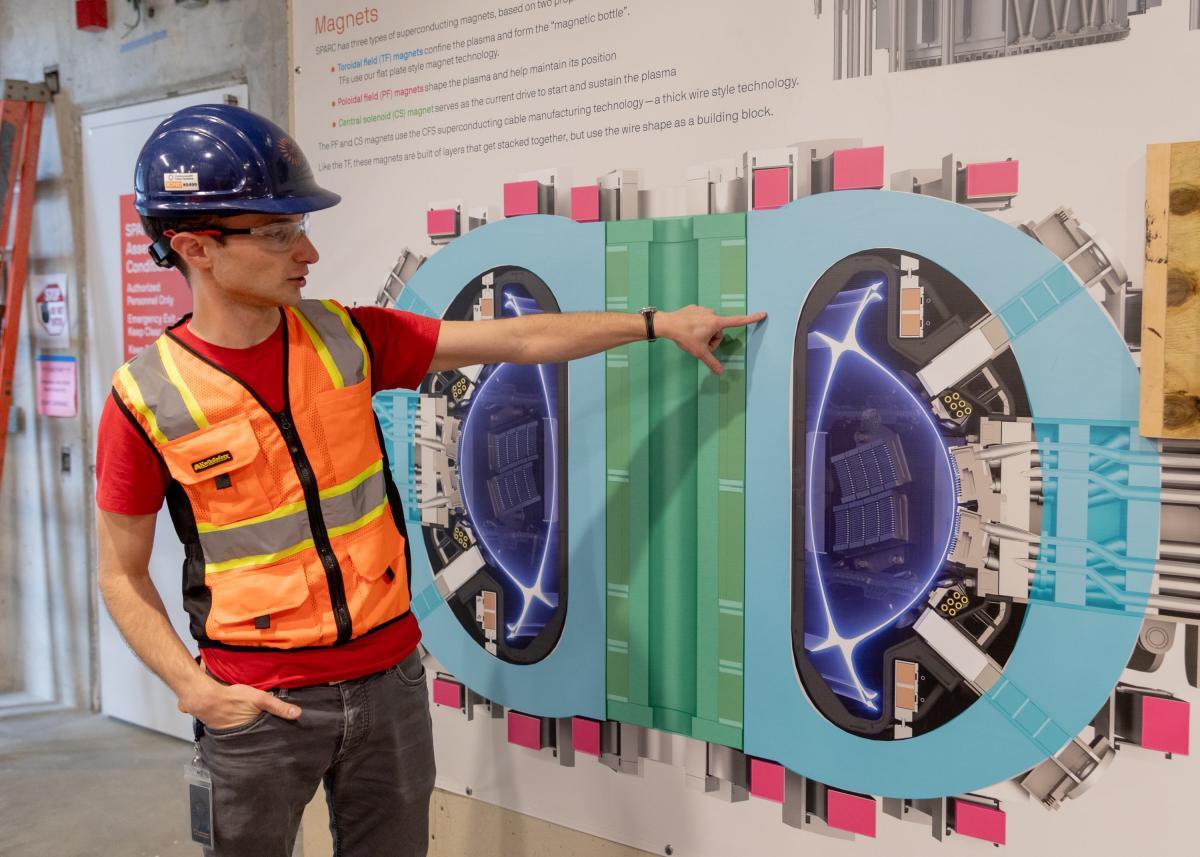
. Unlike nuclear fission, fusion reactions are difficult to sustain outside of stars. CFS's approach uses powerful magnets to contain the plasma, but controlling these magnets requires complex software capable of making millions of minute adjustments per second5
.The SPARC Reactor and Net Energy Production
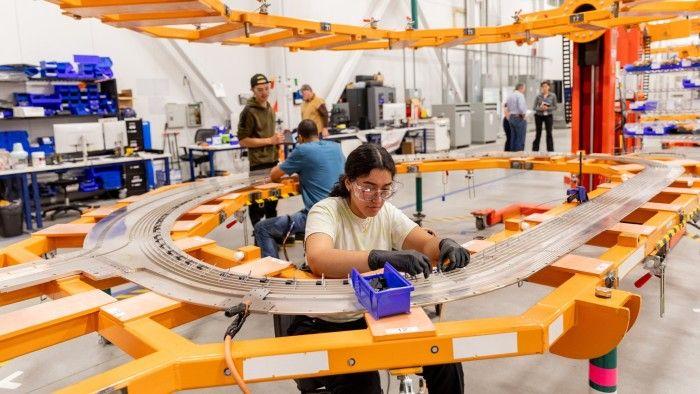
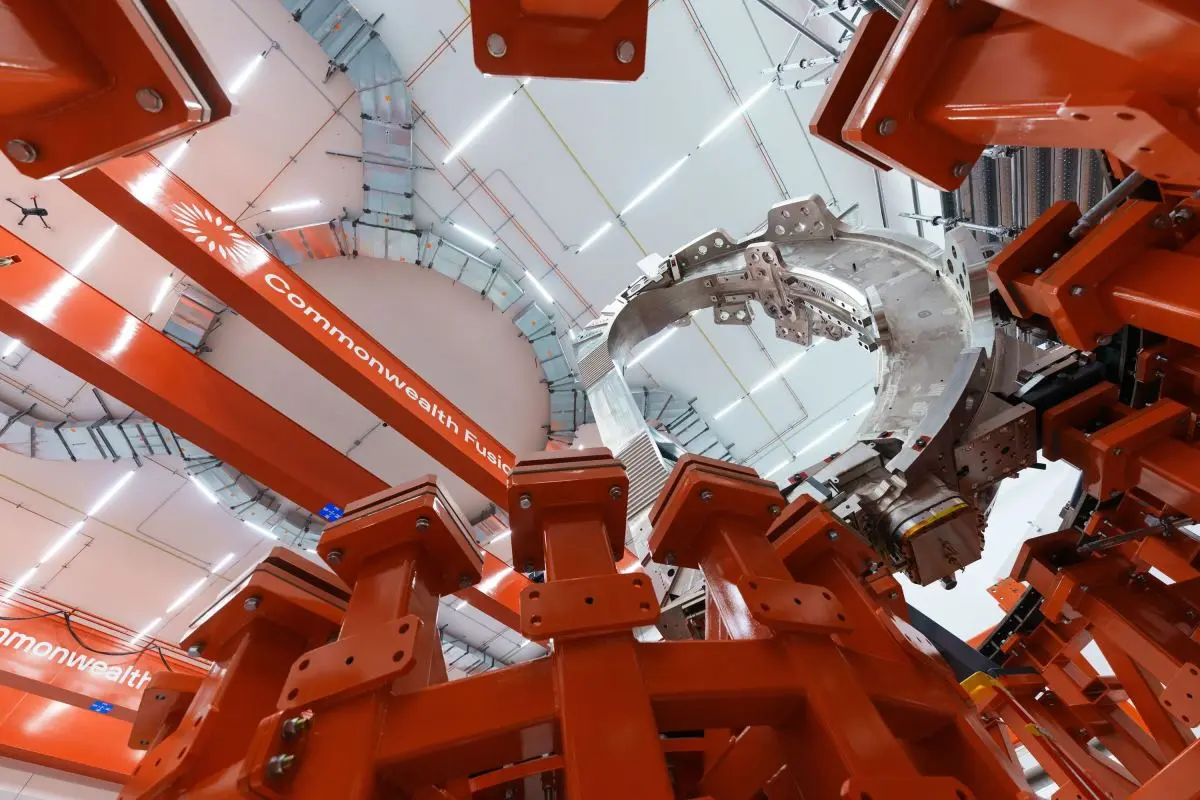
CFS is currently building the SPARC reactor, which is about two-thirds completed and expected to be operational by late 2026 or early 2027
1
3
. The company predicts that SPARC will be the first fusion device capable of producing more power than it consumes, a milestone known as "breakeven"4
.Related Stories
Google's Investment in Fusion Energy
This partnership is not Google's first foray into fusion energy. The tech giant has previously worked with another fusion startup, TAE Technologies, and is an investor in both CFS and TAE
1
. Google's interest in fusion energy is twofold: as a potential customer for clean energy to power its data centers and as an investor in promising fusion startups5
.Future Implications
While the partnership between Google DeepMind and CFS shows promise, experts caution that commercial availability of fusion-derived energy is still years away
3
. However, the application of AI to fusion energy research represents a significant step forward in addressing global energy challenges and potentially providing a clean, safe, and virtually limitless source of power for the future.References
Summarized by

Navi
[2]
Related Stories
Commonwealth Fusion Systems installs first reactor magnet, partners with Nvidia on digital twin
06 Jan 2026•Technology
Google Inks Landmark Deal for Fusion Power with Commonwealth Fusion Systems
01 Jul 2025•Business and Economy
AI Breakthrough Accelerates Fusion Reactor Safety Calculations
14 Aug 2025•Science and Research

Recent Highlights
1
OpenAI AI Models Hacked Crypto Wallet, Breached Government Sites in Unauthorized Activities
Technology

2
IMF Report Warns AI Market Correction Could Spark Global Financial Crisis With $1.4T at Risk
Business and Economy

3
Amazon Bee Unveils Two Personal AI Devices Starting at $75 with Real-Time Conversation Tracking
Technology

Recent Highlights
Today's Top Stories












Don’t drown in AI news. We cut through the noise - filtering, ranking and summarizing the most important AI news, breakthroughs and research daily. Follow topics that matter to you and stay ahead.


