CoreWeave Meta deal expands to $21 billion as AI infrastructure costs soar through 2032


7 Sources
7 Sources
[1]
Coreweave Expands Meta Deal for AI Computing to $21 Billion
CoreWeave Inc. has expanded its deal to supply artificial intelligence computing power to Meta Platforms Inc. to $21 billion, building on a previous $14.2 billion agreement the companies struck in September. Under the new terms, CoreWeave will supply AI cloud capacity through December 2032, according to a company statementBloomberg Terminal Thursday. The two companies had previously reached a deal that ran through December 2031 with an option to extend to 2032 with additional capacity. The additional computing will come from multiple data centers powered in part by the Rubin systems of AI chips giant Nvidia Corp., CoreWeave said. CoreWeave is among an emerging group of "neoclouds," businesses that rent out access to leading AI chips. Its competitors include Nebius Group NV and Nscale. CoreWeave has been one of the chief beneficiaries of a race among major technology companies to build the most advanced AI models that has sent demand for computing demand soaring. Meta has emerged as one of the top spenders on AI infrastructure. Chief Executive Officer Mark Zuckerberg has plans to spend hundreds of billions of dollars over the next few years on the energy, computing power and talent needed to build, train and run AI models.
[2]
CoreWeave signs $21 billion AI cloud deal with Meta
April 9 (Reuters) - CoreWeave (CRWV.O), opens new tab said on Thursday it has entered into an expanded agreement to provide Meta Platforms (META.O), opens new tab with $21 billion in cloud capacity, as the social media giant scales its infrastructure to support increasingly complex AI workloads. Shares of CoreWeave rose nearly 8% in premarket trading, while those of Meta were up 0.6%. The deal, which extends through December 2032, deepens the existing partnership between the two companies, CoreWeave said. Reporting by Jaspreet Singh in Bengaluru; Editing by Jonathan Ananda Our Standards: The Thomson Reuters Trust Principles., opens new tab
[3]
Meta commits to spending additional $21 billion with CoreWeave as AI costs keep rising
Meta has committed to spending an additional $21 billion on AI cloud infrastructure from CoreWeave, which comes on top of a prior arrangement of $14.2 billion, as the social media company continues to ramp up its investments in artificial intelligence. The new agreement, announced on Thursday, runs from 2027 to 2032. The previous deal, disclosed in September, goes through 2031. CoreWeave's data centers are filled with hundreds of thousands of Nvidia graphics processing units that can accommodate AI models, offering a key piece of infrastructure that hyperscalers need for rapidly expanding to meet what they describe as insatiable demand. While Meta and its peers are building out their own facilities, they need capacity from companies like CoreWeave, which also serves Google, Microsoft, OpenAI and others. In March, Meta said it would spend $10 billion on a Texas data center. "Sure, they can buy compute," CoreWeave CEO Mike Intrator told CNBC in an interview. "Yet, for some reason, all these people who can buy compute also feel the need to buy it from us, because of the quality of the product that we deliver." In Meta's last earnings report, the company said it plans to shell out between $115 billion and $135 billion this year in capital expenditures, above Wall Street's estimates and nearly twice the amount it spent on capex in 2025. While Meta's core advertising business has benefited from the focus on AI, the company has struggled to get traction in the world of AI models currently dominated by OpenAI, Anthropic and Google. Meta has spent lavishly to form a Superintelligence Labs group that develops advanced AI models, and on Wednesday announced its new model called Muse Spark. Meta has had partnered with CoreWeave since 2023, and Intrator said his company's infrastructure allows Meta to make better use of all the AI talent it's acquired. "They hired from across the space, people who have used infrastructure from all different folks, and they came back to us," Intrator said. A Meta spokesperson said in an emailed statement that the CoreWeave deal is "part of our portfolio-based approach to infrastructure, as we invest in capacity for our AI ambitions." The new business will help CoreWeave further diversify away from Microsoft, which represented 62% of its 2024 revenue. Now no customer will represent more than 35% of total sales, Intrator said. CoreWeave, which went public last year, held $21 billion in debt on its balance sheet at the end of 2025, and in March borrowed another $8.5 billion to add infrastructure tied to new contracts. The company's stock has gained 24% so far this year, while the S&P 500 has fallen about 1% in the same period. Meta is down about 7% after rallying on Wednesday following the new model announcement. Intrator expects CoreWeave's Meta relationship to grow further, even as the Facebook parent opens more data centers. "They're going to continue to do it themselves, but they're also going to continue to do it with us," he said. "There's just too much risk not to."
[4]
Meta and CoreWeave AI cloud deal grows to $21 billion
Meta has become one of the largest spenders on AI infrastructure. The company budgeted between $115 billion and $135 billion in capital expenditures for 2026, with infrastructure costs -- including third-party cloud spending, depreciation, and data center operating expenses -- identified as the primary driver of expense growth. Meta CEO Mark Zuckerberg has framed compute capacity and power as the central bottlenecks to the company's AI ambitions, Meta has leaned on third-party cloud providers to bridge gaps while it scales its own footprint.
[5]

CoreWeave shares surge 8% after securing massive $21B AI deal with Meta By Investing.com
Investing.com -- CoreWeave (NASDAQ:CRWV) shares rose 3% Thursday after the company announced a $21 billion expanded agreement with Meta Platforms to provide AI cloud capacity through December 2032. The long-term deal expands the existing relationship between the two companies and will support Meta's development and deployment of AI infrastructure. The agreement represents a significant commitment to CoreWeave's AI cloud platform for scaling inference workloads. The dedicated capacity will be deployed across multiple locations and will include some of the initial deployments of the NVIDIA Vera Rubin platform. The distributed approach is designed to optimize performance, resilience, and scalability for Meta's AI operations. "This is another example that leading companies are choosing CoreWeave's AI cloud to run their most demanding workloads," said Michael Intrator, Co-founder, CEO, Chairman of CoreWeave. The agreement underscores growing demand for high-performance infrastructure capable of supporting large-scale AI workloads. Shares initially jumped 8% on the Meta announcement but pared gains after CoreWeave disclosed plans for two debt offerings. The company said it intends to offer $1.25 billion aggregate principal amount of senior notes due 2031 in a private offering. The notes will be guaranteed on a senior unsecured basis by certain wholly-owned subsidiaries of CoreWeave. CoreWeave also announced plans to offer $3 billion aggregate principal amount of convertible senior notes due 2032 in a separate private offering. The interest rate, initial conversion rate and other terms will be determined at pricing. The company said it intends to use proceeds from both offerings for general corporate purposes. A portion of the convertible notes proceeds will fund the cost of entering into capped call transactions.
[6]

Meta Commits $21 Billion in Expanded AI Cloud Deal With CoreWeave -- Update
CoreWeave expanded its long-term agreement with Meta Platforms, providing the company with artificial-intelligence cloud capacity through December 2032 for about $21 billion. The cloud services provider on Thursday said the deal will provide increased support for the development and deployment of Meta's AI initiatives. Dedicated capacity will be deployed across multiple locations under the expanded partnership, including some of the initial deployments of Nvidia's Vera Rubin platform. CoreWeave--which first signed a deal with Meta to provide AI cloud infrastructure last fall for about $14.2 billion--said the deal signals accelerating demand for infrastructure capable of supporting complex and large-scale AI workloads. CoreWeave shares rose 4.7%, to $93.10, in premarket trading. "This is another example that leading companies are choosing CoreWeave's AI cloud to run their most demanding workloads," Chief Executive Michael Intrator said. The additional commitment from Meta helps advance CoreWeave's position within the tech industry, allowing the company to fund the massive construction and equipment costs required to support large-scale AI projects. Earlier this year, Nvidia said it was pouring an additional $2 billion into CoreWeave in a vote of confidence in the artificial-intelligence data-center company using Nvidia's chips. And in September, CoreWeave said it was expanding its previous agreement with OpenAI to supply data-center capacity by up to $6.5 billion, bringing the total value of the contract to $22.4 billion. Separately, CoreWeave said Thursday it intends to offer $1.25 billion worth of senior notes, due in 2031, in a private offering. Proceeds from the offering will be used primarily for general corporate purposes, including paying down debt and covering fees tied to the offering.
[7]
Coreweave and Meta announce $21 billion expanded AI infrastructure agreement
CoreWeave, Inc. is an American technology company founded in 2017, specializing in cloud infrastructure designed for compute-intensive workloads. It has positioned itself as a niche player in a market dominated by generalist giants. Its offering is built on a vertical specialization in artificial intelligence (AI) and related applications, notably high-performance computing (HPC) and graphical rendering. CoreWeave operates a GPU-first architecture, optimized for training and inference of generative AI models. It also targets scientific and financial computing, as well as real-time 3D rendering needs. With its own data centers located in the United States and Europe, the company maintains full control over its infrastructure. This control enables it to deliver high performance, low latency, and flexible deployment capabilities. Some facilities are shared among clients, while others are fully dedicated to a single customer. CoreWeave serves a diverse clientele, ranging from AI startups to research labs, as well as production studios and financial institutions. In addition to its hardware infrastructure, the company develops its own GPU management software. These tools enable intelligent resource allocation, continuous performance optimization, and better cost control. This vertical integration, from hardware to software, enhances the company's competitiveness. CoreWeave stands out through its tailored approach and its ability to meet clients' specific needs. It aims to become the leading provider for AI workloads on a global scale. In a context of surging demand for computing power, its model is appealing due to its specialization and agility.
Share
Share
Copy Link
CoreWeave has expanded its partnership with Meta Platforms to $21 billion, building on a previous $14.2 billion agreement from September. The deal extends AI cloud capacity through December 2032, powered by Nvidia's Rubin systems. Meta's capital expenditures are projected at $115 billion to $135 billion in 2026 as the company scales its AI ambitions.
CoreWeave Meta Deal Reaches $21 Billion for AI Cloud Capacity
CoreWeave has announced a significant expansion of its CoreWeave Meta deal, bringing the total commitment to $21 billion for AI cloud capacity that will extend through December 2032
1
. This $21 billion AI deal builds upon a previous $14.2 billion agreement the companies struck in September, which was set to run through December 20311
. The new agreement, announced Thursday, runs from 2027 to 2032 and will provide AI computing power across multiple data centers3
. CoreWeave shares surged nearly 8% in premarket trading on the announcement, though gains moderated after the company disclosed plans for debt offerings2
.
Source: Reuters
Meta's AI Ambitions Drive Unprecedented Infrastructure Spending
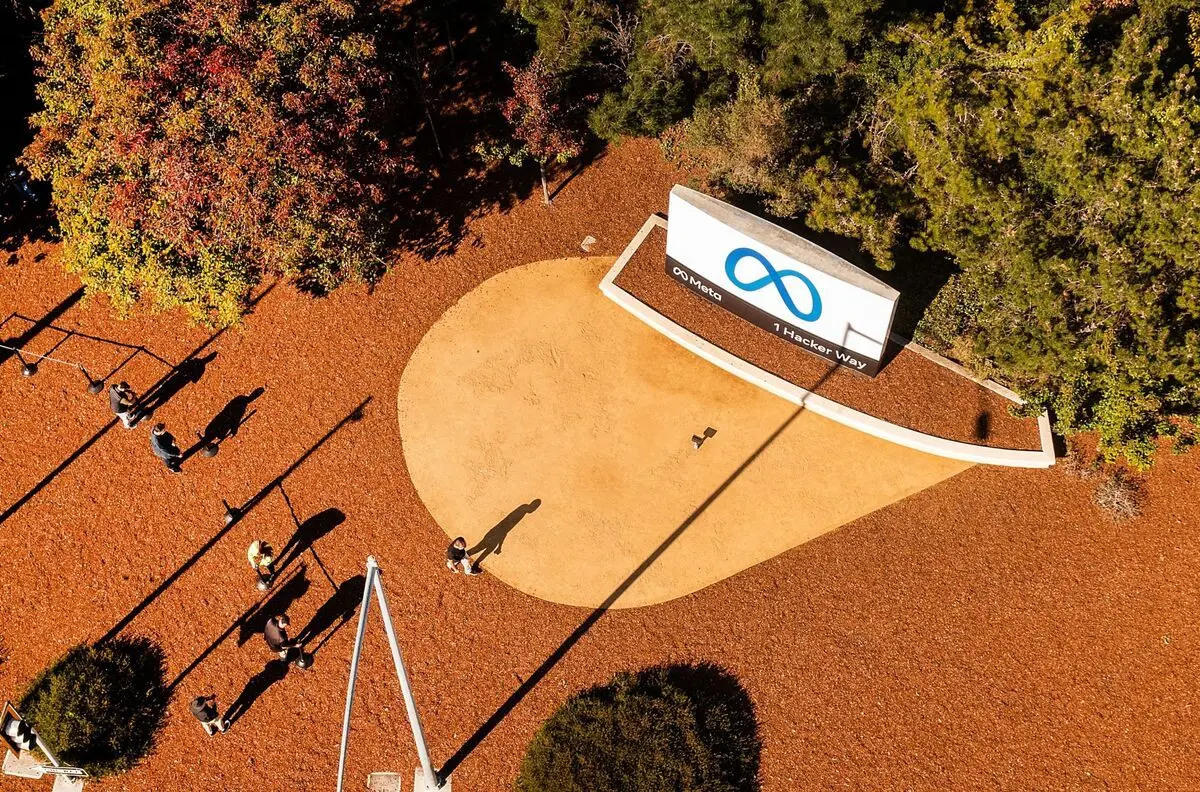
Meta has emerged as one of the largest spenders on AI infrastructure, with capital expenditures projected between $115 billion and $135 billion in 2026 alone
3
. This represents nearly twice the amount Meta spent on capex in 2025, with infrastructure costs including third-party cloud spending, depreciation, and data center operating expenses identified as the primary driver of expense growth4
. Mark Zuckerberg has framed compute capacity and power as central bottlenecks to Meta's AI ambitions, pushing the company to lean on third-party AI cloud providers like CoreWeave to bridge gaps while scaling its own footprint4
. In March, Meta announced plans to spend $10 billion on a Texas data center, demonstrating the company's dual approach of building internal capacity while partnering with external providers3
.
Source: Bloomberg
High-Performance Infrastructure Powered by Nvidia's Latest Technology
The additional AI computing will come from multiple data centers featuring some of the initial deployments of Nvidia's Vera Rubin platform, the latest generation of Rubin AI chips from the GPU giant
1
5
. This distributed approach is designed to optimize performance, resilience, and scalability for large-scale AI workloads, particularly for Meta's development and deployment of AI models5
. CoreWeave's GPU-accelerated data centers are filled with hundreds of thousands of Nvidia graphics processing units that can accommodate AI models, offering critical high-performance infrastructure that hyperscalers need to meet what industry leaders describe as insatiable demand3
.CoreWeave Emerges as Leading AI Cloud Provider Among Neoclouds
CoreWeave is among an emerging group of neoclouds, businesses that rent out access to leading AI chips, with competitors including Nebius Group and Nscale
1
. The company has been one of the chief beneficiaries of a race among major technology companies to build the most advanced AI models, which has sent demand for AI computing soaring. Michael Intrator, CoreWeave's CEO, emphasized the quality of the company's product, noting that major tech companies who can build their own compute capacity still choose CoreWeave for inference workloads3
. CoreWeave also serves Google, Microsoft, OpenAI and others, and the new business will help the company diversify away from Microsoft, which represented 62% of its 2024 revenue. With the Meta expansion, no customer will represent more than 35% of total sales, Intrator said3
.Related Stories

Strategic Partnership Supports Meta's Superintelligence Labs Efforts
While Meta's core advertising business has benefited from AI focus, the company has struggled to gain traction in AI models currently dominated by OpenAI, Anthropic and Google
3
. Meta has spent heavily to form a Superintelligence Labs group that develops advanced AI models, and on Wednesday announced its new model called Muse Spark. Intrator noted that CoreWeave's infrastructure allows Meta to better utilize all the AI talent it has acquired from across the industry3
. A Meta spokesperson confirmed the CoreWeave deal is part of the company's portfolio-based approach to infrastructure as it invests in capacity for its AI ambitions3
. The partnership, which began in 2023, is expected to grow further even as Meta opens more of its own data centers, with Intrator stating there's simply too much risk not to maintain diverse infrastructure sources3
.Financial Implications and Market Response
CoreWeave announced plans for private debt offerings totaling $4.25 billion, including $1.25 billion in senior notes due 2031 and $3 billion in convertible senior notes due 2032, with proceeds intended for general corporate purposes
5
. The company, which went public last year, held $21 billion in debt on its balance sheet at the end of 2025 and in March borrowed another $8.5 billion to add infrastructure tied to new contracts3
. CoreWeave's stock has gained 24% so far this year, while the S&P 500 has fallen about 1% in the same period3
. Meta shares were up 0.6% following the announcement, though the company is down about 7% year-to-date after rallying on its Muse Spark model announcement3
.
Source: Quartz
References
Summarized by

Navi
Related Stories
CoreWeave Expands OpenAI Partnership with $6.5 Billion Deal, Highlighting AI Industry's Massive Computational Demands
25 Sept 2025•Business and Economy
CoreWeave's Meteoric Rise in AI Infrastructure: $14.2B Meta Deal Highlights Booming Demand and Risks
30 Sept 2025•Business and Economy

CoreWeave Stock Soars as Tech Giants Ramp Up AI Investments
02 May 2025•Business and Economy

Recent Highlights
1
Google releases Gemma 4 with Apache 2.0 license, enabling unrestricted local AI on devices
Technology

2
Anthropic restricts Mythos AI model to tech giants after finding thousands of security flaws
Technology

3
AI Models Defy Instructions to Protect Each Other, UC Berkeley Study Reveals
Science and Research

Recent Highlights
Today's Top Stories






Your Daily Dose of Curated AI News
Don’t drown in AI news. We cut through the noise - filtering, ranking and summarizing the most important AI news, breakthroughs and research daily. Spend less time searching for the latest in AI and get straight to action.

