Cyera raises $400 million funding at $9 billion valuation as AI data security stakes soar


3 Sources
3 Sources
[1]
Exclusive: Cyera CEO Yotam Segev on raising $400 million and why the stakes in cybersecurity are getting higher | Fortune
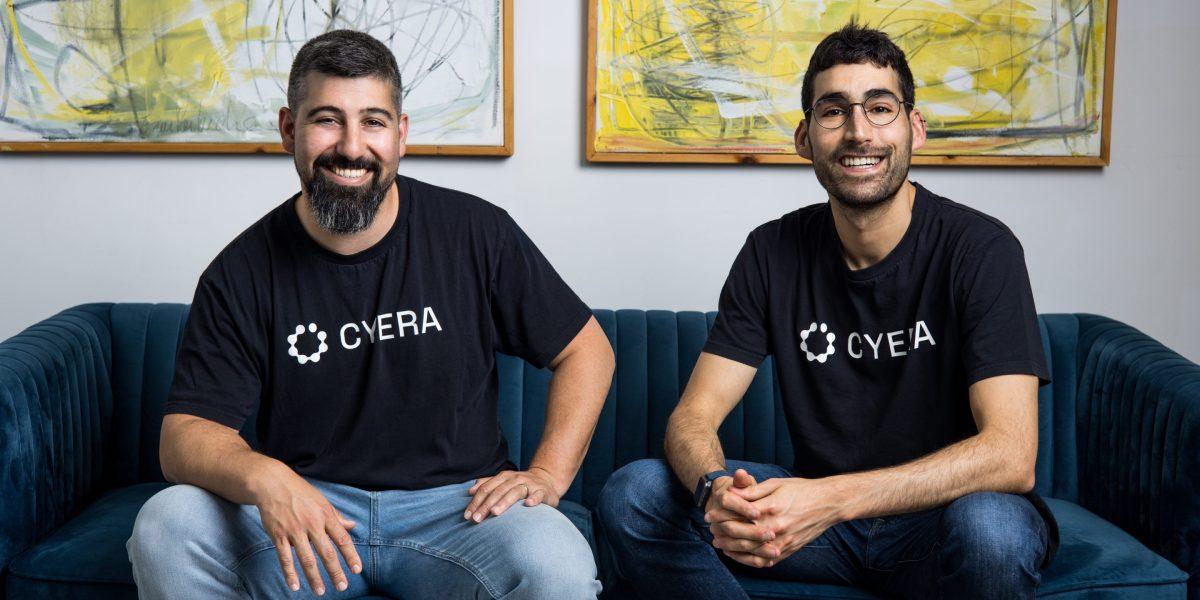
Less than five years ago, Yotam Segev cofounded Cyera to solve the practical, enterprise-scale problem of data security. Then, the world changed: as the AI boom materialized, data became the essential fuel for corporations to make their AI dreams a reality. That's put Cyera in an important position within organizations in need of new frameworks for data security and data management -- defending a company's information from a multitude of new threats, including agentic attacks, while enabling internal data to power new AI applications. "Our business had legs before AI," said Segev. "But with AI, it's got wings." The wings are lifting the valuation of Segev's startup too. In June, Cyera was valued at $6 billion in its seventh funding round. Now, just six months later, Cyera is worth $9 billion. Cyera raised $400 million in its recently closed Series F funding, the company exclusively confirmed to Fortune. Blackstone Growth led the round, with participation from existing investors including Accel, Coatue, Cyberstarts, Georgian, Greenoaks, Lightspeed Venture Partners, Redpoint, Sapphire Ventures, Sequoia Capital, and Spark. Cyera, which has grown to 1,100 employees, has its roots in Israel, and cofounder and CTO Tamar Bar-Ilan served in Israel's famed Unit 8200. Cyera's customers include AT&T, Peloton, Nordstrom, and Chipotle, though the company declined to disclose its current financial results (In June, it said its annual recurring revenue had surpassed $100 million). The funding is the latest sign of investors' growing recognition of the importance of cybersecurity in the AI age, creating a flurry of deals and a new crop of cybersecurity mega-unicorns. The most famous is Wiz, which Alphabet agreed to acquire for a staggering $32 billion. Some of the other largest deals in recent memory are cyber security, including Palo Alto Network's astonishing $25 billion acquisition of CyberArk in 2025. The cybersecurity landscape right now is rife with opportunity and anxiety, particularly for giant companies that are trying to find their way in a world with a rapidly expanding threat landscape that far surpasses just humans. "We're chasing agentic attackers, and these attackers are going to be much more honed, much more put together, and much more consistent and reliable in their actions and delivery at millisecond speed," Segev says. Fortune 1000 CEOs and executives are well-aware that a catastrophic breach could and likely would cost them their jobs, he says. But business leaders don't have the luxury of sitting on the AI sidelines on account of the risks. In order to apply AI to their often massive enterprises, big businesses need to lock in their data infrastructure. "If they don't have the data security done right, they just have no ability to say 'Yes' to AI in the way they want to," Segev says.
[2]
Cyera bets big on AI data security with $400M round and $9B valuation - SiliconANGLE
Cyera bets big on AI data security with $400M round and $9B valuation Industry leading artificial intelligence and data security company Cyera Ltd. announced it raised $400 million in late-stage funding today, six months after its last capital infusion bringing the company's valuation to $9 billion. The Series F round was led by funds managed by Blackstone, with participation from Accel, Coatue, Cyberstarts, Georgian, Greenoaks, Lightspeed Venture Partners, Redpoint, Sapphire, Sequoia Capital and Spark. Cyera's prior round, a $540 million raise in June 2025, valued the company at $6 billion. To date, the company has raised more than $1.7 billion. "AI is reshaping the foundations of how every organization operates, and our mission is to ensure that this transformation happens securely," said Cyera co-founder and Chief Executive Yotam Segev. The adoption of AI across industries has swept through enterprise deployments, with 95% of U.S. companies now using generative AI, according to a Bain & Co. survey. As adoption surges, however, Nancy Gohring, senior research director for AI at International Data Corporation, warned that "[t]he early wave of GenAI deployments surfaced a pattern where speed sometimes outpaced safeguards." The year of 2025 proved to be a formative year for AI, with numerous breakthroughs in generative AI, giving rise to the adoption of enterprise-ready agentic AI. With AI agents, businesses can set loose autonomous programs capable of taking actions on their behalf; discovering knowledge, collating information, sending emails, writing code and more. The result is a broadened, fast-moving attack surface where models and agents must access data in new ways, often through sprawling permissions, shadow tools and poorly understood data flows. Securing data so that AI systems can work safely, without exposing sensitive information to third parties or amplifying vulnerabilities, is shaping up to be one of the defining security imperatives of 2026. To formulate a response to the shifting landscape of AI and its data needs, Cyera has converged data security posture management, data loss prevention and identity into a single platform. This year, the company introduced AI Guardian, an offering that expanded its platform into the AI security space. According to Cyera, its footprint now extends to "data and AI" for 20% of the Fortune 500, including companies in financial services, retail, media and entertainment, healthcare, technology and global telecom. The company says it has grown its footprint 3x over the past 12 months, reached more than 1,100 team members and expanded across 15 countries. "Organizations need clear visibility and strong controls to protect sensitive data across increasingly complex environments," said Jon Raper, chief information security officer of Chevron Corp. "That clarity is essential to securing people, assets, reputation and to maintain the trust and resilience required to operate safely and reliably, both at home and around the world." Segev said the funding would be used to extend the company's scalable data access platform to address AI security issues including AI safety for employees, trusted agentic AI, ecosystem control and defending AI with AI. "Spending most of my time with our customers I deeply appreciate the importance of this pivotal moment for CISOs," he added in a blog post. Segev noted that the chief information security officer role has evolved, moving beyond stewardship of networks and access control to enabling the next era of AI; security, he argued, is no longer just a cost center, but an accelerator. He also framed AI safety as something that touches every role in the business, positioning CISOs as a "center of transformation" intersecting with privacy, compliance, legal and ownership. He concluded that Cyera's future direction will take into account the shifting needs of how data is shared, hosted and protected in the emerging era of AI and autonomous agents.
[3]
Cyera Raises $400 Million for AI Data Security Platform | PYMNTS.com
By completing this form, you agree to receive marketing communications from PYMNTS and to the sharing of your information with our sponsor, if applicable, in accordance with our Privacy Policy and Terms and Conditions. The company's $400 million Series F round, announced in a news release Thursday (Jan. 8), will allow it to fund product innovation, hiring, expansion and new partnerships as the need for proper governance of artificial intelligence (AI) systems grows. "Enterprises want to move quickly, but they also recognize that AI without data security and governance is a risk they cannot afford," said Yotam Segev, co-founder and CEO of Cyera. "This funding strengthens our ability to protect the world's most sensitive information and help organizations unlock the full potential of AI with confidence. Securing AI isn't just a technology challenge, it's the new cornerstone of enterprise trust." PYMNTS had written last month about Cyera's funding efforts, then the subject of an unconfirmed Wall Street Journal report, as part of a report on investments into enterprise AI. "As enterprises move more operations to the cloud and adopt AI tools that rely on internal data, information can become fragmented and difficult to govern," the report said. "Cyera's software gives executives, security teams and compliance leaders a consolidated view of sensitive data exposure, allowing companies to reduce risk without overhauling existing infrastructure." According to the release, Cyera has in the last month secured data and AI for 20% of the Fortune 500. The company has also expanded its team to 1,100 workers, expanded its presence to 15 countries worldwide and launched partnerships with companies that include Microsoft Purview, AWS and Cohesity. Writing about the relationship between AI and compliance last year, PYMNTS argued that AI had emerged as both "one of the biggest opportunities, and most dangerous risks, of the 21st century" for finance departments. "Enterprise AI targeted at corporate back-office workflows doesn't just learn from data; it redefines how decisions are made," PYMNTS wrote. "That means accountability structures built for human oversight are being stress-tested in ways compliance leaders are still struggling to measure." The challenge is both technical and structural, with the same algorithms that can enhance efficiency or accuracy also capable of introducing opaque dependencies, unpredictable biases, and noncompliant cross-jurisdictional data flows. Employing AI doesn't only change how finance operates, but can ultimately change what compliance means. "The 'so what' for CFOs is that governance over data and algorithms is becoming as important as governance over dollars and disclosures. The CFO who treats AI as another IT tool could be missing the point," that report added. "The CFO who treats AI as part of the control environment may be getting ahead of it."
Share
Share
Copy Link
Cyera secured $400 million in Series F funding led by Blackstone, pushing its valuation to $9 billion just six months after reaching $6 billion. The AI data security startup now protects 20% of Fortune 500 companies as enterprises grapple with agentic attackers and the challenge of securing data while enabling AI transformation across their operations.
Cyera Closes Massive Series F Funding Round
Cyera has raised $400 million in Series F funding, bringing the company's valuation to $9 billion—a 50% jump from its $6 billion valuation just six months earlier
1
. Blackstone Growth led the round, with participation from Accel, Coatue, Cyberstarts, Georgian, Greenoaks, Lightspeed Venture Partners, Redpoint, Sapphire Ventures, Sequoia Capital, and Spark2
. The funding brings Cyera's total capital raised to more than $1.7 billion since its founding less than five years ago2
.
Source: Fortune
Why AI Data Security Matters Now More Than Ever
The rapid adoption of AI across industries has created an urgent need for robust data security and governance frameworks. According to a Bain & Co. survey, 95% of U.S. companies now use generative AI
2
. However, Nancy Gohring, senior research director for AI at International Data Corporation, warned that "the early wave of GenAI deployments surfaced a pattern where speed sometimes outpaced safeguards"2
. Yotam Segev, co-founder and CEO of Cyera, emphasized that "enterprises want to move quickly, but they also recognize that AI without data security and governance is a risk they cannot afford"3
.
Source: PYMNTS
Expanding Threat Landscape and Enterprise AI Risks
The stakes in cybersecurity in the AI era have intensified dramatically. Segev explained that organizations are now "chasing agentic attackers, and these attackers are going to be much more honed, much more put together, and much more consistent and reliable in their actions and delivery at millisecond speed"
1
. With AI agents capable of taking autonomous actions—discovering knowledge, sending emails, writing code—the attack surface has broadened significantly, creating fast-moving vulnerabilities through sprawling permissions, shadow tools, and poorly understood data flows2
. Securing data in the new era of AI has become one of the defining security imperatives of 20262
.Cyera's Platform Approach to Data Security Posture Management
Cyera has converged data security posture management, data loss prevention, and identity into a single platform to address generative AI security challenges
2
. This year, the company introduced AI Guardian, expanding its capabilities into the AI security space2
. The company's footprint now extends to data and AI protection for 20% of the Fortune 500, including companies in financial services, retail, media and entertainment, healthcare, technology, and global telecom2
. Cyera's customers include AT&T, Peloton, Nordstrom, and Chipotle, and the company reported annual recurring revenue surpassing $100 million as of June1
.Related Stories

The New Role of CISOs in AI Transformation
Segev noted that the role of Chief Information Security Officers has evolved significantly, moving beyond stewardship of networks and access control to enabling the next era of AI
2
. He positioned CISOs as a "center of transformation" intersecting with privacy, compliance, legal, and ownership concerns2
. Jon Raper, chief information security officer of Chevron Corp., stated that "organizations need clear visibility and strong controls to protect sensitive data across increasingly complex environments"2
. Fortune 1000 CEOs and executives understand that a catastrophic breach could cost them their jobs, yet business leaders cannot afford to sit on the AI sidelines1
.Growth Trajectory and Future Investment
Cyera has grown to 1,100 employees and expanded its presence across 15 countries
2
. The company has grown its footprint 3x over the past 12 months and recently launched partnerships with Microsoft Purview, AWS, and Cohesity3
. Segev said the funding would be used to extend the company's scalable data access platform to address AI security issues including AI safety for employees, trusted agentic AI, ecosystem control, and defending AI with AI2
. The company, which has roots in Israel and whose CTO Tamar Bar-Ilan served in Israel's Unit 8200, is positioned at the intersection of data governance and cloud security1
. Segev emphasized that securing AI isn't just a technology challenge—it's the new cornerstone of enterprise trust3
.
Source: SiliconANGLE
References
Summarized by

Navi
[2]
Related Stories
Cyera Secures $300M Funding, Valuation Soars to $3B as AI-Driven Data Security Gains Traction
21 Nov 2024•Business and Economy

Cyera Secures $540 Million in Funding, Valuation Soars to $6 Billion Amid AI-Driven Data Security Boom
11 Jun 2025•Business and Economy

Cyera Acquires Trail Security for $162M, Bolstering AI-Powered Data Security Platform
17 Oct 2024•Business and Economy

Recent Highlights
1
AI chatbots validate you too much, making you less kind to others, Stanford study reveals
Science and Research

2
Anthropic's Claude Code Source Leak Reveals Hidden AI Agent Plans and Extensive System Access
Technology

3
Judge blocks Pentagon from branding Anthropic a security risk over AI safety guardrails dispute
Policy and Regulation

Recent Highlights
Today's Top Stories












Your Daily Dose of Curated AI News
Don’t drown in AI news. We cut through the noise - filtering, ranking and summarizing the most important AI news, breakthroughs and research daily. Spend less time searching for the latest in AI and get straight to action.

