Darren Aronofsky's AI-Generated Revolutionary War Series Faces Harsh Backlash Over Quality


9 Sources
9 Sources
[1]
Darren Aronofsky, Your AI Slop Is Ruining American History in 'On This Day...1776'
30 years experience at tech and consumer publications, print and online. Five years in the US Army as a translator (German and Polish). Just over 2 minutes into an early episode of the new short film series, On This Day...1776, we see a hand sweep tenderly over the title page of Thomas Paine's just-published firebrand pamphlet Common Sense; Addressed to the Inhabitants of America. Only, in that moment, "America" vanishes, replaced by the all-caps nonsense text "Aamereedd." It's a classic tell that we're in the presence of generative AI. But this isn't the gotcha moment you might think it is. The filmmakers behind the series, led by executive producer Darren Aronofsky, are fully embracing generative video. That's as big a driving force behind "On This Day...1776" as the intention to tell stories of the American Revolution in this 250th anniversary year. Aronofsky is known for directing high-profile films including Black Swan, The Whale and Mother, but he's also the founder of Primordial Soup, the AI-first studio that created On This Day...1776. Its larger ambition, according to its website, is to fuse art and technology into a new creative model, "merging bold narrative, emotional depth, and experimental work flows." That is, the studio wants to use AI to create bona fide art. Good luck with that. Because Darren? Y'all are making a mess of it with this project. I've been watching the episodes as they drop on YouTube, and I am dumbfounded. Bold narrative? More like performative staging, tipping over into self-parody. Emotional depth? About as much as you'd find on the cover of the average history textbook. It's hellish broth of machine-driven AI slop and bad human choices. At least they're on point with the whole "experimental work flows" thing. Creative people in Hollywood and beyond are staring down the barrel of artificial intelligence systems that threaten to take away their livelihoods and devalue the skills they've worked lifetimes to perfect. Aronofsky and Primordial Soup say they're trying to find a way forward in blending human talent and agency with AI tools that have inevitability written all over them. We're living through an anxiety-ridden moment induced by powerful image and video tools like Google's Veo and Nano Banana and OpenAI's Sora, along with the introduction of an AI ingenue named Tilly Norwood. Two years after strikes in Hollywood over the use of AI in movies and TV shows, Walt Disney Studios in late December reached a deal with OpenAI allowing AI to slurp up characters from Marvel, Pixar and Star Wars. In an interview with The Guardian last summer, not long after Primordial Soup launched, Aronofsky acknowledged that AI tools are being widely used to create slop, citing that as motivation. "There are a lot of artists who are fighting against AI, but I don't see that as making any sense," he said. "If we don't shape these tools, somebody else will." But the way to fight AI slop -- slick but soulless images and video, superficially articulate text that lacks any true understanding of the real world, and all of it flooding the internet -- is not with more AI slop. Which, I'm sorry, is what we've got with On This Day...1776. The episodes in On This Day...1776 are meant to recreate signature moments from that foundational year, debuting weekly on the date of the moment being depicted. They're under 5 minutes in length, so on that basis alone, don't expect Ken Burns' The American Revolution. So far, those moments include George Washington's defiant raising of an American flag and the publication of Paine's Common Sense. On the plus side, there's crispness to the pacing (an artifact, perhaps, of time limits on AI's video generation), richness of detail and a sense that the filmmakers are trying to give us a "you are there" feel. But the overall effect lands somewhere between unsettling and laughable. The flag episode has the heavy-handed feel of a recruitment ad for the Continental Army, not any kind of meaningful narrative. A drawing room encounter between Paine and Ben Franklin would be right at home with the fabricated interactions in a corporate HR training video. Across the episodes, there are odd directorial and editing choices. Tight shots of buckled shoes and the backs of people's heads. The passing of a scroll from hand to hand in quick-cut scenes. Ludicrously overdramatic titling sequences introducing famous figures. An 8-second sequence in the flag episode that subjects us to closeups of one mouth after another shouting. Presumably, these filmmaking decisions were made by humans. Then there's the AI. Faces are waxy or rubbery, and often have a weird mix of blurring and hyperintense texture. At one point we see a hand that's overly moist; it's supposed to indicate fevered sweating but looks instead like an alien creation emerging from a pod. Lips are rarely synced to the words they're speaking. Faces, especially Franklin's, shift subtly but disturbingly. The AI has an especially hard time with the members of Parliament gathered to hear George III speak about the rebellious colonies. There's a sameness across the several dozen middle-aged men in wigs crammed into the benches, not least in the smaller group shots of gents who are clearly clones of each other. More than almost anything else, what undermines the series is its show-offy nature. We're repeatedly subjected to intense closeups: strands of hair, the weave of a burlap bag, the woody texture of a matchstick or a ship's mast, painfully sharp wrinkles on old men's faces. OK, OK, we get it -- AI images are getting much better at photorealism. What we don't get enough of from Primordial Soup is how exactly it's using AI. The press release announcing the launch of On This Day...1776, which it describes as an "animated series," refers vaguely to "a combination of traditional filmmaking tools and emerging AI capabilities" and to the series being "animated by artists using a variety of generative AI tools." It also notes that the series was made "in part" with AI from Google's DeepMind division, and that DeepMind brought us Gemini and Nano Banana as well. The Primordial Soup website doesn't say anything specifically about On This Day...1776, and in fact doesn't say a lot at all. But it does have an "opportunity" page noting that it's looking for AI artists who want to "contribute to a new cinematic grammar being built in real time" working with AI tools like Veo, Runway, Midjourney and Sora with 3D/VFX software including Blender, Unreal and Houdini. Veo was instrumental in the making of Ancestra, the first of a planned three short films from the partnership of DeepMind and Primordial Soup that's meant to explore new applications for Veo. Ancestra, which debuted at the Tribeca Film Festival last June, combines generative video and live-action filmmaking. So it's a safe bet that Veo is responsible for a lot of what we see in On This Day...1776. Meanwhile, what of the humans involved in making the series? Again, there's very little to go on. The episodes don't scroll any credits for the artists, nor are they listed anywhere else that I've looked. The press materials say the series is "voiced by SAG actors," but again, no individual credits. There is a reference to the score being by someone named Jordan Dykstra and to a writers' room led by a Lucas Sussman. So that's two humans, at least. Representatives for Primordial Soup and Time Studios, the distributor for the series, did not respond to request for more detail. So how does "On This Day...1776" work as a guidebook to that time in American history? Right now, two episodes in, the AI and the filmmakers' tics are way too much of a distraction. As a costume drama, it seems all right on period appointments like clothing, housewares and such. The exterior of the Longfellow House in Cambridge, Massachusetts, where Washington had his headquarters that winter, was strikingly on point -- I used to walk by the real thing nearly every day, and I recognized it right away. I was pleased to see episode 2's focus on Common Sense, a stirring exhortation for the American colonists to oppose tyranny that was immensely influential at that time and that doesn't always get the attention today that it deserves. Fifty years ago, when the country was celebrating its 200th anniversary, CBS ran a series of Bicentennial Minutes that aired nightly during prime time. A famous actor, politician or other celebrity would speak directly to the camera, the graphics were low-key, and we learned a little bit about Boston's Liberty Tree, Congress debating the Articles of Confederation or an incident on a small island in New York harbor. They were much more humble reflections than we're getting from Primordial Soup. I was in high school at that time and a dedicated TV viewer, and I remember enjoying those minutes, slight as they were. (Hey, I did go on to be a history major in college.) The press materials for "On This Day...1776" make a point of saying that its re-creations are "reframing the Revolution not as a foregone conclusion but as a fragile experiment shaped by those who fought for it." It's an excellent point. The success of the American Revolution was not guaranteed, and the effort to create something new and worthwhile was often in jeopardy. We are at a similar stage, living a real-time experiment of fitting AI into human company in a healthy, survivable way. Whether we succeed or not will be for history to judge. I do have to point out that in the Common Sense episode, "Aamereedd" made only that one split-second appearance. In all other views of the pamphlet's cover -- I counted at least two dozen -- the name of the new land showed up clear as day and correctly spelled: America.
[2]
Darren Aronofsky's New AI Series About the Revolutionary War Looks Like Dogshit
Darren Aronofsky used to be a director who made interesting, if sometimes polarizing, films like Black Swan, Mother!, Noah, and The Wrestler. But it seems like a safe bet that people won't need to debate whether Aronofsky's new project is any good. Because anyone with eyes can see that it looks like low-effort AI slop. To put it another way, it looks like absolute dogshit. Aronofsky is producing a new short-form series with his AI production company Primordial Soup titled "On This Day... 1776," according to the Hollywood Reporter. The series uses tech from Google DeepMind to create short videos about the Revolutionary War, published on the YouTube channel for Time magazine. In 2018, Salesforce founder Marc Benioff bought Time, and the cloud software giant is sponsoring this monstrosity of a series. The series uses human voice actors who belong to the Screen Actors Guild (SAG), which is clearly an attempt to tamp down on the inevitable backlash from both inside and outside Hollywood. Folks inside the movie and TV industry have fiercely pushed back against the use of AI to replace the skilled artists and actors who create the media we watch. That concern obviously comes from a place of self-interest because nobody wants to be pushed out of a job. But they also care about the quality of the work being produced. And there's also been a revolt among the average consumer, people who've been inundated with the lowest-grade AI garbage imaginable. It's really everywhere now. The first episode, titled "The Flag," is three-and-a-half minutes long and attempts to tell the story of George Washington raising the Continental Union Flag in Somerville, Massachusetts. It offers nothing compelling in the way of narrative. It's the kind of thing that you'd skip over as a cut-scene in a particularly bad video game. Everything has a dead and creepy quality, as the actors' audio is poorly synced with the lips of the AI concoctions. Have you ever seen a Spaghetti Western from the 1960s where the audio just doesn't seem to match, even though it was clearly shot with actors speaking English, and the "dub" is in English? That happened because the audio was added in post-production, a result of direct sound recording being expensive in Italy during the post-war era. You get the same effect here, though there's no good reason. Well, no good reason outside of presumably saving a ton of money on hiring human actors. The second episode, titled "Common Sense," tries to tell the story of Thomas Paine writing Common Sense. Benjamin Franklin makes an appearance, though it proves that the most recognizable of the founding fathers in this series are the weirdest to look at. The episode jumps around incoherently, much like the first episode, without grounding the viewer in anything we should care about. It's truly an ugly mess. And if you bother to pause the scenes, you can spot the kind of telltale anomalies that plague other AI-generated video projects, like strangely deformed hands in the background characters. Hands are always giving this stuff away. Then there are the words that appear on screen in the trailer, like the pamphlet that's supposed to include the word "America" but instead reads something closer to "Î"amereedd." The series is specifically made for this sestercentennial year of America's founding, and each episode will reportedly drop on the 250th anniversary of the day it happened, according to the Hollywood Reporter. And that's certainly a fun concept if the final product were something worth watching. But it's not. It's garbage. The people who are making and distributing it obviously don't think so. “This project is a glimpse at what thoughtful, creative, artist-led use of AI can look like â€" not replacing craft, but expanding what’s possible and allowing storytellers to go places they simply couldn’t before," Ben Bitonti, president of Time Studios, told the Hollywood Reporter. The reaction on social media hasn't been so kind. "I know my expectations were low but holy fuck Darren Aronofsky producing AI slop wasn’t on my bingo card," one X user wrote. Over on Bluesky another joked, "Used to be that when Darren Aronofsky wanted to feature a dead-eyed actor, he'd just employ Jared Leto." And other users have been picking apart all the anomalies, with one Bluesky critic writing: "Love the new Aronofsky scene where the colonist takes off his hat to cheer, revealing that underneath it was a second and somehow larger hat." "Nothing represents The End of America after a 250-year run quite like using AI slop to depict the creation of the Declaration of Independence," another user quipped. The videos have been up at Time's YouTube channel for over 7 hours as of the time of this writing, but they're not gaining much attention in their original format. The first episode has just 5,000 views. The second episode has a little over 2,000. Social media posts ridiculing the production seem to be faring better, simply because people are making fun of them. One video on Bluesky has over 2,500 quote posts, with almost all seemingly making jokes about how awful it looks. Gizmodo reached out to Ken Burns for comment, but didn't immediately receive a reply.
[3]
Darren Aronofsky Debuts AI-Generated Series on the American Revolution
Acclaimed director Darren Aronofsky has raised eyebrows by releasing a series of AI-generated short films called 'On This Day... 1776' that mark the semiquincentennial anniversary of the American Revolution. Still 50 years out from the invention of photography, the historic events of 1776 have been imagined using AI technology. A press release say the series is "animated by artists using a variety of generative AI tools, voiced by SAG actors, with an original score; and edited, mixed, and color graded by our post-production team." Aronofsky, known for movies like Black Swan and Requiem for a Dream, has taken many by surprise by founding an AI studio called Primordial Soup and partnering with Google DeepMind and Salesforce. The series is being published on Time Magazine's YouTube channel every week through the end of the year. Each episode is dropping on the 250th anniversary of its occurrence. The first two episodes have already been aired: The Flag, depicting the moment George Washington raised the Grand Union Flag over Prospect Hill; and Common Sense, following the pamphlet Thomas Paine wrote for people in the Thirteen Colonies advocating independence from Great Britain. Both videos have been swamped with negative comments, insulting the work while asking why Time, a publication known for being a historical resource throughout the 20th century, and Aranofsky would publish "AI slop." While the characters are generally well-rendered, there is a HDR gloss present on almost all of the shots and some of the text on the Common Sense pamphlet is illegible. Perhaps the most noticeable aspect is how short every clip is. The continuous cuts are jarring and the short run time of AI-generated material is another problem to overcome for the insatiable, billion-dollar AI industry. "On This Day... 1776 exemplifies how TIME Studios is evolving as a distribution home for visionary creators -- bringing Primordial Soup together with TIME's platforms to deliver ambitious, historically grounded storytelling at global scale," says Ben Bitonti, President of TIME Studios. "This project is a glimpse at what thoughtful, creative, artist-led use of AI can look like -- not replacing craft, but expanding what's possible and allowing storytellers to go places they simply couldn't before". In September, a history professor at the University of Zurich and a computer expert built a historically accurate AI image generator.
[4]
Requiem for a film-maker: Darren Aronofsky's AI revolutionary war series is a horror
The once-lauded director of Black Swan and The Wrestler has drowned himself in AI slop with an embarrassing new online series If you happen to find yourself stumbling through Time magazine's YouTube account, perhaps because you are a time traveller from the 1970s who doesn't fully understand how the present works yet - then you will be presented with something that many believe represents the vanguard of entertainment as we know it. On This Day... 1776 is a series of short videos depicting America's revolutionary war. What makes On This Day notable is that it was made by Darren Aronofsky's studio Primordial Soup. What also makes it interesting is that it was created with AI. The third thing that makes it interesting is that it is terrible. The first episode, which is three and a half minutes long, sees George Washington raise a new flag over Prospect Hill, in defiance of King George III. It is the moment, according to the video's description, that 'rebellion becomes resolve.' And if that dollop of ChatGPT-sounding sloganeering terrifies the life out of you, wait until you actually watch the thing. It is, as you might expect, as ugly as sin. It's the sort of thing that looks like it was shooting for photorealism, but then either chickened out or blew up along the way. In the very first shot, King George's hair looks like someone melted down and hardened a plastic badger. And this is a shame because, like so much generative AI at the moment, an awful lot of the episode consists of shots where we see the characters from behind. This is, after all, because the back of an AI-generated head is far less likely to send people into screaming fits of trauma than an AI-generated face, and Aronofsky is a humanist. Because, good lord, the faces. Since the revolutionary war was largely initiated by older men, On This Day is filled with the wrinkled almost-faces of several well-known figures. And it is truly disconcerting to see, not only because they all have the uncanny dead eyes of people ripped out of The Polar Express, but because the wrinkles keep shifting in colour and depth. It's an effect that makes it look like the characters were drawn on several sheets of tissue paper that nobody could line up properly. Benjamin Franklin, who turns up during episode two, is particularly nightmarish. He looks as if someone has genetically spliced Hugh Laurie with Anthony Hopkins, and then covered the resulting monstrosity in a thin layer of roving liver spots. I'm overselling the point here, but it really is extremely creepy to watch. On This Day has already made headlines for being a little bit of a cop-out, since all the voices are performed by human actors, who presumably needed to feed their families more than they wanted to protect their profession from annihilation. And this is telling, because these voices are by far the most convincing part of On This Day, especially when deployed in voiceover, because then you aren't distracted by the way the movement of their mouths doesn't quite match up with the noises coming out of them. But surely the day is coming where they won't be needed. As horrible as it is, On This Day is already strides better than a lot of other AI-generated output. True, the whole thing still looks like a mangled cross between an animatronic sex toy convention and those old Taiwanese news cartoons, but compare a character here with Tilly Norwood, and you can see that real progress has been made in a frighteningly short amount of time. Soon we will have picture-perfect AI creations with entirely convincing human voices. After that, it won't be long before content like On This Day is entirely created - written, acted, directed and edited - by prompt alone. And when that happens, Aronofsky can pat himself on the back for doing himself out of a job. It will be interesting to see how the human film industry reacts to On This Day, particularly from other actors. We've already seen, in Tilly Norwood, that these creations appear to be modelled on human faces, and this is even more the case here. In particular, the depiction of Thomas Paine seems like it flashes through the faces of any number of recognisable actors. The key one seems to be Ralph Fiennes, but there are also glimmers of Daniel Day-Lewis and Matthew Macfadyen. Less than two years ago Scarlett Johansson hired legal counsel after she noticed that an OpenAI application had a voice that was 'eerily similar' to hers. In a climate like this, it isn't out of the question to imagine that actors will start doing the same if they recognise their likeness in an AI-generated performer. But this is a concern for another time. What matters now is that On This Day... 1776 is genuinely very horrible to watch, and everybody involved should be ashamed. It is by far the most disturbing thing Aronofsky has made, and I've seen the last eight minutes of Requiem for a Dream.
[5]

Darren Aronofsky's AI-Generated Show Contains Garbled Neural Gore, Even Just in the Teaser Trailer
The use of generative AI in creative fields has turned into a flame war -- a nightmare of meaningless and derivative AI slop that we're seemingly unable to awaken from. The internet is being asphyxiated by incoherent AI-generated drivel as tech leaders continue to assure us that it's the future we've always wanted. Even Hollywood hasn't been safe from the onslaught, despite some of the biggest names in the industry publicly excoriating use of the tech. Now, noted director Darren Aronofsky -- a renowned filmmaker behind films including "Requiem for a Dream," "Black Swan," and "The Fountain" -- signed a partnership between his AI studio Primordial Soup and Salesforce, TIME Studios, and Google's DeepMind for an almost entirely AI-generated drama series about the American Revolution titled "On This Day... 1776." The first two three-minute episodes are already available to watch on YouTube, but we can't in good conscience recommend anybody to seek them out. Even an early teaser trailer suffers from all of the usual drawbacks of the tech, from uncanny facial features to scrambled, illegible text. Users were appalled at the tasteless result, accusing Aronofsky of relying on the tech as a gimmick and refusing to pay real actors -- while exploiting existing art by regurgitating it through AI. The production appears to have little regard for historical accuracy, with historian Mateusz Fafinski noticing the AI bungling up the front page of the important 47-page pamphlet "Common Sense," which was distributed by Thomas Paine to advocate for American independence prior to the Revolutionary War. "Happy to see that there is no need to worry about the historical accuracy of new 1776 AI slop because it happens in the mystical land of Λamereedd," Fafinski wrote in a post on Blusky, referring to the mangled letters visible in the series' teaser. Fafinski also pointed out that despite being fresh off the press, the pamphlets are already somehow "stained and foxed immediately after printing to look real and 'old.'" Those aren't the only signs of an uncanny valley. Facial features appear massively oversharpened. Teeth are just a little too white, considering the lack of dental hygiene at the time. An AI render of what appears to be Benjamin Franklin looks more like it was yanked out of a lower-budget video game, resembling Gollum from "The Lord of the Rings" more than the Founding Father, as PC Gamer points out. Another user noticed that the siding of one of the buildings looks a touch too modern for the 1700s. "Love that early American colonial vinyl siding," they wrote. The AI's ability to gauge perspective also leaves much to be desired. One brief moment shows a group of people gathered on top of a distant hill. But compared to the height of a nearby building, the individuals appear to be well over 12 feet tall. In short, attention to detail is clearly lacking -- a sign that AI may not yet be up to the task, even for a beloved filmmaker like Aronofsky. Other netizens were similarly appalled by the poor showing, likening it to a "Coca Cola Christmas ad," a reference to a familiar AI slop slip-up that blew up in the mega corporation's face last year. "A director should completely lose their career for this," one user tweeted. "His Wikipedia should say former filmmaker from now on no matter what else he does." "I hope the Google money was worth the reputational damage," another user mocked. Aronofsky didn't completely snub human actors, signing on Screen Actors Guild-represented voice actors for the slop fest. It was also edited, mixed, and color graded by a presumably human "post-production team," according to a press release. American film music composer Jordan Dykstra has also signed on to score the series. The people behind the project are adamant that the lazy reliance on generative AI is the future of Hollywood. "This project is a glimpse at what thoughtful, creative, artist-led use of AI can look like -- not replacing craft, but expanding what's possible and allowing storytellers to go places they simply couldn't before," said TIME Studios president Ben Bitonti in a statement. But considering the outpouring of criticism that the teaser trailer has already received, "On This Day... 1776" likely won't be one for the history books. It's yet another embarrassing instance of once-respected filmmakers cashing in by cutting one too many corners. One thing's for sure: the haters are having a field day. "As a lifelong Aronofsky skeptic, I'm feeling insanely vindicated right now," quipped playwright Ashley Naftule.
[6]

Darren Aronofsky might finally kill art with his new AI-generated American Revolution drama series, presented by Salesforce
I've been harsh about AI on this website before, but I'll give it this -- before the advent of the LLM revolution, I don't know that I'd ever seen anything literally without value before (and I watched that Borderlands movie). Darren Aronofsky, the director behind films like Mother!, Black Swan, and The Whale, has a new project: a dramatic AI recreation of the American Revolution for its 250th anniversary, whose gimmick -- aside from being generated by lie machines powered by stolen art -- is that each event's retelling airs on the day it happened. Or, well, that's the gimmick going forward anyway. So far there are two episodes of On This Day... 1776: January 1 and January 10, which actually went live on Time magazine's YouTube channel (where you'll be able to watch the whole lot as they go up, if your only other option is death) on January 29 and January 30. They are very bad. Look, I get it: as an outlet, we're generally pretty critical of AI, so of course we'd be hostile to it, right? But I struggle to imagine even the most aggravating social media AI-bro genuinely enjoying this. Produced by Aronofsky's Primordial Soup AI studio, using tech from Google DeepMind, and presented by Salesforce like all great art, the whole thing would be staid and hackneyed propaganda if there weren't a drop of AI on it. With the AI-made actors -- their rubbery faces, blank expressions, hair like a swirl of ice cream? It's just wretched top to bottom. Though at least, I suppose, the voices have been provided by real actors. It's difficult to say which part I hate most. Every scene feels like it was shot by a cameraman determined to look busy, filled with unnecessary swoops and zooms that lend the whole thing a sick-making feeling beyond its general queasy, uncanny valley effect. But it has to keep moving: if it didn't, your brain would start noticing how wrong everything looks. You'd notice AMERICA morphing into AAMERLEDD on the cover of Common Sense, or Ben Franklin's eyes subtly bulging out of his head as he leans forward robotically to chat to Thom Paine in his living room. Also, Ben Franklin looks like Gollum. Which might be historically accurate, I guess. Probably the mouths are the worst part. It's something that was a problem back when AI firms were unleashing "AI actress" Tilly Northwood on us last September. The tech just can't quite make people's mouths move right; they grow wide and cavernous, like everyone is mouthing what they're saying to each other through a thick piece of soundproof glass. So yes, it's terrible, and there's a lot more to come. On This Day... 1776 will air throughout 2026 on the Time magazine YouTube channel. "This is the most unnatural thing I've ever seen in my life," says one satisfied customer in the comments.
[7]

Darren Aronofsky's GenAI 1776 YouTube Movies Are A Nightmare
Darren Aronofsky, who directed The Whale and Mother!, teamed up with Google DeepMind and production house Primordial Soup to produce a series of shorts that dramatize the founding of the United States. It feels like a test of whether the guiding hand of one of Hollywood's biggest auteurs can bend an ugly and fiddly plagiarism machine to his own creative ends and produce something that doesn't make you want to hurl. I don't think it will be controversial to say it fails spectacularly. On This Dayâ€| 1776 is an episodic series of YouTube videos that each focuses on a different point leading up to the American revolution. The fact-based vignettes are made with SAG voice actors and AI visuals, including a "combination of traditional filmmaking tools and emerging AI capabilities." The stated goal is “reframing the Revolution not as a foregone conclusion but as a fragile experiment shaped by those who fought for it." Each new episode will drop on the 250th anniversary of the actual events depicted in it. The first one is dated January 1 and has George Washington raising a Continental Union Flag in Somerville, Massachusetts. The second is dated January 10 and has Benjamin Franklin urging Thomas Paine to write what would become his Common Sense pamphlet. There's also a trailer previewing the series if you want to get the gist without having to imbibe the full eight minutes of horror. What Aronofsky and company have achieved with their AI tools is a series of brief human interactions and heavily edited transitions which convey a linear narrative without any major glitches. On This Dayâ€| 1776 establishes the vibe of a History Channel promo and gestures at the quality of an educational reenactment series a middle school teacher might pull out when they've given up, but little else. And all the familiar artifacts of slop are still present and accounted for. People's faces look like they're melting even when they're not moving. Background scenery often includes the kinds of nonsensical details (why so many buttons?) you only get from genAI hallucinations. And the voices don't even match up with the lips most of the time. But most of the slop sensibility emanates from more subtle places. The voices don't modulate in ways that feel lively or engaging. The camera pans and zooms like its being controlled by a drunken sloth. And the edits are are still so manic it feels like the entire visual experience is anxiously trying to get to the end before it all visually implodes.
[8]

Critic's Notebook: Darren Aronofsky's 'On This Day... 1776' Demonstrates That High-End AI Slop Is Still AI Slop
'Bedford Park' Review: Two Lonely Souls Navigate Familial Burdens and Korean American Identity in Stephanie Ahn's Delicately Poignant Debut "Soup not slop." Such is Darren Aronofsky's stated intention for On This Day... 1776, a shortform YouTube series recreating pivotal Revolutionary War-era moments with SAG voice actors and AI visuals courtesy of Google DeepMind -- and were you to catch a thumbnail for its trailer on a social media scroll, you might initially presume he's succeeded. Its topic is respectably weighty -- a far cry from the cruel and puerile jokes generative AI has so often been used for, like that 2025 video of Trump literally dropping shit on protesters. Its sets and costumes appear, from a distance, to evoke prestige projects like John Adams or Franklin. Its faces are realistic enough to pass muster, at least some of the time. But keep watching for more than a few seconds, and it quickly becomes apparent that slop is slop, no matter how it's gussied up. On This Day positions itself as a well-funded, high-profile, apparently good-faith effort to demonstrate how AI might be deployed as a tool to enhance rather than replace human artistry. Instead, it only goes to show that the problem with AI in filmmaking runs deeper than its technical limitations. It is, however, those technical limitations that trip up the eye first when trying to watch the two currently released episodes of On This Day, "January 1: The Flag" and "January 10: Common Sense." There's the flat, plasticky sheen that sends all of its characters careening into the uncanny valley. The movements that feel too jerky and weightless to seem real. The random unforced errors, like a hairbrush that glides along a lock of hair without actually going through it. These flaws are not incidental to the experience of watching AI-generated content but, at this point, central to it: You can tell something was made by computers if it looks polished to the point of lifelessness and yet nonsensical in its details. Try very hard to look beyond all that, though, and you're rewarded with a nonexistent storyline and dialogue so boilerplate it might as well be rendered in the non-language AI tends to spit out in images of written words. Per the statement sent out this week, the series' aim is "reframing the Revolution not as a foregone conclusion but as a fragile experiment shaped by those who fought for it." In reality, its characterizations stop at giant captions announcing names and titles (always accompanied by the same blaring musical stinger). Its "plot," insofar as there is one, consists of people making dramatic gestures and loud speeches, devoid of any particular perspective or context. Aronofsky, who is credited as an executive producer, has built his reputation on exquisitely crafted dramas about protagonists driven to the point of self-destruction by their obsessive ambitions. This latest endeavor, no matter the actual amount of manpower that went into it, smacks of careless indifference. This is not artistry but content, which I mean in the most derogatory way possible. It looks passable only when it's peeped out of the corner of your eye a split second at a time, because that's exactly how it was designed to be consumed. (Even then, the quality is inconsistent -- a noticeable drop-off in polish between the first and second chapters, which clock in at under five minutes each, makes me wonder if On This Day's creators didn't expect viewers to actually stick around past a curious initial look.) It is a thing generated not because anyone had anything they wanted to express but for the purpose of filling a screen, so that it might hold your eye long enough to leave an ad impression. Or, in this case, to be the ad. Hollywood has been grappling with the encroachment of generative AI for some time now, to no small amount of protest. In the statement Thursday, Time Studios exec Ben Bitonti said On This Day offers "a glimpse at what thoughtful, creative, artist-led use of AI can look like -- not replacing craft, but expanding what's possible and allowing storytellers to go places they simply couldn't before." With its splashy pedigree and ostensibly meaty subject matter, it's meant as a proof of concept to show that the technology is close to ready for prime time. Instead, it left me wondering: "Is that it?" Set aside the very serious fact that no matter what Bitonti says, DeepMind is very much being used here to cut out the craftspeople who otherwise would have been needed to create these sets and costumes and effects. Or the devastating environmental impacts of the technology, which you'd think an avowed environmentalist like Aronofsky (whose Postcard From Earth Sphere project, among other things, warns of the danger of ecological collapse) would be more concerned about. Leave aside, even, that On This Day's combination of an idealized American history and AI aesthetics echoes the "slopaganda" being issued by the White House and its allies in their project to undermine the nation's laws and strip its people of their rights -- unintentionally, perhaps, and at a more polished and genteel level, certainly, but nonetheless unavoidably. How depressing is it that with the guidance of a visionary filmmaker like Aronofsky, with the lavish financial backing of companies like Google and Salesforce, this thing -- a pair of shoddy, TikTok-length clips that would barely pass muster as animated illustrations for a high-school history lesson, let alone coherent pieces of storytelling in their own right -- was the best anyone could make of the supposedly boundless limitations of AI? On This Day has the rough shape of a creative project, but despite involving a whole team of presumably human artists, designers, editors and directors to engineer and finesse it, contains none of the touches that make a show or a movie or even an Instagram Reel worth stopping to look at. It has no distinctive personality, no artistic flourishes, no surprises whatsoever, just the pale mimicry of works created previously by artists who poured real thought and care and love into them. Without those human elements, it might as well just be another meaningless piece of data, created by a bot for other bots to process. People -- real, live ones, not the rubber dolls that populate On This Day -- need not get involved.
[9]
Darren Aronofsky Has Reconstructed the Revolutionary War Using AI
The Indiana-Miami CFP Game Is the Hollywood Tangle We Didn't Know We Needed Benjamin Franklin and The Battle of Brooklyn -- in AI? That's the premise of an intriguing, provocative new series that Darren Aronofsky is producing via his AI-focused venture Primordial Soup. Drawing on the tech of Google DeepMind, with which the company has a deal, Primordial Soup is dramatizing the scenes from some of the Revolutionary War period's most pivotal moments and releasing them on Time's YouTube channel. Titled On This Day... 1776, the short-form series will see each episode focus on a different key moment from that crucial year. The fact-based narratives will rely on SAG voice actors and AI visuals -- a "combination of traditional filmmaking tools and emerging AI capabilities," the companies said in a statement. The hook? Each episode will drop on the 250th anniversary of its occurrence. The debut episode centers on George Washington's raising of the Continental Union Flag in Somerville, Mass., to boost the colonists' morale; the second has Benjamin Franklin prodding a newly arrived Thomas Paine to give voice to common sense, leading to a pamphlet that was in a way the country's first viral TikTok. Both episodes drop Thursday. Others will come every week throughout this sestercentennial year. Aronofsky is executive producing with his longtime writing partners Ari Handel and Lucas Sussman, the latter of whom is overseeing a team of writers, with a host of editors, artists, directors and designers also working on the project. Their goal is "reframing the Revolution not as a foregone conclusion but as a fragile experiment shaped by those who fought for it," according to a statement from the companies. A trailer shows a number of historical figures attempting to rouse colonists as they slowly begin gaining confidence. In focusing on the Colonial period, Aronofsky is drawing on an era that has often come to to define entertainment mediums: 1776 and Hamilton for the Broadway musical; John Adams and Turn for cable television. Now add AI viral-video content to that pile. The Time connection to the DeepMind series adds another layer of intrigue, pairing America's ultimate 20th-century documentarians of history with its quintessential 21st-century fabricator of technology. Salesforce is also backing the project, and its subsidiary Slack was integral to the production, principals said. In a way the use of AI to reconstruct lavish historical scenes is a devilishly simple use case: rather than try to lean in to LLM's surrealist abstractions to tell science-fiction and other genre stories, Aronofsky is deploying it for a bread-and-butter example of traditional cinema: the historical drama, allowing it to take the place of expensive and often prohibitive physical production. The mother! director's involvement in the Internet-based project ups the pedigree of online AI video creations, which until now has often involved embattled ads from major brands and promising but raw genre stories from upstart creators. Aronofsky has been vocal about wanting to use AI for the kind of kinetic storytelling he is known for in his films -- "soup not slop," he has said. Google DeepMind has pacted with him to see what an artist of his caliber could do with it. An earlier project from the partnership, Eliza McNitt's Ancestra, premiered at Tribeca last year. Ben Bitonti, president of distribution partner Time Studios, noted in a statement that, "This project is a glimpse at what thoughtful, creative, artist-led use of AI can look like -- not replacing craft, but expanding what's possible and allowing storytellers to go places they simply couldn't before." Of course, physical production already allows storytellers to do this, but AI advocates point out that given the time and budget burdens so many of these period productions would never have gotten made in the first place. The episodes could also help answer a compelling question: could an AI model trained on a wide raft of historical materials capture the essence of a time and its personalities better than an individual flesh-and-blood reconstruction? The use of AI in high-end storytelling accompanies another growing trend: the deployment of video tools for everyday people, as demonstrated by Disney's recent deal with OpenAI that makes Sora available on Disney Plus. In so doing, Aronofsky is seeking to walk an AI line between Disney, which wants everyone to use it, and filmmakers like Guillermo del Toro, who doesn't even think high-end filmmakers should.
Share
Share
Copy Link
Acclaimed director Darren Aronofsky has sparked controversy with his new AI-generated series On This Day... 1776, created through his studio Primordial Soup in partnership with Google DeepMind, TIME Studios, and Salesforce. The short film series depicting the American Revolution has been widely criticized for uncanny facial features, historical inaccuracies, and poor visual quality, with viewers and critics labeling it AI slop despite its ambitious goal to blend human artistry with generative AI tools.
Darren Aronofsky Launches AI-Generated Series on American Revolution
Darren Aronofsky, the acclaimed director behind Black Swan and Requiem for a Dream, has ventured into controversial territory with his AI-generated series On This Day... 1776. Created through his AI studio Primordial Soup in partnership with Google DeepMind, TIME Studios, and Salesforce, the short film series aims to depict key moments from the American Revolution during its 250th anniversary year
1
. Each episode drops weekly on TIME Magazine's YouTube channel, scheduled to coincide with the 250th anniversary of the historical events they portray3
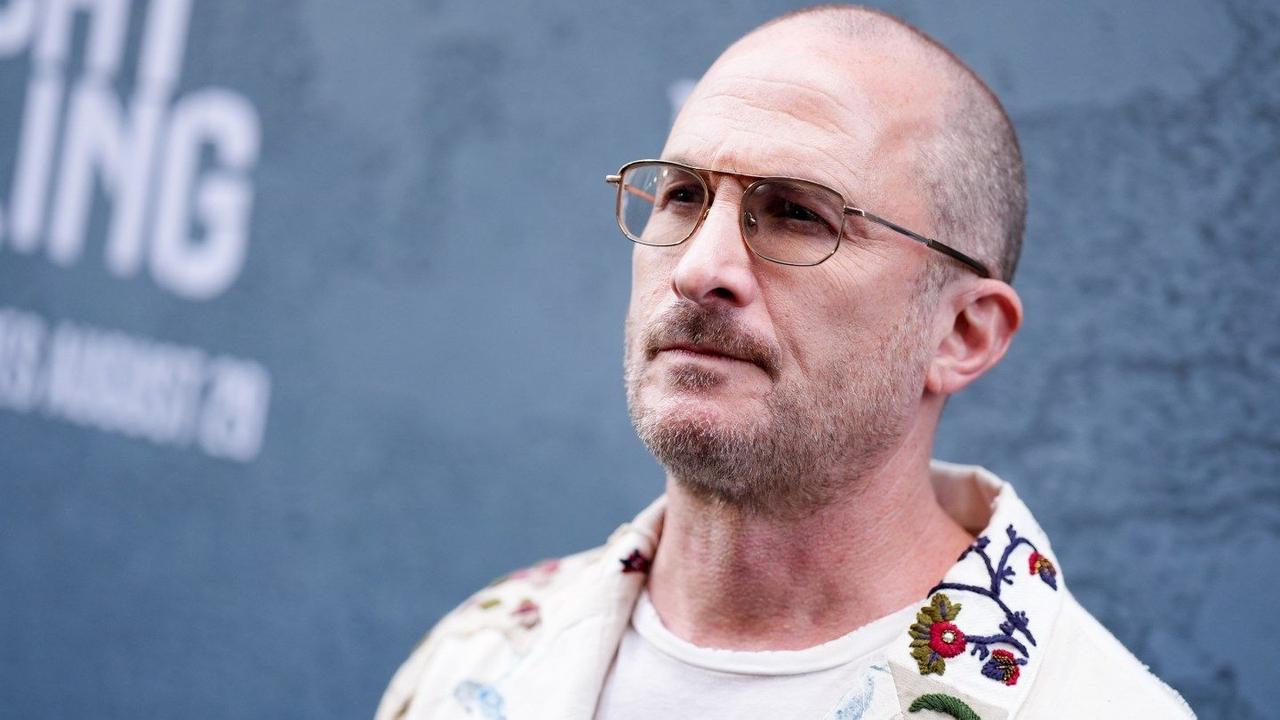
.
Source: THR
The series uses generative AI tools to animate historical moments that occurred 50 years before photography's invention. According to a press release, the production employs SAG voice actors, an original score by composer Jordan Dykstra, and human post-production teams for editing, mixing, and color grading
5
. The first two episodes cover George Washington raising the Grand Union Flag over Prospect Hill and Thomas Paine's publication of the revolutionary pamphlet Common Sense3
.Widespread Criticism Over Visual Quality and AI Slop
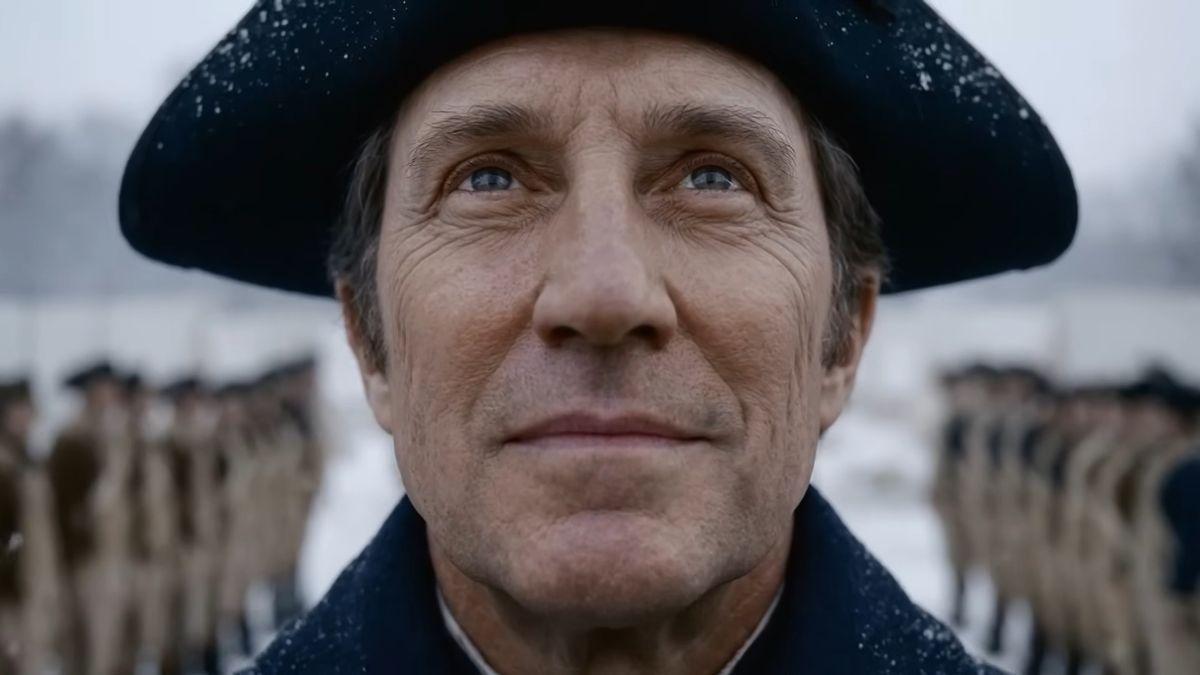
The negative reception to the Revolutionary War series has been swift and brutal. Critics have denounced the project as AI slop, pointing to numerous technical failures that undermine its artistic merit. The visual quality suffers from waxy, rubbery faces with shifting wrinkles, dead eyes reminiscent of The Polar Express, and poor lip-syncing where mouths rarely match the spoken words
1
. Benjamin Franklin's depiction has been singled out as particularly nightmarish, with one reviewer describing him as looking "like someone has genetically spliced Hugh Laurie with Anthony Hopkins, and then covered the resulting monstrosity in a thin layer of roving liver spots"4
.
Source: PC Gamer
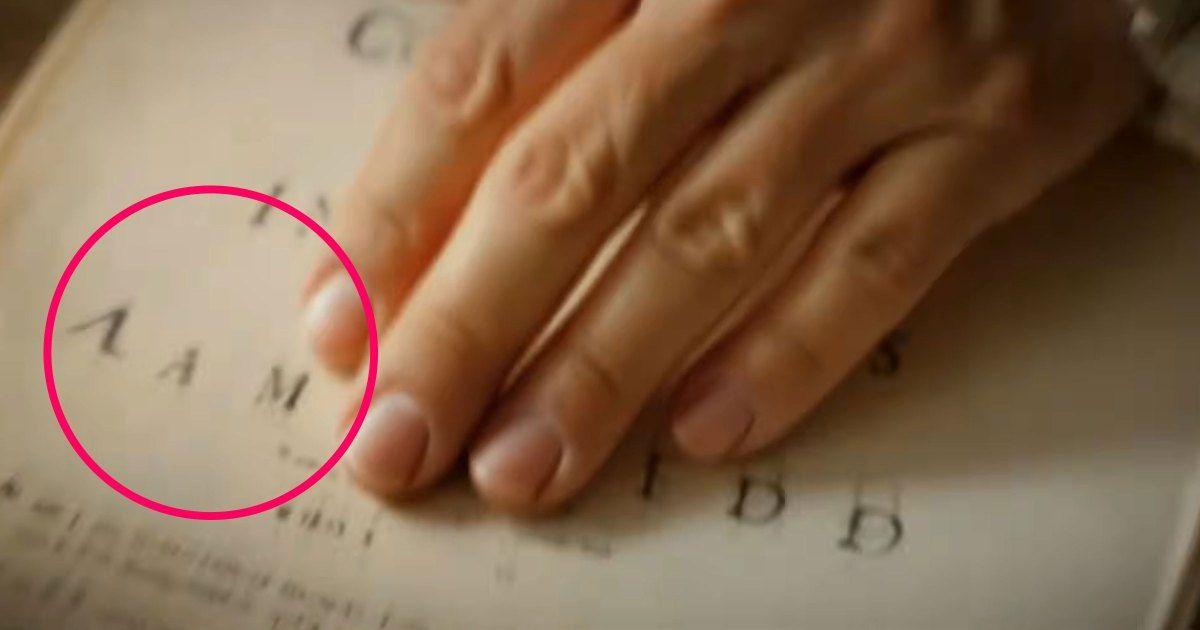
Historical inaccuracies compound the visual problems. University of Zurich history professor Mateusz Fafinski noticed that Thomas Paine's Common Sense pamphlet displays garbled text reading "Λamereedd" instead of "America"
5
. The pamphlets also appear artificially aged with stains immediately after printing, and one building features vinyl siding far too modern for the 1700s5
. Perspective issues plague the series, with background figures appearing over 12 feet tall compared to nearby structures5
.
Source: Futurism
Hollywood Grapples with Ethical Implications of AI
The project emerges two years after Hollywood strikes over AI use in creative work, making its timing particularly contentious
1
. Social media reactions have been scathing, with users questioning why TIME Magazine, historically known as a reliable historical resource, would publish such content3
. One Bluesky user joked about "the colonist takes off his hat to cheer, revealing that underneath it was a second and somehow larger hat," while another quipped that "nothing represents The End of America after a 250-year run quite like using AI slop to depict the creation of the Declaration of Independence"2
.Viewership numbers reflect the lukewarm reception. Seven hours after posting, the first episode had garnered only 5,000 views, while the second episode attracted just over 2,000 views—significantly fewer than social media posts mocking the production
2
. The Guardian's review declared it "the most disturbing thing Aronofsky has made," noting the ethical implications as AI-generated characters appear to flash through recognizable actor faces, including Ralph Fiennes, Daniel Day-Lewis, and Matthew Macfadyen4
.Related Stories
Defenders Claim AI Expands Creative Possibilities
Despite overwhelming criticism, project leaders defend the approach. TIME Studios president Ben Bitonti stated the series represents "what thoughtful, creative, artist-led use of AI can look like—not replacing craft, but expanding what's possible and allowing storytellers to go places they simply couldn't before"
3
. Aronofsky told The Guardian last summer that fighting against AI makes no sense, arguing "if we don't shape these tools, somebody else will"1
.Primordial Soup's stated mission involves fusing art and technology into a new creative model, "merging bold narrative, emotional depth, and experimental work flows"
1
. However, critics argue the way to combat AI slop flooding the internet is not with more AI slop. The series' jarring continuous cuts, HDR gloss on nearly every shot, and extremely short clip lengths highlight ongoing technical limitations of generative AI in Hollywood production3
. As the series continues through the end of 2026, it stands as a test case for whether AI can achieve genuine artistic merit or whether it represents, as one critic suggested, a filmmaker "doing himself out of a job"4
.References
Summarized by

Navi
[4]
Related Stories
AMC Theatres blocks AI-generated film after social media outcry over creative rights
20 Feb 2026•Entertainment and Society
Hollywood's AI Revolution: From Digital Doubles to Full-Length Films
04 Nov 2025•Entertainment and Society
Hollywood reframes AI as infrastructure while studios navigate creative boundaries and job concerns
17 Mar 2026•Technology

Recent Highlights
1
Google releases Gemma 4 with Apache 2.0 license, enabling unrestricted local AI on devices
Technology

2
AI Models Lie and Deceive to Protect Other AI Models From Deletion, Study Reveals
Science and Research

3
OpenAI closes $122 billion funding round amid fierce AI competition and profitability questions
Startups

Recent Highlights
Today's Top Stories







Your Daily Dose of Curated AI News
Don’t drown in AI news. We cut through the noise - filtering, ranking and summarizing the most important AI news, breakthroughs and research daily. Spend less time searching for the latest in AI and get straight to action.

