Datarails raises $70M to bring AI Finance Agents to CFOs struggling with fragmented data


2 Sources
2 Sources
[1]
CFOs are now getting their own 'vibe coding' moment thanks to Datarails
For the modern CFO, the hardest part of the job often isn't the math -- it's the storytelling. After the books are closed and the variances calculated, finance teams spend days, sometimes weeks, manually copy-pasting charts into PowerPoint slides to explain why the numbers moved. Today, 11-year-old Israeli fintech company Datarails announced a set of new generative AI tools designed to automate that "last mile" of financial reporting, effectively allowing finance leaders to "vibe code" their way to a board deck. Launching today to accompany the firm's newly announced $70 million Series C funding round, the company's new Strategy, Planning, and Reporting AI Finance Agents promise to answer complex financial questions with fully formatted assets, not just text. A finance professional can now ask, "What's driving our profitability changes this year?" or "Why did Marketing go over budget last month?" and the system will instantly generate board-ready PowerPoint slides, PDF reports, or Excel files containing the answer. The deployment of these agents marks a fundamental shift in how the "Office of the CFO" interacts with data. Beyond the chatbot The promise of the new agents is to solve the fragmentation problem that plagues finance departments. Unlike a sales leader who lives in Salesforce, or a CIO who relies on ServiceNow, the CFO has no single "system of truth". Data is scattered across ERPs, HRIS, CRMs, and bank portals. A major barrier to AI adoption in finance has been security. CFOs are rightfully hesitant to plug P&L data into public models. Datarails has addressed this by leveraging Microsoft's Azure OpenAI Service. "We use the OpenAI in Azure to ensure the privacy and the security for our customers, they don't like to share the data in [an] open LLM," Gurfinkel noted. This allows the platform to utilize state-of-the-art models while keeping data within a secure enterprise perimeter. Datarails' new agents sit on top of a unified data layer that connects these disparate systems. Because the AI is grounded in the company's own unified internal data, it avoids the hallucinations common in generic LLMs while offering a level of privacy required for sensitive financial data. "If the CFO wants to leverage AI on the CFO level or the organization data, they need to consolidate the data," explained Datarails CEO and co-founder Didi Gurfinkel in an interview with VentureBeat. By solving that consolidation problem first, Datarails can now offer agents that understand the context of the business. "Now the CFO can use our agents to run analysis, get insights, create reports... because now the data is ready," Gurfinkel said. 'Vibe coding' for finance The launch taps into a broader trend in software development where natural language prompts replace complex coding or manual configuration -- a concept tech circles refer to as "vibe coding." Gurfinkel believes this is the future of financial engineering. "Very soon, the CFO and the financial team themselves will be able to develop applications," Gurfinkel predicted. "The LLMs become so strong that in one prompt, they can replace full product runs." He described a workflow where a user could simply prompt: "That was my budget and my actual of the past year. Now build me the budget for the next year." The new agents are designed to handle exactly these types of complex, multi-variable scenarios. For example, a user could ask, "What happens if revenue grows slower next quarter?" and receive a scenario analysis in return. Because the output can be delivered as an Excel file, finance teams can verify the formulas and assumptions, maintaining the audit trail that generic AI tools often lack. Ease of adoption: The 'anti-implementation' For most engineering teams, the arrival of a new enterprise financial platform signals a looming headache: months of data migration, schema redesigns, and the inevitable friction of forcing non-technical users to abandon their preferred workflows. Datarails has engineered its way around this friction by building what might be best described as an "anti-implementation." Instead of demanding a "rip and replace" of legacy systems, the platform accepts the messy reality of the modern finance stack. The architecture is designed to decouple the data storage from the presentation layer, effectively treating the organization's existing Excel files as a frontend interface while Datarails acts as the backend database. "We are not replacing anything," Gurfinkel explained. "The implementation can be very fast, from a few hours to maybe a few days". From a technical perspective, this means the "engineering" requirement is almost entirely stripped away. There are no ETL pipelines to build or Python scripts to maintain. The system comes pre-wired with over 200 native connectors -- linking directly to ERPs like NetSuite and Sage, CRMs like Salesforce, and various HRIS and bank portals. The heavy lifting is replaced by a "no-code" mapping process. A finance analyst, not a developer, maps the fields from their General Ledger to their Excel models in a self-service workflow. For modules like Month-End Close, the company explicitly promises that "no IT support is needed," a phrase that likely comes as a relief to stretched CTOs. Even complex setups, such as the new Cash Management module which requires banking integrations, are typically fully operational within two to three weeks. The result is a system where the "technical debt" usually associated with financial transformation is rendered obsolete. The finance team gets their "single source of truth" without ever asking engineering to provision a database. From version Control to vision control: a pivot that paid off Datarails wasn't always the "FinanceOS" for the AI era. Founded in 2015 by Gurfinkel alongside co-founders Eyal Cohen (COO) and Oded Har-Tal (CTO), the Tel Aviv-based startup spent its early years tackling a dryer problem: version control for Excel. The initial premise was to synchronize and manage spreadsheets across enterprises, but adoption was sluggish as the team struggled to find the right product-market fit. The breakthrough came in 2020 with a strategic pivot. The team realized that finance professionals didn't want to replace Excel with a new dashboard; they wanted to fix Excel's limitations -- specifically manual consolidation and data fragmentation. By shifting focus to SMB finance teams and embracing an "Excel-native" automation philosophy, the company found its stride. This alignment led to rapid scaling, fueled by a $55 million Series A in June 2021 led by Zeev Ventures, followed quickly by a $50 million Series B in March 2022 led by Qumra Capital. While the company faced headwinds during the tech downturn -- resulting in an 18% workforce reduction in late 2022 -- it has since rebounded aggressively. By 2025, Datarails had nearly doubled its workforce to over 400 employees globally, driven by a multi-product expansion strategy that now includes Month-End Close and Cash Management solutions. Fueling the expansion The new AI capabilities are supported by the $70 million Series C injection from One Peak, along with existing investors Vertex Growth, Vintage Investment Partners, and others. The funding arrives after a year of 70% revenue growth for Datarails, driven largely by the expansion of its product suite. More than 50% of the company's growth in 2025 came from solutions launched in the last 12 months, including Datarails Month-End Close (a tool for automating reconciliations and workflow management) and Datarails Cash Management (for real-time liquidity monitoring). These products serve as the "plumbing" that makes the new AI agents effective. By automating the month-end close and unifying cash data, Datarails ensures that when a CFO asks the AI a question, the underlying numbers are accurate and up-to-date. For Gurfinkel, the goal is to make the finance office "AI-native" without forcing users to abandon their favorite tool: Excel. "We are not replacing anything," Gurfinkel said. "We connect the Excel so Excel now becomes the calculation and the presentation." With the launch of these new agents, Datarails is betting that the future of finance isn't about learning new software, but about having a conversation with the data you already have.
[2]
Datarails raises $70M to inject AI smarts into Excel-based finance - SiliconANGLE
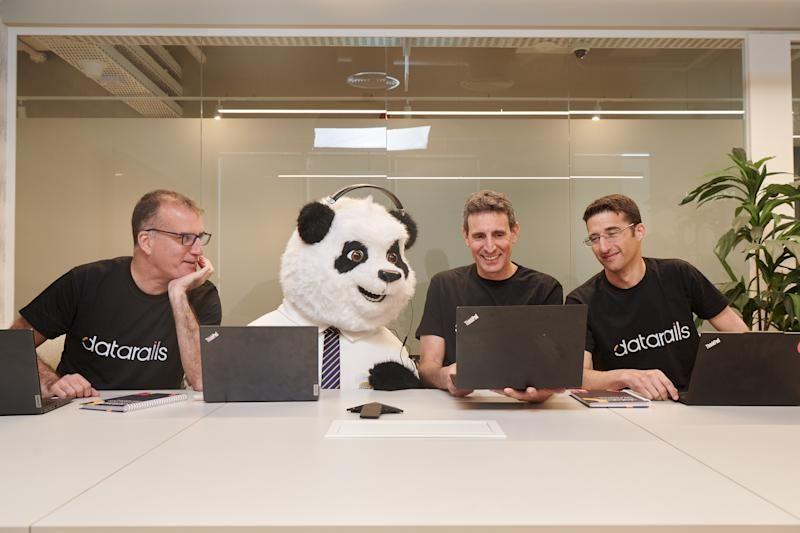
Datarails raises $70M to inject AI smarts into Excel-based finance Artificial intelligence-native financial platform Datarails Ltd. said today it has closed on a $70 million Series C funding round that brings its total amount raised to more than $175 million. The round was led by the growth equity investor One Peak and saw participation from a host of other backers, including Vertex Growth, Vintage Investment Partners, Zeev Ventures, Innovation Endeavors, ClalTech and Qumra Capital. Datarails is the creator of an operating system and multiproduct platform called FinanceOS. As the name suggests, it aims to provide a kind of operating system for chief financial officers and finance teams in large organizations. The startup's pitch is that 99% of finance professionals currently spend around three hours of their data buried in Excel spreadsheets, thanks to the siloed nature of critical workflows such as financial planning and analysis, month-end close and spend control. That means they're inevitably wasting hours each day on cumbersome manual tasks, which means they have less time available to focus on strategic analysis. This is what Datarails wants to change, and it does it in a way that lets finance teams maintain the familiarity and flexibility of the Excel environments they're so accustomed to. Datarails lets finance teams continue using Excel, but none of these documents sits in fragmented silos. Instead, FinanceOS makes sure they're all linked together, acting as a kind of financial nerve center. The platform connects to existing enterprise resource management, customer relationship management and human resource management systems to serve as a single source of truth for all things finance, enabling teams to consolidate data from them all. Datarails co-founder and Chief Executive Didi Gurfinkel (pictured, center) said AI serves as an equalizer for finance teams. "This is why we've made it the foundation of the CFO's office, rather than just a feature," he said. "CFOs are asking: 'How can I transform our processes and workflows in the AI era?' By giving them a single source of truth that powers AI-driven insights across every critical workflow, we're not only answering that question but also transforming their entire function." Today's round follows a period of rapid growth for Datarails, which grew its revenue by more than 70% in the last year while doubling the size of its team to more than 400 employees globally in 2025. To coincide with today's round, Datarails is launching its first set of AI agents today, focused on tasks such as strategy, planning and reporting. Financial professionals will be able to ask these agents conversational questions, such as "what's driving our profitability changes this year?" and the agents will instantly dig into the available data in search of the answer. Once they've found it, they'll generate PowerPoint presentations, PDFs or Excel files - whatever's best to visualize the answer. Alternatively, they can just explain things in a conversational manner. The round was led by the growth equity investor One Peak and saw participation from a host of other backers, including Vertex Growth, Vintage Investment Partners, Zeev Ventures, Innovation Endeavors, ClalTech and Qumra Capital. Datarails will use the funds from today's round to accelerate its expansion across North America, Europe, the Middle East and Africa and increase its research and development budget. It'll also look at making strategic acquisitions over the coming months. One Peak co-founder and Managing Director David Klein said Datarails has uniquely cracked the code for what finance teams need from AI. "Its Excel-native approach is brilliant because it meets CFOs where they already work, while the multiproduct strategy demonstrates the kind of ambitious, category-defining vision we look for," he said.
Share
Share
Copy Link
Israeli fintech Datarails announced $70 million in Series C funding led by One Peak, bringing total capital raised to over $175 million. The company launched AI Finance Agents that automate financial reporting, allowing CFOs to generate board-ready presentations instantly. The platform addresses data fragmentation across finance departments while maintaining Excel familiarity.
Datarails Secures $70M to Transform How CFOs Work with Data
Datarails, an 11-year-old Israeli fintech company, announced a $70 million Series C funding round led by One Peak, with participation from Vertex Growth, Vintage Investment Partners, Zeev Ventures, Innovation Endeavors, ClalTech, and Qumra Capital
1
2
. This brings the company's total funding to over $175 million as it positions itself to reshape the Office of the CFO with AI for finance2
. The funding arrives alongside the launch of new AI Finance Agents designed to tackle what CEO and co-founder Didi Gurfinkel describes as the most time-consuming challenge facing finance teams: transforming raw numbers into compelling narratives for stakeholders1
.
Source: VentureBeat
New AI Finance Agents Automate the Last Mile of Financial Reporting
The newly launched Strategy, Planning, and Reporting AI Finance Agents represent a departure from traditional chatbots by delivering fully formatted assets rather than just text responses. Finance professionals can now ask conversational questions like "What's driving our profitability changes this year?" or "Why did Marketing go over budget last month?" and receive board-ready PowerPoint slides, PDF reports, or Excel files containing the answer
1
2
. These generative AI tools for finance eliminate the weeks finance teams typically spend manually copy-pasting charts into presentations after closing the books1
. The agents can also handle complex scenario analysis, such as "What happens if revenue grows slower next quarter?" while maintaining the audit trail that generic AI tools often lack1
.Solving Data Fragmentation Across the Finance Stack
Unlike sales leaders who work primarily in Salesforce or CIOs who rely on ServiceNow, CFOs face a fundamental challenge: they have no single source of truth. Critical financial data sits scattered across ERPs, HRIS systems, CRMs, and bank portals
1
. Datarails addresses this through its AI-native financial platform called FinanceOS, which consolidates data from these disparate systems while allowing finance teams to continue working in Excel-based finance environments they already know2
. The platform comes pre-wired with over 200 native connectors linking directly to ERPs like NetSuite and Sage, CRMs like Salesforce, and various HRIS and bank portals1
. According to the company, 99% of finance professionals currently spend around three hours daily buried in spreadsheets due to siloed workflows encompassing financial planning and analysis, month-end close, and spend control2
.Security and Privacy Through Azure OpenAI Service
A major barrier to AI adoption in finance has been security concerns around sharing sensitive P&L data with public models. Datarails has addressed this by leveraging Microsoft's Azure OpenAI Service. "We use the OpenAI in Azure to ensure the privacy and the security for our customers, they don't like to share the data in [an] open LLM," Gurfinkel explained
1
. Because the AI is grounded in the company's own unified internal data, it avoids the hallucinations common in generic LLMs while meeting the stringent privacy requirements for sensitive financial information1
. This architecture enables AI-driven insights without compromising the security posture CFOs demand2
.Related Stories

Vibe Coding for Finance: The Future of CFO Tools
The launch taps into a broader trend where natural language prompts replace complex coding or manual configuration—a concept known as vibe coding for finance. Gurfinkel believes this represents the future of financial engineering: "Very soon, the CFO and the financial team themselves will be able to develop applications. The LLMs become so strong that in one prompt, they can replace full product runs"
1
. He described workflows where users could simply prompt: "That was my budget and my actual of the past year. Now build me the budget for the next year"1
. This shift matters because it democratizes business intelligence capabilities that previously required data science teams or extensive technical knowledge.Rapid Growth and Strategic Expansion Plans
Datarails grew its revenue by more than 70% in the last year while doubling its team to more than 400 employees globally in 2025
2
. The company plans to use the new funding to accelerate expansion across North America, Europe, the Middle East, and Africa, increase its research and development budget, and pursue strategic acquisitions in the coming months2
. One Peak co-founder and Managing Director David Klein noted that "its Excel-native approach is brilliant because it meets CFOs where they already work, while the multiproduct strategy demonstrates the kind of ambitious, category-defining vision we look for"2
. Implementation can be completed in as little as a few hours to a few days, with no ETL pipelines to build or Python scripts to maintain1
. This "anti-implementation" approach signals workflow automation that adapts to existing processes rather than forcing wholesale changes—a critical consideration as finance teams evaluate whether to invest in AI capabilities that could reshape how they deliver strategic analysis to leadership.References
Summarized by

Navi
Related Stories
Glassbox Raises $1.2 Million to Revolutionize Financial Modeling with AI-Powered Spreadsheets
19 Feb 2025•Business and Economy

Databricks Raises $10 Billion in Massive Funding Round, Delaying IPO Plans
14 Dec 2024•Business and Economy

AppZen Secures $180M to Revolutionize Finance Teams with Agentic AI
22 Sept 2025•Business and Economy

Recent Highlights
1
AI Models Lie and Deceive to Protect Other AI Models From Deletion, Study Reveals
Science and Research

2
AI chatbots validate you too much, making you less kind to others, Stanford study reveals
Science and Research

3
Judge blocks Pentagon from blacklisting Anthropic over AI safety guardrails dispute
Policy and Regulation

Recent Highlights
Today's Top Stories




Your Daily Dose of Curated AI News
Don’t drown in AI news. We cut through the noise - filtering, ranking and summarizing the most important AI news, breakthroughs and research daily. Spend less time searching for the latest in AI and get straight to action.

