David Sacks leaves AI czar role but keeps influence over Trump's tech policy agenda


9 Sources
9 Sources
[1]
David Sacks is done as AI czar -- here's what he's doing instead | TechCrunch
David Sacks has used up his days as Donald Trump's AI and crypto czar. Speaking with Bloomberg on Thursday, the longtime entrepreneur, investor, and podcaster, confirmed that his non-consecutive 130-day stint as a special government employee is over and that he's moving on to co-chair the President's Council of Advisors on Science and Technology (PCAST) alongside senior White House technology adviser Michael Kratsios. "I think moving forward as co-chair of PCAST, I can now make recommendations on not just AI but an expanded range of technology topics," he told Bloomberg via a video interview. "So yes, this is how I'll be involved moving forward." What that means in practice is Sacks will be much further from power center in Washington than since the outset of this second Trump administration. As AI czar, Sacks had a direct line to Trump and a hand in shaping policy. PCAST is a federal advisory body, so while it studies issues, produces reports, and sends recommendations up the chain, it doesn't make policy. The council has existed in some form since FDR, though Sacks made a point to Bloomberg of noting that this particular iteration has "the most star power of any group like this" ever assembled, and it's hard to argue he's wrong. The initial 15 members include Nvidia's Jensen Huang, Meta's Mark Zuckerberg, Oracle's Larry Ellison, Google co-founder Sergey Brin, Marc Andreessen, AMD's Lisa Su, and Michael Dell, among others. That's a lot of billionaires. Sacks told Bloomberg the council will take up AI, advanced semiconductors, quantum computing, and nuclear power, and that near-term attention will go toward pushing Trump's national AI framework, released just last week. The framework is aimed at replacing what Sacks described to Bloomberg as a mess of conflicting state-level rules. "You've got 50 different states regulating this in 50 different ways," he said, "and it's creating a patchwork of regulation that's difficult for our innovators to comply with." What Sacks didn't address head-on was why the transition is happening now and whether his recent comments were a factor. Earlier this month, on the popular "All In" podcast that he co-hosts, Sacks publicly urged the administration to find an exit from the U.S.-backed war with Iran, walking through a set of worsening scenarios -- attacks on oil infrastructure in neighboring countries, the destruction of desalination plants, the possibility of nuclear use by Israel -- and calling for a polite way out. Trump responded by telling reporters that Sacks hadn't spoken to him about the war. Asked about it Thursday by Bloomberg, Sacks figuratively threw his hands in the air: "I'm not on the foreign policy team or the national security team," he said, adding that his podcast comments represented his personal view, not an official one. For all the marquee names Sacks is bringing to PCAST, it's worth reflecting on what the council has historically been, which is an advisory body with real influence in some administrations and almost none in others. President Obama's version was seemingly the most productive on record, churning out 36 reports over eight years -- two of which led to concrete policy changes, including an FDA rule that opened the market for over-the-counter hearing aids. President Trump's first-term council, by contrast, took nearly three years just to name its first members, produced a handful of reports, and made no particular mark, while President Biden's council skewed heavily academic -- Nobel laureates, MacArthur fellows, National Academy members -- and issued a modest number of reports before the administration ended. The current PCAST is a completely different animal, composed almost entirely of active CEOs and investors building the tech with which the U.S. hopes to dominate the world. Now, Sacks is one of them again and likely free to resume his life as an investor and entrepreneur. A spokeswoman for Craft Ventures, the firm Sacks co-founded and where he remains a partner, has not yet responded to related questions, but TechCrunch reported last year on the ethics waivers Sacks obtained to maintain financial stakes in AI and crypto companies while shaping federal policy in both areas -- an arrangement that drew sharp criticism from ethics experts and lawmakers.
[2]
White House AI czar Sacks to step down, moves to advisory role
WASHINGTON, March 26 (Reuters) - White House artificial intelligence and crypto czar David Sacks is stepping down from his role, saying in an interview on Bloomberg Television on Thursday he had reached the end of his time as a special government employee. Sacks said he is joining President Donald Trump's Council of Advisors on Science and Technology, a federal advisory committee composed of industry and academic experts. As co-chair of the body he would be able to make recommendations on a broader range of technology issues beyond AI, he said. Sacks said earlier this month the U.S. should "declare victory and get out" of the Iran war, a rare instance of a prominent figure in the Trump administration calling for an exit from the conflict. Sacks has been a notable figure in the White House since Trump began his second term. A longtime Silicon Valley entrepreneur and investor, he is a partner at Craft Ventures, the firm he co-founded in 2017. He was appointed to his role in December 2024, but under U.S. rules, special government employees are limited to 130 days of work in a 12-month period. The cap applies to days worked rather than the overall length of the appointment. During his time as AI czar, Sacks presided over a loosening of Biden-era restrictions on AI chip shipments to China. In his interview with Bloomberg, Sacks said he will continue to help advance Trump's AI policy framework released last week. Reporting by Nandita Bose in Washington; Editing by Tom Hogue Our Standards: The Thomson Reuters Trust Principles., opens new tab
[3]
David Sacks says his time as Trump's crypto and AI czar has ended
Venture capitalist David Sacks is stepping aside from his role as artificial intelligence and crypto czar for President Donald Trump. Sacks told Bloomberg on Thursday that he has "used up" his 130 days as a special government employee and is joining the President's Council of Advisers on Science & Technology. "I think moving forward as co-chair of PCAST, I can now make recommendations on not just AI but an expanded range of technology topics," he said. "So yes, this is how I'll be involved moving forward." PCAST is a federal advisory committee composed of outside industry and academic experts that provides evidence-based recommendations to the president on technology, scientific research, and innovation policy. Sacks has been a prominent figure in the White House since Trump began his second term and frequently had the ear of the president. Sacks said Thursday that he will still work to push forward Trump's AI framework, which was released last week. Last fall, Sacks said the Trump administration does want to make permitting and power generation easier for companies, and that the goal is to facilitate rapid infrastructure buildouts without raising residential electricity rates.
[4]
Inside David Sacks' new role shaping Trump's AI agenda
Why it matters: It keeps a powerful Silicon Valley voice at the center of Trump's AI circle without the government ethics constraints that come with serving inside government. * The move lands as Republicans grow increasingly wary of an all-in attitude on AI development and begin to question the White House strategy that has often followed Sacks' lead. Driving the news: White House officials tell Axios that Sacks will continue to wield significant influence as co-chair of the President's Council of Advisors on Science and Technology, with a broader remit across tech policy. * Sacks announced last week that he would step away from his White House role. * As Trump's AI and crypto czar, Sacks served as a special government employee -- meaning he could only work a certain number of days per year, needed waivers for certain investments, and faced other conflict-of-interest restrictions. Moving outside government lifts some of those restrictions while still allowing Sacks, a longtime Silicon Valley power player, to remain closely tied to the administration. * This comes as some of Sacks' investments -- like SpaceX, where he was an early investor -- could soon pay off. * Sacks also just ordained a new $100 million AI group, Innovation Council Action, that plans to push the Trump AI agenda. What they're saying: Some people close to the White House say that Sacks' deregulatory AI vision is increasingly out of step with voter concerns, including in the MAGA movement. * "Sacks brought policies that have been resoundingly defeated--FULL STOP," former Trump adviser Steve Bannon told Axios. * Lagging AI approval poll numbers, an unfinished crypto regulatory agenda and recent Big Tech court losses are also contributing to a sense Sacks should have distance from the White House, Bannon said. * Sacks was largely behind two failed attempts on Capitol Hill to block states from regulating AI, and he champions policies on China that give Republican hawks heartburn. * His general disdain for Anthropic has drawn criticism amid a fight with the Pentagon where the company has been able to project a moral high ground, sources said. Between the lines: This is more a change in title than influence, sources say. How it works: Sacks won't be on the White House premises and participating in day-to-day meetings anymore, but he'll continue to have access to the president, officials said. * White House chief of staff Susie Wiles and National Economic Council head Kevin Hassett have tapped Sriram Krishnan to take on a new position at the NEC where he will focus on AI and the economy, officials told Axios. * Sriram worked hand-in-hand on Trump's AI action plan with Sacks. * "President Trump has assembled the brightest minds from academia, industry, and government to strengthen American leadership in science and technology and to ensure all Americans thrive in the Golden Age of Innovation," White House spokesperson Liz Huston said. The bottom line: Debate over AI policy is intensifying among Republicans, but the White House and Sacks remain in lockstep.
[5]
David Sacks drops "AI czar" label, not policy influence
Why it matters: Sacks has been an influential voice insisting on a light-touch, pro-innovation approach to AI in the U.S. and has wielded his extensive network of Silicon Valley contacts to do so. Driving the news: Sacks told Bloomberg Television on Thursday that he used up his time in the AI czar role, a week after the White House unveiled its national legislative framework for AI. * Earlier this week, President Trump announced that Sacks would serve as a co-chair of the President's Council of Advisors on Science and Technology, known as PCAST. * Members include Nvidia's Jensen Huang, Meta's Mark Zuckerberg and Oracle's Larry Ellison, among others. What they're saying: "In the first year of the Trump administration, I had a role as a SGE [special government employee], I had 130 days. We've now used up that time," he said. * "I think moving forward as co-chair of PCAST I can now make recommendations on not just AI, but an expanded range of technology topics. So yes, this is how I'll be involved moving forward," he added. * As for his role with PCAST, Sacks said the group will "make official recommendations and issue studies and reports." Zoom in: The White House doesn't plan to appoint a new AI czar, according to a source familiar with the matter. Sacks will continue advising the president from PCAST on AI. * The White House did not immediately respond to requests for comment. Our thought bubble: With Sacks still involved in PCAST, don't expect his influence on the Trump administration's AI policy to diminish.
[6]

White House AI Czar Sacks to Step Down, Moves to Advisory Role
WASHINGTON, March 26 (Reuters) - White House artificial intelligence and crypto czar David Sacks is stepping down from his role, saying in an interview on Bloomberg Television on Thursday he had reached the end of his time as a special government employee. Sacks said he is joining President Donald Trump's Council of Advisors on Science and Technology, a federal advisory committee composed of industry and academic experts. As co-chair of the body he would be able to make recommendations on a broader range of technology issues beyond AI, he said. Sacks said earlier this month the U.S. should "declare victory and get out" of the Iran war, a rare instance of a prominent figure in the Trump administration calling for an exit from the conflict. Sacks has been a notable figure in the White House since Trump began his second term. A longtime Silicon Valley entrepreneur and investor, he is a partner at Craft Ventures, the firm he co-founded in 2017. He was appointed to his role in December 2024, but under U.S. rules, special government employees are limited to 130 days of work in a 12-month period. The cap applies to days worked rather than the overall length of the appointment. During his time as AI czar, Sacks presided over a loosening of Biden-era restrictions on AI chip shipments to China. In his interview with Bloomberg, Sacks said he will continue to help advance Trump's AI policy framework released last week. (Reporting by Nandita Bose in Washington; Editing by Tom Hogue)
[7]

White House AI czar Sacks to step down, moves to advisory role - The Economic Times
White House artificial intelligence and crypto czar David Sacks is stepping down from his role, saying in an interview on Bloomberg Television on Thursday he had reached the end of his time as a special government employee. Sacks said he is joining President Donald Trump's Council of Advisors on Science and Technology, a federal advisory committee composed of industry and academic experts. As co-chair of the body he would be able to make recommendations on a broader range of technology issues beyond AI, he said. Sacks said earlier this month the U.S. should "declare victory and get out" of the Iran war, a rare instance of a prominent figure in the Trump administration calling for an exit from the conflict. Sacks has been a notable figure in the White House since Trump began his second term. A longtime Silicon Valley entrepreneur and investor, he is a partner at Craft Ventures, the firm he cofounded in 2017. He was appointed to his role in December 2024, but under U.S. rules, special government employees are limited to 130 days of work in a 12-month period. The cap applies to days worked rather than the overall length of the appointment. During his time as AI czar, Sacks presided over a loosening of Biden-era restrictions on AI chip shipments to China. In his interview with Bloomberg, Sacks said he will continue to help advance Trump's AI policy framework released last week. (Reporting by Nandita Bose in Washington; Editing by Tom Hogue)
[8]

David Sacks Has 'Used Up' His Time As Trump's Crypto And AI Czar, Shares What He Plans To Do Next - Grayscale Bitcoin Mini Trust (BTC) (ARCA:BTC)
David Sacks said on Thursday that his time as White House AI and cryptocurrency czar has ended, paving the way for his new position on the President's Council of Advisors on Science and Technology. Sacks Moves To New Role During an interview with Bloomberg, Sacks said that he has "used up" his tenure as a special government employee, which lasts for 130 days. "I think moving forward as co-chair of PCAST, I can now make recommendations on not just AI but an expanded range of technology topics," Sacks expressed enthusiasm about his new role. "So yes, this is how I'll be involved moving forward." A Glance At Sacks' Tenure However, his tenure attracted scrutiny, including accusations from Sen. Elizabeth Warren (D-Mass.) that he overstayed his 130-day limit to continue "influencing" cryptocurrency policy. Disclaimer: This content was partially produced with the help of Benzinga Neuro and was reviewed and published by Benzinga editors. Photo Courtesy: Everett Collection on Shutterstock.com Market News and Data brought to you by Benzinga APIs To add Benzinga News as your preferred source on Google, click here.
[9]

White House AI czar Sacks to step down, moves to advisory role
WASHINGTON, March 26 (Reuters) - White House artificial intelligence and crypto czar David Sacks is stepping down from his role, saying in an interview on Bloomberg Television on Thursday he had reached the end of his time as a special government employee. Sacks said he is joining President Donald Trump's Council of Advisors on Science and Technology, a federal advisory committee composed of industry and academic experts. As co-chair of the body he would be able to make recommendations on a broader range of technology issues beyond AI, he said. Sacks said earlier this month the U.S. should "declare victory and get out" of the Iran war, a rare instance of a prominent figure in the Trump administration calling for an exit from the conflict. Sacks has been a notable figure in the White House since Trump began his second term. A longtime Silicon Valley entrepreneur and investor, he is a partner at Craft Ventures, the firm he co-founded in 2017. He was appointed to his role in December 2024, but under U.S. rules, special government employees are limited to 130 days of work in a 12-month period. The cap applies to days worked rather than the overall length of the appointment. During his time as AI czar, Sacks presided over a loosening of Biden-era restrictions on AI chip shipments to China. In his interview with Bloomberg, Sacks said he will continue to help advance Trump's AI policy framework released last week. (Reporting by Nandita Bose in Washington; Editing by Tom Hogue)
Share
Share
Copy Link
David Sacks has completed his 130-day tenure as Trump's AI and crypto czar and is transitioning to co-chair the President's Council of Advisors on Science and Technology. The move shifts him from direct policymaking to an advisory role, though sources say his influence on Trump AI policy remains strong despite growing Republican skepticism.
David Sacks Exits AI Czar Position After 130-Day Limit
David Sacks has concluded his stint as Donald Trump's AI and crypto czar, confirming in a Bloomberg interview on Thursday that he has exhausted his 130-day allowance as a special government employee
1
. The longtime Silicon Valley entrepreneur and investor is now moving to co-chair the President's Council of Advisors on Science and Technology alongside senior White House technology adviser Michael Kratsios2
. Under U.S. rules, special government employees are limited to 130 days of work in a 12-month period, a cap that applies to days worked rather than the overall length of the appointment2
.
Source: TechCrunch
PCAST Role Expands Tech Policy Influence Beyond AI
"I think moving forward as co-chair of PCAST, I can now make recommendations on not just AI but an expanded range of technology topics," Sacks told Bloomberg
1
. This advisory role on technology positions him further from the power center in Washington compared to his previous direct line to Trump. PCAST is a federal advisory body that studies issues, produces reports, and sends recommendations up the chain but doesn't make policy directly1
. The council will tackle advanced semiconductors, quantum computing, nuclear power, and continue shaping Trump's AI agenda through the national AI framework released last week1
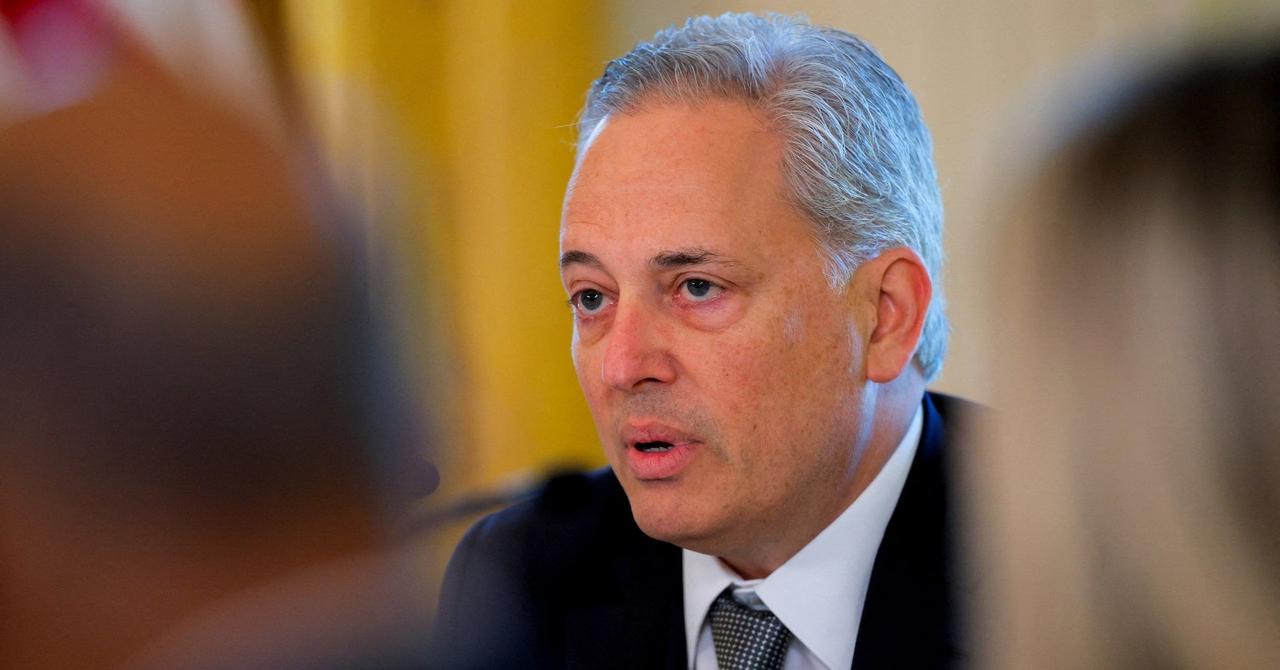
.
Source: Reuters
The initial 15 PCAST members include Nvidia's Jensen Huang, Meta's Mark Zuckerberg, Oracle's Larry Ellison, Google co-founder Sergey Brin, Marc Andreessen, AMD's Lisa Su, and Michael Dell
1
. Sacks noted this iteration has "the most star power of any group like this" ever assembled1
.Ethics Waivers and Investment Conflicts Lifted
Moving outside government lifts some of the conflict-of-interest restrictions Sacks faced as AI czar while still allowing him to remain closely tied to the administration
4
. TechCrunch previously reported on the ethics waivers Sacks obtained to maintain financial stakes in AI and crypto companies while shaping federal policy in both areas—an arrangement that drew sharp criticism from ethics experts and lawmakers1
. Some of Sacks' investments, like SpaceX where he was an early investor, could soon pay off4
. Additionally, Sacks just established a new $100 million AI group called Innovation Council Action that plans to push Trump AI policy4
.Related Stories

Growing Republican Skepticism Over Deregulation Approach
White House officials tell Axios that Sacks will continue to wield significant tech policy influence despite the title change
4
. However, the move comes as Republicans grow increasingly wary of an all-in attitude on AI development and begin to question the White House strategy that has often followed Sacks' lead4
. Former Trump adviser Steve Bannon told Axios that "Sacks brought policies that have been resoundingly defeated--FULL STOP," citing lagging AI approval poll numbers, an unfinished crypto regulatory agenda, and recent Big Tech court losses4
. Sacks was largely behind two failed attempts on Capitol Hill to block states from regulating AI, and he champions policies on China that give Republican hawks heartburn4
.Continued Access to Trump Despite Distance from White House
Sacks won't be on the White House premises participating in day-to-day meetings anymore, but he'll continue to have access to the president, officials said
4
. White House chief of staff Susie Wiles and National Economic Council head Kevin Hassett have tapped Sriram Krishnan to take on a new position at the NEC where he will focus on AI and the economy4
. Krishnan worked hand-in-hand on Trump's AI action plan with Sacks4
. The White House doesn't plan to appoint a new AI czar, according to sources familiar with the matter, with Sacks continuing to advise the president from PCAST on AI5
. During his time as AI czar, Sacks presided over a loosening of Biden-era restrictions on AI chip shipments to China.References
Summarized by

Navi
Related Stories
Trump Appoints David Sacks as White House AI and Crypto Czar: A New Era for Tech Policy
06 Dec 2024•Policy and Regulation

David Sacks Faces Mounting Scrutiny Over Potential Conflicts of Interest in AI and Crypto Role
01 Dec 2025•Policy and Regulation

AI Job Displacement Fears Overhyped, Says Trump's AI Czar David Sacks
04 Aug 2025•Technology

Recent Highlights
1
Google releases Gemma 4 with Apache 2.0 license, enabling unrestricted local AI on devices
Technology

2
AI Models Lie and Deceive to Protect Other AI Models From Deletion, Study Reveals
Science and Research

3
Anthropic discovers functional emotions in Claude that actively shape AI behavior and decisions
Science and Research

Recent Highlights
Today's Top Stories





Your Daily Dose of Curated AI News
Don’t drown in AI news. We cut through the noise - filtering, ranking and summarizing the most important AI news, breakthroughs and research daily. Spend less time searching for the latest in AI and get straight to action.

