Dell admits consumers don't care about AI PCs as Microsoft's Copilot strategy falters


13 Sources
13 Sources
[1]
AI PCs aren't selling, and Microsoft's PC partners are scrambling
Microsoft's CEO has become the company's "most influential product manager" to try to fix things. Microsoft wants you to replace your old Windows 10 laptop with a new Copilot PC, one that's ready for the AI-powered "agentic OS" that Windows 11 will become. But one of the world's biggest PC makers says consumers aren't buying the Copilot hype. Also: The 7 most exciting laptops we saw at CES 2026 - including this trackpad beast At a press briefing ahead of CES 2026, two of Dell's top executives threw a bucket of ice-cold water on the idea that consumers are clamoring for AI. Vice Chairman and Chief Operating Officer Jeff Clarke, in his opening remarks, referred to the "unmet promise of AI." The company had "an expectation of AI driving end-user demand," he noted, but "it hasn't quite been what we thought it was going to be a year ago." In the Q&A portion, the company's head of product, Kevin Terwilliger, stressed that Dell's messaging about its 2026 PC lineup is not "AI first." That's "a bit of a shift from a year ago, where we were all about the AI PC," he acknowledged. "What we've learned over the course of this year, especially from a consumer perspective, they're not buying based on AI. In fact, I think AI probably confuses them more than it helps them understand a specific outcome." Those remarks didn't mention Windows or Copilot, but it's pretty clear that the executives are talking about Microsoft's AI products, which haven't exactly delivered obvious benefits for home users or taken much share from ChatGPT. Google's Gemini has gotten high marks, and Anthropic's Claude continues to get praise for its coding skills. And none of those competitors require a fancy new "AI PC" to work their magic. Also: Not enough people are talking about this MacBook Air alternative at CES 2026 This development doesn't bode well for Microsoft's CEO, Satya Nadella, who saw the company miss the platform shift to mobile devices and tablets and desperately wants to avoid chalking up another failure in yet another momentous platform shift. A recent report from The Information painted a picture of a CEO who's not pleased with Copilot's progress. "Over the past several months, Nadella has morphed into Microsoft's most influential product manager," the report said. "He is conscious of the perception that [the consumer version of Copilot] lags behind competitors like Gemini, the people said. He recently sent notes directly to product groups working on Copilot's consumer app with feedback on bugs and shortcomings he noticed in the chatbot, according to a third person who saw the emails." This isn't exactly a new problem for Microsoft, which has a reputation for shipping half-baked products, then iterating slowly as the market experiments with its product. That approach might work for a startup in a new category, but it's a proven recipe for failure for a company of Microsoft's size. Customers get a chance to try your unfinished product and develop a negative impression; those negative word-of-mouth reviews spread even as the flaws in the product are fixed. The result? Microsoft's reputation takes another hit. Also: Dell just made its boldest product decision yet at CES 2026, and fans should rejoice On top of all that, the real revenue engine for Microsoft isn't consumers -- it's business customers, where licenses are sold 100,000 at a time, and where IT controls the ecosystem and can mandate what's installed. But even there, it's easy to imagine scenarios where enterprise customers decide they really don't need to pay another $20 per user per month for a benefit that isn't there. Technically, every new PC that the leading OEMs ship this year will be an AI PC, with either a Qualcomm Snapdragon X processor or one of the new Intel Core Ultra Series 3 or AMD Ryzen AI CPUs. That's good news for customers who are trying to future-proof their purchases -- maybe in a year or two or three, the powerful neural processing units in those machines will have workloads where they can show off their stuff. But Microsoft's many Copilots aren't ready for that role today, and until they are, the makers of Windows PCs are going to have to sell their new hardware the old-fashioned way.
[2]
Dell admits consumers don't care about AI PCs
Dell has revealed that consumers aren't buying PCs for AI features right now. In an interview with PC Gamer ahead of CES, Dell has made it clear its 2026 products aren't all about being AI-first, and it's moving beyond being "all about" AI PCs. "We're very focused on delivering upon the AI capabilities of a device -- in fact everything that we're announcing has an NPU in it -- but what we've learned over the course of this year, especially from a consumer perspective, is they're not buying based on AI," admits Kevin Terwilliger, Dell's head of product, in the PC Gamer interview. "In fact I think AI probably confuses them more than it helps them understand a specific outcome." It's a surprisingly honest admission from one of Microsoft's biggest PC partners, especially as the software giant continues to push AI features into Windows and try and convince consumers to buy Copilot Plus PCs. Dell was one of Microsoft's partners for the initial Copilot Plus PC launch in 2024, adding Qualcomm's Snapdragon X Elite chips to its popular XPS 13 and Inspiron line of laptops. Dell even added Qualcomm's Cloud AI chips to its high-end laptops last year, boosting AI performance for local models. But most of the benefits in Copilot Plus PCs come from the improved battery life and performance of Qualcomm's Snapdragon X Elite chips, instead of AI features alone. Microsoft even struggled to launch its Recall flagship AI feature for Copilot Plus PCs. The controversial feature eventually launched nearly a year after it was originally scheduled, because the feature was delayed following concerns raised by security experts.
[3]
Dell admitted nobody cares about AI PCs - and they're right
His love of PCs and their components was born out of trying to squeeze every ounce of performance out of the family computer. Tinkering with his own build at age 10 turned into building PCs for friends and family, fostering a passion that would ultimately take shape as a career path. Besides being the first call for tech support for those close to him, Ty is a computer science student, with his focus being cloud computing and networking. He also competed in semi-pro Counter-Strike for 8 years, making him intimately familiar with everything to do with peripherals. AI was still prevalent at CES, and while a lot of companies continued to beat that drum, Dell was not one of them. During a Q&A period, Dell's head of product, Kevin Terwilliger, confirmed that this wasn't an accident. With regard to AI PCs, Terwilliger said, "What we've learned over the course of this year, especially from a consumer perspective, is [consumers] are not buying based on AI." This is a huge departure from the previous push to integrate AI into literally every aspect of the device experience, and honestly, it's a welcome one. Dell has smashed the nail on the head; consumers aren't buying Copilot PCs for Copilot, or MacBooks for Apple Intelligence, they're buying them for the same reasons they've always bought them. The addition of an NPU can be nice, and it's useful for a few niche applications, but even for power users, the concept of an "AI PC" is dead and buried, at least as a selling point. Despite the tighter security precautions, I'm still never using Recall on Windows 11 Try as they may, Microsoft will never convince me to use Recall Posts 1 By Ty Sherback AI PCs already have a bad rap with power users And regular consumers get confused by it As far as the power user goes, they're not the average consumer. They're typically running more intense workloads, require great stability, and need the horsepower for work and play. The laptops that succeed in providing that still exist, but a lot of them have the "AI PC" label slapped on them. These aren't the kinds of users that are hitting the Copilot button, not just because their needs are fundamentally different, but because it wouldn't help them with their tasks anyway. They likely already have an LLM they prefer to use elsewhere, perhaps even with a subscription to boot. Most non-power users buying a PC are likely in a similar boat. Microsoft's attempts to integrate things like Recall into the Windows experience also hasn't exactly earned them brownie points with either crowd. I think irrespective of the hardware itself, what a lot of consumers want is for the normal functions of the OS, like search, the settings, local account creation, and others, to just work, and that's really not a lot to ask. Once those ducks are in a row, adding AI functionality would feel like the next logical step, but as of right now, nobody is buying an AI PC for the AI, they're buying it for the PC. I started self-hosting LLMs and absolutely loved it Who needs OpenAI when your home lab can do the thinking for you? Posts 13 By Raghav Sethi Local LLMs are far more useful They're not accessible to the average person yet In terms of on-device AI, local LLMs you can run on your own machine already exist in spades. There are entire models you can run on your smartphone, and when you scale that up to a full-size workstation with a ton of RAM and GPU power, it's really impressive what is possible on bare metal. Despite that, it's still not really terribly accessible to the average person yet, both in its requirements and its capabilities. Setting up an LLM locally, while straightforward for someone who's tech-inclined, doesn't have the same set of capabilities that something like a ChatGPT or Claude has, so even if someone does have the ability to set one up, it's probably not much more useful to them than it would be to just use a chat in a browser. Despite that, they're still far more useful than using the AI that's on a Windows 11 "AI PC", and that's before you mention the benefits for privacy, customization, and responsiveness. 8 frustrating things laptop makers keep doing for some reason Why are we still dealing with this in 2025? Posts 28 By João Carrasqueira NPUs have their value But they're still too niche to be a real selling point NPUs are essentially accelerators that are designed to make AI features more efficient, and they can be useful. Features like Recall, on-device speech processing and video call effects all rely on the NPU to some degree. But they're still not used for enough to be a true selling point on a device. The primary crux of that being you can't run large local LLMs on them, which is what most people would probably think of if you told them their PC was an "AI PC". 4 ways an on-chip NPU makes your PC better right now Your next laptop might include an NPU built-in. You won't see it, but it quietly changes how your OC runs, especially behind the scenes. Posts 2 By Judy Sanhz AI in a browser will continue to be the default for most people It's a function of familiarity and compute power The reality is, most consumers will continue to use the AI that they've been using, and for the vast majority of people, these are LLMs that are in a browser. To be clear, Dell hasn't gone as far as to say that part out loud, but they've at least admitted that nobody is making a PC purchasing decision based on which AI is plastered on the front. Subscribe to our newsletter for smart AI PC buying insights Our newsletter breaks down AI PCs, local LLMs and NPUs with grounded analysis. We cut through marketing to explain what matters for buyers - specs, OS behavior and realistic AI value so readers can understand the landscape. Subscribe By subscribing, you agree to receive newsletter and marketing emails, and accept Valnet's Terms of Use and Privacy Policy. You can unsubscribe anytime. This is because they're already familiar with whichever AI they use. They may have a history with it that the model refers to, or perhaps that specific model does well with the programming language they use often. Whatever the case may be, the stage is largely set for AI use until something truly transformative comes along. It'll happen largely in a browser or an app that interfaces with an API elsewhere, and local LLMs will continue to be uncommon amongst normal consumers as long as the hardware requirements continue to be as steep as they are. I thought AI and LLMs were dumb and useless until I self-hosted one from home I finally get it. Posts 10 By Rich Edmonds You don't need an "AI PC" to use AI on your PC Dell saying that consumers aren't buying AI PCs for the AI might sound obvious to anyone who's tuned into the tech space, but it's interesting that such a massive OEM like Dell is the first to break that ice. Local AI isn't a mirage by any means, but the way it's being integrated by Microsoft and Apple, is. Nobody is buying a PC for AI features, but instead, they're buying them for the same reasons they always have: the specs, the operating system, and the physical characteristics of the product.
[4]
Dell admits customers are not buying PCs just because they "have AI"
Serving tech enthusiasts for over 25 years. TechSpot means tech analysis and advice you can trust. Crystal ball: Nearly every major tech company is now trying to oversell this inflated "AI-powered" narrative, and the PC market is no exception. Dell, who happens to be shipping a lot of PCs to every corner of the world, is apparently taking a more skeptical stance moving forward, arguing that the push is misguided because customers are not lining up to buy new "AI PCs" at all. While much of the IT industry continues to abuse AI as a stale marketing buzzword, Dell appears more interested in selling practical PC systems. CES 2026 was dominated by talk of an "AI revolution," but the US manufacturer delivered a notably different message. In fact, Dell was among the few companies at the show that did not frame its products around an "AI-first" experience. According to Dell's head of product, Kevin Terwilliger, this year's CES marked a clear shift in strategy compared to last year. In 2025, the company heavily promoted its AI PC initiatives; this time, Dell revived the XPS brand and refocused on hardware improvements that are not directly tied to generative AI or chatbots. Terwilliger noted that every new Dell system announced at CES 2026 has an NPU inside, providing sufficient acceleration for AI workloads. Still, he acknowledged that consumers are not buying new hardware simply because it contains AI components. "In fact, I think AI probably confuses them more than it helps them understand a specific outcome," Terwilliger said in an interview during CES. During its CES pre-briefing, Dell zoomed out to address broader industry pressures and the future of its Alienware lineup and PC business. COO Jeff Clarke touched on issues ranging from Trump-era tariffs to the slow-moving transition in both hardware capabilities and software platforms - particularly the shift to Windows 11. And what about AI? Clarke described consumer-facing chatbots and large language models as an "unmet promise," suggesting that inflated expectations are driving only residual demand. That skepticism comes as the industry braces for another looming challenge: a major memory shortage expected in 2026. With consumers already spending thousands of dollars to build or buy capable systems for work or gaming, no amount of chatbot acceleration is likely to move the needle in terms of happiness or satisfaction. Dell remains a key player in the PC market and was an early partner in Microsoft's Copilot+ PC initiative. Microsoft continues to pitch Copilot as the future of computing, even as it struggles to convince users of its value, not to mention the term "slop" makes the poor AI algorithms sad. But Dell seems to be refocusing in meeting actual customers demand rather than where the industry insists they should be. Whether this massive wave of AI enthusiasm ultimately proves transformative - or simply another cycle of overreach - remains an open question.
[5]

Dell admits that PC buyers don't actually care about AI - 9to5Mac
AI has been a huge buzzword at Apple and other tech companies for years. But Dell just admitted that PC buyers don't actually care about AI -- at least not yet. Dave James at PC Gamer published an article yesterday featuring quotes from Dell about its latest PC offerings. The company's CES messaging this year brought a stark shift from last year's AI-focused approach. And there's good reason for that. Here's Dell's head of product, Kevin Terwilliger, with the explanation: "what we've learned over the course of this year, especially from a consumer perspective, is they're not buying based on AI," Terwilliger says bluntly. "In fact I think AI probably confuses them more than it helps them understand a specific outcome." Terwilliger clarifies that Dell isn't abandoning its AI efforts altogether, it has simply realized that marketing AI all the time isn't helping sell PCs. In fact, it might even be doing the opposite. Most of the non-techie people in my life have little interest in AI, so Dell's confession isn't actually surprising to me. Among people I know, I'd say AI provokes more skepticism and fear than genuine excitement. Dell, like Apple and other tech companies, has to market its products to several different audiences. The general consumer should be a big part of that focus, but tech early adopters are another, and Wall Street is a key player too. And for years, those latter two audiences have rewarded companies for pushing the AI narrative. I wonder if Dell's about-face is only the start of a shifting AI narrative heading into the year ahead. What do you make of Dell's comments about AI PC reception? Let us know in the comments.
[6]

Dell's head of product: 'I think AI probably confuses more than it helps'
Follow all of our CES 2026 live coverage for the biggest gadget news straight from Las Vegas. And be sure to follow Tom's Guide on TikTok for the coolest videos from the show. That's not a huge surprise given basically the same story played out last year at CES 2025, where nearly every major laptop maker was talking up the promise of the AI PC. It's a vague marketing term that typically connotes PCs packing CPUs with onboard NPUs (Neural Processing Units) optimized for AI-driven work like blurring your background on video calls. Dell was one of the big promoters of AI PCs at CES last year, rebranding their laptop lines and repositioning many as AI PCs. But this year the PC vendor took a different tack, reversing last year's rebranding (XPS is back!) and clearly stating that it's pulling back from promoting its new computers as AI-first PCs. How come? According to Dell exec Kevin Terwilliger, people just aren't buying computers based primarily on their AI capabilities. Terwilliger said so during a pre-briefing for Dell's CES 2026 product announcements, which include new Dell XPS laptops packing the latest Intel Panther Lake CPUs. And as our sister site PC Gamer helpfully pointed out, the Dell exec made a point of saying that while Dell isn't abandoning AI features, it's not going to keep trying make them a primary selling point of PCs. "One thing you'll notice is the message we delivered around our products was not AI-first," Terwilliger said. "So, a bit of a shift from a year ago where we were all about the AI PC." He went on to note that while every new product Dell unveiled at CES this year has an NPU inside, the company refrained from promoting their AI features first and foremost because it believes people aren't buying new PCs based on AI. That's a significant bit of insight into how people are buying laptops and desktops from one of the biggest suppliers on the planet. And as someone who personally had to review a fair number of "AI PCs" over the last year or two, I can tell you they're nearly always all style and no substance. "What we've learned over the course of this year, especially from a consumer perspective, is they're not buying based on AI," added Terwilliger. "In fact I think AI probably confuses them more than it helps them understand a specific outcome." This was a common note during Dell's CES 2026 presentation, echoing folks like Dell COO Jeff Clarke claiming "we have this un-met promise of AI" that's struggling to convince folks to buy laptops right as "we're about ready to enter 2026 with a memory shortage that is pretty significant." So while all of Dell's new laptops will support the latest AI features in Windows 11, you can expect them to return to the classic XPS branding and feature a bit less AI-focused advertising. As someone who's been reviewing laptops for decades I gotta say, this sounds like good news to me. I've reviewed over a dozen "AI laptops" in the last year and I've yet to actually use any of their AI features in my day-to-day work. They're typically fun to play around with for five or ten minutes, but unless you like a robot rewriting your words or fiddling with your scribbles in Paint they aren't much help. Even better, Dell has brought back not just the XPS branding but a few other features I loved about the old XPS laptops as well, including a visible touchpad and physical function keys instead of the frustrating old capacitive versions. I'm looking forward to getting a chance to review Dell's 2026 XPS lineup when they ship later this month -- stay tuned!
[7]

Dell reveals people don't care about AI in PCs - and a new truly embarrassing Windows 11 fail shows why
This admission comes just as another Windows 11 AI fail is going viral, which is unfortunate timing for Microsoft Dell is telling it straight as far as the contemporary world of PCs goes, with the computer maker bluntly explaining that consumers aren't buying laptops based on AI abilities. PC Gamer reports (as flagged by The Verge) that Dell's execs were refreshingly frank on the topic of AI and the PC in a Q&A session that was part of the company's pre-briefing for CES 2026 this week. First up, Dell's COO, Jeff Clarke, observed that there was an "expectation of AI driving end user demand" but also an "un-met promise of AI", hinting at some of the disappointment - or confusion - around AI PCs for the average consumer. Then Dell's head of product, Kevin Terwilliger, went further and noted of the company's fresh product launches (which included the new XPS 14 and 16 laptops): "One thing you'll notice is the message we delivered around our products was not AI-first. So, a bit of a shift from a year ago where we were all about the AI PC." Terwilliger continued: "We're very focused on delivering upon the AI capabilities of a device - in fact everything that we're announcing has an NPU in it - but what we've learned over the course of this year, especially from a consumer perspective, is they're not buying based on AI. In fact I think AI probably confuses them more than it helps them understand a specific outcome." In short, Dell is taking its foot off the pedal when it comes to pushing AI in its marketing, simply because it doesn't believe that consumers are that interested - and that it might even be a point of confusion for some. While you could argue that the latter viewpoint is somewhat patronizing, I think it's a fair enough observation overall. I believe some consumers really don't care about AI, and do not see the benefit of the various abilities for Copilot+ PCs - those exclusive Windows 11 AI features - or how they might use them. And in truth, there isn't that much to get excited about with these AI features to date, anyway - not beyond image-editing tricks (and let's face it, many folks don't do anything much with their photos) and additional search powers (some of which people may be very suspicious of on the privacy front, particularly the key AI piece of the puzzle here, which is Recall). Many people probably don't use AI beyond queries posed to ChatGPT, Copilot, Gemini or whatever their favorite flavor of AI portal happens to be, using them as a kind of beefed-up Google search (other engines are available, etcetera). Furthermore, with all the heat that Microsoft is taking over trying to crowbar more AI into Windows 11 - despite consistent cries from detractors who'd rather the software giant fixes what's wrong with its desktop OS, rather than putting in new features that 'no one asked for' at a rate of knots - the reputation of AI features is being tarnished considerably in terms of questioning Microsoft's motives here. Is all this for show, riding the AI hype train and pushing as hard as possible with such features in Windows 11 in a bid to further impress shareholders and drive market capitalization? Onlookers to the kinds of online bunfights that have been going on between anti-AI rebels and Microsoft's execs are no doubt absorbing messaging which, let's say, isn't leaving these AI features in the best light. Especially not when you get videos like the one below on X, recently posted by Ryan Fleury (hat tip to Futurism for spotting this), which highlights an embarrassing fail by the AI agent in Windows 11's Settings app. That clip has currently amassed well over four million views (at the time of writing), and as you can see, it shows the AI freezing up and failing to offer any reply to a basic query. Not just any basic query, mind, but the very one that Windows 11 suggested the user should try in order to show off the capabilities of the agent - so, you'd expect that it'd work well given that fact. Okay, so this is a one-off example, but we've seen others. I can't help but recall (pun fully intended) the video from Microsoft's marketing department where the Copilot AI assistant makes rather a mess of trying to help a user change the text size in Windows 11. (That clip was eventually pulled, and I'm not sure how it was published in the first place). These are eye-opening cases of AD - artificial dumbness - a term I coined two minutes ago (one that, unsurprisingly, already exists, so Google - or should I say Gemini which provides the 'AI overview' - tells me). With sentiment souring around AI in Windows 11 to a greater extent of late, is it any wonder that Dell wants to distance itself from the concept of AI PCs? At least for now, especially as we're moving into a tough sales environment for laptops and desktops (with the spiking costs of RAM, storage, and also GPUs in some cases). And yes, Dell may remind us that despite its comments here, it's still pushing with AI in a way, as "everything that we're announcing has an NPU in it" - but it's not like there's a choice in that regard, is there? Away from budget laptops, all cutting-edge PC chips that are going to power modern laptops now have beefy NPUs, whether they are AMD, Intel or Qualcomm. In fairness, the agentic AI functionality that Microsoft is now implementing with Windows 11 may be the piece of the puzzle that finally moves the needle with AI and grabs the attention of consumers more widely - but that remains to be seen. As do the potential security pitfalls or other nastiness that AI agents might bring in tow. And with one of the major problems with AI being a lack of trust in these features, whether from a security or privacy perspective - or just 'hallucinations' (AI getting stuff plain wrong) - AI agents could possibly be the 'breaking', rather than the 'making', of Copilot and all its associated trappings in Windows 11. 2026 will be a very telling year for AI, I think, but for now, Dell gets credit for being frank about the current state of play with the AI features in Windows 11 PCs. Although arguably, this is the only sensible route to take with marketing PCs right now, given the circumstances as discussed above.
[8]

Dell Admits That Customers Are Disgusted by PCs Stuffed With AI Features
The tech industry's insistence on cramming AI into virtually every aspect of their consumer-facing offerings, from AI apps you can't uninstall to hallucinating assistants that nobody asked for, has been nothing short of insufferable. Tech enthusiasts and average consumers alike have watched helplessly as software and hardware they rely on to research, work, game, and keep in touch have turned into testing grounds for unproven AI tech -- often without their consent. Tech giant Microsoft has been at the epicenter of the resulting blowback, bearing the full brunt of the rage felt by many fed up with having AI shoved down their throat. It's inundated its Windows 11 operating system with annoying AI features following the company's doubling down on what it calls the "AI PC" last year, frustrating countless users, and most recently spawning the pejorative of "Microslop." Thankfully, vendors are finally starting to pay attention. As PCGamer reports, Windows PC maker Dell admitted at this year's CES that things have really gotten out of hand. Their executives are willing to say the quiet part out loud -- that nobody is scrambling to buy an "AI PC." "One thing you'll notice is the message we delivered around our products was not AI-first," Dell's head of product, Kevin Terwilliger, said during a pre-CES briefing, as quoted by the publication. "So, a bit of a shift from a year ago where we were all about the AI PC." "We're very focused on delivering upon the AI capabilities of a device -- in fact everything that we're announcing has an [neural processing unit] in it -- but what we've learned over the course of this year, especially from a consumer perspective, is they're not buying based on AI," he admitted. "In fact I think AI probably confuses them more than it helps them understand a specific outcome." It's a notable change of tune, suggesting a promising sea change in the perspective of tech manufacturers. It's a refreshing new perspective after years of companies promising us that all we needed in life was a little bit more AI. But whether the company developing the operating system of Dell's PCs will agree with the assessment that consumers ahve had enough remains to be seen. In a rambling year-end post on LinkedIn, Microsoft CEO Satya Nadella took umbrage with the term "slop," arguing that "[w]e need to get beyond the arguments of slop vs sophistication." Nadella fumed that the company's tripling down on AI will continue to be a "messy process of discovery, like all technology and product development always is." Indeed, tech companies like Microsoft and Dell have a lot still to prove until they can realize on their lofty promises about what AI can do. For now, many new AI features remain infuriatingly useless, making us wonder if all of the risk and frustration will eventually be worth it in the end. The fact that Dell is worried its AI-first approach may be hindering it from reaching new customers and making new sales, though, is telling. Beyond Terwilliger's eureka moment, Dell also admitted at CES that killing off its much-beloved line of XPS laptops was a mistake, officially reviving it for 2026 -- and judging by the elated reactions the move has garnered, it was likely the right move. Now, if only the hype surrounding AI hadn't caused an astronomical rise in PC component prices...
[9]

Who asked for this? PC gamers left wondering after AI takes center stage at CES 2026
AI and fears of further price increases have made for a strange CES for gamers. I've covered CES for years and each one feels different to the last. Some are great for PC gamers; others aren't. This year, prototypes, concepts and artificial intelligence dominated the show, which is not surprising, nor different to last year. Though I have seen a bit of a trend in how people are reacting to this year's show. From the comments on my CES live blog, to those on TikTok, to various threads on Reddit, to our own reaction on team; gamers keep saying similar things. 'Everything is too expensive' is a common response to any announcement from the show. With RAM prices skyrocketing and this being leveraged for price increases elsewhere, there is a sense of existential doom across the entire PC building market. Things aren't that bad -- not yet -- but it's going to be a bumpy ride for the rest of the year, if not longer, as prices are still on the rise. I've been scrolling through CES coverage on TikTok and YouTube and sticker shock -- the gut reaction to finding out a product's high price -- is a constant. Then there's AI. It wouldn't be CES without a buzzword and that buzzword has been AI for multiple years. So consider me very-not-surprised that, in 2026, we're still talking about the tech world's biggest obsession. But again, looking around, I'm seeing a lot of negativity from gaming audiences. To summarise in a comment from user 'KingFlippyNipz' on the r/Razer subreddit, in response to the company's Project Ava, a holographic AI desk companion that watches you game: "who the fuck asked for this product?" The top comment on Razer's TikTok video about it is "pls tell me this isn't real." I stand with KingFlippyNipz, and various others on other subreddits voicing similar sentiments. Who is asking for this product? Or smart gaming wearables? Or anything else of the sort? Are big tech firms following in the reasoning of famously honest guy, Richard Nixon, and believing there's a 'silent majority' that actually wants this stuff? Perhaps the sales numbers disagree, but I somehow doubt it. The top post on r/pcmasterrace right now is a meme of Dr. Lisa Su and Jensen Huang repeatedly saying AI over and over, to a crowd of people chanting AI. But where I'm looking, there's no crowd of people cheering on AI. To be fair, there are usually a number of comments suggesting some interest in buying these products. I just haven't seen any gain as much traction as the ones along the lines of 'why are you doing this'. When PC gaming is thriving, as is often suggested today, you'd assume gaming companies would be throwing as many core PC products at customers as possible. Counterintuitively, we tend to see more of a push to disconnect themselves from gaming. When our Andy sat down in the Las Vegas Sphere for Lenovo's Tech World CES 2026 event, he didn't know going in that he'd remain there for two hours listening to endless talk of AI innovations. For the record, the top comment on the replay of Lenovo's Tech World @ CES 2026 on YouTube is: "Just searching for the Legion Go 2 SteamOS announcement and can't find it between all that AI bullshit." That's the worst thing. Lenovo did have something exciting for gamers at the show; the SteamOS Legion Go 2, it just didn't waste any time on it that could instead be dedicated to AI. Nvidia and AMD did much of the same during their events; wasting little time on gaming announcements -- Nvidia pushing its own into a pre-recorded video. AMD's keynote caused quite a stir for similar reasons. Granted, it was billed from the very beginning as an event about AI, AI products, and how the world of AI revolves around AMD. The top comment? "299 times AI mentioned. GJ guys." Nvidia has turned comments off on its AI love-in. I get the disappointment; even if these companies going all-in on AI isn't at all surprising, it adequately lays bare the dearth of PC products from major players at the show. I opened this article with the suggestion that, sometimes, CES just has a fallow year for gamers. The release schedules don't always line up; we're between generations, yada yada. That's definitely true to some degree here with some of the big guys, at least. New CPUs aren't expected until the end of the year, if memory shortages don't rain on our parade, and brand new graphics cards were always basically out of the question. Except for Super cards, which had been expected to launch at CES at various times in 2025. No mention of those, unfortunately. Though it's not all bad. There were new products at CES 2026 that are genuinely exciting for PC gamers. Be Quiet! launched a new liquid cooler, two new air coolers, and two new power supplies at the show. You can't fault that. Corsair launched two new mice: carbon fibre and magnesium alloy versions of its excellent Sabre V2 Pro. These probably fall foul of that sticker shock sentiment I was mentioning earlier, however, being $50 to $100 more than the standard model. Corsair's new Galleon 100 SD keyboard definitely does, at $350, which even including the built-in Stream Deck is a lot of cash. I don't want to be a total curmudgeon, Asus had a few cool things. The holographic fan chassis? That's the sorta thing I wanna see. The dual-screen laptop is certainly innovative. Though these, the Kojima collaboration, the Xreal glasses -- I've said it before, and I'll say it again -- the limited available and high price tags of showcase products makes them totally irrelevant to me. I thought the ROG Matrix RTX 5090 looked amazing when it was first announced; it was priced at $4,000 and they only made 1,000 on them. With that sort of price tag and scarcity, my excitement is most definitely capped. Strangely enough, one of our most read articles on the theme of CES is on how Dell eschewed AI throughout its own CES briefing. The company deciding that, while the business world wants AI everywhere, the consumer demand for AI PCs or AI-powered products isn't there. "They're not buying based on AI," Dell head of product, Kevin Terwilliger said in a pre-briefing. And yet Dell appears one of few companies to see things this way. Intel also put on a good show. Something my colleague Jeremy also noted. Admittedly, the company is all in on AI, but the promise of Panther Lake's iGPU, codenamed B390, did stir something positive inside me. The resulting beef between Intel and AMD also gave me a smile -- rival companies shouldn't get along and invest billions of dollars in one another in the name of AI -- they should be at each other's throats. At least one product category seems to be thriving in today's climate. Largely unaffected by AI (though not entirely), gaming monitors are becoming more affordable with better panels and genuine innovation. Both LG and Samsung have new RGB stripe panels on the way, including some of the latter in gaming monitors. Though these gems feel few and far between. With AI reaching fever pitch, high prices, and a sense of new products being somewhat unobtainable have made the show a bit of a joyless watch at times. I guess I want to come away from CES with a sense of seeing the vision for PC gaming throughout the year to come. And that's something I'm lacking right now. While I am looking for gamer's comments to back up my own assumption, I never had to look far to find them. I won't say I have a sense of dread for the coming year -- as I've said before, there's plenty to get excited about in 2026 -- but a general unease? Yeah, that's about right.
[10]

Dell Exec Admits Nobody's Buying AI PCs Because They're Too Confusing - Phandroid
Sometimes the truth hurts, and Dell just delivered a reality check the entire PC industry needed to hear. At CES 2026, Dell exec Kevin Terwilliger admitted what everyone's been thinking but nobody wanted to say out loud: consumers aren't buying Dell AI PC models because the features confuse buyers more than they help. Instead of making purchasing decisions easier, all the AI hype is actually pushing people away. Dell's head of product Kevin Terwilliger didn't sugarcoat it. He explained that the company shifted away from AI-first messaging because consumers simply aren't buying based on it. "What we've learned over the course of this year, especially from a consumer perspective, is they're not buying based on AI," Terwilliger said. "In fact I think AI probably confuses them more than it helps them understand a specific outcome." That being said, Dell isn't ditching AI. In fact, every new Dell AI PC still has an NPU built in. The hardware hasn't changed. What changed is how Dell talks about it. Instead of leading with buzzwords, they're focusing on what people actually care about. This shift makes sense when you look at what's actually happening in stores. Similar to how Snapdragon X Elite laptops proved their worth through battery performance rather than AI capabilities, consumers respond to tangible benefits they can understand. The problem with Dell AI PC marketing was simple: it solved problems most people don't have. For professional creators or businesses handling security and productivity workflows, AI features might make sense. However, for everyday users shopping for a new laptop, terms like "NPU" and "AI acceleration" just create confusion. There's no doubt that AI has a lot of potential. But if people can't grasp why they need it, they won't buy it.
[11]

People aren't buying PCs because of AI, but that's not stopping AMD, Intel and Qualcomm talking up AI chips
If AI isn't selling more PCs, perhaps PC makers need to focus on what people actually want right now One of the key trends at CES 2026 was certainly the slew of new PCs it generated, with AMD, Intel and Qualcomm all launching new AI chips amidst a backdrop of uncertain sales and memory shortages, which are set to drive up prices - Asus told me as much during a pre-CES event in late November to preview its upcoming devices. But despite ever more capable AI chips, it seems that consumers aren't buying into the dream of the AI PC - yet. Dell used a CES 2026 briefing to admit that it had modified the way it was marketing devices to customers (reported by PC Gamer). "One thing you'll notice is the message we delivered around our products was not AI-first," said Dell's head of product Kevin Terwilliger,. "So, a bit of a shift from a year ago where we were all about the AI PC." During the same event, Dell's vice chairman Jeff Clarke also said there was currently an "un-met promise of AI, and the expectation of AI driving end user demand." But that's not what chip manufacturers are telling us, with AMD using its announcement at CES to say: "The PC is being redefined by AI, and AMD is leading that transformation," said Jack Huynh, head of AMD's Computing and Graphics Group. Here's CEO Lisa Su on stage talking about AI growth over the coming years: All the new processors are built around dedicated neural engines (NPUs), making AI performance an expected part of what laptops are capable of rather than an added extra. Qualcomm in particular, has kept the same 80 TOPs (Trillion Operations Per Second) performance in its latest mid-range Snapdragon X2 Plus platform that is in its range-topping Snapdragon X2 Extreme (which is double that of the previous generation). AMD introduced the Ryzen AI 400 for Copilot+ PCs (capable of up to 60 TOPS) as well as the Ryzen AI Max+ to bring the best performance and graphics to thin-and-light laptops as well as an even racier variant of the Ryzen 7 gaming powerhouse chip. However, the AI focus was shown by a lukewarm response from investors to AMD's pitch. Intel introduced the Core Ultra Series 3, with over 200 different PCs already announced as using the new chips. Again, it's a full range of chips, with the newly-announced Intel Core Ultra X9 and X7 topping out the range with up to 16 cores (capable of up to 50 TOPS). One thing I think that PC manufacturers - or Microsoft - have not done enough of is to communicate the benefits of AI PC/Copilot+ PCs to potential purchasers. And there's probably a good reason for that - it's hard. And the individual benefits are not that compelling. Tasks like audio cleanup, photo noise removal and live captions are great capabilities, but they aren't enough to sell a PC on. One benefit of these newer chips that is relevant to people's needs is battery life. Both Apple's M Series Mac chips and Qualcomm's Snapdragon PC chips are partly based on ARM designs - the same as in your phone uses - and that has led to some incredible battery life figures, with even multi-day use starting to become possible. Intel and AMD have had to catch up. And with all these devices now capable of longer use, I think that's a much more compelling message for you and me as we upgrade from older laptops. And it's one that has been downplayed against the AI noise.
[12]

Dell Pulls Back "AI-First" Push After Admitting Customers Aren't Interested
While most PC manufacturers have leaned heavily into AI marketing, Dell is the first to come out and publicly admit that it will scale back the AI-focused strategy. Finally, someone has decided not to push "AI" down consumers' throats. The giant tech companies were not hesitant to spam "AI" throughout their presentations, but Dell had a different approach. If you have read our CES coverage on Dell products, you might have noticed that, unlike other vendors, it didn't slap the AI tag on every product. From the Alienware 2026 laptop lineup to the upcoming Area-51 desktop, Dell kept most of its talks limited to gaming and productivity. While these PCs are definitely AI-capable, Dell has pulled back on unnecessary efforts in a lot of AI-First marketing. In an interview with PC Gamer, Dell's Head of Product, Kevin Terwilliger, talked about what has been on everyone's mind since the time companies started to spam AI on every product. The AI marketing started becoming too noisy with the current-gen products, such as the latest CPUs and GPUs from the three giants. Apparently, Dell has now woken up to what consumers really want. In the CES pre-briefing, Dell VC and COO, Jeff Clarke, said that AI demand is an "un-met promise". Over the past year, AI features have been aggressively marketed across nearly all consumer electronics products, regardless of their practical value. Due to this aggressive marketing, consumers have grown increasingly frustrated, particularly because this same "AI" has caused the immense DRAM shortage in the market. One thing you'll notice is the message we delivered around our products was not AI-first, So, a bit of a shift from a year ago where we were all about the AI PC. We're very focused on delivering upon the AI capabilities of a device -- in fact everything that we're announcing has an NPU in it -- but what we've learned over the course of this year, especially from a consumer perspective, is they're not buying based on AI, In fact I think AI probably confuses them more than it helps them understand a specific outcome. - Kevin Terwilliger, Dell, Head of Product As you can see, Kevin did admit that the customers don't really care about the AI, which is why this year, Dell's marketing didn't aggressively push the AI-first strategy for its products. It's really refreshing to see that some companies reassessing their approach and are understanding what users actually want. However, this mindset is needed more than ever, particularly for gamers who are tired of seeing AI spammed on every product.
[13]

Consumers don't care about AI PCs: Dell drops truth bomb at CES
In January 2023, AMD made headlines for introducing NPUs in laptops for the first time ever. With their Ryzen PRO 7040 series processors, there was a new technology on the block that promised to accelerate performance for AI tasks. Intel too announced its own processors with a built-in NPU the same year and soon, almost every laptop brand talked about how their laptops are "AI first". The term has been used over and over again for years but nobody really asked the most important question - Do consumers even care about AI? At CES this year, Dell has revealed the truth. Also read: Rollable screens to expanding frames: A look at Lenovo's bold laptop concepts at CES Speaking to PC Gamer, Dell's head of product Kevin Terwilliger said the company has learned that shoppers are not choosing laptops based on AI features. According to him, while AI capabilities exist across Dell's latest devices, they are not what is driving purchasing decisions. In fact, he added that AI branding may be doing more harm than good when it comes to clearly explaining benefits to buyers. He said, 'I think AI probably confuses them more than it helps them understand a specific outcome.' Terwilliger also said that everything Dell is announcing still includes an NPU, signalling that the company has not abandoned AI hardware. However, the messaging around these products has deliberately moved away from being AI-first. And the reason is simple- people care more about outcomes like battery life, performance, and display quality rather than abstract promises around on-device AI. It is interesting to note that Dell's was closely aligned with Microsoft during the initial Copilot Plus PC push in 2024. Dell was among the early partners to adopt Qualcomm's Snapdragon X Elite chips in laptops like the XPS 13 and Inspiron, positioning them as part of Microsoft's AI PC vision. Even then, many of the real-world gains came from efficiency and performance improvements rather than AI features themselves. Dell may be the first major Windows OEM to say this out loud, but it is unlikely to be the last. As the PC industry heads into 2026, the focus appears to be shifting back to fundamentals, with AI staying in the background rather than front and centre. Dell has launched various products at CES 2026 so far ranging across gaming and business segments. To name a few, the brand brought back the much-loved XPS name for its laptops after retiring it last year. It also introduced Alienware laptops with anti-glare OLED displays, promising a smoother gaming experience for people across the world. We also briefly got to hear about a thin and light Alienware laptop as well as a more affordable option that is due to come soon. In India, the Dell XPS 14 and XPS 16 are expected to go on sale from early February 2026, initially in Graphite, with additional colour options arriving later in the year. Dell also confirmed that the XPS portfolio will expand further in 2026, including a new XPS 13 that is expected to be the thinnest and lightest XPS laptop ever. Coming to the Alienware laptops, the Alienware 16X Aurora and Alienware 16 Area-51 are both scheduled to arrive in Q1 2026, featuring the new anti-glare OLED displays alongside Intel Core Ultra 200HX processors. The larger Alienware 18 Area-51 is expected to follow in March 2026, bringing the same next-generation Intel Core Ultra 200HX platform to Alienware's biggest laptop form factor.
Share
Share
Copy Link
Dell executives revealed at CES 2026 that consumer interest in AI PCs has fallen short of expectations, with buyers finding AI features more confusing than helpful. The admission marks a significant shift in marketing strategy from last year's AI-first approach and raises questions about Microsoft's Copilot vision as the company scrambles to salvage its AI PC initiative.
Dell Abandons AI-First Marketing as Consumer Interest Falls Flat
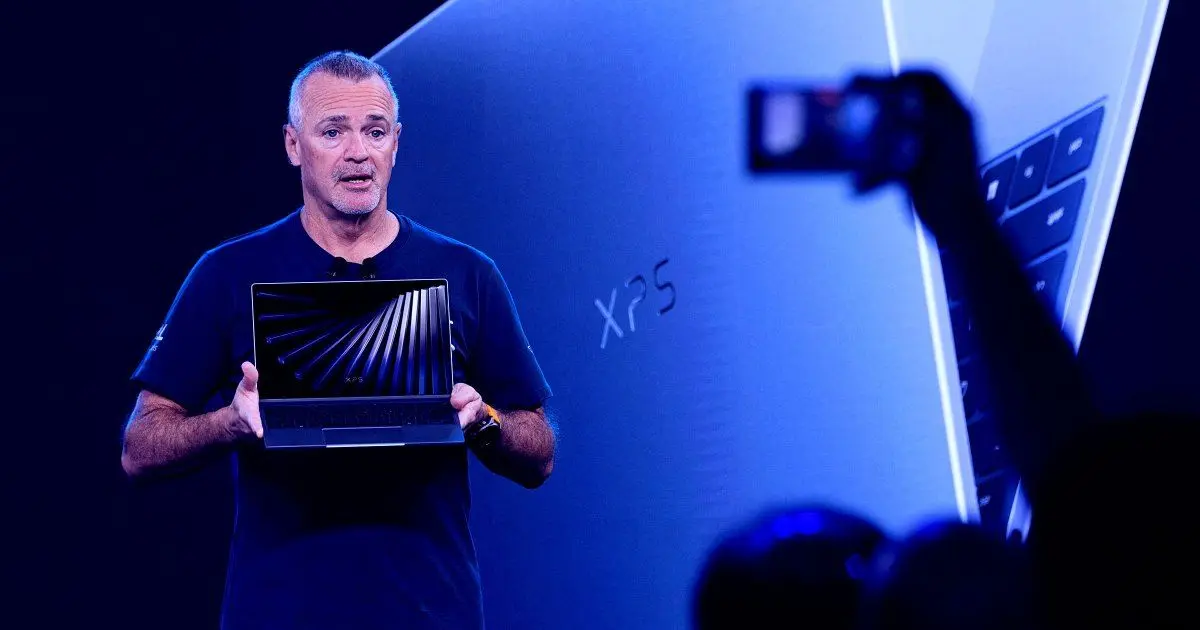
Dell has made a striking admission that challenges the tech industry's AI hype: consumers don't care about AI PCs. At a press briefing ahead of CES 2026, Kevin Terwilliger, Dell's head of product, acknowledged that the company's messaging about its 2026 PC lineup is not "AI first"—a significant departure from last year's strategy. "What we've learned over the course of this year, especially from a consumer perspective, is they're not buying based on AI," Terwilliger stated bluntly. "In fact I think AI probably confuses them more than it helps them understand a specific outcome."
1
2
Source: Futurism
This honest assessment from one of Microsoft's biggest PC partners comes as a blow to the software giant's push for Copilot Plus PCs. Dell Vice Chairman and Chief Operating Officer Jeff Clarke described AI as an "unmet promise," noting that the company had "an expectation of AI driving end-user demand" but "it hasn't quite been what it was going to be a year ago."
1
4
Microsoft's Copilot Struggles to Gain Traction
The shift in marketing strategy exposes deeper problems with Microsoft's Copilot initiative. While every new PC that leading OEMs ship this year will technically be an AI PC—equipped with either a Qualcomm Snapdragon X processor, Intel Core Ultra Series 3, or AMD Ryzen AI CPUs with NPU (Neural Processing Unit) capabilities—the AI features themselves aren't driving sales.
1
3

Source: Stuff
Microsoft's flagship Recall feature exemplifies these challenges. The controversial AI feature eventually launched nearly a year after it was originally scheduled, delayed following security concerns raised by security experts.
2
Even when AI capabilities do arrive, they haven't delivered obvious benefits for home users or taken much share from competitors like ChatGPT, Google's Gemini, or Anthropic's Claude—none of which require a fancy new "AI PC" to work.1

Source: XDA-Developers
Satya Nadella Takes Direct Control Amid Growing Concerns
The lackluster reception has prompted Microsoft CEO Satya Nadella to become what The Information described as the company's "most influential product manager." Nadella, who saw Microsoft miss the platform shift to mobile devices and tablets, desperately wants to avoid another failure in this momentous platform shift. He is conscious of the perception that the consumer version of Copilot lags behind competitors like Gemini, and has recently sent notes directly to product groups working on Copilot's consumer app with feedback on bugs and shortcomings.
1
This represents a familiar pattern for Microsoft: shipping half-baked products, then iterating slowly as the market experiments. That approach might work for a startup, but it's proven problematic for a company of Microsoft's size. Customers try the unfinished product, develop negative impressions, and those reviews spread even as flaws get fixed.
1
Related Stories


Hardware Improvements Overshadow AI Capabilities
Dell was among Microsoft's partners for the initial Copilot Plus PC launch in 2024, adding Qualcomm's Snapdragon X Elite chips to its popular XPS 13 and Inspiron line of laptops. However, most of the benefits in Copilot Plus PCs come from the improved battery life and performance of Qualcomm's chips, instead of AI features alone.
2
At CES 2026, Dell revived the XPS brand and refocused on hardware improvements that are not directly tied to generative AI or chatbots.4
While Terwilliger confirmed that every new Dell system announced at CES 2026 has an NPU inside for AI workloads, he acknowledged consumers aren't buying new hardware simply because it contains AI components.
4
Power users, who typically run more intense workloads and require stability and horsepower, aren't hitting the Copilot button because their needs are fundamentally different and AI wouldn't help them with their tasks anyway.3
Business Market Faces Similar Skepticism
The challenges extend beyond consumer markets. While Microsoft's real revenue engine is business customers—where licenses are sold 100,000 at a time and IT controls the ecosystem—even there, enterprise customers may decide they don't need to pay another $20 per user per month for a benefit that isn't materializing.
1
With consumers already spending thousands of dollars to build or buy capable systems for work or gaming, and a major memory shortage expected in 2026, no amount of chatbot acceleration is likely to drive satisfaction.4
Dell's decision to refocus on meeting actual customer demand rather than where the industry insists they should be represents a pragmatic approach. The powerful neural processing units in these machines may find workloads where they can demonstrate value in a year or two, but until Microsoft's many Copilots are ready for that role, Windows PC makers will have to sell their new hardware the old-fashioned way.
1
4
References
Summarized by

Navi
[2]
[3]
Related Stories
Recent Highlights



Recent Highlights
Today's Top Stories








Your Daily Dose of Curated AI News
Don’t drown in AI news. We cut through the noise - filtering, ranking and summarizing the most important AI news, breakthroughs and research daily. Spend less time searching for the latest in AI and get straight to action.

