Disney invests $1 billion in OpenAI, licenses 200+ characters for Sora video generator


90 Sources
90 Sources
[1]
Disney invests $1 billion in OpenAI, licenses 200 characters for AI video app Sora
On Thursday, The Walt Disney Company announced a $1 billion investment in OpenAI and a three-year licensing agreement that will allow users of OpenAI's Sora video generator to create short clips featuring more than 200 Disney, Marvel, Pixar, and Star Wars characters. It's the first major content licensing partnership between a Hollywood studio related to the most recent version of OpenAI's AI video platform, which drew criticism from some parts of the entertainment industry when it launched in late September. "Technological innovation has continually shaped the evolution of entertainment, bringing with it new ways to create and share great stories with the world," said Disney CEO Robert A. Iger in the announcement. "The rapid advancement of artificial intelligence marks an important moment for our industry, and through this collaboration with OpenAI we will thoughtfully and responsibly extend the reach of our storytelling through generative AI, while respecting and protecting creators and their works." The deal creates interesting bedfellows between a company that basically defined modern US copyright policy through congressional lobbying back in the 1990s and one that has argued in a submission to the UK House of Lords that useful AI models cannot be created without copyrighted material. Tech companies that build AI models traditionally gather those materials without rightsholder permission due to the sheer number of examples needed to train a reasonably useful generative AI model. However, since breaking out with the mainstream success of ChatGPT and becoming flush with investment cash (and facing some gnarly lawsuits), OpenAI in particular has taken steps to license content from IP owners after the fact. Under the new agreement with Disney, Sora users will be able to generate short videos using characters such as Mickey Mouse, Darth Vader, Iron Man, Simba, and characters from franchises including Frozen, Inside Out, Toy Story, and The Mandalorian, along with costumes, props, vehicles, and environments. The ChatGPT image generator will also gain official access to the same intellectual property, although that information was trained into these AI models long ago. What's changing is that OpenAI will allow Disney-related content generated by its AI models to officially pass through its content moderation filters and reach the user, sanctioned by Disney. On Disney's end of the deal, the company plans to deploy ChatGPT for its employees and use OpenAI's technology to build new features for Disney+. A curated selection of fan-made Sora videos will stream on the Disney+ platform starting in early 2026. The agreement does not include any talent likenesses or voices. Disney and OpenAI said they have committed to "maintaining robust controls to prevent the generation of illegal or harmful content" and to "respect the rights of individuals to appropriately control the use of their voice and likeness." OpenAI CEO Sam Altman called the deal a model for collaboration between AI companies and studios. "This agreement shows how AI companies and creative leaders can work together responsibly to promote innovation that benefits society, respect the importance of creativity, and help works reach vast new audiences," Altman said. From adversary to partner Money opens all kinds of doors, and the new partnership represents a dramatic reversal in Disney's approach to OpenAI from just a few months ago. At that time, Disney and other major studios refused to participate in Sora 2 following its launch on September 30. OpenAI's initial policy allowed copyrighted characters to appear in user-generated videos unless rights holders explicitly opted out. The LA Times reported that OpenAI had contacted talent agencies and studios before the launch, telling them that IP holders "would have to explicitly ask OpenAI not to include their copyright material in videos the tool creates." Hollywood's response to Sora 2 was swift and generally negative. According to CNBC, the Creative Artists Agency called it a "significant risk" to its clients, while United Talent Agency labeled it "exploitation, not innovation." The WME talent agency sent a memo to agents notifying OpenAI that all of the agency's clients were opted out of Sora. The Motion Picture Association also demanded "immediate and decisive action" from OpenAI. OpenAI CEO Sam Altman reversed course within days of the reaction, promising to give rights holders "more granular control" and floating a potential revenue-sharing model. The company also partnered with actor Bryan Cranston and SAG-AFTRA in October to implement new safety guardrails around likeness rights. While Disney and OpenAI are apparently friends now, the company has simultaneously taken an aggressive stance against some AI companies it has not partnered with. On Wednesday, Disney sent a cease-and-desist letter to Google, accusing the company of "infringing Disney's copyrights on a massive scale" through its AI services, including YouTube. Disney has also sent similar letters to Meta and Character.AI and filed lawsuits against image synthesis service Midjourney alongside NBCUniversal and Warner Bros. Discovery. A few major questions about the deal remain unanswered, including the actual licensing fees, whether Disney content will be used to train future OpenAI models, and whether this deal is even finalized. The announcement also notes it remains "subject to negotiation of definitive agreements," so expect potential updates or clarifications ahead.
[2]
Disney's OpenAI deal is exclusive for just one year -- then it's open season | TechCrunch
Disney's three-year licensing partnership with OpenAI includes just one of exclusivity, Disney CEO Bob Iger told CNBC. The company signed the partnership with OpenAI last week that will bring its iconic characters to the AI firm's Sora video generator. Once that exclusive year is up, Disney is free to sign similar deals with other AI companies. The deal gives OpenAI a high-profile content partner, allowing users to draw on more than 200 characters from Disney, Marvel, Pixar, and Star Wars to create content on Sora. For now, it's the only AI platform that's legally permitted to do so. For Disney, the deal offers a way to test the waters with generative AI and its intellectual property, letting the company assess how its partnership with OpenAI goes before pursuing additional agreements. "No human generation has ever stood in the way of technological advance, and we don't intend to try," Iger told CNBC. "We've always felt that if it's going to happen, including disruption of our current business models, then we should get on board." Tellingly, the same day that Disney announced its deal with OpenAI, the company sent a cease-and-desist letter to Google, alleging that the tech giant has infringed on its copyrights. Google didn't confirm or deny Disney's allegations but did say it will "engage" with the company.
[3]
Disney and OpenAI have made a surprise deal - what happens next?
In a stunning reversal, Disney has changed tack with regard to safeguarding its copyrighted characters from incorporation into AI tools - perhaps a sign that no one can stem the tide of AI The world's best-known AI company and the world's best-known entertainment firm have come to a surprise agreement to allow AI versions of some of the most iconic characters in film, TV and cartoons to be used in generative AI videos and images. The deal may be a sign that major copyright holders see no way to hold back the flood of AI tools on the market. The Walt Disney Company has signed a deal with OpenAI that will allow the AI firm's Sora video generation tool and ChatGPT image creator to use more than 200 of Disney's most iconic characters. Meanwhile, Disney remains in dispute with another AI firm, Midjourney, over alleged infringement of their intellectual property (IP), claiming Midjourney aims to "blatantly incorporate and copy Disney's and Universal's famous characters" into their image generating tool. The suit was seen as part of an indication that copyright holders were starting to more robustly defend their rights against AI firms' unauthorised use - but some experts now believe the deal could be an indication Disney believes if you can't beat AI companies, you should join them. The characters now deemed fair game for OpenAI users include the likes of Mickey and Minnie Mouse, Simba and Mufasa from The Lion King, Moana, as well as Marvel and Lucasfilm characters, including some of Star Wars' most well-known names. While it'll be possible for users to create videos of those characters, the rights to their voices - many of which come from celebrities, such as Tom Hanks in the case of Woody from Toy Story - will not be permitted. Users will be able to create those images and videos starting in early 2026. The licensing agreement lasts three years. According to a statement released by both companies, the deal was agreed after OpenAI committed to implementing age-appropriate policies and "reasonable controls" to prevent underage users from accessing their products, as well as "robust controls to prevent the generation of illegal or harmful content, to respect the rights of content owners in relation to the outputs of models, and to respect the rights of individuals to appropriately control the use of their voice and likeness". For its part, Disney has agreed to take a $1 billion equity investment in OpenAI, and the option to purchase additional equity in the fast-growing AI firm. Some of the characters that can now be used by OpenAI tools are the same ones that Disney cited in its lawsuit against Midjourney. "This is a great opportunity for the company to enable consumers to engage with our characters on what is probably the most modern of technology and media platforms today," Disney CEO Bob Iger told CNBC. "OpenAI is both respecting and valuing our creativity." Iger also said the growth of AI was "breathtaking". In the same interview, OpenAI CEO Sam Altman said "people really want to connect with Disney characters and express creativity in new ways". Despite the warm words, the deal came as a shock to many. "I'm surprised, because Disney are famously protective of their brand," says Catherine Flick at the University of Staffordshire in the UK. The company has previously strongly defended its characters' IP, including fighting to keep Mickey Mouse out of the public domain, says Rebecca Williams at the University of South Wales in the UK. However, others are less stunned by the deal. "It was clear that Disney didn't want to attack the large tech companies like Google, OpenAI and Meta because they have always seen generative AI as something that can work in their favour," says Andres Guadamuz at the University of Sussex in the UK. Guadamuz believes that the deal with OpenAI benefits Disney because of the potential it offers. "What I think will happen is that they will be using their extensive catalogue to train their own models," he says, adding that it could be used within the animation process itself. Disney will reportedly become a "major customer" of OpenAI tools. Williams worries the agreement is an indication of the general direction AI and copyright contests are heading. "It shows that companies like Disney appear to think that it's impossible to stem the tide of AI," she says. "Their strategy is to partner up with these types of companies in a bid to profit from use of their IP rather than having it stolen from them and used anyway." However, Ty Martin at licensing company Copyrightish believes other AI companies will start to meet licence holders halfway. "This is where 2026 is heading," he says. "Licensing becomes the engine of quality. AI platforms with access to strong, recognisable IP will cut through the slop trough, while unlicensed or generic content is lost." Whether it's a positive, proactive move or a defensive one born out of exasperation, the partnership depends on the agreement lasting the initial three-year term - and Flick believes it'll only be a matter of time before the deal is abandoned. "There are going to be people that will use it in ways that Disney would not normally want their brand to be used," she says. Flick adds: "This will be a good test case to see what's going to happen with the usage of this IP, and personally, I think it's going to be an exercise in seeing how long [Disney] put up with people doing things that they're not super comfortable with, with their IP."
[4]
The Disney-OpenAI Deal Redefines the AI Copyright War
On Thursday, Disney and OpenAI announced a deal that might have seemed unthinkable not so long ago. Starting next year, OpenAI will be able to use Disney characters like Mickey Mouse, Ariel, and Yoda in its Sora video-generation model. Disney will take a $1 billion stake in OpenAI, and its employees will get access to the firm's APIs and ChatGPT. None of this makes much sense -- unless Disney was fighting a battle it couldn't win. Disney has always been a notoriously aggressive litigant around its intellectual property. Alongside fellow IP powerhouse Universal, it sued Midjourney in June over outputs that allegedly infringed on classic film and TV characters. The night before the OpenAI deal was announced, Disney reportedly sent a cease-and-desist letter to Google alleging copyright infractions on a "massive scale." On the surface, there appears to be some dissonance with Disney embracing OpenAI while poking its rivals. But it's more than likely that Hollywood is embarking down a similar path as media publishers when it comes to AI, signing licensing agreements where it can and using litigation when it can't. (WIRED is owned by Condé Nast, which inked a deal with OpenAI in August 2024.) "I think that AI companies and copyright holders are beginning to understand and become reconciled to the fact that neither side is going to score an absolute victory," says Matthew Sag, a professor of law and artificial intelligence at Emory University. While many of these cases are still working their way through the courts, so far it seems like model inputs -- the training data that these models learn from -- are covered by fair use. But this deal is about outputs -- what the model returns based on your prompt -- where IP owners like Disney have a much stronger case Coming to an output agreement resolves a host of messy, potentially unsolvable issues. Even if a company tells an AI model not to produce, say, Elsa at a Wendy's drive-through, the model might know enough about Elsa to do so anyway -- or a user might be able to prompt their way into making Elsa without asking for the character by name. It's a tension that legal scholars call the "Snoopy problem," but in this case you might as well call it the Disney problem. "Faced with this increasingly clear reality, it makes sense for consumer facing AI companies and entertainment giants like Disney to think about licensing arrangements," says Sag.
[5]
Disney signs deal with OpenAI to allow Sora to generate AI videos featuring its characters
The Walt Disney Company announced on Thursday that it has signed a three-year partnership with OpenAI that will bring its iconic characters to the company's Sora AI video generator. Disney is also making a $1 billion equity investment in OpenAI. Launched in September, Sora allows users to create short videos using simple prompts. With this new agreement, users will be able to draw on more than 200 animated, masked, and creature characters from Disney, Marvel, Pixar, and Star Wars, including costumes, props, vehicles, and more. These characters include iconic faces like Mickey Mouse, Ariel, Belle, Cinderella, Baymax, Simba, as well as characters from Encanto, Frozen, Inside Out, Moana, Monsters Inc., Toy Story, Up, and Zootopia. Users will also be able to draw on animated or illustrated versions of Marvel and Lucasfilm characters like Black Panther, Captain America, Deadpool, Groot, Iron Man, Darth Vader, Han Solo, Stormtroopers, and more. Users will also be able to draw on these characters while using ChatGPT Images, the feature in ChatGPT that allows users to create visuals using text prompts. The agreement does not include any talent likenesses or voices, Disney says. "The rapid advancement of artificial intelligence marks an important moment for our industry, and through this collaboration with OpenAI we will thoughtfully and responsibly extend the reach of our storytelling through generative AI, while respecting and protecting creators and their works," said Disney CEO Bob Iger in a statement. Disney says that alongside the agreement, it will "become a major customer of OpenAI," as it will use its APIs to build new products, tools, and experiences, including for Disney+. "Disney is the global gold standard for storytelling, and we're excited to partner to allow Sora and ChatGPT Images to expand the way people create and experience great content," said Sam Altman, co-founder and CEO of OpenAI, in a statement. "This agreement shows how AI companies and creative leaders can work together responsibly to promote innovation that benefits society, respect the importance of creativity, and help works reach vast new audiences." It's worth noting that Disney has sued the generative AI platform Midjourney for ignoring requests to stop violating its intellectual property rights. Disney also sent a cease-and-desist letter to Character.AI, urging the chatbot company to remove Disney characters from among the millions of AI companions on its platform. Disney's agreement with OpenAI indicates the company isn't fully closing the door on AI platforms.
[6]

Disney's $1B Deal With OpenAI Will Bring Iconic Characters to Sora AI Videos
Disney is bringing its catalog of iconic characters, from Marvel to Star Wars and Pixar, to OpenAI's Sora AI social media app, the company announced on Thursday. That means Sora users will soon be able to generate AI videos featuring any of Disney's included characters, with no fear of copyright infringement. In a wide-reaching deal, Disney is making a $1 billion equity investment in OpenAI. Disney employees will have access to ChatGPT, and the entertainment company will use APIs to "build new products, tools and experiences." Part of that deal will apply to Disney Plus, with the company saying its Disney Plus streaming subscribers will be able to watch select Sora AI videos on the Disney Plus app.
[7]

Disney wants to drag you into the slop
Disney and OpenAI's new $1 billion partnership feels emblematic of the terrible times we're living through. In exchange for access to the generative AI firm's APIs and tools like ChatGPT, the studio plans to let users of OpenAI's Sora AI video generator create clips featuring hundreds of Disney-owned characters. Sora AI users will be able to generate as much uncanny Pixar / Marvel / Star Wars slop for themselves as they want, and Disney will share some of it in a special section on the Disney Plus platform. It's not hard to see where this is going to go.
[8]

OpenAI Deal With Disney Will Bring 200+ Characters to Sora, ChatGPT
OpenAI and Disney have signed a three-year content licensing deal that lets Sora users generate videos featuring 200+ Disney, Marvel, Pixar, and Star Wars characters. The deal protects OpenAI from IP lawsuits involving fictional Disney characters across Sora and ChatGPT. On Sora, users can view and share AI-generated videos, while on ChatGPT, they will be able to generate images. Select Sora-generated videos will also be streamed on Disney+. Both AI generators are allowed to use the fictional characters' costumes, props, vehicles, and environments. However, "the agreement does not include any talent [human actors] likenesses or voices," Disney confirms. Disney characters will come to Sora and ChatGPT in early 2026. Available characters include Mickey Mouse, Minnie Mouse, Lilo, Stitch, Ariel, Belle, Beast, Cinderella, Baymax, Simba, Mufasa, illustrated versions of the Avengers, as well as characters from movies like Encanto, Frozen, Inside Out, Moana, Monsters Inc., Toy Story, Up, Zootopia, and more. As part of the deal, Disney will also invest $1 billion in OpenAI and will use its API to build new products, tools, and experiences, while also deploying ChatGPT to its employees. This is a preliminary announcement, and "the transaction is subject to the negotiation of definitive agreements, required corporate and board approvals, and customary closing conditions," both companies said. They also affirmed their commitment to "responsible use of AI that protects user safety and the rights of creators." Hollywood agents were upset when Sora 2 came out earlier this year. The tool generates hyper-realistic videos of characters and movie scenes, and also runs a TikTok-like vertical feed. Agencies wanted OpenAI to seek permission from their clients before using their likenesses in videos, but OpenAI had adopted an opt-out policy, which, as Deadline notes, meant that IP was usable on the app until a removal request was made. While talent agencies like WME, which represents Ben Affleck, Christian Bale, Matt Damon, Denzel Washington, Jennifer Garner, and others, have opted out, Disney is opting in for its fictional characters.
[9]

Disney, OpenAI sign video, image generation licensing deal
Amid controversy over its ability to generate content with copyrighted characters, OpenAI has struck a three-year deal with Disney to license more than 200 Disney, Pixar, Marvel, and Star Wars characters for use in Sora videos and ChatGPT Images. Disney and OpenAI revealed the pact in a Thursday press release, framing it as a way for Sora and ChatGPT Images to generate licensed clips and artwork featuring a curated set of characters. The deal will even push Disney AI creations on Disney+ subscribers, the pair said, as the deal is making "a selection of these fan-inspired Sora short form videos available to stream." No word on how those videos will be picked, and Disney didn't respond to questions for this story. For actors worried that their likenesses are being licensed for AI generation without proper recompense, there's no need to be concerned here: Disney and OpenAI said that neither likenesses nor voices were included in the deal, so live-action characters from the Marvel universe and Star Wars franchise will only appear in "iconic animated or illustrated versions." Disney has also agreed to make a $1 billion equity investment in OpenAI as part of the deal and become "a major customer of OpenAI" through the use of its products "to build new products, tools, and experiences, including for Disney+ and deploying ChatGPT for its employees." In short, Disney is getting ahead of the curve and just jumping full-force into adopting AI. "The rapid advancement of artificial intelligence marks an important moment for our industry, and through this collaboration with OpenAI we will thoughtfully and responsibly extend the reach of our storytelling through generative AI, while respecting and protecting creators and their works," Disney CEO Bob Iger said of the deal. Iger also noted that "technological innovation has continually shaped the evolution of entertainment," and with the AI juggernaut sure seeming like an unstoppable one (barring a bursting bubble), it makes sense for one of the world's largest entertainment companies to adopt it. The move especially makes sense given the kerfuffle caused by OpenAI's Sora 2 video generation tool, which has drawn considerable heat from Hollywood and beyond for its ability to closely mimic the copyrighted intellectual property it was widely alleged to be trained on. OpenAI quickly caved to pressure from the entertainment industry after launching Sora 2 with the promise to adopt licensing deals like the one it signed with Disney, which at first reportedly asked OpenAI to get its IP out of the video generation machine's regurgitation algorithm. At the same time that Disney is partnering with OpenAI, it's also sending word to Google that if AI tools don't come from the house of Altman, they had better not be spitting out content derived from the House of Mouse. Disney reportedly sent a cease and desist letter to Google on Wednesday, alleging the company's AI systems were infringing on its intellectual property, calling the outputs a violation of its copyrights, and demanding that Google immediately stop generating content based on Disney-owned material. Famously litigious Disney has also reportedly sent similar letters to Character.ai and Meta over alleged misuse of its intellectual property. Google didn't respond to questions for this story. ®
[10]

Disney Invests $1 Billion in OpenAI, Strikes Licensing Deal
Walt Disney Co. agreed to invest $1 billion in OpenAI and license iconic characters like Mickey Mouse and Cinderella for use on the startup's short-form, artificial intelligence video platform. As part of the new three-year pact, OpenAI's Sora will be able to draw from from a library of more than 200 animated and creature characters -- from Lilo and Stitch to Ariel and Simba -- when generating AI videos in response to user prompts. The deal, announced Thursday, doesn't cover any talent likenesses or voices, however. So a video could feature Woody from Toy Story but without Tom Hanks' voice.
[11]
OpenAI's billion-dollar Disney deal puts Mickey Mouse and Marvel in Sora
A new three-year licensing agreement announced between Disney and ChatGPT operator OpenAI will allow the Sora video generator to create "user-prompted social videos" that feature more than 200 characters from Disney, Marvel, Pixar, and Star Wars. According to OpenAI's blog post announcing the deal: Sora will be able to generate short, user-prompted social videos that can be viewed and shared by fans, drawing from a set of more than 200 animated, masked and creature characters from Disney, Marvel, Pixar and Star Wars, including costumes, props, vehicles, and iconic environments. In addition, ChatGPT Images will be able to turn a few words by the user into fully generated images in seconds, drawing from the same intellectual property. The agreement does not include any talent likenesses or voices. The list of characters accessible to OpenAI's generators includes Mickey Mouse, Minnie Mouse, Lilo, Stitch, Ariel, Belle, Beast, Cinderella, Baymax, Simba, Mufasa, Black Panther, Captain America, Deadpool, Groot, Iron Man, Loki, Thor, Thanos, Darth Vader, Han Solo, Luke Skywalker, Leia, the Mandalorian, Stormtroopers, Yoda, and many more. There's also a $1 billion investment from Disney in OpenAI with the option to invest more, a plan to deploy ChatGPT for Disney employees as it becomes a "major customer" of OpenAI's APIs across its businesses, and the companies say that Sora-generated AI slop will be available for viewing on Disney Plus next year: Under the license, fans will be able to watch curated selections of Sora-generated videos on Disney+, and OpenAI and Disney will collaborate to utilize OpenAI's models to power new experiences for Disney + subscribers, furthering innovative and creative ways to connect with Disney's stories and characters. Sora and ChatGPT Images are expected to start generating fan-inspired videos with Disney's multi-brand licensed characters in early 2026.
[12]

CNBC Exclusive: Transcript: Disney CEO Bob Iger and OpenAI CEO Sam Altman Speak with CNBC's "Squawk on the Street" Today
Following is the unofficial transcript of a CNBC exclusive interview with Disney CEO Bob Iger and OpenAI CEO Sam Altman on CNBC's "Squawk on the Street" (M-F, 9AM-11AM ET) today, Thursday, December 11. Following are links to video on CNBC.com: https://www.cnbc.com/video/2025/12/11/disney-ceo-on-1-billion-investment-in-openai-this-is-a-good-investment-for-the-company.html, https://www.cnbc.com/video/2025/12/11/disneys-openai-licensing-deal-is-not-a-threat-to-creators-says-ceo-bob-iger.html, and https://www.cnbc.com/video/2025/12/11/bog-iger-on-google-cease-and-desist-letter-we-have-been-aggresive-at-protecting-our-ip.html. All references must be sourced to CNBC. DAVID FABER: Of course, this morning at 9:00am ET, Disney and OpenAI announcing what they're calling a landmark agreement to bring the beloved characters from Disney's brands to Sora, of course, the short-term - the short form video platform of OpenAI. And as we have been promoting all morning, we are now joined by Disney's CEO Bob Iger, along with OpenAI's CEO Sam Altman. And, Sam, very happy to have you on the program I believe for what's the first time. SAM ALTMAN: Happy to be here. FABER: Bob, you and I have done this a few times. I want to start with you, if I can, Bob. Just, first of all, why are you doing this deal, and what led to it? BOB IGER: Well, this is a great opportunity for the company to enable consumers to engage with our characters on what is probably the most modern of technology and media platforms today. And it not only gives consumers or users an opportunity to do so, but it also is significant because, in this deal, OpenAI is both respecting and valuing our creativity, both our characters, but also those that have created those characters. So, it gives us an opportunity really to play a part in what is really a breathtaking, breathtaking growth in essentially AI and new forms of media and entertainment. FABER: Does it represent any risks for you? When I think about it, I know the voices of actors are not going to be a part of this. It's going to be the images, Bob. But, that said, your own Imagineers, those who've created obviously these untold stories for you that have made the company it is, do they look at this announcement and worry at some point people who are manipulating short-term video using your characters are going to replace them? IGER: Well, first of all, what we're doing here is, we're licensing about 200 characters for users of Sora to create their own basically videos using Sora and those characters. We are not including name and likeness, nor are we including character voices. And so, in reality, this does not in any way represent a threat to the creators at all, in fact, the opposite. I think it honors them and respects them, in part because there's a license fee associated with it. The other thing it does is, it enables us to be comfortable that OpenAI is putting guardrails essentially around how these are used, so that really there's nothing for us to be concerned about from a consumer perspective, meaning this will be a safe environment and a safe way for consumers to engage with our characters in a new way. And so, and, also, let's be mindful of the fact that these are 30-second videos. FABER: Right. IGER: So we're not talking about creating either shorts or movies, for that matter. And we know, because we have seen a significant amount of growth in consumption of short form video, we also think this is an era where almost everybody can be a creator of sorts. And we have seen that in breathtaking fashion on other platforms. And this is a way for us as a company really to provide experiences to particularly younger audiences engaging with our characters in new ways. FABER: Yes. Sam, obviously, Sora's success has been significant. It's one of the reasons you cite for all the compute that you need to continue to build, given the usage rates there. How do you view it? Do you expect that it's in fact going to lead to more activity on the platform, the ability to use these characters? ALTMAN: Yes, we hear so much from users about how much they love Disney's characters. Disney, I think, is the greatest storytelling company in the world, bar none, and people really want to connect with Disney characters and express creativity in new ways. And we are confident from everything we have heard from our users that they're going to respond very well to be able to do this. And I hope that it'll unleash a sort of a whole new way that people use this technology and a new model for the companies making the technology and rights holders to sort of responsibly figure out how to get this done together. FABER: Can you expand on that? What do you mean when you say unleashed a new wave, Sam? ALTMAN: I, one thing we found again and again is that we have underestimated the amount of latent creativity in the world, that, if you lower the effort, skill, time required to create new things, people very quickly are able to bring ideas to life and make new kinds of entertainment, art, code, all sorts of things, with this new tool of AI. And if we can enable people to do that and give them more flexibility like with these 200 Disney characters, I don't know exactly what we're going to see, but I think people will come up with amazing kinds of ideas. FABER: Right. And, to that point, and I know Sara is very concerned here about the princesses. There are going to be guardrails around the usage, is that right, Sam? ALTMAN: Yes. Again, Disney is a great partner for us for this because they're, they have been so willing to work out how this new world is going to work together. But there will, of course, be guardrails. It's very important that we enable Disney to set and evolve those guardrails over time. But they will, they will, of course, be in there. FABER: Bob, is the deal exclusive, or is it possible for you to go out and sign a similar deal with other short, short form video or companies that provide that ability? IGER: This is a three-year license agreement, and there is exclusivity at basically the beginning of the three-year agreement. So, yes, it is partially exclusive. FABER: So, for the first year, for example, I would guess, something along those lines? IGER: That would be a good guess. FABER: Now, why did you decide to invest a billion dollars in OpenAI along with this deal? IGER: Well, obviously, we have been mindful of the significant growth in AI to begin with and extremely impressed with the progress that Sam and OpenAI have made. And that includes, by the way, as I said earlier, their agreement to both honor and value and respect our content. And we want to participate in what Sam is creating and what his team is creating. We think this is a good investment for the company. It's kind of a way in of sorts for us to appreciate even more what is obviously something that has significance in terms of the long-term impact on our business. FABER: And there are warrants that came along with it. And I guess you're not giving us any specifics, though, in terms of where those are struck. Is that correct? FABER: OK. Bob, at the same time you announced this deal, you, I reported on a cease-and-desist letter that was sent to Google. I would imagine that's not a coincidence in terms of the timing. I'm curious as to what your conversations have been like with other platforms, including Google, and why you chose to make that move today. IGER: Well, we have been aggressive at protecting our IP, and we have gone after other companies that have not honored our IP, not respected our IP, not valued it. And this is another example of us doing just that. We have been in conversation with Google, basically expressing our concerns about this. And, ultimately, because we didn't really make any progress, the conversations didn't bear fruit, we felt we had no choice but to send them a cease-and-desist. FABER: And, Sam, on that same note, did your conversations with Bob and your reaching a deal here come out of conversations around IP? Or can you give us some sense as to how we got here? ALTMAN: We always have wanted to respect IP. When we launched Sora initially, we had a lot of blocks in place, but we knew that, if there was one company that we wanted to start partnering with, Disney was the obvious one. And so we have had a long discussion going with Disney, and we found them to be a sort of open-minded partner as this technology has evolved. And it was very clear to us that we really wanted to find a deal to do here. FABER: Is it possible you will sign similar deals with other companies as well? ALTMAN: The demand for Disney characters in particular from our users is sort of off the charts, so I won't rule out anything in the future, but we think this alone is going to be a wonderful start for what our customers want to do when it comes to putting themselves in that one lightsaber scene from, lightsaber fight in Star Wars or making like a Buzz Lightyear custom birthday video for their kid. I think this is going to be, like, quite a big deal for our users, and then we can reevaluate from there. FABER: You're, yes, so you're, I just want to understand. Sort of you're looking at, obviously, what people are doing, and you're seeing them interact with these Disney characters on a frequent basis. I guess that's what I'm hearing, right, Sam? ALTMAN: Well, they'd like to be interacting. There's desire to do it. FABER: They'd like to be. When does this start, by the way? ALTMAN: I don't know if we have the launch date yet, but we will try to get it in there as soon as we can. FABER: And, OK. And, Bob, in terms of the use of Sora videos on the Disney+ platform, which is also a part of the announcement, can you give us some sense as to how you're envisioning that or how that would work? IGER: Well we have wanted for a long time to have what we will call user-generated content on our platform. In this case, it will be user prompted Sora-generated content. And we will be licensing AI Sora tools in order to do that. Initially, what we will do is, we will curate some of the videos that have been created on the Sora platform and put them onto Disney+, which we think is a great way to increase engagement with our Disney+ users, particularly the younger users. FABER: So, what -- IGER: And we're going to do that as soon as we possibly can. FABER: Right. So there will be, I don't know, some sort of a tile or something that I can access as a Disney+ user to look at what people have been creating that you guys have decided is worthy of showcasing? IGER: Yes, and then ultimately to enable users to prompt Sora to create what they want to create on our platform, yes. That's a big step for us. FABER: Yes, what am I looking at? Wait. What was I looking at? IGER: Well, you will put it up very quickly. But there you go. There's a case of someone who wants to have a race against Lightning McQueen from "Cars." This is what I think Sam's ultimate fantasy is, which is ultimately to hold the lightsaber himself. FABER: Is it, so it's, Bob, it is inclusive of most of the Disney characters that we know well, and, obviously because they range far and wide at this point between Star Wars and Marvel, not to mention The Simpsons. I mean, it goes all over the place. It's not just Mickey Mouse. IGER: There are many characters here, and I think there's almost a character for everybody in this set, and I think it's going to be really fun and interesting to see what people do with them. And, again, it's a great step for us. We have always been forward-thinking when it comes to applying technology to both engage with consumers at a closer and higher level to improve our business, to essentially create new experiences in general. We were the first to license television shows and movies to the iTunes platform back in 2005 and 2006, as an example. And this is a step in, another step in essentially that direction, which is to get on board with what is clearly an incredibly impactful and profound wave in terms of change in our society and certainly change in our industry. FABER: Yes. I asked this a bit earlier, but I just want to come back to it. I mean, I'm curious, Bob, what you think the reaction is in your company itself and amongst those who are your creators of animated IP. I mean, are they going to view this positively, do you think? And, if so, why? IGER: Well, they should. Our goal is in using AI is to continue to honor, respect, value the creative community in general. And we don't believe that, in this case, it does anything but that, really, again, because we're not using name and likeness. We're not using character voices. That's certainly an example of that. And, again, the fact that we're getting paid for this recognizes the value that's been created, really, in this case, over decades. Mickey Mouse was created in 1928, as a for instance. It's kind of extraordinary when you think about that a character that was created almost 100 years ago is going to end up on the Sora platform. And I think that speaks volumes not just about the value of the character and the interest that people still have in that character, but the fact that the that users will be able to engage with a character that they have loved for so many years, so many decades in really modern and I think pretty enjoyable ways. FABER: Yes. No, it is interesting. Of course, "Steamboat Willie" was kind of a short of its own, about eight minutes' long, obviously a lot longer than 30 seconds, but nonetheless not particularly long. Sam, I wanted to come to you on some broader issues in the time that we have here as well. You're going to exit the year, I believe, with about 1.9 gigawatts of compute. You have said, I believe, publicly around a $20 billion annual revenue rate. Does a deal like this help you think about an increase in terms of revenues and/or your need for compute? ALTMAN: Yes. I mean, we expect this to drive incremental revenue and also just delightful services for our users. We have a lot of other things that we expect will drive incremental revenue, but the only way we can deliver on that is with more compute. So we will continue to build out compute. We will try to do a big multiple on that 1.9 gigawatts over the course of the next year. And we will keep going from there. FABER: Yes. We have been talking a lot about Oracle this morning, of course. And so much of the investment perspective on that company comes back to your own and your ability to make good on the $300 billion commitment you have made in terms of buying compute from them. Why are you confident, because others certainly are at least questioning, in your ability to meet that obligation over these next five years, Sam? ALTMAN: The value that we see people getting from this technology and thus their willingness to pay already today, to say nothing of the models that we have coming in the coming months and years, makes us confident that we will be able to significantly ramp revenue. It's obviously unusual to be growing this fast at this kind of scale, but it is what we see in our current data, the model's ability to do really increasingly valuable economic work in larger and larger chunks. I think you will start to see this with our next model and then more with the next one, the one after that. We are confident we can continue to drive the revenue growth to meet this compute ramp. Without the compute ramp, of course, we can't drive the revenue growth, but we see way more reasons to be optimistic than reasons to be pessimistic. Of course, we will continue to be responsible and, of course, we will adjust our plans if, as necessary if something happens that's not what we expect. But, given what we see right now, the demand in the market is pretty extreme. And the overhang of what these models are capable of that the world has not yet figured out how to build into their workflows is also quite significant. FABER: Right. I do wonder, though, specific to Sora and the discussion we're having, it's more expensive for you, right, I mean, requires more compute, I would assume. Are you losing more money on every Sora or video than on a simple query? And do you start charging in a significant way, particularly given you're going to be paying a licensing fee as well to Disney? ALTMAN: We do charge today for Sora generations beyond some included free ones. And I'm sure we will continue to evolve the business model there. But users have not indicated any lack of willingness to pay for generating videos that they love. In fact, if anything, it's, that's, there's been much more of that than we initially expected. So, yes, it's more expensive, but people pay much more and expect to pay much more than they do for an image. FABER: And you see price elasticity there in terms of what you can charge? ALTMAN: It seems like it. SARA EISEN: I have always wanted to be a Disney princess. ALTMAN: There you go. EISEN: Sam, it's Sara. There we go. Thanks for the solution. Look, as you know, in the market, it's gone from very optimistic to a little more scrutiny on the AI trade. I know you're not public, but there are questions. For instance, following up on the revenue question, can you tell us a little bit about trends in ChatGPT since Gemini 3 was launched by Google and outperformed a lot of the OpenAI models? ALTMAN: Gemini 3 has had less of an impact on our metrics than maybe we feared. We will very soon launch a new model that we're quite excited about, as well as a handful of other features in response to their launch. We have twice before seen a competitive threat. And I believe that, when a competitive threat happens, you want to focus on it, deal with it quickly. We call that a code red, sort of a six-or-eight-week focus period, and then you deal with whatever you're going to deal with and get back to a position of clear leadership and move on. EISEN: Yes. ALTMAN: So, that's what we're doing with Gemini. This is a pretty standard thing for us. I expect we will exit it by January in a very strong position. EISEN: Yes, because that's sort of the question now, is, it's obviously becoming a very competitive race, both technologically and for market share. So, how do you expect the sort of market share battle to play out, both on the consumer side and the enterprise side? ALTMAN: On the consumer side, there's no company I would want to trade positions with. I - it will clearly be competitive, but I love where we are relative to anybody else. I think ChatGPT is the by far market share leader. And with these upcoming launches, I expect that distance to increase, not decrease. I expect our market share to go up. The enterprise side is still earlier. We intend to go in there, but we have a lot of work in front of us, and it won't be easy. The set of services we want to offer finally has, I think, come into clarity, and the models are getting strong enough that I think enterprises can really transform. But that will be one of the big stories of 2026, is the companies competing for that. Again, I love the position we're in, and I think our strength in consumer is going to really translate, and we're going to try our hardest to go win enterprise. FABER: And, Sam, to those who say, well, simply looking at it on a cost per token, per dollar, per watt, to quote Satya Nadella, one of your partners, you guys are not going to be able to beat Alphabet, how do you respond? ALTMAN: We expect to beat Alphabet. We're incredibly excited about our upcoming chip. FABER: When do you expect to actually be deploying that? ALTMAN: I, as soon as I said that, I realized you were going to ask me. We're not ready to talk about that part yet, but we will talk about it. And we are very focused on having the cheapest cost per token in the industry at the highest level of intelligence. FABER: Yes. Bob, I know you have been listening here. And I'm curious as to how you viewed the landscape as well in terms of who you wanted to partner with and whether ChatGPT was always sort of the number one target. IGER: Sam and I first met actually when I was retired from Disney in 2022. And he gave me a bit of a road map of where OpenAI and AI was going. And everything that he predicted has come true a lot faster actually than he thought would unfold or would happen when we met in 2022. So, we have been extremely impressed with OpenAI's growth and what Sam and his team have been able to achieve. And, of course, on top of that was their appreciation for our content and their willingness to license it and their willingness to help us protect it and to protect value. So, we're very excited about what we see. We also think there are great opportunities for our company to license other product from OpenAI to make our company more efficient, to grow the top line, to essentially accomplish a lot of what we feel we need to accomplish in the years ahead. FABER: Yes. Well, you say you're going to become a major customer of OpenAI. What does that mean, Bob? IGER: Again, we think there are a lot of opportunities here beyond Sora to license product from OpenAI. And we intend to do just that. FABER: As you view this significant change in terms of the ability of people to create content, Bob, from your standpoint, I mean, don't you still see it as a significant threat over time to Disney and the use obviously -- IGER: Well, look -- FABER: Of short-term videos and the time people spend with them? IGER: It's interesting, David. We have always viewed technological advance as opportunity, not threat. First of all, you can't do anything about it. No human generation has ever stood in the way of technological advance, and we don't intend to try. And so we have always felt that, if it's going to happen, including disruption of our current business models, then we should get on board and figure out how we advantage our company and our shareholders by moving forward with a sense of optimism and a sense and being aggressive about it. I, someone once said to me that creativity is the new productivity, and I think you're starting to see that more and more. And Sam alluded to it earlier when he talked about just people liking to create, enjoy the creative process themselves, whether they're creating short form videos or all sorts of other things that this technology enables. So it's going to happen regardless. And we'd rather participate in the rather dramatic growth, rather than just watching it happen and essentially being disrupted by it. So we think this is actually a way for us to be part of these developments, as opposed to be harmed by them. FABER: Yes. Interesting listening to you. Of course, it takes me in part to what I have been covering nonstop, which is the fight over Warner Bros. Discovery, Bob. And one of the key arguments from an antitrust perspective that Netflix will make is that we're not just streaming. Streaming is not just us and HBO and Disney+. It includes Sora and Instagram and TikTok and so many other platforms. How do you view that? IGER: Well, one thing I'm, it's nice to be an observer and not a participant in this. You know, eight years ago, we announced a deal with Rupert Murdoch to buy a number of the assets of 20th Century Fox at that point. And we were actually, in many respects, when you look at what's going on, and we were ahead of the game, so to speak, in that we saw the coming wave of streaming. Already, it had begun. And we were going into that business, and we felt we needed not only more volume in terms of content, but more quality, more quality IP, franchises and brands, and also more talent. And so thinking of what the world could become, we jumped on board back then. And we're certainly glad we have, because now the companies are fully integrated and with it came control of Hulu. And that obviously has been very significant and will continue to be in terms of our growth of streaming. So that's one, in effect, position that we're taking, is kind of looking at what we did and now looking at what others have determined they must do in order to succeed going forward. We don't, so we don't have skin in the game, so to speak, here -- FABER: No. IGER: Except, if I were looking at this - if I were looking at this -- FABER: But you have got a view. You definitely have a view. Yes. IGER: Well, I think if I were a regulator looking at this combination, I'd look at a few things. First of all, I would look at what the impact is on the consumer. Will one company end up with pricing leverage that might be considered a negative or damaging to the consumer? And with a significant amount of streaming subscriptions across the world, really, does that ultimately give Netflix pricing leverage over the consumer that it might not necessarily be healthy? Additionally, I'd look at what the impact might be on what I will call the creative community, but also on the ecosystem of television and films, particularly motion pictures. These movie theaters, which obviously run our films worldwide, operate with relatively thin margins. And they require not only volume, but they require interaction with these films and these movie companies that give them the ability to monetize successfully. That's a very, very important global business. And I think it's, we have been certainly participating in it in a very big way. FABER: Yes. IGER: We have had, I think, 33 billion-dollar films in the last 20 years. And we, so we're mindful of protecting the health of that business. It's very important to the, what I will call the media ecosystem globally. FABER: Well, what I'm hearing you say, it certainly sounds like you would prefer Paramount as the owner of Warner Bros., rather than Netflix. Will you make that case to regulators at all in terms of this process? IGER: We haven't determined whether we will take a position or not. But I was, I was suggesting what regulators should be looking at. FABER: OK. And do you view Netflix as a more serious competitor then if they should prevail here? IGER: I'd rather not say anything more than I have said. FABER: OK. Well, we're coming to the end of this time and certainly appreciate it. But, Sam, let me, let me sort of end with you in terms of what we can expect. You mentioned, obviously, we're going to get the latest version of ChatGPT I guess any day now. Anything you want to preview in terms of what we might anticipate? ALTMAN: Bob said something earlier about how this has gone faster than we thought. And I was reflecting on today is actually our 10-year anniversary from when we announced OpenAI. And we have got some incredible new models, in particular, models that can really do the sort of valuable, difficult knowledge work tasks that we think can significantly accelerate the economy. And I think that will be one of the defining characteristics of our new model, maybe the defining characteristic. And the fact that we can actually seriously be sitting here 10 years from when we started to the day talking about a model that can do significant chunks of the knowledge work that the world needs and make things more efficient and faster and better, that is pretty remarkable. So, again, lots of good things about the new model, but that will probably be the dominant one. FABER: Bob, I just wanted to come back to something as sort of we end here on the cease-and-desist letter to Alphabet. What are your expectations there in terms of what you may hear back or whether you would undertake litigation to defend your IP? IGER: Well, the ball is in their court, so to speak. We have to see how they react to it. We have engaged with other companies in this regard. Character.AI was one. And when we warned them of this, of the concerns that we had about it, they took our IP down. And so we didn't have to go beyond, beyond that. We will see how Google reacts to it. FABER: And, finally, Sam, if I could just end with you, we talk about OpenAI so often, but we can never put up a chart. We can never reference a conference call. You're not a public company. But I do wonder, because of how important you are to the overall ecosystem, do you ever think about publicly sharing what your revenue projections are in the way that a public company would at this point, even though I know you're not, just because it would give us all a guidepost in terms of understanding what's going on with the growth that you have referenced? ALTMAN: I have thought about that. I mean, it feels a little strange to do that as a private company. But I get the reasons. And we're not anywhere close to a decision to do that, but I'm not opposed to it either. I don't know what all of the legal complexities would be there, but I assume we could do it in some way. And I think it might help contextualize why we do some of the things that we do. And, unfortunately, a lot of what we share with investors manages to leak out anyway. So we might. FABER: All right. Well, if you choose to, feel free to join us to do it. ALTMAN: I will give you a call. FABER: Yes, I appreciate it. Bob Iger, Sam Altman, thank you both for taking the time today. Very much appreciate it.
[13]

Disney's deal with OpenAI is about controlling the future of copyright
This morning Disney and OpenAI announced a three-year licensing agreement: Starting in 2026, ChatGPT and Sora can generate images and videos incorporating Disney IP, including more than 200 characters from the company's stable of Star Wars, Pixar and Marvel brands. To say these companies make for strange bedfellows is an understatement. The agreement brings together two parties with very different public stances on copyright. Before OpenAI released Sora, the company reportedly notified studios and talent agencies they would need to opt out of having their work appear in the new app. The company later backtracked on this stance. Before that, OpenAI admitted, in a regulatory filing, it would be "impossible to train today's leading AI models without using copyrighted materials." By contrast, Disney takes copyright law very seriously. In fact, you could argue no other company has done more to shape US copyright law than Disney. For example, there's the Sonny Bono Copyright Term Extension Act, which is more derisively known as the Mickey Mouse Protection Act. The law effectively froze the advancement of the public domain in the United States, with Disney being the greatest beneficiary. It was only last year that the company's copyright for Steamboat Willie expired, 95 years after Walt Disney first created the iconic cartoon. On the face of it, it's unclear OpenAI is getting much value out of the deal. As part of the pact, Disney will host a "curated" selection of Sora-generated videos on its streaming platform Disney+, legitimizing the medium of AI-generated video in a way it hasn't been before, but it would appear Disney has the option to spotlight as much or little of it as it sees fit. Additionally, the $1 billion Disney agreed to invest in OpenAI is a drop in the ocean for a company that's expected to burn through more cash in five years than Uber, Tesla, Amazon and Spotify did combined before they became profitable. If anything, the addition of Disney characters is likely to make operating ChatGPT and Sora more expensive for OpenAI; the company will now need to pay a licensing fee on top of the cost of running its servers to generate images and videos. At this stage, it's also hard to put a value on Disney's pledge to use OpenAI's APIs. The company has said those tools will "enable new products, tools and experiences," including some found inside of Disney+, but beyond that it hasn't shared specifics. Bob Iger might be feckless, but he's not stupid. Sometime this week or soon after, President Trump is expected to sign an executive order that makes good on part of his AI Action Plan from July. Specifically, the president has promised to fight against "burdensome" state-level regulation of AI. According to CNN, a recent draft of Trump's order calls for the creation of an AI Litigation Task Force to challenge and preempt state AI laws in favor of the president's own more lax regulatory regime. It's unclear how successful the administration will be in that effort, but clearly Disney is thinking ahead. It's banking on the fact that this time it won't be able to count on the federal government to shape copyright law in its interest, so instead it's making a deal with an industry pushing the boundaries of intellectual property rights as we know them. More importantly, it has partnered with the one AI company it can actually leverage. As I argued in a recent piece, OpenAI is in a far different and more precarious position now than it was at the end of 2022 following the release of ChatGPT. The company is just one AI provider in a sea of competition, and you can't even argue its models are the best, based either on benchmarks or user feedback. Moreover, OpenAI has yet to turn a profit, and has adopted an extremely risky investment strategy. In recent months it has signed more than $1.4 trillion worth of infrastructure deals, hoping to outmuscle the competition that's already beating it through scale. It's not an accident Disney sent a cease-and-desist letter to Google a day before its agreement with OpenAI became public. OpenAI might be the most valuable private company in the world, but Alphabet, Google's parent company, is worth more than $3 trillion. In any negotiations between the two, at best Disney would be on equal footing, and certainly not in a position where it could demand some amount of control over Google's AI projects. And yet by accounts it won exactly that from OpenAI. According to Axios, the deal gives Disney a fair amount of control over how its intellectual property is used. The two will form a joint steering committee designed to monitor the content users create on ChatGPT and Sora. As you surf the web today, you'll likely see a lot of opinions on how this legitimizes AI video. And while that's true, far more important is the fact Disney has secured a seat at the table to decide how the technology evolves over the coming years. Much like with news publishers, OpenAI and other chatbots concerns took a stance of begging forgiveness rather than asking permission towards copyright. It seems to have paid off. Most of the highest-profile news organizations have signed licensing deals to at least be paid a little rather than be ripped off until reaching an uncertain verdict in court. Disney seems to be signalling that the same speculation rush is about to begin for audiovisual licensing, and it may have already secured the most favorable terms.
[14]

Disney invests $1B in OpenAI in deal to bring characters like Mickey Mouse to Sora AI video tool
Disney is investing $1 billion in OpenAI and will bring characters such as Mickey Mouse, Cinderella and Luke Skywalker to the AI company's Sora video generation tool, in a licensing deal that the two companies announced on Thursday. The agreement makes the Walt Disney Co. the first major content licensing partner for Sora, which uses generative artificial intelligence to create short videos. Under the three-year licensing deal, fans will be able to use Sora to generate and share videos based on more than 200 Disney, Marvel, Pixar and Star Wars characters. AI video generators like Sora have wowed with their ability to quickly create realistic clips based merely on text prompts. But a flood of such videos on social media, including clips depicting celebrities and deceased public figures, has raised worries about "AI slop" crowding out human-created work alongside concerns about misinformation, deepfakes and copyright. Disney and OpenAI said they are committed to responsible use of AI that protects the safety of users and the rights of creators. "This agreement shows how AI companies and creative leaders can work together responsibly to promote innovation that benefits society, respect the importance of creativity, and help works reach vast new audiences," OpenAI CEO Sam Altman said. Disney CEO Robert Iger said the deal will "extend the reach of our storytelling through generative AI, while respecting and protecting creators and their works." As part of the deal, some user-generated Sora videos will be made available on the Disney+ streaming service. Disney will also become a "major customer" of OpenAI and use its technology to build new products, tools, and services. It will also roll out ChatGPT for employees.
[15]

OpenAI makes deal to bring Disney characters to ChatGPT and Sora
The move comes as OpenAI faces mounting questions about how its rapidly advancing tech is used - and as anxiety in Hollywood increases over the impact of AI on the creative industries. According to a blog post announcing the news, the list of eligible characters include those from Disney films Zootopia, Moana and Encanto - as well as characters like Star Wars' Luke Skywalker and Marvel's Deadpool. It of course also includes Mickey and Minnie Mouse. But quite how the characters will sound remains unclear, as Disney said the agreement "does not include any talent likenesses or voices". "The rapid advancement of artificial intelligence marks an important moment for our industry," Disney boss Bob Iger said. "Through this collaboration with OpenAI we will thoughtfully and responsibly extend the reach of our storytelling." People are expected to be able to begin making the videos and images in Sora and ChatGPT in early 2026. Sora's hyper-realistic videos have proven to be popular in the US, but there have been significant criticisms from those claiming it has also led to some people creating offensive deepfakes of dead public figures. In October, OpenAI paused the video tool's ability to generate images of Dr Martin Luther King Jr after the app produced "disrespectful" depictions of the civil rights leader. The firm acknowledged the need for stronger safeguards after clips emerged showing him saying offensive things, prompting a public outcry. Other similar videos of President John F. Kennedy, Queen Elizabeth II and physicist and cosmologist Stephen Hawking also circulated widely. In some cases, family members called on OpenAI to stop allowing videos to be made. Zelda Williams, daughter of the late comedian Robin Williams, urged people to stop sending her AI-generated videos of her father.
[16]

Disney Agrees to Bring Its Characters to OpenAI's Sora Videos
In a watershed moment for Hollywood and generative artificial intelligence, Disney on Thursday announced an agreement to bring its characters to Sora, OpenAI's short-form video platform. Videos made with Sora will be available to stream on Disney+ as part of the three-year deal. Disney also said it would buy a $1 billion stake in OpenAI, with an additional equity investment likely to come. Disney said it would work with OpenAI to "build new products, tools and experiences" as part of the deal and "deploy" ChatGPT for its employees. "The rapid advancement of artificial intelligence marks an important moment for our industry, and through this collaboration with OpenAI we will thoughtfully and responsibly extend the reach of our storytelling," Robert A. Iger, the chief executive of Disney, said in a statement. Disney is the first major Hollywood company to cross this particular Rubicon. Disney, Universal, Warner Bros. Discovery and the like have spent the last couple of years trying to sort through major concerns about how generative A.I. software is built, how copyright holders are compensated and how Hollywood unions may react. Disney and Universal are suing Midjourney, an A.I. image generator that has tens of millions of registered users, for allowing people to create images that "blatantly incorporate and copy" characters owned by the companies. (Midjourney has rejected the claim, saying its actions fall under "fair use.") Notably, the agreement announced on Thursday does not include any talent likenesses or voices, and Mr. Iger -- perhaps anticipating pushback in Hollywood's creative community to the agreement -- emphasized that Disney would collaborate "thoughtfully and responsibly" with OpenAI.
[17]

Disney strikes $1 billion deal with OpenAI to bring Mickey, Marvel, and more to generative video platform
Serving tech enthusiasts for over 25 years. TechSpot means tech analysis and advice you can trust. What just happened? The Walt Disney Company has announced a $1 billion equity investment in OpenAI as part of a broader partnership that will allow users of OpenAI's video-generation platform, Sora, to create short videos featuring official Disney characters. The deal, which spans franchises including Marvel, Pixar, and Star Wars, represents one of Hollywood's most significant and direct engagements with an artificial intelligence platform. Sora allows users to generate video sequences by typing descriptive text prompts. Under the new Disney agreement, users will gain legitimate access to more than 200 Disney-owned characters - ranging from Mickey Mouse to Iron Man and Darth Vader - within the Sora environment. The licensing arrangement does not include voice or actor-likeness rights, limiting generated material to visual character assets. OpenAI will also bring Disney's library to its ChatGPT Images tool, which creates still images from natural-language inputs. Disney's investment extends beyond simple licensing. As part of the three-year agreement, the studio will become a major OpenAI customer, using its models and infrastructure to build internal tools for visualization, animation, and digital production workflows. Early applications are expected to appear in Disney+ product features and employee-facing development tools that rely on ChatGPT-style interfaces for research and design support. Disney+ also plans to experiment with showcasing select "fan-inspired" videos created with Sora. These short films are intended to explore how user-generated storytelling could coexist with traditional studio content within a tightly controlled licensing framework. CEO Bob Iger framed the partnership as both a response to the accelerating adoption of AI and a continuation of Disney's long history of embracing new creative technologies. "The rapid advancement of artificial intelligence marks an important moment for our industry," Iger said, adding that the company's goal is to "extend the reach of our storytelling through generative AI, while protecting creators and their work." For OpenAI, the Disney agreement brings a marquee partner with unmatched name recognition and a vast archive of proprietary assets - precisely the type of licensed content that major studios have so far resisted providing to AI firms. OpenAI CEO Sam Altman called Disney "the global gold standard for storytelling" and positioned the collaboration as a model of how creative companies and AI developers can align on responsible innovation. The partnership also tackles one of Hollywood's central tensions around AI video tools: how to monetize intellectual property that users are already recreating in unlicensed or infringing ways. By formalizing access within a licensed, revenue-sharing framework, Disney hopes to channel that demand into official avenues while maintaining strict brand control. Two stills of Disney and Star Wars characters from Sora-generated videos. Disney's deal comes on the heels of smaller-scale AI experiments across the entertainment industry. In 2024, Lionsgate signed a training-data agreement with Runway, allowing the AI video company to use titles from its 20,000-film library to improve its models. Unlike that arrangement, Disney's investment is purely equity-based - no underlying film library is being used for AI training. Instead, it focuses on character licensing and product development, sidestepping the controversial issue of data sourcing for model training. The move echoes Disney's $1.5 billion investment in Epic Games earlier this year, which integrated Disney characters into Fortnite and other digital experiences aimed at younger audiences. Together, these decisions suggest a broader strategic goal: to ensure Disney's intellectual property reaches emerging platforms rather than allowing external creators - or AI tools - to use it without permission.
[18]

Hollywood's Labor Unions Respond to Disney's Dystopian New AI Deal
Yesterday, Disney announced an alliance with OpenAI that will allow over 200 of the company's characters (including some from Pixar, Marvel, and Star Wars) to be hoovered into the Sora video platform and ChatGPT imagery. We knew Disney was planning on plunging into the realm of generative AIâ€"alongside its current lawsuits against AI companies it doesn't have deals withâ€"but now it's official. As Hollywood lets this unsettling latest step into dystopia sink in, both of the industry's major labor unions have released statements in response. The deal does not cover actors' likenesses or voice rights, but SAG-AFTRA, which made a point of addressing AI concerns during its 2023 strike and has continued to be vocal on the issue, still sounds rightfully worried and includes a promise to stay vigilant in its message. You can read the union's full statement on its website, as well as below: “SAG-AFTRA will closely monitor the deal and its implementation to ensure compliance with our contracts and with applicable laws protecting image, voice, and likeness. SAG-AFTRA members are very focused on the rapidly expanding use of intellectual property and individuals’ likenesses and voices by generative AI tools, and SAG-AFTRA remains vigilant about any such uses. We acknowledge Disney’s and OpenAI’s independent outreaches to us on this matter and their assurances that they will meet their contractual and legal obligations to performers and continue to implement systems to ensure ethical and responsible use of this technology. This comes after months of frank discussions between SAG-AFTRA and OpenAI about the protection of performers. The ongoing dialogue reflects a significant commitment to taking SAG-AFTRA members' concerns into account in the protective measures applied to image, likeness, voice, performance, and intellectual property rights generally. In addition, we join in the objections raised in Disney’s formal demand letter to Google, putting the company on notice that the mass infringement of copyrighted works must stop. We equally object to the abuse of performers’ images, likenesses, and performances through its systems. Their output guardrails and technical protections are inadequate and must be significantly strengthened. When a platform is told that its tools are enabling large-scale copyright infringement and voice and likeness misappropriation, it has an obligation to act quickly and effectively. SAG-AFTRA expects Google and all AI providers to close these gaps and align their practices with both the law and the rights of performers and all creative talent. We know that they can, and we demand that they do. SAG-AFTRA members are the faces and voices who entertain and inform the world. Their talent and performances have given life to a century of inspirational human creativity and artistry. AI tools must always be employed with full transparency and the informed consent of the performers.†The Writers' Guild of America, which was also part of the 2023 strike and has long had its own AI concerns, released a statement on its website, which you can read below: "This morning, Disney announced a three-year deal with OpenAI to license hundreds of Disney-owned characters to OpenAI's Sora, an artificial intelligence model that generates audio-visual material, and to include at least some of these user-generated videos on Disney+. The deal is reportedly specific to masked, animated, or creature characters. Disney also announced a significant investment in OpenAI and has stated it will be developing additional AI tools both for internal and consumer use." "Companies including OpenAI have stolen vast libraries of works owned by the studios and created by WGA members and Hollywood labor to train their artificial intelligence systems. We have repeatedly called for the studios to take legal action to defend the valuable intellectual property we help to create. Disney’s cease and desist letter to Google recognizes this and we will continue to pressure the companies to take action. At the same time, Disney’s announcement with OpenAI appears to sanction its theft of our work and cedes the value of what we create to a tech company that has built its business off our backs." "Under the terms of the 2023 MBA we have met annually with the companies to discuss AI developments. We will meet with Disney to probe the terms of this deal, including the extent to which user-generated videos use the work of WGA members. We will continue to fight to protect our members’ creative and economic interests in the context of AI technology."
[19]

Disney gives the green light for AI to ruin all your favorite characters
The deal will see Disney purchase equity in OpenAI, making it part owner. Disney has been pretty litigious when it comes to AI platforms appropriating its intellectual property. In June, the company sued AI image generator Midjourney, seeking to stop the platform from creating images using characters from its IPs. Then, in September, it sent a cease-and-desist to AI chatbot provider Character.AI, again citing the platform's unauthorized use of its characters. But now, ChatGPT developer OpenAI has announced that its products will soon be able to create images and videos of all your favorite Disney characters -- with Disney's blessing.
[20]
Disney making $1 billion investment in OpenAI, will allow characters on Sora AI video generator
The Walt Disney Company on Thursday announced it will make a $1 billion equity investment in OpenAI and will allow users to make videos with its copyrighted characters on Sora. OpenAI launched Sora in September, and it allows users to create short videos by simply typing in a prompt. As part of of the startup's new agreement with Disney, Sora users will be able make content with more than 200 characters across Disney, Marvel, Pixar and Star Wars. "The rapid advancement of artificial intelligence marks an important moment for our industry, and through this collaboration with OpenAI we will thoughtfully and responsibly extend the reach of our storytelling through generative AI, while respecting and protecting creators and their works," Disney CEO Bob Iger said in a statement. OpenAI said users will also be able to draw from the same intellectual property while using ChatGPT Images, where they can use natural language prompts to create images.
[21]

OpenAI and Disney reach 'landmark agreement' to license characters on Sora - 9to5Mac
Disney characters are coming to OpenAI's Sora video generation app -- this time, with permission. OpenAI and Disney just announced a "landmark agreement" that will see some Sora content appear on Disney+. The deal is part of an overall $1 billion equity investment in OpenAI by Disney. The licensing agreement will last for three years to start. Disney will have the opportunity to increase its equity investment in OpenAI in the future. In addition to the licensing agreement and equity investment, Disney will gain access to OpenAI APIs "to build new products, tools, and experiences, including for Disney+," according to OpenAI. Disney will also deploy ChatGPT to its employees as part of the deal. OpenAI released Sora for iPhone at the end of September. Initially, there were very few restrictions around what kind of intellectual property users were allowed to generate. OpenAI slowly increased limits around using licensed characters without permission after the initial launch. Now OpenAI and Disney are touting the new "landmark agreement" as "a significant step in setting meaningful standards for responsible AI in entertainment."
[22]

Disney Invests $1 Billion in the AI Slopification of Its Brand
With OpenAI investment, Disney will officially begin putting AI slop into its flagship streaming product. The first thing I saw this morning when I opened X was an AI-generated trailer for Avengers: Doomsday. Robert Downey Jr's Doctor Doom stood in a shapeless void alongside Captain America and Reed Richards. It was obvious slop but it was also close in tone and feel of the last five years of Disney's Marvel movies. As media empires consolidate, nostalgia intensifies, and AI tools spread, Disney's blockbusters feel more like an excuse to slam recognizable characters together in a contextless morass. So of course Disney has announced it signed a deal with OpenAI today that will soon allow fans to make their own officially licensed Disney slop using Sora 2. The house that mouse built, and which has been notoriously protective of its intellectual property, opened up the video generator, saw the videos featuring Nazi Spongebob and criminal Pikachu, and decided: We want in. According to a press release, the deal is a 3 year licensing agreement that will allow the AI company's short form video platform Sora to generate slop videos using characters like Mickey Mouse and Iron Man. As part of the agreement, Disney is investing $1 billion of equity into OpenAI, said it will become a major customer of the company, and promised that fan and corporate AI-generated content would soon come to Disney+, meaning that Disney will officially begin putting AI slop into its flagship streaming product. The deal extends to ChatGPT as well and, starting in early 2026, users will be able to crank out officially approved Disney slop on multiple platforms. When Sora 2 launched in October, it had little to no content moderation or copyright guidelines and videos of famous franchise characters doing horrible things flooded the platform. Pikachu stole diapers from a CVS, Rick and Morty pushed crypto currencies, and Disney characters shouted slurs in the aisles of Wal-Mart. It is worth mentioning that, although Disney has traditionally been extremely protective of its intellectual property, the company's princesses have become one of the most common fictional subjects of AI porn on the internet; 404 Media has found at least three different large subreddits dedicated to making AI porn of characters like Elsa, Snow White, Rapunzel, and Tinkerbell. In this case, Disney is fundamentally throwing its clout behind a technology that has thus far most commonly been used to make porn of its iconic characters. After the hype of the launch, OpenAI added an "opt-in" policy to Sora that was meant to prevent users from violating the rights of copyright holders. It's trivial to break this policy however, and circumvent the guardrails preventing a user from making a lewd Mickey Mouse cartoon or episode of The Simpsons. The original sin of Sora and other AI systems is that the training data is full of copyrighted material and the models cannot be retrained without great cost, if at all. If you can't beat the slop, become the slop. "The rapid advancement of artificial intelligence marks an important moment for our industry, and through this collaboration with OpenAI we will thoughtfully and responsibly extend the reach of our storytelling through generative AI, while respecting and protecting creators and their works," Bob Iger, CEO of Disney, said in the press release about the agreement. The press release explained that Sora users will soon have "official" access to 200 characters in the Disney stable, including Loki, Thanos, Darth Vader, and Minnie Mouse. In exchange, Disney will begin to use OpenAI's APIs to "build new products" and it will deploy "ChatGPT for its employees." I'm imagining a future where AI-generated fan trailers of famous characters standing next to each other in banal liminal spaces is the norm. People have used Sora 2 to generate some truly horrifying videos, but the guardrails have become more aggressive. As Disney enters the picture, I imagine the platform will become even more anodyne. Persistent people will slip through and generate videos of Goofy and Iron Man sucking and fucking, sure, but the vast majority of what's coming will be safe corporate gruel that resembles a Marvel movie.
[23]

I'm a former Disney employee -- here's why the $1B deal with OpenAI is different than people think
Every Disney employee -- or as the company calls them, a "cast member" -- goes through extensive training on the Disney way. To this day, I still pick up random pieces of trash or my kids' toys using the "Disney swoop" -- a simple bend at the knee, reaching down without breaking stride. And if I see a person taking a photo of a group, I instinctively ask if they'd like me to take it so they can be in the shot. That DIsney "magical moments" mindset is ingrained in me to my core. Although I cover all things AI now, I'm a former Disney cast member -- both in the parks and later as part of a team of writers -- so, I personally know Disney doesn't just protect its image down to the way garbage is picked up. It curates the magic. Every interaction, every costume, every character gesture is intentional. There's a reason cast members don't "break character," and why even the smallest creative changes go through intense layers of approval. The brand represents far more than entertainment. It's about experience. That's why Disney's $1 billion deal with OpenAI gave me pause. I was initially stunned (I think we all were), but the more I thought about it and reflected on my Disney days, I realized this follows their playbook. On paper, it reads like a standard tech headline: Disney invests $1B in OpenAI and licenses hundreds of characters for AI-generated video and images. But from an inside-looking-out perspective, this move feels far more calculated -- and far less reckless -- than critics assume. I'll admit, my first reaction was panic. Wait... does this mean we're going to see user-generated content of Mickey vaping? I genuinely shuddered at the thought. But hear me out. This isn't Disney "giving up control" to AI. It's Disney choosing where and how that control lives next. Because, frankly, the internet has already found ways to butcher beloved Disney characters. This deal doesn't invite anarchy -- it contains the potential for mayhem. By stepping in now, Disney isn't loosening the reins. It's tightening them because AI is coming for entertainment. One thing people forget is that Disney has always used advanced technology. Long before AI the company was quietly pushing boundaries through innovations like audio-animatronics, motion capture and virtual production. Disney pioneered lifelike robotic characters decades ago, adopted performance capture to preserve emotional realism in animation and film, and later transformed theme parks with MagicBands and RFID systems that enabled real-time personalization years before "ambient computing" became a buzzword. Behind the scenes, Disney also uses machine learning to manage crowd flow and wait times, while Lucasfilm's technology reshaped modern filmmaking by placing actors inside real-time digital environments instead of green screens. In every case, the approach was the same: bring cutting-edge technology in-house, shape it to Disney's standards and only deploy to enhance the experience. How do I know this? I took classes on the "Disney way of business" from Walt Disney University and earned my Mouseters degree (I am proud to say that I'm not even joking). From animatronics to motion capture to virtual production, Disney routinely adopts cutting-edge tools -- but only after they've been shaped to fit Disney's standards, not the other way around. Even something as simple as how a character waves or speaks is governed by rules designed to protect emotional continuity. Seen through that lens, partnering with OpenAI makes sense. Rather than fighting generative AI from the sidelines or sending endless cease-and-desist letters, Disney is doing what it's always done best: bringing disruptive tech inside the tent and setting the rules itself. That's a very Disney move. What really changes the equation here isn't AI-generated images -- it's video. Sora gives Disney something it hasn't had before: a way to let fans create short-form, character-driven moments without handing over the keys to their magic kingdom. It's about controlled creativity -- fan expression within boundaries Disney defines. As a cast member, I learned that Disney loves participation -- as long as it's guided. Parades, meet-and-greets, interactive rides -- they're all structured experiences that feel spontaneous while being anything but. Trust me, they make it look like pixie dust, but it's a lot of hard work. Sora fits that philosophy almost perfectly. A lot of creators are understandably nervous about AI and IP. I've thought about this a lot, and from where I'm sitting, this deal feels less like surrender and more like containment. By officially licensing characters to OpenAI, Disney reduces the incentive for unauthorized, lower-quality knockoffs elsewhere. It sets expectations for what's allowed, what's not and what "Disney-level" AI output should look like. And crucially, the deal doesn't include actors' likenesses or voices. That promise, one Disney has historically guarded fiercely, remains intact. As someone who's worn the badge, that restraint speaks volumes. When you work at Disney, you're taught that every guest interaction shapes how people feel about the brand -- sometimes for life. That mindset doesn't disappear when you leave. So when I look at this deal, I don't see Disney abandoning its values. I see it extending them into a world where AI-generated content is inevitable, whether the company participates or not. Disney has made a $1B bet on staying relevant without losing its identity -- and doing it on its own terms. From a former cast member's perspective, that's not surprising at all.
[24]

Disney reaches billion-dollar licensing deal with OpenAI
If you've ever wanted to conjure up a scenario between yourself, Han Solo and the crew from Zootopia, you're in luck. The Walt Disney Company has reached a licensing agreement with OpenAI that brings Disney characters and images to Sora, the artificial intelligence company's short-form-video generator. According to a joint statement released by the two companies, the three-year licensing agreement will allow people to create and share videos using "more than 200" animated characters from Disney, Marvel, Pixar and Star Wars. Notably, the statement adds "the agreement does not include any talent likeness or voices." As a part of this agreement, Disney will invest $1 billion into OpenAI and become a "major customer" of the company. Fairplay, the non-profit advocacy group dedicated to reducing children's screen time, issued a statement saying the Disney OpenAI agreement "betrays kids." "OpenAI claims children are prohibited from using Sora, yet here they are luring young kids to their platform using some of their favorite characters. Shame on the 'House of Mouse' for aiding and abetting OpenAI's efforts to addict young children to its unsafe platform and products," the statement reads. Disney and OpenAI say in their statement that the two companies share a commitment to protecting the rights of creators while "maintaining robust controls to prevent the generation of illegal or harmful content." Sora users will be able to take advantage of the agreement starting in 2026.
[25]
Disney's AI Slop Era Is Here
When Bob Iger eagerly told investors that slop was on the menu at the House of Mouse last month, the Disney CEO mentioned that the studio was in talks with a major generative AI company to power its reckless new era. It's no longer talks: Disney's disastrous turn into the AI bubble is here. This morning the studio announced it had agreed to a major deal with OpenAI that will see over 200 Disney charactersâ€"including ones from Pixar and Marvel properties, as well as Star Warsâ€"allowed to be used on its Sora video platform and in imagery generated by ChatGPT, making Disney the first major brand to license its content with the AI company. The three-year licensing deal, which remains subject to negotiation agreements and approval from both Disney and OpenAI's executive boards, does not cover the likenesses of actors or any voice rights. As part of the agreement, Disney will also become a "major customer" of OpenAI, integrating ChatGPT into its workflow as well as using the company's APIs to develop new products, tools, and experiences. "Technological innovation has continually shaped the evolution of entertainment, bringing with it new ways to create and share great stories with the world," Iger said in a statement shared by OpenAI this morning. "The rapid advancement of artificial intelligence marks an important moment for our industry, and through this collaboration with OpenAI we will thoughtfully and responsibly extend the reach of our storytelling through generative AI, while respecting and protecting creators and their works. "Bringing together Disney’s iconic stories and characters with OpenAI’s groundbreaking technology puts imagination and creativity directly into the hands of Disney fans in ways we’ve never seen before, giving them richer and more personal ways to connect with the Disney characters and stories they love," the Disney CEO concluded. The news comes after Disney has spent the past few years joining several high-profile lawsuits alongside other Hollywood studios to aggressively pursue generative AI platforms from the likes of Midjourney and MiniMax, that allowed users to generate imagery of its characters in breach of Disney's intellectual copyrights. Indeed, the news of the OpenAI deal comes as Variety reports that Disney lawyers sent a cease and desist letter to Google this week, accusing the company of "infringing Disney’s copyrights on a massive scale" by allowing its properties to be generated and distributed through its AI platforms. But even while doing so publicly, the studio has been internally experimenting with implementing generative AI into its movies for a whileâ€"only to have those efforts dashed by concerns with both legal ramifications and potential public backlash. Over the summer, the Wall Street Journal reported on two separate instances related to the production of the live-action Moana remake and Tron: Ares where Disney floated the use of generative AI. In the former case, it would've been reportedly used to mask over the use of Dwayne Johnson’s cousin, Tanoai Reed, to act as a stand-in for the performer on days he was unavailable. In the latter, Disney allegedly experimented with integrating a character powered by generative AI into Tron's grid of programsâ€"named "Bit," and envisioned as a potential companion for Jeff Bridges’ Kevin Flynn. In neither case did the plans come to fruition, with Disney wrapped up in legal concerns over ultimate copyright involving the use of AI, as well as fears that news of its use would engender further public enmity with the studioâ€"a fear that reached a fever pitch months after the report when Disney rode a wave of boycott calls and widespread criticism over its decision to temporarily suspend late-night host Jimmy Kimmel over comments he made on-air in the wake of the assassination of the right-wing commentator Charlie Kirk, seen as the latest in a long line of attempted capitulations made by the movie studio to the Trump administration. With its deal with OpenAI in place, those copyright concerns are seemingly no longer an issue for the studio. It remains to be seen if public backlash will be.
[26]

Here's what the OpenAI and Disney AI deal means to you, and why you should be worried
The deal raises questions around freedom and artistic opportunity that are currently unaddressed The Mouse has entered the prompt box, not to mention all his friends. The Walt Disney Company and OpenAI have signed a deal that will see hundreds of Disney's beloved characters, props, vehicles, and environments licensed for OpenAI. That means you'll be allowed to produce images with those characters in ChatGPT and short films starring them made with OpenAI's Sora AI video platform. Picture Yoda driving the Pizza Planet truck through Arendelle with Deadpool riding shotgun, only without a cease and desist note from Disney's lawyers. But beyond the magic and the marketing sheen lies a more complicated and darker story, like one of the live-action prequels or remakes of a beloved animated classic that Disney is so fond of producing. A $1 billion investment by Disney into OpenAI will make it a major enterprise customer, while opening its intellectual property vault to OpenAI's models trained to remix everything. Every fan, parent of a fan, or artist might want to keep a wary eye on the perhaps less publicized announcements related to the deal. Let's start with what's actually being offered. The deal makes over 200 animated and masked characters from the vast Disney multiverse fair game for Sora and ChatGPT's image tools. However, the agreement explicitly excludes the likenesses or voices of real actors. The licensing agreement to include every single person associated with a Disney, Pixar, or Marvel character would tax even the largest team of entertainment lawyers, which Disney probably retains anyway. Disney and OpenAI call this a step toward "human-centered AI" and "responsible storytelling" in their announcement. But it feels more like an even more extreme version of the monetization of nostalgia common to our late-stage capitalist world. I used to set up all my action figures from different movies and TV shows and arrange elaborate crossovers, but I didn't charge people to see them or claim they were brand new narratives. Funneling the most recognizable characters in pop culture through a machine optimized for engagement is bad enough when that machine is human focus groups. Doing it with actual machines seems worse. Of course, at first, I can see the appeal of getting Disney, Marvel, and Pixar characters to team up. That's literally the central premise of movies like Deadpool & Wolverine, and especially Wreck-It Ralph and its sequel. Synthetically generating these snippets in images and videos doesn't even come close to that level of narrative craftsmanship, though. It turns characters and stories into flat "remember this" images, no more meaningful than paper dolls and less so than the stories I would make up about why Ninja Turtles and Power Rangers needed to fight the Joker. There's also the matter of how this changes who controls the tools of creation. You might think it's you, since you're writing the prompts. Disney and its lawyers might disagree. You're playing in their sandbox, and they'll make sure your imagination doesn't depict anything outside the lines of the licenses. Which brings up the censorship question. OpenAI already filters outputs for "trust and safety," and Disney is famously protective of its brand. That they want to prevent "harmful content" is great, but the definition might be a lot narrower than yours, or even your kids. Suppressing satire, critiques of Disney or OpenAI, or anything the most milquetoast of consumers might object to hardly screams "creative renaissance." Then there's the labor issue, as independent animators and visual effects artists are voicing concerns about being squeezed out of the industry. If AI can generate a stylized Pixar-style scene with Luke Skywalker in 15 seconds, executives aren't likely to write checks to the storyboard artists, background painters, and junior animators who used to spend years mastering that craft, even if their final result is far superior to the AI creation (as it almost certainly would be). Disney's recent track record on this front isn't reassuring. The company has been steadily trimming its workforce, particularly in content development, and outsourcing more animation work to third parties. Meanwhile, Disney is also planning to use ChatGPT for everything from marketing to scripting, with prompts shaping even its customer service. That makes Disney's $1 billion equity stake in OpenAI about influence as much as access. As OpenAI courts regulators and defines new standards, Disney will have a seat at that table. That may lead to decisions that prioritize legacy brands' control over fair use or artist rights. For creatives, this is especially fraught. While Disney and OpenAI say they will "respect the rights of creators," they offer no clear mechanism for how artists whose work trained these models will be compensated, credited, or even acknowledged. Generative AI promises magic, but, to mix IP metaphors in a way unlikely to be approved of by Disney, you're being asked to ignore the man behind the curtain. The dream sold by Disney and OpenAI has barbs in it that may make it more of a saccharine nightmare. Just be cautious that the Mouse with its hand out isn't a rat ready to control your creativity from under your hat.
[27]

Disney CEO Bob Iger: OpenAI deal isn't a threat to creatives
The House of Mouse recently announced a surprise $1 billion deal with OpenAI, which will bring about 200 Disney characters, props, and other copyrighted items to ChatGPT and Sora, OpenAI's AI chatbot and video app. So, if you've ever wanted to make a video of yourself hanging out with Deadpool and wielding a lightsaber, you'll be able to do exactly that starting in 2026. And though many artists and creative professionals have a deep-seated, at-times existential hatred for all things artificial intelligence, Disney CEO Bob Iger said creators don't need to worry. During a CNBC appearance on Thursday, Iger said that "this does not in any way represent a threat to the creators at all." Well, OK then! Incredibly, even though OpenAI CEO Sam Altman told CNBC the demand for Disney characters among ChatGPT users is "off the charts," according to the terms of the deal, Disney will pay OpenAI, and not the other way around, to bring Disney intellectual property into ChatGPT-world. Disney will be making a $1 billion equity investment in the AI company, OpenAI revealed in a blog post. As part of the deal, Disney will also become a "major customer" of OpenAI, giving Disney employees access to new AI tools. Despite Iger's rosy assessment, the Disney-OpenAI alliance will be seen as terrible news by AI-skeptical artists, who fear that movie studios will replace them with AI tools at the first opportunity. That's why even the smallest hint of AI in movies triggers an immediate backlash from many creative professionals. Even the use of AI to produce movie posters will spark a boycott among artists, many of whom see all generative AI output as slop. Although, as I've written before, it's not clear that audiences care as much about the use of AI in creative work. Ultimately, the Disney-OpenAI deal is just the latest proof that generative AI in movies, TV, and advertising is a train that can't be stopped. Artists can and will fight the adoption of AI in Hollywood, but the powers that be aren't asking for permission. In his CNBC appearance with Altman, Iger spoke about the inevitability of AI adoption. "If it's going to happen regardless, then we'd rather participate in the rather dramatic growth, rather than just watching it happen and essentially being disrupted by it," Iger said. Notably, the new agreement does not include the voices of any Disney characters. Including the voice or likeness of the actors behind the characters could put Disney in violation of agreements with writers, artists, and actors, whose unions have been fighting for protections against AI. As part of the deal, OpenAI and Disney said there's a "licensing fee" for using Disney's characters. But since Disney is the one forking over $1 billion, it seems extremely unlikely that any creatives will see the benefits of this deal. Disney may yet set a precedent that AI companies should pay to license creatives' work, but this isn't that. "We are not including name and likeness, nor are we including character voices," Iger said on CNBC show Squak on the Street. "And so, in reality, this does not in any way represent a threat to the creators at all, in fact, the opposite. I think it honors them and respects them, in part because there's a license fee associated with it." For the record, I am extremely skeptical that "license fee" will trickle down to the artists behind the characters that appear in Sora. I'm equally skeptical that artists, voice actors, and artists will agree that this deal "honors" and "respects them." In Mashable's testing of AI image generators, we've found every major AI image maker will readily produce a deepfake featuring a popular Disney character. It's part of our standard testing process for AI image generators. So, unsurprisingly, a legal battle is playing out in courts around the world over AI copyright law, with Hollywood heavyweights, authors, and artists pitted against the big AI companies. Some of these cases focus on AI companies using copyrighted works for training without payment or permission. Others focus on the output of those AI tools, many of which readily create deepfakes of popular characters from Star Wars, Pixar, Marvel, and other Disney franchises. So far, early AI copyright cases have ruled in favor of AI companies. It's been a true David vs. Goliath story so far, with relatively unknown authors going up against tech giants like OpenAI, Google, and Meta. That's why many artists were delighted when, earlier this year, Disney sued AI image generator Midjourney, calling it "a bottomless pit of plagiarism." The hope was that The House of Mouse's famously formidable legal department might succeed where early class action suits had failed. In the legal battle between artists and AI companies, artists are generally outgunned at every turn. Case in point: In the Kadrey v. Meta class action case, the judge noted in his ruling that the authors' legal team simply made weak arguments, even though the facts of the case seemed so damning. Meta literally pirated the authors' books, and internal messages showed its own employees questioned the legal and ethical implications of their work. But artists who were hoping Disney might come to the rescue in the AI copyright battle may want to temper their expectations. Disney has now made the bold decision to pay OpenAI for the privilege of turning Disney characters into slop. It's easy to see why. On the same day we learned about the Disney-OpenAI deal, OpenAI sent a cease-and-desist letter to Google, demanding that Google's AI tools stop creating images and videos that feature Disney characters. By granting OpenAI and Sora an exclusive AI license for these Disney characters, Disney is protecting its copyrights and setting itself up for future legal battles. None of this is particularly good news for creators and artists worried about AI, however. It should hardly come as a surprise that Iger's best interests don't necessarily align with those of actors, animators, and voice-over artists. But, Iger says they don't need to worry, so I'm sure everything will be fine.
[28]

The dos and don'ts of Disney's Sora agreement
Why it matters: Disney's move to solidify itself as the first major content licensing partner on Sora marks a stunning endorsement of AI-generated content -- and signals Disney's openness to "responsible" use of the emerging tech. Driving the news: As part of the deal, Disney will make a $1 billion equity investment in OpenAI and will receive warrants to buy additional equity. * Axios' Sarah Fischer and Jeffrey Cane report from a source familiar that Disney hopes the deal shows the tech industry that it's open to equitable agreements with AI firms -- as long as its rights and creators are protected. What we know about the deal: What will Sora be able to do with Disney characters? Sora will be able to generate short videos from user prompts, drawing from more than 200 "animated, masked and creature characters," as well as from costumes, environments, props, and vehicles owned by Disney. * Users can also harness ChatGPT Images to create stills using the same intellectual property. What they're saying: Bob Iger, Disney's CEO, said in a statement that the collaboration "puts imagination and creativity directly into the hands of Disney fans in ways we've never seen before." * Curated selections of Sora-generated videos will also be available on the Disney+ streaming service. What can't you do with Disney characters with Sora? The agreement does not cover the voices and likenesses of Disney talent. Catch up quick: Talent agencies and SAG-AFTRA sounded the alarm over Sora 2 after its invite-only launch earlier this year. * "No one's creative work, image, likeness or voice should be used without affirmative, informed consent," SAG-AFTRA President Sean Astin and national executive director Duncan Crabtree-Ireland said in an October statement. "Anything less is an unjustifiable violation of our rights." * After actor Bryan Cranston's voice and likeness were able to be generated without his consent, OpenAI strengthened guardrails around voice and likeness replication. Astin applauded the "positive resolution." * SAG-AFTRA did not immediately respond to Axios' request for comment on the new deal. The fine print: Additionally, OpenAI said it commits to continuing to implement safety measures, like age-appropriate policies. * OpenAI and Disney also affirmed that they will maintain "robust controls" to stop harmful or illegal content from being generated. * Axios reported that the two companies created a joint steering committee to monitor user creations for any content that violates a voluminous brand appendix, which outlines use cases Disney wouldn't want its characters to be associated with. What Disney characters will be available in the Sora deal? A broad slate of characters will be available for fans to use in their creations. They include: * Mickey and Minnie Mouse; * Lilo and Stitch; * several princesses, including Ariel, Belle (and her Beast) and Cinderella; * and characters from "The Lion King," "Big Hero 6," "Encanto," "Frozen," "Inside Out" and more. The intrigue: Also available will be animated or illustrated versions of characters from Marvel and Star Wars, like Black Panther, Captain America, Han Solo and Luke Skywalker. When will the Disney deal be available? Sora and ChatGPT images are expected to start generating content with Disney's licensed characters early next year, according to press releases from Disney and OpenAI. Disney's past clashes over AI Disney has ramped up legal threats against AI firms over the use of its copyrighted characters. * Just this week, it sent a cease-and-desist letter to Google, alleging the search engine and tech giant had been infringing on its works to train generative AI models without compensation. * In September, it also sent a cease-and-desist to Character.AI, demanding the developer immediately stop using its characters without authorization. * "Disney will not allow your company to hijack its characters, damage its brands, or infringe its copyrights and/or trademarks," the letter read. * A Character.AI spokesperson said in response that Disney's characters had been removed from its service. Zoom out: In June, it teamed up with NBCUniversal to bring a historic lawsuit against Midjourney, a generative AI company, accusing it of copyright infringement. * In September, Disney sued Chinese AI firm MiniMax alongside NBCUniversal and Warner Bros. Discovery.
[29]

Disney wants you to AI-generate yourself into your favorite Marvel movie
The media company is investing $1bn in OpenAI - and allowing its characters to be used in generated videos Users of OpenAI's video generation app will soon be able to see their own faces alongside characters from Marvel, Pixar, Star Wars and Disney's animated films, according to a joint announcement from the startup and Disney on Thursday. Perhaps you, Lightning McQueen and Iron Man are all dancing together in the Mos Eisley Cantina. Sora is an app made by OpenAI, the firm behind ChatGPT, which allows users to generate videos of up to 20 seconds through short text prompts. The startup previously attempted to steer Sora's output away from unlicensed copyrighted material, though with little success, which prompted threats of lawsuits by rights holders. Disney announced that it would invest $1bn in OpenAI and, under a three-year deal perhaps worth even more than that large sum, that it would license about 200 of its iconic characters - from R2-D2 to Stitch - for users to play with in OpenAI's video generation app. At a time of intense anxiety in Hollywood over the impact of AI on the livelihoods of writers, actors, visual effects artists and other creatives, Disney stressed its agreement with OpenAI would not cover talent likenesses or voices. The announcement was framed as an extraordinary opportunity to empower fans. Think of the "fan-inspired Sora short form videos", as Disney called them in a press release - akin to taking an AI-generated version of a photo with Princess Jasmine at Disney World. OpenAI included screenshots of these kinds of videos in its press release, indicating how the two companies expect people to use the app's new cast. Sora already allows users to generate videos that include their own likenesses. Bob Iger, Disney's CEO, said the licensing deal would place "imagination and creativity directly into the hands of Disney fans in ways we've never seen before". They may even offer a chance at wide viewership, with some fan-made videos being displayed on the Disney+ streaming service, a move seemingly designed to compete with TikTok's and YouTube Shorts' infinite feeds, which themselves often include clips of popular TV shows and movies.
[30]

People Are Already Creating Ghoulishly Horrifying Sora Disney Videos
On Thursday, Disney announced a landmark partnership with OpenAI to license its iconic characters and properties to be used to generate clips on Sora, OpenAI's video generating app, starting in 2026. It's the first major licensing deal between OpenAI and a major Hollywood studio, and will include more than 200 Disney, Marvel, Star Wars, and Pixar characters. But consequential as it is, it's simply putting the rubber stamp on what is already happening on the app. Since its launch, Sora users have been gleefully churning out absurd and dark short-form clips that spoof Disney's intellectual property -- especially those made by its animation studio Pixar, aping their recognizable aesthetic and often prominently flashing Disney's and Pixar's logos. It doesn't bode well for how fans will end up using the collaboration once it goes online. One of the most popular Sora trends has been to generate Disney-style trailers built on exceedingly dark humor. One video shows a Pixar-ified version of the 2008 holocaust movie "The Boy in the Striped Pyjamas," in which Pixar Hitler sends the young protagonists into a gas chamber. Or if your poor taste leans towards current events, how about a Pixar-style story about Jeffrey Epstein inviting children to his "amazing" island? Or the opposite of that: a fun adventure movie in which the kids try to escape Epstein's lair instead? Or an anthropomorphic folder labeled "Epstein Files" being buried alive? Maybe we should just have Epstein be the main character! Other originals include a trailer for "Towers," a montage of a young man's journey to becoming a pilot who -- you guessed it -- flies his airliner into a pair of skyscrapers, in just one example of a popular subgenre of Sora videos in which Pixar-style characters perpetrate the 9/11 terror attacks. Many are explicitly racist, touting stereotypes targeting Indians and Black people. Cruel gags about people with Down syndrome abound, too. And to be clear, we're just scratching the surface. There's entire compilations of Sora "Disney" trailers out there already, plus their own little ecosystem of reaction YouTubers howling at Pixar-styled depictions of child labor or the death of George Floyd being a punchline. The trend should raise questions about Disney's decision to so closely associate its family-friend brand with an app that largely seems to be a factory of nothing but offensive jokes that also happen to have a blatant disregard for copyright law. It's especially strange since Disney is clearly being cautious with other aspects of the deal: both companies stressed that actors' faces and voices won't be part of the licensing agreement, which is almost certainly because of the fraught copyright involved. And now that Disney is officially licensing its IP to OpenAI, it seems very likely that the deluge of Disney-fied AI slop could get worse. How will Disney and OpenAI moderate how Disney's IPs get used, when OpenAI very clearly has failed to clamp down on the existing Disney content? It's perhaps an extra pressing question given that Disney says its fans will be treated "curated selections" of Sora videos on its streaming service Disney+.
[31]

'We're not just going to want to be fed AI slop for 16 hours a day': Analyst sees Disney/OpenAI deal as a dividing line in entertainment history | Fortune
Nicholas Grous, director of research for consumer internet and fintech at Ark Invest, told Fortune tools like Sora effectively recreate the "YouTube moment" for video production, handing professional‑grade creation capabilities to anyone with a prompt instead of a studio budget. In his view, that shift will flood the market with AI‑generated clips and series, making it far harder for any single new creator or franchise to break out than it was in the early social‑video era. His remarks echoed the analysis from Melissa Otto, head of research at S&P Global Visible Alpha, who recently told Fortune Netflix's big move for Warner Bros.' reveals the streaming giant is motivated by a need to deepen its war chest as it sees Google's AI-video capabilities exploding with the onset of TPU chips. As low‑cost synthetic video proliferates, Grous said he believes audiences will begin to mentally divide entertainment into "pre‑AI" and "post‑AI" categories, attaching a premium to work made largely by humans before generative tools became ubiquitous. "I think you're going to have basically a split between pre-AI content and post-AI content," adding that viewers will consider pre-AI content closer to "true art, that was made with just human ingenuity and creativity, not this AI slop, for lack of a better word." Within that framework, Grous argued Disney's real advantage is not just Sora access, but the depth of its pre‑AI catalog across animation, live‑action films, and television. Iconic franchises like Star Wars, classic princess films and legacy animated characters become building blocks for a global experiment in AI‑assisted storytelling, with fans effectively test‑marketing new scenarios at scale. "I actually think, and this might be counterintuitive, that the pre-AI content that existed, the Harry Potter, the Star Wars, all of the content that we've grown up with ... that actually becomes incrementally more valuable to the entertainment landscape," Grous said. On the one hand, he said, there are deals like Disney and OpenAI's where IP can become user-generated content, but on the other, IP represents a robust content pipeline for future shows, movies, and the like. Grous sketched a feedback loop in which Disney can watch what AI‑generated character combinations or story setups resonate online, then selectively "pull up" the most promising concepts into professionally produced, higher‑budget projects for Disney+ or theatrical release. From Disney's perspective, he added, "we didn't know Cinderella walking down Broadway and interacting with these types of characters, whatever it may be, was something that our audience would be interested in." The OpenAI deal is exciting because Disney can bring that content onto its streaming arm Disney+ and make it more premium. "We're going to use our studio chops to build this into something that's a bit more luxury than what just an individual can create." Grous agreed the emerging market for pre‑AI film and TV libraries is similar to what's happened in the music business, where legacy catalogs from artists like Bruce Springsteen and Bob Dylan have fetched huge sums from buyers betting on long‑term streaming and licensing value. For streaming rivals, the Disney-OpenAI pact is a strategic warning shot. Grous argued the soaring price tags in the bidding war for Warner Bros. between Netflix and Paramount shows the importance of IP for the next phase of entertainment. "I think the reason this bidding [for Warner Bros.] is approaching $100 billion-plus is the content library and the potential to do a Disney-OpenAI type of deal." In other words, whoever controls Batman and the like will control the inevitable AI-generated versions of those characters, although "they could take a franchise like Harry Potter and then just create slop around it." Netflix has a great track record on monetizing libraries, Grous said, listing the example of how the defunct USA dramedy Suits surged in popularity once it landed on Netflix, proving extensive back catalogs can be revived and re‑monetized when matched with modern distribution. Grous cited Nintendo and Pokémon as examples of under‑monetized franchises that could see similar upside if their owners strike Sora‑style deals to bring characters more deeply into mobile and social environments. "That's another company where you go, 'Oh my god, the franchises they have, if they're able to bring it into this new age that we're all experiencing, this is a home-run opportunity.'" In that environment, the Ark analyst suggests Disney's OpenAI deal is less of a one‑off licensing win than an early template for how legacy media owners might survive and thrive in an AI‑saturated market. The companies with rich pre‑AI catalogs and a willingness to experiment with new tools, he argued, will be best positioned to stand out amid the "AI slop" and turn nostalgia‑laden IP into enduring, flexible assets for the post‑AI age. Underlying all of this is a broader battle for attention that spans far beyond traditional studios and shows how sectors between tech and entertainment are getting even blurrier than when the gatecrashers from Silicon Valley first piled into streaming. Grous notes Netflix itself has long framed its competition as everything from TikTok and Instagram to Fortnite and "sleep," a mindset that fits naturally with the coming wave of AI‑generated video and interactive experiences. (In 2017, Netflix co-founder Reed Hastings famously said "sleep" was one of the company's biggest competitors, as it was busy pioneering the binge-watch.) Grous also sounded a warning for the age of post-AI content: The binge-watch won't feel as good anymore, and there will be some kind of backlash. As critics such as The New York Times' James Poniewozik increasingly note, streaming shows don't seem to be as re-watchable as even recent hits from the golden age of cable TV, such as Mad Men. Grous said he sees a future where the endangered movie theater makes a comeback. "People are going to want to go outside and meet or go to the theater. Like, we're not just going to want to be fed AI slop for 16 hours a day."
[32]

Disney makes $1 billion investment in OpenAI, sends iconic characters to the slophouse
Remember earlier this year when a bunch of Disney characters and civil rights activists were being puppeteered on social media by generative AI prompts? Disney sent a cease-and-desist to Character.ai, accusing the platform of ripping off its copyrighted characters in what, at the time, seemed like the latest push by studios to protect their IP. Turns out, Disney just wanted a better deal. The company announced plans on Dec. 11 to bring over 200 of its characters to OpenAI's video platform, Sora. Disney will invest $1 billion in the ChatGPT creator as part of a three-year licensing agreement. "Sora will be able to generate short, user-prompted social videos that can be viewed and shared by fans," according to OpenAI, some of which will be curated and available to stream on Disney Plus. Some of these licensed characters include, "Mickey Mouse, Minnie Mouse, Lilo, Stitch, Ariel, Belle, Beast, Cinderella, Baymax, Simba, Mufasa, as well as characters from the worlds of Encanto, Frozen, Inside Out, Moana, Monsters Inc., Toy Story, Up, Zootopia, and many more; plus iconic animated or illustrated versions of Marvel and Lucasfilm characters like Black Panther, Captain America, Deadpool, Groot, Iron Man, Loki, Thor, Thanos, Darth Vader, Han Solo, Luke Skywalker, Leia, the Mandalorian, Stormtroopers, Yoda and more," according OpenAI's official statement. Disney and OpenAI say they're committed to responsible use of AI that safeguards users and respects creators' rights -- an acknowledgment that, in the wrong hands, the tech and its characters could become dangerous, or at the very least misleading. (OpenAI recently had to block all depictions of Martin Luther King Jr. from Sora, but we're sure nothing will go wrong with the Black Panther.) Disney will also use OpenAI's technology to build new products, tools, and experiences. "Technological innovation has continually shaped the evolution of entertainment, bringing with it new ways to create and share great stories with the world," said Disney CEO Bob Iger. "The rapid advancement of artificial intelligence marks an important moment for our industry, and through this collaboration with OpenAI we will thoughtfully and responsibly extend the reach of our storytelling through generative AI, while respecting and protecting creators and their works. Bringing together Disney's iconic stories and characters with OpenAI's groundbreaking technology puts imagination and creativity directly into the hands of Disney fans in ways we've never seen before, giving them richer and more personal ways to connect with the Disney characters and stories they love." This marks a major turning point in Hollywood's investments in AI. Although some creators, like James Cameron, have come out to say they'd never use the technology to create films, the companies those filmmakers work for see it differently. Tools like Sora also give Disney a way to create content for its streaming service with no pushback from artists (and no salaries, either). By tapping fan ideas and letting AI do the rest, Disney could produce endless AI slop and then charge fans to watch creations inspired by their own input on Disney Plus.
[33]
Disney just bet $1B on OpenAI -- and it's bringing Mickey, Iron Man and Darth Vader to Sora
A galaxy of characters is coming to Sora, and Disney+ could become home to the best AI-generated fan content In one of the boldest Hollywood-tech mashups we've seen yet, Disney is officially joining forces with OpenAI -- and the deal is about way more than money. The Walt Disney Company announced today that it's making a $1 billion equity investment in OpenAI and signing a three-year character licensing agreement that will bring its massive universe of IP to Sora, OpenAI's AI-powered video generator. That means Mickey Mouse, Elsa, Darth Vader, Buzz Lightyear, Iron Man and more than 200 Disney-owned characters are headed to generative AI -- legally, for the first time. The deal makes Disney the first major entertainment studio to license characters to Sora and ChatGPT's image tools. Fans will soon be able to generate their own short videos and illustrations using iconic characters from across Disney Animation, Marvel, Pixar and Star Wars. Even more surprising? Disney plans to curate some of the best AI-generated creations and feature them on Disney+, essentially blending fan art with studio streaming. Imagine a Sora-generated clip of Moana and R2-D2 sailing across galaxies -- and then seeing it go live on Disney+. While the agreement opens the door to some wildly creative fan experiences, there are clear boundaries: real actor likenesses and voices are off limits. So you won't be able to make Harrison Ford as Indiana Jones say new lines or hear Scarlett Johansson's voice reimagined through AI. The tools will generate new content using known characters, but not recreate or mimic actors -- a key clause that likely helped ease legal concerns from the Screen Actors Guild and other unions. This moment marks a major shift in how Hollywood approaches AI. Not long ago, Disney was on the side of rights-holders pushing back against AI platforms that used copyrighted characters without permission. Now, Disney is turning that friction into opportunity. In the announcement, CEO Bob Iger called the move a way to "expand storytelling possibilities while protecting the rights of our creators." OpenAI CEO Sam Altman called it a blueprint for "responsible collaboration between legacy entertainment and AI." The partnership also makes Disney a major OpenAI customer, with plans to integrate ChatGPT's capabilities internally and possibly across Disney+ as new interactive features roll out. Sora launched earlier this year as a text-to-video tool, generating short cinematic clips from written prompts. But it lacked access to licensed characters -- meaning anything resembling Disney IP had to be vague, indirect or scrubbed. That changes now. With Disney's blessing, AI-powered storytelling is going mainstream. Fans will be able to create mashups, parodies and tributes with official character integration -- and some of the best content may end up streaming on the same service that launched Frozen and Avengers: Endgame. With Disney becoming the first studio to go all-in on AI storytelling, it has set the stage for other entertainment giants to follow.
[34]

Disney to invest $1 billion in OpenAI under new licensing agreement
Walt Disney Co. is investing $1 billion in OpenAI under a new commercial partnership with the ChatGPT and Sora developer. The three-year licensing agreement will allow users of Sora, OpenAI's artificial intelligence video tool, to create AI videos using more than 200 characters from Disney, Marvel, Pixar and Star Wars, the entertainment giant announced Thursday. Disney is the first major company to strike a licensing deal with OpenAI on Sora, which uses generative artificial intelligence to create short videos. "Through this collaboration with OpenAI we will thoughtfully and responsibly extend the reach of our storytelling through generative AI, while respecting and protecting creators and their works," Disney CEO Robert Iger said in a statement. As part of the deal, Disney said it will deploy ChatGPT for its employees and use OpenAI tech to develop new products. Some user-generated Sora videos will also be made available on the Disney+ streaming service. The agreement does not include any talent likenesses or voices, Disney said. AI video generators like Sora have impressed users with their ability to quickly create realistic clips based on simple text prompts. At the same time, concerns over misinformation, deepfakes and copyright have swelled. In the aftermath of the Sora 2 release, clips of copyrighted characters, as well as prominent figures like Martin Luther King Jr., started cropping up on the platform. Disney did not immediately respond to a request for comment. OpenAI directed CBS News to the press release issued Thursday.
[35]

Disney to invest $1bn in OpenAI to let fans create AI videos
One of your browser extensions seems to be blocking the video player from loading. To watch this content, you may need to disable it on this site. Walt Disney and OpenAI agreed a three-year licensing deal on Thursday allowing users to generate short videos featuring Disney characters with artificial intelligence. It is the first time a major studio has permitted such broad generative-AI use of its protected characters, from Mickey Mouse to Marvel heroes and Star Wars icons. France24 correspondent Wassim Cornet reports the latest from Los Angeles.
[36]

Disney deal with OpenAI brings Mickey Mouse to Sora AI video tool
OpenAI said the agreement with Walt Disney was part of a push to ensure the rights of creators in the generative AI space - amid growing concerns over copyright, deepfakes and misinformation. Disney is investing $1 billion in OpenAI and will bring characters such as Mickey Mouse, Cinderella and Luke Skywalker to the AI company's Sora video generation tool. The OpenAI agreement makes the Walt Disney Co. the first major content licensing partner for Sora, which uses generative artificial intelligence to create short videos. Under the three-year licensing deal, fans will be able to use Sora to generate and share videos based on more than 200 Disney, Marvel, Pixar and Star Wars characters. AI video generators like Sora have wowed with their ability to quickly create realistic clips based merely on text prompts. However, a flood of such videos on social media, including clips depicting celebrities and deceased public figures, has raised worries about "AI slop" crowding out human-created work - alongside concerns about misinformation, deepfakes and copyright. Disney and OpenAI said they are committed to responsible use of AI that protects the safety of users and the rights of creators. "This agreement shows how AI companies and creative leaders can work together responsibly to promote innovation that benefits society, respect the importance of creativity, and help works reach vast new audiences," OpenAI CEO Sam Altman said. At Disney, Bob Iger, added that the partnership would "extend the reach of our storytelling through generative AI, while respecting and protecting creators and their works". As part of the deal, some user-generated Sora videos will be made available on the Disney+ streaming service. At the same time, Disney went after Google, demanding the tech company stop exploiting its copyrighted characters to train its AI systems. Disney sent Google a cease and desist letter, and has previously issued similar letters to Meta and Character.AI and has filed litigation with NBCUniversal and Warner Bros. Discovery against AI image generator Midjourney and AI company Minimax.
[37]

Disney quaffs the Kool-Aid with a $1 billion investment in OpenAI that will see its most iconic characters used to generate AI slop
Disney has announced a deal that will see the House of Mouse invest $1 billion in OpenAI, as well as allow many of its characters to be used in ChatGPT and video tool Sora. This is the first such licensing deal between one of the major studios and an AI company, and comes less than a month after Disney CEO Bob Iger told shareholders AI is an "engagement engine" and Disney+ is soon gonna be crammed with it. To put the cash to one side for a moment, over 200 Disney characters will now be used in OpenAI's products. This includes Mickey Mouse as well as more recent characters like Moana, and then there's Star Wars (the likes of Luke Skywalker included), Marvel, and the Pixar catalogue. Hey, has anyone here seen Wall-E? There is one very notable caveat to the agreement: Disney specifies it "does not include any talent likenesses or voices." There are a host of obvious reasons why: primarily the likely objection of said talent, such as Mark Hamill, and the inevitable battle for rights that would ensue. Plus you get into a real grey area with characters like Mickey, who was for decades voiced by Walt Disney himself. I appreciate the following sentence may make some raise a cartoon eyebrow, but Bob Iger has previously given the impression of being fiercely protective of Disney's heritage and creative integrity. In the light of today's announcement, here's a memory about Iger and contemporary observation from ex-Microsoft exec and father of the Xbox Seamus Blackley. I remember doing the deal for Epic Mickey, and Bob Iger shooting laser beams out his eyes at me in the Disney dining room. "Don't let this video game fuck up Mickey." Oh well. That's over. -- @seamus.bsky.social ( @seamus.bsky.social.bsky.social) 2025-12-12T00:13:41.831Z We know exactly what people do when they are given AI to exploit: many make it do the most fucked-up thing they can think of. Who knows what kind of guard rails OpenAI is building into the use of Disney properties but, if we suddenly get a load of fascist Mickey videos where he cheerfully denies the Holocaust, then colour me unsurprised. That, of course, is not the attitude taken by Iger. "The rapid advancement of artificial intelligence marks an important moment for our industry," Iger said, though I am kinda wondering if he used ChatGPT to draft this statement because: "Through this collaboration with OpenAI we will thoughtfully and responsibly extend the reach of our storytelling." I don't think "responsible" in any form is a word that should be used in the context of OpenAI, which recently had to pause Sora's ability to generate what it admitted were "disrespectful" likenesses of the late civil rights leader Dr Martin Luther King Jr engaged in degrading activities. More widely Zelda Williams, daughter of the late Robin Williams, absolutely ethered AI-generated videos of her father, calling the whole culture of it "making disgusting, over-processed hotdogs out of the lives of human beings." OpenAI is also currently facing multiple lawsuits including one from the parents of a teen who killed himself after ChatGPT allegedly encouraged the act. Anyway. Hakuna matata: what a wonderful phrase. OpenAI's tools will begin to incorporate Disney's characters in "early 2026" and, per OpenAI's announcement, the broad guidelines are: Well, sure sounds like a fun time to be a Disney employee. There are wider questions that this deal raises, beyond taste, such as how exactly performers and creatives are going to be compensated when their performances switch from steak to sausagemeat. Such a deal reinforces "exactly why our members are fighting for AI protections," Cathy Sweet of Equity, the entertainment trade union, told the BBC. "The recorded material that will be sold on as part of this eye-watering big money deal are the result of creatives' professional work, and their rights must be protected." Who knows: maybe someone just needs the right prompt.
[38]

Disney strikes deal with OpenAI to let Sora generate AI videos of its characters
The Walt Disney Company announced on Thursday that it had reached a three-year agreement with OpenAI to bring its popular characters to the company's Sora AI video generator. Disney will also make a $1 billion investment in the ChatGPT owner. The company says it will also become a "major customer" of OpenAI, using its services to develop new products and experiences, including for its Disney+ streaming service. "Under the agreement, Disney and OpenAI are affirming a shared commitment to the responsible use of AI that protects user safety and the rights of creators," the companies said in a statement. OpenAI also says it has committed to "implementing responsible measures to further address trust and safety, including age-appropriate policies." Disney says that some of the characters that are part of the deal include: Mickey Mouse, Minnie Mouse, Lilo, Stitch, Ariel, Belle, Beast, Cinderella, Baymax, Simba, Mufasa, as well as characters from the worlds of Encanto, Frozen, Inside Out, Moana, Monsters Inc., Toy Story, Up, Zootopia. "Technological innovation has continually shaped the evolution of entertainment, bringing with it new ways to create and share great stories with the world," Bob Iger, CEO of The Walt Disney Company, said in a news release. "The rapid advancement of artificial intelligence marks an important moment for our industry, and through this collaboration with OpenAI we will thoughtfully and responsibly extend the reach of our storytelling through generative AI, while respecting and protecting creators and their works," the release said. "Bringing together Disney's iconic stories and characters with OpenAI's groundbreaking technology puts imagination and creativity directly into the hands of Disney fans in ways we've never seen before, giving them richer and more personal ways to connect with the Disney characters and stories they love." Disney shares initially jumped on the news in premarket trading, however by 9:15 a.m. ET, shares were flat.
[39]

Disney Will Now Let You Make AI Slop of Its Characters on Sora
Sora users have already made fake Disney videos that are wildly offensive, and this may only add fuel to the fire. If you've engaged in any sort of doomscrolling over the past year, you've no doubt encountered some wild AI-generated content. While there are plenty of AI video generators out there producing this stuff, one of the most prevalent is OpenAI's Sora, which is particularly adept at generating realistic short-form videos mimicking the content you might find on TikTok or Instagram Reels. These videos can be so convincing at first glance, that people often don't realize what they're seeing is 100% fake. That can be harmless when it's videos of cats playing instruments at midnight, but dangerous when impersonating real people or properties. It's that last point that I thought would offer some pushback to AI's seemingly exponential growth. These companies have trained their AI models on huge amounts of data, much of which is copyrighted, which means that people are able to generate images and videos of iconic characters like Pikachu, Superman, and Darth Vader. The big AI generators put guardrails on their platforms to try to prevent videos that infringe on copyright, but people find a way around them. As such, corporations have already started suing OpenAI, Google, and other AI companies over this blatant IP theft. (Disclosure: Lifehacker's parent company, Ziff Davis, filed a lawsuit against OpenAI in April 2025, alleging it infringed Ziff Davis copyrights in training and operating its AI systems.) But it seems not all companies want to go down this path. Take Disney, as a prime example. On Thursday, OpenAI announced that it had made a three-year licensing agreement with the company behind Mickey Mouse. As part of the deal, Sora users can now generate videos featuring over 200 Disney, Marvel, Pixar, and Star Wars characters. The announcement names the following characters and movies specifically: That includes licensed costumes, props, vehicles, and environments. What's more, Disney+ will host a "selection" of these "fan-inspired" Sora videos. (I'll admit, that last point genuinely shocks me.) This does only apply to Disney's visual assets, however, as Sora users won't have access to voice acting. ChatGPT users will also be able to generate images with these characters, so this news doesn't just affect Sora users. You might think OpenAI is paying Disney a hefty licensing fee here, but it appears to be quite the opposite. Not only is Disney pledging to use OpenAI APIs to build "products, tools, and experiences," it is rolling out ChatGPT to its employees as well. Oh, and the company is making a $1 billion equity investment in OpenAI. (Is that all?) I know many companies are embracing AI, often in ways I disagree with. But this deal is something else entirely. I'm not sure any Disney executives actually searched for "Sora Disney" on the internet, because right now, you'll find fake AI trailers for Pixar movies filled with racism, sexual content, and generally offensive content -- all generated using an app Disney just licensed all of its properties to. OpenAI asserts in its announcement that both companies are committed to preventing "illegal or harmful" content on the platform, but Sora users are already creating harmful content. What kind of content can we expect with carte blanch access to Disney's properties? Now that Disney's characters are fair game, I can't imagine the absolute slop that some users are going to make here. The only hope I have is in the fact that Disney+ is going to host some of these videos. Staff will have to weed through some garbage to find videos that are actually suitable for the platform. And maybe seeing the "content" that Sora users like to make with iconic characters will be enough for Disney to rethink its plans.
[40]
Disney and OpenAI are set to open the vault to Sora -- yet an AI Mickey feels like magic lost
This is bold: The Walt Disney Company has struck a three-year licensing agreement with OpenAI, which will allow Sora, the AI video generation tool, to use classic Disney, Marvel, Pixar, and Star Wars characters. Additionally, Disney's making a $1 billion equity investment in OpenAI - with the possibility of more - but for a company that's been strict and intentional with the use of its characters, this is surprising. Especially so, as with this agreement, classic characters like Mickey Mouse and Minnie Mouse, as well as those from franchises like Frozen, Toy Story, Moana, Zootopia, and mainstays from the Star Wars and Marvel universes, will be eligible for use as licensed characters within OpenAI and Sora. So while it might seem fitting for Deadpool and Stitch to be thrown into some crazy scenes, for a company that's been so strict on storytelling and use of characters, it's a bit of an about-face. Selections of short-form, Sora-generated videos will even be highlighted in Disney+, likely available to stream alongside classic films made by Disney Animation Studios, Pixar, Marvel, and Lucasfilm, to name a few. It's critical to note that this is just for the characters, costumes, props, vehicles, and environments - not for any talent likeness or voice. As noted in the release, Disney expects its licensed characters to begin appearing in Sora- and ChatGPT-generated content in early 2026. Robert A. Iger, CEO of Disney, is quoted as saying, "The rapid advancement of artificial intelligence marks an important moment for our industry..." It's a will-they-or-won't-they moment for Disney, as OpenAI and user-generated AI content have been growing, and we've been wondering when this would happen. Iger calls out the rapid development and progress of artificial intelligence and notes that the agreement struck is designed to "responsibly extend the reach of our (Disney's) storytelling through generative AI." Iger also says it "puts imagination and creativity directly into the hands of Disney fans in ways we've never seen before." Disney's also been about imagination and creativity, but it's been real humans pulling the strings behind the curtains - writing the stories and drafting the art. This does mean you could act next to one of your favorite characters, though. In fact here's how Disney lists the characters included: "Among the characters fans will be able to use in their creations are Mickey Mouse, Minnie Mouse, Lilo, Stitch, Ariel, Belle, Beast, Cinderella, Baymax, Simba, Mufasa, as well as characters from the worlds of Encanto, Frozen, Inside Out, Moana, Monsters Inc., Toy Story, Up, Zootopia, and many more; plus iconic animated or illustrated versions of Marvel and Lucasfilm characters like Black Panther, Captain America, Deadpool, Groot, Iron Man, Loki, Thor, Thanos, Darth Vader, Han Solo, Luke Skywalker, Leia, the Mandalorian, Stormtroopers, Yoda and more." Altman decidedly praises Disney as the gold standard for storytelling and says, "This agreement shows how AI companies and creative leaders can work together responsibly to promote innovation that benefits society, respect the importance of creativity, and help works reach vast new audiences." Many will be watching and wanting to interact, but it also underscores how OpenAI and Disney need to offer some guardrails. To a degree, we'll need to wait and see what the actual product and tools look like come 2026, and once real folks - like ourselves - can give this a go. Disney's also made it very clear whose preverbal side they are on in the AI battle, as The Hollywood Reporter notes that Disney's hit Google with a cease-and-desist letter citing AI copyright infringement, and that comes right after this deal with OpenAI was made public. Now, this is a bold, big step for Disney to be taking. It's never been a company that shies away from technology, as the Walt Disney Imagineering division has been at the forefront of robotics, haptics, and a leader in earning patents. Interestingly enough, that division is not mentioned in this release, though they've been using various AI tools like reinforcement training for its BDX droids, and while it's not AI, the progress made in audio-animatronics feels as innovative, if not more. The idea of putting yourself into an iconic environment - maybe Andy's bedroom or Tatooine - or putting yourself next to Mickey, Stitch, or Deadpool... couldn't we also have similar experiences in the real world at Disney Parks? There's always been the quest for more immersion there, and Disney has made some incredible lands - Galaxy's Edge at Disneyland and Disney World, plus Frozen land at Disneyland Paris and Hong Kong Disneyland. And there it's real, right? We have seen Disney dabble more directly with AI with its partnership with Epic Games - earlier in 2025, during the Star Wars season of Fortnite, there was an AI-powered Darth Vader that you could have join your squad and chat with, using James Earl Jones' likeness/voice, but that went a little off the rails, and the two companies had to course-correct. Time will tell here, but to quote Mickey from Fantasmic - "Some imagination, huh?" It's stuck with me not just as a fan of the nighttime spectacular, but for how Mickey has a dream that takes him on a wild adventure with many friendly characters from Disney IP that also turns into a nightmare with many villains. I'm not quite sure which this Disney x OpenAI partnership will turn out to be. On one hand, it feels very anti-Disney in the sense that it's letting an AI have all the fun and do the work of being creative off of data it's been trained on in various ways; it loses the human element, and I imagine Walt Disney and many of the creatives at Disney right now aren't too happy about that. Similarly, Sora and ChatGPT Images have been cool to see evolve, and I'd be lying if I said I didn't see myself creating some fun scenarios for these characters, but I worry about the guardrails and safety here. In the end, maybe it comes down to money... or maybe it's simply the start of a new story none of us know the ending to yet.
[41]
Disney's $1 billion deal with OpenAI will bring Disney characters to Sora
Disney is also becoming a major user of OpenAI. Credit: Getty images/Sopa images Disney is investing $1 billion in OpenAI, the entertainment giant announced on Thursday. As part of the deal, OpenAI users will be able to create AI images and videos featuring some of Disney's copyrighted characters. OpenAI recently launched Sora, an AI video generation app powered by the Sora 2 video model, which allows users to create short videos by typing in a text prompt. When the app first launched, it freely used copyrighted characters from companies like Disney, before OpenAI ultimately cracked down. Now, users will be able to create content on Sora using characters from Disney, Marvel, Pixar, and Star Wars universes. The deal also extends to ChatGPT, where users will be able to create images with these characters just by entering a text prompt. "The rapid advancement of artificial intelligence marks an important moment for our industry, and through this collaboration with OpenAI, we will thoughtfully and responsibly extend the reach of our storytelling through generative AI, while respecting and protecting creators and their works," Disney CEO Bob Iger said in a statement. "Bringing together Disney's iconic stories and characters with OpenAI's groundbreaking technology puts imagination and creativity directly into the hands of Disney fans in ways we've never seen before," he said. Disney also said that it will now become a "major customer" of OpenAI, and that it will be using its API to "build new products, tools, and experiences," as well as deploy ChatGPT for its employees. While Disney has cozied up with OpenAI, the company has taken a very different approach with other AI companies. In June 2025, Disney and Universal filed a lawsuit against AI company Midjourney, calling the AI image generator a "bottomless pit of plagiarism." Sora ruffled some feathers when it launched this September, too, with the Motion Picture Association urging OpenAI to take action against copyright infringement on the platform.
[42]
Disney's landmark OpenAI deal comes as AI battle rages
Why it matters: Content companies have been racking up notable legal wins against AI firms as they present strong cases around fair use. * Reuters' landmark victory against competitor Ross Intelligence in February set a new precedent around whether AI companies can use real-time intellectual property that they don't own to fuel their products and services, not just to train their large language models. * Anthropic in September agreed to pay at least $1.5 billion to a group of authors and publishers in the largest copyright settlement in U.S. history. Driving the news: Disney's new agreement with OpenAI will make it the first major content licensing partner on Sora, OpenAI's social video platform. * The deal allows Sora users to generate videos and stills from a set of more than 200 animated, masked and creature characters from Disney, Marvel, Pixar and Star Wars. * Disney is also making a $1 billion equity investment in OpenAI. Zoom out: The deal represents a huge endorsement of AI-created content by Disney, which has amped up its legal threats against AI firms over the past year. * Disney this week sent a cease-and-desist letter to Google alleging widespread copyright infringement for the use of its characters and IP across Google's AI products. What to watch: The news industry has been getting more aggressive over the past week in its legal fights against -- and dealmaking with -- AI firms.
[43]
Disney to invest $1bn in OpenAI, allowing use of characters in video generation tool
Agreement comes amid anxiety in Hollywood over impact of AI on the industry, expression and rights of creators Walt Disney has announced a $1bn equity investment in OpenAI, enabling the AI start-up's Sora video generation tool to use its characters. Users of Sora will be able to generate short, user-prompted social videos that draw on more than 200 Disney, Marvel, Pixar and Star Wars characters as part of a three-year licensing agreement between OpenAI and the entertainment giant. A selection of the videos made by users will also be available for streaming on the Disney+ platform. Bob Iger, Disney's CEO, hailed a deal which paired his firm's "iconic stories and characters" with OpenAI's AI technology. It will place "imagination and creativity directly into the hands of Disney fans in ways we've never seen before", he claimed. But it comes amid intense anxiety in Hollywood over the impact of artificial intelligence on the industry, expression and rights of creators. Disney will also use OpenAI's application programming interfaces to build new products and tools, becoming a major customer of the ChatGPT maker. It will also deploy ChatGPT for its employees, the companies said. "Technological innovation has continually shaped the evolution of entertainment, bringing with it new ways to create and share great stories with the world," said Iger. "The rapid advancement of artificial intelligence marks an important moment for our industry, and through this collaboration with OpenAI we will thoughtfully and responsibly extend the reach of our storytelling through generative AI, while respecting and protecting creators and their works."
[44]

As Disney takes sides in the AI copyright wars, is it worth gambling the House of Mouse on OpenAI?
If you were one of those cynical souls who feared that OpenAI was a bit of a Mickey Mouse company, well, Disney just confirmed your suspicions to the tune of $1 billion - and a major gamble with its brand values. Meanwhile Google has been cast in the role of the AI Wicked Queen with threats of legal action over allege copyright infringement on a massive scale. Let's start with Google. According to Disney, whose patience appears to have run out, Google's AI tech has been tapping into characters from the likes of Frozen, The Lion King, Toy Story, Monsters Inc., and Lilo & Stitch among other Disney brands, as well as franchises such as Star Wars, The Simpsons, and Marvel's Avengers and Spider-Man. In a cease-and-desist letter to Google's General Counsel, Disney alleged: Google is infringing Disney's copyrights on a massive scale, by copying a large corpus of Disney's copyrighted works without authorization to train and develop generative Artificial Intelligence ('AI') models and services, and by using AI models and services to commercially exploit and distribute copies of its protected works to consumers in violation of Disney's copyrights. The letter goes on: Google operates as a virtual vending machine, capable of re-producing, rendering, and distributing copies of Disney's valuable library of copyrighted characters and other works on a mass scale. And compounding Google's blatant infringement, many of the infringing images generated by Google's AI Services are branded with Google's Gemini logo, falsely implying that Google's exploitation of Disney's intellectual property is authorized and endorsed by Disney. Google is to "immediately cease further copying, publicly displaying, publicly performing, distributing, and creating derivative works of Disney's copyrighted characters" in outputs of Google's AI Services, including via YouTube's mobile app, YouTube Shorts and YouTube. Disney also demands that Google should: ...immediately implement effective technological measures within Google's AI Services and, as necessary, Google's suite of products and services in which Google's AI Services are integrated, to ensure that no future outputs infringe Disney works. It warns: Disney will not tolerate the unauthorized commercial exploitation of its copyrighted characters and works by so-called AI services. Here, Google's conduct is particularly harmful because Google is leveraging its market dominance across multiple channels to distribute its AI Services and using the draw and popularity of infringed copyrighted works to help maintain that dominance. For its part, Google's immediate response has been to pull down the offending videos from its channels, issuing a statement that: We have a longstanding and mutually beneficial relationship with Disney, and will continue to engage with them. More generally, we use public data from the open web to build our AI and have built additional innovative copyright controls like Google-extended and Content ID for YouTube, which give sites and copyright holders control over their content. What happens next? Let's see. The Google letter went public shortly before Disney announced a three year licensing deal with OpenAI to use its Sora tech to enable people to generate short, user-prompted social videos that can be viewed and shared by other fans. Disney will also use Open AI's APIs to build new products, tools, and experiences, including for Disney+, deploy ChatGPT for its employees, and take an initial $1 billion equity investment in the AI firm. In a statement, Robert Iger, CEO of The Walt Disney Company, said: The rapid advancement of Artificial Intelligence marks an important moment for our industry, and through this collaboration with OpenAI we will thoughtfully and responsibly extend the reach of our storytelling through generative AI, while respecting and protecting creators and their works. Bringing together Disney's iconic stories and characters with OpenAI's groundbreaking technology puts imagination and creativity directly into the hands of Disney fans in ways we've never seen before, giving them richer and more personal ways to connect with the Disney characters and stories they love. Iger had actually hinted at the OpenAI deal last month when he said of AI tech in general: [There's] the opportunity to use Disney+ as a portal to all things Disney. There's clearly an opportunity for commerce. There's an opportunity to use it as an engagement engine for people who want to go to our theme parks, want to stay at our hotels or want to enjoy our cruises, our cruise ships, and obviously, there's a huge opportunity for games. The other thing that we're really excited about, that AI is going to give us the ability to do, is to provide users of Disney+ with a much more engaged experience, including the ability for them to create user-generated content and to consume user-generated content, mostly short form, from others. And foreshadowing this week's developments, he added: We've been in some interesting conversations with some of the AI companies and I would characterize some of them as quite productive conversations as well, seeking to not only protect the value of our IP and of our creative engines, but also to seek opportunities for us to use their technology to create more engagement with consumers. And we feel encouraged by some of the discussions that we're having. It's obviously imperative for us to protect our IP with this new technology, and we've been pretty engaged on that subject with a number of entities and I'm hopeful that, ultimately, we'll be able to reach some agreement, either as the industry or the company on its own, with some of these entities that would, in fact, reflect our need to protect the IP. Now we know what he meant... What would Walt think of all this? Come on Mouseketeers, he was a futurist in his DNA, a technophile before the term was coined. He'd have had his spoon in the AI gravy, right up to the elbow. But while this is a huge win for OpenAI, it is a massive gamble for Disney. Doomsayers were quick to take to online platforms to predict a tsunami of Disney-related AI slop heading our way, diluting and diminishing the brand values of the House of Mouse. It's worth noting that this agreement doesn't give a green light to a free-for-all in the Disney toy box - not every character is included in its scope. Any with human faces are problematic, for example. And voice rights are definitely not part of the deal. OpenAI's already been stung here, following its run-in with actress Scarlett Johansson who alleged the firm mimicked her voice for ChatGPT 4.0. According to her, she was asked to provide that voice, personally at one point by CEO Altman, but declined on the basis that it went against her "core values". But when the AI release came out, there was a voice involved that Johansson claimed was clearly meant to be her, although OpenAI countered that it was another actress using her own natural speaking voice. Nonetheless it pulled the voice. Despite the built-in limitations of the deal, it's an easy assumption to make that Disney's IP lawyers are going to be even busier bods in the months and years ahead as the first Mickey and Minnie AI porn shorts start to appear under a presumed veil of legitimacy now. Stand by for an ongoing game of 'whack a mole' as the infringements pile up. The tie-up is also likely to run into active opposition from Hollywood. The Writers Guild of America (WGA) has already warned that it's keeping a close eye on developments: Companies, including OpenAI, have stolen vast libraries of works owned by the studios and created by WGA members and Hollywood labor to train their artificial intelligence systems. We have repeatedly called for the studios to take legal action to defend the valuable intellectual property we help to create. Disney's cease and desist letter to Google recognizes this and we will continue to pressure the companies to take action. At the same time, Disney's announcement with OpenAI appears to sanction its theft of our work and cedes the value of what we create to a tech company that has built its business off our backs....We will meet with Disney to probe the terms of this deal, including the extent to which user-generated videos use the work of WGA members. We will continue to fight to protect our members' creative and economic interests in the context of AI technology. That said SAG-AFTRA, which represents approximately 160,000 actors, announcers, broadcast journalists, dancers, DJs, news writers, news editors, program hosts, puppeteers, recording artists, singers, stunt performers, voiceover artists and other entertainment and media professionals, was more conciliatory towards OpenAI, citing "independent outreaches to us" about the deal: SAG-AFTRA will closely monitor the deal and its implementation to ensure compliance with our contracts and with applicable laws protecting image, voice, and likeness....This comes after months of frank discussions between SAG-AFTRA and OpenAI about the protection of performers. The ongoing dialogue reflects a significant commitment to taking SAG-AFTRA members' concerns into account in the protective measures applied to image, likeness, voice, performance, and intellectual property rights generally. And it threw its weight behind Disney's legal warnings to Google: We join in the objections raised in Disney's formal demand letter to Google, putting the company on notice that the mass infringement of copyrighted works must stop. We equally object to the abuse of performers' images, likenesses, and performances through its systems. Their output guardrails and technical protections are inadequate and must be significantly strengthened. When a platform is told that its tools are enabling large-scale copyright infringement and voice and likeness mis-appropriation, it has an obligation to act quickly and effectively. SAG-AFTRA expects Google and all AI providers to close these gaps and align their practices with both the law and the rights of performers and all creative talent. We know that they can, and we demand that they do. SAG-AFTRA members are the faces and voices who entertain and inform the world. Their talent and performances have given life to a century of inspirational human creativity and artistry. AI tools must always be employed with full transparency and the informed consent of the performers." It may be co-incidental, but the timing of the deal is interesting given that it comes hot on the heels of Netflix's planned takeover of Warner Brothers. If the merger closes - and Paramount seems intent on making sure it doesn't - that will open up a vast content library to Netflix's arsenal, ripe for AI exploitation to add to its existing data manipulation and personalization tech capabilities. In one fell swoop, by taking sides with OpenAI, Disney will be hoping that it's just leapfrogged a lot of AI innovation effort through partnering, All of this is assuming that the AI bubble doesn't burst, placing OpenAI's business model under intolerable pressure, and sending the global economy to hell in a handcart - at which point, the Magic Kingdom isn't going to provide refuge for any of us.
[45]

OpenAI nabs $1B investment from Disney as part of character licensing deal - SiliconANGLE
OpenAI nabs $1B investment from Disney as part of character licensing deal OpenAI Group PBC has secured a $1 billion investment from The Walt Disney Co. as part of a deal that will also see it license key intellectual property from the entertainment giant. The companies announced the partnership today. According to OpenAI, Disney is receiving warrants that will enable it to purchase an unspecified amount of additional equity further down the line. It didn't disclose the valuation at which the funding was raised. Under the agreement, OpenAI will obtain a license to more than 200 characters from popular Disney, Marvel, Pixar and Lucasfilm franchises. The deal also covers associated costumes, props, vehicles and environments. OpenAI will enable users to incorporate those assets into clips they create with its Sora video generation model. In a blog post, the ChatGPT developer stated that the model will provide the ability to "generate short, user-prompted social videos that can be viewed and shared by fans." Some user creations will become available via the Disney+ streaming service. OpenAI introduced the latest version of Sora, Sora 2, in September. The model is better than its predecessor at simulating physical phenomena such as buoyancy. It's also less prone to making certain mistakes, such as generating unrealistic motion effects when users enter overly ambitious prompts. OpenAI will also bring Disney characters to ChatGPT's built-in image generator. Both the image generator and Sora will start providing access to the content early next year. According to Axios, OpenAI and Disney have formed a joint committee focused on ensuring that user creations comply with the latter company's brand guidelines. The partnership comes a day after the entertainment giant reportedly sent Google LLC a cease and desist letter over Gemini's image generation features. According to Variety, the document alleges that the AI model series recreates Disney characters without permission. Disney has asked Google to stop the practice. It's notable that the OpenAI partnership was announced so soon after the cease and desist letter. Disney might be hoping that its deal with the ChatGPT developer, one of Google's top rivals in the AI market, might incentivize the search giant to ink a similar licensing deal. Microsoft Corp. and Meta Platforms Inc. might also opt to license Disney characters in the future given that they both offer consumer-facing image generation features. Anthropic PBC is less likely to follow in OpenAI's steps. The company's Claude model series can generate images much like ChatGPT, but it's mainly geared towards enterprise use cases. In addition to providing OpenAI with funding and a content license, Disney will roll out ChatGPT to its employees. It will also use the AI provider's application programming interfaces to build new products. OpenAI's APIs provide access to the large language models that power ChatGPT, Sora and other algorithms.
[46]

Disney gives OpenAI's Sora access to more than 200 characters
Disney is also making a $1bn equity investment in OpenAI. Disney has agreed to license out many of its iconic characters to OpenAI's Sora and ChatGPT. The three-year licensing deal would see users gaining access to more than 200 copyrighted characters from Disney, Marvel, Pixar and Star Wars, including Mickey Mouse, Lilo, Stitch, Yoda, characters from Encanto, Frozen, Inside Out, Moana and Monsters Inc, among many more. This also includes costumes, props, vehicles and environments, but no talent likenesses or voices. Users can freely use these characters starting 2026 to generate "fan-inspired" videos on Sora - a selection of which will be streamed on Disney+. Plus, ChatGPT Images also get access to the Disney content, allowing users to generate AI images from the company's licensed content. Alongside this, Disney has also agreed to make a $1bn equity investment in OpenAI. In addition, the company is also a major OpenAI customer now, and will use its APIs to build new products, tools and experiences for Disney+, while deploying ChatGPT for its employees. "Through this collaboration with OpenAI we will thoughtfully and responsibly extend the reach of our storytelling through generative AI," commented Walt Disney Company CEO Robert Iger. "Bringing together Disney's iconic stories and characters with OpenAI's groundbreaking technology puts imagination and creativity directly into the hands of Disney fans in ways we've never seen before." OpenAI's controversial AI video generating platform Sora was launched just months ago, when concerns around AI copyright infringement, fair use and issues such as information accuracy are at an all-time-high. Prior to launching, the ChatGPT-maker sent talent agents and studios notifications warning them that their copyrighted materials will be used in Sora unless the creators or owners actively opt out. Reuters reported at the time that Disney had been the first to take up the option. The new agreement with Disney "shows how AI companies and creative leaders can work together responsibly to promote innovation that benefits society, respect the importance of creativity, and help works reach vast new audiences", commented Sam Altman, the CEO of OpenAI. AI partnerships are becoming common, with giant creative publishing companies allowing AI start-ups access to their content. Just weeks earlier, Warner Music Group (WMG) struck a partnership with AI music generator Suno, which they say will "open new frontiers in music creation". WMG struck the deal after settling its year-long copyright lawsuit with Suno. Universal Music Group has made a similar deal with Udio AI. Don't miss out on the knowledge you need to succeed. Sign up for the Daily Brief, Silicon Republic's digest of need-to-know sci-tech news.
[47]

Disney Plans $1 Bn Investment in OpenAI, to Bring Over 200 Characters to Sora | AIM
Under the agreement, Sora will generate short videos based on user prompts, using a library of cartoon and comic characters. Even as the entertainment industry is reshaping, with Netflix announcing plans to acquire Warner Bros., The Walt Disney Company on Thursday announced it has entered into a three-year licensing agreement with OpenAI. This will allow Sora, OpenAI's generative video platform, to create short, user-prompted social videos featuring more than 200 characters from Disney, Marvel, Pixar and Star Wars. The deal also includes a $1 billion equity investment in OpenAI, along with warrants to purchase additional equity. The transaction remains subject to definitive agreements, corporate and board approvals, and other closing conditions. Sora and ChatGPT Images are expected to begin generating Disney-licensed content in early 2026. Under the agreement, Sora will generate short videos based on user prompts, using a library of animated, masked and creature characters, as well as costumes, props, vehicles and iconic environments. The licence does not include any talent likenesses or voices. ChatGPT Images will also be able to generate images using the same intellectual property. Disney+ will stream a curated selection of fan-inspired Sora videos, while both companies collaborate to build new subscriber experiences using OpenAI's models. Disney will adopt OpenAI APIs across products, tools and internal workflows, including ChatGPT for employees. Among the characters fans will be able to use are Mickey Mouse, Minnie Mouse, Lilo, Stitch, Ariel, Belle, Beast, Cinderella, Baymax, Simba and Mufasa, as well as characters from Encanto, Frozen, Inside Out, Moana, Monsters Inc., Toy Story, Up and Zootopia. The licence will also include animated or illustrated versions of Marvel and Lucasfilm characters such as Black Panther, Captain America, Deadpool, Groot, Iron Man, Loki, Thor, Thanos, Darth Vader, Han Solo, Luke Skywalker, Leia, the Mandalorian, Stormtroopers and Yoda. Both companies said the partnership includes a framework for responsible AI use. They said it focuses on user safety, protection of creator rights, age-appropriate policies, and systems to prevent illegal or harmful content. "Technological innovation has continually shaped the evolution of entertainment, bringing with it new ways to create and share great stories with the world," said Robert Iger, CEO of The Walt Disney Company. "Bringing together Disney's iconic stories and characters with OpenAI's groundbreaking technology puts imagination and creativity directly into the hands of Disney fans in ways we've never seen before, giving them richer and more personal ways to connect with the Disney characters and stories they love." Sam Altman, co-founder and CEO of OpenAI, said, "Disney is the global gold standard for storytelling, and we're excited to partner to allow Sora and ChatGPT Images to expand the way people create and experience great content."
[48]

Disney will open up its toy chest of 200+ characters for AI creators in a $1 billion deal with OpenAI
Fans will soon be able to create short-form generative AI videos featuring more than 200 Disney, Marvel, Pixar, and Star Wars characters thanks to a three-year agreement that The Walt Disney Co. inked Thursday with OpenAI. In addition to a $1 billion equity investment in the tech company, Disney will become the first major content licensing partner on OpenAI's Sora app. The new collaboration offers an opportunity for Disney to "extend the reach of our storytelling" through AI, Bob Iger, Disney's CEO, said in a statement. "Bringing together Disney's iconic stories and characters with OpenAI's groundbreaking technology puts imagination and creativity directly into the hands of Disney fans in ways we've never seen before, giving them richer and more personal ways to connect with the Disney characters and stories they love." As for what Disney gets out of this deal, the media giant said it will become a "major customer" of OpenAI and receive warrants to purchase additional equity. Disney employees will also have access to ChatGPT and use OpenAI's tools to build new products and experiences.
[49]
Disney Strikes Huge Deal With OpenAI: Get Ready for Sora Videos of Donald Duck Cooking Meth
Famous copyright tyrant Disney is now bending over for the AI industry and signing away its precious intellectual property. On Thursday, the entertainment conglomerate announced a new licensing agreement with OpenAI that will allow it to use Disney's iconic characters and properties to generate clips on Sora, OpenAI's video generating app that lets you deepfake friends and celebrities, and which has quickly become a factory of controversy and surreal memes. Sweetening the pot in an agreement that's already the first major licensing deal between OpenAI and a major Hollywood studio, Disney is also making a staggering $1 billion investment in the ChatGPT maker. The three-year deal includes more than 200 Disney, Marvel, Star Wars, and Pixar characters that, starting sometime in 2026, will let users generate depictions of in Sora and also ChatGPT. Some notables include Darth Vader, Cinderella, Iron Man, and the toys from "Toy Story." The agreement doesn't include talent likenesses or voices, the companies claimed. Only the animated or illustrated versions of the above characters will be depicted. "Through this collaboration with OpenAI we will thoughtfully and responsibly extend the reach of our storytelling through generative AI, while respecting and protecting creators and their works," Disney CEO Bob Iger said in a statement. Reader, be warned: the impending deluge of Disney AI slop will be so overwhelming that it'll warrant its own flood myth when our successors are picking through the bones of our civilization. That's certainly the future that was being prefigured in the launch of Sora in October. The app was explicitly intended to let you deepfake friends and participating celebrities into all kinds of ridiculous scenarios. But what it really proved to excel at was seemingly infringing on every entertainment property imaginable. Sora users quickly churned out videos of SpongeBob cooking meth and dressed as a Nazi officer. Countless depicted various Pokémon, and an entire mini-trend spawned around inserting Pikachu into famous movies. In sum, if you tried hard enough, or often not very hard at all, you could get Sora to spit out almost any cartoon or video game character you wanted, in the most controversial settings a prompt could dream up. This went largely unacknowledged by OpenAI, which hinted that it was simply a matter of time before all these potential copyright disasters became officially sanctioned, when Sora team leader Bill Peebles teased that fictional characters would soon be licensed. It's worth noting that despite Disney and OpenAI stressing that actors' faces and voices won't be part of the agreement, Sora has frequently been used to imitate performers and the characters they depict. That raises another question: if character voices can't be used, what does generating AI amalgamations of them look like in practice? Will Darth Vader or Yoda be completely silent? Other details raise eyebrows. As part of the agreement, Disney says that fans will be able to watch "curated selections" of Sora videos on its streaming service Disney+, serving up the lowest form of AI slop directly to its audiences, many of whom are children. Disney also said it will become a "major customer of OpenAI," using its AI "to build new products, tools, and experiences, including for Disney+, and deploying ChatGPT for its employees." In all, the agreement marks a major turning point in an industry that has pushed back against AI's rampant copyright abuses, if only so it could cash in on the tech on its own terms. Disney was chief among them: as recently as October, it issued a cease and desist letter to the chatbot platform Character.AI, demanding that it remove all its AI companions that imitate its copyrighted characters. Disney also sued the image and video AI tool Midjourney in June for alleged copyright infringement. And the night before announcing its new deal with OpenAI, Disney also sent a cease and desist order to Google, accusing it, too, of committing copyright infringement on a "massive scale" by training its AI models on its IP. Whether Disney really needs the extra exposure from collaborating with OpenAI is pretty dubious, as is the prospect of reaping back money off its billion dollar investment. But it is, in a different way, still asserting control over its IP. OpenAI CEO Sam Altman was effusive about the deal. "Disney is the global gold standard for storytelling, and we're excited to partner to allow Sora and ChatGPT Images to expand the way people create and experience great content," Altman said in a statement.
[50]
'Creativity is the new productivity': Bob Iger on why Disney chose to be 'aggressive,' adding OpenAI as a $1 billion partner | Fortune
In a landmark move that signals a definitive shift in how major media conglomerates approach artificial intelligence (AI), OpenAI has gone from the company that had unapproved Disney princesses being made from its tools to a $1 billion partnership with the house of mouse itself. Disney CEO Bob Iger unpacked the deal jointly with OpenAI CEO Sam Altman in a TV interview with CNBC's Squawk on the Street, explaining "we'd rather participate in the rather dramatic growth, rather than just watching it happen and essentially being disrupted by it." He also reframed the issue of how AI is reshaping entertainment, business, even work itself: "Someone once said to me that creativity is the new productivity, and I think you're starting to see that more and more." The deal, which brings Disney's intellectual property to OpenAI's video generation platform Sora, is structured to balance "aggressive" intellectual property protection with a willingness to embrace inevitable technological disruption, Iger said. Under the terms of the three-year agreement, Disney will license approximately 200 characters for use within Sora, allowing users to create short-form videos featuring iconic figures ranging from Mickey Mouse to Star Wars personalities. Iger framed the partnership not as a concession to AI, but as a necessary evolution -- and one that is actually good for human artists. This is because the deal does not include name and likeness, nor does it include character voices. "And so, in reality, this does not in any way represent a threat to the creators at all, in fact, the opposite. I think it honors them and respects them, in part because there's a license fee associated with it." Iger stressed repeatedly Disney wants to be on the cutting edge of how technology reinvents entertainment. "No human generation has ever stood in the way of technological advance, and we don't intend to try." The partnership stands in stark contrast to Disney's relationship with other tech giants. On the same day the OpenAI deal was announced, Disney sent a cease-and-desist letter to Google regarding alleged misuse of IP. Iger explained the divergence in approach by noting that, unlike Google, OpenAI has agreed to "honor and value and respect" Disney's content through a licensing fee and safety guardrails. "We have been aggressive at protecting our IP, and we have gone after other companies that have not honored our IP," Iger said, adding conversations with Google had failed to "bear fruit." For OpenAI, reportedly under pressure from the aforementioned Google -- whose Gemini 3 has been hailed by AI luminaries such as Salesforce billionaire Marc Benioff -- the deal represents a validation of its generative video technology. Altman told CNBC user demand for Disney characters was "sort-of off the charts," and he envisioned a future in which fans can generate custom content, such as a "Buzz Lightyear custom birthday video" or a personalized lightsaber scene. Altman argued the partnership would unlock "latent creativity" in the general public by lowering the skill and effort required to bring ideas to life. The collaboration will also extend to Disney's own streaming platform. Iger revealed plans to integrate "user prompted Sora-generated content" directly into Disney+. He said specifically Disney has "wanted for a long time to have what we will call user-generated content on our platform," suggesting this partnership is a defensive move with regard to streaming giant YouTube and social media epicenter TikTok, which is partially under the control of the Ellison family that also controls entertainment rival Paramount. The deal includes undisclosed warrants, giving Disney a financial stake in OpenAI's success. Iger confirmed the warrants and declined to offer more specifics. He compared this forward-thinking approach to Disney's 2005 decision to license shows to iTunes, viewing the OpenAI partnership as the modern equivalent of boarding a "profound wave" of societal change. Iger revealed the groundwork for this deal was laid several years ago, saying he had first met Altman in 2022, when he was retired from Disney, before his comeback as CEO. Altman gave Iger a "bit of a road map" about where OpenAI was headed, and Disney has been "extremely impressed" with OpenAI's growth since then, with all of Altman's predictions from 2022 coming true a lot faster than either party realized. Iger added Disney sees great opportunities to license other product from OpenAI in the years ahead, which he sees being a huge push in "essentially accomplish[ing] a lot of what we feel we need to accomplish in the years ahead."
[51]

OpenAI bags Disney characters for Sora short video app
OpenAI's boss says the licensing agreement shows how AI companies and creative leaders can work together responsibly to promote innovation. OpenAI has signed its first major licensing deal to bring well-known characters to life on its Sora video generation tool. The company said the agreement with Walt Disney was part of a push to ensure the rights of creators in the generative artificial intelligence (AI) space amid growing concerns over copyright, fakes and misinformation. It forms part of a $1bn Disney investment in OpenAi, that will see the entertainment firm roll out ChatGPT to its staff and grow its AI capabilities. Money latest: Urgent warning over tumble dryers The initial three-year licensing deal will allow Sora users to generate and share videos based on more than 200 Disney, Marvel, Pixar and Star Wars characters. These include Mickey Mouse, Cinderella and Luke Skywalker. Sora allows people to quickly create realistic clips based merely on text prompts. Disney and OpenAI said they were committed to responsible use of AI amid the backlash from critics who have pointed to widespread misuse of generative AI in the social media space - a practice known as AI slop. Some have depicted fake messages from celebrities and even used the dead. OpenAI CEO Sam Altman said: "This agreement shows how AI companies and creative leaders can work together responsibly to promote innovation that benefits society, respect the importance of creativity, and help works reach vast new audiences. His counterpart at Disney, Bob Iger, added that the partnership would "extend the reach of our storytelling through generative AI, while respecting and protecting creators and their works." As part of the deal, some user-generated Sora videos will be made available on the Disney+ streaming service.
[52]

Disney licenses characters to OpenAI Sora for one-year exclusive
Disney signed a three-year licensing partnership with OpenAI last week, granting the company one year of exclusivity to use its characters on the Sora video generator before pursuing similar deals with other AI firms. The agreement provides OpenAI with legal access to more than 200 characters spanning Disney, Marvel, Pixar, and Star Wars franchises specifically for content creation on Sora. During this initial exclusive period, Sora remains the only AI platform legally permitted to incorporate these characters. The partnership positions OpenAI with a prominent content collaborator, enabling users to generate videos featuring these well-known properties. Disney CEO Bob Iger explained the strategic intent during an interview with CNBC. The deal allows Disney to evaluate generative AI applications with its intellectual property through this initial collaboration. Iger stated, "No human generation has ever stood in the way of technological advance, and we don't intend to try." He added, "We've always felt that if it's going to happen, including disruption of our current business models, then we should get on board." Iger disclosed to CNBC that the three-year term includes just one year of exclusivity. After that period concludes, Disney gains freedom to negotiate comparable licensing agreements with additional AI companies, expanding its engagements beyond OpenAI. On the same day Disney announced the OpenAI partnership, the company issued a cease-and-desist letter to Google. The letter accused Google of copyright infringement related to Disney's properties. Google neither confirmed nor denied the allegations, stating only that it would "engage" with Disney on the matter.
[53]

Disney to invest $1.5b in OpenAI and license characters for videos
Gift 5 articles to anyone you choose each month when you subscribe. Walt Disney agreed to invest $US1 billion ($1.5 billion) in OpenAI and license iconic characters like Mickey Mouse and Cinderella for use on the startup's short-form, artificial intelligence video platform. As part of the new three-year pact, OpenAI's Sora will be able to draw from a library of more than 200 animated and creature characters -- from Lilo and Stitch to Ariel and Simba -- when generating AI videos in response to user prompts. The deal, announced Thursday, doesn't cover any talent likenesses or voices, however. So a video could feature Woody from Toy Story but without Tom Hanks' voice.
[54]

Disney to invest $1 billion in OpenAI, permit use of characters on AI video generator
The Walt Disney Company on Thursday announced plans to invest $1 billion in artificial intelligence company OpenAI, in a deal that will grant the company access to copyrighted characters from "Star Wars," Marvel and other properties for users of AI short-form video generator Sora. "The rapid advancement of artificial intelligence marks an important moment for our industry, and through this collaboration with OpenAI we will thoughtfully and responsibly extend the reach of our storytelling through generative AI, while respecting and protecting creators and their works," Disney CEO Bob Iger said in a statement on Thursday. Disney is the parent company of ABC News.
[55]
Disney to invest $1 billion in OpenAI under new licensing agreement
Mary Cunningham is a reporter for CBS MoneyWatch. She previously worked at "60 Minutes," CBSNews.com and CBS News 24/7 as part of the CBS News Associate Program. Walt Disney Co. is investing $1 billion in OpenAI under a new commercial partnership with the ChatGPT and Sora developer. The three-year licensing agreement that will allow users of Sora, OpenAI's artificial intelligence video tool, to create AI videos using more than 200 characters from Disney, Marvel, Pixar and Star Wars, the entertainment giant announced Thursday. -- This is a developing story and will be updated
[56]
Disney, OpenAI strike landmark deal to let fans create AI-generated videos
One of your browser extensions seems to be blocking the video player from loading. To watch this content, you may need to disable it on this site. Walt Disney and OpenAI announced a three-year licensing deal Thursday that will allow users to create short videos featuring beloved Disney characters through artificial intelligence. The deal marks the first time a major entertainment company has embraced generative AI at this scale, licensing its fiercely protected characters-from Mickey Mouse to Marvel superheroes and Star Wars's Darth Vader-for AI content creation. The partnership represents a dramatic shift for an industry that has largely been battling AI companies in court. Disney and other creative industry giants have been suing AI firms like OpenAI, Perplexity and Anthropic, accusing them of illegally using their content to train their technology. Read moreTime magazine names 'Architects of AI' as 2025 'Person of the Year' The entertainment giant continued that legal campaign on Wednesday, separately sending a cease-and-desist letter to Google over the illegal use of its intellectual property to train the search engine giant's AI models. For OpenAI, the deal comes as it faces increasing questions about the sustainability of its business model, with costs skyrocketing far faster than revenue-despite nearing one billion users worldwide. Under the agreement, fans will be able to produce and share AI-generated content featuring more than 200 characters from Disney, Marvel, Pixar and Star Wars franchises on OpenAI's Sora video generation platform and ChatGPT. Launched at the end of September, Sora aims to be a TikTok-like social network where only AI-generated videos can be posted. From the outset, many videos have included characters directly inspired by real cartoons and video games, from South Park to Pokémon. Facing license-holder anger, CEO Sam Altman promised OpenAI would offer rights holders more control to put a stop to these AI copies. The partnership includes a $1 billion equity investment by Disneyin OpenAI, along with warrants to purchase additional shares in the ChatGPT maker. Read moreEU opens probe into Google for training AI without paying content creators Disney shares rose more than 2% Thursday after the announcement. Disney CEO Robert Iger said the collaboration would "thoughtfully and responsibly extend the reach of our storytelling." Characters available for fan creations will include Mickey Mouse, Minnie Mouse, Elsa from Frozen, and Marvel heroes like Iron Man and Captain America, as well as Star Wars icons including Darth Vader and Yoda. The agreement excludes talent likenesses and voices from actors amid deep concern in Hollywood about the impact of AI. "This does not in any way represent a threat to the creators at all-in fact the opposite. I think it honors them and respects them, in part because there's a license fee associated with it," Iger told CNBC. Hollywood's leading actors union, SAG-AFTRA, said it would "closely monitor" the deal's implementation, while the Writers Guild of America said it will meet with Disney to probe the terms and underlined that OpenAI had stolen "vast libraries" of studio content to train its technology. Read moreThe future of wine has hints of artificial intelligence 30 seconds Iger, in a joint interview with Altman on CNBC, insisted the deal only includes videos no longer than 30 seconds and the technology wouldn't be used for longer-form productions. Beyond licensing, Disney will deploy OpenAI's technology to build new products and experiences for Disney+, the streaming platform. "Disney is the global gold standard for storytelling," Altman said. "This agreement shows how AI companies and creative leaders can work together responsibly." Both companies emphasised their commitment to responsible AI use, with OpenAI pledging age-appropriate policies and controls to prevent illegal or harmful content generation. In Disney's complaint against Google, OpenAI's biggest rival in the AI space, the entertainment giant accuses Google of infringing Disney's copyrights on a massive scale by copying a large corpus of content without authorization to train and develop AI models and services. "We've been aggressive at protecting our IP, and we've gone after other companies that have not valued it, and this is another example of us doing just that," Iger told CNBC.
[57]
Mickey Mouse meets ChatGPT: Disney signs short video deal with OpenAI
Disney has signed a deal with OpenAI to let the firm's video generation tool produce short videos featuring more than 200 Disney, Pixar, Marvel, and Star Wars characters. The Walt Disney Company has announced a sweeping partnership with OpenAI that will see it take a $1bn (€852mn) stake in the tech giant. The deal will notably allow cult Disney characters to appear in AI-generated short videos created through Sora, OpenAI's generative video platform. The licensing agreement marks the first time a major entertainment studio has licensed their intellectual property to a large-scale AI video tool. "As part of this new, three-year licensing agreement, Sora will be able to generate short, user-prompted social videos that can be viewed and shared by fans, drawing from a set of more than 200 animated, masked, and creature characters from Disney, Marvel, Pixar and Star Wars, including costumes, props, vehicles, and iconic environments," the company said in a statement on Thursday. By formally licensing its characters to OpenAI, Disney sidesteps the intellectual property disputes that have dogged generative AI from day one and establishes a new revenue stream. Sora will be able to turn a few words from the user into fully generated images in seconds, drawing from the same intellectual property. The agreement "does not include any talent likenesses or voices". The companies framed the agreement as a major step towards establishing norms for safe and ethical AI deployment in entertainment. "Under the agreement, Disney and OpenAI are affirming a shared commitment to the responsible use of AI that protects user safety and the rights of creators," the statement continued. Disney chief executive Robert Iger said the collaboration would allow audiences to engage with the company's stories in unprecedented ways. "The rapid advancement of artificial intelligence marks an important moment for our industry... [this] groundbreaking technology puts imagination and creativity directly into the hands of Disney fans in ways we've never seen before, giving them richer and more personal ways to connect with the Disney characters and stories they love," Iger said in the statement. OpenAI CEO Sam Altman praised the deal as an example of how AI and creative content producing companies can avoid pitting themselves against each other. "This agreement shows how AI companies and creative leaders can work together responsibly to promote innovation that benefits society, respect the importance of creativity, and help works reach vast new audiences," he said in the statement. Sora and ChatGPT Images are expected to begin producing Disney-licensed fan content in early 2026, pending final approvals. The deal may unsettle character actors, voice artists, and animators, signalling a future in which studios can generate whole scenes without the human performers and illustrators who once defined the craft. Among the characters fans will be able to use in their creations are Mickey and Minnie Mouse, Lilo, Stitch, and Ariel, as well as characters from the worlds of Encanto, Frozen, Inside Out, Moana, and many more. Iconic animated or illustrated versions of Marvel and Lucasfilm characters from originally non-animated content like Black Panther, Captain America, Deadpool, Groot, and Yoda will also be available.
[58]
Walt Disney to invest $1 billion in OpenAI, license characters for Sora
Why it matters: It's a huge endorsement of AI-created content from one of the biggest media companies in the world. Zoom in: As part of the agreement, Disney will make a $1 billion equity investment in OpenAI. It will also receive warrants to buy additional shares. * Under the arrangement, social videos can be generated from from a set of more than 200 animated, masked and creature characters from Disney, Marvel, Pixar and Star Wars. * "The agreement does not include any talent likenesses or voices," the companies said in a statement. Between the lines: As part of the agreement, OpenAI will commit to implementing responsible measures to further address trust and safety, "including age-appropriate policies and other reasonable controls across the service," per a statement. * That provision is especially important to Disney, which has taken issue with how AI platforms used by children have weaponized the names and likenesses of its characters in the past. Zoom out: Disney hopes its agreement with OpenAI serves as a proof point to the tech industry that it's open to equitable agreements with AI firms, so long as its rights and creators are protected, according to source familiar with its thinking. The big picture: The company has taken a more aggressive stance in going after AI companies for copyright infringement in recent months. * On Wednesday, the firm sent a cease and desist letter to Google, alleging it is infringing Disney's copyrights on a massive scale, sources told Axios. * In September, the company sent a cease and desist letter to Character.AI with similar allegations. * In June, the entertainment giant -- alongside NBCUniversal -- became the first major studio to sue a generative AI company when it filed a complaint against Midjourney. Warner Bros. Discovery sued Midjourney in early September. * Earlier this month, Disney teamed with NBCU and WBD to sue the Chinese AI firm MiniMax, alleging large-scale piracy of their respective studios' copyrighted works. Editor's note: This story has been updated with new details throughout.
[59]

Disney Invests $1B in OpenAI in Deal to Bring Characters Like Mickey Mouse to Sora AI Video Tool
Disney is investing $1 billion in OpenAI and will bring characters such as Mickey Mouse, Cinderella and Luke Skywalker to the AI company's Sora video generation tool, in a licensing deal that the two companies announced on Thursday. The agreement makes the Walt Disney Co. the first major content licensing partner for Sora, which uses generative artificial intelligence to create short videos. Under the three-year licensing deal, fans will be able to use Sora to generate and share videos based on more than 200 Disney, Marvel, Pixar and Star Wars characters. AI video generators like Sora have wowed with their ability to quickly create realistic clips based merely on text prompts. But a flood of such videos on social media, including clips depicting celebrities and deceased public figures, has raised worries about "AI slop" crowding out human-created work alongside concerns about misinformation, deepfakes and copyright. Disney and OpenAI said they are committed to responsible use of AI that protects the safety of users and the rights of creators. "This agreement shows how AI companies and creative leaders can work together responsibly to promote innovation that benefits society, respect the importance of creativity, and help works reach vast new audiences," OpenAI CEO Sam Altman said. Disney CEO Robert Iger said the deal will "extend the reach of our storytelling through generative AI, while respecting and protecting creators and their works." As part of the deal, some user-generated Sora videos will be made available on the Disney+ streaming service. Disney will also become a "major customer" of OpenAI and use its technology to build new products, tools, and services. It will also roll out ChatGPT for employees.
[60]

Disney inks billion-dollar deal with OpenAI
The Walt Disney Company made a major push further into artificial intelligence on Thursday, announcing a licensing agreement with OpenAI that gives it access to Disney's vast library of content and characters. The three-year deal, worth an estimated $1 billion, will allow consumers to use the Sora App to generate short, user-prompted social videos that can be viewed and shared by fans, drawing on more than 200 Disney, Marvel, Pixar and Star Wars characters, the company said. The companies in a press release announcing the deal voiced a commitment to "responsible use of AI that protects the safety of users and the rights of creators," and noted the agreement does not include any talent likenesses or voices. "The rapid advancement of artificial intelligence marks an important moment for our industry, and through this collaboration with OpenAI we will thoughtfully and responsibly extend the reach of our storytelling through generative AI, while respecting and protecting creators and their works," Disney CEO Bob Iger said. In a statement of his own, OpenAI founder Sam Altman said the deal illustrates "how AI companies and creative leaders can work together responsibly to promote innovation that benefits society, respect the importance of creativity, and help works reach vast new audiences." The deal comes as more major media companies weigh the usefulness and risks of AI in their content creation and broader business plans. A number of online safety advocates and lawmakers on Capitol Hill have expressed concern in recent months that AI platforms can be harmful to children, a key demographic of Disney's business model.
[61]

Disney Is Feeding Your Favorite Characters To The OpenAI Woodchipper For $1 Billion - Kotaku
Do you wanna build a slopman with Han Solo from Star Wars and Elsa from Frozen? The Walt Disney Company and tech bro Sam Altman’s OpenAI have signed a massive deal that will allow users to create AI slop videos centered around their favorite Disney characters starting early next year. News of the $1 billion deal (h/t Variety) comes just days after Altman was on Jimmy Fallon’s The Tonight Show, claiming that AI could help people raise their kids. According to the rather fluffy Variety report, the deal makes Disney the “first major licensing partner on Sora,†which is OpenAI’s generative AI video platform. Users will be able to make videos featuring more than 200 characters across Disney, Marvel, Pixar, and Star Wars, and a variety of “costumes, props, vehicles, and iconic environments†that they can then share on social media. Importantly, the deal does not include “talent likenesses or voices,†so you won’t be seeing a mostly accurate Harrison Ford building a snowman with Frozen’s Elsa, or whatever weird digital amalgamation Disney adults decide to type into the slop machine. Characters people can use in their quest to rob the planet of water include: Importantly, the deal allows for “iconic animated or illustrated versions of Marvel and Lucasfilm characters,†so a cartoon version of Harrison Ford building a snowman with Elsa appears to be in the cards. It’s unclear what kinds of guardrails Disney (notoriously protective over how its characters are used in media) will put on Sora, which had to readjust back in October after users created videos of Altman grilling and eating Pikachu. Considering that the depravity and stupidity of AI knows no bounds, I expect Disney will be regretting this deal sooner rather than later. The corporate conjunction also means Disney will be folding OpenAI into its daily operations, including “deploying ChatGPT for its employees.†It’s unclear if that means AI-generated content will be in the next Moana film. Disney is investing $1 billion into Altman’s AI company, so it clearly wants to get its money’s worth. Disney CEO Bob Iger rang the “AI is good†bell in an official statement, saying, “Technological innovation has continually shaped the evolution of entertainment, bringing with it new ways to create and share great stories with the world. The rapid advancement of artificial intelligence marks an important moment for our industry, and through this collaboration with OpenAI we will thoughtfully and responsibly extend the reach of our storytelling through generative AI, while respecting and protecting creators and their works.â€
[62]
OpenAI and Disney just ended the 'war' between AI and Hollywood with their $1 billion Sora deal -- and OpenAI made itself 'indispensable,' expert says | Fortune
"AI companies are either in a position where they need to aggressively filter user prompts and model outputs to make sure that they don't accidentally show Darth Vader, or strike deals with the rights holders to get permission to make videos and images of Darth Vader," Sag told Fortune. "The licensing strategy is much more of a win-win." The three-year agreement gives OpenAI the right to ingest hundreds of Disney-owned characters into Sora and ChatGPT Image. Disney will also receive equity warrants and become a major OpenAI customer, while deploying ChatGPT internally. Sag said the deal itself will be a kind of "revenue-sharing." "OpenAI hasn't figured out the revenue model," Sag said. "So I think making this just an investment deal, in some ways, simplifies it. For Disney ... [OpenAI] will figure out a way to make this profitable at some point, and [Disney will] get a cut of that." For more than a year, the biggest legal threat to large-scale generative AI has centered on what Sag calls the "Snoopy problem": It is extremely difficult to train powerful generative models without some degree of memorization, and copyrightable characters are uniquely vulnerable because copyright protects them in the abstract. Sag was careful to outline a key distinction. AI companies aren't licensing the right to train on copyrighted works; they're licensing the right to create outputs that would otherwise be infringing. That's because the case for AI companies training their models on unlicensed content is "very strong," Sag said. Two recent court rulings involving Anthropic and Meta have strengthened those arguments. The real stumbling block, Sag said, has always been outputs, not training. If a model can accidentally produce a frame that looks too much like Darth Vader, Homer Simpson, Snoopy, or Elsa, the fair use defense begins to fray. "If you do get too much memorization, if that memorization finds its way into outputs, then your fair-use case begins to just crumble," Sag said. While it's impossible to license enough text to train an LLM ("that would take a billion" deals, Sag said), it is possible to build image or video models entirely from licensed data if you have the right partners. This is why deals like Disney's are crucial: They turn previously illegal outputs into legal ones, irrespective of whether the training process itself qualifies as fair use. "The limiting principle is going to be essentially about whether -- in their everyday operation -- these models reproduce substantial portions of works from their training data," Sag said. The deal, Sag says, is also a hedge against Hollywood's lawsuits. This announcement is "very bad" for Midjourney, who Disney is suing for copyright infringement, because it upholds OpenAI's licensing deal as the "responsible" benchmark for AI firms. Beyond copyright risk, the deal exposes another trend: the drying up of high-quality, unlicensed data on the public internet. In a blog post, Sag wrote: "The low-hanging fruit of the public internet has been picked," he wrote. "To get better, companies like OpenAI are going to need access to data that no one else has. Google has YouTube; OpenAI now has the Magic Kingdom." This is the core of what he calls the "data scarcity thesis." OpenAI's next leap in model quality may require exclusive content partnerships, as opposed to more scraping. "By entangling itself with the world's premier IP holder, OpenAI makes itself indispensable to the very industry that threatened to sue it out of existence," Sag wrote. AI and Hollywood have spent three years locked in a cold war over training data, likeness rights and infringement. With Disney's $1 billion investment, that era appears to be ending. "This is the template for the future," Sag wrote. "We are moving away from total war between AI and content, toward a negotiated partition of the world."
[63]

Disney Is Keeping Its Options Open For Future AI Partnerships
The letter accuses Google's AI systems of copyright infringement Disney's partnership with OpenAI is reportedly exclusive for just one year. The revelation was made by the company CEO, Robert A. Iger, during an interview, who also shared the media conglomerate's plans in the artificial intelligence (AI) space. The deal, which was publicly announced last week, is multifaceted with benefits for both companies. While OpenAI gets a license to more than 200 copyrighted characters for Sora's AI-generated videos and AI images made by ChatGPT and an investment of $1 billion, Disney gets the AI giant's equity and access to its tools and technologies. Disney Is Not Opposed to AI In an interview with CNBC, Iger clarified two points. First, Disney is getting a licence fee to let OpenAI use its library of more than 200 characters across Disney animation, Marvel, Pixar, and Star Wars. Second, and more importantly, the exclusivity to the AI giant only lasts one year out of three. The media conglomerate's strategy is clear here. Enter the AI space with an equity-based investment in a company that is sure to give a positive return, earn from the licensing part of the deal, while also gaining access to learn and understand what the technology offers and how the House of Mouse can adapt to it. Then, if Disney finds it financially sensible, they have the option to forge similar licensing deals with other AI companies. "No human generation has ever stood in the way of technological advance, and we don't intend to try. We've always felt that if it's going to happen, including disruption of our current business models, then we should get on board," Iger told the publication. OpenAI also benefits from this as it has the exclusive rights to Disney's characters for the next 12 months, making them a lucrative platform for users who want to generate videos and images of popular characters, such as Mickey Mouse, Cinderella, Simba, Darth Vader, Iron Man, Spider-Man, Captain America, Yoda, and more. The entertainment giant has also sent a clear signal that unless an AI company legally licenses the characters, their models and tools cannot generate the copyrighted content. Around the same time as the OpenAI partnership announcement, the Mouse House sent a cease-and-desist letter to Google, telling it to stop generating and distributing copyrighted content, as per Variety. Disney's allegation largely focused on the text-to-image generation tool Nano Banana, which was allegedly generating content resembling the copyrighted characters. "We have been aggressive at protecting our intellectual property (IP), and we have gone after other companies that have not honoured our IP, not respected our IP, not valued it. And this is another example of us doing just that," Iger told CNBC.
[64]

Disney Wanted a 'Way In' to AI. Its CEO Thinks It Got One With OpenAI Deal
Disney and OpenAI on Thursday announced a three-year licensing agreement to bring Disney, Star Wars, and Marvel characters to OpenAI's image and video generation tools. Darth Vader, Captain America, and Mickey Mouse are coming to ChatGPT. The Walt Disney Company (DIS) and OpenAI announced a three-year licensing deal Thursday to make Disney characters available through the ChatGPT maker's image and video generation tools, with Disney also investing $1 billion in OpenAI. Starting early next year, users of the ChatGPT image generator and OpenAI's Sora short-form video platform will be able to use over 200 Disney, Star Wars, Pixar, and Marvel characters in their content. Disney said it also plans to make some of the Sora-generated user videos available for Disney+ users to watch on its streaming service. Disney CEO Bob Iger told CNBC in a televised interview following the announcement that the agreement is seen giving Disney "a way in" to AI and could help expand its reach with younger consumers. Disney wants to "participate in the rather dramatic growth rather than just watching it happen and essentially being disrupted by it," Iger said. Iger said that the OpenAI deal does not include the voices of the characters, or the name, image, and likeness of the original actor, which he said means it "does not in any way represent a threat to the creators" or actors who played the characters. He also suggested the deal is exclusive for only part of the three-year timeline, potentially allowing Disney to make similar licensing deals with other AI companies in the future. OpenAI CEO Sam Altman said in the interview alongside Iger that OpenAI plans to work with Disney to establish guardrails preventing videos with inappropriate content from being generated involving the Disney characters. The deal comes not long after Disney sent a cease and desist letter to Alphabet's (GOOGL) Google, alleging that the maker of the Gemini chatbot and Nano Banana Pro image generator used copyrighted material to train its models, according to CNBC. Disney and Google did not respond to an Investopedia request for comment on the letter in time for publication. Iger told CNBC that Disney will wait to see how Google responds before deciding if the company needs to escalate legal action. Disney shares were up about 1% in recent trading, leaving them less than 1% below where they started the year.
[65]

Disney and OpenAI strike a deal that will allow users to generate videos of Disney Princesses, Darth Vader, Mickey Mouse, Deadpool, and more
The Walt Disney Company and OpenAI have struck a deal in which Disney will buy a $1 billion stake in the company. Disney will also allow the generation of imagery featuring the studio giant's many characters (though not actors or likenesses) through video platform Sora and ChatGPT. The agreement will allow users to create and share their Disney based creations, while also embedding OpenAI and ChatGPT within the corporation. Disney and OpenAI state that they'll also use AI in house to create "new experiences" for fans. Characters named as being part of the deal include Mickey Mouse, Minnie Mouse, Lilo, Stitch, Ariel, Belle, Beast, Cinderella, Baymax, Simba, Mufasa, Black Panther, Captain America, Deadpool, Groot, Iron Man, Loki, Thor, Thanos, Darth Vader, Han Solo, Luke Skywalker, Leia, the Mandalorian, Stormtroopers, and Yoda alongside characters from Encanto, Frozen, Inside Out, Moana, Monsters Inc., Toy Story, Up, Zootopia, with more to be named. "Technological innovation has continually shaped the evolution of entertainment, bringing with it new ways to create and share great stories with the world," says Disney CEO Bob Iger. "The rapid advancement of artificial intelligence marks an important moment for our industry, and through this collaboration with OpenAI we will thoughtfully and responsibly extend the reach of our storytelling through generative AI, while respecting and protecting creators and their works. Bringing together Disney's iconic stories and characters with OpenAI's groundbreaking technology puts imagination and creativity directly into the hands of Disney fans in ways we've never seen before, giving them richer and more personal ways to connect with the Disney characters and stories they love." "Disney is the global gold standard for storytelling, and we're excited to partner to allow Sora and ChatGPT Images to expand the way people create and experience great content," adds OpenAI CEO Sam Altman. "This agreement shows how AI companies and creative leaders can work together responsibly to promote innovation that benefits society, respect the importance of creativity, and help works reach vast new audiences." I don't think anyone would accuse today's Disney of putting artistic vision first, but this is another level of separation between what made Disney so huge in the first place - the monumental effort and care of human artists - and its current content mall philosophy. Disney has traditionally had no hesitation in cracking down on unauthorized portrayals of its beloved characters, down to its sub-companies like Marvel and Lucasfilm, and it's now even going after Google AI for alleged copyright violations of depicting its characters (via Deadline). Even from the most charitable viewpoint toward generative AI models, the OpenAI deal seems to reinforce that Disney's priority is not advancing human creativity, but the pursuit of more control over the entertainment industry. Disney has put some brakes on the deal, which will only allow the creation of types of content approved directly by the corporation, meaning you won't be seeing anything lewd or harmful (at least not through the official apps). Disney's IP is scheduled to come to OpenAI in 2026. To see some of the characters coming to the platform, stay up to date on all the upcoming Disney movies in the works.
[66]
OpenAI, Disney to let fans create AI videos in landmark deal
San Francisco (United States) (AFP) - Walt Disney and OpenAI announced a three-year licensing deal Thursday that will allow users to create short videos featuring beloved Disney characters through artificial intelligence. The deal marks the first time a major entertainment company has embraced generative AI at this scale, licensing its fiercely protected characters -- from Mickey Mouse to Marvel superheroes and Star Wars's Darth Vader -- for AI content creation. The partnership represents a dramatic shift for an industry that has largely been battling AI companies in court. Disney and other creative industry giants had been suing AI firms like OpenAI, Perplexity and Anthropic, accusing them of illegally using their content to train their technology. The deal comes at a sensitive time for OpenAI, which faces increasing questions about the sustainability of its business model, with costs skyrocketing far faster than revenue despite nearing one billion daily users worldwide. Under the agreement, fans will be able to produce and share AI-generated content featuring more than 200 characters from Disney, Marvel, Pixar and Star Wars franchises on OpenAI's Sora video generation platform and ChatGPT. The partnership includes a $1 billion equity investment by Disney in OpenAI, along with warrants to purchase additional shares in the ChatGPT maker. Disney shares rose by about two percent on Thursday after the announcement. "The rapid advancement of artificial intelligence marks an important moment for our industry," said Disney CEO Robert Iger, adding the collaboration would "thoughtfully and responsibly extend the reach of our storytelling." Characters available for fan creations will include Mickey Mouse, Minnie Mouse, Elsa from Frozen, and Marvel heroes like Iron Man and Captain America, as well as Star Wars icons including Darth Vader and Yoda. The agreement excludes talent likenesses and voices from actors. Beyond licensing, Disney will deploy OpenAI's technology to build new products and experiences for Disney+, the streaming platform, and will make ChatGPT available to its employees. "Disney is the global gold standard for storytelling," said OpenAI CEO Sam Altman. "This agreement shows how AI companies and creative leaders can work together responsibly." Both companies emphasized their commitment to responsible AI use, with OpenAI pledging age-appropriate policies and controls to prevent illegal or harmful content generation and protect creator rights.
[67]

AI-bubble fear is myth? Disney becomes major ChatGPT customer after signing $1 billion equity investment deal with OpenAI
OpenAI-Disney tie-up will also cover image generation on ChatGPT, drawing from the same Disney intellectual property. Walt Disney is investing $1 billion in OpenAI and will let the startup use characters from Star Wars, Pixar and Marvel franchises in its Sora AI video and image generator, a crucial deal that could reshape how Hollywood makes content. Walt Disney Co (NYSE: DIS) share price was up by more than two per cent. Walt Disney has sent a cease-and-desist letter to Alphabet's Google, CNBC reported on Thursday. The partnership announced on Thursday is a pivotal step in Hollywood's embrace of generative artificial intelligence, despite the industry's concerns over the impact of AI on creative jobs and intellectual property rights. As part of the agreement, Sora and ChatGPT Images are expected to start generating fan-requested videos using licensed Disney characters in early 2026. The companies will use OpenAI's models to build new products, tools and customer experiences, including for Disney+ subscribers. The partnership comes months after Hollywood's premier talent agency sharply criticized the same technology Disney is now embracing. Creative Artists Agency, which represents thousands of actors, directors and music artists, said in October OpenAI was exposing artists to "significant risk" through Sora, questioning whether the AI company believed creative professionals "deserve to be compensated and credited for the work they create". Through the deal with OpenAI, a selection of the videos made by users will be available for streaming on the Disney+ platform. It will also deploy ChatGPT for its employees, the companies said. The tie-up will also cover image generation on ChatGPT, drawing from the same Disney intellectual property. Q1. What we know about Disnesy-OpenAI deal? A1. Sora and ChatGPT Images are expected to start generating fan-requested videos using licensed Disney characters in early 2026. Q2. What do we know about Walt Disney Co share price? A2. Walt Disney Co (NYSE: DIS) share price was up by more than two per cent.
[68]

Disney Strikes Deal With OpenAI To Let Sora Generate AI Videos of Its Characters
The Walt Disney Company announced on Thursday that it had reached a three-year agreement with OpenAI to bring its popular characters to the company's Sora AI video generator. Disney will also make a $1 billion investment in the ChatGPT owner. The company says it will also become a "major customer" of OpenAI, using its services to develop new products and experiences, including for its Disney+ streaming service. "Under the agreement, Disney and OpenAI are affirming a shared commitment to the responsible use of AI that protects user safety and the rights of creators," the companies said in a statement. OpenAI also says it has committed to "implementing responsible measures to further address trust and safety, including age-appropriate policies." Disney says that some of the characters that are part of the deal include: Mickey Mouse, Minnie Mouse, Lilo, Stitch, Ariel, Belle, Beast, Cinderella, Baymax, Simba, Mufasa, as well as characters from the worlds of "Encanto," "Frozen," "Inside Out," "Moana," "Monsters Inc.," "Toy Story," "Up," and "Zootopia." "Technological innovation has continually shaped the evolution of entertainment, bringing with it new ways to create and share great stories with the world," Bob Iger, CEO of The Walt Disney Company, said in a news release. "The rapid advancement of artificial intelligence marks an important moment for our industry, and through this collaboration with OpenAI we will thoughtfully and responsibly extend the reach of our storytelling through generative AI, while respecting and protecting creators and their works," the release said. "Bringing together Disney's iconic stories and characters with OpenAI's groundbreaking technology puts imagination and creativity directly into the hands of Disney fans in ways we've never seen before, giving them richer and more personal ways to connect with the Disney characters and stories they love." Disney shares jumped more than 2% at the opening of trading at 9:30a.m. ET. News of the deal rocked the worlds of tech and entertainment Thursday in large part because Disney is so famously protective of its sprawling portfolio of intellectual property, from the animated shorts of the 1920s to modern superhero and fantasy franchises. The studio has taken aggressive legal action, for years, to block the unauthorized use of its recognizable characters, logos and musical scores. Disney has also lobbied Congress for U.S. copyright extensions, including a 1998 federal law that some critics labeled the "Mickey Mouse Protection Act." To wit, Disney sent a cease-and-desist letter on Wednesday to OpenAI competitor Google, alleging that Google's AI services infringe on Disney's copyrights. In the letter, Disney writes that it believes Google is "infringing Disney's copyrights on a massive scale." "Disney has been raising its concerns with Google for months, but Google has done nothing in response," Disney's lawyer also writes. "Google's mass infringement of Disney's copyrighted works must stop." Disney said it is seeking a "swift response" from Google on the issue. On Disney's Nov. 13 earnings call, Iger hinted that the company was working on a deal with an AI company, but didn't name any specific firms. "We've been in some interesting conversations with some of the AI companies," Iger said. " I would characterize some of them as quite productive conversations." Iger said in those talks Disney was "seeking to not only protect the value of our IP and of our creative engines but also to seek opportunities for us to use their technology to create more engagement with consumers."
[69]

Disney Invests $1 Billion in OpenAI Fantasia
Israel Can Compete in Eurovision After Organizers Decided Not to Vote on a Ban Because everything these days seems to be A.I. (except Rolling Stone articles, which are still written by humans -- hey there, hi there, ho there), Disney has invested $1 billion in equity in OpenAI. The company also signed a three-year deal with OpenAI's Sora platform that will allow users to create "fan-inspired Sora short form videos" featuring Disney, Marvel, Pixar, and Star Wars characters, giving the company a modicum of control over its intellectual property. The licensing deal will launch on OpenAI and ChatGPT early next year; some videos will be streaming on Disney+. The move marks a 180 turn in the industry, which has long been wary of artificial intelligence and resisted it. "The rapid advancement of artificial intelligence marks an important moment for our industry, and through this collaboration with OpenAI, we will thoughtfully and responsibly extend the reach of our storytelling through generative AI, while respecting and protecting creators and their works," Disney CEO Bob Iger said in a statement. "Bringing together Disney's iconic stories and characters with OpenAI's groundbreaking technology puts imagination and creativity directly into the hands of Disney fans in ways we've never seen before, giving them richer and more personal ways to connect with the Disney characters and stories they love." But many major talent agencies, according to The Hollywood Reporter, have aligned themselves against A.I. WME, CAA, and UTA all voiced support for their clients to resist what they saw as infringement of their likenesses. The union SAG-AFTRA, meanwhile, cut a deal with what THR describes as guardrails for real humans, like Bryan Cranston, which may have informed Disney's deal. (Disney's agreement doesn't include actors' likenesses.) Sam Altman, co-founder and CEO of OpenAI, was clearly excited about the deal, as he intimated in a statement. "This agreement shows how AI companies and creative leaders can work together responsibly to promote innovation that benefits society, respect the importance of creativity, and help works reach vast new audiences," he said. Disney, which invested $1.5 billion in equity in Epic Games to bring its characters to Fortnite, previously sued Midjourney, an AI image generator, calling it a "bottomless pit of plagiarism," according to THR. Universal, Warner Bros., and Discovery joined Disney in the suit. The news announcement claimed the deal advocates for "the responsible use of AI."
[70]

Disney's Next Big Billion Dollar Bet Is On AI - Walt Disney (NYSE:DIS)
Disney is ushering in a new wave of creative magic, teaming up with OpenAI to bring its legendary characters and worlds into a fresh era of AI-powered storytelling. The Walt Disney Company (NYSE:DIS) announced Thursday that it has entered a multiyear partnership with OpenAI that could redefine how fans engage with its iconic franchises by integrating generative AI into Disney's experiences. Disney- OpenAI's Sora: What's New A three-year licensing deal grants OpenAI's Sora platform access to more than 200 characters, settings, vehicles, and props from Disney, Pixar, Marvel, and Star Wars to generate short, user-prompted videos. Fans can create and share clips, and curated selections will appear on Disney+. Also Read: Broadcom Stock Rides Market Momentum As Marvell Faces Microsoft, Amazon Setbacks Investment And Enterprise Integration Disney will invest $1 billion in OpenAI and receive warrants that could increase its stake. The company will also adopt OpenAI's APIs to enhance Disney+ features and deploy ChatGPT internally to support operations and creative development. Sora will produce short videos from prompts, while ChatGPT Images will generate stills using licensed IP. The agreement excludes performers' real faces and voices, and both companies emphasize strong protections for creators, strict safety controls, and prevention of harmful or illegal content. Disney's Storytelling Legacy CEO Robert A. Iger called generative AI the next major evolution in entertainment, stating that the partnership enables Disney to deepen fan engagement while upholding creator rights. OpenAI CEO Sam Altman praised Disney as the benchmark for global storytelling and highlighted the collaboration as a model for responsible innovation. Interactive fan experiences are expected to debut on Disney+ in early 2026, pending corporate approvals. In separate entertainment news, Disney recently renewed Jimmy Kimmel under a new multiyear deal as part of its broader content strategy. Commitment to Responsible AI Disney said in its press release that OpenAI will continue developing age-appropriate policies, safety tools, and content filters. Both companies underscore protecting IP rights and individual likeness while unlocking new creative possibilities for fans and professionals. OpenAI Landscape The partnership comes as OpenAI navigates a shifting competitive and financial environment. Nvidia (NASDAQ:NVDA) recently revealed that its widely discussed $100 billion direct-compute deal with OpenAI is still only at the letter of intent stage, with no definitive agreement finalized. OpenAI continues to rely on cloud partners like Microsoft (NASDAQ:MSFT) and Oracle (NYSE:ORCL) in the meantime, even as industry analysts warn the company faces intensifying pressure from rivals such as Alphabet's (NASDAQ:GOOGL)(NASDAQ:GOOG) Google Gemini 3 and ongoing financial strains. DIS Price Action: Walt Disney shares were up 1.81% at $110.79 at the time of publication on Thursday, according to Benzinga Pro data. Read Next: Semiconductor Stocks Sell Off After Oracle's Results Spoil AI Party Image via Shutterstock DISThe Walt Disney Co$110.771.78%OverviewGOOGAlphabet Inc$315.98-1.56%GOOGLAlphabet Inc$315.06-1.61%MSFTMicrosoft Corp$477.47-0.23%NVDANVIDIA Corp$177.30-3.53%ORCLOracle Corp$191.49-14.1%Market News and Data brought to you by Benzinga APIs
[71]
Sora Users Can Now Generate AI Videos Featuring Disney Characters
Agreement excludes actor voices and likeness rights in generated content OpenAI and The Walt Disney Company have reached a three-year licensing and investment agreement that will allow users to create short, artificial intelligence (AI)-generated videos featuring more than 200 Disney characters on OpenAI's generative video platform, Sora. Under the agreement, Disney will also make a $1 billion (roughly Rs. 8,300 crore) equity investment in the AI giant and receive warrants to purchase additional shares. Notably, in November, OpenAI received a written letter from Japan's Content Overseas Distribution Association (CODA), which represents Studio Ghibli and others, over copyrighted character usage in Sora. Disney Characters Licenced to OpenAI's Sora App In separate posts, both The Walt Disney Company and OpenAI announced reaching an agreement. While the agreement covers several aspects, the key element is that the AI giant now has the rights to use a wide selection of characters and visual assets from Disney's portfolio across Disney animation, Marvel, Pixar, and Star Wars, for Sora's AI videos and ChatGPT's AI images. This means users of Sora or ChatGPT will be able to type prompts and receive short videos or images featuring characters such as Mickey Mouse, Ariel and Iron Man, along with their associated environments, props and costumes. While short videos and images will use Disney's characters, the agreement does not include actor likenesses or original voice recordings. In other words, users can generate animated content featuring characters like Darth Vader or Cinderella, but they will not be able to automatically recreate the voices or appearances of the actors who played them. The licensing side of the agreement runs for three years. During that period, OpenAI will begin offering Disney-character content on its platforms. Disney also plans to make a selection of fan-generated videos available for streaming on Disney+, the company's subscription video service, giving users another space to showcase their creative content. Some of the characters users can now generate images and videos of include, Mickey Mouse, Minnie Mouse, Ariel, Cinderella, Baymax, Simba, as well as characters from Frozen, Inside Out, Toy Story, and more. Additionally, iconic Marvel and Star Wars characters, such as Black Panther, Captain America, Deadpool, Darth Vader, Han Solo, Iron Man, Luke Skywalker, Leia, Stormtroopers, Spiderman, and Yoda, can also be generated using OpenAI's AI tools. In addition to the licensing arrangement, Disney will become a major customer of OpenAI's products and services. As a result, the entertainment giant will use the AI firm's application programming interfaces (APIs) to build new products and experiences, including features for Disney+ and internal workplace tools powered by ChatGPT. "The rapid advancement of artificial intelligence marks an important moment for our industry, and through this collaboration with OpenAI we will thoughtfully and responsibly extend the reach of our storytelling through generative AI, while respecting and protecting creators and their works," said Robert A. Iger, CEO, The Walt Disney Company.
[72]
Disney CEO Bob Iger Says OpenAI Deal Gives Entertainment Giant 'A Way In' to AI
Disney and OpenAI on Thursday announced a three-year licensing agreement to bring Disney, Star Wars, and Marvel characters to OpenAI's image and video generation tools. Darth Vader, Captain America, and Mickey Mouse are coming to ChatGPT. The Walt Disney Company (DIS) and OpenAI announced a three-year licensing deal Thursday to make Disney characters available through the ChatGPT maker's image and video generation tools, with Disney also investing $1 billion in OpenAI. Starting early next year, users of the ChatGPT image generator and OpenAI's Sora short-form video platform will be able to use over 200 Disney, Star Wars, Pixar, and Marvel characters in their content. Disney said it also plans to make some of the Sora-generated user videos available for Disney+ users to watch on its streaming service. Disney CEO Bob Iger told CNBC in a televised interview following the announcement that the agreement is seen giving Disney "a way in" to AI and could help expand its reach with younger consumers. Disney wants to "participate in the rather dramatic growth rather than just watching it happen and essentially being disrupted by it," Iger said. Iger said that the OpenAI deal does not include the voices of the characters, or the name, image, and likeness of the original actor, which he said means it "does not in any way represent a threat to the creators" or actors who played the characters. He also suggested the deal is exclusive for only part of the three-year timeline, potentially allowing Disney to make similar licensing deals with other AI companies in the future. OpenAI CEO Sam Altman said in the interview alongside Iger that OpenAI plans to work with Disney to establish guardrails preventing videos with inappropriate content from being generated involving the Disney characters. The deal comes not long after Disney sent a cease and desist letter to Alphabet's (GOOGL) Google, alleging that the maker of the Gemini chatbot and Nano Banana Pro image generator used copyrighted material to train its models, according to CNBC. Disney and Google did not respond to an Investopedia request for comment on the letter in time for publication. Iger told CNBC that Disney will wait to see how Google responds before deciding if the company needs to escalate legal action. Disney shares were up about 1% in recent trading, leaving them less than 1% below where they started the year.
[73]
Bob Iger says Disney's $1 billion deal with OpenAI is an 'opportunity, not a threat': 'We'd rather participate than be disrupted by it' | Fortune
Disney is investing $1 billion in OpenAI and is giving the go-ahead for its iconic characters like Mickey Mouse to be used in the AI short-form video app Sora. The two companies announced a three-year deal that would bring more than 200 characters to Sora with a period of exclusivity for part of the duration of the deal. Disney CEO Bob Iger painted the team-up as Disney taking the next step in content with the newest technology and waived away concerns about whether the deal represents a threat to human creators. "We've always viewed technological advances as opportunity, not threat," Iger said. "It's going to happen regardless, and we'd rather participate in the rather dramatic growth, rather than just watching it happen and essentially being disrupted by it," he later added. Iger also noted in an interview with CNBC that as part of the deal, Disney characters can be used in Sora videos, but it does not include rights to likeness or voices. "OpenAI is putting guardrails essentially around how these are used, so that really there's nothing to be concerned about from a consumer perspective," he said. "This will be a safe environment and a safe way for consumers to engage with our characters in a new way." Iger said the company would also feature some user-generated AI content from Sora on the Disney+ platform, which he said would be a great way to increase engagement with younger users. Disney will receive warrants to buy additional equity in OpenAI as part of the deal and Iger said there would be future opportunities for the company to become an OpenAI customer including licensing from OpenAI. Starting last year, OpenAI started opening up Sora to more users and in September launched Sora 2, an upgraded version of the video generator catered more toward mobile. Controversy followed its September release because of the app's ability to create convincing and realistic videos of people. In October, OpenAI paused AI-generated deepfake videos that featured civil rights leader Martin Luther King Jr. after his daughter, Bernice A. King complained they were being used in a "demeaning, disjointed" way. Thursday's deal also comes after Disney sent a cease-and-desist letter to Google for allegedly using its intellectual property to train its AI models and in its services without permission. The company has previously sent similar letters to other companies like Character.ai. Iger told CNBC that Character.ai corrected the issue shortly after and noted that with Google, "the ball is in their court," and Disney would wait to see how they react to the claim. Altman for his part said Sora users have longed to use Disney characters in their videos and said he hoped adding them to the platform could "unleash a sort of whole new way that people use this technology." "We have underestimated the amount of latent creativity in the world," said Altman. "But if you lower the effort, skill, time required to create new things people very quickly are able to bring ideas to life."
[74]

This $200 Billion Streaming Giant Is Partnering With a Top AI Company (Hint: It's Not Nvidia) | The Motley Fool
Businesses in different industries are starting to leverage the power of artificial intelligence. Despite fears of a possible bubble bursting, artificial intelligence (AI) is a technology that increasingly looks like it's not going away. There are already businesses winning the AI race, whether they make hardware, operate cloud platforms, or run the large language models that have become so popular among consumers. But other industries are starting to embrace AI instead of fighting it, showcasing how seriously executive teams are taking this new technology to bolster their competitive positions. In fact, a prominent streaming giant just decided to partner with a top AI company in a move that could impact the media and entertainment sector. Investors should take notice. It was announced on Dec. 11 that Walt Disney (DIS +0.26%) entered a three-year partnership with OpenAI, licensing more than 200 characters (including Mickey Mouse, characters from Inside Out and Frozen, and Marvel superheroes) for photo generation on ChatGPT and video generation on Sora by those apps' user bases. Disney can show these user-generated videos on Disney+, its streaming platform. What's more, Disney will invest $1 billion in OpenAI. And it will become a customer, integrating OpenAI's technology across its organization in various ways for its employees and to help create new products for customers. This is clear evidence that Disney is leaning into AI, at a time when those in Hollywood worry about the tech's impact on content creation. "Disney and OpenAI affirm a shared commitment to responsible use of AI that protects the safety of users and the rights of creators," the press release reads. This is an encouraging statement for those in the industry, but it will be interesting to see how much appetite there is for watching AI-created videos from viewers. Disney benefits because it can potentially earn incremental revenue by leveraging its intellectual property in this new way. While it's not known if the business will make money from its characters' use on ChatGPT or Sora prompts, it can drive more engagement on Disney+ if this type of short-form content catches on. Disney could better compete with Meta Platforms' Reels on Facebook and Instagram and Alphabet's YouTube Shorts. There is intense competition for attention. And it gives Disney a first-mover advantage. Perhaps if AI-generated videos go viral, investors could see similar moves by Netflix, for example. One obvious critique of this decision might be that Disney is selling out and diluting the value of its intellectual property, making its famous characters available to the masses. With ChatGPT counting 800 million weekly users (as of early November), however, this is a good example of a media and entertainment powerhouse attempting to stay ahead of the curve. This partnership highlights just how valuable Disney's intellectual property is. With characters, storylines, and franchises that span Disney, Pixar, Marvel, and Lucasfilm, no company can go toe-to-toe with this depth and breadth of content. It makes sense that OpenAI would want to sign a deal with an industry leader. This also suggests there has been significant demand from ChatGPT and Sora users to be more creative and work with Disney characters rather than other studios' intellectual property. From an investment point of view, those looking to put capital to work in the streaming industry might want to consider Disney. It has become a leader in the streaming wars, with Disney+, Hulu, and ESPN providing a full range of content for an entire household. And its experiences segment is extremely profitable.
[75]
Disney bets $1 billion on OpenAI, bringing Mickey, Marvel and more to Sora - The Economic Times
Disney will invest $1 billion in OpenAI as part of a landmark partnership that will bring more than 200 Disney, Marvel, Pixar and Star Wars characters to Sora, the AI firm's video generation tool. The three-year deal will also see Disney use OpenAI's technology across its products and deploy ChatGPT for employees.Walt Disney Co. on Thursday said it will invest $1 billion in OpenAI as part of a broad partnership that will bring the entertainment giant's characters to Sora, the startup's AI video generation tool. Under a new three-year licensing agreement, Sora will be able to generate short, user-prompted social videos featuring more than 200 Disney, Marvel, Pixar and Star Wars characters, along with costumes, props, vehicles and iconic environments. A curated selection of fan-made clips will also stream on Disney+. The deal makes Disney the first major content licensing partner for Sora and marks a notable shift in the company's approach to AI platforms. Disney and Universal are currently suing AI image generator Midjourney, alleging it improperly used and distributed AI-generated characters from their films. In September, Disney also issued a cease-and-desist notice to Character.AI for using its copyrighted characters without permission. OpenAI said its ChatGPT Images feature will similarly be able to generate images based on Disney-owned IP, though the agreement excludes any talent likenesses or voices. As part of the collaboration, Disney will become a major OpenAI customer -- using its APIs to build new products, tools and experiences across its businesses, including Disney+. The company will also deploy ChatGPT internally for employees. In return, Disney will receive warrants to purchase additional equity. "This important moment in artificial intelligence will help extend the reach of our storytelling," Disney CEO Bob Iger said, adding that the companies will take a "thoughtful and responsible" approach in protecting creators and their works. OpenAI CEO Sam Altman said the partnership shows how AI companies and creative leaders can work together "to promote innovation that benefits society" and helps content reach wider audiences. Both companies said they are committed to responsible use of AI, including safety controls, rights protection for creators, and measures to prevent harmful or illegal content. Fan-generated videos featuring Disney characters on Sora are expected to roll out in early 2026.
[76]

Here's What You Really Need to Know About the Disney-OpenAI Deal
Can something be expected but huge? That's what Disney's OpenAI deal is: the most inevitable bombshell around, but still a bombshell. On Thursday the country's biggest legacy entertainment company announced that it would be partnering with OpenAI to allow its characters to be toyed with in AI. Starting in the next few months, you'll be able to play with Pixar, Marvel and Star Wars characters using Sora on Disney+, or on OpenAI's own platforms. You want to crouch at a race starting-line next to a character from Cars, as a Disney sample showed? Your moment is here. The inevitable part is that Disney CEO Bob Iger hinted several weeks ago something like this was coming, and most smart money had it involving OpenAI; the kind of social virality Iger suggested fit squarely with what OpenAI has been good at with the likes of Sora and ChatGPT. Still, we didn't know how soon this would happen. And the details weren't known. One big detail: Disney is paying OpenAI $1 billion for an undisclosed stake in the company. Another detail: a lot of Disney characters will be available as part of the licensing component, but not such that you can see their face; the company is choosing to stay far from that SAG-AFTRA minefield (for now). Also, no voices, to avoid a voice-actor legal/ethical situation, though voice-mouth alignment in current models isn't very good or convincing anyway. But that still leaves a gigantic swath -- so many animated characters, and presumably plenty of faceless ones like Darth Vader and Iron Man. (There will be content guardrails, Iger says.) We're about to be inundated on Disney+ with everyone making their own content -- to type or likely soon speak a character into your own personalized story, the way you used to speak action figures into your own personalized story, except now it instantly becomes a video. Is this the world's coolest Play-Doh or the world's lamest memeslop? Just one of the key questions you're forgiven for asking. Here are a bunch more, with some answers. What's motivating this move? In a word, Netflix. That's true historically -- Netflix ran a 10K on streaming before Disney could lace up its sneakers, prompting a mad belated frenzy from the Burbank firm to get its own service up and running more than a decade later, in 2019. Bob Iger doesn't want to see that happen again, so he's getting out front on the next wave of digital entertainment -- AI creations -- before Netflix can add its own offering. But it's also true literally. Entertainment giants in the AI age will thrive if they excel on two criteria: tech and content. Netflix has the tech -- no Hollywood platform has better algorithms, data or personalization engines. And Disney has the content -- no Hollywood studio has more beloved characters and properties. What Netflix did earlier in the week was seek to bolster its content -- by buying Warner Bros, it will have a library for training and AI character manipulations it couldn't have built in 100 years (technically 102, given the age of WB). And now with the OpenAI deal, Disney is hoping it has the tech. Netflix. It's always Netflix. So how quickly does this thing go from faceless, voiceless characters to Captain America showing up at my holiday dinner table? Iger is smart by keeping it away from the stuff people are most worried about: live actors getting manipulated to oblivion. There's a Guild issue there, but there's also an uncanny-valley issue there -- are we really ready for Chris Evans to be walking and talking as we see fit? Animated characters are already stylized, so that valley is a lot shallower. "A Buzz Lightyear custom birthday card for their kid," OpenAI leader Sam Altman said on CNBC Thursday. Which is pretty much the most benign, casualty-lite use case you could devise (unless you're Hallmark) But make no mistake: existing actors moving in lifelike ways (or synthetic actors doing the same) is where this is all going. Disney just needs to start making deals with unions and getting consumers comfortable first. Think of this as designing a car that looks like a carriage. Necessary, but temporary. Teslas will fill the road soon enough. How should we think about OpenAI now? How much time do you have? The most intriguing company in all of tech-dom is also the most frustrating to define. Founded as a do-gooder nonprofit a decade ago this month, morphed into a social-media ChatGPT "It" company three years ago this month, OpenAI is now something entirely uncategorizable. It has a knack for creating buzz thanks to Sam Altman's evangelism; it has a tendency to be a lighting rod for everything we worry about thanks to Sam Altman's evangelism. Its video tools are not seen as strong as Google's Veo and its lack of app development is noticeable; the company waits for others to come along and build stuff for its models. Also, many, many people have left OpenAI because they worry about the company's more ... liberal attitude to safety. The alignment with Disney, a company as American as they come, does a little burnishing. I mean can the place of Mickey Mouse and the Magic Kingdom really be leading us down an apocalyptic path? For all the ways Disney's move sullies it with creatives in Hollywood, OpenAI's new partner does the opposite -- gives it massive cred in Silicon Valley. And, really, around the world. How un-American can Sam Altman be if Disney loves him? That said, OpenAI is still building mysterious pins, promising AGI and releasing weirdly named Large Language Models, no matter how many Little Mermaid re-creations it enables. If a company this vexing didn't exist it would be necessary to invent it. Isn't Disney suing Midjourney? And did they really just cease-and-desist Google on the same day they announced this OpenAI deal? It can seem at first glance like the company is all over the place on AI; you can be forgiven for saying "pick a lane, Bob." The truth is Disney has picked a lane: the express one, to the land of Generative AI. What people thought back when Disney's Midjourney lawsuit was filed this summer -- that it really wanted human-led art -- wasn't really accurate. It wanted machine-generated art. It just wanted to control what was being fed into that machine. The alignment with screenwriters and craftspeople was just incidental. By the way, if you think it's only Disney, well. This will also open the door for others. Where one conglomerate plunges, others will soon tread. Expect Universal and Warners - despite their own Midjourney suits -- to follow Disney into the pool. They may not have the same store of animated characters that Disney has. But they'll find a way. What does this mean for new movies and TV shows? Is Disney still as excited about that business? Well of course if you ask them they will say yes. Iger himself told CNBC Thursday that "this does not in any way represent a threat to the creators at all. In fact, the opposite. I think it honors them and respects them." But he also said that when it comes to AI "you can't do anything about it. No human generation has ever stood in the way of technological advance, and we don't intend to try," adding "if it's going to happen, including disruption of our current business models, then we should get on board" - which hardly sounds like a man eager to keep television and film output at the current levels. Part of what's happening here is a concession -- I wouldn't call it a white flag, but I'd hardly call it a vote of confidence either. Iger is seeing just how much of the attention economy is being gobbled up by user-generated content on TikTok, YouTube, Insta et al. And rather than fight it, he's leaning into it. He's betting that instead of makeup tutorials and viral dances, AI now allows Disney can play the short-form user-generated game too, by making many of its properties available -- that people looking to upload, create and share would rather do it with stuff they grew up loving, especially now that you can have those characters do pretty much anything you want. And he's betting that this is a majorly good use of the company's time and resources -- a form that drafts off what they have instead of the laborious, unproven expensive work of creating something new. That doesn't mean Disney won't be in the original content business, of course -- if nothing else you need to refresh old characters or invent new ones for us to AI-play with it. But it does mean the focus is a little different; it does likely mean that in a world of limited dollars more of them are going to be rehashing what's been made than making something new; it does mean that the artist-led work of film reboots and nostalgia plays could be given way to the masses-led work of rehashes and prompted entertainment. Disney is still Disney. But as of today it's a little less about finding new water sources and a little more about going back to the well. Will this work? The part nobody knows. Legit nobody. All this supply, in a very strange inversion of everything you learned in freshman Microeconomics, is coming before any evidence of demand. Will speaking characters into action be a novelty or a mainstay -- a paradigmatic way of interacting with screens or just a passing diversion that will turn this deal cringe in short order? Will it be TikTok or MySpace? The bet feels like the former -- people love these characters, and the stuff you could do with them is elastic and eye-opening. But nobody really knows. Iger's billion will soon help us find out.
[77]

Disney's $1 Billion Bet: A Licensing Model With OpenAI for User Content | PYMNTS.com
By completing this form, you agree to receive marketing communications from PYMNTS and to the sharing of your information with our sponsor, if applicable, in accordance with our Privacy Policy and Terms and Conditions. This is more than a creative collaboration; it's a new intellectual property (IP) licensing paradigm: the first time a major studio has formally sanctioned a generative AI platform to use its copyrighted universe. For financial services, payments and FinTech professionals, this landmark deal is a crucial case study in how global enterprises are moving from a stance of litigation and restriction to one of structured commercial engagement with generative AI. It signals a critical shift in how enterprises plan to both protect their core digital assets and monetize a surging wave of user-generated content. The three-year partnership gives OpenAI rights to use more than 200 Disney characters and visual assets for user prompted Sora videos that will begin rolling out in 2026. Users will be able to generate short clips featuring characters from Disney, Pixar, Marvel and "Star Wars" within a structured environment that limits scenes to approved contexts. Disney will prohibit the use of actor likenesses and will restrict Sora prompts that introduce violence, politics or adult themes. OpenAI told TechCrunch it will add new content filters and human review processes to enforce the rules. Disney will also integrate OpenAI's technology into its internal operations. ChatGPT will be used across teams for research, planning, documentation and various production and marketing tasks that require time consuming information gathering. The company said it wants employees to work with AI tools that can increase efficiency and support creative exploration at earlier stages of development. CEO Bob Iger framed the partnership to modernize Disney's approach to storytelling while retaining strong control of its intellectual property. In his statement, Iger said the collaboration will "extend the reach of our storytelling through generative AI, while respecting and protecting creators and their works." He added that Disney wants to participate in the development of emerging tools that will influence how audiences discover and interact with characters in the future. The shift comes after Disney challenged the unlicensed use of its copyrighted content in AI training datasets and warned model developers against producing images styled on its characters. The new agreement moves Disney from exclusive restriction toward structured licensing. Rather than depending on notices and enforcement to manage AI generated derivative content, the company is creating an official channel with defined boundaries and oversight. The OpenAI agreement allows fans to create short Sora videos that include Disney characters, costumes, vehicles and environments. These clips must follow Disney content standards and will be screened through automated prompt filters and additional review measures. OpenAI plans to build a dedicated version of Sora trained to operate within Disney's permitted range of scenarios. Disney may highlight select fan-generated videos on Disney Plus in a curated section. The company said it sees potential in letting audiences participate in small scale creative experiences that support engagement without replacing professional production. The Sora experience will be limited to short form outputs and will not produce full scenes or long-format animation. Disney and OpenAI said they will monitor content closely. Generative video systems can occasionally misunderstand prompts or generate scenes that drift from guidelines. The companies plan to adjust filters and review processes as needed once the feature becomes available to consumers. Disney is the first major studio to formally authorize a generative AI model to use its characters for user generated content. The entertainment industry has spent much of the last couple of years questioning how AI tools could affect copyright, creative work and brand integrity. The Disney OpenAI agreement shows that a studio can create a structured licensing model that both uses AI and protects creative rights. Disney retains the ability to control the scope of generated content, remove outputs that violate standards and revise the rules as the technology evolves. The company also gains early access to AI models that may support future production methods, including rapid previsualization, localization and internal creative assistance.
[78]

OpenAI partners with Disney to bring Marvel, Star Wars, and Pixar characters to Sora
OpenAI and The Walt Disney Company have reached a mutual agreement for Disney to become the first major content licensing partner on Sora, OpenAI's short-form generative AI video platform. This is a landmark agreement with Disney, one of the world's largest creative mass media firms, allowing people to generate AI-generated videos using more than 200 Disney, Marvel, Pixar, and Star Wars characters. Drawing from Disney's intellectual property, Sora and ChatGPT Images can now turn a user prompt into social videos/Images that can be viewed and shared by fans, drawing from a set of more than 200 animated, masked, and creature characters from Disney, Marvel, Pixar, and Star Wars, including costumes, props, vehicles, and iconic environments. This move will push the public to generate creative short, user-prompted social videos with their character they love. This is a three-year licensing agreement between two giants, and the best part is that a selection of these fan-inspired Sora short-form videos will be available to stream on Disney+. Do note that this agreement doesn't include any talent likenesses or voices of Disney characters, meaning that mimicking those aspects might lead to legal disputes. Alongside this licensing deal, The Walt Disney Company also reached an agreement with OpenAI to make a $1 billion (INR 100 crore approx.) equity investment in the firm and receive warrants to purchase additional equity. Further, as part of the shared commitments, Disney will use OpenAI APIs and tools across its operations to build new products, tools, and experiences, including for Disney+, and will deploy ChatGPT for its employees. Both companies also assured that they will protect user safety by preventing the generation of illegal or harmful content and promoting the responsible use of AI by upholding the rights of creators and advancing human-centered AI that respects the creative industries. Sora and ChatGPT Images are expected to start generating fan-inspired videos with Disney's multi-brand licensed characters in early 2026. Regarding the partnership, Robert A. Iger, CEO, The Walt Disney Company, said, Technological innovation has continually shaped the evolution of entertainment, bringing with it new ways to create and share great stories with the world. The rapid advancement of artificial intelligence marks an important moment for our industry, and through this collaboration with OpenAI we will thoughtfully and responsibly extend the reach of our storytelling through generative AI, while respecting and protecting creators and their works. Bringing together Disney's iconic stories and characters with OpenAI's groundbreaking technology puts imagination and creativity directly into the hands of Disney fans in ways we've never seen before, giving them richer and more personal ways to connect with the Disney characters and stories they love. Sam Altman, co-founder and CEO of OpenAI, said,
[79]
Disney and OpenAI Are Teaming Up. Here's What It Means for Investors. | The Motley Fool
Disney is investing $1 billion in the AI start-up and will leverage its generative AI video platform. Less than a week after the Warner Bros. Discovery-Netflix deal sent shockwaves through Hollywood, another deal is threatening to upend the entertainment industry. Walt Disney Co (DIS +2.43%) said it would invest $1 billion in OpenAI, the AI juggernaut whose generative AI tools could disrupt a host of industries, including entertainment. Central to that agreement is that Disney is bringing its classic characters to Sora, OpenAI's text-to-video platform that could change the way TV and movies get made. As part of a three-year licensing deal, Sora will be able to generate "short, user-prompted social videos that can be viewed and shared by fans, drawing on more than 200 Disney, Marvel, Pixar and Star Wars characters," some of which will be selected to stream on Disney+. Disney and OpenAI also committed to the responsible use of AI to protect the rights of creators and the safety of users. As part of the deal, Disney will become a major customer of OpenAI, using its APIs internally and deploying ChatGPT for its employees. In addition to the $1 billion equity investment, Disney will also receive warrants to buy additional shares of OpenAI. For Disney, the move seems like a clever way to test the generative AI waters, give fans a valuable outlet for creativity, and even come up with new programming for Disney+. The move also ties its future to OpenAI, the company that has led the AI era since the launch of ChatGPT. As long as the deal doesn't upset Disney's creative workforce, it looks like a clever, low-risk move for the entertainment giant. Movies are notoriously expensive to produce, and experimenting with Sora both as a way to cut costs and make production easier makes sense. CEO Bob Iger explained, "Technological innovation has continually shaped the evolution of entertainment, bringing with it new ways to create and share stories with the world." For OpenAI, the deal gives its technology the opportunity to play with some of the world's best-known characters and build further awareness. Sora thus far seems to be struggling to be more than a novelty, and making content that could stream on Disney+ allows it to demonstrate that it could be used to make professional-level video entertainment. The deal looks likes a smart move for both companies. While it's not necessarily a game-changer, it gives both companies the opportunity to push the envelope and experiment with a new technology or new intellectual property. While the deal is likely to sound some alarm bells in Hollywood, Iger is right that the company needs to experiment with new technology, rather than reject it. Disney stock rose 2.4% on the news on Thursday, a sign that investors agree with the move, applauding the long-term thinking behind the deal.
[80]

Has Disney sold its soul in deal with OpenAI's Sora?
Just months ago, it seemed Disney might make a stand for artists everywhere when it sued Midjourney, the company behind one of the most popular AI image generators. But it's become clear that the animation giant doesn't have a problem with AI per se; it was just waiting for a deal so it could get something out of the tech too. The animation giant has now signed an agreement with OpenAI, allowing the company to use over 200 of its characters in Sora, the controversial AI video generator and 'fake social media' app. And it could be the deal that changes entertainment as we know it. OpenAI's launch of Sora 2 and the Sora iPhone app in October became a shambles when it backtracked on its intention to allow video generations with copyright IP by default. CEO Sam Altman expressed surprise when media companies and the Motion Picture Association said they weren't happy with their IPs appearing in an app that allowed people to generate videos of things like a Nazi SpongeBob SquarePants, racist depictions of Martin Luther King Jr and ads for 'Epstein Island' children's toys. The company, which also owns ChatGPT, backed down and said it would only allow copyright IPs to be used when their owners opted in. Just two months later, Disney has opted in big time. Under a three-year licensing deal, Sora users will be able to generate short videos featuring Disney, Marvel, Pixar and Star Wars characters, from Mickey Mouse to Lilo and Stitch, Black Panther, Deadpool, Darth Vadar and characters from Frozen, Inside Out, Moana, Toy Story, Zootopia, and many more. Disney has a difficult relationship with generative AI art so far. It's been reported that several Disney attempts to use AI were abandoned over legal issues and concerns from actors, while LucasFilm's AI Star Wars movie was just embarrassing. The deal with OpenAI doesn't cover human actors or voices, but people will also be able to put themselves into the videos with Disney characters. On top of that, Disney's going to invest $1bn in OpenAI, giving it equity in a company that expects to continue making a loss until the end of the decade. And to protect the deal, Disney has reportedly sent a cease-and-desist letter to Google asking it to stop allowing its Gemini AI image generator to reproduce Disney characters. What's in it for Disney? It will get to use OpenAI's application programming interfaces to build new products and tools, and select videos made by Sora users will be available for streaming on Disney+. This follows a recent licensing agreement with Epic Games, the developer of Fortnite, to add game-like features to the streaming service. Walt Disney Company CEO Robert Iger says that "bringing together Disney's iconic stories and characters with OpenAI's groundbreaking technology puts imagination and creativity directly into the hands of Disney fans in ways we've never seen before, giving them richer and more personal ways to connect with the Disney characters and stories they love." But it sounds a lot like Disney's going to surrender quality IPs and get AI slop in return.
[81]
Bob Iger: Disney's OpenAI Deal "Does Not In Any Way" Threaten Creatives
Disney Taps Former Apple COO Jeff Williams to Join Board of Directors Walt Disney Co. CEO Bob Iger said Thursday that the company's blockbuster deal with OpenAI was about reacting to the reality of technological disruption, and that the agreement provides a framework for AI companies to value and respect human creativity. Iger appeared alongside OpenAI CEO Sam Altman on CNBC Thursday morning, where he also suggested that regulators should scrutinize Netflix's proposed acquisition of Warner Bros. "We've always viewed technological advances as an opportunity, not a threat. First of all, you can't do anything about it. No human generation has ever stood in the way of technological advance, and we don't intend to try," Iger said, noting that Disney was the first company to put its content on Apple's iTunes store. "So we've always felt that if it's going to happen, including disruption of our current business models, then we should get on board and figure out how we advantage our company and our shareholders, you know, by moving forward with a sense of optimism and being aggressive about it. "If it's going to happen regardless, then we'd rather participate in the rather dramatic growth, rather than just watching it happen and essentially being disrupted by it," he continued. "So we think this is actually a way for us to be part of these developments, as opposed to be harmed by them." As for what consumers can expect with the Sora deal, Iger said that the deal encompasses some 200 characters, as well as props (like lightsabers) and worlds from Disney IP. Notably it will not include the voices of characters. Sora users will also be able to insert themselves into scenes. The deal is partially exclusive, meaning that Disney characters will be exclusive to Sora for a window (Iger suggested it is around a year). "The demand for Disney characters in particular, from our users, is sort of off the charts," Altman said, when asked if OpenAI is looking to cut deals with other entertainment companies. "So I won't rule out anything in the future, but we think this alone is going to be a wonderful start for what our customers want to do when it comes to putting themselves in that one lightsaber fight from Star Wars, or making a Buzz Lightyear custom birthday video for their kid. I think this is going to be quite a big deal for our users." "This is a great opportunity for the company to enable consumers to engage with our characters on what is probably the most modern of technology and media platforms today, and it not only gives users an opportunity to do so, but it also is significant because in this deal, OpenAI is both respecting and valuing our creativity, both our characters, but also those that have created those characters," Iger added. "So it gives us an opportunity to play a part in what is really breathtaking growth in AI and new forms of media and entertainment. "We are not including name and likeness, nor are we including character voices. So in reality, this does not in any way represent a threat to the creators at all," Iger continued. "In fact, the opposite. I think it honors them and respects them, in part because there's a license fee associated with it. The other thing it does is it enables us to be comfortable that open AI is putting guardrails essentially around how these are used." "There will, of course, be guardrails," Altman emphasized. "It's very important that we enable Disney to set and evolve those guardrails over time." As for the battle for Warner Bros. between Netflix and Paramount, Iger said that "we haven't determined whether we'll take a position or not," but when discussing what regulators should look at as they scrutinize the deals his point of view was hard to miss. "If I were a regulator looking at this combination, I'd look at a few things. First of all, I would look at what the impact is on the consumer," Iger said. "Will one company end up with pricing leverage that might be considered a negative or damaging to the consumer, and with a significant amount of streaming subscriptions across the world? Does that ultimately give Netflix pricing leverage over the consumer, that it might not necessarily be healthy? "Additionally, I'd look at what the impact might be on what I'll call the creative community, but also on the ecosystem of television and films, particularly motion pictures that these movie theaters, which obviously run our films worldwide operate with relatively thin margins, and they require, not only volume, but they require interaction with these films and these movie companies that give them the ability to monetize successfully," he continued. "That's a very, very important global business. We've been certainly participating in it in a very big way, we've had 33 $1 billion films in the last 20 years. So we're mindful of protecting the health of that business. It's very important to the what I'll call the media, media ecosystem globally."
[82]

Personality Rights Left Out of Disney's Licensing Deal With Sora
MediaNama's Take: OpenAI's assumption that every piece of online content belongs to its AI models and products, unless original copyright owners actively opt out, is exploitative and should be reversed. However, Disney's three‑year licence with Sora grants access to over 200 characters while expressly excluding "likenesses or voices", leaving a loophole for misuse, which is a welcome move in the GenAI content generation business. The licensing deal and Disney's inclination to include Sora's AI-generated content into its streaming platform also indicate a possible reimagination of fan fiction or fan theories, as they can now use the IP-protected characters to visualise the parallel fan fiction stories. However, the question then remains, who owns the original fan fiction content, which is based on Disney's IP and generated through OpenAI's Sora? Can the writer-creator-prompter of the "original" fan fiction claim the new copyrights? Nonetheless, personality rights protection in the GenAI content generation business is very crucial. Without its protection, actors and creators are vulnerable to being depicted (read generated) in harmful and misleading ways, and probably stripping them of moral rights over their work. The Walt Disney Company has entered a three-year licensing agreement with OpenAI's AI-based audio-video generating vertical, Sora. This means that users of the Sora platform will have access to over 200 Disney, Marvel, Pixar and Star Wars characters, whose Intellectual Properties (IP) are with Disney. It is important to note that the agreement doesn't include any "likenesses or voices", indicating the restrictions that the personality rights doctrine puts on the AI-driven usage and misuse of real-life people, particularly celebrities. This aligns with 2024's California state law that requires media studios to obtain consent before using any actors' or deceased artists' likeness for AI-generated 'digital replicas'. Interestingly, on the same day of the deal, December 10, Disney reportedly sent a cease-and-desist letter to Google to stop the alleged copyright infringement on a "massive scale". After the launch of OpenAI's Sora platform, the Disney-Sora licensing deals became the first such deal. In addition to the licensing agreements, Disney will also become a major OpenAI customer by using the company's employees and APIs to build new tools and "experiences", including for Disney+, its video-streaming platform. As per their licensing terms, the users can also watch the "curated selections of Sora-generated videos" on the Disney+ streaming platform. "Sora and ChatGPT Images are expected to start generating fan-inspired videos with Disney's multi-brand licensed characters in early 2026," reads the press release. Both OpenAI and Disney affirmed that they will maintain "robust controls to prevent the generation of illegal or harmful content" and will "respect the rights of content owners in relation to the outputs of models and respect the rights of individuals to appropriately control the use of their voice and likeness." According to a Disney press release, the company will invest $1 billion in equity in OpenAI and receive warrants to purchase additional equity. Out of over 200 characters under Disney's IP, some of the prominent superheroes are Black Panther, Captain America, Deadpool, Iron Man, Loki, Thor, Thanos, Darth Vader, Han Solo, and Luke Skywalker. Similarly, some animated characters are Mickey Mouse, Frozen, Inside Out, and Toy Story. While minimum effort and low-quality AI slop and deepfake content, which are dangerously increasing their capabilities to generate real-like videos and images, are increasingly making the overall internet experience unpleasant and less trustworthy, AI-based video-generating platforms like Sora are adding more fuel to the fire with even more exploitative violation of IP rights as well as personality rights. For example, when OpenAI released the second version of Sora, MediaNama documented the vast copyrighted content the AI platform generated, even though there were no contracts with the original intellectual-property owners. For additional references to the copyrighted content generated by AI models, including OpenAI's Sora models, readers can refer to the X account, @seemscopied, which has been documenting the copyright and intellectual property-infringed content generated by various AI models. OpenAI was able to pull this off because of its tricky opt-out mechanisms, which default to opting in everyone and all content under its AI-based generative capabilities unless the original copyright owners explicitly request the AI platform not to include their work in their GenAI content. It means that OpenAI is treating all generated content as copiable, unless the original owner has an issue with it. Ideally, and ethically, it should have been reverse- the original copyright owners should opt in voluntarily, through contracts, like in the case of Walt Disney and OpenAI. In addition to this blatant exploitation of every content on the internet, Sora's AI feed and recommendation algorithms can also take insights from ChatGPT's chat history and memory, unless, again, the users have to deliberately opt out. Probably to avoid further lawsuits and comply with the above-mentioned California law, Disney has exempted the "likenesses or voices" from their agreement with OpenAI. Even though producers control most of the content's copyrights, artists can still challenge AI-generated material by arguing it violates their personality rights, especially if a breach-of-agreement claim does not hold. When Ranjhanaa's climax was altered using AI, without permission from the writer-director Anand L Rai and actor Dhanush, the director called the AI-powered alterations to original art a "dystopian experiment". "They [producers] say legally they can do it. But there is something called creative respect. Without getting the consent of the creators involved, why do you want to reimagine a new world?" asked aggrieved director Anand L Rai, as the climax was altered in the Tamil version "Ambikapathy". Readers can watch the AI-altered climax clip here. To protect against such AI-based deepfake-driven exploitations that have the potential to not only mislead people but also damage their personal and professional reputation, several Indian celebrities are walking to the Indian courts to get their personality rights protected, including Karan Johar, Aishwarya, and Abhishek Bachchan, Jackie Shroff, Arijit Singh, Anil Kapoor, Amitabh Bachchan, Jagadish Vasudev (a.k.a. Sadhguru), Rajat Sharma, and Mohan Babu.
[83]

Disney invests US$1B in OpenAI in deal to bring characters like Mickey Mouse to Sora AI video tool
Disney is investing US$1 billion in OpenAI and will bring characters such as Mickey Mouse, Cinderella and Luke Skywalker to the AI company's Sora video generation tool, in a licensing deal that the two companies announced on Thursday. At the same time, Disney went after Google, demanding the tech company stop exploiting its copyrighted characters to train its AI systems. The OpenAI agreement makes the Walt Disney Co. the first major content licensing partner for Sora, which uses generative artificial intelligence to create short videos. Under the three-year licensing deal, fans will be able to use Sora to generate and share videos based on more than 200 Disney, Marvel, Pixar and Star Wars characters. AI video generators like Sora have wowed with their ability to quickly create realistic clips based merely on text prompts. But a flood of such videos on social media, including clips depicting celebrities and deceased public figures, has raised worries about "AI slop" crowding out human-created work alongside concerns about misinformation, deepfakes and copyright. Disney and OpenAI said they are committed to responsible use of AI that protects the safety of users and the rights of creators. "This agreement shows how AI companies and creative leaders can work together responsibly to promote innovation that benefits society, respect the importance of creativity, and help works reach vast new audiences," OpenAI CEO Sam Altman said. Disney CEO Robert Iger said the deal will "extend the reach of our storytelling through generative AI, while respecting and protecting creators and their works." As part of the deal, some user-generated Sora videos will be made available on the Disney+ streaming service. Disney will also become a "major customer" of OpenAI and use its technology to build new products, tools, and services. It will also roll out ChatGPT for employees. Also Thursday, Disney sent Google a cease and desist letter, demanding that the tech company stop using Disney content without permission to feed and train its AI models, including its Veo video generator and Imagen and Nano Banana image generators. It has previously issued similar cease and desist letters to Meta and Character.AI and has filed litigation with NBCUniversal and Warner Bros. Discovery against AI image generator Midjourney and AI company Minimax. "Well, we have been aggressive at protecting our IP, and we have gone after other companies that have not honored our IP, not respected our IP, not valued it. And this is another example of us doing just that," Iger said in an interview on CNBC's "Squawk on the Street. "We have been in conversation with Google, basically expressing our concerns about this. And, ultimately, because we didn't really make any progress, the conversations didn't bear fruit, we felt we had no choice but to send them a cease-and-desist." Disney accused Google of "infringing Disney's copyrights on a massive scale," according to a copy of the letter dated Dec. 10 seen by The Associated Press. The letter included examples that it says Google's AI systems easily generated, such as characters from Star Wars, The Simpsons, Deadpool and The Lion King. Google has also been "intentionally amplifying" the problem by making the infringing content available across its many channels including YouTube, Disney said. Disney said Google hasn't taken any measures to mitigate the problem even though it has been raising the concerns for months. "Google's mass infringement of Disney's copyrighted works must stop," the letter said. Google did not respond immediately to a request for comment.
[84]

Disney to let users make AI videos featuring beloved characters in...
The Walt Disney Company said Thursday it will invest $1 billion in OpenAI in a deal that will allow users to churn out AI videos with copyrighted characters from "Star Wars" and more through the artificial intelligence firm's Sora app. The announcement of the deal -- which seems poised to flood the web with even more AI slop -- came a day after Disney threated legal action against OpenAI's rival, Google, over alleged copyright infringement on a "massive scale." The House of Mouse accused Google of using Disney videos and images both to develop the tech giant's AI projects and to "commercially exploit and distribute copies of [Disney's] protected works." Meanwhile, Disney is diving into the world of AI with the gusto of Scrooge McDuck wading in his vault of gold coins. Under the new deal, Sora users will be able to use over 200 characters from Disney, Marvel, Pixar and "Star Wars" to generate custom short videos -- some of which will eventually be streamed on Disney+, the entertainment giant said. The characters available for use will include Mickey and Minnie Mouse, Cinderella, Black Panther, Captain America, Darth Vader, Yoda, "Toy Story" characters and more, according to Disney. The deal doesn't make any "talent likenesses or voices" available to Sora users, Disney noted. "The rapid advancement of artificial intelligence marks an important moment for our industry, and through this collaboration with OpenAI we will thoughtfully and responsibly extend the reach of our storytelling through generative AI, while respecting and protecting creators and their works," Disney CEO Bob Iger said in a statement. OpenAI's top executive echoed the remarks. "Disney is the global gold standard for storytelling, and we're excited to partner to allow Sora and ChatGPT Images to expand the way people create and experience great content," OpenAI CEO Sam Altman said in a statement. "This agreement shows how AI companies and creative leaders can work together responsibly to promote innovation that benefits society." Under the three-year deal, Disney said it would "become a major customer of OpenAI, using its APIs to build new products, tools, and experiences, including for Disney+, and deploying ChatGPT for its employees." On the legal front, Disney says Google ripped off "a large corpus of Disney's copyrighted works without authorization to train and develop generative artificial intelligence ... models and services," states a letter law firm Jenner & Block sent Google on behalf of Disney. "Google's conduct is particularly harmful because Google is leveraging its market dominance across multiple channels to distribute its AI Services and using the draw and popularity of infringed copyrighted works to help maintain that dominance," stated the cease-and-desist letter, first reported by Variety. Disney pointed to Google-owned YouTube platforms as a font of "derivative works of Disney's copyrighted characters," demanding the content be removed. The Post has sought comment from Google. Disney's deal with OpenAI marks a turning point in Hollywood's relationship with tech firms that have been accused of ripping off major studios by allowing users access to copyrighted material in order to generate images and videos featuring popular characters. Earlier this year, Disney banded together with Universal Pictures and Warner Bros. Discovery to file separate but consolidated lawsuits against Midjourney, the San Francisco-based AI image generator that has been accused of "calculated and willful" copyright infringement. The three entertainment conglomerates also united to take legal action against MiniMax, a Chinese AI firm that rolled out its own video-generation service, Hailuo AI. The studios allege that MiniMax engaged in "willful and brazen" copyright infringement by using characters to train its model and promote its service. OpenAI has also been the subject of legal action from media companies who say it trained its large language models on copyrighted materials. In December 2023, the New York Times Company filed a lawsuit against OpenAI and its partner, Microsoft, alleging mass copyright infringement using millions of Times stories to train ChatGPT. Weeks earlier, thousands of authors, including John Grisham, Jodi Picoult and George R.R. Martin, filed a class action lawsuit against OpenAI alleging that it copied books without permission to train its popular bot. In May of last year, OpenAI struck a multi-year licensing agreement with The Post's parent company News Corp.
[85]

Disney Gets a Lift as OpenAI Deal Adds a New Layer to Its Long-Term Growth Story | Investing.com UK
Walt Disney Company shares surged following the announcement of a landmark $1 billion investment in OpenAI, coupled with a groundbreaking three-year licensing agreement that will bring Disney's beloved characters to OpenAI's Sora AI video generator and ChatGPT Images platform. The partnership, announced December 11, 2025, marks Disney as the first major content licensing partner on Sora, representing a pivotal shift in Hollywood's embrace of generative artificial intelligence. This strategic move comes despite ongoing industry concerns about AI's impact on creative jobs and intellectual property rights, positioning Disney at the forefront of AI-powered entertainment innovation. Under the three-year licensing agreement, Sora will generate short, user-prompted social videos featuring more than 200 animated, masked, and creature characters from Disney's portfolio, including iconic figures from Star Wars, Pixar, and Marvel franchises. The agreement covers characters such as Mickey Mouse, Minnie Mouse, Stitch, Ariel, Simba, Black Panther, Darth Vader, Luke Skywalker, and many others, along with costumes, props, vehicles, and iconic environments. Notably, the agreement excludes any talent likenesses or voices, focusing exclusively on animated and illustrated character representations. Disney will become a major customer of OpenAI, utilizing its APIs to build new products, tools, and experiences for Disney+ subscribers, while also deploying ChatGPT for its employees. A curated selection of fan-created Sora videos will be available for streaming on Disney+, creating new engagement opportunities for subscribers. The companies expect Sora and ChatGPT Images to begin generating fan-inspired videos with Disney's licensed characters in early 2026, marking a significant expansion in how audiences interact with beloved Disney properties. Both companies have affirmed a shared commitment to responsible AI use, with OpenAI pledging to maintain industry-leading trust and safety measures, including age-appropriate policies and controls to prevent illegal or harmful content generation. The partnership emphasizes respect for content owners' rights and individuals' control over their voice and likeness, addressing key concerns that have emerged around generative AI in creative industries. The OpenAI partnership announcement comes at a strategic time for Disney, which has been working to strengthen its streaming business profitability and enhance technological capabilities. The company also recently appointed former Apple COO Jeff Williams to its board, further bolstering its tech expertise. With analyst recommendations leaning toward "Buy" ratings and the forward P/E ratio at 16.42, the market appears cautiously optimistic about Disney's strategic pivot toward AI-enhanced content creation and distribution. *** Looking to start your trading day ahead of the curve?
[86]

Disney Says It Will 'Thoughtfully and Responsibly Extend' Its Storytelling Through Generative AI Use With $1 Billion OpenAI Deal That Licenses 200 Characters Including Mickey Mouse, Luke Skywalker, Captain America and Elsa From Frozen - IGN
Disney has agreed to license 200 of its most beloved characters for use in Sora's generative AI videos, alongside a $1 billion investment in OpenAI. The three-year deal will allow users to generate short-form videos featuring Disney icons such as Mickey Mouse, Pixar favorites such as Woody, Marvel heroes like Black Panther and Captain America, as well as Star Wars characters like Luke Skywalker and Princess Leia. Disney and OpenAI's agreement includes mention of a "shared commitment to the responsible use of AI that protects user safety and the rights of creators" and, notably, Disney has said that all of its licensed characters will be animated, masked or creatures, with no "talent likenesss or voices." More to follow...
[87]
Disney to invest US$1 billion in OpenAI, license characters for Sora AI tool
Walt Disney is investing US$1 billion in OpenAI and will let the startup use characters from Star Wars, Pixar and Marvel franchises in its Sora AI video and image generator, a crucial deal that could reshape how Hollywood makes content. The partnership announced on Thursday is a pivotal step in Hollywood's embrace of generative artificial intelligence, despite the industry's concerns over the impact of AI on creative jobs and intellectual property rights. As part of the agreement, Sora and ChatGPT Images are expected to start generating fan-requested videos using licensed Disney characters in early 2026. The companies will use OpenAI's models to build new products, tools and customer experiences, including for Disney+ subscribers. The partnership comes months after Hollywood's premier talent agency sharply criticized the same technology Disney is now embracing. Creative Artists Agency, which represents thousands of actors, directors and music artists, said in October OpenAI was exposing artists to "significant risk" through Sora, questioning whether the AI company believed creative professionals "deserve to be compensated and credited for the work they create." Through the deal with OpenAI, a selection of the videos made by users will be available for streaming on the Disney+ platform. It will also deploy ChatGPT for its employees, the companies said. The tie-up will also cover image generation on ChatGPT, drawing from the same Disney intellectual property.
[88]

Disney to license characters for OpenAI's Sora video tool
STORY: Walt Disney announced a deal with OpenAI that will let users of its Sora AI video generator to make videos with characters from Star Wars, Pixar and other movie franchises. Disney is also investing $1 billion in OpenAI, the company behind ChatGPT. The three-year partnership could reshape how Hollywood makes content. It also side-steps the industry's concerns over the impact of AI on creative jobs and intellectual property rights. Disney CEO Bob Iger told CNBC the agreement gives users access to 300 of its characters but not to any talent likenesses or voices. He added, (quote) "Through this collaboration with OpenAI we will thoughtfully and responsibly extend the reach of our storytelling through generative AI, while respecting and protecting creators and their works." According to one person familiar with the matter, Iger and OpenAI's Sam Altman began talking years ago to explore more ways to showcase the potential of generative AI when combined with Disney's characters and stories. As part of the agreement with OpenAI, a selection of the videos by users will be made available for streaming on Disney+. That will allow the Disney to capitalize on the growing appeal for short-form video content. The companies will use OpenAI's models to build new products and customer experiences, including for Disney+ subscribers, while Disney will deploy ChatGPT for its employees. The partnership comes months after Creative Artists Agency, Hollywood's premier talent agency, criticized OpenAI for exposing artists to "significant risk" through Sora and questioned if creative professionals would be compensated for their work.
[89]
Disney invests $1bn in OpenAI and opens access to its characters on Sora
On Thursday Walt Disney announced a $1bn investment in OpenAI, sealing a 3-year strategic partnership focused on generative artificial intelligence. The deal will enable users of the Sora platform, a text-to-video tool launched in September, to create content featuring over 200 characters from the Disney, Marvel, Pixar and Star Wars universes. The initiative marks a major foray by Disney into AI technologies applied to audiovisual creation. The partnership does not include the voices or likenesses of the actors portraying these characters, but it will enable animating Mickey Mouse, Iron Man, Cinderella and Darth Vader through simple text prompts. Sora, developed by OpenAI, relies on automated video generation capable of producing realistic short films from a single instruction in natural language. The same capabilities will also be available in the ChatGPT Images tool.
[90]

Pixar animation with GenAI: Disney and OpenAI Sora deal, will it deliver real emotion?
User generated AI videos on Disney Plus using Pixar characters For decades, the "Pixar touch" has been the gold standard in animation. It is defined by a meticulous, almost obsessive attention to detail where every frame is crafted to evoke a specific feeling. From the opening montage of Up to the final goodbye in Toy Story 3, these moments are the result of hundreds of artists working for years to perfect a single narrative beat. The recent announcement that The Walt Disney Company has invested $1 billion in OpenAI to bring its characters to the Sora video generation platform marks a technological leap, but it raises a fundamental question about the future of storytelling. Can an algorithm replicate the heart that defines the studio's legacy? Also read: Meta's new AI model is called Avocado: Everything we know about it so far The deal effectively hands the keys of the Magic Kingdom to the public, albeit with strict supervision. Under the agreement, OpenAI's Sora will be trained on over 200 characters from the Disney, Pixar, Marvel, and Star Wars libraries. This allows users to generate short videos featuring animated icons like Mickey Mouse or Buzz Lightyear legally for the first time. Crucially, the agreement excludes the likenesses and voices of human actors, ensuring that the focus remains on animated assets rather than deepfaking real talent. The most surprising element is the distribution plan. Disney intends to curate the best fan-made videos and stream them on Disney+, placing user-generated AI content on the same shelf as its billion-dollar blockbusters. Also read: ChatGPT with Photoshop and Acrobat lowers Adobe's learning curve, here's how The challenge lies in the gap between visual fidelity and emotional resonance. Generative AI models like Sora are exceptional at understanding physics, lighting, and textures. They can render a photorealistic fur texture on Sulley or the metallic sheen of Iron Man's suit in seconds. However, they currently struggle with narrative consistency and emotional intent. A prompt can describe a sad scene, but it cannot inherently understand the context of loss or joy that makes a Pixar movie work. The fear among critics is that flooding the ecosystem with visually stunning but emotionally hollow content could dilute the brand. If anyone can create a scene with Woody and Buzz, the uniqueness of the official storytelling might lose its luster. Disney seems aware of these risks and has positioned this as a tool for engagement rather than a replacement for its studios. By creating a "walled garden" where they own the data and the platform, Disney is attempting to harness the viral potential of AI without surrendering its intellectual property rights. The success of this experiment will depend on whether these tools can empower fans to tell genuine stories or if they will simply result in a flood of uncanny, novelty clips. For now, the technology can mimic the look of a Pixar film, but the ability to make an audience cry remains a strictly human capability. Also read: World's 1st LLM trained in space: From earth to orbit on NVIDIA H100 GPUs
Share
Share
Copy Link
Disney and OpenAI announced a three-year partnership allowing Sora users to create videos with Mickey Mouse, Darth Vader, and 200+ Disney characters. The $1 billion deal marks a dramatic reversal from Disney's previous resistance to AI platforms and signals a potential turning point in Hollywood's approach to generative AI and intellectual property rights.
Disney Strikes Historic Partnership with OpenAI for Character Access
The Walt Disney Company announced a $1 billion investment in OpenAI alongside a three-year licensing agreement that grants users of the Sora AI video generator access to more than 200 Disney characters
1
. Starting in early 2026, users will be able to create short videos featuring iconic Disney characters including Mickey Mouse, Darth Vader, Iron Man, Simba, and characters from franchises like Frozen, Inside Out, Toy Story, and The Mandalorian5
. The agreement extends to ChatGPT Images, allowing Disney, Marvel, Pixar, and Star Wars characters, costumes, props, vehicles, and environments to officially pass through OpenAI's content moderation filters1
.
Source: Digit
From Adversary to Partner in the AI Copyright War
The Disney OpenAI deal represents a stunning reversal in the entertainment giant's stance on generative AI. Just months earlier, Disney and other major studios refused to participate in Sora 2 following its September 30 launch, when OpenAI's policy allowed copyrighted characters to appear unless rights holders explicitly opted out
1
. The Creative Artists Agency called it a "significant risk" while United Talent Agency labeled it "exploitation, not innovation"1
. Sam Altman reversed course within days, promising rights holders "more granular control" and floating a revenue-sharing model1
. This agreement resolves what legal scholars call the "Snoopy problem"—the tension around AI model outputs where even if a company tells a model not to produce specific characters, the model might know enough to do so anyway4
.Exclusive Access and Strategic Implications
Bob Iger told CNBC that the three-year licensing agreement includes just one year of exclusivity, after which Disney is free to sign similar deals with other AI companies
2
. "No human generation has ever stood in the way of technological advance, and we don't intend to try," Iger stated2
. For OpenAI, the partnership provides a high-profile content partner and validates its approach to responsible AI development. Disney will become a major customer of OpenAI, deploying ChatGPT for employees and using OpenAI's technology to build new features for Disney+1
. A curated selection of fan-made Sora videos will stream on Disney+ starting in early 20261
.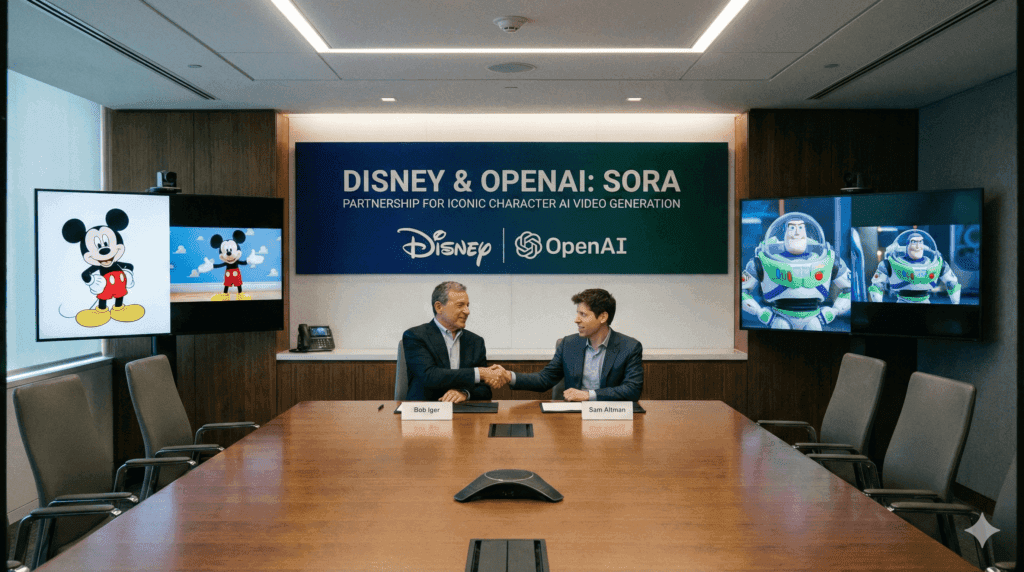
Source: MediaNama
Protecting Likeness Rights While Embracing Innovation
The agreement notably excludes any talent likenesses or voices, addressing concerns from actors and their representatives
1
. Both companies committed to "maintaining robust controls to prevent the generation of illegal or harmful content" and to "respect the rights of individuals to appropriately control the use of their voice and likeness"1
. OpenAI partnered with actor Bryan Cranston and SAG-AFTRA in October to implement safety guardrails around likeness rights1
.Related Stories
Selective Enforcement of Intellectual Property Rights
While embracing OpenAI, Disney maintains an aggressive stance against other AI platforms. The same day the OpenAI partnership was announced, Disney sent a cease-and-desist letter to Google, accusing the company of "infringing Disney's copyrights on a massive scale"
1
. Disney also sued Midjourney in June alongside Universal over outputs allegedly infringing on classic film and TV characters4
. Matthew Sag, a professor of law and artificial intelligence at Emory University, notes that "AI companies and copyright holders are beginning to understand and become reconciled to the fact that neither side is going to score an absolute victory"4
. Hollywood appears to be following a path similar to media publishers, signing content licensing agreements where possible and using litigation when necessary4
.What This Means for Hollywood and Beyond
Experts view the equity investment and partnership as a signal that major copyright holders see no way to hold back AI tools entirely
3
. "It shows that companies like Disney appear to think that it's impossible to stem the tide of AI," says Rebecca Williams at the University of South Wales3
. Ty Martin at licensing company Copyrightish believes other AI companies will follow suit: "Licensing becomes the engine of quality. AI platforms with access to strong, recognisable IP will cut through the slop trough"3
. The deal creates interesting dynamics between a company that shaped modern US copyright policy through congressional lobbying and one that argued useful AI models cannot be created without copyrighted material1
.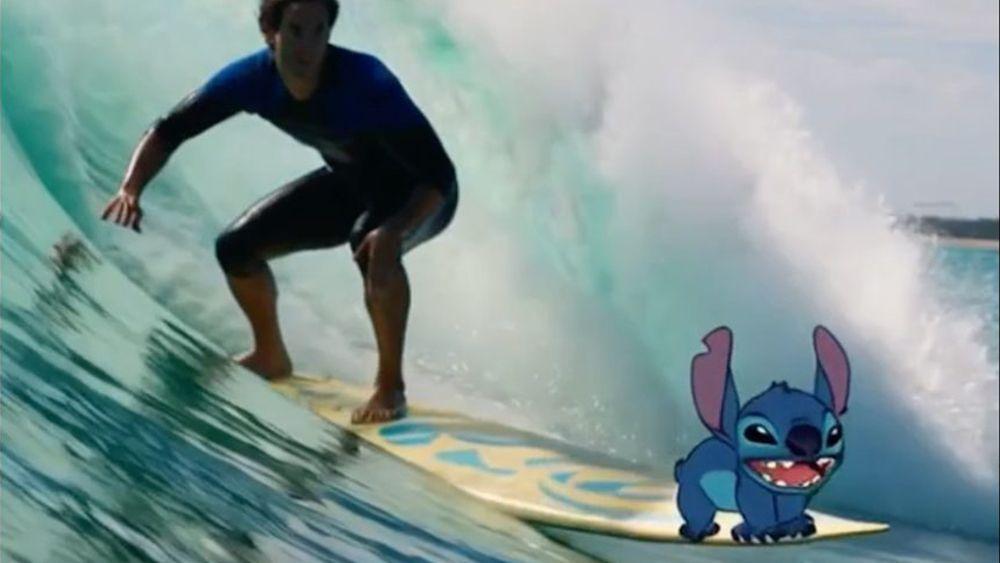
Source: Creative Bloq
References
Summarized by

Navi
[2]
[3]
Related Stories
Disney Plus Plans AI-Generated Content Features as Part of Major Platform Overhaul
13 Nov 2025•Entertainment and Society

Disney and NBCUniversal Sue Midjourney: A Landmark Case in AI Copyright and Creative Ownership
11 Jul 2025•Policy and Regulation
Disney Takes Legal Action Against Character.AI Over Unauthorized Use of Copyrighted Characters
01 Oct 2025•Policy and Regulation

Recent Highlights


Recent Highlights
Today's Top Stories
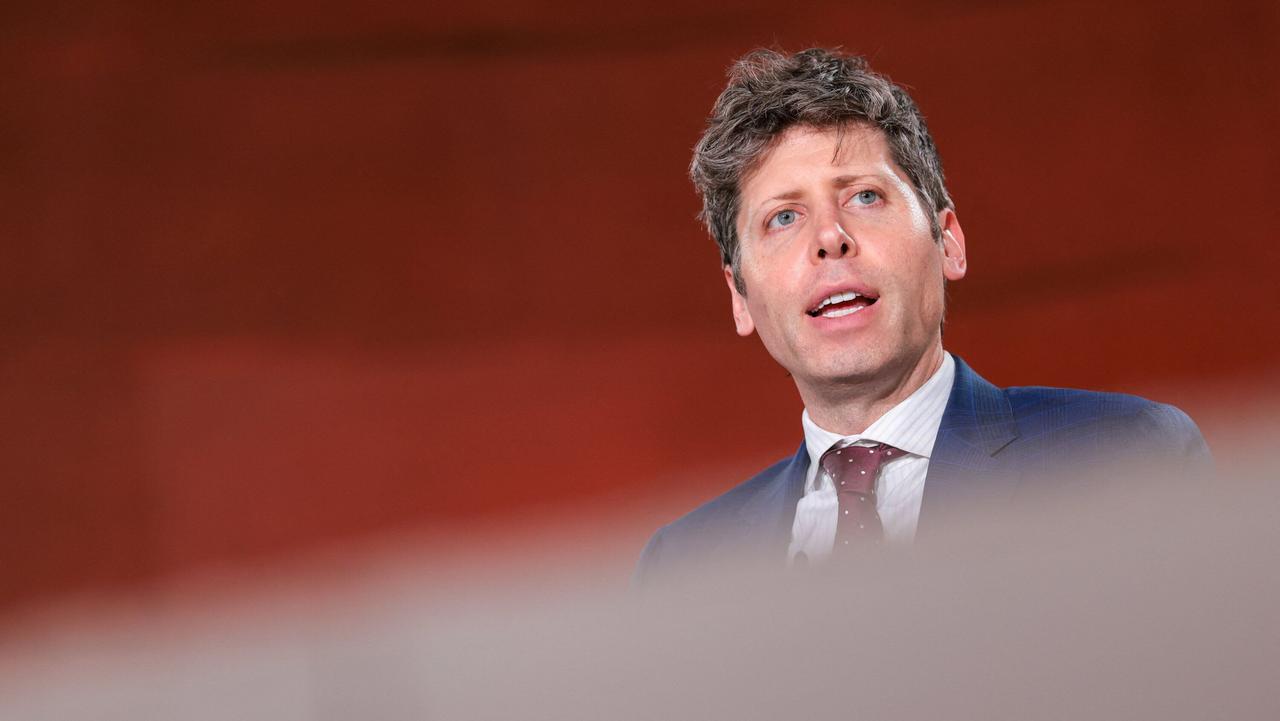



Your Daily Dose of Curated AI News
Don’t drown in AI news. We cut through the noise - filtering, ranking and summarizing the most important AI news, breakthroughs and research daily. Spend less time searching for the latest in AI and get straight to action.

