Drax to build 100MW data centre at Yorkshire power station to meet surging AI energy demand


3 Sources
3 Sources
[1]
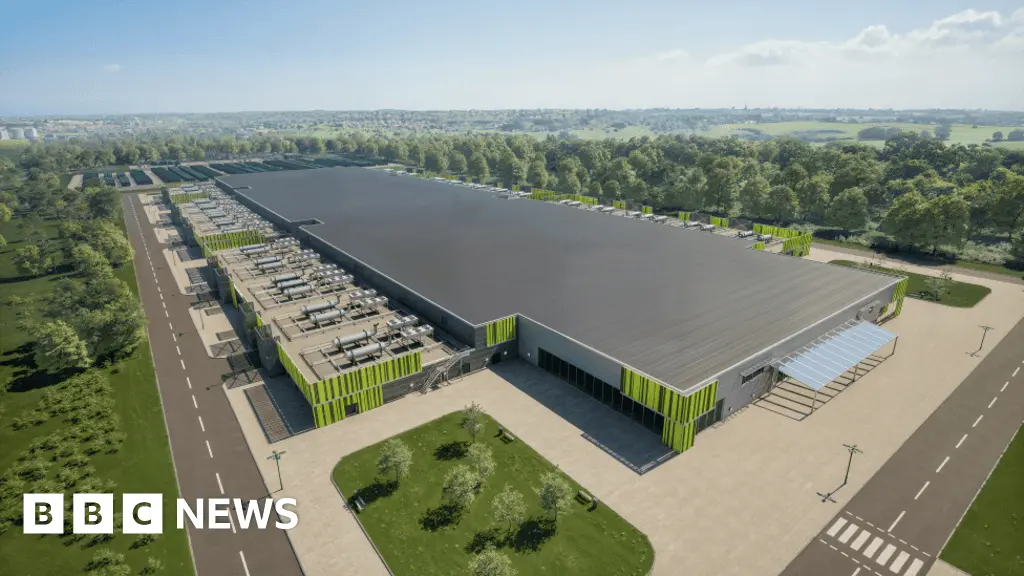
Drax unveils plan for data centre at Selby power station
An energy company has said its Yorkshire site will get a new data centre to help it "contribute to the growth of AI". Drax announced plans to expand its power station near Selby with a new 100MW data centre, which could be operational by 2027. A spokesperson said the centre would be part of Drax's plans to allocate up to £2bn towards investment in flexible and renewable energy. They added that further details were yet to be finalised and no planning application had been submitted. Russ Mould, investment director at AJ Bell, said Drax was making the most of the opportunity to benefit from AI. "The company has unveiled proposals to repurpose existing infrastructure and grid links at its Yorkshire power station to make its own contribution to the growth of AI," he said. "Once fuelled by the coal which was central to the industrial revolution, upgraded infrastructure will be utilised to run a data centre as part of the latest phase of technological advancement." The news came as Drax gave a trading update saying it expected earnings to be at the "top end" of market forecasts after a "strong" performance this year. The fim said trading was boosted by the performance of its flexible generation, pellet production and biomass operations. It told shareholders that full-year adjusted earnings would be "around the top end of consensus estimates" for 2025 after a positive second half of the year. Chief executive Will Gardiner said: "Aligned to the UK's future energy needs and underpinned by a strong balance sheet, good cash generation, and a disciplined approach to capital allocation, we are working to maximise the value of our existing portfolio, while driving growth over the short, medium and long term." Listen to highlights from North Yorkshire on BBC Sounds, catch up with the latest episode of Look North.
[2]
Drax plans to convert part of its North Yorkshire power plant into datacentre
Plans are response to surge in demand for AI capability and come after government signalled it would curb subsidies Drax has revealed plans to convert part of its power plant in North Yorkshire into a datacentre as soon as 2027 in response to the increase in demand for AI capability. The FTSE 250 company behind Britain's biggest power plant told investors on Thursday that it had applied for planning permission to build a 100-megawatt datacentre at its site near Selby. The datacentre is expected to use the land, cooling systems and transformers that were once dedicated to the power plant's coal generation before Drax converted its generators to burn imported wood pellets. The first datacentre to be built on its site will draw electricity from the UK's national electricity grid, but it future there could be potential to use electricity from the Drax power plant. The company set out the plans to safeguard demand for its electricity in its latest trading update weeks after the government signalled that it would curb the amount of electricity it would subsidise from 2026. The trading update suggested that Drax would make profits at the upper end of its guidance, largely thanks to subsidies of more than £2m a day that are drawn from energy bills to support the controversial burning of biomass as a renewable energy source. The government said the subsidies offered to Drax "simply did not deliver a good enough deal for bill payers and enabled Drax to make unacceptably large profits". It also said that Drax would face "substantial penalties" if it failed to use 100% woody biomass from sustainable sources, up from the current level of 70%. The Guardian revealed last month that a report by forestry experts found that Drax has continued to burn 250-year-old trees sourced from some of Canada's oldest forests despite growing scrutiny of its sustainability claims. It followed a 2022 report by the BBC that detailed similar findings, and the start of investigation this year by the FCA, the City watchdog, over "historical statements" made by Drax about the sourcing of wood pellets to examine whether the company had complied with disclosure and transparency rules. The investigation is ongoing. The report by the Canadian NGO Stand.earth suggested it was "highly likely" that Britain's biggest power plant sourced some wood from ecologically valuable forests as recently as this summer even while lobbying the government for further subsidies. Drax dismissed the report in an official filing to the US market after its publication. It told the Guardian that it uses sources woody biomass only from "well-managed, sustainable forests" and did not source biomass from "designated areas of old growth". These designated areas of old growth amount to less than half of the total old-growth forest areas in British Columbia.
[3]
Drax to convert Yorkshire power station into 1GW data centre to meet AI energy demand By Invezz
Invezz.com - Drax Group announced on Thursday that it is considering converting a section of its Yorkshire power station in northern England into a data centre as early as 2027. The project would repurpose land, cooling systems, and transformers that were previously used for coal generation, according to a Reuters report. Europe's landscape of energy infrastructure is on the cusp of a significant transformation, driven by the insatiable energy demands of the artificial intelligence boom. Repurposing legacy infrastructureAgeing coal and gas-fired power plants, once destined for decommissioning, are now attracting the attention of global tech behemoths like These companies are actively seeking to repurpose these legacy power generation sites into vast new data centres. The primary appeal of these former power plants lies in their existing, robust infrastructure. Crucially, they possess immediate, high-capacity grid connections, which are essential for powering the energy-intensive operations of modern data centres and their sophisticated cooling systems. Furthermore, their location, often near major water sources, provides a ready-made and efficient supply for the considerable water-based cooling needs of these facilities. This repurposing offers a dual benefit: it breathes new economic life into sites that might otherwise become industrial relics, and it helps technology giants rapidly scale their data centre footprint to keep pace with the explosion in AI-driven compute requirements. This trend underscores a critical convergence point between the old industrial economy and the new digital economy, highlighting a pragmatic and sustainable way to leverage existing infrastructure to meet the unprecedented energy spike created by advanced AI applications and machine learning models. Drax's data centre strategy and capacityDrax is planning a 100-megawatt data centre at its site, with a planning application currently being prepared. The company aims to expand this capacity beyond 1 gigawatt after 2031 to meet the rapidly increasing British power demand, largely fueled by the rise of artificial intelligence. "We would effectively provide the land and the power connection and the power working with a data centre developer," Drax CEO Will Gardiner said in an interview to Reuters. Due to the rapid expansion of data centres, companies are increasingly looking for sites that already possess power connections. This approach helps them bypass the long waiting times associated with connecting to the power grid. Last month, RWE reported a book gain of 225 million euros ($263 million) following the sale of a former coal-fired power plant site in Britain to a data centre developer. JPMorgan analysts said in a note on Drax's plan. While nothing has been agreed, we believe this is a more optimistic timeline than investors would otherwise expect. Profit at top endThe power producer's shares climbed over 2% following a forecast for 2025 core profit that is expected to be near the high end of market predictions. This growth is driven by performance across its flexible generation, pellet production, and biomass divisions. Drax aims to generate £3 billion in free cash flow between 2025 and 2031. This cash flow is planned to be allocated for shareholder returns, with over £1 billion dedicated to this purpose, and up to £2 billion for funding growth investments. The company is also shutting down its Williams Lake pellet plant in Canada and temporarily halting its Longview project. This decision reflects an expectation not to invest in additional pellet production capacity in the near future.
Share
Share
Copy Link
Drax has revealed plans to convert part of its North Yorkshire power plant into a 100MW data centre by 2027, repurposing coal-era infrastructure to meet the increasing demand for AI capability. The move comes as the UK government signals it will curb subsidies for the company's biomass operations while tech companies scramble for sites with existing grid connections.
Drax Power Station Transforms to Meet AI Energy Demand
Drax has unveiled ambitious plans to build a data centre at its Selby site in North Yorkshire, marking a shift from traditional energy generation to supporting the infrastructure needs of artificial intelligence
1
. The FTSE 250 company announced that the initial 100MW facility could be operational by 2027, with potential expansion beyond 1 gigawatt after 2031 to address rapidly increasing British power demand driven by AI3
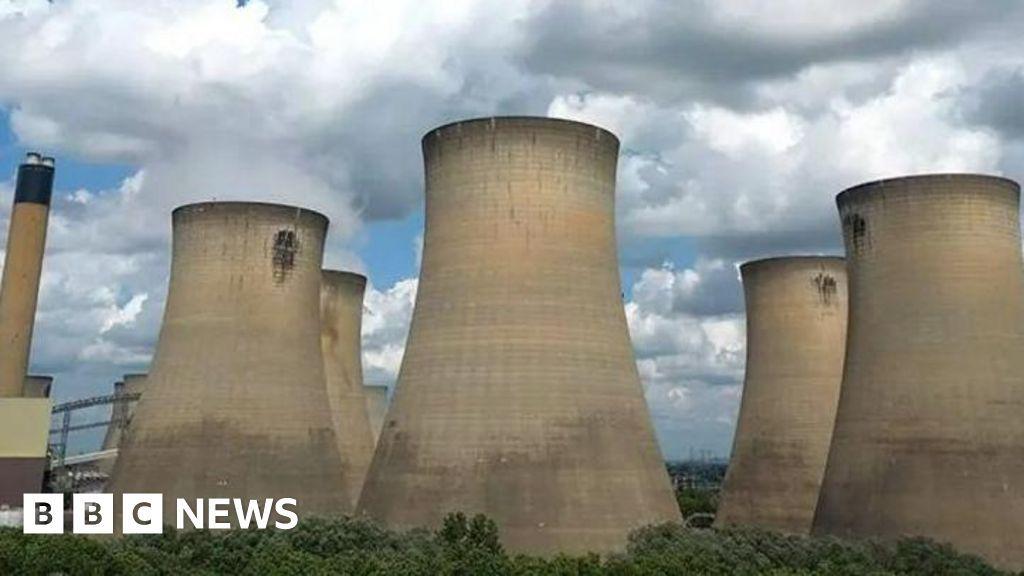
.
Source: BBC
The data centre will leverage land, cooling systems, and transformers that once powered coal generation before Drax converted its generators to burn imported wood pellets
2
. This repurposing of existing infrastructure offers a practical solution to one of the tech industry's most pressing challenges: securing sites with immediate, high-capacity grid connections. A planning application is currently being prepared for the initial phase3
.Strategic Timing Amid Government Subsidy Changes
The announcement comes at a critical juncture for Drax, weeks after the UK government signaled it would curb the amount of electricity it would subsidize from 2026
2
. The government stated that subsidies offered to Drax "simply did not deliver a good enough deal for bill payers and enabled Drax to make unacceptably large profits"2
. The company's trading update revealed it currently receives subsidies of more than £2 million per day drawn from energy bills to support biomass burning2
.Will Gardiner, Drax CEO, explained the approach: "We would effectively provide the land and the power connection and the power working with a data centre developer"
3
. This strategy allows the company to diversify revenue streams while maintaining its core energy infrastructure operations. The move forms part of Drax's broader plans to allocate up to £2 billion towards investment in flexible and renewable energy1
.AI-Driven Data Centers Reshape Energy Infrastructure
The increasing demand for AI capability is driving a fundamental transformation across Europe's energy landscape. Companies are actively seeking to repurpose legacy power generation sites into AI-driven data centers, attracted by robust infrastructure and immediate grid connections essential for energy-intensive operations
3
. This trend reflects a convergence between the old industrial economy and the new digital economy.Russ Mould, investment director at AJ Bell, noted that Drax was capitalizing on AI opportunities: "Once fuelled by the coal which was central to the industrial revolution, upgraded infrastructure will be utilised to run a data centre as part of the latest phase of technological advancement"
1
. The approach helps technology companies bypass long waiting times associated with connecting to the power grid, a bottleneck that has slowed data centre expansion across the UK.Related Stories
Financial Performance and Future Outlook
Drax's shares climbed over 2% following the announcement, which coincided with a trading update indicating earnings would be "around the top end of consensus estimates" for 2025 after a strong second half performance
1
3
. The company's performance was boosted by its flexible generation, pellet production, and biomass operations1
.Drax aims to generate £3 billion in free cash flow between 2025 and 2031, with over £1 billion dedicated to shareholder returns and up to £2 billion for funding growth investments
3
. JPMorgan analysts suggested this represents "a more optimistic timeline than investors would otherwise expect"3
. The company is also shutting down its Williams Lake pellet plant in Canada and temporarily halting its Longview project, reflecting expectations not to invest in additional pellet production capacity in the near future3
. This pivot toward data centre development signals Drax's strategy to diversify beyond biomass amid ongoing scrutiny of its sustainability claims and changing government support.References
Summarized by

Navi
Related Stories
North Lincolnshire approves £10bn AI data centre despite climate emissions warnings
12 Mar 2026•Business and Economy
Europe's Aging Power Plants Get AI-Driven Makeover as Data Centers
05 Aug 2025•Business and Economy
Ravenscraig Site Set to Become £3.9bn Green AI Data Centre in Scotland
27 Jun 2025•Business and Economy
Recent Highlights
1
Tennessee Teens Sue Elon Musk's xAI Over Grok AI-Generated Child Abuse Images
Policy and Regulation

2
Supermicro Co-Founder Indicted in $2.5 Billion Nvidia AI Chip Smuggling Scheme to China
Policy and Regulation

3
Val Kilmer to appear posthumously in As Deep as the Grave through AI-generated performance
Entertainment and Society

Recent Highlights
Today's Top Stories










Your Daily Dose of Curated AI News
Don’t drown in AI news. We cut through the noise - filtering, ranking and summarizing the most important AI news, breakthroughs and research daily. Spend less time searching for the latest in AI and get straight to action.

