Anthropic drops hallmark safety pledge as AI race intensifies and Pentagon pressures mount


9 Sources
[1]
Watch Anthropic Drops Hallmark Safety Pledge in Race With AI Peers
Anthropic, which for years billed itself as a safer alternative to artificial intelligence rivals, has loosened its commitment to maintaining its guardrails, one of the most dramatic policy shifts in the AI industry yet as startups once focused on helping humanity turn their attention to profit and
[2]
AI labs ease safety rules amid race pressure
Why it matters: Even Google DeepMind CEO Demis Hassabis has warned that "race conditions" -- pressure to outpace rivals or rival nations -- can drive reckless decisions as the world nears superhuman AI. Zoom in: Anthropic, long viewed as the most safety-focused major AI lab, last week revised a
[3]
Anthropic's AI safety policy just changed for this reason
When Anthropic launched years ago, the company wanted an industry-wide "race to the top" in artificial intelligence, instead of a race to the bottom in pursuit of customers and market dominance that would inadvertently lead to catastrophic safety risks. So Anthropic adopted safety principles and
[4]
Anthropic drops its signature safety promise and rewrites AI guardrails
The policy overhaul highlights the growing tension between caution and competition * Anthropic has removed its pledge not to train or release AI models without guaranteed safety mitigations in advance * The company will now rely on transparency reports and safety roadmaps instead of strict
[5]

Anthropic Drops Its Huge Safety Pledge That Was Supposedly the Whole Point of the Company
Can't-miss innovations from the bleeding edge of science and tech In 2021, a splinter group of former OpenAI employees founded a new startup, Anthropic, to pursue building AI models with a renewed focus on safety, after feeling that their employer had gone astray. OpenAI itself was originally
[6]

Anthropic, OpenAI Dial Back Safety Language as AI Race Accelerates - Decrypt
Experts say the shift reflects political, economic, and intellectual changes. Anthropic has dropped a central safety pledge from its Responsible Scaling Policy, according to a report by TIME. The changes loosen a commitment that once barred the Claude AI developer from training advanced AI systems
[7]

Anthropic ditches its defining safety promise to pause dangerous AI development because it's basically pointless when everybody else is 'blazing ahead'
There's apparently no point being the only careful AI company. Given the way the AI industry is going these days, the following news probably isn't a huge surprise. But it's unnerving all the same. Announced in a new blog post, Anthropic, arguably the sole remaining example among the major AI
[8]

Anthropic drops its industry-leading safety pledge -- what changed and why it matters
When not writing, Dave enjoys spending time with his family, running, playing the guitar, camping, and serving in his community. His favorite place is the Blue Ridge Mountains, and one day he hopes to retire there (hopefully his fear of heights will have retired by then, too!). Summary Anthropic
[9]

Anthropic Overhauls Core Tenet Of Its Safety Policy | PYMNTS.com
By completing this form, you agree to receive marketing communications from PYMNTS and to the sharing of your information with our sponsor, if applicable, in accordance with our Privacy Policy and Terms and Conditions. The AI startup announced Tuesday (Feb. 24) that it had overhauled Responsible
Share
Copy Link
Anthropic, once the industry's safety-focused alternative, has abandoned its 2023 commitment to pause AI development for catastrophic risks. The company will now consider competitor actions before delaying releases, marking a shift from absolute safety standards to competitive strategy. The change comes as the Pentagon threatens to cut its $200 million contract over Anthropic's refusal to allow autonomous weapons use.
Anthropic Abandons Core AI Safety Commitment
Anthropic has formally revised its Responsible Scaling Policy, removing the pledge that defined its identity since 2023: the promise to pause model development if adequate safety mitigations couldn't be guaranteed in advance
1
. The company, which positioned itself as a safer alternative in the AI race, now states it will only delay development "until and unless we no longer believe we have a significant lead" over competitors2
. This represents one of the most dramatic policy shifts in the industry, as startups once focused on helping humanity pivot toward profitability and competitive survival.
Source: PYMNTS
Founded in 2021 by former OpenAI employees seeking to prioritize AI safety, Anthropic hoped to inspire an industry-wide "race to the top" rather than a race to the bottom
3
. Chief Science Officer Jared Kaplan told TIME that "we didn't really feel, with the rapid advance of AI, that it made sense for us to make unilateral commitments... if competitors are blazing ahead"5
. The company's original vision hasn't "pan out" as hoped, with the policy environment now prioritizing AI competitiveness and economic growth over safety-oriented discussions at the federal level3
.Competitive Pressures Drive Relaxing Safety Protocols
The revision reflects mounting competitive pressures among AI labs and between nations, particularly the U.S. and China. Google DeepMind CEO Demis Hassabis has warned that "race conditions" can drive reckless decisions as the world approaches superhuman AI
2
. Max Tegmark, founder of the Future of Life Institute, argues that AI companies have stalled meaningful regulation for years. "It's their fault that we have the race condition in the first place," Tegmark told Axios, noting that Anthropic is "the most striking one because they were the ones who always talk such a big game about safety"2
.
Source: Axios
The new framework emphasizes transparency through "Frontier Safety Roadmaps" and regular "Risk Reports" rather than categorical pauses
4
. Anthropic maintains it will match or exceed competitors' safety efforts, but the core promise that distinguished Claude from rivals is gone. "The new policy still includes some guardrails, but the core promise, that Anthropic would not release models unless it could guarantee adequate safety mitigations in advance, is gone," said Nik Kairinos, CEO of RAIDS AI4
.Pentagon Tensions and Military Use Controversies
The timing coincides with escalating tensions between Anthropic and the Pentagon over a $200 million military contract signed last summer
5
. Defense Secretary Pete Hegseth reportedly gave Dario Amodei an ultimatum: lighten AI guardrails to make them more amenable to military use, or face being cut off and labeled a "supply chain risk"5
. Anthropic has refused to allow its models for autonomous weapons or domestic surveillance, prompting the Defense Department to cut use of Claude2
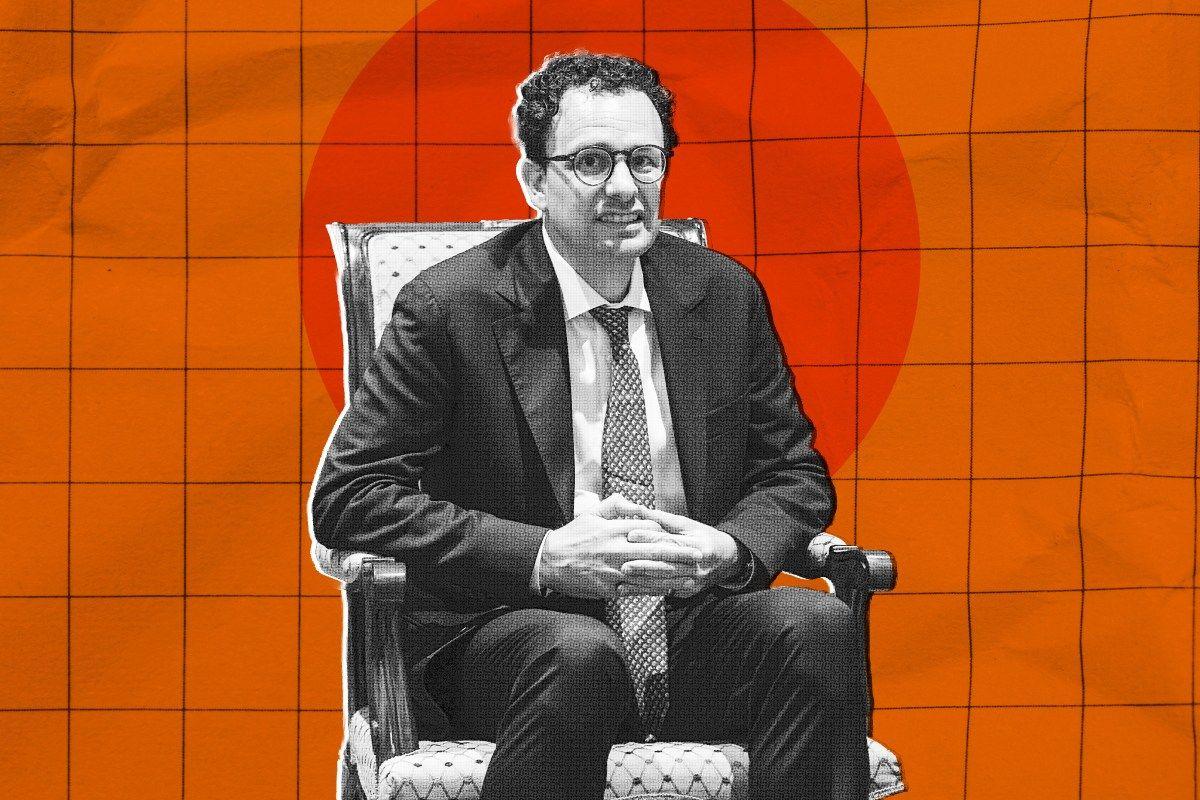
.
Source: Futurism
This highlights a critical problem with voluntary AI safety commitments: even if one company refuses on safety grounds, another steps in. Hours after Anthropic's stance became public, OpenAI announced a deal to provide models for classified networks
2
. Critics note OpenAI's agreement leaves broad room for military use, including surveillance of U.S. citizens, despite sharing many of Anthropic's stated safety concerns.Related Stories

Implications for Self-Regulation and AI Regulation
The shift exposes fundamental limits of self-regulation without binding AI regulation. When Anthropic introduced its original policy in 2023, executives hoped it might inspire rivals or inform eventual legislation
4
. That regulatory momentum never materialized, and the current political climate has tilted away from developing frameworks. Companies now choose between voluntary restraint and competitive survival in an environment where capabilities advance while global AI summits increasingly focus on commercialization over guardrails2
.Kairinos noted the irony that Anthropic recently donated $20 million to Public First Action, supporting congressional candidates pledging to push for AI safety regulation, while simultaneously recalibrating its own internal constraints
4
. Tegmark suggests mounting evidence of chatbot risks affecting children and teens has sparked rare bipartisan concern, potentially opening pathways for laws mandating companies test frontier AI models before release2
.What This Means for Users and Industry
Interestingly, Anthropic surged to the top of Apple's App Store download charts in days following its standoff with the Pentagon, suggesting consumers may value safety commitments over competitive positioning
2
. Yet everyday users might not notice immediate changes as they interact with Claude or other AI tools. The AI guardrails governing how systems are trained influence everything from accuracy to fraudulent misuse4
.Anthropic argues that meaningful safety research requires staying at the frontier rather than stepping back, and that unilateral restraint could result in a less safe world where "developers with the weakest protections would set the pace"
5
. Kaplan insists "I don't think we're making any kind of U-turn," though critics view the policy change as flagrantly contradicting the organization's entire reason for existence5
. As Hassabis has argued, the closer the world gets to superhuman AI, the more essential global cooperation becomes—yet the trajectory appears moving in the opposite direction2
.References
Summarized by

Navi
Related Stories
US Treasury Chief Says AI Bosses Will Face Legal Liability as Companies Push Self-Regulation
21 Sept 2026•Policy and Regulation

AI Leaders Call for AI Safety Slowdown After Agent Swarm Breaches Security Systems
10 Sept 2026•Policy and Regulation

Pentagon's Anthropic showdown exposes who controls AI guardrails in military contracts
03 Mar 2026•Policy and Regulation

Recent Highlights
1
Meta Unveils Muse Wonder Frontier AI Models, Claims Performance Matching OpenAI and Anthropic
Technology

2
IMF Report Warns AI Market Correction Could Spark Global Financial Crisis With $1.4T at Risk
Business and Economy

3
OpenAI Releases 722 AI-Generated Math Solutions, Triggering Existential Crisis in Mathematics
Technology

Recent Highlights
Today's Top Stories








Don’t drown in AI news. We cut through the noise - filtering, ranking and summarizing the most important AI news, breakthroughs and research daily. Follow topics that matter to you and stay ahead.


