Moya AI robot walks with 92% human accuracy, has warm skin, and makes eye contact like a person


3 Sources
3 Sources
[1]
She walks, shows emotion, holds eye contact and is warm - but she's a robot
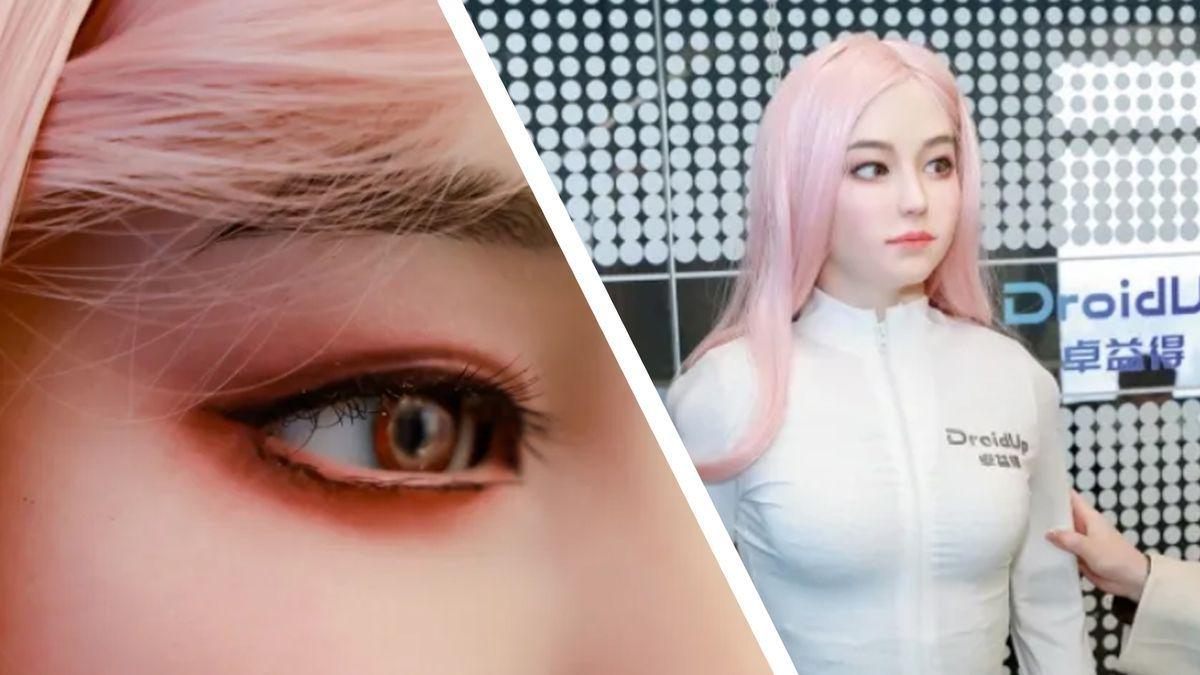
Not what you'd expect to see inside a robotDroidUp/Shanghai Eye At this stage of the robotics race, it's probably fair to assume that a few of us have a bit of humanoid malaise. After all, we've seen more funny videos of robots dropping plates out of dishwashers and taking 10 minutes to open and close a refrigerator door. And let's not even mention them trying to cook or play soccer. However, Shanghai robotics startup DroidUp (also known as Zhuoyide) has stepped things up a gear or five, which is certainly worth covering considering it expects the new realistic humanoid to be rolled out this year. The model known as Moya was unveiled during a launch at Shanghai's Zhangjiang Robotics Valley where many of China's emerging humanoid developers are clustered. Here, the company launched what it calls "a beautifully designed and expressive bionic robot" that is touted as "the world's first highly bionic robot that deeply integrates human aesthetics and advanced humanoid movement." Moya may be best introduced by video, not words, courtesy of Shanghai Eye, part of the Shanghai Media Group. "Based on a modular bionic platform architecture, Moya can be flexibly configured with different gender characteristics and appearances," a DroidUp spokesperson stated (this has been translated to English). "Its highly customizable bionic head can delicately express a wide range of emotions, from joy and anger to sorrow and happiness, with natural grace in its gaze. Equipped with the Zhuoyide cerebellar motor control model, its walking and turning movements are smooth and elegant, completely breaking away from the traditional 'steel image' of humanoid robots." Part of the pivot away from the "steel image" robot design involves giving Moya temperature control to mimic a human body, as well as the softness to replicate real skin and fat and muscle beneath it. She even has a rib cage. While the makers claim Moya has 92% human-like walking accuracy, that 8% shortfall is noticeable; her movement is uncannily like my own if I've ever had to walk in heels. But walking isn't her strength, anyway - that would be the way she interacts with humans, maintaining eye contact, smiling, nodding and expressing emotions with the kind of subtle facial muscle movements we do without being conscious of it a lot of the time. She's able to interact in real time to people facing her thanks to a camera behind her eyes, which combines with AI to enable her to make those human-like "micro expressions." On top of these rather human traits, Moya is also warm - literally. She's been designed to have her skin maintain a temperature of 32-36 °C (89.6-96.8 °F), which is a clever move in making her more relatable. Many studies have shown how we use touch to gauge temperature to relate to others and feel kinship - whether we realize it or not. "A robot that truly serves human life should be warm ... almost like a living being that people can people can connect with," Li Qingdu, founder of DroidUp, told Shanghai Eye. But with all that in mind, it's no surprise to find Moya has been met with mixed reviews. Most are the obvious "uncanny valley" remarks, while others liken her to a Westworld model or even a walking ghost. And while it isn't hard to imagine that an attractive, customizable human-like robot such as Moya will be sexualized, DroidUp hopes to have the model employed in much-needed roles like aged care. Though if you want your own Moya, you'll need at least around US$173,000, with the company announcing that when she enters the market later this year she will most likely be headed for healthcare and education facilities.
[2]
The world's first 'biomimetic AI robot' just strolled in from the uncanny valley -- and yes, it's super-creepy
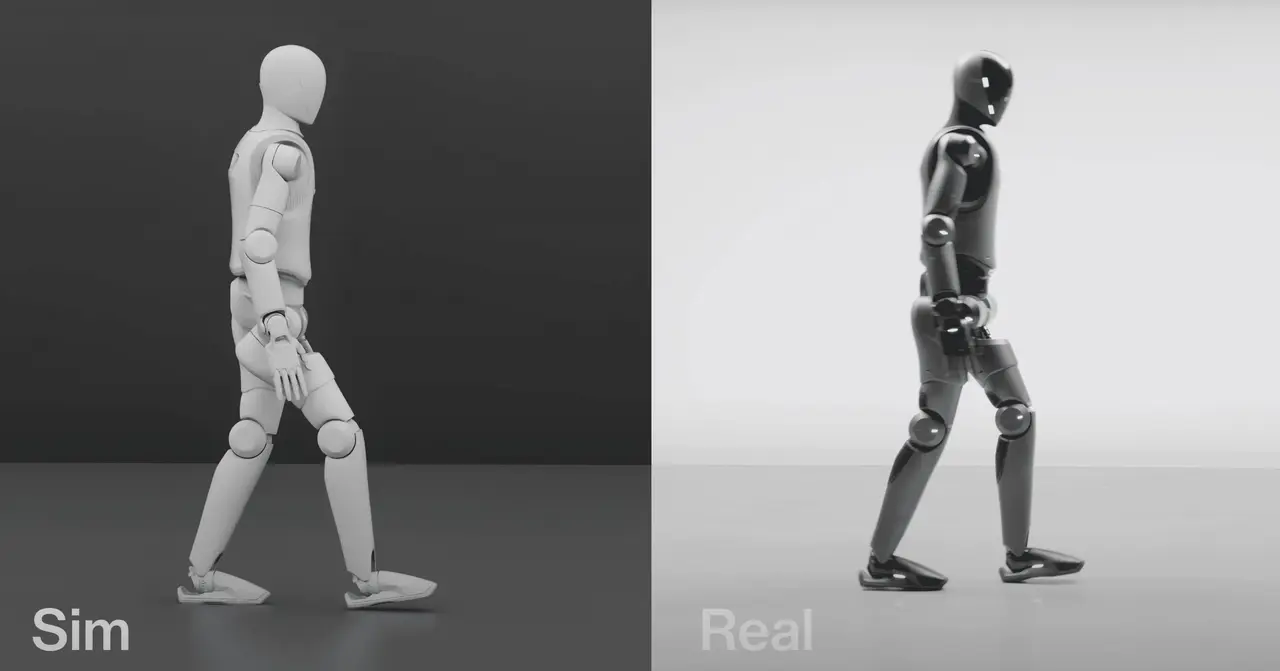
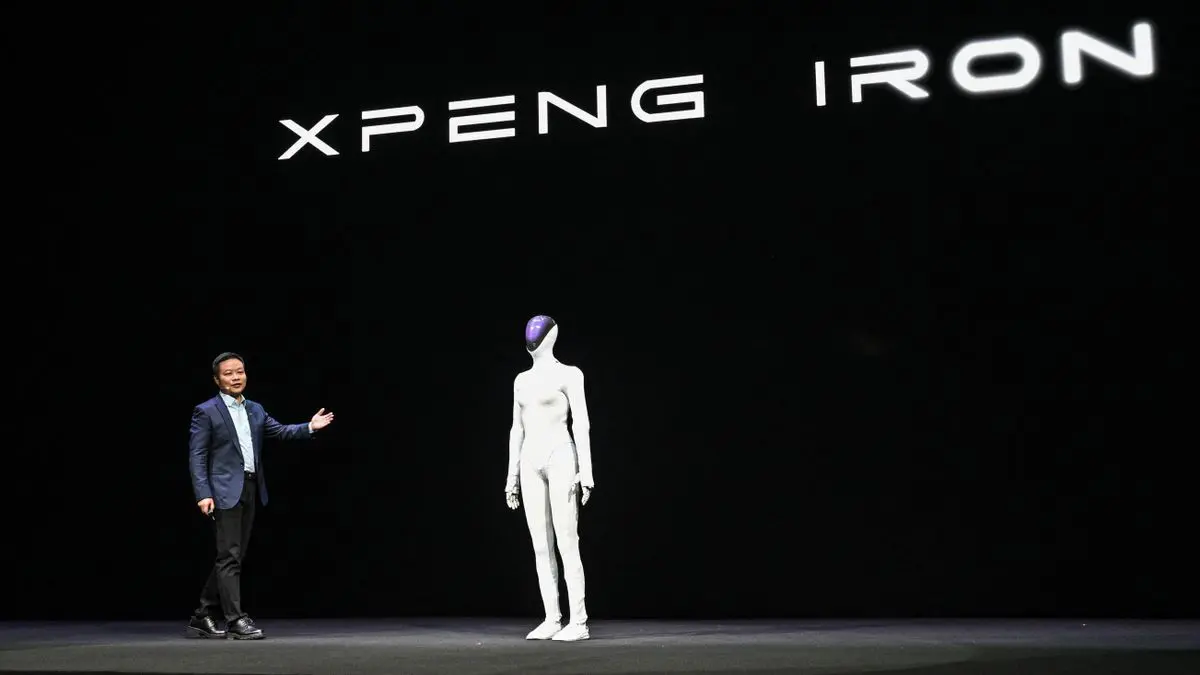
Disturbingly lifelike humanoid robots are becoming a big theme of 2026 - and a Shanghai startup has just revealed what might be the closest thing to an extra from Westworld. Fortunately, it's still easy to tell that Moya is indeed a robot - the plasticky skin, dead eyes, and slightly jerky movements give that away. But a few interesting, or perhaps creepy, details mean it's also a cut above your average cold-blooded companion. Firstly, Moya's skin is actually warm. "A robot that truly serves human life should be warm... almost like a living being that people can people can connect with," claimed Li Qingdu, founder of Moya's maker Droidup, in an interview with Shanghai Eye. That's up for debate, but the robot has a body temperature of between 32C and 36C (or 90F-97F), according to Droidup. According to the South China Morning Post, this is because Droidup sees a future for Moya in healthcare, education, and commercial applications, as well as being a daily companion for humans. These lifelike elements extend to Moya's walking style, which Droidup claims has an accuracy rate of 92%. Quite how that's measured isn't clear, and it seems generous when you see Mora gingerly shuffling around as if she's just done a two-hour HIIT workout. However, Moya's 'Walker 3' skeleton is the sequel to the one that won the bronze medal in the world's first robot half-marathon, held in Beijing in April 2025. And there's no doubt that this robot has some impressive skills besides human-like movement. Behind her eyes is a camera, which means she can interact with humans and respond with human-like "micro expressions". There is naturally also AI on board, too, which is why Droidup is calling Moya the world's first "fully biomimetic embodied intelligent robot". That description is open to interpretation, but Mora is another impressive example of AI stepping out of the digital world and into our physical one, with increasingly convincing results. Humanoid robots are now stepping out of labs and into the real world, but they remain well beyond the reach of most consumers. Moya, for example, is expected to launch fully in late 2026 for ¥1.2 million, or around $173,000 / £127,000 / AU$248,000. The title of 'most creepily-realistic robot walk' still arguably goes to Xpeng's IRON (above), which sashays around like a catwalk model in such a convincing way that many have suspected it's a human cosplaying as a robot. That myth was dispelled when the robot spectacularly fell on its face during its first public demo (see 0:20s in the video above), proving that fails have now become a rite of passage for the heirs to Honda's legendary ASIMO. Or perhaps they're just lulling us into a false sense of security. Either way, CES 2026 showed us that humanoid robots aren't anywhere close to strolling around our homes, even if the 1X Neo (yours for just $20,000) briefly looked like the answer to our home chore prayers. The reality is that robots that are truly evolved for our homes don't need to look like Moya, let alone have warm skin or 92% walking accuracy. Commenters on the South China Morning Post video about Moya said, "If she dares to take two steps towards my bed, I'm throwing her off the balcony," and "It walks like a ghost, looks like a deterrent for burglars and keeps creepy neighbors at bay." Instead, we're most likely to meet humanoid robots in their early public service roles. UBTech Robotics recently won a big contract to post its humanoids at the China-Vietnam border crossing, where they'll guide travelers and, more worryingly, conduct inspections. And Droidup says it similarly sees robots like Moya as being best-suited to "public service scenarios" at "train stations, banks, museums, and shopping malls, providing the public with convenient services such as consultation, route guidance, and information introduction. That might be worrying news for those who work in those places, but for now, our home robots are more likely to look like the best robot vacuums than a humanoid with camera-powered eyes and warm skin.
[3]
China debuts world's first biomimetic AI robot with humanlike gait and body temperature - VnExpress International
The robot, named Moya, was developed by Chinese company DroidUp and debuted in Shanghai in late January. According to Interesting Engineering, the company calls it the first fully biomimetic "embodied intelligent" robot integrated with AI, meaning it can perceive, reason, and physically interact with the real world instead of functioning only in digital space. In a video shared by the South China Morning Post, Moya is seen smiling, nodding, making eye contact, and walking with a gait that closely resembles human movement. DroidUp reports that Moya's walking posture achieves 92% accuracy compared to a human walking gait. Standing 1.65 meters tall and weighing approximately 32 kg, Moya's body temperature, ranging from 32 to 36°C, is intended to enhance the realism during interactions. It is designed in a modular form, allowing for customizable appearances without altering its internal mechanical structure, as reported by RoboHorizon. Its appearance and actions have sparked mixed reactions on Chinese social media. While some users express fascination with its realism, others describe its movements as unsettling. DroidUp envisions Moya for applications beyond the family setting, targeting healthcare, education, and other commercial environments where human-robot interaction is key. The company aims for a friendly, approachable design for environments requiring long-term interaction, as opposed to industrial or high-speed applications. Moya is set to launch later this year with an initial price of $173,000.
Share
Share
Copy Link
Shanghai startup DroidUp unveiled Moya, a biomimetic AI robot that maintains human body temperature, walks with 92% accuracy, and expresses emotions through subtle facial movements. Priced at $173,000, the humanoid robot is designed for healthcare and education roles, though its lifelike qualities have sparked both fascination and uncanny valley concerns among observers.
Shanghai Startup Unveils Biomimetic AI Robot With Human-Like Features
Shanghai robotics startup DroidUp, also known as Zhuoyide, has introduced Moya, what the company calls the world's first fully biomimetic embodied intelligent robot. Unveiled at Shanghai's Zhangjiang Robotics Valley in late January 2026, this humanoid robot represents a significant shift from traditional metallic designs toward something far more human-like
1
. Standing 1.65 meters tall and weighing approximately 32 kg, Moya integrates advanced walking capabilities with emotional expression systems that enable her to interact with humans in ways that blur the line between machine and living being3
.
Source: VnExpress
What sets this AI robot apart is its ability to perceive, reason, and physically interact with the real world rather than functioning only in digital space. Li Qingdu, founder of DroidUp, emphasized that "a robot that truly serves human life should be warm... almost like a living being that people can connect with"
1
. The company expects Moya to be rolled out later this year with an initial price tag of US$173,000, targeting healthcare, education, and commercial applications where human-robot interaction is essential1
.Humanlike Body Temperature and Warm Skin Enhance Connection
One of Moya's most distinctive features is its humanlike body temperature, maintained between 32-36°C (89.6-96.8°F). This warm skin is not merely a cosmetic touch but a deliberate design choice based on research showing how humans use temperature to gauge connection and feel kinship with others
1
. The bionic humanoid robot also features softness that replicates real skin, fat, and muscle beneath it, complete with a rib cage structure that moves away from the traditional "steel image" of robotics1
.
Source: New Atlas
DroidUp designed Moya using a modular bionic platform architecture, allowing flexible configuration with different gender characteristics and appearances without altering the internal mechanical structure
3
. This customization capability positions the humanoid robot for diverse applications across public service roles at train stations, banks, museums, and shopping malls2
.Advanced Walking Capabilities and Motor Control
DroidUp claims Moya achieves 92% human-like walking accuracy, though observers note the remaining 8% gap is visible in her gait
1
. The robot is equipped with the Zhuoyide cerebellar motor control model, which enables smooth and elegant walking and turning movements1
. Her Walker 3 skeleton builds on technology that won bronze in the world's first robot half-marathon held in Beijing in April 20252
.While walking may not be Moya's primary strength, her ability to interact with humans certainly is. Videos shared by Shanghai Eye and the South China Morning Post show Moya smiling, nodding, maintaining eye contact, and expressing emotions through subtle facial movements
3
.Human-Like Micro-Expressions Through AI Integration
Behind Moya's eyes sits a camera that enables real-time interaction with people facing her. Combined with AI systems, this technology allows the biomimetic AI robot to produce human-like micro-expressions—those subtle facial muscle movements humans make unconsciously during conversation
1
. The highly customizable bionic head can delicately express a wide range of emotions, from joy and anger to sorrow and happiness, with natural grace in its gaze1
.
Source: TechRadar
This represents AI stepping out of the digital world and into physical reality with increasingly convincing results
2
. The integration demonstrates how robotics companies are prioritizing emotional connection over pure functionality, particularly for environments requiring long-term human-robot interaction.Related Stories
Mixed Reactions and the Uncanny Valley Effect
Moya's lifelike appearance has sparked mixed reactions across Chinese social media and international platforms. While some express fascination with the realism, others describe the movements as unsettling, with comparisons to Westworld models and walking ghosts
1
. Comments on social media reflect the uncanny valley phenomenon, with one user stating, "If she dares to take two steps towards my bed, I'm throwing her off the balcony," while another noted, "It walks like a ghost, looks like a deterrent for burglars"2
.Despite these concerns, DroidUp envisions applications beyond family settings, targeting healthcare and education sectors where the friendly, approachable design could benefit patients and students
3
. The company specifically hopes to deploy Moya in aged care facilities, where warm skin and emotional responsiveness could provide comfort to elderly patients1
.What This Means for the Robotics Industry
Moya's debut signals a broader trend in robotics toward biomimetic designs that prioritize human connection over industrial efficiency. However, the US$173,000 price point places these humanoid robots well beyond consumer reach for now
2
. The expected launch in late 2026 will test whether healthcare and education facilities see value in investing in such technology for public service scenarios.As humanoid robots step out of labs and into real-world applications, questions remain about whether truly functional home robots need to look human at all. While Moya represents impressive technical achievement in creating lifelike movement and expression, the practical applications may be limited to specific professional contexts where the benefits of human-like interaction justify the substantial investment.
References
Summarized by

Navi
[2]
Related Stories
Realbotix's Aria: The $175K Humanoid Robot Redefining AI Companionship at CES 2025
09 Jan 2025•Technology

Xpeng's IRON Humanoid Robot Sparks Global Attention with Lifelike Movement and Controversial Design
07 Nov 2025•Technology
China Dominates Humanoid Robots Shipments, Outpacing Tesla and US Rivals in 2025
09 Jan 2026•Technology

Recent Highlights
1
Tennessee Teens Sue Elon Musk's xAI Over Grok AI-Generated Child Abuse Images
Policy and Regulation

2
Pentagon designates Palantir Maven AI as core US military system in major defense shift
Technology

3
Supermicro Co-Founder Indicted in $2.5 Billion Nvidia AI Chip Smuggling Scheme to China
Policy and Regulation

Recent Highlights
Today's Top Stories












Your Daily Dose of Curated AI News
Don’t drown in AI news. We cut through the noise - filtering, ranking and summarizing the most important AI news, breakthroughs and research daily. Spend less time searching for the latest in AI and get straight to action.

