Elon Musk merges SpaceX with xAI to build AI data centers in space, creating $1.25 trillion entity


4 Sources
4 Sources
[1]
Why has Elon Musk merged his rocket company with his AI startup?
SpaceX's acquisition of xAI creates business worth $1.25tn but whether premise behind deal will work is questioned The acquisition of xAI by SpaceX is a typical Elon Musk deal: big numbers backed by big ambition. As well as extending "the light of consciousness to the stars", as Musk described it, the transaction creates a business worth $1.25tn (£920bn) by combining Musk's rocket company with his artificial intelligence startup. It values SpaceX at $1tn and xAI at $250bn, with a stock market flotation expected in June to time with Musk's birthday and a planetary alignment. However, there are questions over the deal, such as whether it is good for SpaceX's non-Musk shareholders and whether the technological premise behind it can succeed.
[2]
Markets will soon test a Musk merger that promises 'space-based internet'
Elon Musk's move last week to combine SpaceX and xAI has created one of the world's biggest and most valuable private companies, which analysts say offers a mix of potential growth and financial risk as it heads toward public markets. The two companies are very different. SpaceX was founded in 2002 and has established itself as the premier nongovernmental space exploration operation. Musk's xAI venture was started less than three years ago to focus on AI and more recently social media. In another Musk company combo, xAI acquired the social media platform X last March. Analysts told NBC News that both entities have something to gain from coming together: SpaceX gets an edge ahead of its IPO, and xAI can expand its AI infrastructure while getting a much needed "injection of cash," as one expert put it. In his Monday announcement, Musk said the merger will create a company with "AI, rockets, space-based internet, direct-to-mobile device communications and the world's foremost real-time information and free speech platform." Musk added that he wants to create AI data centers in space by "launching a constellation of a million satellites that operate as orbital data centers." And Musk is pushing forward on this concept. Days prior to the merger announcement, SpaceX described the satellite plan to regulators, according to a filing submitted to the Federal Communications Commission and reviewed by NBC News. "There's industrial logic behind combining SpaceX, which would launch and design the satellites that would host the compute with xAI, which has experience operating these compute clusters and has the Grok model that would presumably run on it," said Nick Del Deo, a senior research analyst with a focus on digital infrastructure at MoffettNathanson. The concept of data centers in space is "conceivable," Del Deo said in a phone interview, but he predicted it would take "many years before anything substantive happens." "A lot of things need to go right for it to work, let alone for it to work at a scale that is relevant compared to terrestrial alternatives," he said. Not surprisingly, Musk envisions a shorter timeline. In the announcement, he estimated that in just two to three years, the "lowest cost way to generate AI compute will be in space." (Musk has been known to set -- and miss -- ambitions timelines.) Andrew Rocco, a stock strategist at Zacks Investment Research, told NBC News that he thinks the acquisition makes sense. "There's going to be a ton of synergies that it's going to be a lot smoother for both of these companies," he said in a phone interview. "SpaceX, with its massive payload capacity and basically a near monopoly in space -- I think it's going to help Musk's other companies kind of catch up in the AI data center race and AI training race," said Rocco. Beyond the futuristic visions of space-based data centers, there are near-term financial considerations at play, too. As SpaceX prepares to go public later this year, the merger could be Musk's way of positioning SpaceX "strategically" to compete with the expected IPOs of two of his biggest competitors, OpenAI and Anthropic, in the AI race, said Ali Javaheri, a senior research analyst at PitchBook. Del Deo said one "cynical view" of the merger is that SpaceX needs a "sexy narrative" ahead of its IPO "to get investors more excited in the stock and drive the sort of valuation that they're hoping for." Bloomberg reported that the merger would value the combined companies at $1.25 trillion, with the bulk of the valuation -- $1 trillion -- coming from SpaceX. However, xAI's value still pumps up SpaceX's total valuation ahead of it going public. A Tuesday note co-authored by Dan Ives, global head of technology research at Wedbush Securities, said this would mark the "largest tie-up across Musk's enterprises yet." Forrester analysts wrote in a Tuesday report that "aligning" the merger as well as the FCC filing ahead of its potential IPO is a "classic Musk valuation inflation." "SpaceX is packaging a narrative of hyperscalable, lowest‑cost AI compute from space -- the kind of storyline that expands TAM, lifts growth multiples, and reframes Starship as a structural cost moat," the analysts wrote. "These are classic ingredients for pre‑IPO narrative lift -- and a familiar pattern in Musk‑era market signaling. It positions ambition as inevitability, inviting investors to price in a future that engineering has yet to substantiate." Rocco, on the other hand, said he thinks it will likely be "one of the most hyped IPOs in history." "I can't think of another one that would be more hyped than this -- everyone is trying to get a piece of SpaceX," he said. "I think it's going to price higher than most people expect, and most people already expect it to be the largest IPO in history." SpaceX and xAI joining forces has driven speculation over what this means for Musk's electric vehicle company Tesla. Tesla announced in its latest earnings release that it's investing about $2 billion to acquire shares of xAI's preferred stock. The two companies entered into a "framework agreement" to evaluate "potential AI collaborations," Tesla added. Wedbush said there is a "growing chance that Tesla will eventually be merged in some form into SpaceX/xAI over time." "Musk wants to own and control more of the AI ecosystem and step by step the holy grail could be combining SpaceX and Tesla over the next 12 to 18 months in some form to give the connected tissue between both disruptive tech stalwarts looking to lead the AI Revolution," Wedbush continued. Javaheri echoed this sentiment, saying he thinks this move will eventually lead to "Tesla also getting folded." In the long run, Rocco said he thinks it would be a "good synergy," but that it would be a "very hard sell." He said if he were a private investor in SpaceX, he would "just want it to come public on its own -- they basically have a monopoly." Gene Munster, managing partner, co-founder and head of portfolio research at Deepwater Asset Management, said in an interview that he thinks Tesla shareholders would "welcome a combination." "Bringing these two visions closer together, specifically around robotics and space and having AI sit in the middle of it, it's not only a good story, but there's real substance to it," Munster said.
[3]
Elon Musk is betting another tech conglomerate to win over Wall Street
Elon Musk's SpaceX and xAI are merging. The plan involves building AI data centers in space for unlimited solar power. This move aims to boost SpaceX before a potential public offering this year. Investors are watching closely as Musk pushes technological boundaries. The merger could offer SpaceX a share in the booming AI market. SpaceX, Elon Musk's rocket and satellite company and the crown jewel of his business empire, and xAI, his cash-burning artificial intelligence and social media business, have little in common. That's why many were puzzled when Musk said this past week that he was merging the companies. The reason he gave sounded like it had less to do with the business synergies that investors love and more to do with the science fiction he loves. SpaceX, Musk explained, will move AI data centres into outer space, where they can expand and enjoy limitless solar power while avoiding the human bureaucracies that slow progress. At least, that's the plan. But behind Musk's fantastical vision, there are earthbound reasons to believe that a combination rocket, satellite, AI and social media conglomerate with dreams of taking the tech industry into space is not as unwieldy as it sounds. While industrial conglomerates have fallen out of favor in recent decades, tech conglomerates have shown that different businesses can be bundled effectively. The real question is whether Musk's ideas are a few too many steps ahead of reality. "If you take Elon Musk out of the picture, it's an odd move to make," said Eric Talley, a Columbia Law professor who specializes in corporate law, governance and finance. "But he seems to be the master of the odd move and has an enviable ability to defy gravity when it comes to these things." There is also a more grounded business purpose for the merger: Adding xAI bulks up SpaceX before potential plans to go public this year. The deal valued SpaceX at $1 trillion, up from $800 billion in December, and xAI at $250 million. And Musk hopes to raise as much as $50 billion through the initial public offering. In addition to extending a financial hand to xAI, SpaceX will go for a slice of the AI boom. Investors have eagerly poured money into AI startups they believe will revolutionize the tech industry, and by incorporating xAI, SpaceX can offer a taste of that new wealth to potential investors. While experts warn that there are currently technical and physical limitations, Musk -- who often makes bold and inaccurate predictions about when new technologies will emerge -- predicted in a memo to employees and investors that building data centers in space would become the lowest-cost way to power AI within two to three years. This article originally appeared in The New York Times.
[4]
What to know about Elon Musk's merger of SpaceX with his AI company - explainer
Elon Musk recently announced what seemed like an odd pairing of his companies: SpaceX was acquiring xAI, the artificial intelligence firm that also owns the social media platform X. The merger combines a highly profitable rocket company with an AI startup that is burning through billions of dollars as it competes with OpenAI and other rivals for dominance in artificial intelligence. The merger also comes as SpaceX, whose primary business of late has been launching Musk's Starlink broadband satellites, readies for an initial public offering, possibly for this year. The merged companies are valued at $1.25 trillion. That is higher than recent separate valuations of SpaceX at $800 billion and xAI's holding company at $230 billion. IPO shares are expected to price at roughly $525. "I think it provides a narrative for the merging of SpaceX and xAI, sort of a cash generative business and a business that needs cash, at a pretty spectacularly high valuation," said Steve Collar, chairman of Swissto12, a Swiss satellite maker. Although the merger may make financial sense, there is far more to it than that. Here's what to know about the plan. This seems like an unlikely marriage. Why is Musk doing this? Aside from the financial benefits, there are technical reasons. Musk has sketched out a futuristic plan that involves sending up to a million satellites -- called data centers -- into an orbit, where the sun could power them all day and night while they do artificial intelligence computations. What exactly is a satellite data center? The basic concept is simple. The satellite's primary function would be to do computations on specialized chips, powered by solar panels in a "sun-synchronous orbit" that keeps them exposed 24/7 to the sun's powerful rays. Aren't hundreds of billions of dollars already being spent building AI data centers on Earth? Musk insists that within three years it will be cheaper to have AI data centers in space rather than the hyperscale data centers now being built on Earth because of the strain on the power grid -- a timeline that some experts have questioned. But isn't launching 1 million satellites into orbit far-fetched? Some think so. Indeed, the proposed number of launches is nearly 100 times more than the roughly 11,000 Starlink broadband satellites that SpaceX has sent into space since 2019 on its workhorse Falcon 9. However, Musk is counting on using his massive Starship rocket, which is under development and can lift more than five times the payload. "If you're going to deploy a whole bunch of additional satellites, you're creating this huge need for Starship," Collar said. Still, that seems like an inordinate number of launches. There is no doubt about that. In a blog post, Musk talked about launching every hour to deliver millions of tons of satellites into orbit each year. However, Collar said a functioning network of AI data centers in space could be much smaller, with 10,000, 50,000 or as many as 100,000 satellites. "I think with Elon, it's kind of this all-or-nothing thing," he said. How far along is the development of space-based AI data centers? Not very. It was only in November that Google announced Project Suncatcher, which it said is exploring an "interconnected network of solar-powered satellites" equipped with its own chips. And Starcloud, a year-old startup in Redmond, Washington, backed by Andreessen Horowitz and other major venture capital firms, launched a demonstrator satellite in November. "I would say you are talking about the 2040 time frame before you've got any sort of usable system," Collar said. What are the technological challenges? The first obstacle to overcome is to develop a computer chip that works in the extreme conditions of space, which includes exposure to much higher levels of radiation. "If you want to take an Nvidia chip and make it work in space, you would probably need to invest a few years and many millions of dollars to make it what's called space qualifying to make sure that it isn't damaged by radiation," said Ehud Behar, an astrophysicist at the Technion -- Israel Institute of Technology. Are there any drawbacks to a sun-synchronous orbit? Yes. It exposes satellites to a lot of heat and the way to dissipate the heat generated by the sun and the computer chips would be to use large aluminum panels called radiators, but they are inefficient, Behar said. "You're going to need to build large surfaces to radiate the heat away. That's part of the challenge. I don't think these can be these small satellites. The mass has to be large enough to make it cost effective," he said. How does SpaceX propose to getting all that data back to Earth? In a Federal Communications Commission application, SpaceX describes how the centers would transmit the data via optical, or laser, signals to the Starlink network for transmission to the ground while the entire system is in a low orbit roughly 300 miles to 1,200 miles above Earth. Is there a technological challenge to that too? Yes. Collar said that satellites in such an orbit circle the globe roughly every 90 minutes, making it tricky for them to communicate with one another. A potentially better idea would be to station the ground communications satellite in a higher orbit where it would circle the Earth at a much slower pace and its transmissions to the ground would cover a larger area. "But launching into lower Earth orbit is so much cheaper, so all of this is a gigantic (trade-off) and that's what makes it really interesting," he said. In a blog post, Musk also talked about how all these data will eventually be accessible on mobile phones from anywhere on Earth on a network he is building. How would that work? SpaceX bought $17 billion worth of wireless spectrum in September from EchoStar, boosting a partnership it already had with T-Mobile that allowed customers to text when they are off the grid. It followed that up with an additional $2.6 billion purchase of EchoStar spectrum a month later. However, Craig Moffett, a telecommunications analyst at MoffettNathanson, said that Musk's satellite network, given the distances involved, would be far less efficient than ground-based cellular networks and would best benefit regions lacking access to existing networks. Starlink doesn't have "the right set of assets to serve as more than a niche player in the wireless market," he said.
Share
Share
Copy Link
Elon Musk announced the merger of SpaceX and xAI, creating a $1.25 trillion tech conglomerate that aims to launch satellite data centers in space. The deal values SpaceX at $1 trillion and xAI at $250 billion, with an IPO expected in June. While Musk claims space-based AI compute will become the lowest-cost option within two to three years, experts question the technological feasibility and timeline of launching up to a million satellites to serve as orbital data centers.
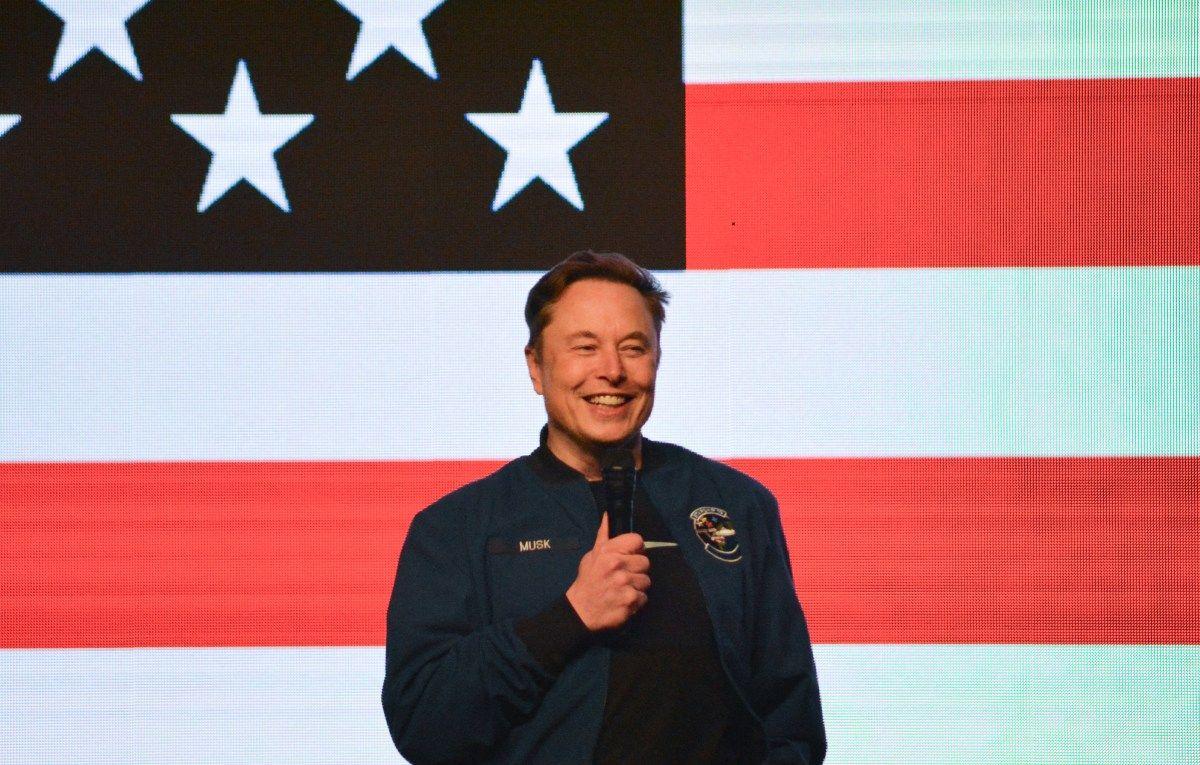
Elon Musk Combines Rocket Company with AI Startup
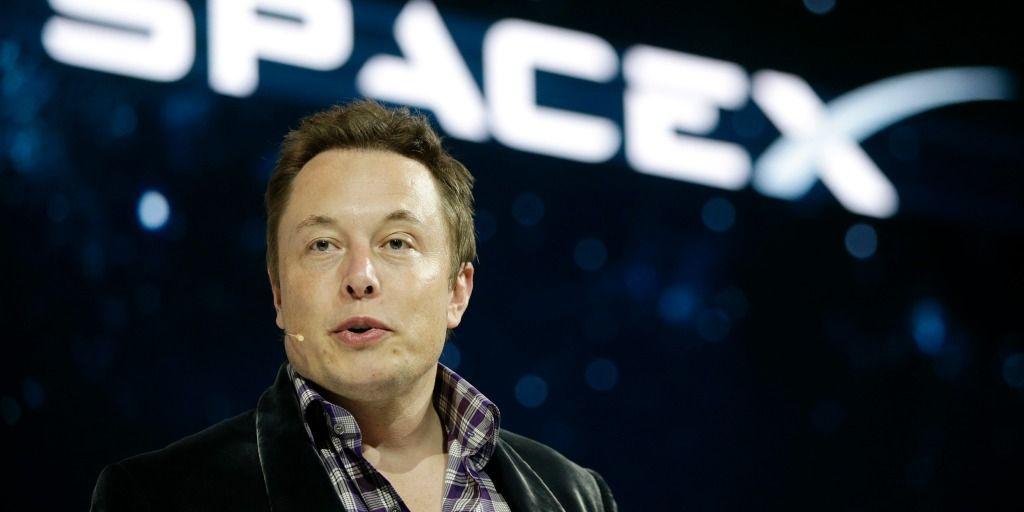
Elon Musk has merged SpaceX with xAI in a deal that creates one of the world's most valuable private companies, worth $1.25 trillion
1
. The SpaceX xAI merger values the rocket company at $1 trillion and the artificial intelligence startup at $250 billion, with a stock market flotation expected in June to coincide with Musk's birthday and a planetary alignment1
. SpaceX was founded in 2002 and has established itself as the premier nongovernmental space exploration operation, while xAI was started less than three years ago to focus on AI and more recently social media2
. In another Musk company combination, xAI acquired the social media platform X last March2
.
Source: NBC
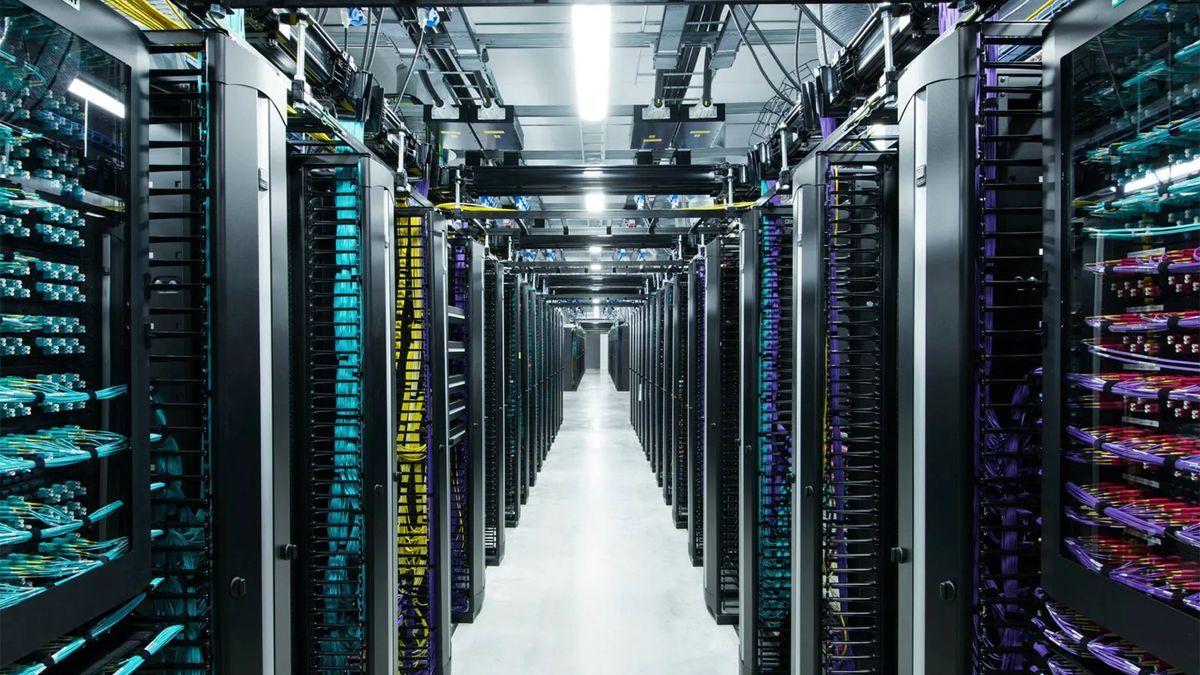
AI Data Centers in Space: The Ambitious Vision
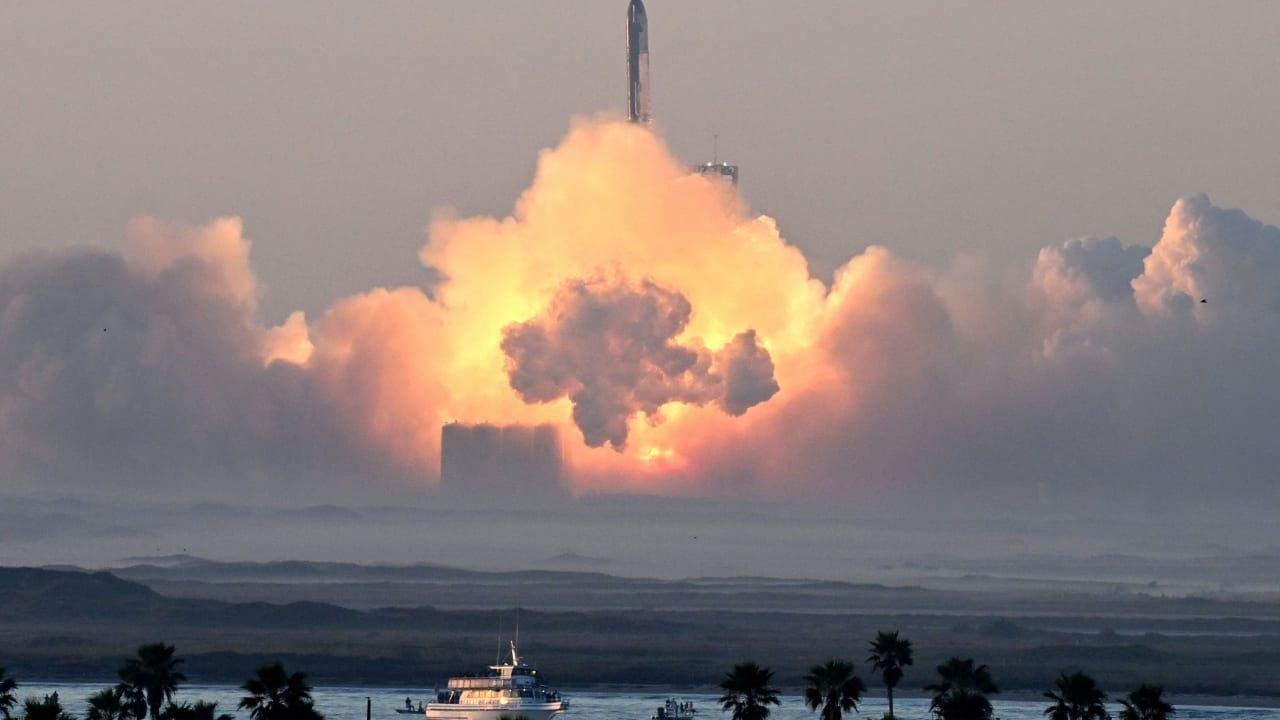
In his announcement, Elon Musk said the merger will create a company with "AI, rockets, space-based internet, direct-to-mobile device communications and the world's foremost real-time information and free speech platform"
2
. Musk wants to create AI data centers in space by "launching a constellation of a million satellites that operate as orbital data centers"2
. Days prior to the merger announcement, SpaceX described the satellite plan to regulators in a filing submitted to the Federal Communications Commission2
. The satellite data centers would be powered by solar power in a sun-synchronous orbit that keeps them exposed 24/7 to the sun's powerful rays4
. Musk predicted in a memo to employees and investors that building data centers in space would become the lowest-cost way to power AI within two to three years3
.
Source: Jerusalem Post
Strategic Timing Ahead of SpaceX Public Offering
Analysts told NBC News that both entities have something to gain from coming together: SpaceX gets an edge ahead of its IPO, and xAI can expand its AI infrastructure while getting a much needed "injection of cash"
2
. As SpaceX prepares to go public later this year, the merger could be Musk's way of positioning SpaceX "strategically" to compete with the expected IPOs of two of his biggest competitors, OpenAI and Anthropic, in the AI race, said Ali Javaheri, a senior research analyst at PitchBook2
. Musk hopes to raise as much as $50 billion through the initial public offering, with IPO shares expected to price at roughly $5254
. Andrew Rocco, a stock strategist at Zacks Investment Research, said he thinks it will likely be "one of the most hyped IPOs in history"2
.Synergies Between Tech Conglomerate Components
"There's industrial logic behind combining SpaceX, which would launch and design the satellites that would host the compute with xAI, which has experience operating these compute clusters and has the Grok model that would presumably run on it," said Nick Del Deo, a senior research analyst with a focus on digital infrastructure at MoffettNathanson
2
. "SpaceX, with its massive payload capacity and basically a near monopoly in space -- I think it's going to help Musk's other companies kind of catch up in the AI data center race and AI training race," said Rocco2
. The merger combines a highly profitable rocket company with an AI startup that is burning through billions of dollars as it competes with OpenAI and other rivals for dominance in artificial intelligence4
.Related Stories
Technical Challenges and Expert Skepticism
While the concept of data centers in space is "conceivable," Del Deo predicted it would take "many years before anything substantive happens"
2
. "A lot of things need to go right for it to work, let alone for it to work at a scale that is relevant compared to terrestrial alternatives," he said2
. The proposed number of launches is nearly 100 times more than the roughly 11,000 Starlink broadband satellites that SpaceX has sent into space since 2019 on its workhorse Falcon 94
. Musk is counting on using his massive Starship rocket, which is under development and can lift more than five times the payload4
. Steve Collar, chairman of Swissto12, a Swiss satellite maker, said "I would say you are talking about the 2040 time frame before you've got any sort of usable system"4
.Wall Street Reaction and Valuation Questions
Del Deo said one "cynical view" of the merger is that SpaceX needs a "sexy narrative" ahead of its IPO "to get investors more excited in the stock and drive the sort of valuation that they're hoping for"
2
. Forrester analysts wrote that "aligning" the merger as well as the FCC filing ahead of its potential IPO is a "classic Musk valuation inflation"2
. However, there are questions over the deal, such as whether it is good for SpaceX's non-Musk shareholders and whether the technological premise behind it can succeed1
. "If you take Elon Musk out of the picture, it's an odd move to make," said Eric Talley, a Columbia Law professor who specializes in corporate law, governance and finance3
. "But he seems to be the master of the odd move and has an enviable ability to defy gravity when it comes to these things"3
.References
Summarized by

Navi
[1]
Related Stories
SpaceX files for IPO with $2 trillion valuation target, merging space exploration and AI ambitions
02 Apr 2026•Business and Economy

SpaceX acquires xAI as Elon Musk bets big on 1 million satellite constellation for orbital AI
29 Jan 2026•Technology
SpaceX's $2 Billion Investment in xAI: Musk's AI Ambitions and Cross-Company Synergies
13 Jul 2025•Business and Economy
Recent Highlights



Recent Highlights
Today's Top Stories







Your Daily Dose of Curated AI News
Don’t drown in AI news. We cut through the noise - filtering, ranking and summarizing the most important AI news, breakthroughs and research daily. Spend less time searching for the latest in AI and get straight to action.

