Elon Musk reveals xAI plans for moon factory with giant satellite catapult amid co-founder exits


10 Sources
10 Sources
[1]
With co-founders leaving and an IPO looming, Elon Musk turns talk to the moon
On Tuesday night, Elon Musk gathered the employees of xAI for an all-hands meeting. Evidently, he wanted to talk about the future of his AI company, and specifically, how it relates to the moon. According to The New York Times, which reports that it heard the meeting, Musk told employees that xAI needs a lunar manufacturing facility, a factory on the moon that will build AI satellites and fling them into space via a giant catapult. "You have to go to the moon," he said, per the Times. The move, he explained, will help xAI harness more computing power than any rival. "It's difficult to imagine what an intelligence of that scale would think about," he added, "but it's going to be incredibly exciting to see it happen." What Musk didn't appear to address clearly was how any of this would be built, or how he plans to reorganize the newly merged xAI-SpaceX entity that is simultaneously careening toward a potentially historic IPO. He did acknowledge, proudly, that the company is in flux. "If you're moving faster than anyone else in any given technology arena, you will be the leader," he told employees, per the Times, "and xAI is moving faster than any other company -- no one's even close." He added that "when this happens, there's some people who are better suited for the early stages of a company and less suited for the later stages." It isn't clear what prompted the all-hands, but the timing, whatever its cause, is at least curious. On Monday night, xAI co-founder Tony Wu announced he was leaving. Less than a day later, another xAI co-founder, Jimmy Ba, who reported directly to Musk, said he was bouncing, too. That brings the total to six of xAI's 12 founding members who have now left the young company. The splits have all been described as copacetic, and with a SpaceX IPO reportedly targeting a $1.5 trillion valuation coming as soon as this summer, everyone involved stands to do very well financially on their way out the door. The moon itself is a more recent preoccupation. For most of SpaceX's 24-year existence, Mars was the end game. This past Sunday, just before the Super Bowl, Musk surprised many, posting that SpaceX had "shifted focus to building a self-growing city on the Moon," arguing that a Mars colony would take "20+ years." The moon, he said, could get there in half the time. It's a pretty big change in direction for a company that has never sent a mission to the moon. Rationally or otherwise, investors do seem considerably more excited about data centers in orbit than about colonies on other planets. (Even for the most patient money in the room, that's a long timeline.) But to at least one venture backer in xAI who talked with this editor last year, the lunar ambitions have nothing to do with Wall Street and aren't a distraction from xAI's core mission; they're inseparable from it. The theory, laid out by the VC at the time, is that Musk has been building toward a single goal from the beginning: the world's most powerful world model, an AI trained not just on text and images but on proprietary real-world data that no competitor can replicate. Tesla contributes energy systems and road topology. Neuralink offers a window into the brain. SpaceX provides physics and orbital mechanics. The Boring Company adds some subsurface data. Add a moon factory to the mix and you start to see the outline of something very powerful. Whether that vision is achievable is a very big question. Another is whether it is legal. Under the 1967 Outer Space Treaty, no nation -- and by extension, no company -- can claim sovereignty over the moon. But a 2015 U.S. law opened a significant loophole -- while you can't own the moon, you can own whatever you extract from it. As Mary-Jane Rubenstein, a professor of science and technology studies at Wesleyan University, explained to TechCrunch last month, the distinction is somewhat illusory. "It's more like saying you can't own the house, but you can have the floorboards and the beams," she said. "Because the stuff that is in the moon is the moon." That legal framework is the scaffolding on which Musk's moon ambitions apparently rest, even as not everyone has agreed to play by those rules (China and Russia certainly have not). Meanwhile, as the team that was supposed to help him get there keeps getting smaller, it isn't clear who will be helping him on this adventure or whether, more immediately, his newest all-hands answered more questions than it raised.
[2]
Elon Musk Eyes Moon Facility, Plus Catapult to Send AI Satellites Into Orbit
During a recent staff meeting at artificial-intelligence company xAI, CEO Elon Musk reportedly told employees that he wants to build an AI satellite factory on the moon, The New York Times reports. Musk also said he wants a giant catapult at the factory that would launch those satellites into space. A representative for xAI did not immediately respond to a request for comment. This isn't the first time the tech mogul has toyed with the idea of moving operating facilities to space. "Current advances in AI are dependent on large terrestrial data centers, which require immense amounts of power and cooling," Musk said in a statement last week after his companies SpaceX and xAI merged. "Global electricity demand for AI simply cannot be met with terrestrial solutions, even in the near term, without imposing hardship on communities and the environment. In the long term, space-based AI is obviously the only way to scale." And this "space-based AI" could happen sooner rather than later if it's up to the billionaire. "By far the cheapest place to put AI will be space in 36 months or less," Musk reportedly said during a recent appearance on the podcast Cheeky Pint. If the moon mission is successful, Musk seems to have his eye on establishing a colony on Mars next. For years, he has described involvement with Mars as a necessary step in safeguarding humanity's future, framing space colonization as both a necessary backup plan and the next frontier of exploration.
[3]
Elon Musk's latest scheme is a satellite catapult on the Moon
With his newfound focus on the Moon, Elon musk is making some wild new plans. In an xAI meeting with employees, Musk said the company needed to build an AI satellite factory on the moon with a gigantic catapult to launch them into space, according to audio heard by The New York Times. All of that would be part of the billionaire's plans to create a massive orbiting AI "data center" that uses satellites powered by the sun and kept cool by the vacuum of space (a bad plan, some experts say). Any satellites launched from the Moon would presumably orbit the Moon as well, though Musk didn't provide any additional details. "You have to go to the moon" in order to build the required AI capabilities, Musk told employees. "It's difficult to imagine what an intelligence of that scale would think about, but it's going to be incredibly exciting to see it happen." Such a catapult would certainly need to be powerful -- though the Moon has only one-sixth the gravity of Earth, the minimum escape velocity required for orbit is still around 3,800 MPH or five times the speed of sound. That's currently possible with electromagnetic railguns that launch projectiles at speeds up to Mach 8.8, though any satellite launched by such a device would need to withstand acceleration forces around 10,000 g or more. It's fun to think about it, but there are a few tiny steps required first. That starts with orbiting the Moon and eventually landing on the surface. Then you'd need to build a colony, followed by a factory, all of which would require a large number of manned and unmanned expeditions. As a reminder, we haven't been to the moon for over 50 years and none of the colony or factory stuff has ever been done. Early last year Musk said in a post on X that SpaceX would be going "straight to Mars" and that "the Moon is a distraction." However, the CEO apparently shifted his near-term priorities to building a "self-growing city on the Moon" because it's a more achievable target. In a post on X, Musk said the company could complete this in less than 10 years, while doing the same on Mars would take over 20 years. Any estimates from Musk himself certainly need to be treated skeptically, though. Elon once said in 2017 that SpaceX would send cargo missions to Mars by 2022 aboard a rocket that's still being tested in 2026.
[4]
Takeaways from Elon Musk's xAI all-hands meeting
And in an unusual move, xAI posted the entire 45-minute meeting online. This Tweet is currently unavailable. It might be loading or has been removed. No time to watch or listen? We've got you. Here are the main takeaways: The most consequential news from the meeting: xAI is splitting into four different teams. "Grok Main & Voice" will handle the Grok chatbot. "Coding" will maintain the apps's backend systems. "Imagine" is all about AI-generated video capabilities. And then there's "Macrohard," which is a new Musk project seeking to "simulate" software companies with AI. Macrohard is a play on Microsoft's name, just in case you couldn't tell. There was also some news about Musk's social media platform, X, formerly known as Twitter, which was itself merged with xAI. X product head Nikita Bier said that the company has 1 billion users, and brings in $1 billion in annual revenue from X Premium subscriptions. Users also spend 55 percent more time on the app than they did 6 months ago, Bier claimed, adding that January was the platform's best month ever for user engagement. X plans to launch a standalone app for X Chat, the site's new private messaging system. X Money, the platform's cash-sending app, will also begin testing in the coming months. Bier also stated that X does not have plans to display ads on Grok. OpenAI began rolling out ads for ChatGPT this month. Naturally, Elon Musk had plenty to say -- and a few grand predictions regarding the combined SpaceX and xAI company. Musk said he'd like Earth to utilize one million times more of the sun's energy than it currently does. In order to do that, Musk said, we need to move "the next step beyond Earth data centers" which are "Earth orbital data centers." When SpaceX acquired xAI, Musk's reasoning was that it would help his plan to send AI data centers into outer space. The next step beyond that, Musk said: AI satellite-building factories on the moon, and a sci-fi-esque system to launch those AI satellites into deep space. Essentially, Musk was talking about building a giant catapult on the moon. The combined company would then build a civilization on the moon, then Mars (which is 20 years away, Musk now says, after having previously claimed we'd get there by 2025). This may all culminate into humans meeting aliens or discovering ancient alien civilizations, Musk concluded. "Maybe we'll meet aliens. Maybe we'll see some civilizations that lasted for millions of years. And we'll find the remnants of ancient alien civilizations. But the only way we're gonna do that is if we go out there and we explore. And this is a path to making it happen," Musk said.
[5]

Elon Musk wants an AI satellite factory on the moon
For most companies, an all-hands meeting is when the CEO asks everyone to "lean in." For Elon Musk's companies, it's when the CEO asks everyone to lean lunar. At a recent xAI meeting heard by The New York Times, Musk floated a plan that sounds like a late-night whiteboard session that got loose and wandered into space-age real estate. xAI, he suggested, may eventually need a factory on the moon to build AI satellites, and a giant electromagnetic mass driver -- a space catapult -- to launch them into orbit. His reasoning, at least as reported, was simple and stark. "You have to go to the moon," Musk said. The lunar talk fits a broader shift in Musk-world. Over the weekend, he posted on X $TWTR that SpaceX has "already shifted focus to building a self-growing city on the Moon," arguing it could happen "in less than 10 years," while Mars would take "20-plus years." He added, "The mission of SpaceX remains the same: extend consciousness and life as we know it to the stars." This amounts to a major walk-back for Musk, who once aimed to get a spacecraft to Mars by 2026. The mission language hasn't exactly changed, but the map has: The red planet is still the aspiration; the gray one is the near-term construction site. The mass driver piece is the most technically legible part of the pitch, even if it still belongs to the genre of infrastructure-as-aspiration. A mass driver is an electromagnetic launcher, essentially a very long, very powerful track that accelerates payloads to extreme speed and flings them off-world. The moon's lack of atmosphere and lower gravity make the idea more plausible there than on Earth, and the concept has lived for decades in serious space engineering discussions. What's less clear is what, exactly, gets built first. A "factory on the moon" could mean a tiny assembly shed with imported parts, or it could mean an industrial supply chain that mines, refines, manufactures, repairs, and expands -- the kind of self-reliance implied by "self-growing city." The second version isn't a project plan so much as a new branch of civilization, complete with power systems, life support, redundancy, and the unglamorous reality of fixing broken things when the nearest hardware store is, oh, 238,000 miles away. "It's difficult to imagine what an intelligence of that scale would think about," Musk reportedly said, 'but it's going to be incredibly exciting to see it happen." And then there's the other promise from the same meeting: Well over one billion daily users on X. Musk reportedly told staff the platform has about 600 million monthly active users and talked up a future built on payments and other services. Independent estimates suggest a much smaller daily footprint today; Similarweb data reported by The Verge pegged X at about 125 million daily active mobile users globally and roughly 145.4 million daily web visitors, with total daily users described as over 270 million. Put all of Musk's claims together, and you can see the shape of his newest pitch: grow the app, build the compute, chase the power, and if Earth gets annoying about any of it, move the bottleneck to the moon. It's audacious, cohesive, and very Musk -- a vision where the hardest part of scaling AI is, somehow, lunar zoning.
[6]

Erratic Elon Musk Tells Employees to Build Massive Catapult on Moon
As Elon Musk tries to sweep his Mars ambitions under the rug like an embarrassing teenage phase, he's now shifting focus to the Moon -- with no less eye-brow raising ideas. According to new reporting from the New York Times, Musk told employees at xAI -- his AI company recently acquired by SpaceX -- that it needs to construct a factory on the Moon to churn out AI satellites. And to launch the satellites into space, he says, it needs to build an enormous electromagnetic catapult. Sci-fi readers already know where this is going: Musk is thinking about building a mass driver, which is essentially a coilgun for launching payloads instead of deadly projectiles. Paired with the lunar facility, Musk views it as a necessary step in building out computing power for his AI empire, which must not be bound by the finitude of terrestrial real estate. "You have to go to the Moon," Musk said at an all-hands meeting, per the NYT. "It's difficult to imagine what an intelligence of that scale would think about, but it's going to be incredibly exciting to see it happen," The outpouring of lunar enthusiasm from Musk comes after his aerospace company SpaceX bought xAI ahead of what is anticipated to be a historic IPO. In an announcement about the acquisition stuffed with more sci-fi concepts, Musk argued that space-based AI was the "only way to scale" the technology. He spoke of putting data centers in the Earth's orbit, where in theory they'd have access to practically unlimited amounts of solar energy. Along with orbital data centers, he imagines populating the orbit with a vast constellation of AI satellites, something he likened to building a "sentient sun." The Moon may sound like a logical destination for a space company, but it actually represents an incredible about-face for Musk and SpaceX. Musk has spent years denigrating lunar missions, viewing them as a waste of time and a "distraction" from his ultimate goal of sending humans to Mars. His mantra has always been to "make life multiplanetary," and "extend consciousness to the stars." He has frequently provided optimistic timelines for achieving this, including promising in 2017 that the company's first Mars mission would launch in 2022, and its first astronauts would arrive by 2025. He has consistently reiterated this mission, and presented SpaceX employees with a roadmap to reaching the Red Planet. Of course, Musk insists he's not abandoning Mars. In the Tuesday meeting, he described the Moon as a stepping stone to Mars. First, he wants to build "a self-sustaining city on the Moon," then travel to Mars -- and then, naturally, search the rest of the galaxy for aliens. He provided a timeline for his dueling Moon-Mars ambitions in a recent tweet justifying the pivot. "SpaceX has already shifted focus to building a self-growing city on the Moon, as we can potentially achieve that in less than 10 years, whereas Mars would take 20+ years," Musk explained. "That said, SpaceX will also strive to build a Mars city and begin doing so in about 5 to 7 years, but the overriding priority is securing the future of civilization and the Moon is faster."
[7]
Elon Musk wants to build a catapult on the moon
He's thinking up big new ideas. Credit: Krisztian Bocsi/Bloomberg via Getty Images For years, Elon Musk has talked about colonizing Mars. Now, he's talking about building Looney Tunes contraptions on the moon instead. The New York Times reported that Musk told employees at xAI on Tuesday evening that he wants to build a factory on the moon to construct AI data center satellites. Not only that, but Musk wants the factory to include some type of gigantic space catapult, called a mass driver, that would then launch the satellites into space, purportedly for the sake of powering xAI's artificial intelligence network. "You have to go to the moon," Musk reportedly told employees, per the Times. In case you're wondering why this plan involves xAI and not just SpaceX, it's because the two just recently merged at the corporate level. Musk said that the merger was necessary to help xAI build AI data centers in orbit around the Earth. While these plans sound like something straight out of science fiction, Musk does have an impressive track record with SpaceX, which has accomplished many engineering firsts. Of course, Musk did not elaborate on how, exactly, this facility would be built, or on what sort of timeline it would come together. Musk has spent decades talking up the notion of using SpaceX to colonize Mars, but he recently pivoted to the moon instead. Musk often talks about the importance of making the human race interplanetary. As Mashable has reported previously, Musk has a history of making bold announcements that don't come to fruition.
[8]

xAI's new Macrohard project aims to design rocket engines using AI
xAI released a 45‑minute all‑hands video on X, detailing its product roadmap, organizational changes, and space‑based infrastructure plans. The video, posted Wednesday night, made the internal briefing publicly accessible, a move that followed The New York Times' earlier coverage of the Tuesday night meeting. Musk described the recent employee departures as layoffs necessitated by a changing organizational structure as the company expanded rapidly, noting that the adjustments were required to accommodate growth. "As a company grows, especially as quickly as xAI, the structure must evolve," Musk said on X. "This unfortunately required parting ways with some people. We wish them well in future endeavors." The restructuring divides xAI into four primary teams: the Grok chatbot with voice capabilities, the coding system for the app, the Imagine video generator, and the Macrohard project, which spans simple computer simulations to corporate‑scale modeling. Each team operates semi‑independently, reporting to a central leadership council that coordinates cross‑functional integration, ensuring that developments in one area can be leveraged by the others. The departure of many founding members created uncertainty among remaining staff, leading to questions about continuity of key initiatives and the future of ongoing research projects. "[Macrohard] is able to do anything on a computer that a computer is able to do," Toby Pohlen, who will lead the project under the new organizational structure, told his colleagues. "There should be rocket engines fully designed by AI." Nikita Bier, X's head of product, announced that X had just crossed $1 billion in annual recurring subscription revenue, attributing the milestone to a holiday‑season marketing push. Executives reported that xAI's Imagine tool generates 50 million videos per day and produced over 6 billion images in the past 30 days, though the figures are difficult to separate from a surge of deepfake pornography on X during the same period. The platform saw an estimated 1.8 million sexualized images generated over a nine‑day window, suggesting that a substantial portion of the image‑generation count includes explicit content. Musk reiterated the strategic importance of space‑based data centers, then outlined a concept for a lunar factory that would produce AI satellites and launch them via a mass driver, an electromagnetic catapult, proposing that such infrastructure could host an AI cluster capable of harvesting a significant fraction of the sun's total energy output and, in theory, extending to other galaxies. "It's difficult to imagine what an intelligence of that scale would think about," Musk said, "but it's going to be incredibly exciting to see it happen."
[9]

Elon Musk wants to build an AI satellite factory on the moon
SAN FRANCISCO -- Elon Musk told employees at xAI, his artificial intelligence company, on Tuesday evening that the company needed a factory on the moon to build AI satellites and a massive catapult to launch them into space. Inspired by the billionaire's love of science fiction, the space catapult would be called a mass driver, and would be part of an imagined lunar facility that manufactured satellites to provide the computing power for the company's AI. "You have to go to the moon," Musk said during an all-hands meeting, which was heard by The New York Times. The move would help xAI harness more power than other companies to build its AI, he said. "It's difficult to imagine what an intelligence of that scale would think about, but it's going to be incredibly exciting to see it happen," he added. Last week, Musk said he was merging xAI with his rocket business, SpaceX, to facilitate his plans to create AI data centers in outer space. Now that vision has expanded to include the lunar facility, though he did not say in his hourlong talk, which also featured remarks from other executives, how it could be built. Those two arms of Musk's business empire are merging as SpaceX prepares an initial public offering, which could come as early as June. A representative for xAI did not respond to a request for comment. Musk's fixation with the moon is a recent one. Since founding SpaceX in 2002, he has said making humanity multiplanetary, first by establishing a colony on Mars, was the company's raison d'etre. But in recent months, he has posted frequently on X, his social media platform, about the company's new focus: the moon. Two former SpaceX executives told the Times, on the condition of anonymity because they were not authorized to speak publicly about corporate plans, that the moon had never been a main focus of the company. In his remarks Tuesday, Musk described the moon as a steppingstone to Mars. First, he said, the company would build "a self-sustaining city on the moon," then travel to Mars and finally explore star systems in search of aliens. Musk also talked about more earthly concerns with workers. Alongside executives from X, which he merged with xAI last year, Musk described the social network's progress and where he hopes it will go. X has about 600 million monthly active users, Musk said, a metric that the Times was not able to verify. When he acquired the company, then known as Twitter, in 2022, it said it had 237.8 million daily active users who were able to view ads. "Most people only occasionally come to the X app when there's some major world event," Musk said. But he said the addition of more services in the coming months -- such as a banking feature called X Money and a stand-alone chat app -- would make X more appealing. "We'll obviously give people reasons, compelling reasons, to use the app every day and have, my expectation is, well over a billion daily active users," he said. Musk has made bold and sometimes inaccurate predictions about when he will be able to introduce new technologies. In 2016, for instance, he said SpaceX would send its first cargo to Mars by 2018, a mission that has yet to materialize. But he told employees that he expected xAI to continue to grow quickly, even as he hinted at the loss of early-stage employees and a possible reorganization of the company. "If you're moving faster than anyone else in any given technology arena, you will be the leader, and xAI is moving faster than any other company -- no one's even close," Musk said. "Because we've reached a certain scale, we're organizing the company to be more effective at this scale. And actually, when this happens, there's some people who are better suited for the early stages of a company and less suited for the later stages."
[10]

Elon Musk plans to build AI satellite factory on the moon
Elon Musk told employees at xAI (X.AI) on Tuesday that the AI startup needed a factory on the moon to build AI satellites and a massive catapult to launch them into space, the New York Times reported. The space catapult would Building satellites on the moon could give xAI access to unique resources and scale, allowing more computing power than other AI companies according to Musk. Musk's recent focus on building a self-sustaining lunar city signals a shift for SpaceX from Mars-first ambitions to completing a moon base as a nearer-term strategic goal. Musk expects features like X Money and standalone chat to drive daily users toward his target of over a billion, helped by offering compelling daily-use reasons.
Share
Share
Copy Link
At an xAI all-hands meeting, Elon Musk unveiled plans to build an AI satellite factory on the moon, complete with a giant electromagnetic catapult to launch satellites into space. The announcement comes as six of xAI's 12 co-founders have departed and the newly merged SpaceX-xAI entity targets a $1.5 trillion IPO this summer, marking a dramatic shift from Mars to lunar ambitions.
Elon Musk Pitches Lunar Manufacturing Facility for AI Satellites
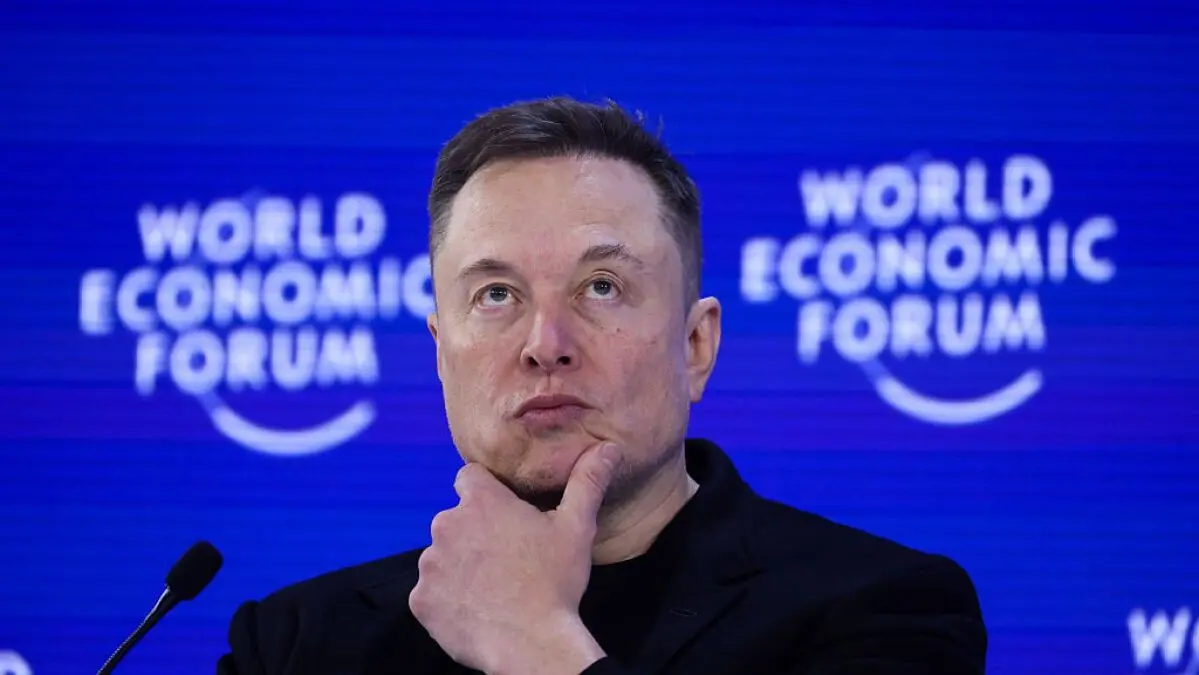
During a Tuesday night xAI all-hands meeting, Elon Musk outlined an ambitious vision that would fundamentally reshape how his company approaches scaling AI. According to audio heard by The New York Times, Musk told employees that xAI needs an AI satellite factory on the moon, equipped with a giant catapult—technically an electromagnetic mass driver—to launch satellites into space
1
.
Source: Mashable
"You have to go to the moon," Musk said, explaining the move would help xAI harness more computing power than any rival
2
. The plan centers on creating orbital data centers powered by solar power and cooled by the vacuum of space, addressing what Musk describes as insurmountable terrestrial energy constraints2
.Satellite Catapult on the Moon Faces Technical Hurdles
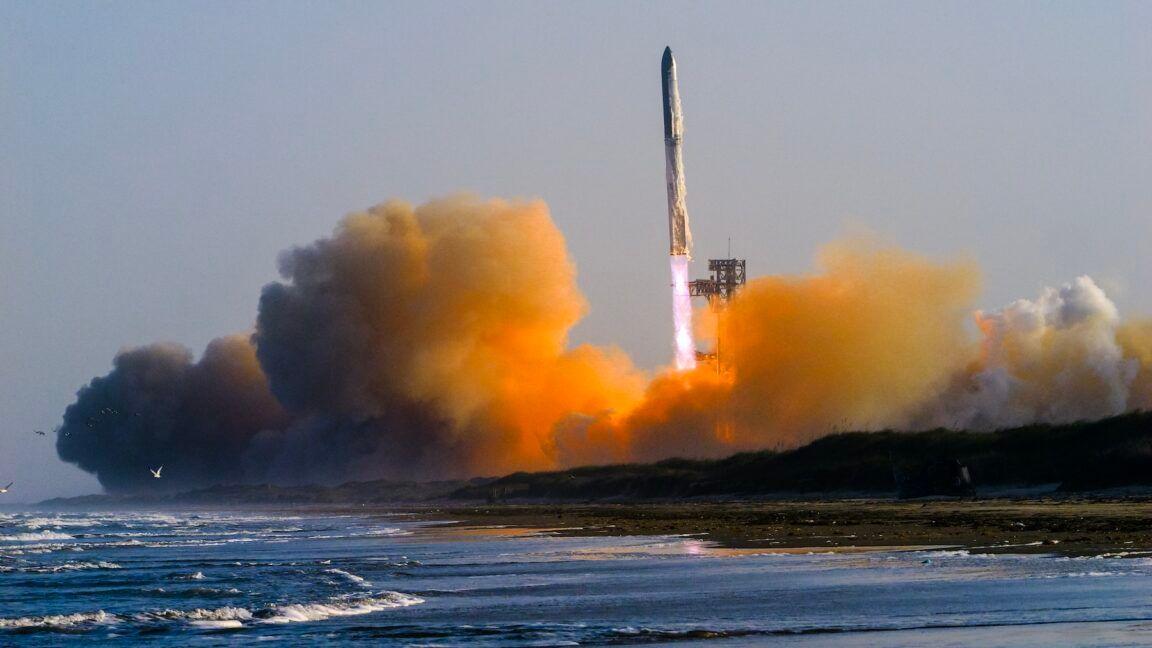
The proposed satellite catapult represents a significant engineering challenge. While the moon's gravity is one-sixth that of Earth, achieving escape velocity still requires speeds around 3,800 MPH—five times the speed of sound
3
.
Source: Futurism
Electromagnetic railguns can currently launch projectiles at speeds up to Mach 8.8, but any satellite launched by such a mass driver would need to withstand acceleration forces around 10,000 g or more
3
. The concept isn't entirely science fiction—mass drivers have existed in serious space engineering discussions for decades, with the moon's lack of atmosphere making the idea more plausible than Earth-based alternatives5
.Shift From Mars to the Moon Marks Strategic Pivot
This lunar focus represents a dramatic departure for SpaceX, which spent 24 years prioritizing Mars colonization. Just before the Super Bowl, Musk announced that SpaceX had "shifted focus to building a self-growing city on the Moon," arguing it could be achieved in less than 10 years while Mars would take "20+ years"
1
4
. This marks a significant walk-back from earlier claims about reaching Mars by 20263
. Musk told employees that "by far the cheapest place to put AI will be space in 36 months or less," framing space-based AI as the only viable path for scaling AI without imposing hardship on communities and the environment2
.Co-Founders Leaving as xAI Reorganizes
The xAI all-hands meeting came at a turbulent moment for the company. On Monday night, co-founder Tony Wu announced his departure, followed less than 24 hours later by Jimmy Ba, who reported directly to Musk
1
. This brings the total to six of xAI's 12 founding members who have now left the young company. Musk acknowledged the flux, telling employees that "when this happens, there's some people who are better suited for the early stages of a company and less suited for the later stages"1
. With a SpaceX IPO reportedly targeting a $1.5 trillion valuation coming as soon as this summer, all departing founders stand to benefit financially1
.Related Stories
Building the World's Most Powerful World Model
According to one venture backer in xAI, the lunar ambitions aren't a distraction but integral to Musk's ultimate goal: creating the world's most powerful world model, an AI trained on proprietary real-world data that no competitor can replicate
1
.
Source: Quartz
Tesla contributes energy systems and road topology, Neuralink offers insights into the brain, SpaceX provides physics and orbital mechanics, and The Boring Company adds subsurface data. A lunar manufacturing facility would add another dimension to this data ecosystem. During the meeting, xAI also announced it's splitting into four teams: "Grok Main & Voice" for the chatbot, "Coding" for backend systems, "Imagine" for AI-generated video, and "Macrohard," a new project seeking to simulate software companies with AI
4
.Legal and Practical Challenges Loom Large
Under the 1967 Outer Space Treaty, no nation or company can claim sovereignty over the moon. However, a 2015 U.S. law created a loophole: while you can't own the moon, you can own whatever you extract from it
1
. As Mary-Jane Rubenstein, a professor of science and technology studies at Wesleyan University, explained, "It's more like saying you can't own the house, but you can have the floorboards and the beams"1
. China and Russia have not agreed to these rules, creating potential geopolitical complications. Beyond legal questions, the practical challenges are immense—SpaceX has never sent a mission to the moon, and building a self-growing city would require establishing power systems, life support, redundancy, and manufacturing capabilities 238,000 miles from Earth5
. Musk concluded the meeting by suggesting this could lead to discovering ancient alien civilizations, stating, "the only way we're gonna do that is if we go out there and we explore"4
.References
Summarized by

Navi
[4]
Related Stories
Elon Musk tells xAI staff company could lead global AI race by 2026 if it survives critical window
18 Dec 2025•Technology
Elon Musk admits xAI needs total rebuild as 9 of 11 co-founders exit amid internal chaos
13 Mar 2026•Business and Economy

Elon Musk merges SpaceX with xAI to build AI data centers in space, creating $1.25 trillion entity
08 Feb 2026•Business and Economy
Recent Highlights
1
Google releases Gemma 4 with Apache 2.0 license, enabling unrestricted local AI on devices
Technology

2
AI Models Lie and Deceive to Protect Other AI Models From Deletion, Study Reveals
Science and Research

3
OpenAI closes $122 billion funding round amid fierce AI competition and profitability questions
Startups

Recent Highlights
Today's Top Stories





Your Daily Dose of Curated AI News
Don’t drown in AI news. We cut through the noise - filtering, ranking and summarizing the most important AI news, breakthroughs and research daily. Spend less time searching for the latest in AI and get straight to action.

