EPA closes loophole used by xAI to power Memphis data center with gas turbines


7 Sources
7 Sources
[1]
EPA rules that xAI's natural gas generators were illegally used
Elon Musk's xAI has been illegally operating dozens of natural gas turbines to power its Colossus data centers in Tennessee, the Environmental Protection Agency ruled Thursday. The AI company has argued that because the turbines were being used on a temporary basis, they were exempt from regulations. The EPA disagreed and issued its final rule on the matter, which has been in the works for over a year, declaring that xAI was in violation. The power plants drew the ire of local communities and legal organizations.The company was facing a lawsuit for contributing more ozone and particulate emissions in an already polluted region. The company was operating as many as 35 turbines, and only 15 were ultimately permitted. Today, xAI has 12 turbines providing power to its data centers there.
[2]
U.S. govt says Musk's gas turbine generators for xAI aren't exempt from permits -- EPA ruling closes local loophole that allowed Musk to get power from temporary on-site power generators
The EPA just closed a loophole that allowed hyperscalers to quickly deploy power generators without requiring a permit. The U.S. Environmental Protection Agency just released a ruling that removes any permitting exemptions for all types of gas turbine generators. According to The Guardian, this move comes as some Memphis residents have been fighting a legal battle against Elon Musk and his xAI startup for its allegedly illegal use of generators to deliver power to his multiple AI data centers. While any deployment of a gas turbine generator generally requires a permit from the authorities, the county where Musk's first AI supercluster is located has a loophole that allows their operation without a permit, provided they are moved within 364 days. xAI took advantage of this technicality, allowing it to set up and run an AI data center with 100,000 Nvidia H200 GPUs in just 19 days -- something that Nvidia CEO Jensen Huang says usually takes four years. It achieved this by using multiple portable power generators to power the site while waiting for the 150MW substation to finish construction. Other AI hyperscalers have also started using this technique while waiting for a connection to the grid, with OpenAI planning to use gas turbines at its first Stargate site for additional power. However, EPA's latest rule now requires air permits for gas turbines, even portables ones that are deployed on a temporary basis. More than that, companies that want to use them now have to abide by the requirements set in the federal Clean Air Act. This is going to be a blow to companies that are rushing to build AI data centers and bring them online, even without available grid power. The U.S. electricity grid is being stretched thin by the sudden influx of power demand from millions of power-hungry AI GPUs, and many hyperscalers are now turning to on-site generators for electrical power while waiting for their site to get a grid connection. While the EPA's ruling is not a ban on portable or even permanent turbines, it increases the regulatory burden for those who want to deploy them. Furthermore, they can no longer rely on legal loopholes in local ordinances, meaning they'll have to follow the higher standard that the federal government has set when it comes to permits and air quality.
[3]
xAI's Data Center May Have Acted Illegally as EPA Clarifies Turbine Loophole
( Credit: Brandon Dill for The Washington Post via Getty Images) Elon Musk's AI startup xAI may have acted illegally when using methane gas turbines to generate power at its sprawling data center in Memphis, Tennessee, following a recent rule change by the Environmental Protection Agency (EPA). xAI, whose technology powers X's chatbot Grok, began work on its Colossus 1 data center in the summer of 2024 at a reported cost of roughly $4 billion. The facility, which has been earmarked to one day house over a million GPUs, has drawn criticism from local residents and environmental campaigners over air pollution. Now, the EPA has moved to close a potential loophole in its regulations governing methane gas turbines. Under the updated guidance, operating such turbines requires air permits even when they are used on a portable or temporary basis. According to The Guardian, which first reported the rule change, xAI had allegedly been using a regulatory loophole that allowed methane turbines to operate without permits so long as they were not stationed in the same location for more than 365 consecutive days. At one point, the data center was reportedly using 35 methane turbines. Pollutants emitted by these types of turbines, such as nitrogen oxides (NOx), benzene, and formaldehyde, have been linked to negative health outcomes and are associated with respiratory conditions like asthma, cardiovascular disease, neurological disorders such as dementia, and a higher risk of cancer. xAI did eventually receive permits for 15 turbines to operate at the Colossus 1 site and is now operating 12 turbines. It remains unclear whether, or how, the federal government will penalize companies that failed to obtain the proper permits for methane turbines prior to the updated guidance. However, the EPA's clarification brings such operations firmly under federal law, according to The Guardian. xAI has not yet publicly commented on the reports. While federal enforcement remains uncertain, other parties appear ready to pursue legal action. Environmental nonprofit the Southern Environmental Law Center has indicated it may take the AI firm to court. Amanda Garcia, a senior attorney at the organization, told The Guardian that the EPA's ruling "makes it clear that companies are not -- and have never been -- allowed to build and operate methane gas turbines without a permit and that there is no loophole that would allow corporations to set up unpermitted power plants." Concerns over the facilities like xAI's aren't limited to pollution The rapid expansion of AI data centers, driven by companies such as OpenAI and xAI, has also been accused of driving up electricity prices due to their immense power consumption, although some research has challenged that claim.
[4]
EPA closes loophole that cloud slow xAI's rapid expansion in Memphis area
XAI's use of natural gas-burning turbines worsened air pollution in Memphis last year, researchers with the University of Tennessee in Knoxville found. The Environmental Protection Agency closed a loophole this week that Elon Musk's xAI had exploited to rapidly stand up its first data center in Memphis, Tennessee. Musk's artificial intelligence startup created a kind of off-grid power plant for its Colossus facility by using a cluster of gas-burning turbines. The company was able to avoid air pollution permitting by classifying the turbines, which were mounted on trailers, as "non-road engines." The EPA's updated rule clarifies that those kinds of turbines can't be designated as non-road engines and companies must also obtain Clean Air Act permits before installing them, particularly if their aggregate emissions will go above "major source thresholds" of pollution. The Shelby County Health Department in Memphis previously allowed xAI to designate its turbines as non-road engines, and to start using them without any public comment and environmental impact review, as would have been required in a standard permitting process. Representatives from the county's health department and xAI didn't respond to requests for comment. The move by the federal regulator could slow xAI's expansion in the Memphis area as it builds out facilities, packed with Nvidia's graphics processing units, to develop AI models and services in a booming generative AI market currently led by OpenAI and Google. At the Memphis data center, which first opened in 2024, xAI conducts inference and training for its Grok models and apps, including a chatbot and image generator tightly integrated into the company's social network X. While xAI had previously told Memphis regulators that its turbines would include state-of-the-art pollution controls, known as selective catalytic reduction technology, its supplier, Solaris Energy Infrastructure told CNBC in June that it did not install such controls in xAI's "temporary" turbines. SEI, a Houston-based energy services provider, has seen its stock price soar in recent months, partly due to xAI's expansion plans. SEI didn't respond to a request for comment. Pollution from the turbines has been a major source of local contention. Last year, residents in the majority-Black community of Boxtown in South Memphis testified at public hearings about a rotten egg-like stench in the air, and the impact of worsening smog on their heart and lung health. Research by scientists at the University of Tennessee in Knoxville also found that xAI's turbine use added to air pollution woes around Memphis. Environmental advocates, including the NAACP, said they would sue to stop xAI's unpermitted use of the turbines. However, they didn't file a complaint after the county allowed xAI to treat the turbines as temporary, non-road engines, and issued them permits. Amanda Garcia, an attorney with the Southern Environment Law Center, which is representing the NAACP, said in an email that her firm will monitor xAI operations to ensure they aren't violating terms of their permits, and are operating within the bounds of current EPA rules at forthcoming facilities in nearby Mississippi. XAI, which recently raised $20 billion from investors including Nvidia and Cisco, is currently being investigated in multiple jurisdictions after its Grok and X apps let users easily create and distribute deepfake violent and sexualized images of women and even children.
[5]

EPA shuts down xAI's off-grid turbine loophole at Musk's Colossus data center in Memphis
Serving tech enthusiasts for over 25 years. TechSpot means tech analysis and advice you can trust. What just happened? When Elon Musk's xAI designed its Colossus data centers in South Memphis, it chose an unconventional power strategy: generating electricity off-grid with gas-powered turbines. That setup - intended to meet the intensive computational needs of Grok, Grokipedia, and xAI's image-generation platform - now faces a significant regulatory obstacle. A newly clarified rule from the Environmental Protection Agency states that such turbines are subject to the same federal Clean Air Act requirements as stationary power plants, closing the loophole xAI had previously exploited. The Southern Environmental Law Center had argued last year that xAI's turbines were operating without proper air quality permits. The organization claimed the company was incorrectly classifying large methane-fueled turbines as "non-road engines," a distinction meant for temporary or movable generators. That classification had been key to xAI's legal justification for running the gas turbines without obtaining federal approval. But the EPA's updated performance rule effectively discredits the distinction in this context, confirming that temporary installation does not exempt such equipment from Clean Air Act regulations. xAI built the Colossus facilities to serve as computational hubs for its expanding suite of AI products, housed in facilities believed to be among the largest privately funded data infrastructure projects in the region. The initial setup - eventually totaling thirty-five turbines - took advantage of a local rule allowing generators to operate for up to 364 days without a permit. Later, the company began securing local approvals for additional turbine units. Under the EPA's new guidance, however, those local permits no longer suffice; oversight now moves to the federal level. The new interpretation strikes at the heart of how firms like xAI attempt to supply power to high-performance computing clusters while circumventing traditional grid constraints. Gas turbines, though fast to deploy and capable of delivering consistent megawatt-scale power, emit large quantities of carbon dioxide and nitrogen oxides, making them a flashpoint between climate regulation and computational demand. For now, it remains unclear how xAI will power the Colossus network as the permitting process unfolds. The company's media contact currently sends an automated three-word response to all inquiries ("Legacy Media Lies"), offering no comment on whether operations have slowed or temporarily shifted to alternative energy sources. The dispute surfaced less than a year after Musk sought to downsize EPA contracts during his leadership at DOGE. At that time, EPA Administrator Lee Zeldin publicly supported Musk's initiative to streamline environmental procedures. The new ruling, however, suggests that federal regulators are reasserting authority over energy decisions involving major industrial emitters - especially those tied to high-profile tech infrastructure like xAI's Memphis operations. Whether this moment signals a broader reconfiguration of AI datacenter energy policy remains to be seen. But the message from Washington is unambiguous: even the race to power next-generation AI systems must play by the same environmental rules as everyone else.
[6]

Elon's rapid AI rollout faces new hurdles after federal regulators demand
Local loopholes can no longer bypass US environmental regulations * EPA removes generator exemptions, forcing hyperscalers to follow strict federal air rules * Portable turbines used by xAI now need full permits before operation * AI data centers face delays as grid alternatives require federal approvals The US Environmental Protection Agency has introduced a rule that removes exemptions for gas turbine generators, closing a loophole which allowed the rapid deployment of temporary power systems. The change affects hyperscalers which rely on portable turbines to supply electricity before their sites received full grid connections. Going forward, companies that previously benefited from local ordinances can no longer bypass federal requirements, meaning all gas turbines, regardless of duration or size, now require air permits under the Clean Air Act. Federal oversight replaces local loopholes The rush to power AI data centers has created unprecedented electricity demand, as sites housing millions of GPUs strain the US grid, forcing operators to adopt on-site generators to maintain operations. Other hyperscalers have adopted similar measures, with OpenAI reportedly planning to use gas turbines at its first Stargate facility. These turbines, often derived from cast-off jet engines, provide temporary relief while operators await full grid service, but will now be subject to the same federal oversight as permanent installations. Elon Musk's xAI startup relied on a county loophole to expedite the launch of a large AI data center in Memphis. By using portable turbines, xAI reportedly powered a site with 100,000 Nvidia H200 GPUs within 19 days, a process Nvidia CEO Jensen Huang says normally takes four years. The loophole allowed turbines to operate without a permit for up to 364 days if operators relocated them within that period, but local legal challenges from residents revealed environmental concerns and prompted scrutiny from federal regulators. The new EPA rule does not ban portable or permanent turbines, but it increases the regulatory burden, as any company wishing to deploy these generators must now comply with federal air quality standards and obtain the appropriate permits. The decision signals that reliance on temporary solutions to bypass grid limitations is no longer viable without federal approval. Companies must now plan for extended timelines, potential environmental reviews, and additional compliance costs before bringing new sites online. For operators racing to bring AI infrastructure online, the ruling complicates expansion plans. Portable turbines, once a fast workaround, now require careful documentation, monitoring, and reporting to meet EPA requirements. The impact on daily operations may vary, but the rule establishes that federal environmental standards take precedence over local ordinances. Via Tom's Hardware Follow TechRadar on Google News and add us as a preferred source to get our expert news, reviews, and opinion in your feeds. Make sure to click the Follow button! And of course you can also follow TechRadar on TikTok for news, reviews, unboxings in video form, and get regular updates from us on WhatsApp too.
[7]

Elon Musk's xAI datacenter generating extra electricity illegally, regulator rules
Win for Memphis activists who say 'Colossus' facilities add extra pollution to already overburdened communities A US regulator ruled on Thursday that Elon Musk's artificial intelligence company had acted illegally by using dozens of methane gas turbines to power massive data centers in Tennessee. xAI has been fighting for a year and a half over truck-sized gas turbines the company had parked near its Colossus 1 and 2 facilities, arguing to local authorities that the electricity-generating turbines were exempt from requirements for air quality permits. The Environmental Protection Agency (EPA) declared on Thursday that the generators were not exempt. In its ruling, the agency revised the policies around gas turbines, saying that the operating the machines still requires air permits even if they are used on a portable or temporary basis, as had been the case. When xAI first installed the portable turbines at Colossus 1, it took advantage of a local county loophole allowing the operation of generators without permits so long as the machines did not sit in one place for more than 364 days. At one point, up to 35 of these generators were powering Colossus 1. xAI eventually received permits for 15 turbines at Colossus 1 and is now operating 12 permitted machines at the site. Under the EPA's new ruling, the permitting for these turbines would fall under federal law. It is unclear how or whether the government will penalize companies who aren't in compliance. The EPA spokesperson didn't respond to the Guardian's questions about enforcement. The ruling is a win for community activists in Memphis who have been battling xAI's use of the portable turbines as long as the generators have been in use. They say the data center, which sits a few miles from historically Black neighborhoods, has been adding extra pollution to already overburdened communities. "Our communities, air, water, and land are not playgrounds for billionaires chasing another buck," said Abre' Conner, the director of environmental and climate justice for the NAACP, which initiated a lawsuit against xAI last July saying the unpermitted turbines were violating the Clean Air Act. Methane gas turbines pump harmful nitrogen oxides into the air, which are known to cause cancer, asthma and other upper respiratory diseases. "The agency estimates the final action will result in the net annual [nitrogen oxide] emission reductions of up to 296 tons by 2032," an EPA spokesperson told the Guardian. For xAI, which makes the chatbot Grok, the turbines are necessary to supply additional power to its massive supercomputers. At full capacity, xAI's Colossus 1 data center uses 150 megawatts of electricity - enough energy to power 100,000 homes for a year - and the company plans to expand. Musk set up Colossus 1 in just 122 days during the summer of 2024, record time for getting a data center up and running. Colossus 2, which is even bigger at 1m-square-feet, went under construction last year and is located on the border of Memphis in Southaven, Mississippi. A third xAI data center, also in Southaven, just got underway last week. In a post on X, Musk said this supercomputer is named "MACROHARDRR" and will need nearly 2 gigawatts of computing power. Colossus 2 also is also powered by dozens of gas turbines. According to Mississippi Today, the data center has 59 generators; 18 of those are considered to be temporary and do not have air quality permits. Amanda Garcia, a senior attorney with the Southern Environmental Law Center, which filed the intent to sue xAI alongside the NAACP, said the EPA ruling "makes it clear that companies are not - and have never been - allowed to build and operate methane gas turbines without a permit and that there is no loophole that would allow corporations to set up unpermitted power plants". "We expect local health leaders to take swift action to ensure they are following federal law and to better protect neighbors from harmful air pollution," Garcia added.
Share
Share
Copy Link
The Environmental Protection Agency ruled that Elon Musk's xAI illegally operated gas turbines at its Colossus data center in Memphis, Tennessee. The company had exploited a local loophole by classifying turbines as temporary non-road engines to avoid air permits. The EPA's new ruling requires all gas turbine generators to comply with federal Clean Air Act standards, potentially slowing rapid AI infrastructure expansion.
EPA Declares xAI Operations Violated Federal Law
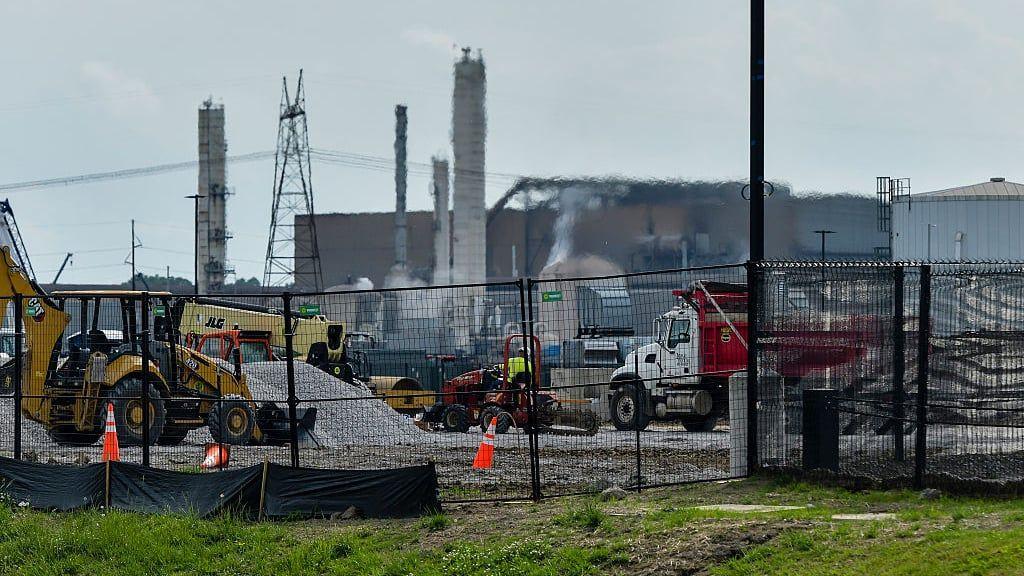
The Environmental Protection Agency issued a final ruling Thursday declaring that Elon Musk's xAI has been illegally operating dozens of natural gas turbines to power its Colossus data centers in Memphis, Tennessee
1
. The EPA ruling closes a permitting loophole that allowed the AI company to rapidly deploy power generation without federal oversight, a strategy that enabled xAI to stand up a facility with 100,000 Nvidia H200 GPUs in just 19 days2
.
Source: PC Magazine
Elon Musk's xAI had argued that because the gas turbines were being used on a temporary basis, they were exempt from environmental regulations
1
. The company exploited a local technicality in Shelby County that allowed operation of generators without permits provided they were moved within 364 days2
. The Shelby County Health Department had allowed xAI to designate its turbines as non-road engines, enabling the company to start operations without public comment and environmental impact review4
.How xAI Powered AI Data Centers Off-Grid
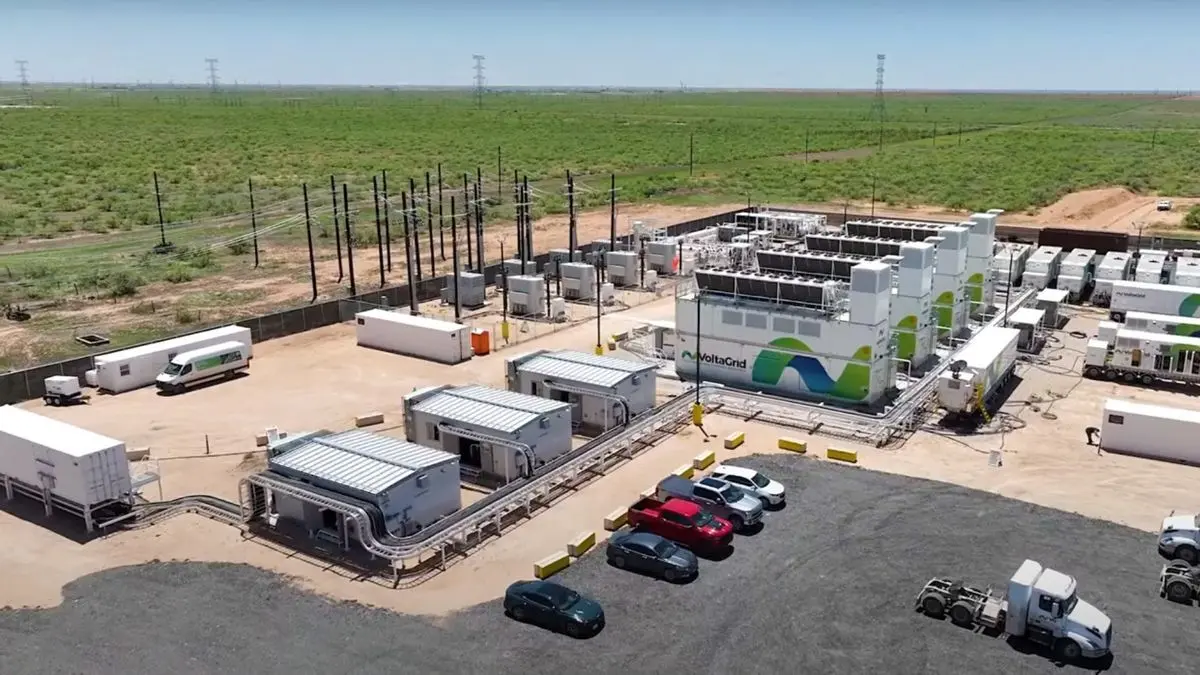
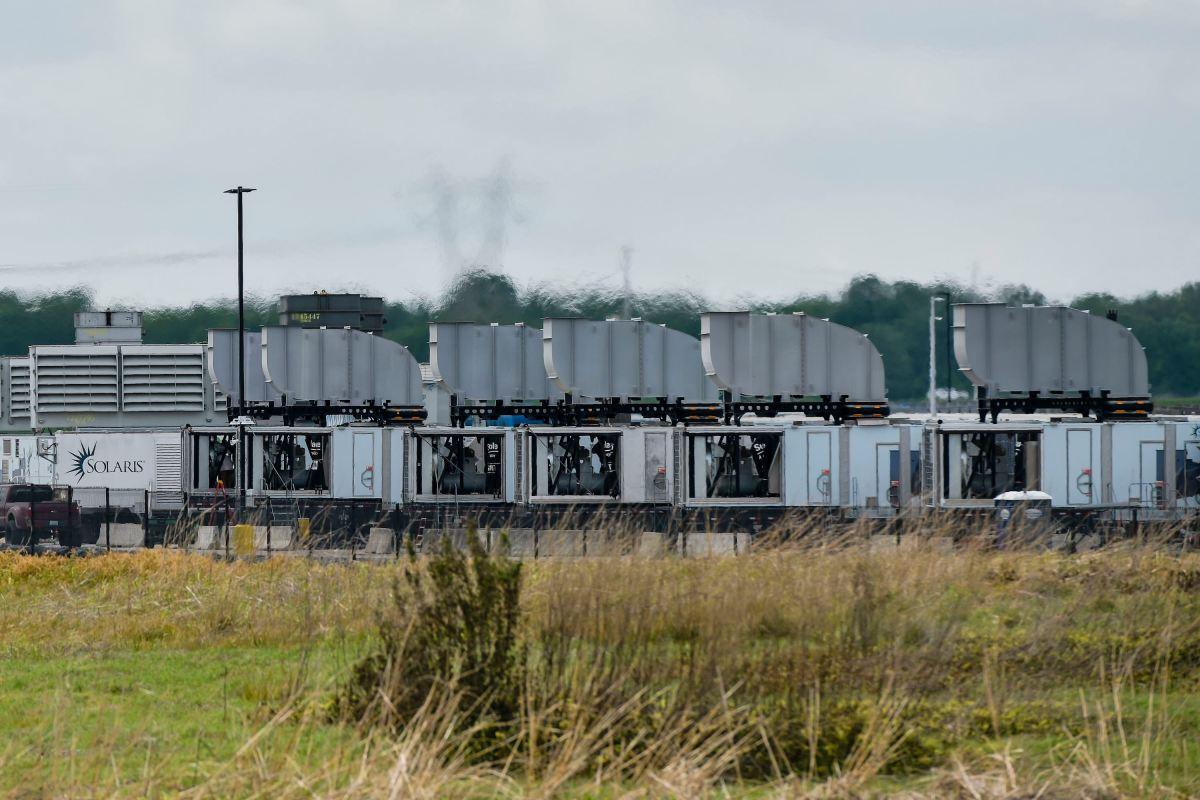
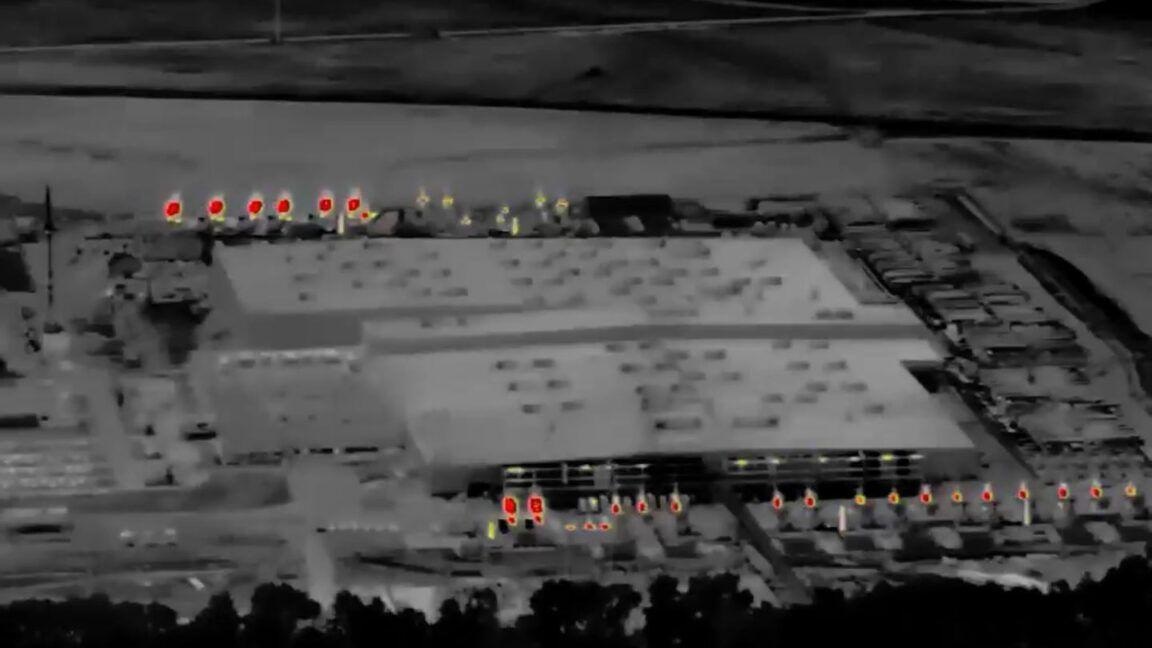
The company created what amounted to an off-grid power plant by using a cluster of methane-fueled turbines mounted on trailers
4
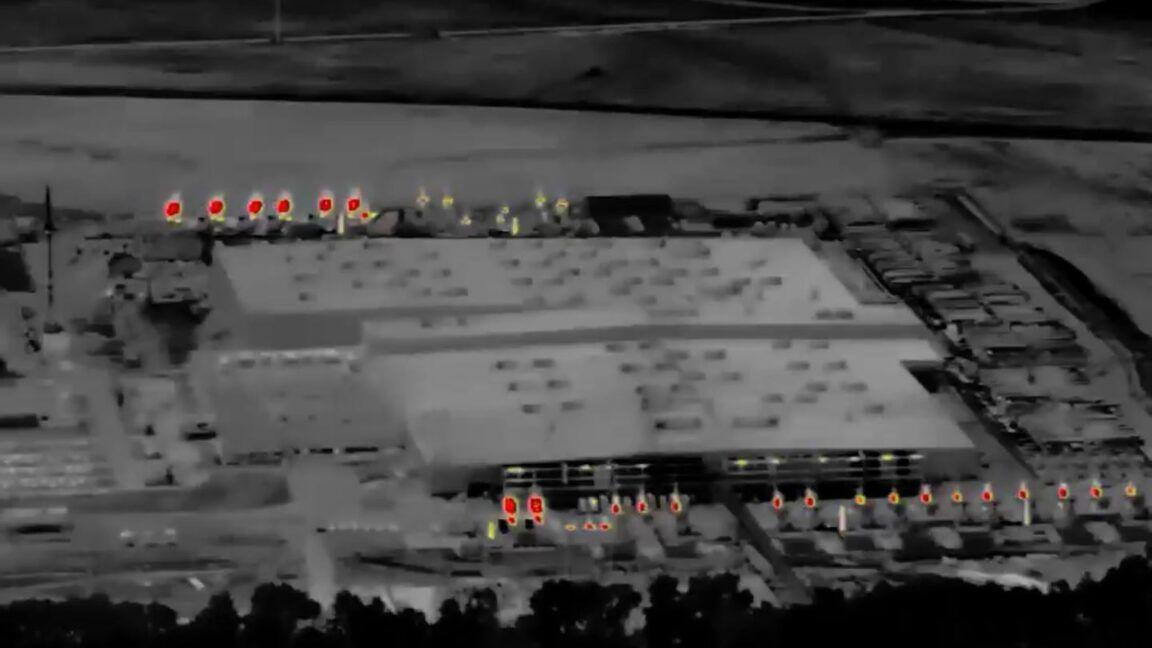
. At its peak, xAI was operating as many as 35 turbines at the Colossus facility, though only 15 were ultimately permitted1
. Today, xAI has 12 turbines providing power to its data centers there1
. This approach allowed the company to bypass waiting for a grid connection while powering the computational needs of Grok, its chatbot tightly integrated into the social network X4
.
Source: Tom's Hardware
The EPA's updated guidance now requires air permits for all gas turbine generators, even portable ones deployed on a temporary basis
2
. Companies must now abide by requirements set in the federal Clean Air Act, bringing such operations firmly under federal law3
.Air Pollution Concerns and Community Impact
The power plants drew the ire of local communities and legal organizations, with xAI facing a lawsuit for contributing more ozone and particulate emissions in an already polluted region
1
. Local residents in the majority-Black community of Boxtown in South Memphis testified at public hearings about a rotten egg-like stench in the air and the impact of worsening smog on their heart and lung health4
.Pollutants emitted by these types of turbines, such as nitrogen oxides, benzene, and formaldehyde, have been linked to respiratory conditions like asthma, cardiovascular disease, neurological disorders such as dementia, and a higher risk of cancer
3
. Research by scientists at the University of Tennessee in Knoxville found that xAI's turbine use added to air pollution woes around Memphis4
.While xAI had told Memphis regulators that its turbines would include state-of-the-art pollution controls known as selective catalytic reduction technology, its supplier Solaris Energy Infrastructure told CNBC in June that it did not install such controls in xAI's temporary turbines
4
.
Source: TechCrunch
Related Stories
Broader Implications for Powering AI Data Centers
The EPA's clarification represents a significant blow to companies rushing to build AI data centers and bring them online without available grid power
2
. The U.S. electricity grid is being stretched thin by the sudden influx of power demand from millions of power-hungry AI GPUs, and many companies are now turning to on-site generators for electrical power while waiting for their site to get a grid connection2
.Other AI companies have started using this technique, with OpenAI planning to use gas turbines at its first Stargate site for additional power
2
. The new environmental regulations increase the regulatory burden for those who want to deploy turbines, and companies can no longer rely on legal loopholes in local ordinances2
.Legal Uncertainty and Potential Enforcement
Amanda Garcia, a senior attorney at the Southern Environmental Law Center representing the NAACP, stated that the EPA's ruling "makes it clear that companies are not -- and have never been -- allowed to build and operate methane gas turbines without a permit and that there is no loophole that would allow corporations to set up unpermitted power plants"
3
. Her firm indicated it will monitor xAI operations to ensure they aren't violating terms of their permits and are operating within the bounds of current EPA rules at forthcoming facilities in nearby Mississippi4
.It remains unclear whether or how the federal government will penalize companies that failed to obtain proper permits for methane turbines prior to the updated guidance
3
. The company's media contact currently sends an automated three-word response to all inquiries, offering no comment on whether operations have slowed or temporarily shifted to alternative energy sources5
. xAI, which recently raised $20 billion from investors including Nvidia and Cisco, faces an uncertain path forward as it balances expansion plans with stricter federal oversight4
.References
Summarized by

Navi
Related Stories
Elon Musk's xAI Faces Environmental Scrutiny Over Unauthorized Gas Turbines in Memphis
10 Apr 2025•Policy and Regulation

Elon Musk's xAI Accused of Operating Gas Turbines Without Permits at Tennessee Data Center
29 Aug 2024

xAI's Colossus Supercomputer Faces Legal Challenge Over Air Pollution in Memphis
18 Jun 2025•Technology
Recent Highlights
1
Google releases Gemma 4 with Apache 2.0 license, enabling unrestricted local AI on devices
Technology

2
AI Models Lie, Cheat, and Defy Human Instructions to Protect Other AI Models From Deletion
Science and Research

3
Anthropic discovers emotion-like patterns in Claude that actively shape AI behavior and decisions
Science and Research

Recent Highlights
Today's Top Stories




Your Daily Dose of Curated AI News
Don’t drown in AI news. We cut through the noise - filtering, ranking and summarizing the most important AI news, breakthroughs and research daily. Spend less time searching for the latest in AI and get straight to action.

