Etched Secures $500 Million to Challenge Nvidia's AI Chip Dominance with Sohu Processor


2 Sources
2 Sources
[1]
AI Chip Startup Etched Raises $500 Million to Take on Nvidia
AI chip startup Etched raised about $500 million in a new funding round, according to people familiar with the matter, part of an effort to compete with Nvidia Corp. in the booming market for artificial intelligence processors. The round, which was led by investment firm Stripes and includes participation from billionaire entrepreneur Peter Thiel, valued the company at $5 billion, said the people, who asked not to be identified because the agreement hasn't been announced. Positive Sum and Ribbit Capital also invested, they said.
[2]
AI chip unicorns Etched.ai and Cerebras Systems get big funding boost to target Nvidia - SiliconANGLE
AI chip unicorns Etched.ai and Cerebras Systems get big funding boost to target Nvidia Nvidia Corp. has been in pole position in the artificial intelligence chip market for as long as the industry has existed, but it may want to keep an eye on the rear view mirror as some of its biggest rivals are getting the financial backing they need to shift into a higher gear. For instance, the AI chip startup Etched.ai Inc. said today it has closed on a bumper $500 million funding round that brings its value to more than $5 billion. Meanwhile, an even more prominent rival called Cerebras Systems Inc. is reportedly in talks to raise double that amount, even as it finalizes plans for an initial public offering later this year. Etched.ai is the lesser known quantity here, but today's round, which was led by Stripes and saw participation from the entrepreneur Peter Thiel, brings its total amount raised to almost $1 billion. That's a pretty sizable war chest for a two-year-old startup that's developing a highly specialized chip that's optimized to run so-called "Transformer" models that sit at the heart of OpenAI Group PBC's ChatGPT and Google LLC's Gemini chatbots. The chip in question is called Sohu, which is a kind of application-specific integrated circuit that's designed to run a specific workload with the greatest possible efficiency in terms of power consumption, performance, cost or a combination of all three. In the case of Sohu, it has been designed to run transformers at maximum efficiency. It was built using Taiwan Semiconductor Manufacturing Corp.'s most advanced four-nanometer process, and the startup claims it can deliver enhanced inferencing performance compared to Nvidia's graphics processing units and other AI chips. It does this while drawing less energy too, the company said. In a 2024 interview, Etched.ai Chief Executive Gavin Uberti promised that Sohu will be an "order of magnitude faster and cheaper" for transformer-based text, image and video-generation tasks, compared to Nvidia's most powerful Blackwell GB200 graphics processing units. "One Sohu server replaces 160 H100 GPUs," Uberti claimed. "Sohu will be a more affordable, efficient and environmentally friendly option for business leaders that need specialized chips." Cerebras Systems is a more familiar name, and the $1 billion raise that's being discussed would boost its value to more than $22 billion, anonymous sources told The Information. The company has gotten a lot of attention in the past couple of years because of its unusual, dinner-plate-sized silicon chips that are said to be much more powerful than Nvidia's GPUs. Its flagship chip is the Cerebras WSE-3 processor that debuted in March 2024. Built on a five-nanometer process, the chip features 1.4 trillion transistors and has over 900,000 compute cores - more than 50 times the number found on a single Nvidia H100 GPU. It also packs 44 gigabytes of onboard static random-access memory, which helps it to solve one of the major bottlenecks associated with Nvidia's chips - bandwidth. In May, the company updated its cloud-based AI inference service, which is designed to run trained AI models in production, claiming that it's the fastest offering of its kind in the world. It said it can run the most powerful large language models at speeds of more than 2,000 tokens per second, which is much more rapid than Nvidia GPU-based inference services. It's said that the latest funding discussions will not impact Cerebras' plans to go public. The chipmaker has made no secret of its ambitions to become a publicly traded company. In fact, it first filed for an IPO in September 2024, only to cancel the listing following reports that one of its major investors, the United Arab Emirates-based conglomerate G42, was being investigated as part of a U.S. national security review. G42 is both an investor and a customer of Cerebras, and it has faced scrutiny by U.S. authorities over concerns that Middle East companies may provide China with backdoor access to American AI and chip technologies. However, G42 has since been cleared by the Committee on Foreign Investment in the United States, and it's no longer listed as one of Cerebras' investors either, paving the way for the chipmaker to rekindle its IPO plans. It's widely assumed that Cerebras will file again in the next couple of months. Both Etched.ai and Cerebras still have a way to go if they're to seriously threaten Nvidia's position at the top of the AI chip market. During a keynote at CES 2026 earlier this month, Nvidia CEO Jensen Huang said that demand for the company's chips is still increasing, and projects that it will do more than half a trillion dollars in sales in fiscal 2026.
Share
Share
Copy Link
AI chip startup Etched raised $500 million in a funding round led by Stripes, with backing from Peter Thiel, reaching a $5 billion valuation. The company's Sohu chip targets Transformer models and promises to deliver performance gains over Nvidia's GPUs. Meanwhile, rival Cerebras Systems is reportedly pursuing $1 billion in funding as competition intensifies in the artificial intelligence chip market.
Etched Lands $500 Million to Take on Nvidia in AI Chip Market
AI chip startup Etched has closed a $500 million new funding round that values the company at $5 billion, marking a significant milestone in its quest to compete with Nvidia in the rapidly expanding artificial intelligence processors market
1
. The round was led by investment firm Stripes and includes participation from billionaire entrepreneur Peter Thiel, along with Positive Sum and Ribbit Capital1
. This brings the two-year-old company's total funding to nearly $1 billion, providing substantial resources to challenge the incumbent leader in the artificial intelligence chip market2
.
Source: Bloomberg
Sohu Chip Promises Performance Gains Over Graphics Processing Units
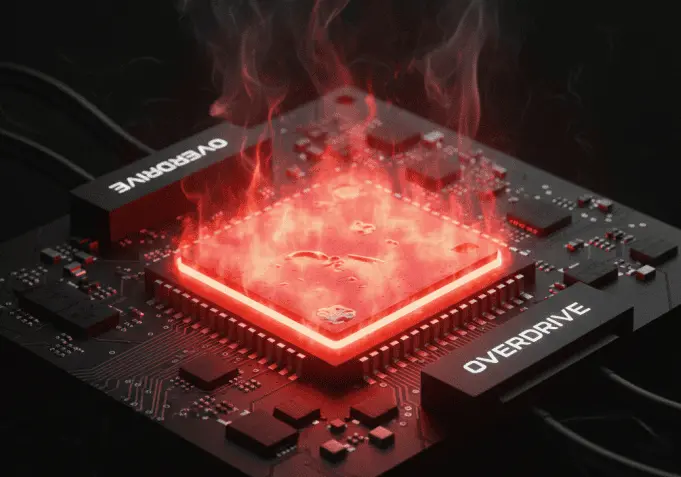
At the heart of Etched's strategy lies the Sohu chip, a specialized application-specific integrated circuit designed exclusively to run Transformer models that power systems like OpenAI's ChatGPT and Google's Gemini chatbots
2
. Built using Taiwan Semiconductor Manufacturing Corp.'s advanced four-nanometer process, the Sohu chip targets maximum efficiency in running transformer-based text, image, and video-generation tasks. Etched CEO Gavin Uberti made bold claims in a 2024 interview, stating that Sohu will be "an order of magnitude faster and cheaper" than Nvidia's Blackwell GB200 graphics processing units. "One Sohu server replaces 160 H100 GPUs," Uberti claimed, positioning the chip as a more affordable and energy-efficient alternative for businesses requiring specialized processors2
.
Source: SiliconANGLE
Cerebras Systems Joins the Race with $1 Billion Funding Talks
The competitive landscape intensified as Cerebras Systems, another major player challenging Nvidia, is reportedly in discussions to raise $1 billion at a valuation exceeding $22 billion
2
. Cerebras has gained attention for its dinner-plate-sized WSE-3 processor, which features 1.4 trillion transistors and over 900,000 compute cores—more than 50 times the number found on a single Nvidia H100 GPU. The company's AI inference service claims to run large language models at speeds exceeding 2,000 tokens per second, significantly faster than Nvidia GPU-based inference services. Cerebras is also moving forward with plans for an initial public offering after clearing regulatory hurdles related to its former investor G42, with analysts expecting a filing within the next couple of months2
.Related Stories

Market Implications as Nvidia Maintains Dominance
While Etched and Cerebras Systems secure substantial backing, Nvidia maintains its commanding position in the AI chip sector. During a keynote at CES 2026, Nvidia CEO Jensen Huang projected the company would achieve more than half a trillion dollars in sales for fiscal 2026, with demand for its chips continuing to climb
2
. The $5 billion valuation achieved by Etched reflects investor confidence in specialized approaches to AI processing, particularly for workloads centered on Transformer models. For businesses evaluating AI infrastructure, the emergence of purpose-built alternatives to general-purpose GPUs signals a shift toward optimization for specific use cases. The coming months will reveal whether these challengers can convert technical promises into market share, particularly as organizations seek cost-effective solutions for deploying and scaling AI applications.References
Summarized by

Navi
Related Stories
MatX AI chip startup raises $500 million to challenge Nvidia's dominance in LLM processing
25 Feb 2026•Startups
Cerebras Systems raises $1B at $23B valuation as Benchmark doubles down with $225M investment
04 Feb 2026•Business and Economy

Cerebras Challenges Nvidia's AI Chip Dominance as Competition Heats Up
15 Jul 2024

Recent Highlights



Recent Highlights
Today's Top Stories







Your Daily Dose of Curated AI News
Don’t drown in AI news. We cut through the noise - filtering, ranking and summarizing the most important AI news, breakthroughs and research daily. Spend less time searching for the latest in AI and get straight to action.

