Europe trails US and China in AI race despite €200 billion push to close infrastructure gap


2 Sources
2 Sources
[1]
AI power play: Can Europe catch up to the US and China?
The EU is leading the AI race with key policies like the AI Act - but the US and China are racing ahead with innovation and investment. Can the EU cover the gap and catch up? The United States has produced 40 AI foundation models. China has developed 15. All of Europe combined has created just three. The European Union is losing the global "AI race" on nearly every key metric except regulation. While China and the United States invest billions in infrastructure, talent, startups, labs, and research, Europe remains focused on rules. Policy burdens and fragmentation across 27 member states create major hurdles: progress is inconsistent, talent leaves, and capital goes elsewhere. Clark Parsons, leader of the European Startup Network, is blunt about the imbalance. "The EU should stop patting itself on the back for being the world's regulator in technology. Some elements of the Digital Markets Act were designed to promote competition. I like those, but in general we have spent far too long focusing on regulating instead of every day waking up and saying what can we do to make Europe the most competitive place on the planet, the most prosperous place on the planet." "If I had to say, 'Please stop doing one thing,' I would say, 'Stop thinking about how to regulate and start thinking about how to unleash incredible growth,'" he adds. Parsons also questions whether regulation is the best way to guarantee trust in a fast-moving technological field. "The AI world is moving so fast. It's hard to see what's coming. I think clever entrepreneurs and technologists are going to deliver ways for us to establish trust and establish safeguards." Despite its current position, the EU refuses to concede defeat. As part of its 2025 AI strategy, European Commission president Ursula von der Leyen promised that "from now on, it's 'AI first'", vowing to "spare no effort to make Europe an AI continent". "The AI race is far from over. We are only at the beginning, and global leadership is still up for grabs," she declared at the Paris AI Action Summit in February 2025. Talent without traction The paradox is clear. Although Europe produces top talent, it fails to retain it. The EU has about 30% more AI professionals per capita than the US, but better funding, clearer career paths, and softer regulations abroad lure them away. Three out of four European international AI PhD students at American universities stay in the US for at least five years. In total, a third of non-US AI specialists move to the United States. This talent drain raises a fundamental question: has Europe already lost the global race on AI? "When it comes to AI startups and scale-ups in Europe, there's very clearly some hurdles. And if I had to boil it down to one, I would say it's finance and financing," Parsons says. The United States invests four to ten times more in AI than the EU. Annual AI venture investment in the US is $60-70 billion, compared to about $7-8 billion in the EU. Over the past decade, private AI investment in the US exceeded $400 billion, while all EU countries combined attracted about $50 billion. According to Parsons, "[the US] also has extremely deep pools of capital. You see how comparatively easy it has been for OpenAI to raise enormous sums. Other new entrants, like Anthropic, got incredible valuations and incredible amounts of capital." Infrastructure gaps and late catch-up This funding gap directly affects Europe's AI infrastructure. The continent has fewer data centres and much less AI-specific compute capacity. To address this, the European Commission has announced initiatives, including AI "factories" and future "gigafactories" with many accelerators, backed by public funding and expected private co-investment. Through its InvestAI initiative, the EU aims to mobilise €200 billion, including €20 billion for the construction of up to five AI gigafactories, each expected to produce more than 100,000 advanced AI chips. EuroHPC has already received 76 proposals from 16 countries to host these facilities, and Brussels aims to triple Europe's data-centre capacity within five to seven years. Beyond infrastructure, the EU has steadily increased funding for AI. Through Horizon Europe and Digital Europe, the Commission already allocates more than €1 billion each to AI. The AI Continent Action Plan mobilised €20 billion for AI scaling in April 2025, followed by €1 billion under the Apply AI Strategy in October 2025. These European projects are still under construction, while US cloud providers already operate hyperscale clusters for AI workloads. Even Europe's most powerful supercomputers are better suited to traditional high-performance computing than to large-scale AI training, after years of underinvestment in AI-specific infrastructure. Venture capital and startup exodus European venture capital is structurally more cautious than in the US. AI startups in Europe raise about $8.5 million in their first funding rounds, compared with $13 million in the US. US venture capital firms manage roughly $270 billion, six times more than the $44 billion managed in Europe. These differences make it harder for European startups to grow, adopt AI at scale, and retain talent. They also influence where companies choose to base themselves. Parsons points to a telling example. "Let's look at Lovable, the fastest-growing AI company in Europe, based in Stockholm. The founder is Swedish. His team is Swedish. The angel investors are Swedish. But the company is legally registered in Delaware. And this is just because the access to capital is so much easier in the US." Mobility within Europe is also limited. "Only about 18% of our venture capital crosses borders now in Europe," Parsons explains. "So, if you're sitting in Paris or Munich or London or Stockholm, you've got a pretty nice pool of local investment money. But if you're sitting in Barcelona or Lisbon or Milan, or Bucharest, it's harder... and you might have to leave or move." Regulation, fragmentation, and the AI Act Regulation remains a central challenge. Europe wants to be a global leader in ethical, human-centric AI. By August 2027, the European Commission plans to implement what it calls the world's first comprehensive AI regulation. At the heart of this effort is the AI Act, which is based on a risk-based approach: the greater an AI system's potential impact on people, the stricter the rules governing it. The Act sets requirements for AI providers and deployers to prevent harms such as manipulation, discrimination, intrusive biometric profiling, deepfakes, and social scoring, with the stated aim of ensuring trust in AI systems. Enforcement is inconsistent and insufficient. While some member states like Italy, Spain, Denmark, and Ireland are making significant headway in the AI Act's application, others still lack fully operational enforcement bodies, putting the immediate impact of the AI Act at risk and missing Brussels' intentions. Critics argue that the EU's strict rules and bureaucratic complexity have slowed innovation. International companies have also asked the Commission to ease aspects of the framework. As the AI Act introduces legal uncertainty, its scope must be "proportionate and support innovation and development," warned economist Mario Draghi. For startups, the effects are tangible. European AI companies face enterprise sales cycles that are 30% longer than in the US, deal sizes that are 50% smaller, and higher expansion costs, largely due to regulatory fragmentation across 27 national markets. Unlike the US or China, the EU lacks a single, unified market for AI deployment. Fragmentation also affects data. Differences in privacy enforcement, sector-specific rules, and public-sector data-sharing practices make it difficult to build continent-wide datasets. Developers in some member states say varying interpretations of GDPR and copyright law limit which datasets they can use. As a result, companies often rely on non-EU data or foreign AI models trained elsewhere. The trend is unmistakable. Swedish AI companies, such as Sana Labs, end up acquired by US firms. Stockholm produces many unicorns per capita, but founders consistently turn to American investors for scaling. "It is hard right now to scale across Europe. We have very different markets, with no single market for startups or scale-ups. If you start here, you generally have a tougher time than in one giant market like China or the United States," Parsons says. Dependency on the US and China For now, Europe depends heavily on external players for the core components of AI. The world's leading large language models are American or Chinese. European companies rely on platforms they do not control. US hyperscalers dominate cloud and compute in Europe. Amazon Web Services (32%), Microsoft Azure (23%), and Google Cloud (10%) together hold 65% of the European cloud market. Overall, US providers control around 72%, while EU-based companies account for less than 20%. The US has 17 times Europe's AI supercomputing capacity and controls 74% of global high-end AI compute. Most advanced AI chips are designed and made outside Europe, mainly in the US and East Asia. China leads in AI patents and is advancing quickly in generative AI, shaping global standards and competition. A race still open, but narrowing Facing criticism, the European Commission has begun to signal a shift. In November last year, it launched a review of the rules governing digital innovation, the Omnibus revision of the Digital Rulebook. The aim is to simplify parts of the AI Act and related legislation to boost competitiveness and accelerate AI development. While the European Parliament and Council continue to discuss, the Commission has already proposed more simplification. It is not yet clear if this will lead to faster scaling and more investment. The race is not over, but the EU's window to catch up is closing quickly.
[2]
Will European AI Infrastructure Ever Catch Up With the US and Asia?: By Dmytro Spilka
We're locked in the midst of an artificial intelligence race between tech frontrunners, the United States and China, but where is Europe? Despite its status as one of the most technologically advanced continents in the world, Europe already faces a steep challenge to catch up with the likes of the US and China, particularly at a time when the S&P 500's AI-heavy Magnificent Seven stocks possess a near-identical total market capitalization to all European markets combined. To illustrate the extent to which Europe lags its peers, 2024 saw the United States produce 40 notable AI models, with China producing 15. Europe, on the other hand, created three artificial intelligence models. Last year, Stanford's AI Index Report suggested that the US holds nine times China's AI compute capacity and 17 times Europe's. So what can be done for European tech to address such a seismic gulf in capabilities? Europe currently suffers from significant investment gaps, a severe lack of data centers, and the inability to compete with resource-rich Wall Street tech firms or Chinese companies that benefit from significant government investment. However, there are some signs that the Old Continent is gaining ground in some key areas of artificial intelligence. Addressing Europe's AI Gap The major problem with Europe's struggles when competing with the likes of the United States and China in AI is that it's missing out on a lucrative market opportunity. According to Grand View Research, the global artificial intelligence market is expected to grow at a CAGR of 30.6% between 2026 and 2033 into a $3.5 trillion industry. This significant rate of growth will benefit the industry's biggest innovators, with Europe's lack of movement set to cause the continent to miss out on a strong share of a rapidly emerging market. However, there appear to be some signs of Europe fighting its way into the AI race, with Ursula von der Leyen, President of the European Commission, launching the EU's InvestAI scheme last year, which is geared towards mobilizing €200 billion of investment towards artificial intelligence projects. "The EU is looking to make intelligent investments in creating a powerful AI infrastructure, which can be seen in last year's €20 billion plan to build new supercomputer locations throughout the continent," explained Iván Marchena, Senior Economist at global brokerage brand Just2Trade. "This comes off the back of the European Union's €8bn AI Factories initiative to support the development of artificial intelligence models that can compete with some of the world's strongest AI tech today." Although it's clear that the European Union leveled up its initiatives to catch up with the likes of the United States and China over the past 18 months, it appears that the strength of Wall Street runs the risk of merely absorbing the brightest of the continent's tech firms. Issues in Scaling Another major challenge that Europe faces stems from a long-standing inferiority complex to the strength of US resources. In terms of the data centers required to power AI models, the United States hosts 45.6% of the global share. By comparison, the United Kingdom and Germany host around 4.4% each as Europe's leaders. This infrastructure disparity means that many of the most successful European AI firms are more likely to be bought by US and Chinese tech giants. According to CSET data, American firms purchased 503 foreign AI companies between 2014 and 2023, with UK businesses the most frequent target of acquisitions. To make matters more difficult, many of these acquired firms will then return to dominate EU markets, creating an AI dependency on non-European artificial intelligence players within the continent. AI Inference to Support Growth Despite Europe's shortcomings in building a data center infrastructure for the training of artificial intelligence models, it's possible that the continent could compete with its peers when it comes to AI inference, which is supported by smaller, cloud-based facilities based on significant volumes of fiber. With McKinsey data suggesting that 70% of all AI demand could ultimately come from inference, Europe's data center struggles may not prove to be as challenging as some market experts suggest. Instead, it may be the case that Europe's leading AI players, such as France's Mistral, could continue to pioneer more foundational models that thrive through inference in a way that helps to grow the continent's capabilities despite a weaker infrastructure than the US. Fresh Investment Opportunities European AI innovators are also enjoying increasing investor interest at a time when some analysts are beginning to warn of a growing artificial intelligence bubble in the United States. According to European Commission data the first half of 2025, AI's share of total European venture capital climbed to 27%, which underlines the high potential that the industry holds throughout the continent. As high valuations on Wall Street continue to spark concern among investors, Europe's AI stocks offer lower price-to-earnings (P/E) ratios and greater resilience in the face of a prospective market correction. Should investors begin looking for growth opportunities in AI beyond the Magnificent Seven in the United States, we may see further strengthening in confidence for their European counterparts. Life Outside the AI Race It's clear that Europe won't win the AI infrastructure race, but the continent may yet become a powerful player in the artificial intelligence ecosystem, instead relying on inference rather than masses of data centers to deliver solutions to users. The threat of acquisitions may be strong for Europe's brightest players, but with more attractive growth potential than many of Wall Street's high-value stocks, we may see more investors look further afield for growth prospects in the future. This may provide a shot in the arm for Europe's AI ambitions, but it's clear that there's certainly life for European artificial intelligence even if it's forced to remain behind the likes of the United States and China in its development.
Share
Share
Copy Link
The European Union faces a steep challenge in the global AI race, producing only three foundation models compared to 40 from the US and 15 from China. Despite launching ambitious initiatives like the €200 billion InvestAI scheme and plans for AI gigafactories, Europe struggles with funding gaps, talent drain, and infrastructure shortfalls that threaten its competitiveness in artificial intelligence.
European AI Struggles to Match US and China Output
The numbers tell a stark story about European AI capabilities. The United States has produced 40 AI foundation models, China has developed 15, while all of Europe combined has created just three
1
. This disparity highlights how the EU is losing the AI race on nearly every key metric except regulation, as the artificial intelligence race intensifies between global powers2
.Stanford's AI Index Report reveals that the US holds nine times China's AI compute capacity and 17 times Europe's, underscoring the infrastructure chasm that European AI firms must bridge
2
. The continent's lack of data centers and AI-specific computing power creates fundamental barriers to innovation and competitiveness.Investment Gaps Widen as US Outspends Europe
The funding gap between regions is dramatic. Annual AI investment in the US reaches $60-70 billion, compared to about $7-8 billion in the EU
1
. Over the past decade, private AI investment in the US exceeded $400 billion, while all EU countries combined attracted about $50 billion. This disparity directly impacts Europe's ability to compete with resource-rich Wall Street tech firms or Chinese companies that benefit from significant government investment2
.European venture capital operates more cautiously than its American counterpart. AI startups in Europe raise about $8.5 million in their first funding rounds, significantly less than their US peers
1
. However, there are signs of change: AI's share of total European venture capital climbed to 27% in the first half of 2025, suggesting growing investor interest2
.Europe's Talent Drain Threatens Long-Term Prospects
The EU produces about 30% more AI professionals per capita than the US, yet fails to retain them
1
. Better funding, clearer career paths, and softer regulations abroad lure talent away. Three out of four European international AI PhD students at American universities stay in the US for at least five years, and a third of non-US AI specialists ultimately move to the United States1
.This exodus compounds Europe's challenges. Clark Parsons, leader of the European Startup Network, argues that "the EU should stop patting itself on the back for being the world's regulator in technology" and instead focus on unleashing growth
1
. The lack of data centers proves particularly problematic, with the US hosting 45.6% of the global share while the UK and Germany each host around 4.4% as Europe's leaders2
.Related Stories

InvestAI Initiative and European Union Initiatives Target Infrastructure
Ursula von der Leyen, President of the European Commission, launched the InvestAI initiative to mobilize €200 billion of investment towards AI projects
2
. This includes €20 billion for constructing up to five AI gigafactories, each expected to produce more than 100,000 advanced AI chips1
.
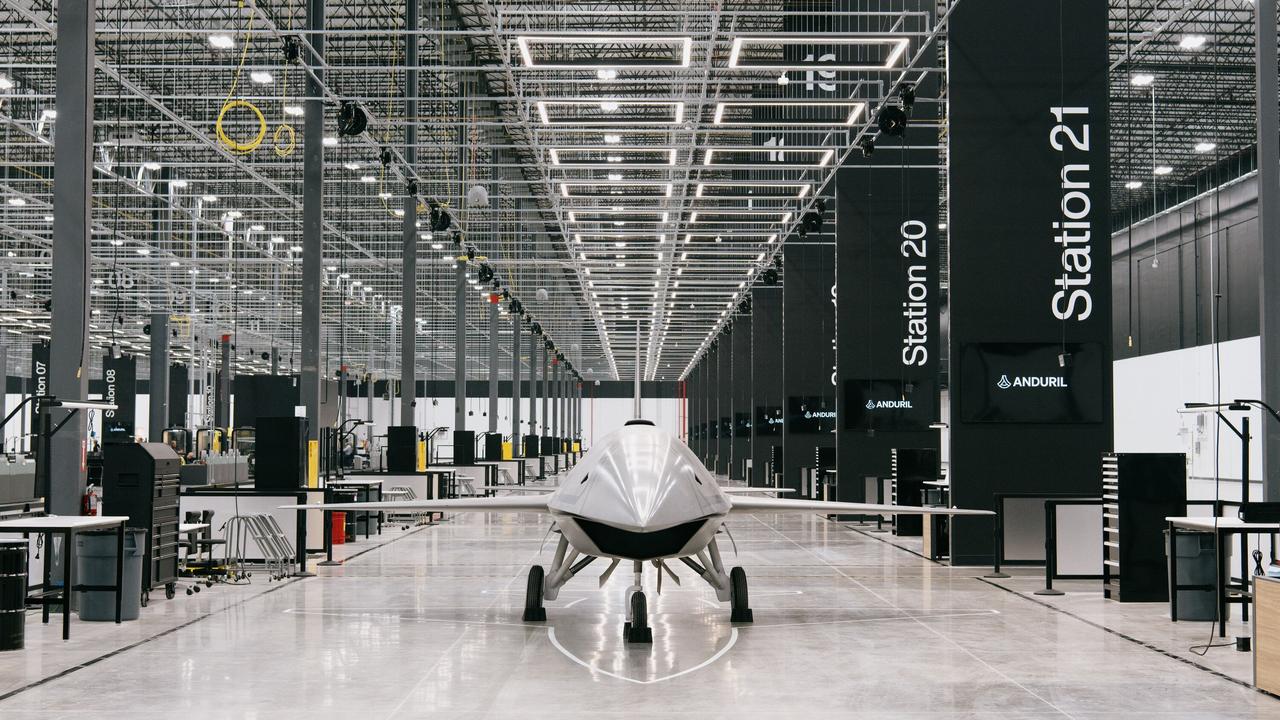
Source: Euronews
The European Commission has received 76 proposals from 16 countries to host AI factories, and Brussels aims to triple Europe's data-centre capacity within five to seven years
1
. Through Horizon Europe and Digital Europe programs, the Commission already allocates more than €1 billion each to AI. An additional €8 billion AI Factories initiative supports development of artificial intelligence models that can compete globally2
.Can Europe Catch Up with US and China Through Alternative Strategies?
While Europe struggles with AI infrastructure for training large models, the continent may find opportunities in AI inference. McKinsey data suggests that 70% of all AI demand could ultimately come from inference, which requires smaller, cloud-based facilities supported by significant fiber volumes rather than massive supercomputers
2
.European AI firms like France's Mistral could pioneer foundational models that thrive through inference, potentially offsetting weaker infrastructure. Yet challenges persist: American firms purchased 503 foreign AI companies between 2014 and 2023, with UK businesses the most frequent acquisition targets
2
. This pattern risks creating AI dependency on non-European players within the continent.Von der Leyen declared at the Paris AI Action Summit that "the AI race is far from over. We are only at the beginning, and global leadership is still up for grabs"
1
. With the global artificial intelligence market expected to grow at a CAGR of 30.6% between 2026 and 2033 into a $3.5 trillion industry, Europe's ability to close these gaps will determine whether it captures a meaningful share of this emerging market2
.References
Summarized by

Navi
Related Stories
EU Unveils Ambitious 'AI Continent Action Plan' to Compete with US and China
09 Apr 2025•Technology

European AI gets US funding but risks becoming an R&D incubator as innovation gap widens
01 Apr 2026•Business and Economy

Europe Joins AI Race with €200 Billion InvestAI Initiative
13 Feb 2025•Business and Economy

Recent Highlights



Recent Highlights
Today's Top Stories












Your Daily Dose of Curated AI News
Don’t drown in AI news. We cut through the noise - filtering, ranking and summarizing the most important AI news, breakthroughs and research daily. Spend less time searching for the latest in AI and get straight to action.

