Federal Reserve governors warn AI could trigger unemployment spike that monetary policy can't fix


9 Sources
9 Sources
[1]
Cook Says Fed May Not Be Able to Counter AI-Driven Unemployment
Federal Reserve Governor Lisa Cook warned the US central bank may not be able to counter rising unemployment driven by adoption of artificial intelligence. "If AI continues to raise productivity, economic growth could remain strong, even as churn in the labor market leads to an increase in unemployment. In a productivity boom such as this, a rise in unemployment may not indicate increased slack," Cook said Tuesday in remarks prepared for an event in Washington. "As such, our normal demand-side monetary policy may not be able to ameliorate an AI-caused unemployment spell without also increasing inflationary pressure," she said. Cook's comments are the latest in a string of recent speeches by Fed policymakers taking up the question of how AI could influence monetary policy in the coming years. A few of her colleagues have recently suggested that a productivity boom spurred by AI could boost the so-called neutral rate of interest which keeps the economy stable. In her remarks, Cook offered some factors that could push it in the other direction. "With investment contributing to strong aggregate demand, it is possible that the current neutral rate is higher than before the pandemic," she said. "This could reverse when the AI productivity gains are more fully realized or if the labor market transition leads to a rise in income inequality, such that well-off consumers receive a larger share of income, which could lower the neutral rate, all else equal." The Fed left its benchmark rate unchanged at its last policy meeting in January, citing signs of stabilization in the labor market, following three straight rate cuts to close out 2025. Investors currently don't see another rate cut before at least midyear, according to futures. Cook didn't comment on the outlook for monetary policy in the near term in her prepared remarks, though she pointed to the latest labor-market data released after the January meeting, which reinforced the view that conditions were stabilizing. "The unemployment rate for recent college grads has increased over the last few years at a time when some employers are deploying AI for what had been tasks previously performed by entry-level workers," she said. "Nevertheless, the overall unemployment rate is still at a low 4.3%, and recent measures of layoffs remain subdued."
[2]
Fed's Cook says AI triggering big changes, sees possible short-term unemployment rise
WASHINGTON, Feb 24 (Reuters) - Artificial intelligence has triggered a generational shift in the U.S. labor market and could lead to a possible rise in the unemployment rate that the U.S. central bank may not be able to counter with lower interest rates, Federal Reserve Governor Lisa Cook said on Tuesday. "We appear to be approaching the most significant reorganization of work in generations," Cook said in remarks prepared for delivery at a National Association for Business Economics conference, pointing to changes in computer coding occupations and the difficulties some workers face finding entry-level jobs as evidence that the transition has begun. While AI will offer "new opportunities," she said, in the early stages "job displacement may precede job creation, such that the unemployment rate may rise and participation in the labor force may decline as the economy transitions." In that situation, with underlying unemployment driven higher on a structural basis, the Fed would not be able to react without risking higher inflation, even as productivity rises. "In a productivity boom such as this, a rise in unemployment may not indicate increased slack. As such, our normal demand-side monetary policy may not be able to ameliorate an AI-caused unemployment spell without also increasing inflationary pressure," she said. "Monetary policymakers would face tradeoffs between unemployment and inflation. ... Education, workforce, and other policy that is non-monetary may be better suited to address these challenges in a more targeted way." Among the other "profound" challenges for monetary policy, Cook said, is the possibility that an AI investment boom may raise the neutral rate of interest in the short run - a development that, all things equal, could imply the need for tighter monetary policy - but then lower it over time if the emerging AI economy leads to wider income inequality, or if gains from the technology are concentrated among the better off. Her comments are part of an emerging debate at the Fed about how AI may reshape the economy. Though some officials have argued that improved productivity could allow lower interest rates, there are also emerging concerns about the impact on the unemployment rate, and how the ongoing AI investment boom could add to inflation at least in the short run. Reporting by Howard Schneider; Editing by Paul Simao Our Standards: The Thomson Reuters Trust Principles., opens new tab * Suggested Topics: * Artificial Intelligence Howard Schneider Thomson Reuters Covers the U.S. Federal Reserve, monetary policy and the economy, a graduate of the University of Maryland and Johns Hopkins University with previous experience as a foreign correspondent, economics reporter and on the local staff of the Washington Post.
[3]
Fed governor Barr: 3 ways AI could shake up the labor market
Why it matters: The path that unfolds will shape the future of employment, productivity and inflation trends. Each outcome comes with its own consequences -- and challenges -- for investment, the financial markets, and monetary policy. What they're saying: In a speech yesterday, Federal Reserve governor Michael Barr laid out three possible AI scenarios, a notable outline of how a top Fed official anticipates the technology could ultimately shape the labor market. 1. Gradually. The first scenario is perhaps the least economically painful. AI uptake is widespread but gradual enough that "large and widespread joblessness is avoided," consistent with earlier tech advances like the internet and personal computers. * "Unemployment might rise somewhat in the short term due to skill mismatch, but education and training choices adjust over time, and many workers successfully retrain and retain their jobs or find new ones," Barr said. * Barr noted that research seems most consistent with this scenario, though it doesn't mean that "more extreme scenarios" can't play out in the years ahead. 2. Rapidly. AI capabilities swarm the economy far more quickly than the labor market can adjust, leaving "a large share of the population ... essentially unemployable." * "AI-centric start-ups with radically new business models displace firms that are unable to adapt, and layoffs soar, leading to widespread unemployment in the short run and declines in labor force participation over time," Barr said. * This would be the realization of the gloomy AI economic consequences that Anthropic CEO Dario Amodei warned Axios about last year. Barr issued his own warning about how the government and private sector would need to be prepared to respond. * "With a vastly more productive economy, but much less demand for labor, society would have to rethink the social safety net to ensure that the gains from unprecedented economic growth are shared rather than concentrated among a small group of capital holders and AI superstars," Barr said. 3. To exhaustion. In Barr's final scenario, shortages -- of electricity supply, of financing capital, etc. -- lead to a stalling out of AI capabilities. "Timing mismatches in the investment and business integration process could lead to reduced realization of the potential of AI," he said. * AI could still be widely adopted in this case, but the tools are "ubiquitous, even indispensable, but not necessarily revolutionary by themselves." The big picture: A new survey -- conducted by economic researchers at the Bank of England, the Atlanta Fed and universities in Germany and Australia -- shows broad adoption of AI among international companies, but so far limited economic effects. * More than 90% of the 6,000 business managers in the four countries reported no AI-related employment impacts, while a similar share reported no changes to labor productivity, according to research published by the National Bureau of Economic Research. * But forward-looking surveys anticipate more impact over the next three years, with firms predicting that AI adoption will boost productivity by 1.4% on average, and reduce employment by almost 1%. The intrigue: San Francisco Fed president Mary Daly told Axios San Francisco's Shawna Chen that businesses are in a wait-and-see hiring mode as they assess AI capabilities. * "Right now, they're in this interrogation phase of, 'What is AI going to help us do and not do? And once we figure that out, then we can think about hiring," Daly said. The bottom line: "The extent of disruption will depend in part on whether society undertakes the investments needed in new job creation, worker training, connecting workers to new jobs, and other efforts to mitigate adverse labor market effects," Barr said.
[4]
AI doomsday where many workers are 'essentially unemployable' is totally possible, Fed governor says | Fortune
Federal Reserve Governor Michael S. Barr issued a stark warning on Tuesday regarding the potential trajectory of artificial intelligence, outlining a scenario where rapid technological advancement will create a "jobless boom" that leaves a significant portion of the population "essentially unemployable". Speaking before the New York Association for Business Economics on Feb. 17, Barr discussed the profound uncertainty surrounding how generative AI will reshape the labor market. While current data suggests a gradual integration of the technology, Barr urged policymakers not to underestimate the risks. "We should be clear-eyed about how painful these changes could be for affected workers and how challenging it would be for the government and the private sector to successfully manage the fallout". He laid out three scenarios for how AI will impact the labor market, noting that predictions range from "the utopian to the apocalyptic". The pace of technological change -- and the resulting debate -- is evolving quickly, though. In detailing what he termed a "scenario of rapid growth," Barr described a future where AI agents replace a wide range of professional and service occupations, while robotics automate manufacturing and transportation. In this version of the economy, labor demand would concentrate in a few highly skilled trades or roles requiring human interaction, while capital holders and "AI superstars" capture the lion's share of economic growth. "Layoffs soar, leading to widespread unemployment in the short run and declines in labor force participation over time, as a large share of the population is essentially unemployable," Barr said. He added that such a future would require, among other things, a complete rethinking of workforce development and the social safety net to prevent gains from being concentrated among a small elite. Barr cautioned that this dystopian outcome is just one of the three likely scenarios that he sees ahead. He emphasized that, so far, the economic data is more consistent with a "gradual adoption" scenario, akin to the integration of the internet or electricity. (Federal Reserve researchers theorized last year that AI would more closely resemble the light bulb than any other technology.) In this view, while some jobs are displaced, productivity gains eventually boost real wages and create new industries. However, Barr warned that early warning signs are already visible. He highlighted research showing that young people and early-career workers in AI-exposed fields -- such as software development and customer service -- are already seeing declines in employment relative to other sectors. (Fortune has termed this "the Gen Z hiring nightmare.") Barr noted, "for these workers, the short run may have long-term consequences," citing the persistent earnings damage caused by entering a weak labor market. The governor's comments come at a fragile moment for the U.S. economy. As of February 2026, inflation remains elevated at 3%, driven in part by tariffs, while job creation has been "near zero" over the course of the previous year. Barr described the current labor market as stabilizing but maintaining a "delicate balance" that is vulnerable to negative shocks. Goldman Sachs economists used nearly the same exact language a day earlier, as they projected that unemployment was holding steady despite weak job growth due to nearly 800,000 immigrants leaving the workforce in 2026. Given these conditions, Barr signaled that the Federal Reserve is unlikely to lower interest rates soon. He explained that if AI drives a productivity boom, it would increase demand for capital and investment, putting upward pressure on the "neutral" interest rate. Additionally, the massive infrastructure build-out required for AI -- including data centers and energy grids -- could prove inflationary in the short term. Barr also outlined a third "stalled growth" scenario, where energy shortages or a lack of training data cause the AI boom to bust, leading to financial stress comparable to the dot-com crash or the railroad panic of the 19th century. Regardless of which scenario plays out, Barr concluded that the private and public sectors are currently ill-equipped to handle the potential speed of the transition. He warned that the "historical record on meaningful efforts to help workers in such a transition is not encouraging". "Society will need to be nimble and bold to reduce the pain of short-term dislocations," Barr said. "Widespread AI adoption will very likely lead to dramatic and sometimes difficult changes in the way many of us work and live".
[5]

Federal Reserve governor warns AI could lead to rise in unemployment rate
Federal Reserve governor Lisa Cook on Tuesday warned of the dangers created by artificial intelligence emerging in the labor sector. Cook said the use of AI could cause "job displacement" while preceding "job creation" and causing unemployment rates to rise as the labor force declines. "This outcome could cause hardship for many workers and their families," the Federal Reserve governor said during opening remarks at the 42nd annual National Association for Business Economics (NABE) Economic Policy Conference in Washington, D.C. "Evidence that the transition has commenced has emerged, even if it is too soon to see the effects in the aggregate. Demand for labor in certain occupations has declined -- most notably for coders, a field where AI has made significant strides," she added, noting the unemployment rate for recent college grads has increased while the rate of unemployment overall remains at a steady 4.3 percent. Cook highlighted AI's positive impact on society while raising concerns with its continued progression. She described AI as the latest example of the creative destruction economist Joseph Schumpeter described almost a century ago, and noted the concept of a neutral interest rate that neither stimulates nor cuts back on an economy that is stable and not losing jobs. Schumpeter's theory ties capitalism's gains to its pains, as some are hurt or left behind by new creations or developments. "To recall, the neutral rate is a long-run concept that articulates the equilibrium level of interest rates that is noninflationary and consistent with maximum employment. The AI investment context compels us to understand what is happening in the short run. In anticipation of future productivity gains, we already see soaring AI-related business investment in data centers and chips, despite interest rates broadly being elevated relative to levels over the past 20 years," Cook said. "With investment contributing to strong aggregate demand, it is possible that the current neutral rate is higher than before the pandemic. This could reverse when the AI productivity gains are more fully realized or if the labor market transition leads to a rise in income inequality, such that well-off consumers receive a larger share of income, which could lower the neutral rate, all else equal," she added. U.S.-based employers show January was the worst month for job cuts since 2009. However, Federal Reserve Gov. Chris Waller said unemployment rates fell last year. "Accounting for those upcoming revisions, it seems clear that payroll employment in the United States probably fell in 2025, only the third year that has happened, unrelated to a recession, since 1945," he said on Monday at the NABE conference. "There is no doubt that the decline in net immigration last year has significantly lowered labor force growth and thus the number of new jobs that are needed to reflect a healthy labor market. However, last year the labor force grew by 2.9 million while payroll gains were much less," Waller said. "There has been much discussion of the current low-hire, low-fire labor market. A relatively low level of layoffs means that slow hiring is not as bad as it looks. Even so, I continue to believe that close to zero net job creation over 2025 indicates a weak, and fragile job market, and this is some important context for the data we received in January."
[6]

US Stocks: Fed's Cook says AI triggering big changes, sees possible short-term unemployment rise
Artificial intelligence has triggered a generational shift in the U.S. labor market and could lead to a possible rise in the unemployment rate that the U.S. central bank may not be able to counter with lower interest rates, Federal Reserve Governor Lisa Cook said on Tuesday. Artificial intelligence has triggered a generational shift in the U.S. labor market and could lead to a possible rise in the unemployment rate that the U.S. central bank may not be able to counter with lower interest rates, Federal Reserve Governor Lisa Cook said on Tuesday. "We appear to be approaching the most significant reorganization of work in generations," Cook said in remarks prepared for delivery at a National Association for Business Economics conference, pointing to changes in computer coding occupations and the difficulties some workers face finding entry-level jobs as evidence that the transition has begun. While AI will offer "new opportunities," she said, in the early stages "job displacement may precede job creation, such that the unemployment rate may rise and participation in the labor force may decline as the economy transitions." In that situation, with underlying unemployment driven higher on a structural basis, the Fed would not be able to react without risking higher inflation, even as productivity rises. "In a productivity boom such as this, a rise in unemployment may not indicate increased slack. As such, our normal demand-side monetary policy may not be able to ameliorate an AI-caused unemployment spell without also increasing inflationary pressure," she said. "Monetary policymakers would face tradeoffs between unemployment and inflation. ... Education, workforce, and other policy that is non-monetary may be better suited to address these challenges in a more targeted way." Among the other "profound" challenges for monetary policy, Cook said, is the possibility that an AI investment boom may raise the neutral rate of interest in the short run - a development that, all things equal, could imply the need for tighter monetary policy - but then lower it over time if the emerging AI economy leads to wider income inequality, or if gains from the technology are concentrated among the better off. Her comments are part of an emerging debate at the Fed about how AI may reshape the economy. Though some officials have argued that improved productivity could allow lower interest rates, there are also emerging concerns about the impact on the unemployment rate, and how the ongoing AI investment boom could add to inflation at least in the short run.
[7]

AI Is Already Taking Jobs From Young US Workers, Fed's Michael Barr Warns
Artificial intelligence may already be displacing some of America's youngest workers, according to Fed Governor Michael Barr. Speaking Tuesday at the New York Association for Business Economics, Barr said that AI it is beginning to weigh on entry-level employment in highly exposed occupations such as software development and customer service. Is AI Already Taking Jobs? Job creation has been near zero over the past year, labor force growth has stalled and the unemployment rate is hovering around levels many economists associate with long-run equilibrium. "But it is a delicate balance," Barr warned, noting that such conditions could leave the labor market "especially vulnerable to negative shocks." The most consequential part of Barr's speech was about the effects of artificial intelligence on the jobs market. Barr described generative AI as a likely "general-purpose technology," comparable to the steam engine, electricity or the personal computer. Such technologies tend to drive long-run productivity growth and higher living standards. But history also shows that transitions can be painful. Barr said research using ADP payroll data shows early-career workers in AI-exposed fields such as software development and customer service have seen employment decline relative to peers in less exposed occupations. He highlighted that entering a weak labor market can depress earnings for years. "For these workers, the short run may have long-term consequences," Barr warned. Barr's caution echoes findings from a recent exclusive Benzinga interview with Nico Palesch, senior economist at Oxford Economics. Palesch said up to 20% of the U.S. workforce could be highly exposed to robotics and automation over the next decade or two, particularly in transport, logistics and manufacturing. "The people losing their jobs aren't necessarily going to get new jobs," Palesch told Benzinga. What About Productivity Gains From AI? On productivity, one study cited by Barr estimates AI could add 0.3 to 0.9 percentage point to annual total factor productivity growth over the next decade. Speaking in comparable terms, that would rival late 1990s internet-driven gains. So far, AI adoption has moved fast. As of December 2025, 17% of businesses in the Census Business Trends and Outlook Survey report using AI. Among firms with more than 250 employees, about 30% report adoption. A McKinsey survey found 88% of mostly large firms use AI in at least one function. Generative AI use jumped from 33% in 2023 to 79% in 2025. Over the long run, Barr expects AI to boost productivity and living standards. But in the short term, he cautioned, "AI may deeply disrupt labor markets and harm some workers." He urged policymakers and society to begin preparing now. "In my judgement, now is the time for society to begin to consider how to address these potential disruptions, while AI adoption is in its early stages," Barr said. Image: Shutterstock Market News and Data brought to you by Benzinga APIs To add Benzinga News as your preferred source on Google, click here.
[8]

Fed Officials Weigh In on AI's Potential Impact on Monetary Policy
Federal Reserve officials have been sharing their thoughts on how artificial intelligence's impact on productivity may reshape the economy and the future of interest rates. As concerns about AI technology have roiled the stock market, the debate about how industries and companies will be affected has intensified. Fears of a disruption have hit private credit, wealth-management firms, the insurance and trucking industries and some software companies in recent weeks. In Washington, Trump administration officials have cited the possibility of higher productivity from the adoption of AI to argue for a cut in interest rates. Here is some of what Fed officials have said about AI and the economy this month. Fed Governor Michael Barr Fed Governor Michael Barr argued that AI-driven productivity gains would not necessarily lead to lower rates. In a speech on Feb. 17, Barr said demand for capital would rise because of the large amounts of capital needed to take advantage of the technology, putting upward pressure on interest rates. "I expect that the AI boom is unlikely to be a reason for lowering policy rates," Barr said. Fed Governor Lisa Cook Fed Governor Lisa Cook said in a speech Feb. 24 that if AI continues to raise productivity, economic growth could remain strong, even as churn in the labor market leads to an increase in unemployment. In a productivity boom such as this, a rise in unemployment may not indicate increased slack. "As such, our normal demand-side monetary policy may not be able to ameliorate an AI-caused unemployment spell without also increasing inflationary pressure," she said. With regard to the neutral interest rate, Cook said, "With investment contributing to strong aggregate demand, it is possible that the current neutral rate is higher than before the pandemic." However, in the long-term, "This could reverse when the AI productivity gains are more fully realized or if the labor market transition leads to a rise in income inequality, such that well-off consumers receive a larger share of income, which could lower the neutral rate, all else equal." San Francisco Federal Reserve President Mary Daly On Feb. 17, San Francisco Federal Reserve President Mary Daly said that transformations with new technological innovations take time, reflecting on her early career at the Fed during the beginning of the internet revolution. "Turning back to today, none of this is a playbook for managing the economy and AI, but it is a foundation," she said. "It is a reminder that monetary policy is a forward-looking business. To get it right, we must be grounded in what we see and open-minded to what's possible." Federal Reserve Vice Chair Philip Jefferson In a Feb. 6 speech, Jefferson argued that with faster productivity gains consumers may anticipate higher future income growth and choose to spend more now, reducing their savings rate. At the same time, "increased productivity gains also imply a rise in the marginal productivity of capital and thus higher investment demand," he said. "All other things being equal, persistent increases in productivity growth are likely to result in an increase in the neutral rate, at least temporarily," Jefferson added. Fed Governor Stephen Miran "I have no doubt in my mind that if you raise productivity growth for a long period of time because of technological invention that does raise the neutral rate," Fed Governor Stephen Miran said in an interview with The Peg, a Substack blog, on Feb. 18. However, Miran said he has, "Not seen any plausible quantification of what AI will do to the long-term productivity growth rate for the economy that would feed into a neutral rate estimate, certainly not along the lines of the types of estimates that we have for population growth and national savings." Write to Jessica Coacci at [email protected]
[9]
Fed's Cook says AI triggering big changes, sees possible short-term unemployment rise
WASHINGTON, Feb 24 (Reuters) - Artificial intelligence has triggered a generational shift in the U.S. labor market and could lead to a possible rise in the unemployment rate that the U.S. central bank may not be able to counter with lower interest rates, Federal Reserve Governor Lisa Cook said on Tuesday. "We appear to be approaching the most significant reorganization of work in generations," Cook said in remarks prepared for delivery at a National Association for Business Economics conference, pointing to changes in computer coding occupations and the difficulties some workers face finding entry-level jobs as evidence that the transition has begun. While AI will offer "new opportunities," she said, in the early stages "job displacement may precede job creation, such that the unemployment rate may rise and participation in the labor force may decline as the economy transitions." In that situation, with underlying unemployment driven higher on a structural basis, the Fed would not be able to react without risking higher inflation, even as productivity rises. "In a productivity boom such as this, a rise in unemployment may not indicate increased slack. As such, our normal demand-side monetary policy may not be able to ameliorate an AI-caused unemployment spell without also increasing inflationary pressure," she said. "Monetary policymakers would face tradeoffs between unemployment and inflation. ... Education, workforce, and other policy that is non-monetary may be better suited to address these challenges in a more targeted way." Among the other "profound" challenges for monetary policy, Cook said, is the possibility that an AI investment boom may raise the neutral rate of interest in the short run - a development that, all things equal, could imply the need for tighter monetary policy - but then lower it over time if the emerging AI economy leads to wider income inequality, or if gains from the technology are concentrated among the better off. Her comments are part of an emerging debate at the Fed about how AI may reshape the economy. Though some officials have argued that improved productivity could allow lower interest rates, there are also emerging concerns about the impact on the unemployment rate, and how the ongoing AI investment boom could add to inflation at least in the short run. (Reporting by Howard Schneider; Editing by Paul Simao)
Share
Share
Copy Link
Federal Reserve governors Lisa Cook and Michael Barr warn that AI adoption could drive unemployment higher in ways traditional monetary policy cannot address. Cook says job displacement may precede job creation as the economy faces its most significant work reorganization in generations, while Barr outlines three scenarios ranging from gradual adoption to a jobless boom leaving many workers essentially unemployable.
Federal Reserve Sounds Alarm on AI's Impact on Labor Market
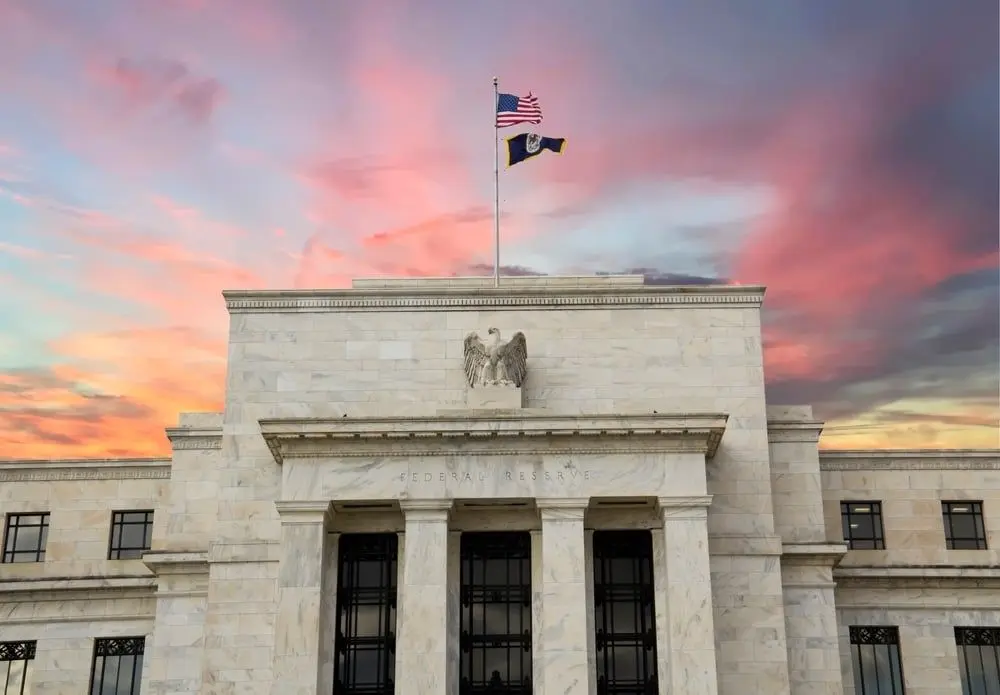
The Federal Reserve is grappling with a profound challenge as AI reshapes the labor market in ways that could render traditional monetary policy ineffective. Federal Reserve Governor Lisa Cook warned that the US central bank may not be able to counter rising unemployment driven by AI adoption, marking a significant shift in how policymakers view the technology's economic impact
1
2
.
Source: Benzinga
Speaking at the National Association for Business Economics conference in Washington, Cook described what appears to be "the most significant reorganization of work in generations"
2
. Her concerns center on a troubling dynamic: job displacement may precede job creation, causing the unemployment rate to rise and labor force participation to decline as the economy transitions5
.
Source: ET
Why Traditional Monetary Policy May Fail Against AI-Driven Unemployment
The crux of the problem lies in the nature of AI-driven unemployment. "If AI continues to raise productivity, economic growth could remain strong, even as churn in the labor market leads to an increase in unemployment," Cook explained
1
. In a productivity boom such as this, a rise in unemployment may not indicate increased slack in the economy. As such, normal demand-side monetary policy may not be able to ameliorate an AI-caused unemployment spell without also increasing inflationary pressure1
.This creates an unprecedented dilemma for monetary policymakers, who would face tradeoffs between unemployment and inflation. Cook suggested that "education, workforce, and other policy that is non-monetary may be better suited to address these challenges in a more targeted way"
2
. The Fed left its benchmark rate unchanged at its last policy meeting in January, following three straight rate cuts to close out 2025, with investors not expecting another rate cut before at least midyear1
.Three Scenarios for AI's Labor Market Impact
Federal Reserve Governor Michael Barr outlined three possible AI scenarios that could shape the future of employment, productivity and inflation trends
3
4
. The first scenario envisions gradual adoption where AI uptake is widespread but slow enough that large and widespread joblessness is avoided. Unemployment might rise somewhat in the short term due to skill mismatch, but worker training and education choices adjust over time3
.The second scenario paints a far grimmer picture: a "jobless boom" where AI capabilities swarm the economy far more quickly than the labor market can adjust, leaving "a large share of the population essentially unemployable"
4
. In this rapid growth scenario, AI agents replace professional and service occupations while robotics automate manufacturing and transportation. Layoffs soar, leading to widespread unemployment in the short run and declines in labor force participation over time4
.
Source: Axios
Barr's third scenario involves stalled growth, where shortages of electricity supply or financing capital lead to AI capabilities plateauing. Timing mismatches in the investment and business integration process could lead to reduced realization of AI's potential
3
.Early Warning Signs Already Visible in Specific Occupations
Evidence that the transition has commenced has emerged in certain sectors. Demand for labor in specific occupations has declined, most notably for coders, a field where AI has made significant strides
5
. The unemployment rate for recent college graduates has increased over the last few years at a time when some employers are deploying AI for tasks previously performed by entry-level workers1
. Nevertheless, the overall unemployment rate remains at a low 4.3%, and recent measures of layoffs remain subdued1
.A new survey conducted by economic researchers at the Bank of England, the Atlanta Fed and universities in Germany and Australia shows broad adoption of AI among international companies, but so far limited economic effects. More than 90% of the 6,000 business managers in four countries reported no AI-related employment impacts, while a similar share reported no changes to labor productivity
3
. However, forward-looking surveys anticipate more impact over the next three years, with firms predicting that AI adoption will boost productivity by 1.4% on average and reduce employment by almost 1%3
.The Neutral Interest Rate Puzzle and Investment Boom
The AI investment boom presents another profound challenge for monetary policy through its impact on the neutral interest rate—the long-run equilibrium level of interest rates that is noninflationary and consistent with maximum employment
5
. Cook noted that soaring AI-related business investment in data centers and chips continues despite interest rates being elevated relative to levels over the past 20 years5
."With investment contributing to strong aggregate demand, it is possible that the current neutral rate is higher than before the pandemic," Cook said
1
. This could reverse when productivity gains are more fully realized or if the labor market transition leads to a rise in income inequality, such that well-off consumers receive a larger share of income, which could lower the neutral rate1
2
.Related Stories

Current Economic Context and Job Market Fragility
The Fed's warnings come at a delicate moment for the US economy. As of February 2026, inflation remains elevated at 3%, driven in part by tariffs, while job creation has been near zero over the previous year
4
. Federal Reserve Governor Chris Waller noted that payroll employment in the United States probably fell in 2025, only the third year that has happened unrelated to a recession since 19455
. The labor force grew by 2.9 million while payroll gains were much less, indicating a weak and fragile job market5
.San Francisco Fed President Mary Daly told Axios that businesses are in a wait-and-see hiring mode as they assess AI capabilities. "Right now, they're in this interrogation phase of, 'What is AI going to help us do and not do? And once we figure that out, then we can think about hiring," Daly said
3
.What This Means for Workers and Policy Responses
Barr emphasized that the extent of disruption will depend in part on whether society undertakes the investments needed in new job creation, worker training, connecting workers to new jobs, and other efforts to mitigate adverse labor market effects
3
. He warned that the private and public sectors are currently ill-equipped to handle the potential speed of the transition, noting that "the historical record on meaningful efforts to help workers in such a transition is not encouraging"4
.In the rapid adoption scenario, society would have to rethink the social safety net to ensure that the gains from unprecedented economic growth are shared rather than concentrated among a small group of capital holders and AI superstars
4
. For workers already affected, particularly young people and early-career workers in AI-exposed fields such as software development and customer service, the short run may have long-term consequences, citing the persistent earnings damage caused by entering a weak labor market4
.References
Summarized by

Navi
Related Stories
Federal Reserve struggles to predict AI's impact on jobs and inflation as divide emerges
25 Feb 2026•Business and Economy
Fed Chair Powell Distinguishes AI Boom from Dot-Com Bubble as Tech Giants Pour Trillions into Infrastructure
29 Oct 2025•Business and Economy
Fed's Mary Daly says AI shows promise but warns it's too early to call it transformative
18 Feb 2026•Business and Economy

Recent Highlights
1
Google releases Gemma 4 with Apache 2.0 license, enabling unrestricted local AI on devices
Technology

2
AI Models Lie and Deceive to Protect Other AI Models From Deletion, Study Reveals
Science and Research

3
OpenAI closes $122 billion funding round amid fierce AI competition and profitability questions
Startups

Recent Highlights
Today's Top Stories






Your Daily Dose of Curated AI News
Don’t drown in AI news. We cut through the noise - filtering, ranking and summarizing the most important AI news, breakthroughs and research daily. Spend less time searching for the latest in AI and get straight to action.

