Finance techie clones Bloomberg's $30,000 Terminal with Perplexity AI in single afternoon


2 Sources
2 Sources
[1]
Finance techie says they cloned Bloomberg's $30k-a-year Terminal with Perplexity's Computer -- project draws both praise and sizable skepticism
The launch of Perplexity's Computer got quite a bit of attention from almost everyone with an interest in AI. The new product combines multi-model and multi-agent for both researching and autonomously executing complex tasks. Naturally, almost every techie put it to the test, including X user @hamptonism (Hampton). They claim to have needed but one afternoon to build a clone of Bloomberg's Terminal, going as far as saying "Perplexity just became the first Al company to truly go head-to-head with the Bloomberg Terminal." Those are the pudgiest of bold claims, as the Terminal costs a few pennies at around $30,000 per year. It's also Bloomberg's bread-and-butter, representing about 85% of the firm's approximate $12 billion yearly revenue. Hampton showed a short clip of them operating their terminal clone, and it definitely resembles the Terminal's basic information and feeds, an impressive feat, at least apparently. The effort drew immediate praise and no amount of AI hyperbole, borderline stating that Bloomberg is done for. The fact that it's possible today to build a tool of this caliber with an afternoon of talking to a bot is definitely eyebrow-raising, but as the saying goes, looks can be deceiving, and beauty only goes skin-deep. Many users immediately pointed out that the data feed for Hampton's clone comes from Perplexity Finance, which itself is an AI bot that aggregates information from various sources. Ultimately, this means that the clone's "real time" information isn't quite so, even assuming that Perplexity Finance gets actual zero-delay, true real-time data to begin with, a doubtful fact on its own. This fact is further highlighted by various comments noting that the true value of the Bloomberg Terminal is in its underlying real-time data provided directly by thousands of financial services. If Bloomberg's own words are an indication, its service covers "more than 200 billion pieces of financial data daily, [across] 6.5 million entities", presumably most if not all of it in true real time. That's a feat that Hampton's clone almost certainly cannot claim, whether for speed or for breadth of information. Second, Terminal is a highly complex, highly customizable product, even coming with its own keyboard. Hampton's ticker/dashboard is impressive, but it's hard to believe that Terminal's estimated 30,000 function commands developed over four decades have all been replicated. Third, the Terminal is not only a highly evolved read-only dashboard -- it's used to issue market orders of many types. Hampton themselves go over the Terminal's capabilities in a post. There are a lot of positives in Hampton's effort, regardless, though. At its core, it's extraordinary that a few hours of quality time with a high-powered bot can yield this result as it is, and as they point out, it's a step towards democratizing access to financial analysis. Moreover, anyone can ask the bot for the functions they need from the Terminal, as relatively few will need everything it can offer. The design can also evolve and be iterated upon with additional prompting, too. While it's quite hyperbolic to claim a bot can replicate the Bloomberg Terminal, it can be argued that with enough effort, folks can make a simplistic, skin-deep version of it that's enough for their needs. Follow Tom's Hardware on Google News, or add us as a preferred source, to get our latest news, analysis, & reviews in your feeds.
[2]
Perplexity AI Just Turned A $30,000/Year Bloomberg Terminal Into A $200/Month Subscription - iShares Expanded Tech-Software Sector ETF (BATS:IGV)
For decades, the Bloomberg L.P. Terminal has been the undisputed operating system of global finance. Walk onto any trading floor in New York, London, or Hong Kong and you'll see it glowing in black and amber. It's more than software -- it's infrastructure. The Terminal doesn't just provide data; it provides identity. Thousands of keyboard shortcuts. Proprietary functions. Instant messaging between traders, analysts, and dealmakers. Real-time feeds licensed from exchanges across the globe. At nearly $30,000 per year per seat, the price has never been trivial. But the switching cost was never really about money. It was about habit and network. That dominance generated $12.6 billion in annual revenue last year -- largely from terminal subscriptions. But that reign may be starting to crack. Perplexity Just Launched 'Computer:' Why Wall Street Should Pay Attention On Wednesday, Perplexity AI introduced a new product called "Computer." It's not just another chatbot. According to the company, Computer can research, design, code, deploy, and manage projects end-to-end. It automatically selects the best model for each task -- Claude for reasoning, Gemini for research, Grok for speed -- and can operate autonomously in the background for hours or even days. In a post on X, Perplexity described it as "what a personal computer in 2026 should be" -- personal, persistent, secure by default, with hundreds of connectors, memory, file access, and web integration built into its infrastructure. That's ambitious. But what caught Wall Street's attention wasn't the description. It was the demonstration. Shortly after launch, a viral post by user @hamptonism -- viewed 7.5 million times -- showed Perplexity Computer building a functional market-analysis terminal to evaluate NVDA using Perplexity Finance. No local setup. No single-LLM limitations. No specialized hardware. Just an AI system orchestrating everything. The comparison was immediate: the Bloomberg L.P. Terminal. The Economics of Disruption At $30,000 per year per seat, Bloomberg is built for large institutions. But not every market participant needs the full stack. Independent traders, smaller funds, fintech startups, and global operators often need similar insights at a fraction of the budget. If a roughly $200-per-month AI subscription can replicate even a majority of key workflows, the pressure starts at the edges. Disruption rarely begins by replacing the incumbent's largest clients. It begins by serving those priced out. And then it moves upmarket. What It Means For Markets This story lands at a sensitive moment for software stocks. The broader software sector has already been under pressure amid concerns about AI commoditization and weakening pricing power. The iShares Expanded Tech-Software Sector ETF (NYSE:IGV) is down roughly 24% year to date, reflecting investor anxiety about how durable traditional SaaS business models really are in an AI-native world. If AI agents can replicate high-value workflows at dramatically lower cost, the market may begin to reassess which companies truly have defensible moats -- and which ones relied primarily on interface lock-in and subscription inertia. Pricing power is the foundation of premium multiples. If AI compresses switching costs across industries -- from finance terminals to enterprise software -- valuation frameworks may need to adjust. Bloomberg is not a public company. But the implications ripple outward. Because if a $30,000 product can be challenged by a $200/month subscription, investors will inevitably ask a broader question: How many other software franchises are more vulnerable than they appear? Photo: Shutterstock Market News and Data brought to you by Benzinga APIs To add Benzinga News as your preferred source on Google, click here.
Share
Share
Copy Link
A developer claims to have replicated Bloomberg Terminal's core functionality using Perplexity Computer in just hours, turning a $30,000-per-year service into a $200-per-month AI subscription. The viral demonstration has sparked both excitement about democratizing financial analysis and skepticism about whether AI can truly match the Terminal's real-time data feeds and depth.
Finance Developer Builds Market-Analysis Terminal Using Perplexity Computer
When Perplexity AI launched its new Computer product on Wednesday, few expected it would immediately challenge one of finance's most entrenched tools. Yet X user Hampton (@hamptonism) did exactly that, claiming to have built a cloned Bloomberg Terminal in a single afternoon using the AI platform. The demonstration, which garnered 7.5 million views, showed a functional market-analysis terminal evaluating NVDA using Perplexity Finance
2
. Hampton's bold assertion that "Perplexity just became the first AI company to truly go head-to-head with the Bloomberg Terminal" immediately drew both praise and sizable skepticism from the tech and finance communities1
.
Source: Benzinga
The timing matters. Perplexity Computer represents a significant evolution in AI capabilities, combining multi-model and multi-agent systems to autonomously execute complex tasks. According to the company, Computer can research, design, code, deploy, and manage projects end-to-end, automatically selecting the best model for each task—Claude for reasoning, Gemini for research, Grok for speed—and operating autonomously for hours or even days
2
. This architecture enabled Hampton to build what superficially resembles the Terminal's basic information feeds without specialized hardware or local setup.The Economics Behind the $30,000-a-Year Terminal Challenge
The Bloomberg Terminal costs approximately $30,000 per year per seat, generating roughly $12.6 billion in annual revenue for Bloomberg L.P.—with terminal subscriptions representing about 85% of the firm's total income
1
2
. If Perplexity AI's roughly $200-per-month subscription can replicate even a majority of key workflows, the pricing power disparity becomes stark. Market dominance at this scale has never really been about money alone—the switching cost was always about habit and network effects. Walk onto any trading floor in New York, London, or Hong Kong and you'll see the Terminal glowing in black and amber, serving as both infrastructure and identity for financial professionals2
.Yet disruption rarely begins by replacing the incumbent's largest clients. It starts by serving those priced out—independent traders, smaller funds, fintech startups, and global operators who need similar insights at a fraction of the budget. This is where democratizing financial analysis becomes more than rhetoric; it represents a genuine shift in market access that could reshape who participates in sophisticated financial analysis
1
.Real-Time Data Feeds and the Depth Question
Skepticism emerged quickly, focusing on what critics consider the Terminal's true value proposition. Hampton's clone relies on data from Perplexity Finance, an AI bot that aggregates information from various sources. This means the clone's "real-time" information isn't quite so, even assuming Perplexity Finance receives actual zero-delay data to begin with
1
. Bloomberg's service processes more than 200 billion pieces of financial data daily across 6.5 million entities, provided directly by thousands of financial services in true real-time—a feat Hampton's aggregated data approach almost certainly cannot match1
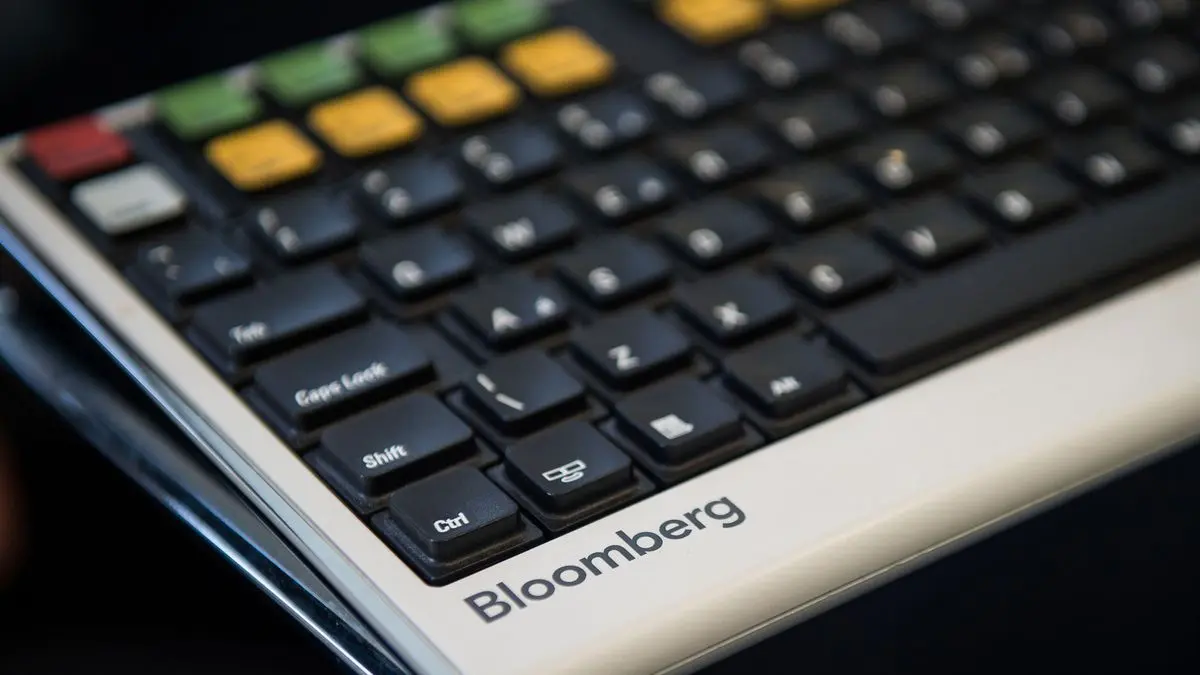
.Beyond data speed and breadth, the Bloomberg Terminal is a highly complex, highly customizable product that comes with its own specialized keyboard and an estimated 30,000 function commands developed over four decades. It's not merely a read-only dashboard—traders use it to issue market orders of many types. Hampton's ticker dashboard, while impressive for an afternoon's work, represents a skin-deep version that captures the interface but not the full depth
1
.
Source: Tom's Hardware
Related Stories

Implications for SaaS Business Models and Enterprise Software
This demonstration arrives at a sensitive moment for the software sector. The iShares Expanded Tech-Software Sector ETF (IGV) is down roughly 24% year to date, reflecting investor anxiety about how AI agents might commoditize traditional SaaS business models
2
. If AI models can replicate high-value workflows at dramatically lower subscription cost, markets may need to reassess which companies truly have defensible moats versus those that relied primarily on interface lock-in and subscription inertia.The AI hyperbole surrounding Hampton's project shouldn't obscure the legitimate questions it raises. While Bloomberg is not a public company, the implications ripple across enterprise software and valuation frameworks. If a $30,000 product can be challenged by a $200-per-month alternative—even an imperfect one—investors will ask how many other software franchises are more vulnerable than they appear
2
.What matters for AI watchers isn't whether Hampton perfectly replicated the Terminal, but that a few hours with a high-powered LLM can yield this result at all. Users can request specific functions they need rather than paying for everything the Terminal offers. The design can evolve through additional prompting, creating customized versions tailored to individual needs. This iterative capability, combined with Perplexity Computer's ability to operate autonomously and select optimal AI models for each task, suggests a future where specialized financial tools become increasingly accessible—even if they don't immediately match the incumbent's full capabilities
1
2
.References
Summarized by

Navi
[1]
Related Stories
Anthropic's Claude AI Sparks $1 Trillion Market Disruption as Software Stocks Tumble
03 Feb 2026•Technology

AI disruption risk reshapes stock market as software stocks tumble while hardware firms surge
06 Feb 2026•Business and Economy
Perplexity takes AI agent Computer into enterprise, challenging Microsoft and Salesforce
12 Mar 2026•Technology

Recent Highlights
1
Tennessee Teens Sue Elon Musk's xAI Over Grok AI-Generated Child Abuse Images
Policy and Regulation

2
Pentagon designates Palantir Maven AI as core US military system in major defense shift
Technology

3
Supermicro Co-Founder Indicted in $2.5 Billion Nvidia AI Chip Smuggling Scheme to China
Policy and Regulation
Recent Highlights
Today's Top Stories









Your Daily Dose of Curated AI News
Don’t drown in AI news. We cut through the noise - filtering, ranking and summarizing the most important AI news, breakthroughs and research daily. Spend less time searching for the latest in AI and get straight to action.

