Microsoft AI chief predicts artificial intelligence will automate most white-collar jobs in 18 months


12 Sources
12 Sources
[1]
Microsoft's AI boss says AI can replace every white-collar job in 18 months -- 'We're going to have a human-level performance on most, if not all, professional tasks'
Microsoft AI chief executive Mustafa Suleyman said that artificial intelligence can replace most white-collar work in the 12 to 18 months. The Microsoft head said this during a YouTube interview with the Financial Times, where they talked about the company's aims to achieve "humanist superintelligence." During this conversation, the topic steered into artificial capable intelligence, which was the term that Suleyman coined for the phase in AI development between basic large language models (LLMs) and Artificial General Intelligence (AGI). When the host asked him about the latter, he said, "I think we're going to have a human-level performance on most, if not all, professional tasks. So, white-collar work, where you're sitting down at a computer -- either being, you know, a lawyer, or an accountant, or a project manager, or a marketing person -- most of those tasks will be fully automated by an AI within the next 12 to 18 months." This line echoes that voiced other business leaders, with Anthropic CEO Dario Amodei proclaiming that AI will wipe out half of all entry-level white-collar jobs in five years. Ford CEO Jim Farley agrees with this prediction, saying that "AI will leave a lot of white-collar people behind." Even scientists are worried about this, with an MIT simulation showing that AI could replace 11.7% of U.S. workers across multiple industries and not just in tech. However, others are a bit more skeptical about this prediction. While there has been a claimed increase in AI-driven layoffs last year, some researchers suggested that this was instead driven by poor business performance blamed on exaggerated AI capabilities. Another MIT study showed that 95% of enterprise use of generative AI had no measurable impact on profit and loss, while a report from Pricewaterhouse Coopers that 55% of chief executives saw no benefits with the deployment of AI tools. Still, Suleyman is confident about how AI can be used in nearly any application. "There are going to be billions of digital minds. There are going to be many, many different lineages of model [sic]. Creating a new model is like creating a podcast or writing a blog -- it is going to be possible to design an AI that suits your requirements for every institution, organization, and person on the planet."
[2]
Microsoft AI CEO: Virtually All White Collar Tasks Will Be Automated Within a Year and a Half
Congratulations, office workers. Most of what you do at your cozy desk jobs will soon be automated with AI, according to the extremely questionable projections of Microsoft's AI CEO Mustafa Suleyman. That's because AI models, as Suleyman claims in an interview with the Financial Times published Wednesday, are on the verge of achieving "human-level performance on most, if not all professional tasks." "So white collar work where you're sitting down at a computer, either being a lawyer or an accountant or a project manager or a marketing person, most of those tasks will be fully automated by an AI within the next 12 to 18 months," Suleyman said. Suleyman's bold assertion comes amid renewed anxiety over AI's potential to disrupt the job market. The release of Anthropic's new Claude Cowork AI agent helped spark a broad stock market selloff last week, as investors feared that it could automate tasks like legal work, something that also jeopardized the bottom line of large software companies who make a killing off of providing the specialized programs to complete those office tasks. According to the Microsoft AI chief, heavy AI automation can already be seen in fields like software engineering. "Many software engineers report that they are now using AI-assisted coding for the vast majority of their code production," Suleyman said in the interview, "which means that their roles shifted now to this meta function of debugging, scrutinizing, of doing the strategic stuff like architecting," and "putting things into production." "So it's a quite different relationship to the technology," he added. "And that's happened in the last six months." It's true that many programmers are now using AI coding tools and agents. Microsoft's CEO -- the main one, not the AI one -- Satya Nadella has claimed that over a quarter of its code is written with AI. But the quality of AI-generated code and other outputs remains suspect, with some studies finding that these purported automation miracles overwhelmingly fail to complete common remote work and office tasks. Equally suspect is AI's ability to yield economic gains for the companies that embrace it. Some research suggests that AI does not lead to an increase in productivity and may even slow down workflows, including in fields like programming, where humans are forced to double and triple check AI outputs. AI may in reality be intensifying work, as its introduction leads to employees being expected to take on even greater workloads, resulting in burnout and lower quality work. Nonetheless, AI leaders insist on sounding the alarm. Last summer, Anthropic CEO Dario Amodei proclaimed that AI could wipe out half of all entry-level white collar jobs. OpenAI CEO Sam Altman echoed that the tech is poised to destroy entire categories of work. Don't get us wrong: AI-related layoffs are already happening. Many companies, however, are arguably using the pretense of AI to fire employees for purely financial reasons, a practice that some are calling "AI washing." And given how fresh AI automation is, it's still unclear how sustainable it will be for companies to heavily depend on the tech in the long-term, a reality that some over-eager firms are already having to reckon with.
[3]
Microsoft AI chief gives it 18 months -- for all white-collar work to be automated by AI | Fortune
For the back half of the 20th century (what Fortune founder Henry Luce called "The American Century"), MBA and law-school degree programs were a ticket to a great office job and a path to the American Dream. The 21st century is asking the question: What happens when all those office jobs get automated? In a recent conversation with the Financial Times, the CEO of Microsoft AI, Mustafa Suleyman, delivered another in a series of predictions from AI leaders that white-collar work is on the precipice of a radical transformation thanks to AI. His timeline is 18 months until those law school and MBA grads -- and many less-credentialed peers -- are out of luck. Suleyman predicted "human-level performance on most, if not all professional tasks," being done by AI. Most tasks that involve "sitting down at a computer" will be fully automated by AI within the next year or 18 months, he said, naming accounting, legal, marketing, and even project management as vulnerable. Suleyman's warning echoed the viral essay of the week, a version of which was published on Fortune, by AI researcher Matt Shumer, who compared this moment to February 2020, when the pandemic was about to hit America. This will be more dramatic, though, Shumer said. Suleyman cited the exponential growth in computational power as a flashing red signal that AI could replace large swaths of professionals. As "compute" advances, he said, models will be able to code better than most human coders. Shumer and OpenAI CEO Sam Altman have both written recently about their alarm, even sadness, at watching their life's work rapidly grow obsolete. If Suleyman's warning sounds familiar, that's because it was the tune of early 2025, when many CEOs issued similarly apocalyptic prophecies. Anthropic CEO Dario Amodei warned last May that AI could wipe out half of all entry-level white-collar jobs. Ford CEO Jim Farley said AI would cut in half the number of white-collar jobs in the U.S. In The Atlantic, Josh Tyrangiel argued that the U.S. wasn't prepared for the coming AI disruption to work, comparing CEOs' recent silence on the subject to seeing "a shark fin break the water." But that drumbeat is beginning again, with SpaceX CEO Elon Musk saying in Davos last month that he thinks artificial general intelligence -- AI that matches or exceeds human-level intelligence -- could arrive as early as this year. However, as AI experts hypothesize about when, and if, AI will disrupt white-collar work, the technology thus far has made only a small splash in professional services. A 2025 Thomson Reuters report found lawyers, accountants, and auditors are experimenting with AI for targeted tasks like document review and routine analysis. But while the results have shown marginal productivity improvements, they fall short of signaling mass job displacement. In fact, in some instances, AI has had the reverse effect: making workers less productive. A recent study from nonprofit technology research institute Model Evaluation and Threat Research on AI's impact on software developers found the technology actually made the workers' tasks take 20% longer. Any returns the economy is seeing are largely confined to the tech industry, suggesting that the AI disruption has been limited in the real economy. Recent research from Apollo Global Management's chief economist Torsten Slok found that while profit margins in Big Tech increased by more than 20% in the fourth quarter of 2025, the broader Bloomberg 500 Index has seen almost no change. A few days earlier, Slok had noted that "investors do not believe AI will result in higher earnings outside the tech sector," citing consensus Wall Street expectations for the S&P 500. Still, there are early signs AI is leading to job displacement. About 55,000 jobs cuts in 2025 were AI-related, according to employment consultancy Challenger, Gray and Christmas. While not citing AI as a reason for cuts, Microsoft last year let go of 15,000 workers. In a memo released last July following job eliminations, CEO Satya Nadella said the company must "reimagine our mission for a new era." Despite marginal workforce reductions, the markets are reacting violently to the technology's potential. Last week, software stocks suffered a huge selloff out of fears of automation (analysts dubbed it the "SaaSpocalypse," for the software-as-a-service sector). The selloff came after Anthropic and OpenAI announced the launch of agentic AI systems for enterprises that perform many of the key functions of SaaS organizations. Suleyman is adamant about the technology's potential. He thinks organizations will be able to retrofit the technology to perform any required job function, enhancing productivity across the white-collar industries. "Creating a new model is going to be like creating a podcast or writing a blog," he said. "It is going to be possible to design an AI that suits your requirements for every institution, organization, and person on the planet." Suleyman said his core mission as the steward of Microsoft AI is to achieve "super intelligence." The CEO wants to achieve AI self-sufficiency and reduce its reliance on OpenAI, instead prioritizing the construction of the company's independent models. "This after all is the most important technology of our time," Suleyman said. "We have to develop our own foundation models which are at the absolute frontier."
[4]
Microsoft AI Chief Sets Two-Year Timeline for AI to Automate Most White Collar Jobs - Decrypt
Suleyman warns that a major AI safety incident is likely in the next two to three years with no regulatory mechanisms in place. Microsoft AI CEO Mustafa Suleyman said most professional white-collar tasks could be fully automated within the next two years, outlining a timeline that would affect workers across industries, including law, accounting, and marketing. Speaking to the Financial Times, Suleyman said AI is approaching what he described as "human-level performance" of most office-based roles. "I think that we're going to have a human-level performance on most, if not all, professional tasks," he said. "So white collar work, where you're sitting down at a computer, either being a lawyer or an accountant or a project manager or a marketing person, most of those tasks will be fully automated by an AI within the next 12 to 18 months." He pointed to software engineering as an example of how roles are changing, saying that Microsoft software engineers reported using AI-assisted coding for the vast majority of their coding work. "So it's a different relationship to the technology, and that's happened in the last six months," Suleyman said. Suleyman said gains in computing power now allow AI models to outperform most programmers, a shift he said justifies heavy investment, including with ChatGPT developer OpenAI. In October, Microsoft extended its intellectual property agreement with OpenAI through 2032, retaining a $135 billion stake in the company. Despite those eye-watering investments, Suleyman said Microsoft should develop AI products in-house to build resiliency and self-reliance. "We have to develop our own foundation models, which are at the absolute frontier with gigawatt-scale compute with some of the very best AI training teams in the world," he said. "That's our true self-sufficiency mission." Suleyman said he envisions "professional-grade AGI" -- a form of artificial general intelligence capable of performing most cognitive tasks humans can handle in the next two years. Economists are also seeing the shift, saying that anyone who depends on a computer to do their job is already at risk. "The jobs most exposed are those requiring higher education, paying more, and involving cognitive tasks," Tobias Sytsma, economist with the Rand Corporation, previously told Decrypt. "Historically, this type of AI exposure has been correlated with employment reductions." Policymakers are increasingly grappling with how to prepare for the day when AI can fully replace human workers. Earlier this month, Vermont Senator Bernie Sanders said he would travel to California to discuss the technology. "Artificial intelligence and robotics will transform the world. Today, a handful of billionaires in Silicon Valley are making decisions behind closed doors that will shape the future of humanity," Sanders said in a statement. "Meanwhile, working people have no voice in these discussions, and far too little visibility into the rapid changes already underway." Suleyman's comments echo those of other tech CEOs, including Vlad Tenev, who in January argued AI will fuel a surge of new jobs, solo companies, and industries, not just cause displacement. "We're on a curve of rapidly accelerating job creation, which I like to call the 'job singularity,' a Cambrian explosion of not just new jobs but new job families across every imaginable field," Tenev said. "Where the internet gave people worldwide reach, AI gives them a world-class staff." Despite his view that AGI was on the horizon, Suleyman addressed safety concerns around increasingly autonomous systems. "We should only bring a system like that into the world if we are sure we can control it and operate it in a subordinate way to us, so that humans remain at the top of the food chain and these tools are designed to enhance human well-being and serve humanity, not exceed humanity," he said.
[5]
Fear Grows That AI Is Permanently Eliminating Jobs
In 2026, the grim comedy of late capitalism seems to have found a perfect punchline: workers laid off in a dismal job market are now being hired to train AI systems meant to replace them altogether. If a great AI replacement ever comes to pass, the scale of potential displacement is massive. MIT researchers recently calculated that today's AI systems could already automate tasks performed by more than 20 million American workers, or about 11.7 percent of the entire US labor force. And things are looking tangibly grim: in January, the total number of job cuts exceeded even 2009, when the country was still roiling from the great recession. That being the case, it's no surprise that workers are worried -- and not just about their immediate employment prospects. The anxiety is evolving into something deeper, the result of AI's seemingly rapidly expanding intelligence. Back in August, a poll conducted by Reuters and Ipsos showed that 71 percent of American respondents are concerned that AI will put "too many people out of work permanently." Though there was little evidence AI was causing mass unemployment at the time, a slew of layoffs in early 2026 have thrust the possibility of AI-fueled labor dystopia back into the spotlight. Those anxieties aren't just felt by workers or labor leaders. A massive list calling for a "prohibition" on the development of superintelligence is now nearing 135,000 signatures online. Its endorsers run the gamut from tech luminaries like Geoffrey Hinton and Steve Wozniak to conservative commentators like Steve Bannon and Glenn Beck to national security operatives like Mike Mullen and Susan Rice. Even celebrity figures like Prince Harry are on board. "The future of AI should serve humanity, not replace it," the Duke of Sussex commented under his signature. "The true test of progress will be not how fast we move, but how wisely we steer." The list also includes members from both sides of the political aisle in the US. In an interview with the Atlantic, Bannon explained why he put his name on the list alongside prominent Democratic lawmakers like Gary Ackerman and Joe Crowley -- or, as he called them, "lefties that would rather spit on the floor than say Steve Bannon is with them on anything." "We're in a situation where people on the spectrum that are not, quite frankly, total adults... are making decisions for the species," Bannon said, with his usual delicacy and eloquence. "Not for the country. For the species. Once we hit this inflection point, there's no coming back. That's why it's got to be stopped, and we may have to take extreme measures."
[6]
The godfather of AI predicts mass unemployment is on its way. This CEO warns even a 10% reduction 'will feel like a depression' | Fortune
In 1997, IBM supercomputer Deep Blue defeated the reigning world chess champion Garry Kasparov. In 2023, ChatGPT passed the bar exam. And last year, Google DeepMind clinched gold at the International Math Olympiad. These milestones are only expected to accelerate, with some business leaders, including SpaceX CEO Elon Musk, predicting artificial general intelligence -- AI that is able to meet or surpass human intelligence -- could arrive as early as this year. While avid sci-fi fans and business leaders are thrilled by the technology's potential, others caution about the economic downsides. Salman Khan, the CEO of Khan Academy and vision steward at TED -- two organizations that provide free online education services for more than 200 million users globally -- predicts the AI revolution will hit harder and faster than most are predicting (although the AI doomers are getting louder in early 2026). And while AI experts like Geoffrey Hinton, the British computer scientist widely known as the "godfather of AI," have warned the technology could trigger mass unemployment, Khan said even a 10% decrease could bring the burn. "If white-collar work were to shrink even 10%," Khan told Fortune, "it's going to feel like a depression." But Khan said to look beyond the ensuing AI encroachment on white-collar jobs triggering mass unemployment a bit -- it could also cause an identity crisis among a large portion of the population. "They've been making upper middle class, affluent salaries for the last 20 years," Khan said. "Their identity is tied to this. And now all of a sudden, you're going to have this mass shift in the job market." While no one can say exactly how significantly AI will upheave the labor market -- if at all -- recent research predicts an uptick in unemployment thanks to the technology. A 2025 MIT study found AI could replace nearly 12% of the U.S. workforce, nearly triple the current rate. Part of Khan's concern stems from conversations he's shared with business leaders within the tech industry. "People behind closed doors are talking about pretty bold things these days," he said. "I've heard people say you could do the same work with a quarter of the team." It's not just white-collar jobs that will be impacted. Khan predicts robotic automation has already set in motion a displacement among the gig economy. From Waymo to Tesla, driverless cars are popping up across the U.S. While adoption is still uneven, Khan predicts driverless cars will become the norm, potentially impacting more than 1 million rideshare drivers across the country. Khan's solution? As detailed in a recent New York Times op-ed, the CEO proposes a 1% commitment from major corporations of personnel costs or profits to fund a national reskilling collective. While many employers already invest in skill development, the CEO said those programs are way too specific and untransferable. "If you don't figure out how the laid-off truck driver or delivery driver can become a radiology tech or a nurse's aid or something," Khan said, "we're going to have a huge problem on our hands. I don't see any other solution." To be sure, the economy hasn't shown signs of a massive reskilling effort just yet. Wednesday's jobs numbers were much better than expected, with unemployment falling to 4.3%. Still, AI is starting to chip away at the workforce. Last year, about 55,000 layoffs were connected to AI. Salesforce laid off 4,000 customer service workers after implementing AI. And other business leaders, like Amazon CEO Andy Jassy, have alluded to future AI cuts. Khan said these early rumbles act as a warning sign that leaders must act now to prevent a severe job disruption. "When three years [from now] the stuff is really hitting the fan, you can't wait another year to even have something to start mitigating the problem."
[7]

Microsoft's AI boss says AI could replace all white-collar jobs within 18 months
TL;DR: Mustafa Suleyman, Microsoft's AI CEO, predicts AI will fully automate most white-collar jobs, including lawyers and accountants, within 12 to 18 months by achieving human-level performance. This rapid AI advancement raises concerns about widespread job displacement and significant economic impacts across industries. Mustafa Suleyman, Microsoft's AI CEO, recently sat down with the Financial Times to discuss all things AI, and he had a few words to say about AI one day taking over and making jobs and employment a thing of the past. In fact, when it comes to white-collar jobs that involve sitting at a computer day in and day out, Suleyman has set a timeline of 12 to 18 months for those jobs to become redundant and "fully automated by an AI." "I think we're going to have a human-level performance on most, if not all, professional tasks," Mustafa Suleyman says. "White-collar work, where you're sitting down at a computer - either being, you know, a lawyer, or an accountant, or a project manager, or a marketing person - most of those tasks will be fully automated by an AI within the next 12 to 18 months." Suleyman notes that this will be due to AI achieving "human-level performance" on nearly all professional tasks, regardless of industry. He adds that this AI advance has already reached the software engineering sector, where he says "AI-assisted coding" is now a mainstay. Of course, Mustafa Suleyman is not alone in saying that AI will make a wide range of jobs obsolete, as Anthropic CEO Dario Amodei predicted that AI could replace half of entry-level white-collar jobs. Some analysts have even predicted that AI will lead to an unprecedented 80% unemployment rate as a wide range of jobs disappear. Suleyman's 12- to 18-month prediction that AI will automate all white-collar jobs is alarming and has even led US Senator Bernie Sanders to call it an "economic earthquake" if it comes true. Of course, one has to wonder whether 'Microsoft CEO' or 'Executive' is among the white-collar jobs that AI can fully automate.
[8]
AI could trigger a global jobs market collapse by 2027 if left unchecked, former Google ethicist warns | Fortune
Tech companies are hurdling toward a goal of artificial general intelligence, or AGI -- technology that matches or exceeds human cognitive abilities. Anthropic CEO Dario Amodei and Tesla CEO Elon Musk have predicted the advent of human-level artificial intelligence could arrive as early as this year. Despite optimism about the technology among business leaders, AI experts say it could have catastrophic impacts if left uncontrolled. Ex-Google insider and AI expert Tristan Harris joined The Diary of a CEO podcast with host Steven Bartlett last November to discuss the pursuit of AGI, which he acknowledges most industry leaders believe could arrive by as soon as 2027. Harris said the mad dash to achieve human-level AI could create harmful incentives for unchecked growth, ultimately deteriorating safety, security, and economic well-being. "It's a kind of competitive logic that self-reinforces itself," Harris said. "It forces everyone to be incentivized to take the most shortcuts, to care the least about safety or security, to not care about how many jobs get disrupted, to not care about the well-being of regular people." Today, AI companies are operating with minimal regulation. On the first day of his second term, President Donald Trump rolled back Biden-era AI regulations aimed at ensuring safe and secure implementation that supported workers facing job disruptions. And in December, Trump signed an executive order preempting regulation of the technology, preventing a patchwork of state laws that the president said could "stymie innovation." Harris argued unfettered AI growth is not in the average American's best interest. "The default path is not in [the people's] interest," he said. "The default path is companies racing to release the most powerful, inscrutable, uncontrollable technology we've ever invented with the maximum incentive to cut corners on safety." One of Harris's main concerns about the current trajectory of AI development is the technology's looming impact on the job market. He said the ability of advanced AI to replace human work for free should be a greater concern than immigration taking people's jobs. "If you're worried about immigration taking jobs, you should be way more worried about AI," Harris said. "It's like a flood of millions of new digital immigrants that are Nobel Prize-level capability, work at superhuman speed, and will work for less than minimum wage." Early research shows the burgeoning impact of AI on jobs. A recent study by Stanford University evaluating payroll data showed AI is causing a 13% decline in jobs for early-career workers. Rapid AI implementation has also triggered job cuts, contributing to about 55,000 layoffs in 2025, according to outplacement firm Challenger, Gray, and Christmas. Last year, Microsoft slashed 9,000 jobs, citing a desire to implement AI. And Salesforce cut 4,000 customer service jobs in an AI push. "AI is like another version of NAFTA. It's like NAFTA 2.0," Harris said of the North American Free Trade Agreement, the trade deal between the U.S., Canada, and Mexico that critics, including Trump, argue hurt the U.S. job market. "Except instead of China appearing on the world stage who will do the manufacturing labor for cheap, suddenly this country of geniuses in a data center created by AI appears on the world stage, and it will do all of the cognitive labor in the economy for less than minimum wage." Harris predicts the current unstructured AI buildout could hinder growth "unless there's a massive political backlash because people recognize that this issue will dominate every other issue," he said during the interview. The early rumblings of that fallout have already bubbled to the surface in some states. Despite Trump's executive order, 26 states have enacted some degree of AI legislation, according to law firm Bryan Cave Leighton Paisner, with states such as New York and California proposing stringent requirements around safety and data-use transparency. Harris said swift regulation is pressing because as AI takes over jobs, human political power could become watered down as human workers grow less valuable economically. "This is the last moment that human political power will matter," he said. "Does the state need humans anymore? Their GDP is coming in almost entirely from the AI companies. So suddenly, this political class, this political power base, they become the useless class."
[9]

The 12-month deadline: Is AI about to wipe out white-collar jobs?
India's IT sector faces uncertainty as artificial intelligence advances rapidly. Experts predict AI could automate many white-collar jobs within 12 to 18 months. This raises concerns about job displacement and the future of traditional IT outsourcing models. However, some believe AI will transform rather than eliminate jobs, creating new roles in integration and governance. India's IT sector is staring at one of its most turbulent phases in recent memory. A sharp correction in technology stocks has been triggered by rising fears that artificial intelligence (AI) could render many core roles redundant. At the heart of this anxiety is a stark warning from AI leaders -- a 12-month deadline may loom over large swathes of white-collar employment. Death knell sounding for jobs? The most dramatic articulation of this disruption has come from Mustafa Suleyman, CEO of Microsoft AI. In a recent interview with The Financial Times, Suleyman argued that most tasks performed in white-collar professions could be fully automated within the next 12 to 18 months. According to him, office-based roles such as lawyers, accountants and project managers, the jobs that primarily involve working at a computer, are particularly vulnerable. He claimed that existing AI models can already code better than the vast majority of human programmers, "maybe even all of them to date." This is not a distant, theoretical forecast. It is presented as an imminent transformation, unfolding in real time. Suleyman described Microsoft's work on what he termed "professional grade AGI", which means AI systems engineered to carry out everyday knowledge-worker tasks with reliability and scale. He suggested that a significant portion of computer-based office work could be automated in the next year to year and a half. He also offered a striking analogy about the future of AI model creation. Building AI models, he said, could soon become as routine and accessible as launching a podcast or writing a blog. Rather than remaining the exclusive domain of specialist engineers, institutions and individuals would be able to design AI tailored to their own operational needs. Within two to three years, he projected, AI agents could manage complex workflows across large organisations, coordinating tasks that currently require teams of professionals. Also Read | Microsoft AI chief Mustafa Suleyman predicts widespread white-collar job automation within 12-18 months Workforce cuts and corporate pivots These predictions are not occurring in isolation. They coincide with a broader wave of AI-driven restructuring across global corporations. US-based cloud services company Salesforce reportedly eliminated up to 1,000 roles this month as part of a more aggressive pivot toward artificial intelligence. Similar workforce reductions have been reported at major technology and logistics firms in recent weeks, reinforcing investor concerns that automation is accelerating faster than labour markets can adjust. In India, where IT services form a critical pillar of the economy and employ millions, such developments have amplified market anxieties. Investors fear that if AI can independently code, manage workflows and deliver enterprise solutions, then traditional outsourcing models may face structural disruption. "Software engineering will be obsolete" Adding to the sense of urgency, Dario Amodei, CEO of Anthropic, made an even more direct claim at the World Economic Forum last month, setting off a 12-month countdown. He said software engineering as a profession could become obsolete within 12 months. Amodei argued that the defining risk is not merely job loss but the pace of progress. In just two years, AI systems have advanced from struggling to produce a single line of functional code to generating entire programs used internally by engineers at his own firm. The speed of capability expansion, he suggested, makes workforce displacement a near-term reality rather than a distant possibility. The transformation inside Anthropic itself illustrates this shift. At the Cisco AI Summit recently, the company's Labs chief, Mike Krieger, told Jeetu Patel of Cisco that the company's AI model Claude is now effectively writing its own updates. "Claude is now writing Claude," he said, describing development processes where most products are now almost entirely generated by the AI system itself, supported by carefully constructed scaffolding to ensure trust and oversight. This internal reliance on AI for software creation strengthens the argument that coding, once considered a future-proof skill, may face rapid commoditisation. Also Read |Is 'AI-washing' behind new wave of tech layoffs? JPMorgan's 'plumbers of the tech world' thesis Yet, not everyone shares the apocalyptic view. A recent report by JPMorgan argues that while AI fears are driving the deep correction in IT stocks, the sector is unlikely to collapse. The brokerage characterises IT services firms as the "plumbers of the tech world." Even if tools like Anthropic's Claude Code and its Cowork plugin accelerate complex tasks and enable agentic AI to write substantially more software, JPMorgan cautions against assuming such tools will automatically achieve enterprise-grade reliability across every function. Enterprise environments are shaped by legacy systems, regulatory constraints, security protocols and what the report calls "tribal enterprise context", the nuanced operational knowledge that IT services vendors have accumulated over decades. According to JPMorgan, even if enterprise software or SaaS platforms are rewritten on a bespoke basis by AI agents, they will still require extensive integration, implementation and operational support to function effectively and to minimise what it terms "AI slop." The bank foresees partnerships between AI tool developers and IT services firms, potentially creating entirely new areas of work. In this view, AI does not eliminate the need for IT services but it transforms and possibly expands it, shifting the focus toward orchestration, governance and systems integration. IBM's contrarian hiring bet A contrasting corporate response has emerged from IBM. According to a report by Bloomberg, IBM plans to triple its entry-level hiring in the United States in 2026, even amid mounting concerns about automation. IBM's Chief Human Resources Officer, Nickel LaMoreaux, announced at the Leading with AI Summit in New York that the expansion would span multiple departments. "And yes, it's for all these jobs that we're being told AI can do," she said, underscoring the company's commitment to investing in human capital despite automation pressures. IBM has redesigned junior job descriptions to reflect AI's growing capabilities. Entry-level software developers, for instance, now spend less time writing routine code, tasks that AI can handle, and more time engaging directly with customers. In HR, junior staff focus on stepping in when chatbots fall short, correcting outputs and collaborating with managers rather than processing every query themselves. LaMoreaux acknowledged that AI can now perform most tasks associated with entry-level jobs from two to three years ago. However, she argued that cutting back on early-career recruitment to save costs could backfire. Without a steady pipeline of junior hires, organisations risk a future shortage of mid-level managers, forcing them into expensive and time-consuming talent poaching. Disruption or transition? These developments present a stark yet complex picture. On one side are technologists predicting that within 12 to 18 months, AI will automate the bulk of white-collar computer-based tasks, potentially rendering professions like software engineering obsolete. On the other are financial analysts and corporate leaders who argue that while task automation will accelerate, the broader ecosystem of enterprise technology will still depend heavily on human expertise. For India's IT sector, the stakes are particularly high. If AI can independently design, code and deploy solutions, the traditional labour-arbitrage model may face structural pressure. Yet if AI-generated software requires large-scale integration, contextual adaptation and governance, IT services firms could reposition themselves as indispensable orchestrators of AI-driven systems. The looming 12-month horizon, therefore, may not mark the end of white-collar employment but it could signal the end of its current form. The year 2026 will likely determine whether AI becomes a wholesale substitute for human knowledge work or a force that radically reshapes, rather than eliminates, the white collar workers.
[10]

Microsoft AI Chief Mustafa Suleyman Says Most Professional Taks Will Be Fully Automated By AI Within 12-18 Months - Microsoft (NASDAQ:MSFT)
Mustafa Suleyman, CEO of Microsoft AI, made a bold prediction about the future of professional tasks, suggesting that "most, if not all, professional tasks" for lawyers, accountants, project managers, and marketing professionals "will be fully automated by AI within the next 12 to 18 months." Software Engineers Already Experiencing Role Transformation In a recent interview with the Financial Times, Suleyman pointed to software engineering as evidence that the shift is already underway. "Many software engineers report that they are now using AI-assisted coding for the vast majority of their code production," he said, noting this transformation happened "in the last six months." He said this same pattern will apply to white-collar work, "where you're sitting down at a computer" across professions. Unprecedented Compute Increases Behind AI Capabilities Earlier in the interview, Suleyman discussed the broader context. "Over the last 15 years, there's been a 1 trillionfold increase in training compute," he stated. "In the next 3 years or so, there will be a further 1,000x increase in training compute." Models today "can code better than the vast majority of human coders, maybe even all of them to date," Suleyman added. Defining AGI Versus Superintelligence When asked about the difference between artificial general intelligence and superintelligence, Suleyman explained that he focuses on building a system capable of performing most tasks that a typical professional handles daily, referring to this as "professional-grade AGI." Microsoft Faces Pressure As AI Race Intensifies However, Suleyman's prediction comes at a time when Microsoft is reportedly falling behind in the AI race, despite its OpenAI partnership, as rivals ramp up infrastructure spending. He has previously emphasized the importance of developing AI to serve people rather than to act as a person, cautioning about the risks of systems that could convincingly mimic consciousness without truly having it. Photo courtesy: Shutterstock Disclaimer: This content was partially produced with the help of AI tools and was reviewed and published by Benzinga editors. Market News and Data brought to you by Benzinga APIs To add Benzinga News as your preferred source on Google, click here.
[11]
Microsoft AI chief Mustafa Suleyman predicts widespread white-collar job automation within 12-18 months - The Economic Times
Suleyman predicted that creating customised AI models will soon be as simple as launching a blog or podcast today. Within two to three years, he said, AI agents could manage substantial portions of institutional workflows.Microsoft AI CEO Mustafa Suleyman has warned that artificial intelligence (AI) could automate a large share of white-collar jobs within the next 12 to 18 months, as the company accelerates development of what he calls "professional-grade AGI". In an interview with the Financial Times on Thursday, Suleyman said Microsoft is targeting a larger share of the enterprise market with advanced AI systems capable of performing routine knowledge-work tasks. AGI, or artificial general intelligence, refers to systems designed to match or exceed human-level performance across a wide range of intellectual tasks. "White-collar jobs, essentially those sitting in front of computers whether lawyers, accountants, project managers, or marketers... most of these tasks will be fully automated by AI within the next 12 to 18 months," Suleyman said. Rather than replacing isolated roles such as software developers, the company is building AI agents, he added. AI agents are software systems that can independently complete multi-step workflows, from drafting contracts to analysing financial statements. The development follows a series of incidents surrounding cost-cutting measures seeded by AI. Salesforce reportedly laid off around 1,000 employees this month amid a broader AI transition. Other major employers, including Amazon, FedEx, and Ericsson, have also announced restructuring tied partly to automation and efficiency drives. Looking ahead, Suleyman predicted that creating customised AI models will soon be as simple as launching a blog or podcast today. Within two to three years, he said, AI agents could manage substantial portions of institutional workflows. On strategy, he signalled a shift toward what he called "true AI self-sufficiency," indicating Microsoft plans to increase production of its own AI models and reduce reliance on OpenAI. He further revealed that the company's new in-house models could debut globally as early as 2026. Also Read: Is 'AI-washing' behind new wave of tech layoffs?
[12]

AI will replace many white-collar jobs within 18 months, warns Microsoft AI chief Mustafa Suleyman
While AI may boost productivity and cut costs, he acknowledges it could disrupt jobs even as new AI-focused roles emerge. Microsoft AI chief Mustafa Suleyman has again made headlines for his statements on AI. Amid rapid advances in AI and automation, Suleyman stated in an interview with the Financial Times that AI will replace a large portion of white-collar jobs within the next year and a half. This comes after many companies, including Google, Meta, and other tech behemoths, confirmed that they are automating a few tasks within their organisations. In recent interviews, Suleyman suggested that systems approaching human-level capability across many knowledge tasks are no longer a distant possibility. As per him, AI models are improving at a pace that could allow them to handle research, analysis, drafting, summarisation and other desk-based functions far more efficiently than before. He hinted that this transition may begin changing the professional roles in many sectors, including law, finance, consulting and administration, sooner than many expect. Also read: Apple iPhone 18 Pro Max and iPhone 18 Pro leaks: Launch timeline, India pricing, camera, battery and more Suleyman stated that progress in computing power and model training has accelerated dramatically over the past decade. He stated that the AI training scale has increased exponentially, enabling systems to perform complex cognitive tasks that were previously limited to skilled professionals. As these tools become more reliable and autonomous, businesses are likely to integrate them deeply into workflows. He stated that this development will act as an opportunity to boost productivity and lower costs, but also acknowledged that it will affect many employees. The automation of routine cognitive tasks could reduce the need for certain roles, even as it creates demand for new skills related to AI oversight, deployment and safety. The statements come amid the intensifying investment in AI infrastructure and growing debate over how quickly artificial general intelligence, or highly capable AI systems, may arrive.
Share
Share
Copy Link
Microsoft AI CEO Mustafa Suleyman claims artificial intelligence will reach human-level performance on most professional tasks within 12 to 18 months, potentially automating roles in law, accounting, marketing, and project management. While some business leaders echo these warnings, skeptics point to studies showing limited productivity gains and question whether AI washing is driving premature layoffs.
Microsoft AI CEO Sets Aggressive Timeline for Workplace Automation
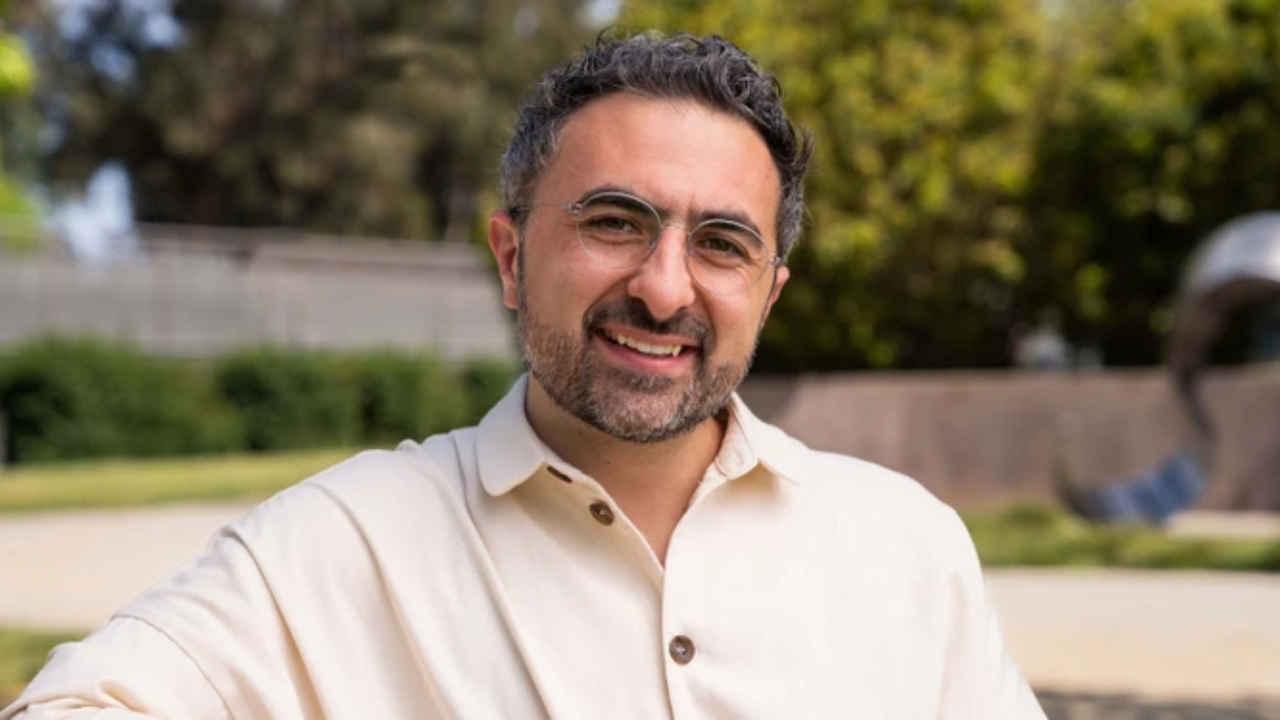
Mustafa Suleyman, CEO of Microsoft AI, delivered a stark prediction during a Financial Times interview: artificial intelligence will achieve human-level performance on most professional tasks within the next 12 to 18 months
1
.
Source: Digit
According to Suleyman, white-collar jobs where workers sit at computers—lawyers, accountants, project managers, and marketing professionals—face complete automation within this timeframe
2
.
Source: ET
The Microsoft executive's comments come as AI's impact on the job market intensifies, with companies across industries evaluating how to deploy large language models and foundation models for the automation of professional tasks.
Suleyman pointed to software engineering as evidence that this transformation is already underway. Many software engineers now use AI-assisted coding for the vast majority of their code production, shifting their roles toward debugging, scrutinizing outputs, and strategic architecture work . Microsoft CEO Satya Nadella has claimed that over a quarter of the company's code is now written with AI
2
. This shift in how programmers interact with technology represents what Suleyman describes as a fundamental change that has occurred in just the last six months.Growing Chorus of Warnings About Job Displacement
Suleyman's prediction aligns with warnings from other tech leaders about AI's impact on the workforce. Anthropic CEO Dario Amodei proclaimed that artificial intelligence could wipe out half of all entry-level white-collar jobs within five years
1
. Ford CEO Jim Farley echoed similar concerns, stating that AI will leave many white-collar workers behind1
. Meanwhile, OpenAI CEO Sam Altman has expressed both alarm and sadness watching his life's work rapidly grow obsolete3
.The anxiety extends beyond tech executives. An MIT simulation calculated that today's AI systems could already automate tasks performed by more than 20 million American workers, representing approximately 11.7% of the entire U.S. labor force across multiple industries
5
. A Reuters and Ipsos poll from August showed that 71% of American respondents are concerned that AI will put too many people out of work permanently5
. In January 2026, total job cuts exceeded even 2009 levels during the great recession5
.
Source: Futurism
Skepticism Mounts Over AI's Actual Impact
Despite bold predictions about superintelligence and Artificial General Intelligence (AGI), evidence of AI's transformative economic impact remains limited. A 2025 MIT study found that 95% of enterprise use of generative AI had no measurable impact on profit and loss
1
. A Pricewaterhouse Coopers report revealed that 55% of chief executives saw no benefits with the deployment of AI tools1
.Productivity gains from AI remain questionable. Research from nonprofit technology institute Model Evaluation and Threat Research found that AI actually made software developers' tasks take 20% longer
3
. A Thomson Reuters report found that while lawyers, accountants, and auditors are experimenting with AI for tasks like document review, the results show only marginal productivity improvements that fall short of signaling mass job displacement3
.Recent research from Apollo Global Management's chief economist Torsten Slok found that while profit margins in Big Tech increased by more than 20% in the fourth quarter of 2025, the broader Bloomberg 500 Index saw almost no change
3
. These findings suggest that economic returns remain largely confined to the tech industry.Related Stories

AI Washing and the Reality of AI-Driven Layoffs
While approximately 55,000 job cuts in 2025 were classified as AI-related according to employment consultancy Challenger, Gray and Christmas
3
, some researchers suggest that AI washing may be at play. Companies may be using the pretense of AI to fire employees for purely financial reasons, blaming exaggerated AI capabilities for decisions driven by poor business performance1
. Microsoft itself let go of 15,000 workers last year, with CEO Satya Nadella stating the company must "reimagine our mission for a new era"3
.The uncertainty around permanent job losses has sparked significant concern. Workers laid off in a dismal job market are now being hired to train AI systems meant to replace them altogether
5
. Job market anxiety has reached such levels that a massive petition calling for a prohibition on the development of superintelligence has gathered nearly 135,000 signatures, including endorsements from tech luminaries like Geoffrey Hinton and Steve Wozniak, as well as political figures across the spectrum5
.What Lies Ahead for White-Collar Work
Suleyman remains confident about AI's trajectory, envisioning a future where creating customized AI models becomes as simple as starting a podcast or writing a blog. "It is going to be possible to design an AI that suits your requirements for every institution, organization, and person on the planet," he stated
1
. Microsoft has reinforced this commitment by extending its intellectual property agreement with OpenAI through 2032, retaining a $135 billion stake in the company .However, Suleyman also addressed AI safety concerns, emphasizing that systems approaching AGI should only be deployed if they can be controlled and operated in a subordinate way to humans . As policymakers grapple with these challenges, Vermont Senator Bernie Sanders announced plans to travel to California to discuss the technology, stating that "a handful of billionaires in Silicon Valley are making decisions behind closed doors that will shape the future of humanity" while "working people have no voice in these discussions" . Whether Suleyman's 18-month timeline proves accurate or becomes another overhyped prediction remains to be seen, but the debate over AI's role in reshaping white-collar work has clearly moved from theoretical to urgent.
References
Summarized by

Navi
[2]
[3]
[4]
Related Stories
Anthropic CEO Warns: AI Could Eliminate Half of Entry-Level White-Collar Jobs in 5 Years
29 May 2025•Technology
CEOs Predict Massive Job Displacement as AI Advances, Sparking Debate on Future of Work
03 Jul 2025•Business and Economy

Microsoft's 2025 Work Trend Index: AI Agents and the Rise of 'Frontier Firms'
24 Apr 2025•Technology

Recent Highlights
1
Tennessee Teens Sue Elon Musk's xAI Over Grok AI-Generated Child Abuse Images
Policy and Regulation
2
Supermicro Co-Founder Indicted in $2.5 Billion Nvidia AI Chip Smuggling Scheme to China
Policy and Regulation
3
Val Kilmer to appear posthumously in As Deep as the Grave through AI-generated performance
Entertainment and Society

Recent Highlights
Today's Top Stories







Your Daily Dose of Curated AI News
Don’t drown in AI news. We cut through the noise - filtering, ranking and summarizing the most important AI news, breakthroughs and research daily. Spend less time searching for the latest in AI and get straight to action.

