Georgia leads first statewide push to halt AI data centers over energy and water concerns


4 Sources
4 Sources
[1]
Georgia emerges as a battleground over AI data centers
Why it matters: Tech companies are flocking to Georgia for AI energy demands, and people across the political spectrum are pushing back. * In a state where key midterm elections could rebalance power statewide and nationally, candidates are laser-focused on getting the messaging and policy solutions right. Zoom in: Democratic state Rep. Ruwa Romman's HB-1012 would place a temporary moratorium on new data center construction in Georgia. * The goal is to give officials time to study water usage, energy consumption and the real revenue and economic impacts instead of just projections, said Romman, who is running for governor. * Romman added that data would then inform regulation. Romman echoes Sen. Bernie Sanders (I-Vt.), though Romman said she was already looking into the idea of a moratorium when she heard the progressive standard-bearer had a similar solution in mind. * "I'm actually working on an email to shoot his chief of staff to let him know that we're working on this," said Romman, contending that "any policy that happens at the federal level gets implemented first at the state level." * Other Democrats are sounding more like Republicans and promising voters that data center-related costs will be paid by Big Tech. * The two ideas are not at odds, according to Romman, who noted that in order for Big Tech to pay, policymakers first need to understand how much it actually costs. The intrigue: In last year's elections, Georgia flipped two statewide seats on the Public Service Commission for the first time in more than 20 years by more than 25 points, with data center construction and rising utility rates central to mobilizing voters. * "This continues to be the one issue that has shown up everywhere around the state. It doesn't matter if it's a blue area or red area. It doesn't matter if somebody votes in a specific way. Historically, this is a massive concern for Georgians," Romman said. * In Georgia, data center opposition didn't start on the left but in rural areas, Romman said: "It was just straight up typical nimby-ism coupled with, 'Hey, I don't want to lose that river.'" Friction point: One of the biggest data centers currently planned in Georgia is being built on land owned by the father of Republican Lt. Gov. Burt Jones, who is also running for governor. What we're watching: Sen. Jon Ossoff (D-Ga.), who is in a competitive race this year, hasn't veered into this issue -- yet.
[2]
Georgia leads push to ban datatcenters used to power America's AI boom
Southern state becoming ground zero in fight against rapid growth of facilities using huge amounts of energy and water Lawmakers in several states are exploring passing laws that would put statewide bans in place on building new datacenters as the issue of the power-hungry facilities has moved to the center of economic and environmental concerns in the US. In Georgia a state lawmaker has introduced a bill proposing what could become the first statewide moratorium on new datacenters in America. The bill is one of at least three statewide moratoriums on datacenters introduced in state legislatures in the last week as Maryland and Oklahoma lawmakers are also considering similar measures. But it is Georgia that is quickly becoming ground zero in the fight against untrammelled growth of datacenters - which are notorious for using huge amounts of energy and water - as they power the emerging industry of artificial intelligence. The Georgia bill seeks to halt all such projects until March of next year "to allow state, county and municipal-level officials time to set necessary policies for regulating datacenters ... which permanently alter the landscape of our state", said bill sponsor state Democratic legislator Ruwa Romman. It comes at a time when Georgia's public service commission - the agency that oversees utility company Georgia Power - just last month approved a plan to provide 10 additional gigawatts of energy in the coming years. It was the largest amount of electricity sought for a multi-year plan in the commission's history, was driven by datacenters and will mostly be supplied by fossil fuels. The 10-gigawatt plan - enough to power about 8.3m homes - in turn comes as the Atlanta metro area led the nation in datacenter construction in 2024. This accelerated growth has already led at least 10 Georgia municipalities to pass their own moratoriums on datacenter construction, with Atlanta suburb Roswell becoming the most recent earlier this month. Municipalities in at least 14 states have done the same, according to Tech Policy Press. Bernie Sanders, the Vermont independent democratic socialist senator, proposed a national moratorium last month. "What we're seeing is, as communities are learning more about this aggressive industry's presence ... [they] want to have time to thoroughly investigate all potential harms," said Seth Gladstone, spokesperson for Food and Water Watch. The rampant development of datacenters to power AI raises several concerns for residents and activists alike. One is their impact on the cost of electricity. "In the public's mind, datacenters and utility bills are inextricably linked," said Charles Hua, founder and executive director of PowerLines, an organization that works on lowering utility bills and involving communities in decisions about energy. Hua noted that the relationship between the two varies, depending on each state's market and regulatory system. In Georgia, he said, the Georgia Power utility company makes profit off new capital investments - so it has incentive to keep building new power plants. This approach has led Georgia's rates to go up by a third in the last several years alone. Meanwhile, he said, the power company doesn't have incentive to make the electrical grid more efficient - which "could actually lower prices", Hua said. But datacenter concerns in Georgia also include water use and lost tax revenue. Republicans in the state legislature have introduced bills this year to protect consumers from increases in their utility bills and to end tax breaks for the centers. A Democrat has proposed that datacenters make public how much energy and water they use each year. Romman, the first Palestinian American elected to statewide office in Georgia, is also running for governor, hoping to break the near quarter-century hold Republicans have on the office. Her bill, HB 1012, has a Republican co-sponsor in state congressman Jordan Ridley, who said he signed o nto the measure because he wanted to give local governments time to develop zoning regulations on datacenters, since "it seems like they're being built across the state". "Every local government has zoning codes and ... they need public input. That takes time," Ridley said. At the same time, Ridley added, "datacenters ... provide tax revenue and high-paying jobs. I'm not against datacenters." Romman's bill is not just a policy proposal; it's also a political one. In a statement, she wrote that the moratorium "would provide time for Georgians to vote on the majority of the Public Service Commission seats who make final decisions on energy-related projects". Georgia is one of 10 states that elect their utility regulators. Voters in the state elected progressive Democrats Alicia Johnson and Peter Hubbard to the five-member commission in November, leading the agency to lose its all-Republican makeup for the first time in nearly two decades. Another seat is up for a vote this November. The calculus: if the commission becomes majority-Democratic, it will no longer give a rubber stamp to electricity demands from Georgia Power driven by tech companies seeking to build datacenters. Hubbard, now in his new position, recently wrote an editorial asserting that Georgia voters "see data centers receiving tax breaks as their power bills go up. They see local communities struggle with competition for water supplies and high voltage transmission lines that reduce property values. And they see how the PSC approved every request placed before it by the monopoly electric utility. "This is why opposition to data centers is growing in Georgia; because Georgians oppose being treated as collateral damage by the unregulated growth of data centers that will push their power bills even higher." There's another political implication to Romman's bill. Paul Glaze, spokesperson for Georgia Conservation Voters, said if the bill crosses from the House to the Senate, "it may be a preview of the potential general election" later this year. "The question is, in communities where datacenters are coming, who are voters going to trust to have their back?" Glaze said. "Anyone serious about statewide office should have a clear position on this."
[3]
Amid Soaring AI Demand, the First Statewide Data Center Moratorium Is Here
A Georgia state lawmaker has proposed a bill that would become the first statewide moratorium on new data centers in the country. The motion seeks to prohibit the construction of data centers until March 2027. While Maryland and Oklahoma also introduced state legislatures in the last week, Georgia is emerging as the leading entity taking a stance against the surge in data centers. The bill aims to postpone the development of data centers "to allow state, county and municipal-level officials time to set necessary policies for regulating data centers... which permanently alter the landscape of our state," according to Ruwa Romman, the bill sponsor and state Democratic legislator. As AI has rapidly emerged, plans to build the data centers that power it have spread just as quickly across the country. It's unclear how many data centers there are in Georgia, but some groups estimate that the number is between 100 to 200. The groups also estimate that those facilities require the same amount of energy used to power nearly 3.9 million homes and the amount of water that could sustain Athens, Georgia for five years. "What we're seeing is, as communities are learning more about this aggressive industry's presence... [they] want to have time to thoroughly investigate all potential harms," said Seth Gladstone, a spokesperson for Food and Water Watch, to The Guardian.
[4]
Georgia Becomes First State To Consider Halt On New Data Centers As AI Boom Threaten Power, Water And Local Budgets
Enter your email to get Benzinga's ultimate morning update: The PreMarket Activity Newsletter On Monday, Georgia introduced a bill proposing a statewide moratorium on new data centers as concerns grow over the environmental and economic impacts of these power-intensive facilities, particularly as they support the burgeoning artificial intelligence (AI) industry. The bill, spearheaded by state Democratic legislator Ruwa Romman, aims to halt such projects until March of next year. While Maryland and Oklahoma also introduced state legislatures in the last week, Georgia is leading the push against the surge in data centers. The proposed legislation follows a significant decision last month by Georgia's public service commission, which approved a historic 10-gigawatt energy plan largely driven by datacenter demands. This capacity is enough to power approximately 8.3 million homes and will primarily rely on fossil fuels. Sen. Bernie Sanders (I-Vt.) had proposed a national moratorium on data centers last month. Are Datacenters Threatening Georgia's Environment? The rapid development of datacenters raises multiple concerns, including increased electricity costs and water usage. It's unclear how many data centers there are in Georgia, but some groups like Science for Georgia and Baxtel estimate that the number is between 100 and 200. The opposition to data centers by locals in Georgia is also fueled by their contribution to lost tax revenue and the strain on local resources. This has prompted legislative efforts to end tax breaks for datacenters and mandate transparency in their energy and water consumption. Image via Shutterstock Market News and Data brought to you by Benzinga APIs
Share
Share
Copy Link
Georgia lawmakers introduced HB-1012, proposing the nation's first statewide data center moratorium until March 2027. The bill seeks to pause new data center construction while officials assess energy and water consumption, rising utility costs, and economic impacts. With 100-200 facilities already consuming power for 3.9 million homes, the state has become ground zero in the fight against unchecked AI infrastructure growth.
Georgia Proposes Nation's First Statewide Data Center Moratorium
Georgia has emerged as the battleground for one of the most contentious issues in AI infrastructure development. Democratic state Rep. Ruwa Romman introduced HB-1012, a bill proposing the first statewide data center moratorium in the United States
1
. The legislation seeks to halt new data center construction until March 2027, giving state, county, and municipal officials time to establish policies for regulating these facilities that "permanently alter the landscape of our state," Romman stated2
. While Maryland and Oklahoma lawmakers have also introduced similar measures in recent weeks, Georgia is leading the charge against the rapid expansion of AI data centers3
.
Source: Axios
The moratorium aims to provide officials time to study water usage, energy and water consumption, and the real revenue and economic impacts of data centers instead of relying solely on projections, according to Romman, who is running for governor
1
. That data would then inform future regulation. HB-1012 has attracted bipartisan support, with Republican co-sponsor state Rep. Jordan Ridley signing onto the measure to give local governments time to develop zoning regulations on data centers2
.
Source: Benzinga
Environmental and Economic Impacts Drive Legislative Action
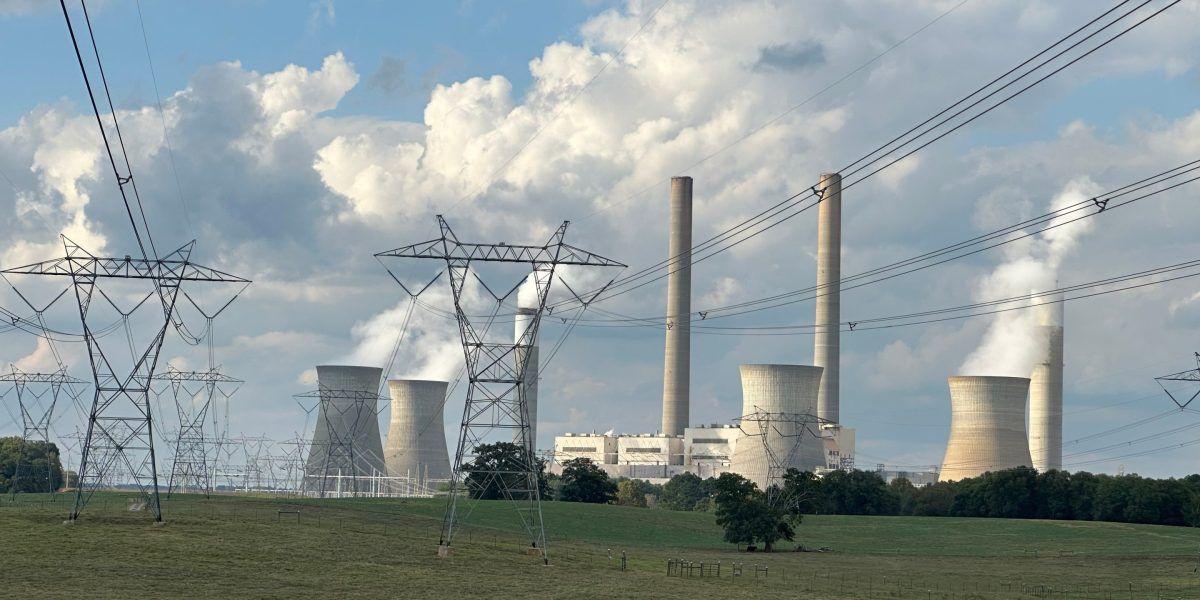
The push for a statewide data center moratorium comes amid mounting environmental concerns about these power-hungry facilities. Georgia's Public Service Commission approved a historic plan last month to provide 10 additional gigawatts of energy in the coming years—the largest amount of electricity sought in the commission's history
2
. This capacity, enough to power approximately 8.3 million homes, will be driven primarily by data centers and supplied mostly by fossil fuels4
. The Atlanta metro area led the nation in new data center construction during 2024, accelerating concerns about resource usage2
.
Source: Inc.
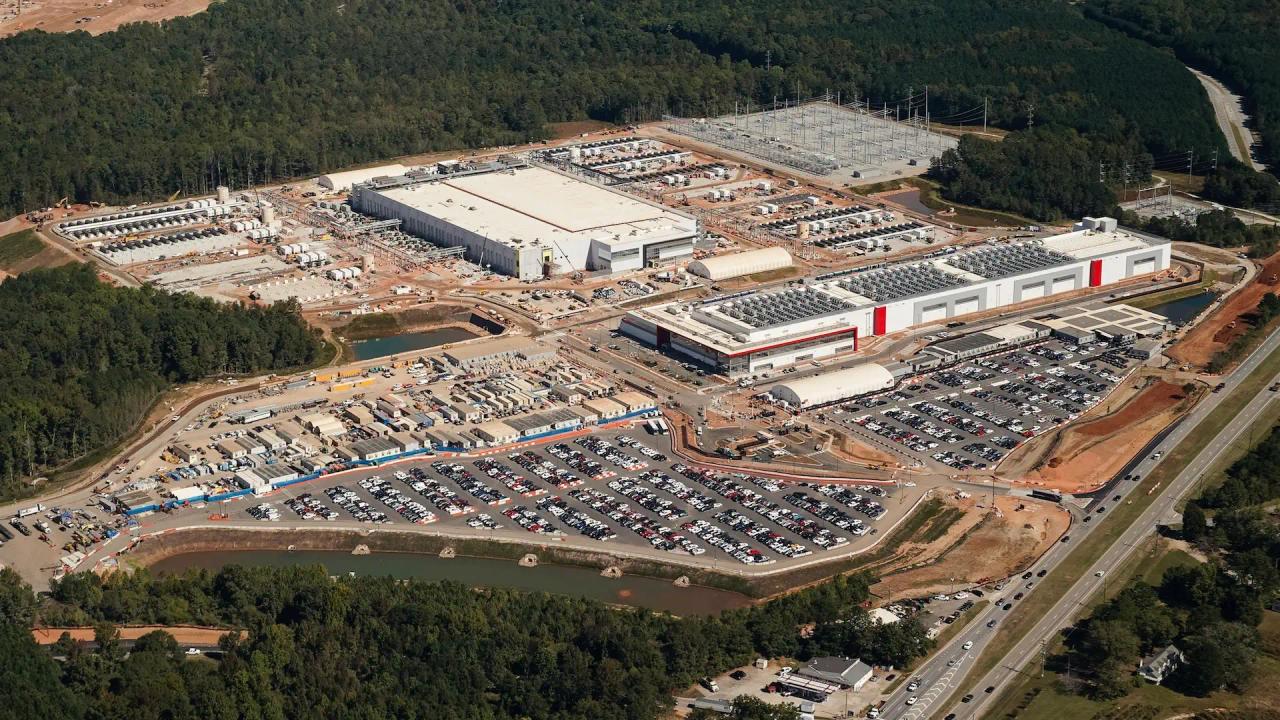
Estimates suggest Georgia currently hosts between 100 to 200 data centers, facilities that require the same amount of energy used to power nearly 3.9 million homes and consume water that could sustain Athens, Georgia for five years
3
. "What we're seeing is, as communities are learning more about this aggressive industry's presence, they want to have time to thoroughly investigate all potential harms," said Seth Gladstone, spokesperson for Food and Water Watch3
.Rising Utility Costs and Tax Revenue Concerns
The AI boom has created direct financial pressure on Georgia residents through rising utility costs. "In the public's mind, data centers and utility bills are inextricably linked," said Charles Hua, founder and executive director of PowerLines
2
. Georgia Power, the state's utility company, profits from new capital investments in the power grid, creating incentives to build new power plants rather than improve efficiency. This approach has driven Georgia's utility rates up by a third in recent years2
.Beyond energy costs, concerns about lost tax revenue have prompted Republicans in the state legislature to introduce bills ending tax breaks for data centers
2
. Other Democrats are promising voters that data center-related costs will be paid by Big Tech, though Romman contends that policymakers first need to understand actual costs before determining how much companies should pay1
. Additional proposed legislation would require data centers to publicly disclose their annual energy and water consumption2
.Related Stories

Political Implications and Grassroots Opposition
The data center issue has proven remarkably bipartisan in Georgia, mobilizing voters across the political spectrum. "This continues to be the one issue that has shown up everywhere around the state. It doesn't matter if it's a blue area or red area," Romman said
1
. In last year's elections, Georgia flipped two statewide seats on the Public Service Commission for the first time in more than 20 years by more than 25 points, with new data center construction and rising utility rates central to mobilizing voters1
.Opposition to AI data centers didn't originate on the left but in rural areas, according to Romman, starting as "straight up typical nimby-ism coupled with, 'Hey, I don't want to lose that river'"
1
. At least 10 Georgia municipalities have already passed their own moratoriums on data center construction, with Atlanta suburb Roswell becoming the most recent earlier this month2
. Municipalities in at least 14 states nationwide have implemented similar local restrictions, according to Tech Policy Press2
.Romman echoes Bernie Sanders, who proposed a national moratorium last month, though she noted she was already exploring the idea before hearing about the senator's proposal
1
. The political stakes extend beyond policy, with one of the biggest data centers currently planned in Georgia being built on land owned by the father of Republican Lt. Gov. Burt Jones, who is also running for governor1
. Romman's moratorium bill also serves as a political strategy, providing time for Georgians to vote on additional Public Service Commission seats that make final decisions on energy-related projects2
.References
Summarized by

Navi
Related Stories
Georgia Power wins approval for massive 50% capacity expansion to fuel AI data center boom
21 Dec 2025•Policy and Regulation
Data Centers Spark Political Controversy as Energy Costs Soar
15 Oct 2025•Business and Economy

Over 230 groups demand moratorium on AI data center expansion as communities revolt nationwide
09 Dec 2025•Policy and Regulation

Recent Highlights
1
Tennessee Teens Sue Elon Musk's xAI Over Grok AI-Generated Child Abuse Images
Policy and Regulation
2
Supermicro Co-Founder Indicted in $2.5 Billion Nvidia AI Chip Smuggling Scheme to China
Policy and Regulation

3
Val Kilmer to appear posthumously in As Deep as the Grave through AI-generated performance
Entertainment and Society

Recent Highlights
Today's Top Stories










Your Daily Dose of Curated AI News
Don’t drown in AI news. We cut through the noise - filtering, ranking and summarizing the most important AI news, breakthroughs and research daily. Spend less time searching for the latest in AI and get straight to action.

