Gnani.ai unveils Inya VoiceOS, India's first 5-billion-parameter voice-to-voice AI model


2 Sources
2 Sources
[1]
India AI Impact Summit 2026: Gnani.ai Launches India's First Voice-to-Voice AI System '5B Inya VoiceOS'
The launch highlights the strong progress made under the IndiaAI Mission and the country's growing focus on artificial intelligence. Inya VoiceOS is India's first 5-billion-parameter model. Most voice systems change speech into text first and then convert text back into speech. Inya VoiceOS works differently by understanding and responding directly to speech. The conversations sound more natural while ensuring a clear tone and emotion. Gnani.ai trained the model using more than 14 million hours of multilingual speech data. The team fine-tuned it with over 1.2 million hours of task-based audio. Training also included trillions of text tokens. The company built and deployed the system in India.
[2]
India AI Impact Summit 2026: Gnani.ai unveils India's first 5B voice-to-voice AI model, Inya VoiceOS
Currently in research preview, a larger 14B-parameter version is already in development. India's AI startup Gnani.ai introduced what it describes as the country's first 5-billion-parameter voice-to-voice foundational model under the India AI Mission. The model, called Inya VoiceOS, was showcased at the India AI Impact Summit 2026 at Bharat Mandapam, where Prime Minister Narendra Modi formally unveiled it. Unlike conventional voice assistants that convert speech into text and then back into audio, Inya VoiceOS works directly with speech. The system processes and generates spoken responses natively, without relying on intermediate speech-to-text or text-to-speech layers. According to the company, this allows it to better retain tone, pauses, emotion and other subtle cues that shape human conversations. Gnani.ai said the model has been trained on one of the largest sovereign voice datasets assembled for Indian languages. It is built on 5 billion parameters, pre-trained on over 14 million hours of multilingual speech data and further fine-tuned on more than 1.2 million hours of task-specific audio. The training also incorporated trillions of text tokens to strengthen reasoning and linguistic grounding. The company claims sub-second response times and 24 kHz audio output with natural-sounding prosody. It supports more than 15 Indian languages and is designed to handle code-mixed conversations, a common pattern in India, along with interruptions and overlapping speech during real-time interactions. It can be used for multilingual government helplines, grievance redressal systems and emergency response platforms. For the private sector, it could power hands-free, voice-driven workflows in banking, insurance, healthcare and logistics. It must be noted that the current release is a research preview, with Gnani.ai indicating that a larger 14-billion-parameter version is in development. The company emphasised that the model has been built and deployed entirely within India.
Share
Share
Copy Link
Indian AI startup Gnani.ai launched Inya VoiceOS at the India AI Impact Summit 2026, marking a significant milestone as India's first voice-to-voice AI system. The 5-billion-parameter model processes speech directly without converting to text, trained on 14 million hours of multilingual Indian speech data. Prime Minister Narendra Modi formally unveiled the system, which supports over 15 Indian languages and handles code-mixed conversations.
Gnani.ai Introduces India's First Voice-to-Voice AI System
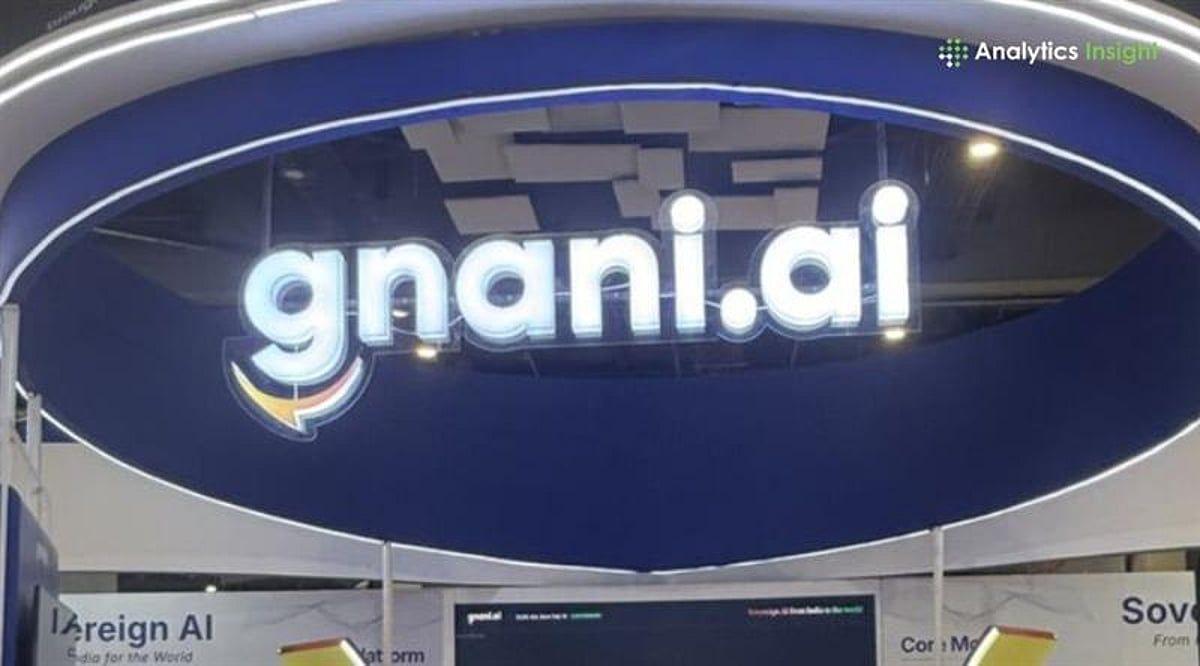
Gnani.ai unveiled Inya VoiceOS at the India AI Impact Summit 2026 held at Bharat Mandapam, where Prime Minister Narendra Modi formally introduced what the company describes as India's first voice-to-voice AI system
1
. The launch represents a significant step forward under the IndiaAI Mission, showcasing the country's expanding capabilities in artificial intelligence development. Unlike conventional voice assistants that rely on speech-to-text and text-to-speech conversion layers, Inya VoiceOS processes and generates spoken responses directly, working natively with speech without intermediate transformations2
.
Source: Analytics Insight
Technical Architecture Behind the 5-Billion-Parameter Voice-to-Voice AI
The AI foundational model operates on 5 billion parameters and has been pre-trained on over 14 million hours of multilingual Indian speech data, with additional fine-tuning on more than 1.2 million hours of task-specific audio
2
. Training also incorporated trillions of text tokens to strengthen reasoning and linguistic grounding. By processing speech directly, Inya VoiceOS retains conversational nuances such as tone, pauses, and emotion that typically get lost in traditional conversion methods. The company claims sub-second response times and 24 kHz audio output with natural-sounding prosody, delivering natural conversations that feel more human-like2
.Multilingual Capabilities and Code-Mixed Conversations
Inya VoiceOS supports more than 15 Indian languages and handles code-mixed conversations, a common communication pattern across India where speakers blend multiple languages within single exchanges
2
. The system manages interruptions and overlapping speech during real-time interactions, making it suitable for authentic conversational scenarios. Gnani.ai trained the model using one of the largest sovereign voice datasets assembled for Indian languages, ensuring the system understands regional linguistic variations and cultural communication styles2
. The company built and deployed the entire system within India, emphasizing data sovereignty and local innovation1
.Related Stories


Applications Across Government and Private Sectors
The voice-to-voice AI model opens pathways for multilingual government helplines, grievance redressal systems, and emergency response platforms where quick, accurate communication proves critical
2
. For private sector deployment, Inya VoiceOS could power hands-free, voice-driven workflows in banking, insurance, healthcare, and logistics operations. The current release exists as a research preview, with Gnani.ai indicating that a larger 14-billion-parameter version is already in development2
. This progression suggests the company aims to expand capabilities and accuracy as the technology matures, potentially positioning India as a competitive player in voice AI development alongside global counterparts.
Source: Digit
References
Summarized by

Navi
[1]
Related Stories
Recent Highlights
1
OpenAI Releases GPT-5.4, New AI Model Built for Agents and Professional Work
Technology
2
AI chatbots helped teens plan violent attacks in 8 of 10 cases, new investigation reveals
Technology
3
Pentagon shuts door on Anthropic talks as Microsoft and Big Tech rally behind AI firm's lawsuit
Policy and Regulation
Recent Highlights
Today's Top Stories



Your Daily Dose of Curated AI News
Don’t drown in AI news. We cut through the noise - filtering, ranking and summarizing the most important AI news, breakthroughs and research daily. Spend less time searching for the latest in AI and get straight to action.

