Google acquires ProducerAI, bringing AI music generation tool backed by The Chainsmokers to Labs


2 Sources
2 Sources
[1]
Music generator ProducerAI joins Google Labs | TechCrunch
The generative AI music tool ProducerAI will become part of Google Labs, the company announced on Tuesday. Backed by The Chainsmokers, the ProducerAI platform allows users to write natural language requests -- something like "make a lofi beat"- to generate music. It uses Google DeepMind's Lyria 3 music-generation model, which can turn text and even image inputs into audio outputs. Google announced last week that its Lyria 3 capabilities would be introduced into the flagship Gemini app, but ProducerAI makes it possible for users to communicate with the AI model more like it's a "collaboration partner," to use the words of Elias Roman, Google Labs' Senior Director of Product Management. "ProducerAI has allowed me to create in new ways," Roman wrote in a blog post. "I've experimented with new genre blends, expressed how I feel with personalized birthday songs for my loved ones, and made custom workout soundtracks for myself and friends." Google also shared that three-time Grammy-winning rapper Wyclef Jean used the Lyria 3 model and Google's Music AI Sandbox on his recent song "Back From Abu Dhabi." "This is not just a machine where you're clicking a button a hundred times, and then you're done. It's a careful kind of curation where you're going through and saying, 'Oh, I think that's something we can use,'" said Jeff Chang, Director of Product Management at Google DeepMind, in a video the company put out. Jean recalls wanting to know what a flute would sound like in a track he already recorded, and being able to use Google's tools to quickly add a flute sound to the mix. "What I want everybody to understand [...] is you're in the era where the human has to be the most creative," Jean said in the video. "There's one thing that you have over the AI: a soul. And there's one thing that AI has over you: the infinite information." Some musicians have ardently opposed the use of AI tools in the music-making process, since it's almost a given that a generative AI tool was trained on copyrighted data from artists without their consent. Hundreds of musicians, including stars like Billie Eilish, Katy Perry, and Jon Bon Jovi, signed an open letter in 2024 calling on tech companies not to undermine human creativity with AI music generation tools. A cohort of music publishers also recently sued the AI company Anthropic for $3 billion, claiming that the company illegally downloaded more than 20,000 copyrighted songs, including sheet music, song lyrics, and musical compositions. (Anthropic was already ordered by the court to offer a $1.5 billion settlement to authors whose books were pirated for AI training.) Other artists, however, have embraced the potential of this technology as a way to improve audio quality, rather than as a creative aid. Paul McCartney used AI-powered noise reduction systems -- the kind of technology that allows Zoom or FaceTime to block out unwanted background noises on your video calls -- to clean up a decades-old, low-quality John Lennon demo. The resulting "new" Beatles track, "Now and Then," won a Grammy in 2025. Meanwhile, AI music generation tools like Suno have created synthetic music that sounds real enough to top charts on Spotify and Billboard. Telisha Jones, a 31-year-old in Mississippi, used Suno to turn her (supposedly organic) poetry into the viral R&B song "How Was I Supposed To Know" and signed a record deal with Hallwood Media in a deal reportedly worth $3 million. The law remains unclear on the legality of using copyrighted works as training data -- one federal judge, William Alsup, ruled last year that training on copyrighted data is legal, but pirating it is not.
[2]
This Chainsmokers-approved AI music producer is joining Google
ProducerAI, an AI-powered music-making platform, is joining Google. As part of the deal, Google will fold ProducerAI under the Labs umbrella and power the tool with a preview version of its new Lyria 3 music-making AI model. ProducerAI is a music-making platform that allows users to work with an AI agent to generate sounds, workshop lyrics, remix songs, and even create new instruments based on a prompt. The platform launched in July 2025 as a successor to the AI music-making tool Riffusion, and initially used the startup's own AI model to help you generate songs and tweak existing ones. Seth Forsgren, the cofounder and CEO of ProducerAI, tells The Verge the team is "just scratching the surface of what these models are going to be able to do once we harness everything that Google brings to the table." "You can talk to this producer like you would a Gemini model, ask questions, and learn about a new genre," Forsgren says. "As soon as you want to, you can start actually creating, and you can craft things with these instruments and make a song and iterate on it." According to Elias Roman, the director of product management at Google Labs, the key difference between ProducerAI and other AI music-making platforms is the conversation with the platform's built-in agent. "It's not a tool that you put in your prompt, roll the slot machine, and something will come out," Roman says. "The reality is that's not how good music is made ... and ProducerAI was really made for the back-and-forths that play out over time." In addition to using Lyria 3 for music generation and Gemini for its chat interface, ProducerAI will leverage Google's image-generation model, Nano Banana, to create album art, and Veo to generate AI-powered music videos. "All of these models are coordinated by your producer, so you just get to focus on what you want to create, and the model does the coordination for you," Roman says. Google will also embed its SynthID watermark into ProducerAI's output, which flags AI-generated text, videos, images, and audio. The team behind ProducerAI has collaborated with The Chainsmokers, Lecrae, Anjulie, and other artists to develop the platform. Even as the music industry begins to embrace AI tools for song creation -- like those offered by ElevenLabs, Udio, and Suno -- many artists have expressed frustration with AI clones. Bandcamp has even banned AI-generated music from its platform entirely, while Deezer has developed technology to detect and deprioritize it. The press release includes a quote from The Chainsmokers' Alex Pall saying that the duo is "so grateful" to see how ProducerAI evolves. "It's truly crafted around the musician's experience," Pall adds. ProducerAI will remain a standalone service after joining Labs, adding yet another platform to Google's growing AI toolset. Last week, Google put Lyria 3 in the Gemini app, allowing users to generate 30-second tracks using prompts with text, images, and videos. Users can access ProducerAI for free with a limited number of credits. There's also an $8 / month starter plan that offers 3,000 credits to create around 600 songs, along with a $24 / month Plus and $64 / month Member subscriptions with the ability to generate more music. ProducerAI is now available in more than 250 countries, and is available to try now from its website on desktop or mobile devices.
Share
Share
Copy Link
Google has acquired ProducerAI, an AI-powered music platform backed by The Chainsmokers, integrating it into Google Labs. The generative AI music tool uses Google DeepMind's Lyria 3 model to transform text and image prompts into audio, enabling users to generate beats, remix songs, and create custom soundtracks through conversational AI. The move expands Google's AI music capabilities amid ongoing copyright debates in the industry.
ProducerAI Joins Google Labs with Advanced Music Generation Capabilities
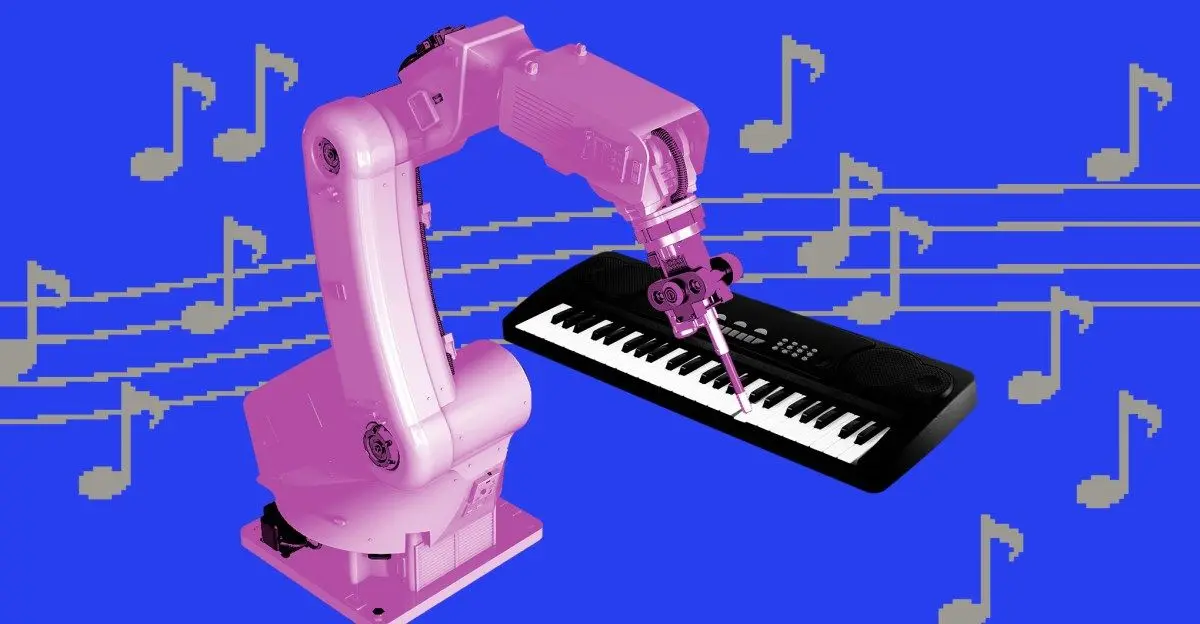
Google announced that ProducerAI, a generative AI music tool backed by The Chainsmokers, will become part of Google Labs
1
2
. The platform allows users to write natural language requests like "make a lofi beat" to generate music, powered by Google DeepMind's Lyria 3 music-generation model that converts text and image inputs into audio outputs1
. ProducerAI launched in July 2025 as a successor to the AI music-making tool Riffusion and initially used its own AI model before this integration2
.
Source: The Verge
Collaborative Music Creation Through AI-Powered Conversation
According to Elias Roman, Google Labs' Senior Director of Product Management, ProducerAI distinguishes itself by functioning as a "collaboration partner" rather than a simple prompt-based generator
1
. "It's not a tool that you put in your prompt, roll the slot machine, and something will come out," Roman explained, emphasizing that the platform enables the back-and-forth iterations essential to creating quality music2
. Users can generate sounds, workshop lyrics, remix songs, and create new instruments through conversational interactions with the AI agent2
. Seth Forsgren, ProducerAI's cofounder and CEO, noted the team is "just scratching the surface of what these models are going to be able to do once we harness everything that Google brings to the table"2
.Integration with Google's AI Ecosystem and Artist Adoption
ProducerAI will leverage multiple Google technologies beyond Lyria 3, including Gemini for its chat interface, Nano Banana for album art creation, and Veo for AI-powered music videos
2
. Google will embed its SynthID watermark into all output to flag AI-generated content2
. Three-time Grammy-winning rapper Wyclef Jean used the Lyria 3 model and Google's Music AI Sandbox on his recent song "Back From Abu Dhabi," demonstrating professional adoption of AI in the music industry1
. Jean emphasized the importance of human creativity, stating: "There's one thing that you have over the AI: a soul. And there's one thing that AI has over you: the infinite information"1
.Related Stories

Copyright Concerns and Industry Resistance to AI Music Generation
The expansion of AI music generation tools continues to face significant pushback over copyright and training data concerns. Hundreds of musicians, including Billie Eilish, Katy Perry, and Jon Bon Jovi, signed an open letter in 2024 calling on tech companies not to undermine human creativity with AI music tools
1
. Music publishers recently sued Anthropic for $3 billion, claiming the company illegally downloaded more than 20,000 copyrighted songs without artist consent1
. The law remains unclear on the legality of using copyrighted works as training data, with one federal judge ruling that training on copyrighted data is legal but pirating it is not1
. Despite these concerns, platforms like Suno have created AI-generated music that topped Spotify and Billboard charts, with artist Telisha Jones signing a $3 million record deal after using Suno to create the viral R&B song "How Was I Supposed To Know"1
.Pricing and Availability Across Global Markets
ProducerAI will remain a standalone service under Google Labs and is now available in more than 250 countries
2
. Users can access the platform for free with limited credits, or choose from paid tiers: an $8-per-month starter plan offering 3,000 credits to create around 600 songs, a $24-per-month Plus subscription, and a $64-per-month Member subscription for higher-volume creation2
. Last week, Google introduced Lyria 3 capabilities into the flagship Gemini app, allowing users to generate 30-second tracks using text, image, and video prompts1
2
. The team behind ProducerAI has collaborated with The Chainsmokers, Lecrae, Anjulie, and other artists to develop the platform, with The Chainsmokers' Alex Pall stating the duo is "so grateful" to see how the tool evolves2
.References
Summarized by

Navi
Related Stories
Google Gemini rolls out Lyria 3 to generate 30-second AI songs from text and images
18 Feb 2026•Technology

OpenAI's Foray into AI Music Generation: Innovation Meets Controversy
26 Oct 2025•Technology

ElevenLabs Launches AI Music Generator with Commercial Rights, Expanding its AI Audio Portfolio
06 Aug 2025•Technology

Recent Highlights



Recent Highlights
Today's Top Stories









Your Daily Dose of Curated AI News
Don’t drown in AI news. We cut through the noise - filtering, ranking and summarizing the most important AI news, breakthroughs and research daily. Spend less time searching for the latest in AI and get straight to action.

