Google AI's competitive edge relies on knowing you better through extensive user data collection


2 Sources
2 Sources
[1]
One of Google's biggest AI advantages is what it already knows about you | TechCrunch
A Google Search exec said that one of the company's biggest opportunities in AI lies in its ability to get to know the user better and personalize its responses. The promise is AI that's uniquely helpful because it knows you. But the risk is AI that feels more like surveillance than service. In a recent episode of the Limitless podcast, Robby Stein, VP of Product for Google Search, explained that Google's AI tends to field more queries that are advice-seeking or those where the user is looking for recommendations -- and these types of questions are more likely to benefit from more subjective responses. "We think there's a huge opportunity for our AI to know you better and then be uniquely helpful because of that knowledge," Stein said in the interview. "And one of the things we talked about at [Google's developer conference] I/O was how the AI can get a better understanding of you through connected services like Gmail." Google has been integrating AI into its apps for some time, starting back when Gemini was still known as Bard. More recently, it began pulling personal data into another AI product, Gemini Deep Research. And Gemini is now infused into Google Workspace apps like Gmail, Calendar and Drive. But as Google integrates more personal data into its AI -- spanning your emails, documents, photos, location history, and browsing behavior -- the line between a helpful assistant and an intrusive one becomes increasingly blurred. And unlike opt-in services, avoiding Google's data collection may become harder as AI becomes central to its products. Google's pitch is that this deep personalization makes the AI far more useful. The idea is that Google's AI technology could learn from the user's interactions across Google's various services, then use that understanding to make more personalized recommendations. For instance, if it learned that a user likes particular products or brands, the AI responses might favor those in its recommendations. That, Stein said, would be "much more useful" than just showing users a more generic list of the best-selling products in a given category. "That is, I think, very much the vision -- of building something that can be really knowledgeable for you, specifically." This idea isn't all that different from how the "Others" in the hit Apple TV show Pluribus have gobbled up the world's knowledge, including intimate details about individuals. When the system interacts with the show's protagonist, Carol, it uses that data to personalize everything: cooking her favorite meals, adopting a familiar face to handle its communications with her, and otherwise anticipating her needs. But Carol doesn't find the personalized responses kind; she finds them invasive. She never consented to sharing her data with the hivemind, yet it knows her better than she's like. Similarly, it seems that avoiding Google's data-gobbling ways will get increasingly difficult in the AI era, and if Google doesn't get the balance right, the results could feel more creepy than useful. (To be clear: Google does let you control the apps Gemini uses to make its AI more knowledgeable about you specifically -- it's under "Connected Apps" in Gemini's settings.) If you do share app data with Gemini, Google says it will save and use that data according to the Gemini privacy policy. And that policy reminds users that human reviewers may read some of their data and not to "enter confidential information that you wouldn't want a reviewer to see or Google to use to improve its services." But as more data gets ingested into Google's own hivemind, it's easy to see how AI could make data privacy more of a gray area. Google, however, believes it has a solution of sorts. Stein says that Google will indicate when its AI responses are personalized. "I think people want to intuitively understand when they're being personalized- when information is made for them, versus when [it's] something that everyone would see if they were to ask this question," he said. Stein noted, too, that Google could send a push notification to users when a product they had been considering after several days of online research becomes available or is on sale. "There are all these ways that Google now, across modes, across kind of different aspects of your life, [is] being incredibly helpful to you..." he said. "And I think that's more of how I think of the future of search than any one specific feature or single form factor."
[2]
Google's Plan to Win the AI Race Is All About Getting a Little Too Personal
Google is envisioning a future where almost every interaction you may have with the internet is hyper-personalized for you. According to Google's VP of product for Search, Robby Stein, most people use AI products not for general factual information but more so for advice and recommendations. "They want to know where to eat for dinner, they want to know where to travel with their family," Stein told the Limitless podcast last week. "So we think there's a huge opportunity for our AI to know you better and then to be uniquely helpful because of that knowledge." For AI to get a better understanding of you, Stein says Google's AI models would use connected services like Gmail so that it could paint a detailed picture of your likes and dislikes over time. Thanks to that, for example, the AI can serve you up targeted product releases that you might like. AI is an existential topic for Google Search. Earlier this year, a judge ruled in favor of Google in an antitrust trial over its Search business, saying that "for the first time in over a decade," AI made it so that "a product could emerge that will present a meaningful challenge to Google's market dominance." Google, it seems, might be seeing where the judge comes from as the tech giant ramped up its AI efforts, unveiling its latest Gemini model to great success and integrating it across the entire Google ecosystem. Gemini is already integrated with Google Workspace apps like Gmail (where you're personal correspondences), Calendar (which knows what you do, when, and where), and Drive (which may have your work documents or your personal photos). It is also available on Google Maps, YouTube, WhatsApp, Spotify, you name it. The company also launched a new Chrome browser in September with Gemini integration throughout, including an agentic AI that can navigate the web and complete tasks on your behalf. Stein's vision of an internet that knows a lot about you is one where your interactions with Google won't be confined to the specific instances you use the search engine, but rather as ongoing conversations. The example he gives is, say, you're looking for a couch for your apartment. You're going to gradually feed your AI information on what kind of couch you might be looking for, whenever it might pop into your head. The AI would remember these scattered bits of information, and more that it gathers from you via previous conversations and your activity on connected apps. And then one day, the perfect couch you are looking for goes on sale, and boom, the AI serves it up to you, perhaps via a push alert. "I think that’s more of how I think of the future of search than any one specific feature or single form factor," Stein said. Of course, some parts of the Google search experience would stay non-personalized, even in this vision, like when you go on the internet to look for simple, factual information, such as the height of the Empire State Building. But that's not likely the majority, according to the Google executive. "It's almost weird not to personalize it," Stein said. This hyper-personalization would also be super beneficial for the company's ad business. Stein announced just a few weeks ago that Google had "started some experiments on ads within AI Mode and within Google AI experiences." AI-enhanced targeted ads are the name of the game, seeing that Google's biggest digital ads competitor, Meta, announced its own foray into it just recently. Google's business decisions are consequential for the entire web as the company's products hold the power to alter the way we interact with the internet. Their search engines are the average user's gateway to the internet; meanwhile, the company's AI business is making great strides and outperforming competitors. Personalization sounds great on paper, and it promises to make life easier on multiple fronts. But, like many other technological advancements of our day and age, it undeniably comes with risks. The more an AI system knows about you, the bigger the security risk of any potential data breach or sale becomes. Even OpenAI CEO Sam Altman has admitted the risks of letting AI models learn all about you. "There's two things that people really love right now that taken together are a real security challenge. Number one, people love how personalized these models are getting," Altman told Stanford University professor Dan Boneh last month. "And then number two is you can connect these models to other services." You can't trust AI with this information the way that you could trust a fellow human, Altman said. "If you tell your spouse a bunch of secrets, you can sort of trust that they will know in what context... what to tell to other people. The models don't really do this very well yet," Altman said. "So if you're telling a model all about your private healthcare issues, and then you have it buying something for you, you don't want that e-commerce site to know about all of your health issues."
Share
Share
Copy Link
Google's VP of Product for Search revealed the company's AI strategy centers on deep personalization using data from Gmail, Drive, and other services. While promising uniquely helpful responses, the approach raises questions about surveillance versus service. Even OpenAI's Sam Altman warns about security risks when AI models learn intimate details about users.
Google AI Strategy Banks on Deep User Knowledge
Google AI is positioning itself to win the artificial intelligence race through a strategy that hinges on knowing users intimately. Robby Stein, VP of Product for Google Search, revealed on the Limitless podcast that the tech giant sees a massive opportunity in leveraging data from connected services like Gmail, Google Drive, and Google Calendar to deliver highly personalized responses
1
. The rationale is straightforward: most users approach Google AI not for simple facts but for advice-seeking queries and recommendations about where to eat, travel, or what products to buy."We think there's a huge opportunity for our AI to know you better and then be uniquely helpful because of that knowledge," Stein explained, noting that the Gemini AI model can gain understanding through user interactions across Google's ecosystem
1
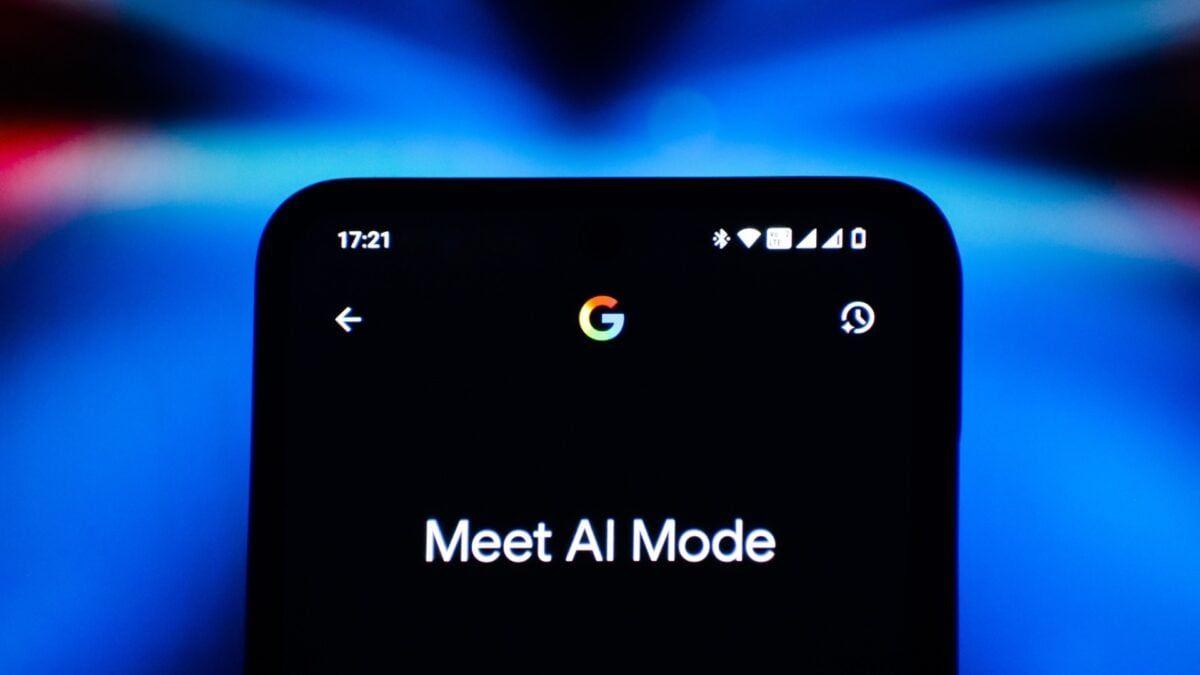
.
Source: Gizmodo
This approach represents a fundamental shift in how Google Search operates, moving from isolated queries to ongoing conversations where the AI remembers scattered bits of information you share over time.
Hyper-Personalization Transforms the Search Experience
Google's vision extends beyond traditional search into a world where AI personalization feels almost constant. Stein described a scenario where someone shopping for a couch gradually feeds preferences to the AI whenever thoughts arise. The system would aggregate these details along with data gathered from Workspace apps and Connected Apps, then proactively alert users when the perfect item goes on sale
2
. "It's almost weird not to personalize it," Stein remarked about most search interactions2
.The Gemini integration now spans Gmail (personal correspondence), Calendar (schedules and locations), Drive (documents and photos), plus Google Maps, YouTube, WhatsApp, and Spotify
2
. Google also launched a Chrome browser with Gemini integration in September, featuring agentic AI that can navigate the web and complete tasks autonomously. This extensive user data collection enables AI to learn product preferences and brand affinities, then favor those in recommendations rather than showing generic best-seller lists.AI Privacy Concerns Mount as Data Collection Expands
The promise of AI that knows you collides with growing anxiety about surveillance and security risks. As Google integrates more user data spanning emails, documents, photos, location history, and browsing behavior, the boundary between helpful assistant and intrusive observer blurs
1
. Unlike opt-in services, avoiding this data collection may become increasingly difficult as AI becomes central to Google's products.
Source: TechCrunch
Even Sam Altman, OpenAI CEO, acknowledged the dangers inherent in this approach during a Stanford University talk. "If you tell your spouse a bunch of secrets, you can sort of trust that they will know in what context... what to tell to other people. The models don't really do this very well yet," Altman warned
2
. He cautioned that if users share private healthcare issues with AI while also having it make purchases, e-commerce sites could inadvertently access sensitive health information.Related Stories




Data Privacy in the AI Era Becomes Gray Area
Google does provide controls through Connected Apps settings in Gemini, allowing users to manage which apps share data
1
. However, the Gemini privacy policy warns that human reviewers may read some data and advises against entering confidential information. Stein said Google will indicate when responses are personalized, helping users distinguish between tailored information and what everyone would see1
.The stakes extend beyond individual privacy. This hyper-personalization strategy directly benefits Google's advertising business, with Stein announcing experiments on ads within AI Mode just weeks ago
2
. Meta recently announced similar AI-enhanced advertising initiatives, intensifying competition. The more an AI system knows about users, the greater the security risks from potential data breach incidents or unauthorized data sales become.Google's business decisions carry weight across the entire web, as the company's products shape how billions interact with the internet. The approach emerges as AI poses an existential challenge to Google Search itself—a judge ruled earlier this year that AI could present "a meaningful challenge to Google's market dominance" for the first time in over a decade
2
. Whether users embrace this vision or find it invasive will determine if data privacy in the AI era remains manageable or spirals into what feels more like surveillance than service.References
Summarized by

Navi
Related Stories
Recent Highlights



Recent Highlights
Today's Top Stories







Your Daily Dose of Curated AI News
Don’t drown in AI news. We cut through the noise - filtering, ranking and summarizing the most important AI news, breakthroughs and research daily. Spend less time searching for the latest in AI and get straight to action.

