Google denies Gemini ads report as AI chatbot monetization debate intensifies


9 Sources
9 Sources
[1]
Google Won't Bring Ads to Gemini AI Any Time Soon
Ads in your AI chatbot results may soon become the norm, but Google has denied a report saying it plans to bring them to Gemini next year. A report from Adweek cited anonymous sources within the advertising industry who claim Google is briefing clients on plans to bring ads to Gemini in 2026. Soon after publication, Google denied the report with Dan Taylor, vice president of global ads at Google, saying the claims are based on "uninformed, anonymous sources who are making inaccurate claims." Taylor also says, "There are no ads in the Gemini app and there are no current plans to change that." Taylor's comments are clear about the near future, but it also doesn't deny Google may change strategy at a later date. Google will likely want to find a way to monetize its Gemini platform for those who don't pay for a subscription. Google has begun testing ads in its AI Mode within Search, which is a newer feature than Gemini. Google's latest comments come at a time when its biggest rival is reportedly exploring bringing ads to its own tools. Recently spotted code within the ChatGPT app makes hidden references to features like "search ad" and "ad features," although it's unclear how these would eventually appear for users. However, the project now appears to be on pause. OpenAI CEO, Sam Altman, called a "code red" for employees in late November, motivated by Google's increasingly powerful AI tools. Altman reportedly told employees to pause select projects, which included plans to bring ads to ChatGPT. OpenAI has recently been introducing apps to ChatGPT, which some users have misunderstood to be paid ads. The results recommend brands and products from the likes of Peloton or Target after searching for related topics. Disclosure: Ziff Davis, PCMag's parent company, filed a lawsuit against OpenAI in April 2025, alleging it infringed Ziff Davis copyrights in training and operating its AI systems.
[2]
Google says Gemini won't get ads -- at least not yet
The company has denied the claims and says it doesn't have any current plans to introduce ads in Gemini. Google has denied a new report that claims it's preparing to introduce ads in Gemini. According to Adweek, Google is in active discussions with advertising clients to bring ads to the Gemini experience. Two advertising clients told the publication that these ad placements are reportedly targeted for a 2026 rollout. However, Google has vehemently denied having these conversations or any plans to crowd Gemini with ads. According to Dan Taylor, Vice President of Global Ads at Google, the report is false and "based on uninformed, anonymous sources who are making inaccurate claims." Tylor took to X to confirm that there are no ads in the Gemini app and that the company has "no current plans to change that." Reports of ads coming to Gemini have surfaced just as rival ChatGPT is also reportedly exploring the same idea. Recently uncovered code strongly suggests that ads may be headed to ChatGPT, with references to "search ad," "ad features," "bazaar content," and other related terms. Google, for its part, hasn't been shy about experimenting with ads in its AI products as well. The company recently confirmed it's testing ads in Search's AI Mode, where sponsored results now appear alongside AI-generated answers. While Google says it has no plans to bring ads to Gemini at this time, it hasn't ruled out the possibility. Advertising makes up the bulk of Google's revenue, so it wouldn't be surprising if the company eventually explores ads within Gemini as well.
[3]
No, ads are not coming to Gemini... for now
Many of Google's most widely used services are free. That's no accident, as the company makes its money from advertising. Gemini's free tier is free of such ads, and that's surprising given the heavy investment Google is currently making in AI. A recent report suggested ads could be coming to the Gemini next year, but a couple of Google executives have shot down such rumors. An Adweek report, citing agency buyers, claimed that Google has supposedly informed at least two of its ad buyers about its intention to roll out ads in Gemini in 2026. The report further mentioned that details on the pricing, formats, and other technical specifics were not clear. The VP of Google Ads, Dan Taylor, responded to the report on X, saying it is based on "uninformed, anonymous sources" making inaccurate claims. Google currently doesn't serve any ads in the Gemini app, and "there are no current plans to change that." Google ads product liaison also reconfirmed this, confirming Google's current plans do not include showing ads in the Gemini app anytime soon. Google last revealed in October that Gemini has over 650 million users. That number must have increased by at least 50-100 million users post the launch of Gemini 3 and Nano Banana Pro. It's only a matter of time before Gemini gets ads Not everyone will be on a paid Google One AI or Workspace plan, which means Google is serving free Gemini access to hundreds of millions of users every day. That's a significant challenge, especially given the current scarcity of AI compute resources. The demand is so high that Google had to adjust the limit on its free tier for the time being. Given Google's long history of monetizing free services with ads, it seems only a matter of time before ads find their way into Gemini as well. Another report from earlier this month pointed to ads coming to ChatGPT's free tier. Based on user feedback surrounding promotional messages appearing in chats, OpenAI's Chief Research Officer Mark Chen confirmed that the company has paused displaying them for now. And whenever it returns, users will have more controls to tone down the suggestions' intensity or turn them off altogether.
[4]
Google says there are 'no plans' to put ads in the Gemini app
A recent report claims that Google is preparing to inject its ever-more-popular Gemini AI tools with advertisements, but Google is adamant that there are "no plans" for ads in Gemini. A report today from AdWeek claims that Google has "told advertising clients" that it plans to bring ads to "its AI chatbot Gemini" sometime in 2026, separate from existing ads found in AI Mode and AI Overviews. Google denies this is happening. In a tweet, Google's Dan Taylor, VP of Global Ads, says that "there are no ads in the Gemini app and there are no current plans to change that." Taylor also claims that the report is based on "uninformed, anonymous sources who are making inaccurate claims." Google's AdLiaison account reiterated this, saying:
[5]

Google denies report that ads are coming to Gemini following major ChatGPT backlash
Google is making its stance clear on an important subject: It has no plans to bring ads to the Gemini app. Recently, a report suggested Google had been telling advertising clients that it planned to bring ads to Gemini in 2026. This initial report, which was published in Adweek, claimed that Google reps had two separate calls with advertising clients, discussing plans for ad development, but nothing was discussed in terms of format, pricing or testing. Google has since come out to deny these rumors, with Google's Vice President of Global Ads, Dan Taylor, , announcing in an X post: "This story is based on uninformed, anonymous sources who are making inaccurate claims. There are no ads in the Gemini app and there are no current plans to change that." In the Adweek report, there is mention of Google's AI Mode being part of the advertising discussion. AI Mode is a feature seen in Google search, allowing users to adopt a chatbot while browsing Google. It is separate from the Gemini system but can operate in a similar way. This is an area where Google is actively looking into ad development and has been for a while. "There are no ads in the Gemini app, and there are no current plans to change that. Ads are available in AI Overviews in the US and are expanding to more English-speaking countries. We continue to test ads in AI mode," said Ginny Martin, Google's Ad Liaison on X. In the Adweek report, it was suggested that Gemini would be getting ads in 2026. While both Taylor and Martin denied this, the phrasing of the X posts was that there are "no current plans." With ads rolling out in other AI areas of Google's network, including AI Overviews and AI Mode on Google, Gemini could be on the table at some point. Right now, ChatGPT, Gemini's biggest AI competitor, is in hot water for its alleged plans to unveil ads. This started with reports of ChatGPT code that highlighted the potential forads. Then, ChatGPT started rolling out app suggestions that looked a lot like ads, including to members on paid versions of the chatbot. Since then, ChatGPT has quickly rolled back parts of this feature. While this wasn't directly an ad rollout, it received enough backlash to highlight users' concerns over future ads.
[6]

Ads aren't coming to Gemini, Google says -- but OpenAI has shown that the inevitable is coming
As 2026 fast approaches, the world of AI continues to evolve daily, opening up new capabilities through updates and integrating new ways to interact with chatbots. That said, this week has firmly focused on the world of advertising within AI chatbots. It started when $200 a month ChatGPT subscribers started to notice "app suggestions" in their conversations. OpenAI was quick to accept responsibility, disabling the pop-ups that looked like ads, with Mark Chen, the company's Chief Research Officer, saying, "anything that feels like an ad needs to be handled with care, and we fell short." Now, ChatGPT's biggest competitor, Google Gemini, is firmly in the spotlight with a new rumor that says ads are definitely coming to the AI platform. The only caveat? Google has completely denied this report, stating, "There are no ads in the Gemini app, and there are no current plans to change that." That line sounds reassuring, but it also comes with the unmissable qualifier of "current plans". That's where Google's stance becomes interesting. It can be said that Gemini isn't doing this today, and it's right. It can insist your chats won't be used for ads, and that's true too. But OpenAI has just shown the industry what happens when the business model meets the reality of massive compute bills and multi-billion-dollar growth. Eventually, something has to give, even if the company has backtracked for now. AI assistants are quickly turning into the new home for search, recommendations, and app discovery. That's the exact territory where ads thrive. And while Gemini might be holding firm for now, it's hard to imagine a future where none of these platforms explore "suggestions" as part of the chat window, especially when one of the biggest players has already tested the waters. Gemini in its current form is user-friendly, focused, and refreshingly free of interruptions. But if this week proved anything, it's that the era of ads in AI assistants is coming. OpenAI sparked it, users reacted exactly how you'd expect, and the rest of the industry is watching closely. Whether Gemini stays ad-free for good or simply waits for the right moment is the real question. And after this week, nothing feels off the table anymore.
[7]

Will Gemini Get Ads? Google Says No to Rumors - Phandroid
If you've been worried about ads popping up in your Gemini app, you can relax. Google just shut down rumors claiming it told advertisers the company would start showing ads in Gemini by 2026. According to Dan Taylor, Google's VP of Global Ads, the story relies on inaccurate anonymous sources. Taylor took to X to set the record straight, stating there are no ads in the Gemini app and no current plans to add them. For the 650 million people who use Gemini every month to brainstorm ideas, plan trips, or get quick answers, your experience stays interruption-free. The rumors began with an AdWeek report suggesting Google was preparing to monetize Gemini through advertising in 2026. Taylor's denial makes a clear distinction: while Google does show ads in other AI-powered features like AI Overviews in Search or AI Mode, the standalone Gemini chatbot app remains ad-free. When you open the Gemini app to ask for recipe ideas or help drafting an email, you're using a different product than when you search on Google and see AI-generated results with ads. Features like Google Maps with Gemini or Chrome may have their own advertising strategies, but the core chatbot experience stays clean. Gemini has become genuinely useful for everyday tasks. Whether you're using it through Google Chat to polish work messages or asking it to summarize articles, the app works because it's fast and clean. Adding ads would slow everything down and create clutter. Google probably knows that keeping Gemini ad-free matters to users. Other AI tools have experimented with ads, and the results haven't impressed people who just want straight answers. The timing matters too, as Gemini keeps expanding into Android Auto and smart home devices. Nobody wants ads interrupting voice commands while driving. Running AI costs money, and CEO Sundar Pichai has previously hinted at "native ad ideas" similar to YouTube. That doesn't mean ads are coming soon, but Google is likely thinking about how to cover costs without charging users directly. For now, the company remains committed to keeping the core Gemini app experience ad-free.
[8]

Google Says Ads Are Not Coming to Gemini
Google, on Monday, refuted the claims that it is planning to introduce advertisements in Gemini. A report had claimed that the Mountain View-based tech giant is working to bring ads to its flagship chatbot platform as soon as 2026. The move was said help the company monetise the artificial intelligence (AI) chatbot directly, without relying on earnings from application programming interface (API) credits and subscriptions. However, as per a Google executive, the company does not have any such plans currently to introduce advertisements in Gemini. Google Says Claims of Ads in Gemini Are False In a post on X (formerly known as Twitter), Dan Taylor, Vice President, Global Ads at Google, called the claims of ads coming to Gemini "uninformed" and "inaccurate," adding, "There are no ads in the Gemini app and there are no current plans to change that." Notably, the executive was responding to an Adweek report, which first reported on the matter. The publication had claimed that the tech giant giant reached out to its advertising client to tell them that it is planning to place ads in Gemini on web and mobile apps in 2026. The report cited unnamed agency buyers familiar with the conversations. One of the source reportedly also told Adweek that ads in Gemini is separate from those shown in AI Mode. However, details such as technical specifications, pricings, and placement details were not mentioned. Rumours around Google's integration of ads in Gemini gained tractions due to two main reasons. First, the company does not have any revenue stream with the chatbot besides API credits and subscription money. This means making a profit off of the expensive infrastructural and processing costs will not be easy. Second, reports had claimed that OpenAI is testing ads on ChatGPT, and might soon roll it out to a wider user base. While this was before CEO Sam Altman reportedly declared code red, and put advertising plans on pause, these are still expected to arrive sooner rather than later. With OpenAI starting the trend, Google would have faced less flak compared to if it was the first one to do so. However, the second reason would not have really applied on the tech giant, given it has never been shy to introduce ads to a platform. It was among the first AI companies to bring ads when it announced them for AI Overviews, and later for AI Mode.
[9]

Google Denies Report It Plans to Bring Ads to AI Chatbot Gemini | PYMNTS.com
"This story is based on uninformed, anonymous sources who are making inaccurate claims," Dan Taylor, vice president, global ads at Google, said in a Monday post on X. "There are no ads in the Gemini app and there are no current plans to change that." AdWeek had said earlier in the day, in a post on X promoting a paywalled article: "[Google] has told advertising clients in recent days that it plans to bring ads to its AI chatbot Gemini, according to agency buyers familiar with the conversations." It was reported in May that Google was testing the placement of ads inside AI chatbot conversations in an effort to protect its search ads business. Bloomberg reported at the time that Google had begun embedding ads directly into conversations with AI chatbots from startups, including iAsk and Liner, and that this was an expansion of Google's AdSense for Search network, setting the stage for a new era of AI-powered monetization. In the pilot, Google inserted contextual ads into real-time chats between users and AI chatbots. Meta said in October that it will begin using people's conversations with its AI to create personalized ads and content. The change is set to go into effect on Dec. 16. "Your interactions with content on Facebook and Instagram have long shaped what appears in your feed," the company wrote in a blog post. "Just like other personalized services, we tailor the ads and content you see based on your activity, ensuring that your experience evolves as your interests change. Many people expect their interactions to make what they see more relevant. Soon, interactions with AI will be another signal we use to improve people's experience." In August, it was reported that Elon Musk was planning to let companies promote their brands within X's AI chatbot. Musk said during a live discussion with advertisers broadcast on the social media platform that the company would let marketers pay to show up in suggestions from X's chatbot Grok. "If a user's trying to solve a problem [by asking Grok], then advertising the specific solution would be ideal at that point," Musk said.
Share
Share
Copy Link
Google has firmly denied reports that it plans to introduce ads to its Gemini AI chatbot in 2026. Dan Taylor, VP of Global Ads at Google, called the claims inaccurate and based on uninformed sources. While Google confirms no current plans for ads in Gemini app, the company continues testing ads in Search's AI Mode, leaving future monetization possibilities open as competitors like ChatGPT face user backlash over similar strategies.
Google Denies Report on Gemini Ads
Google has publicly rejected claims that it plans to introduce advertising to its Google Gemini AI chatbot, responding swiftly to an industry report that sparked concerns about the future of ad-free AI experiences. The Adweek report claims that Google briefed at least two advertising clients about plans to roll out Gemini ads in 2026, though details on pricing, formats, and testing remained unclear
2
. Dan Taylor Google Ads VP moved quickly to counter these assertions, stating on X that the story is "based on uninformed, anonymous sources who are making inaccurate claims"1
.
Source: PYMNTS
Dan Taylor emphasized that there are no ads in Gemini app currently and confirmed no current plans for ads exist to change that status
4
. Ginny Martin, Google's Ad Liaison, reinforced this position while clarifying the company's broader advertising strategy across its AI products. She noted that ads are available in AI Overviews in the US and expanding to more English-speaking countries, while Google continues testing ads in Search's AI Mode5
.The Monetization Challenge for AI Chatbot Services
The denial comes at a critical moment as Google faces mounting pressure to monetize its substantial AI investments. Google revealed in October that Gemini has over 650 million users, a number likely increased following recent product launches
3
. Serving free access to hundreds of millions of users daily presents significant challenges, particularly given current AI compute resource scarcity. The demand has grown so intense that Google recently adjusted limits on its free tier temporarily.
Source: Gadgets 360
Advertising revenue forms the backbone of Google's business model, making the question of monetizing Gemini service not if, but when. The company has built its empire on offering free services supported by ads, and Gemini represents a substantial departure from this proven formula. Not everyone will subscribe to paid Google One AI or Workspace plans, leaving Google to absorb the considerable costs of serving AI responses to a massive free user base.
OpenAI ChatGPT Backlash Shapes Industry Approach
Google's firm denial arrives amid significant user backlash against its primary competitor. Recently discovered code within the ChatGPT app revealed hidden references to features like "search ad" and "ad features," though implementation details remain unclear
1
. OpenAI CEO Sam Altman reportedly called a "code red" for employees in late November, motivated by Google's increasingly powerful AI tools. Altman instructed employees to pause select projects, which included plans to bring ads to ChatGPT.The situation escalated when ChatGPT began displaying app suggestions that resembled promotional content, recommending brands like Peloton and Target after users searched for related topics. Even paid subscribers encountered these suggestions, triggering substantial criticism. OpenAI's Chief Research Officer Mark Chen confirmed the company has paused displaying these messages, with plans to offer users more controls to adjust or disable suggestions when they return
3
.Related Stories

What Google's Careful Wording Reveals
While Taylor's statements clearly address the immediate future, the phrasing leaves room for strategic flexibility. The repeated use of "no current plans" doesn't explicitly rule out Google changing its approach later
5
. This careful language matters because Google is actively experimenting with ads in related AI products. The company recently confirmed it's testing ads in Search's AI Mode, where sponsored results now appear alongside AI-generated answers—a feature newer than Gemini itself2
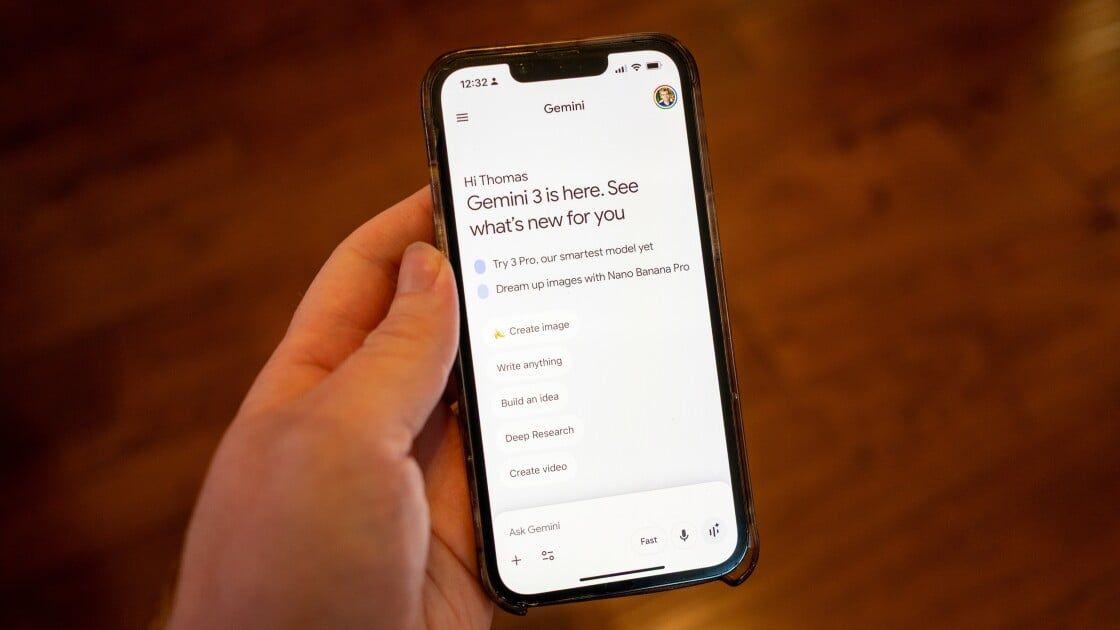
.
Source: PC Magazine
The distinction between Gemini, AI Mode, and AI Overviews creates multiple testing grounds for advertising approaches. AI Mode operates within Google search as a chatbot-style interface, separate from the standalone Gemini system but functionally similar. This allows Google to gather data on user response to ads in conversational AI contexts without directly affecting the Gemini app experience. Industry observers note that given Google's history of monetizing free services with ads, it seems only a matter of time before ads find their way into Gemini as well
3
.Industry Implications and What Users Should Watch
The competing pressures of user expectations and business sustainability will likely define the next phase of AI chatbot development. Both Google and OpenAI face the challenge of maintaining user trust while finding viable paths to profitability. The anonymous sources cited in the original Adweek report, despite Google's denials, highlight ongoing industry discussions about advertising integration timelines and formats.
Users should monitor how Google's ad experiments in AI Mode and AI Overviews perform and whether user feedback influences broader strategy. The OpenAI ChatGPT backlash demonstrates that users remain sensitive to perceived commercialization of AI tools, particularly those marketed as helpful assistants rather than search engines. As compute costs remain high and AI capabilities expand, the pressure to introduce some form of monetization beyond subscriptions will intensify. The question facing both companies isn't whether to monetize, but how to do so without triggering the kind of user backlash that forces product rollbacks.
References
Summarized by

Navi
[1]
[2]
[3]
Related Stories
Google Hints at Future Ad Integration in Gemini AI, Balancing User Experience and Monetization
05 Feb 2025•Business and Economy

Google Gemini stays ad-free as DeepMind CEO questions OpenAI's rush to introduce ChatGPT ads
21 Jan 2026•Business and Economy

ChatGPT ads arrive for free users as OpenAI tests new revenue model amid industry scrutiny
04 Feb 2026•Technology

Recent Highlights

Recent Highlights
Today's Top Stories







Your Daily Dose of Curated AI News
Don’t drown in AI news. We cut through the noise - filtering, ranking and summarizing the most important AI news, breakthroughs and research daily. Spend less time searching for the latest in AI and get straight to action.

