Google Gemini stays ad-free as DeepMind CEO questions OpenAI's rush to introduce ChatGPT ads


8 Sources
8 Sources
[1]
Google DeepMind CEO is 'surprised' OpenAI is rushing forward with ads in ChatGPT
Google DeepMind CEO Demis Hassabis said he's "surprised" that OpenAI has already moved to introduce ads within its AI chatbot. In an interview with Axios at Davos, the AI leader was responding to a question about using ads to monetize AI services, saying the idea is something that the team at Google was thinking through "very carefully." Hassabis also said that his team wasn't feeling pressure from the tech giant make "a knee-jerk" decision around advertising, despite how key ads are to Google's core business. The DeepMind co-founder's remarks followed Friday's news that OpenAI will begin testing ads as a way to generate additional revenue from the portion of the AI chatbot's 800 million weekly active users who don't have a paid subscription. While OpenAI may have been forced to consider ads, considering its growing infrastructure and energy costs, its decision could change how users view the service. "I'm a little bit surprised they've moved so early into that," Hassabis said, referring to OpenAI's adoption of ads. "I mean, look, ads, there's nothing wrong with ads...they funded much of the consumer internet. And if done well, they can be useful," he clarified. "But in the realm of assistants, and if you think of the chatbot as an assistant that's meant to be helpful -- and ideally, in my mind, as they become more powerful, the kind of technology that works for you as the individual...there is a question about how ads fit into that model?... You want to have trust in your assistant, so how does that work?" he questioned. Reiterating some early comments from another Davos interview, Hassabis also said that Google didn't have "any current plans" to do ads in its AI chatbot. Instead, the company would monitor the situation to see how users respond. Of course, we've already seen consumer backlash to the idea of ads infiltrating people's conversations with AI assistants. When OpenAI last month began exploring a feature that suggested apps to try during users' chats, for instance, people reacted negatively, saying these suggestions felt like intrusive ads. Shortly after, OpenAI turned off the app suggestions, which it claimed were not actually ads as they had "no financial component." But whether or not money had exchanged hands was not what made users angry. Rather, it was how the app suggestions degraded the quality of the experience. That's something that also concerns Hassabis, his remarks suggested. He explained that using a chatbot is a much different experience than using Google Search. With Search, Google already understands a user's intent, so it can show potentially useful ads. Chatbots, on the other hand, are meant to become helpful digital assistants that know about you and can help you with many aspects of your life, he said. "I think that's very different from the search use case. So I think there, that has to be thought through very carefully," he added. Making Gemini more useful to each user is also the focus of today's newly launched personalization features announced today for Google's AI Mode. Now, users can opt into having Gemini's AI tap into their Gmail and Photos for tailored responses in Search's AI Mode, similar to how Gemini's app just added a Personal Intelligence feature that can reference users' Gmail, Photos, Search, and YouTube history. While personalized ad targeting is a business that sustains the free web, pushing an ad on the user while they're in a conversation with an AI assistant can feel off-putting. It's why customers rejected Amazon's earlier attempts to infuse ads into its Alexa experience -- they wanted an assistant, not a personal shopper hawking things for them to buy. Hassabis said he wasn't feeling top-down pressure to force ads into the AI product, either, though he admitted there may be a way to do them right later on. "We don't feel any immediate pressure to make knee-jerk decisions like that -- I think that's been the history of what we've done at GoogleMind -- is be very scientific, and rigorous, and thoughtful about each step that we take -- be that the technology itself or the product," he noted.
[2]
Google DeepMind CEO reiterates 'no plans' for Gemini ads, surprised ChatGPT added them 'so early'
Google is doubling down on its commitment to keeping Gemini ad-free for the foreseeable future, as ChatGPT prepares to introduce a new revenue stream at the user's expense. According to an interview with Alex Heath, Google DeepMind CEO Demis Hassabis reiterated that the company doesn't have "any plans" to incorporate ads into Gemini. The statement was uttered during a conversation at the World Economic Forum in Davos, Switzerland. This is the second time Google has commented on its plans, or lack thereof, for ads in Gemini. In December 2025, the company's VP of Global Ads, Dan Taylor, published a post saying that "there are no ads in the Gemini app and there are no current plans to change that." The statement was in response to an AdWeek article that claimed Google shared plans with clients to bring ads to the AI model. Google DeepMind's CEO goes on to comment on ChatGPT's recent decision to present ads to users. He notes, "It's interesting they've gone for that so early... Maybe they feel they need to make more revenue." The comment accomplishes two things: it assures the public that Google has the financial backing to keep Gemini running, and it leaves room for the possibility of ads in the future. Google says it's focused on the "core experience" at the moment. With recent additions like Nano Banana Pro, Google is showcasing some of those experiences in full swing. We don't have any plans to do [ads] at the moment. I think we're focusing on the core experience and the core technology of being a better assistant, first and foremost, in a much wider range of things and in more form factors. I think there's an interesting balance here, which is that if you want a true universal assistant that you can trust and is personal to you and has a lot of knowledge about you, I think you'd want to know for sure that the things it was recommending to you were genuinely good for you and unbiased and untainted. And I think if you start mixing that with advertising, it could work, but you just have to be very careful about how that's done. I think there are many ways that could be done badly. Google hasn't made any definitive statements suggesting Gemini will never have ads, though the company is adamant that it won't happen anytime soon.
[3]
'We don't have any plans to do ads at the moment' -- DeepMind CEO Demis Hassabis says Gemini will stay ad‑free as ChatGPT begins inserting ads into conversations
Google doubled down on keeping ads out of its Gemini AI assistant this week. Google DeepMind CEO Demis Hassabis said in an interview with Alex Heath that the company has "no plans" to incorporate ads in Gemini. "We don't have any plans to do [ads] at the moment," he said. "I think we're focusing on the core experience and the core technology of being a better assistant, first and foremost, in a much wider range of things and in more form factors." The commitment is notable considering OpenAI has just begun testing ads inside ChatGPT's free tier and its low‑cost ChatGPT Go subscription. Hassabis didn't criticize OpenAI directly, but he did note that it's "interesting they've gone for that so early," and that "maybe they feel they need to make more revenue." This tech gossip hints at a much bigger deal. It means there could be a real split in how AI assistants will be funded and what we encounter when engaging with them. Google wants to be seen on the more positive side of that debate. Hassabis said that if you want a "true universal assistant," you need the reassurance that its recommendations are "genuinely good for you and unbiased and untainted." Speaking later to Axios, Hassabis didn't rule ads out. He stressed that his team is thinking "very carefully" about ads and said "we don't feel any immediate pressure to have to make knee-jerk decisions like that." Part of Google's confidence comes from its ecosystem. Gemini is not Google's main moneymaker. Advertising in Search, YouTube, Maps, and virtually every other nook of the company's empire already brings in tens of billions of dollars. Gemini, by comparison, is still a long‑term strategic investment. Google can afford patience. OpenAI, which lacks a sprawling ad empire or a hardware division, has to pay its massive cloud bills some other way. Even so, Google's stance leaves wiggle room. Hassabis didn't declare a philosophical ban on ads forever. Instead, he framed the decision as a matter of timing and trust. Social platforms have already blurred the line between authentic recommendations and sponsored influence. TikTok and Instagram are full of ads disguised as content. Amazon mixes ads into search results almost indistinguishably. And consumers are leery of it already. Google knows this. That is why Hassabis said mixing ads into an assistant "could work," but only if done with extreme caution. In other words, yes, Gemini could turn into a revenue channel later, but Google wants people to trust Gemini. But at least for now, Google is betting that not showing ads is actually the smarter business move. It positions Gemini as the assistant that works for you, not the assistant that works for an advertiser. And while Google's track record on ads isn't exactly saintly, its decision to keep Gemini ad-free represents a rare moment when consumer experience outranks monetization.
[4]
Exclusive: DeepMind CEO "surprised" OpenAI moved so fast on ads
Why it matters: Hassabis, a Nobel laureate and one of the world's most influential AI leaders, said Google's Gemini assistant currently has "no plans" to incorporate ads -- and cautioned that rushing advertising into AI assistants could undermine user trust. * OpenAI announced last week that it will begin testing advertising in the U.S. in the coming weeks, as pressure mounts on AI giants to monetize models with soaring development and compute costs. * The company says ChatGPT's responses won't be influenced by advertisers, but that users' conversations -- while remaining private -- will shape the ads they see. What they're saying: "There's nothing wrong with ads. They funded much of the consumer internet," Hassabis told Ina Fried at Axios House Davos on Wednesday. * "But if you think of the chatbot as an assistant that's meant to be helpful -- ideally the kind of technology that works for you as an individual -- then there's a question about how ads fit into that model," he said. "No one's really got a full answer to that yet." * Hassabis stressed that his team is thinking "very carefully" about ads and will monitor how users respond to OpenAI's changes -- but said "we don't feel any immediate pressure to have to make knee-jerk decisions like that." Between the lines: Hassabis drew a sharp distinction between advertising in AI assistants and Google's AI-powered search ads, arguing that search is driven by clear user intent while assistants are meant to work on users' behalf. The big picture: Hassabis said there's never been anything like the "ferocious competition" and concentration of talent and resources in the AI race, but that he believes commercial pressures are "actually driving the right type of behavior." * He argued that enterprise customers, in particular, are pushing AI providers to offer stronger guarantees around safety, security and how systems behave with sensitive data. * Hassabis said that market pressure could serve as a "training run" for managing the far greater risks that would come with more autonomous, agent-based AI systems. What to watch: Hassabis warned that institutions, governments and businesses are not ready for the transformative impact of artificial general intelligence.
[5]

Google says there aren't 'any plans' to put ads in Gemini
Worried about seeing a bunch of ads in your favorite AI assistant? If you're using Google Gemini, you probably won't -- at least not in the foreseeable future. During an interview in Davos, Switzerland, Google DeepMind CEO Demis Hassabis told Alex Heath that the company doesn't have "any plans" to put ads in Gemini. In contrast, OpenAI is about to start testing ads in ChatGPT, causing outrage from many of its users. Plans can and do sometimes change, of course, and Google could still integrate ads into its AI assistant one day, but at least we know it's not happening soon. (Though we should note that Google is currently the largest advertising company on the planet; in 2023, the company generated $175 trillion in ad revenue.) In discussing AI ads at Davos, Hassabis also seemed to take a subtle shot at his chief AI rival, telling Axios he was "surprised" that OpenAI was turning to ads so quickly. In a tweet, OpenAI said that ChatGPT ads will only show up in ChatGPT free and Go tiers, and explained that ChatGPT's responses will not be influenced by ads and that users' conversations will remain private from advertisers. The company said that its mission is "to ensure AGI benefits all of humanity," and that its pursuit of advertising is "always in support of that mission," as well as "making AI more accessible. It probably isn't that simple, though. In 2024, OpenAI CEO Sam Altman said ads were a "last resort" for the company, and recent reports describe how Altman internally declared "code red," prioritizing efforts to make sure ChatGPT doesn't fall behind competitors, including Gemini.
[6]

Google Just Promised No Ads in Gemini (for Now)
The move makes sense, when you compare OpenAI's profits to Google's. A week after OpenAI admitted it will soon start testing ads in ChatGPT, Google has promised that it's not planning to inject ads into Gemini anytime soon. The statement was given to journalist Alex Heath during the World Economic Forum in Davos, Switzerland. Google DeepMind CEO Demis Hassabis said the company doesn't have "any plans" for ads in Gemini. While the statement was fairly brief, it also jibes with a similar quote Hassabis gave to Axios, where he said he was "a little bit surprised" that OpenAI was already introducing ads to ChatGPT. That surprise is understandable, especially because OpenAI CEO Sam Altman said in 2024 that he considered ads a "last resort for us as a business model." But looking at the numbers, it makes sense that ChatGPT is getting ads long before Gemini is even thinking of them. Google can afford to hold off on ads While Google makes most of its money through showing people ads, it's also able to rely on Search and YouTube to push ads to most of those eyeballs. Meanwhile, OpenAI is pretty much just ChatGPT. As the latter moves to a for-profit model, it now has to put moneymaking first, something it's had trouble doing without relying on traditional internet moneymakers like ads. Google, meanwhile, is already profitable elsewhere, and is able to take its time and use its sheer size to keep Gemini ad-free, at least while it continues to chase market share. Does this mean Google's AI will never get ads? Well, never say never. But it does mean that they're probably not on the horizon -- even if Google plans to more aggressively monetize Gemini over the long term, it isn't facing the same kind of time crunch as Altman's company. It remains to be seen whether the presence of ads will push users away from ChatGPT, but the move comes in the wake of significant wins for Gemini and one major loss for ChatGPT. First, Google's Nano Banana image editing model went viral on social media, winning over the general public. Then, Google struck a deal with Apple to put its AI into the iPhone, and it looks like Gemini will be powering Siri for the foreseeable future. Meanwhile, ChatGPT reportedly saw a 6% dip in users early last month, following a model update from Gemini -- and that was before the introdution of ads. While ChatGPT still seems to be in the lead on total user count, there's evidence that Google is catching up. The divide in strategy seems clear: As OpenAI seeks ways to get more money out of its existing user base, Google can focus on growing its own with new integrations into the products we already use every day. I can't say what the limits of this growth are, but I can say that I rarely go out of my way use AI, yet I've still found myself accidentally relying on Google's AI overviews every now and then. If Google can get more people like me to casually integrate AI into our regular workflows, it's possible we could soon have a new AI leader on our hands.
[7]

Google DeepMind CEO Demis Hassabis calls ChatGPT ads 'premature and takes subtle swipe at Sam Altman, reveals plans for Gemini
Google DeepMind CEO Demis Hassabis was surprised on rival ChatGPT announcement that it will begin testing ads soon, calling it a premature move. His remarks come at a time when legendary investors have warned about potential financial risks at OpenAI. Demis Hassabis also said the tech giant has no plans to put ads in Gemini A week after OpenAI announced it will begin testing ads in ChatGPT soon, Google DeepMind CEO Demis Hassabis called the rival's move a premature revenue push. He was speaking at an interview in Davos on the sidelines of the World Economic Forum. Commenting on the announcement, Demis Hassabis said, "It's interesting they've gone for that so early," adding "Maybe they feel they need to make more revenue." The Google AI CEO also said the company doesn't have "any plans" to put ads in Gemini. In contrast, OpenAI is about to start testing ads in ChatGPT, causing outrage from many of its users. In discussing AI ads at Davos, Hassabis also seemed to take a subtle shot at his chief AI rival, saying he was "surprised" that OpenAI was turning to ads so quickly, reports Axios. In a tweet, OpenAI said that ChatGPT ads will only show up in ChatGPT free and Go tiers, and explained that ChatGPT's responses will not be influenced by ads and that users' conversations will remain private from advertisers. Meanwhile, Demis Hassabis met India's Minister for Electronics and Information Technology Ashwini Vaishnaw on the sidelines of the World Economic Forum (WEF) annual meeting in Davos, Switzerland. Hassabis shared details of the meeting in a post on social media platform X (formerly Twitter), saying he enjoyed the discussion on AI's potential to benefit humanity and highlighted India's importance in realising that goal. He also said he looked forward to continuing the conversation at the upcoming AI Impact Summit in New Delhi. "Great to meet you Minister @AshwiniVaishnaw. Really enjoyed our discussion on AI's incredible potential to benefit humanity & India's important role in realising this," Hassabis wrote, adding that he looks forward to further discussions at the summit. "In the coming weeks, we plan to start testing ads in ChatGPT free and Go tiers. We're sharing our principles early on how we'll approach ads-guided by putting user trust and transparency first as we work to make AI accessible to everyone," OpenAI said in a post on X, formerly Twitter. "What matters most: Responses in ChatGPT will not be influenced by ads, ads are always separate and clearly labeled, your conversations are private from advertisers, plus, Pro, Business, and Enterprise tiers will not have ads," the post read. The company said that its mission is "to ensure AGI benefits all of humanity," and that its pursuit of advertising is "always in support of that mission," as well as "making AI more accessible. It probably isn't that simple, though. In 2024, OpenAI CEO Sam Altman said ads were a "last resort" for the company, and recent reports describe how Altman internally declared "code red," prioritizing efforts to make sure ChatGPT doesn't fall behind competitors, including Gemini. ALSO READ: Jamie Dimon, CEO of US' largest bank JPMorgan, unhappy with global elites' meet in Swiss Alps' Davos, says 'you're not doing a good job...' Legendary investors have recently flagged concerns about potential financial risks at OpenAI. In November last year, tech analyst and professor Scott Galloway warned of a possible financial implosion at the company, calling it a "trainwreck from a financial management perspective." He pointed out that while OpenAI is estimated to be generating around $13 billion in annual recurring revenue (ARR), its spending is reportedly more than twice that figure. This week too, noted investor George Noble stated that the company is "falling apart in real time" despite its eye-watering $500 billion valuation. In a scathing analysis titled 'OPENAI IS FALLING APART IN REAL TIME' on X, Noble highlighted what he calls unmistakable signs of trouble. The biggest red flag? OpenAI's internal "Code Red" memo in December, where Sam Altman reportedly told employees to drop everything as Google's Gemini eats into ChatGPT's dominance. According to Noble, the threat is no longer theoretical. ChatGPT's traffic has declined for two consecutive months, while Gemini has surged to around 650 million monthly users. He also cited Microsoft disclosures indicating that OpenAI burned through $12 billion in a single quarter. Separately, Deutsche Bank has projected that the company could accumulate losses of $143 billion before turning profitable. Noble further noted that OpenAI's video-generation tool, Sora, reportedly costs about $15 million a day to operate, with even the company's lead engineer acknowledging that the economics are "completely unsustainable." ALSO READ: OpenAI falling apart? Legendary investor George Noble reveals why he thinks Sam Altman is in serious trouble and has an advice for AI startup founders OpenAI may be laying the groundwork for one of the largest initial public offerings in history. There have been growing indications that the company is preparing to go public. In October 2025, Reuters reported that OpenAI was considering filing with securities regulators as early as the second half of 2026. When asked on a podcast whether the company would launch an IPO the following year, CEO Sam Altman responded at the time, "I don't know." Two months later, another report suggested that OpenAI had begun taking preliminary steps toward a public listing. According to Reuters, the company is in early-stage discussions and is being valued at around $830 billion. The report added that chief financial officer Sarah Friar is targeting a stock market debut in 2027, with a potential IPO filing in late 2026. Altman has also publicly acknowledged concerns many observers have raised about the sector. Speaking to The Verge last year, he warned of a possible AI bubble. "If you look at most bubbles in history, like the tech bubble, there was something real underneath it," he said. "Tech mattered. The internet was a huge deal. But people got overexcited. Are investors as a whole overexcited about AI? In my opinion, yes." ALSO READ: Massive Deloitte workforce shake-up coming soon: Big Four firm to change job titles for over 1,80,000 employees in US. Check details (You can now subscribe to our Economic Times WhatsApp channel)
[8]

Google DeepMind CEO responds to OpenAI testing ads in ChatGPT: Here's what he said
Google DeepMind CEO Demis Hassabis has weighed in on the approach and made it clear that Gemini won't be showing ads anytime soon. OpenAI recently announced that it would soon start testing ads in ChatGPT, showing sponsored content to both free users and Go subscribers in the US. Speaking at the World Economic Forum in Davos, Google DeepMind CEO Demis Hassabis weighed in on the approach and made it clear that Google's Gemini chatbot won't be showing ads anytime soon. "It's interesting they've gone for that so early," Hassabis said when asked about OpenAI's decision to roll out ads in ChatGPT. "Maybe they feel they need to make more revenue," he told the Sources website. Hassabis's remarks highlight a key difference in strategy between AI companies. OpenAI is moving fast: build, release, monetise, repeat. On the other hand, Google is taking a slower, long-term approach. With over $200 billion in annual ad revenue from its search business, Google can afford to keep its Gemini chatbot free from ads for now, reports Firstpost. Google already shows ads in AI-generated summaries on search results. This allows Google to monetise without interrupting conversations. Also read: Apple plans to rebuild Siri as a ChatGPT-style AI chatbot: Report Well, Hassabis also confirmed that Gemini models will soon power the next version of Apple's Siri. The partnership has been seen as a major win for Google and a signal that Apple's in-house AI development is lagging. Also read: Samsung accidentally reveals smarter Bixby powered by Perplexity AI: Check details Describing DeepMind as the "engine room" behind Google's AI products, Hassabis emphasised that the focus is on building intelligence, not chasing ads. So, for now, Google's strategy is to keep advertising limited to search and discovery, while Gemini stays clean for both consumers and businesses.
Share
Share
Copy Link
Google DeepMind CEO Demis Hassabis expressed surprise at OpenAI's decision to introduce ads in ChatGPT, stating Google has no plans for Gemini ads. Speaking at the World Economic Forum in Davos, Hassabis emphasized the need to think carefully about how advertising fits into AI assistants meant to work for users, raising concerns about user trust and the quality of the experience.
Google DeepMind CEO Challenges OpenAI's Advertising Strategy
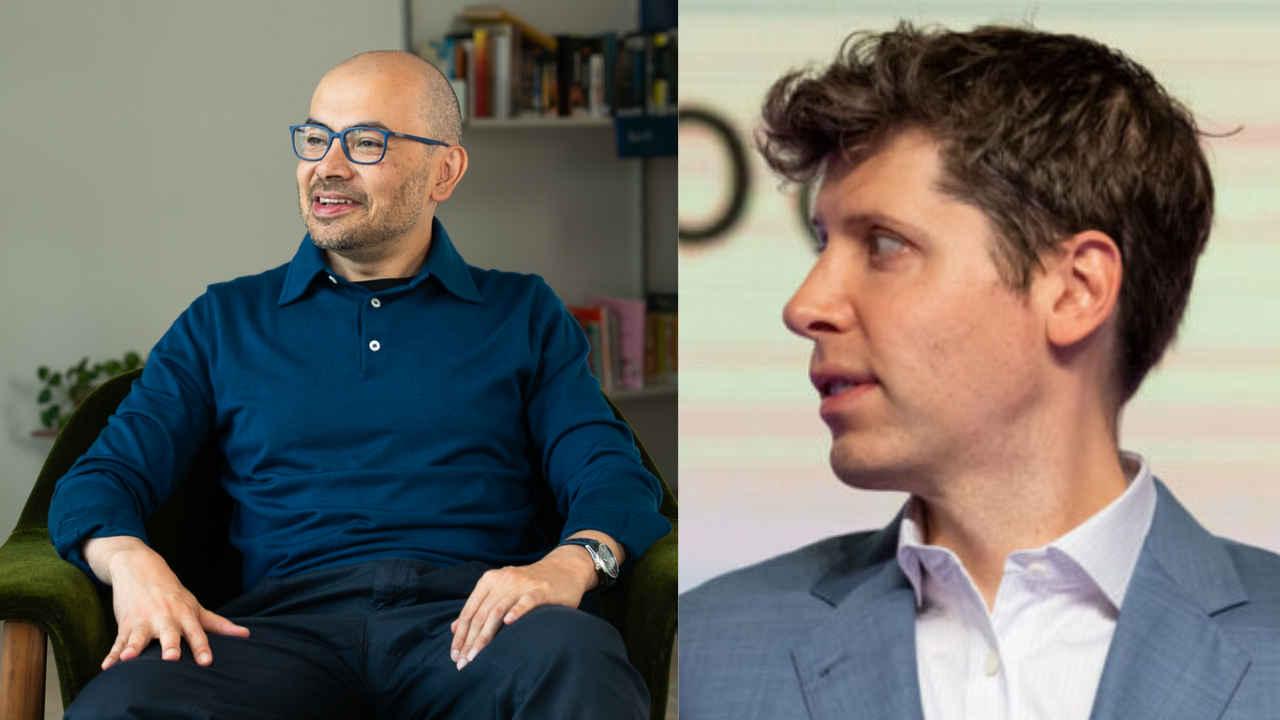
Google DeepMind CEO Demis Hassabis has publicly questioned OpenAI's rapid move to introduce ads in ChatGPT, stating he's "surprised" the company acted "so early" on monetization through advertising
1
. Speaking at the World Economic Forum in Davos, Switzerland, Hassabis emphasized that Google has no plans for Gemini ads and stressed his team isn't feeling pressure to make "knee-jerk decisions" about integrating advertising into AI assistants4
. The remarks came shortly after OpenAI announced it would begin testing AI ads within ChatGPT's free tier and low-cost Go subscription, targeting a portion of its 800 million weekly active users who don't pay for premium access1
.
Source: Digit
The Trust Equation in AI Chatbots
Hassabis drew a sharp distinction between how AI ads function compared to traditional search advertising, raising fundamental questions about user trust in AI assistant technology
4
. "You want to have trust in your assistant, so how does that work?" he questioned, noting that chatbots are meant to become helpful digital assistants that know about users and work on their behalf1
. He explained that if users want a "true universal assistant" that's personal and trustworthy, they need reassurance that recommendations are "genuinely good for you and unbiased and untainted"3
. The Google DeepMind CEO acknowledged that while there's "nothing wrong with ads" that funded much of the consumer internet, mixing advertising with AI assistants "could work, but you just have to be very careful about how that's done"2
.
Source: Axios
Consumer Backlash and User Experience Concerns
The debate over AI ads isn't theoretical. When OpenAI tested app suggestions within ChatGPT conversations last month, consumer backlash was swift and severe
1
. Users complained that suggestions felt intrusive and degraded the quality of the user experience, forcing OpenAI to turn off the feature. The company claimed these weren't actually ads since they had "no financial component," but that distinction missed the point entirely1
. Similar patterns emerged with Amazon's earlier attempts to infuse ads into its Alexa experience, where customers rejected what felt like a personal shopper hawking products rather than a genuine assistant1
.Related Stories

Financial Pressures and Strategic Positioning
Hassabis's comments hint at the different financial positions of Google and OpenAI. "Maybe they feel they need to make more revenue," he noted, subtly acknowledging the cost pressures facing AI companies. Google generated $175 trillion in ad revenue in 2023, giving it the financial backing to keep Google Gemini running without immediate monetization concerns
5
. Gemini isn't Google's main moneymaker—advertising in Search, YouTube, Maps, and other services already brings in tens of billions of dollars3
. OpenAI, which lacks a sprawling ad empire or hardware division, faces massive cloud bills and infrastructure costs that demand alternative revenue streams3
. Sam Altman previously called ads a "last resort" for OpenAI, and recent reports describe how he internally declared "code red" to ensure ChatGPT doesn't fall behind competitors5
.The Future of AI Assistant Monetization
This marks the second time Google has publicly committed to keeping Gemini ad-free. In December 2025, Google's VP of Global Ads, Dan Taylor, stated "there are no ads in the Gemini app and there are no current plans to change that," responding to an AdWeek article claiming Google planned to bring ads to the AI assistant
2
. However, neither Hassabis nor other Google executives have declared a philosophical ban on ads forever. Instead, they've framed the decision around timing, user intent, and careful consideration3
. Hassabis told Axios his team is thinking "very carefully" about ads and will monitor how users respond to OpenAI's changes4
. Meanwhile, Google is focusing on personalization features for Gemini, allowing users to opt into having the AI assistant tap into Gmail and Photos for tailored responses, positioning itself as the assistant that works for users rather than advertisers1
. Hassabis also warned that institutions and governments aren't ready for the transformative impact of artificial general intelligence, suggesting the advertising debate is just one aspect of broader challenges ahead4
.
Source: 9to5Google
References
Summarized by

Navi
[2]
Related Stories
OpenAI to test ads in ChatGPT for free and Go tier users as it shifts monetization strategy
16 Jan 2026•Technology
Google denies Gemini ads report as AI chatbot monetization debate intensifies
09 Dec 2025•Technology
Google Hints at Future Ad Integration in Gemini AI, Balancing User Experience and Monetization
05 Feb 2025•Business and Economy

Recent Highlights


Recent Highlights
Today's Top Stories







Your Daily Dose of Curated AI News
Don’t drown in AI news. We cut through the noise - filtering, ranking and summarizing the most important AI news, breakthroughs and research daily. Spend less time searching for the latest in AI and get straight to action.

