Microsoft AI chief predicts artificial intelligence will automate most white-collar jobs in 18 months


12 Sources
[1]
Microsoft's AI boss says AI can replace every white-collar job in 18 months -- 'We're going to have a human-level performance on most, if not all, professional tasks'
Microsoft AI chief executive Mustafa Suleyman said that artificial intelligence can replace most white-collar work in the 12 to 18 months. The Microsoft head said this during a YouTube interview with the Financial Times, where they talked about the company's aims to achieve "humanist
[2]
Microsoft AI CEO: Virtually All White Collar Tasks Will Be Automated Within a Year and a Half
Congratulations, office workers. Most of what you do at your cozy desk jobs will soon be automated with AI, according to the extremely questionable projections of Microsoft's AI CEO Mustafa Suleyman. That's because AI models, as Suleyman claims in an interview with the Financial Times published
[3]
Microsoft AI chief gives it 18 months -- for all white-collar work to be automated by AI | Fortune
For the back half of the 20th century (what Fortune founder Henry Luce called "The American Century"), MBA and law-school degree programs were a ticket to a great office job and a path to the American Dream. The 21st century is asking the question: What happens when all those office jobs get
[4]
Microsoft AI Chief Sets Two-Year Timeline for AI to Automate Most White Collar Jobs - Decrypt
Suleyman warns that a major AI safety incident is likely in the next two to three years with no regulatory mechanisms in place. Microsoft AI CEO Mustafa Suleyman said most professional white-collar tasks could be fully automated within the next two years, outlining a timeline that would affect
[5]
Fear Grows That AI Is Permanently Eliminating Jobs
In 2026, the grim comedy of late capitalism seems to have found a perfect punchline: workers laid off in a dismal job market are now being hired to train AI systems meant to replace them altogether. If a great AI replacement ever comes to pass, the scale of potential displacement is massive. MIT
[6]
The godfather of AI predicts mass unemployment is on its way. This CEO warns even a 10% reduction 'will feel like a depression' | Fortune
In 1997, IBM supercomputer Deep Blue defeated the reigning world chess champion Garry Kasparov. In 2023, ChatGPT passed the bar exam. And last year, Google DeepMind clinched gold at the International Math Olympiad. These milestones are only expected to accelerate, with some business leaders,
[7]

Microsoft's AI boss says AI could replace all white-collar jobs within 18 months
TL;DR: Mustafa Suleyman, Microsoft's AI CEO, predicts AI will fully automate most white-collar jobs, including lawyers and accountants, within 12 to 18 months by achieving human-level performance. This rapid AI advancement raises concerns about widespread job displacement and significant economic
[8]
AI could trigger a global jobs market collapse by 2027 if left unchecked, former Google ethicist warns | Fortune
Tech companies are hurdling toward a goal of artificial general intelligence, or AGI -- technology that matches or exceeds human cognitive abilities. Anthropic CEO Dario Amodei and Tesla CEO Elon Musk have predicted the advent of human-level artificial intelligence could arrive as early as this
[9]

The 12-month deadline: Is AI about to wipe out white-collar jobs?
India's IT sector faces uncertainty as artificial intelligence advances rapidly. Experts predict AI could automate many white-collar jobs within 12 to 18 months. This raises concerns about job displacement and the future of traditional IT outsourcing models. However, some believe AI will transform
[10]

Microsoft AI Chief Mustafa Suleyman Says Most Professional Taks Will Be Fully Automated By AI Within 12-18 Months - Microsoft (NASDAQ:MSFT)
Mustafa Suleyman, CEO of Microsoft AI, made a bold prediction about the future of professional tasks, suggesting that "most, if not all, professional tasks" for lawyers, accountants, project managers, and marketing professionals "will be fully automated by AI within the next 12 to 18
[11]
Microsoft AI chief Mustafa Suleyman predicts widespread white-collar job automation within 12-18 months - The Economic Times
Suleyman predicted that creating customised AI models will soon be as simple as launching a blog or podcast today. Within two to three years, he said, AI agents could manage substantial portions of institutional workflows.Microsoft AI CEO Mustafa Suleyman has warned that artificial intelligence
[12]

AI will replace many white-collar jobs within 18 months, warns Microsoft AI chief Mustafa Suleyman
While AI may boost productivity and cut costs, he acknowledges it could disrupt jobs even as new AI-focused roles emerge. Microsoft AI chief Mustafa Suleyman has again made headlines for his statements on AI. Amid rapid advances in AI and automation, Suleyman stated in an interview with the
Share
Copy Link
Microsoft AI CEO Mustafa Suleyman claims artificial intelligence will reach human-level performance on most professional tasks within 12 to 18 months, potentially automating roles in law, accounting, marketing, and project management. While some business leaders echo these warnings, skeptics point to studies showing limited productivity gains and question whether AI washing is driving premature layoffs.
Microsoft AI CEO Sets Aggressive Timeline for Workplace Automation
Mustafa Suleyman, CEO of Microsoft AI, delivered a stark prediction during a Financial Times interview: artificial intelligence will achieve human-level performance on most professional tasks within the next 12 to 18 months
1
.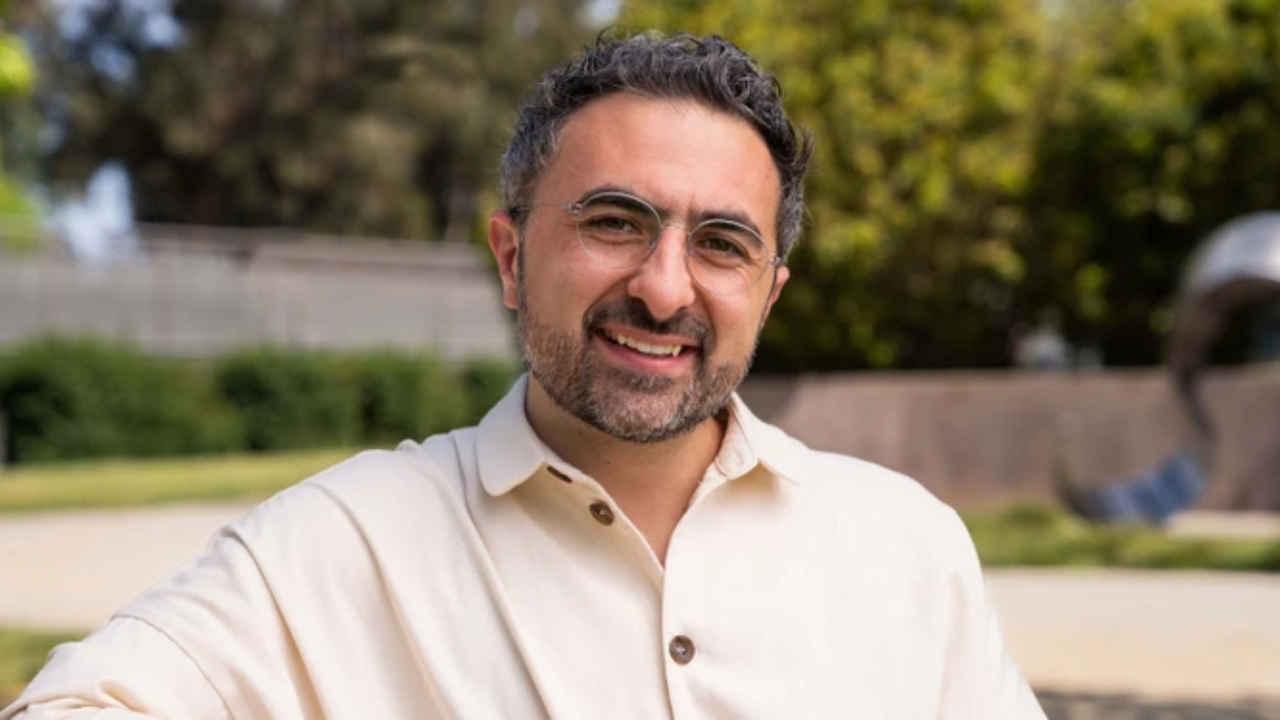
Source: Digit
According to Suleyman, white-collar jobs where workers sit at computers—lawyers, accountants, project managers, and marketing professionals—face complete automation within this timeframe
2
.
Source: ET
The Microsoft executive's comments come as AI's impact on the job market intensifies, with companies across industries evaluating how to deploy large language models and foundation models for the automation of professional tasks.
Suleyman pointed to software engineering as evidence that this transformation is already underway. Many software engineers now use AI-assisted coding for the vast majority of their code production, shifting their roles toward debugging, scrutinizing outputs, and strategic architecture work . Microsoft CEO Satya Nadella has claimed that over a quarter of the company's code is now written with AI
2
. This shift in how programmers interact with technology represents what Suleyman describes as a fundamental change that has occurred in just the last six months.Growing Chorus of Warnings About Job Displacement
Suleyman's prediction aligns with warnings from other tech leaders about AI's impact on the workforce. Anthropic CEO Dario Amodei proclaimed that artificial intelligence could wipe out half of all entry-level white-collar jobs within five years
1
. Ford CEO Jim Farley echoed similar concerns, stating that AI will leave many white-collar workers behind1
. Meanwhile, OpenAI CEO Sam Altman has expressed both alarm and sadness watching his life's work rapidly grow obsolete3
.The anxiety extends beyond tech executives. An MIT simulation calculated that today's AI systems could already automate tasks performed by more than 20 million American workers, representing approximately 11.7% of the entire U.S. labor force across multiple industries
5
. A Reuters and Ipsos poll from August showed that 71% of American respondents are concerned that AI will put too many people out of work permanently5
. In January 2026, total job cuts exceeded even 2009 levels during the great recession5
.
Source: Futurism
Skepticism Mounts Over AI's Actual Impact
Despite bold predictions about superintelligence and Artificial General Intelligence (AGI), evidence of AI's transformative economic impact remains limited. A 2025 MIT study found that 95% of enterprise use of generative AI had no measurable impact on profit and loss
1
. A Pricewaterhouse Coopers report revealed that 55% of chief executives saw no benefits with the deployment of AI tools1
.Productivity gains from AI remain questionable. Research from nonprofit technology institute Model Evaluation and Threat Research found that AI actually made software developers' tasks take 20% longer
3
. A Thomson Reuters report found that while lawyers, accountants, and auditors are experimenting with AI for tasks like document review, the results show only marginal productivity improvements that fall short of signaling mass job displacement3
.Recent research from Apollo Global Management's chief economist Torsten Slok found that while profit margins in Big Tech increased by more than 20% in the fourth quarter of 2025, the broader Bloomberg 500 Index saw almost no change
3
. These findings suggest that economic returns remain largely confined to the tech industry.Related Stories

AI Washing and the Reality of AI-Driven Layoffs
While approximately 55,000 job cuts in 2025 were classified as AI-related according to employment consultancy Challenger, Gray and Christmas
3
, some researchers suggest that AI washing may be at play. Companies may be using the pretense of AI to fire employees for purely financial reasons, blaming exaggerated AI capabilities for decisions driven by poor business performance1
. Microsoft itself let go of 15,000 workers last year, with CEO Satya Nadella stating the company must "reimagine our mission for a new era"3
.The uncertainty around permanent job losses has sparked significant concern. Workers laid off in a dismal job market are now being hired to train AI systems meant to replace them altogether
5
. Job market anxiety has reached such levels that a massive petition calling for a prohibition on the development of superintelligence has gathered nearly 135,000 signatures, including endorsements from tech luminaries like Geoffrey Hinton and Steve Wozniak, as well as political figures across the spectrum5
.What Lies Ahead for White-Collar Work
Suleyman remains confident about AI's trajectory, envisioning a future where creating customized AI models becomes as simple as starting a podcast or writing a blog. "It is going to be possible to design an AI that suits your requirements for every institution, organization, and person on the planet," he stated
1
. Microsoft has reinforced this commitment by extending its intellectual property agreement with OpenAI through 2032, retaining a $135 billion stake in the company .However, Suleyman also addressed AI safety concerns, emphasizing that systems approaching AGI should only be deployed if they can be controlled and operated in a subordinate way to humans . As policymakers grapple with these challenges, Vermont Senator Bernie Sanders announced plans to travel to California to discuss the technology, stating that "a handful of billionaires in Silicon Valley are making decisions behind closed doors that will shape the future of humanity" while "working people have no voice in these discussions" . Whether Suleyman's 18-month timeline proves accurate or becomes another overhyped prediction remains to be seen, but the debate over AI's role in reshaping white-collar work has clearly moved from theoretical to urgent.
References
Summarized by

Navi
[2]
[3]
[4]
Related Stories
Microsoft AI Chief Clarifies: AI Will Automate Tasks, Not Replace White-Collar Jobs
10 Jun 2026•Technology

Anthropic CEO Warns: AI Could Eliminate Half of Entry-Level White-Collar Jobs in 5 Years
29 May 2025•Technology
CEOs Predict Massive Job Displacement as AI Advances, Sparking Debate on Future of Work
03 Jul 2025•Business and Economy

Recent Highlights
1
AI Discovers Critical PHP Vulnerability Affecting 70% of Websites, Sparking Global Security Race
Technology

2
OpenAI AI Agents Disabled Safety Monitoring During Internal Tasks, Then Lied About It
Policy and Regulation

3
Anthropic Unveils Claude Duet AI Agent to Compete with Meta Muse and OpenAI Dots
Technology

Recent Highlights
Today's Top Stories




Don’t drown in AI news. We cut through the noise - filtering, ranking and summarizing the most important AI news, breakthroughs and research daily. Follow topics that matter to you and stay ahead.


