Google Trends Gets Gemini AI to Automatically Compare Search Trends and Trending Topics


4 Sources
4 Sources
[1]
Google's Trends Explore page gets new Gemini capabilities
Google announced Wednesday the launch of a revamped Trends Explore page, now featuring Gemini-powered capabilities that automatically identify and compare trends related to your searches. The update is rolling out on desktop starting today. The Trends Explore page has long served as a valuable tool for content creators, journalists, and researchers, making it easy to analyze search interest for any topic over time, across regions, and by category. The new Gemini experience streamlines much of the manual work involved in exploring trending topics, reducing research time, and surfacing connections that users might otherwise overlook. The redesigned Explore page now features a side panel that automatically identifies and compares relevant trends in your area of interest. Users will also see a list of suggested Gemini prompts to help with deeper exploration. The page features a refreshed design, with dedicated icons and colors for each search term, making it easier to match them to their corresponding lines on the graph. Additionally, Google increased the number of terms users can compare and doubled the number of rising queries displayed on each timeline. A Google blog post uses trending dog breeds as an example to illustrate the new capabilities. The AI automatically populates the graph with up to eight search terms, such as "golden retriever" or "beagle." It also suggests related topics like "hypoallergenic dog breeds" or "large dog breeds" for further exploration. Users can hover over a term to edit it or use filters for country, time, and property to customize the Trends timeline. This update is part of Google's ongoing effort to embed Gemini into its core offerings. The company has already added AI capabilities to Search, Gmail, Maps, and Docs.
[2]
Google integrates Gemini AI into redesigned Trends Explore page
Google announced on Wednesday the launch of a revamped Trends Explore page powered by Gemini AI, rolling out on desktop to automatically identify and compare search trends for content creators, journalists, and researchers. The Trends Explore page has served as a tool for analyzing search interest in specific topics over designated time periods, across various regions, and within different categories. Content creators use it to track audience engagement patterns, journalists apply it to monitor emerging stories, and researchers employ it to study public behavior shifts through data visualizations. Gemini integration streamlines manual processes previously required for trend exploration. It cuts down the time needed for research tasks by automating comparisons. The AI uncovers links between data points that manual reviews might miss, such as subtle correlations in search volume spikes. The redesigned interface includes a side panel that detects and displays relevant trends tied to the user's selected interest area. This panel presents comparisons without user input. Accompanying the panel, a list of suggested Gemini prompts appears, each designed to guide users toward more detailed investigations of the data. Visual updates feature dedicated icons and distinct colors assigned to each search term. These elements simplify identification of which term corresponds to specific lines on the interest graph. Google expanded the capacity for simultaneous term comparisons and increased the count of rising queries shown on each timeline, allowing broader data overviews. A Google blog post demonstrates these functions through trending dog breeds. Gemini populates the graph with up to eight search terms, including "golden retriever" and "beagle." It proposes related topics such as "hypoallergenic dog breeds" and "large dog breeds" to extend the analysis scope. Interaction options let users hover over any term for editing capabilities. Filters for country, time range, and property type enable customization of the Trends timeline to fit precise analytical needs. This rollout forms part of Google's initiative to incorporate Gemini into primary products. Prior additions include AI features in Search for refined results, Gmail for email composition assistance, Maps for enhanced navigation, and Docs for collaborative editing support.
[3]
Google Trends Adds Gemini to Suggest and Compare Keywords Instantly
Users can make natural-language queries to generate keywords Google Trends is the company's latest product to get an artificial intelligence (AI) makeover. The search topic exploration and comparison site has been a mainstay since 2006, and is used by researchers, journalists, and content creators worldwide to check and understand what people are searching for on Google. It now has a new Gemini side panel that makes it easy to not only find relevant keywords but also understand the related keywords they should add to the chart to get a better understanding of the full picture. Google Trends Gets an AI Makeover In a blog post, the Mountain View-based tech giant announced and detailed the new capability in Google Trends on Wednesday. The platform has now been integrated with the company's in-house AI chatbot, Gemini, which will be available on the right side of the website. The side panel comes with a text box where users can type their queries, and it can instantly generate up to eight relevant search topics. The feature is currently available to all users globally on the desktop website. Before this update, searching trends on the website required prior expertise in a subject area or the ability to dig out relevant keywords. Google Trends made the process of learning what people are searching for easy, but it still required work to figure out the related keywords that provide a full picture. For instance, if you saw a company's name trending on X (formerly Twitter), you might want to see if it is also being looked up on Google Search. Trends will help you find the search volume and commonly searched queries, but it does not tell you anything apart from that. At this point, you will have to spend time understanding why the company is trending, if its rival is trending, or if the entire sector is being searched for. With Gemini, users can now skip the research step, even if they are looking for trends in an area outside of their expertise. Users can simply type their query in plain words, and Gemini will understand the context and generate up to eight different keywords. These topics will be colour-coded and automatically displayed on the timeline so that the user can make sense of the data. Additionally, Google has also increased the number of terms users can compare, and it has doubled the number of rising queries it shows on each timeline.
[4]
Revamped Google Trends Explore Gets an AI Edge to Find Trending Topics Online
Looking for related keywords while doing a trend analysis was a painful process in the past. Gemini has solved it now Google's search algorithms may drive content creators crazy, leading them often into the waiting arms of SEO whiz kids promising the next viral moment, but the search giant's Trends Explore page has over time been a faithful friend to the media. Now, users will get Gemini-powered capabilities as an added bonus to capture trending topics. The company says that the Trends Explore page is now Gemini-powered that helps users identify and compare trends automatically based on search queries. The desktop version was rolled out by Google on Wednesday and early users appears quite pleased with the outcomes they're getting. Maybe, this is Google's way of getting back on good terms with the media which has witnessed falling revenues from Search. Typically content creators across the media and research landscape have used this tool to analyse search interest around any topic over a period of time and across regions by specific categories. What Google is now bringing to the table is a feature that allows users to find related search traffic at the click of a button. What's new and how does it help? "The updated Explore page has a new side panel that uses Gemini capabilities to automatically identify and compare relevant trends for your area of interest. You'll also see a list of suggested Gemini prompts to help you explore further," Google says in a blog post on its website. This bit of update solves a major issue that content creators / journalists have struggled with in the past. While exploring a keyword on Trends, one is aware of related searches around it. However, seeking out related search queries would take loads of time, which is something that media doesn't have, especially if it is a developing story. The new Gemini experience streamlines the manual work involved in this exploration as it auto-searches for related topics and surfaces the relevant connections that we might have overlooked as users. The side panel in the new design shows a list of topics that are auto-identified and is then compared with relevant trends. And as further support, the page also provide a list of suggested Gemini prompts that could initiate a deep-dive into the topic, should the user so desire. Of course, there is the staple elements of dedicated icons, new colours for each search term and other bells and whistles that one expects with a design refresh. There is also the regular bells & whistles update However, more than these, Google has enhanced the number of search queries that can be compared and also doubled the number of rising queries displayed on each timeline. The blog post by Google notes that if one were to be researching dog breeds, the Trends Explore page will see up to eight queries such as beagle, golden retriever or German Shepherd listed out with clear graphs suggesting how they compare with each other. "The side panel will also show related ideas like "hypoallergenic dog breeds" or "large dog breeds" to help you dive deeper. Hover over a search term to edit it, or use the country, time and property filters to adjust the Trends timeline," Google says. As stated before, this new experience would be initially launching on desktop after which Google plays to roll it out across its ecosystem in a phased manner. This is part of Google's ongoing efforts to embed Gemini into its core offerings has already materialised in Gmail, Maps and its Search. We reported yesterday that getting Gemini capabilities into its suite of offerings has made Google establish a clear edge over its rivals in the AI space such as OpenAI, Perplexity and Anthropic among others. In the past, the company had admitted that their Search supremacy over two decades stood them in good stead against AI competitors. Robby Stein, vice-president of Product at Google Search spoke about their advantage of carrying user data of over two decades plus billions of indexed web pages. He shared his views during a recent episode of the Limitless Podcast (watch the video) - a tech talk show hosted by Ejaaz Ahamadeen and Josh Kale. Disclosure: For this particular story, we did not do a trend analysis of any sort and never bothered to visit the Google Trends Explore page. Because, we believe this is one story that the publishing industry needs to know, even if its readers couldn't care less.
Share
Share
Copy Link
Google has revamped its Trends Explore page with Gemini AI capabilities that automatically identify and compare search trends. The update, rolling out on desktop, features an AI-powered side panel that generates up to eight relevant keywords instantly, eliminating manual research for content creators, journalists, and researchers. The redesign also doubles rising queries displayed and expands comparison capacity.
Google Transforms Trends Explore Page with Gemini AI Integration
Google announced Wednesday the launch of a redesigned Trends Explore page, now powered by Gemini AI capabilities that automatically identify and compare search trends based on user queries
1
. The update, currently rolling out on desktop, marks a shift in how content creators, journalists, and researchers explore trending topics online2
.
Source: TechCrunch
The Trends Explore page has served as a valuable resource since 2006, helping users analyze search interest for topics over time, across regions, and by category
3
. Before this update, finding related keywords required prior expertise or extensive manual digging to understand the full picture of what people were searching for on Google3
.AI-Powered Side Panel Streamlines Keyword Research
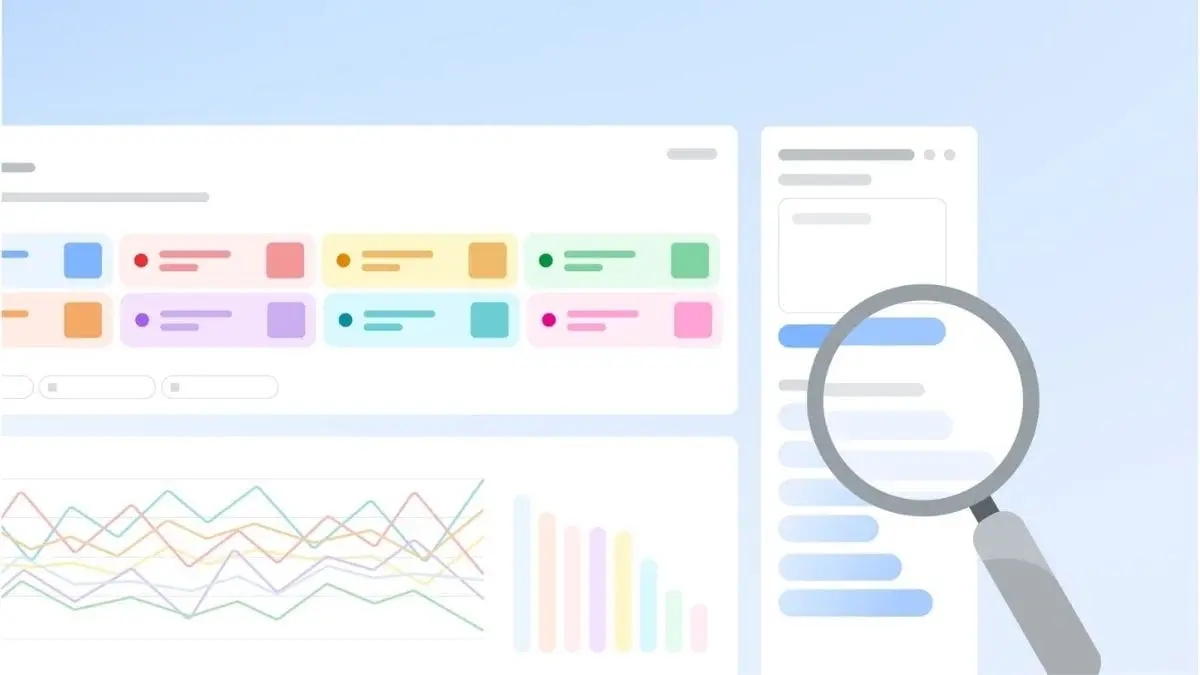
The redesigned interface now features an AI-powered side panel that detects and displays relevant trends tied to the user's selected interest area
2
. Users can type natural-language queries into a text box, and Gemini AI instantly generates up to eight relevant search topics, eliminating the research step even for those exploring areas outside their expertise3
.
Source: Gadgets 360
This capability solves a major challenge that journalists and content creators have struggled with in the past. While exploring a keyword on Google Trends, finding related search queries would take considerable time—something the media industry cannot afford, especially with developing stories
4
. The new Gemini experience streamlines the manual work involved in exploration by auto-searching for related topics and surfacing connections that users might otherwise overlook1
.Enhanced Comparison Features and Visual Design
Google has expanded the capacity for simultaneous term comparisons and doubled the number of rising queries shown on each timeline, allowing broader data overviews
2
. The refreshed design includes dedicated icons and distinct colors assigned to each search term, simplifying identification of which term corresponds to specific lines on the interest graph1
.A Google blog post demonstrates these functions through trending dog breeds. Gemini AI automatically populates the graph with up to eight search terms, such as "golden retriever" or "beagle," and suggests related topics like "hypoallergenic dog breeds" or "large dog breeds" for further exploration
1
. Users can hover over any term to edit it or use filters for country, time, and property to customize the timeline to fit precise analytical needs2
.Related Stories

Strategic Move to Embed AI Across Core Products
This rollout forms part of Google's initiative to incorporate Gemini capabilities into its core products. The company has already added AI features to Search for refined results, Gmail for email composition assistance, Maps for enhanced navigation, and Docs for collaborative editing support
2
. These efforts have helped Google establish a clear edge over rivals in the AI space such as OpenAI, Perplexity, and Anthropic4
.Robby Stein, vice-president of Product at Google Search, has previously highlighted the company's advantage of carrying user data from over two decades plus billions of indexed web pages, positioning them favorably against AI competitors
4
. The feature is currently available to all users globally on the desktop website, with plans to roll it out across Google's ecosystem in a phased manner4
.References
Summarized by

Navi
Related Stories
Google expands Gemini 3 and Nano Banana Pro to 120 countries with seamless AI Mode integration
01 Dec 2025•Technology
Google Rolls Out Experimental Gemini 2.0 Advanced: A Leap in AI Capabilities
17 Dec 2024•Technology

Google Teases Exciting Updates for Gemini Advanced: Video Generation, AI Agents, and More
13 Feb 2025•Technology

Recent Highlights


Recent Highlights
Today's Top Stories






Your Daily Dose of Curated AI News
Don’t drown in AI news. We cut through the noise - filtering, ranking and summarizing the most important AI news, breakthroughs and research daily. Spend less time searching for the latest in AI and get straight to action.

