Gemini expands on Google TV with Nano Banana and Veo models for AI-generated content


16 Sources
16 Sources
[1]
Gemini expands on Google TV, bringing Nano Banana and Veo models to your TV
Soon, even loafing around on the couch won't help you steer clear of AI. TV makers are busily integrating AI models into the experience, and Google is no different. At CES, the company announced a big expansion of Gemini features on the Google TV platform, starting with TCL smart TVs. Google began integrating Gemini with the TV Streamer box this past fall, but the new expansion brings some of the company's most popular AI features to TVs: Nano Banana (image) and Veo (video), which offered a huge leap in visual fidelity at launch and have only improved with subsequent updates. Both models will be part of the TV experience, allowing users to modify or create new content. The Google TV platform connects to Google Photos, allowing Gemini to access those images with your approval. Gemini can generate a slideshow of your choosing on the spot, but it can also feed those images into Veo or Nano Banana. Using Gemini voice controls, you can remix a photo or turn a still image into a video. You can also enter a solo prompt to generate a totally new image or video with Google's AI on your TV. That might be a fun distraction, but it's not a core TV experience. Google's image and video models are good enough that you might gain some benefit from monkeying around with them on a larger screen, but Gemini is also available for more general tasks. This update brings a full chatbot-like experience to TVs. If you want to catch up on sports scores or get recommendations for what to watch, you can ask the robot. The outputs might be a little different than you'd expect from using Gemini on the web or in an app. Google says it has devised a "visually rich framework" that will make the AI more usable on a TV. There will also be a "Dive Deeper" option in each response to generate an interactive overview of the topic. Gemini can also take action to tweak system settings based on your complaints. For example, pull up Gemini and say "the dialog is too quiet" and watch as the AI makes adjustments to address that. The new Gemini features will debut on TCL TVs that run Google TV, but most other devices, even Google's own TV Streamer, will have to wait a few months. Even then, you won't see Gemini taking over every TV or streaming box with Google's software. The new Gemini features require the full Google TV experience with Android OS version 14 or higher.
[2]
Google previews new Gemini features for TV at CES 2026 | TechCrunch
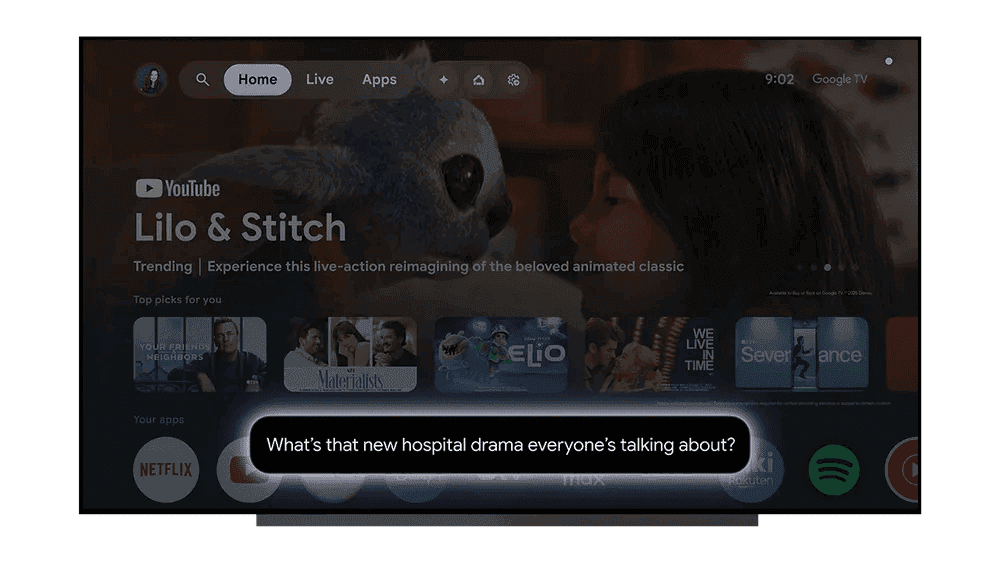
Google believes AI can improve the TV-watching experience, which is why it brought its Gemini AI to Google TV devices in November. At the Consumer Electronics Show (CES 2026) in Las Vegas, the company is now showing off a series of new Gemini features that will soon arrive on the TV, making it possible for viewers to deep dive into topics, search for and "reimagine" their personal photos and videos with AI, and, perhaps best of all, tell the TV what to do instead of having to navigate through complicated settings. The company is first bringing these Gemini features and others to select TCL televisions before rolling them out more broadly to other Google TV devices in the months ahead. Designed for large-screen experiences, Gemini for Google TV will allow users to talk to their TV to find something to watch, catch up on a favorite series by getting a recap of the plot, or get recommendations, all by using natural language conversation. For instance, you could ask Gemini for something to watch that would be a blend of two people's tastes, or get help remembering a show or movie where you can't remember the title, but can describe the plot or name one of the actors. You could even ask Google something like, "What's the new hospital drama everyone's talking about?" Gemini can respond to users' questions through a new visually rich framework that adapts to individual queries, combining text, imagery, video context, and real-time sports updates, as required. But Google sees the potential for the TV's screen to be used for more than just entertainment; with Gemini, the TV can be used to educate, too. At CES, Google showed how this would work. When users ask a question about something they want to learn about, the TV screen can offer a deep dive into the topic. A narrated interactive overview simplifies concepts, and users can ask follow-up questions to learn more. Gemini will also allow users to query their Google Photos library for specific people or moments. They can also apply artistic styles to their photos and videos using Gemini AI and turn their memories into cinematic slideshows, says Google. However, perhaps the most useful feature is one that gives you the power to optimize the TV's settings using only your voice. Now, you'll be able to tell Gemini things like "the screen is too dim" or "I can't hear the dialogue," and Gemini will adjust the relevant settings without you having to leave the movie or TV show you're watching to dig through menus to find the necessary option. Google says the new Gemini features will require the Google TV devices to be running Android TV OS 14 or higher, and they will need an internet connection. Not all languages, countries, or devices will be supported at launch, and users must also have a Google account to access the Gemini for TV experience.
[3]
AI Slop Is Coming to Some Google TV Devices, Whether You Want It or Not
Google really wants you to get comfortable talking to your TV. The company is adding even more of its Gemini AI to its TV devices, including the ability to create and edit photos and videos with AI using its nano banana and Veo 3 models. The company made its announcement on Monday at CES 2026, the world's largest consumer tech show. CNET is on the ground at the show in Las Vegas, covering all the emerging trends and futuristic tech, including humanoid robots, a better alternative to chatbots and the path to flying cars. Google initially integrated its AI assistant into its TV viewers' experiences last fall, and these new updates add even more ways to use AI. You can now chat with Gemini like you would through your phone or laptop. You can easily activate the AI, represented by the star icon, which will appear at the bottom of the screen. You can ask Gemini for recommendations for what to watch next, to adjust the brightness and volume, to show you images from your Google Photos, or to answer questions like a chatbot would, including links to YouTube videos. Don't miss any of our unbiased tech content and lab-based reviews. Add CNET as a preferred Google source. Gemini will also suggest follow-up search questions for deeper dives. It feels like using Gemini, just on a much larger screen. Google invested heavily in generative media last year, with its flagship AI image and video models, nano banana and Veo 3, sparking awe among fans. Veo 3 was the first major model to include synchronized audio with video, and nano banana pro is unnervingly good at editing and creating photorealistic images. Google has been integrating these models into its products, including Google Photos. Now, it's coming to TVs. Read More: My CES 2026 Secret Weapon? This New Wearable AI Note-Taking Pin From Plaud Compatible TV devices can take photos from your Google Photos account and remix them on the larger TV screen. If you've remixed images on your phone using the Google Photos app, it will feel familiar. You can give your photos a different aesthetic, like oil painting or art deco, and save the AI-edited image to your Google Photos. And if you want, you can also create your own AI images and videos on TVs. You can upload reference photos from your phone by scanning a QR code and say your prompt aloud to the TV. While creating on a bigger screen may be nice for some, I imagine the most common example will be for people who want to create as a group, like parents entertaining young kids or at a party -- no need to crowd around a phone or laptop. These Gemini AI features will be available to TVs running Android TV OS 14 or later, and generation limits will apply. The new features will first be available on select TCL devices, rolling out to more Google devices over the next few months.
[4]
Gemini on Google TV is getting Nano Banana and voice-controlled settings
Gemini on Google TV is getting a major update that makes the AI assistant more helpful and more visually engaging. The big highlights are obviously the addition of Nano Banana and Veo support for creating AI videos and images directly on your TV. This can be anything from modifying your family photos for a laugh to creating "original" video clips on your TV. (Though how "original" anything spit out by an AI generator can be is up for debate.) Those tools can also be paired with Gemini to search your Google Photos library to pull together stylized slideshows of particular events in your life. In general, Gemini's responses will be more visual, including images or video context for your queries, as well as real-time sports updates. Gemini will also generate "deep dives" with narrated interactive elements on topics you choose. If all of that seems like fun, but not particularly useful, fair. But Google will also be granting Gemini new voice-control capabilities. You'll now be able to change various settings just by telling Gemini simple things like "the screen is too dim" or "I can't hear the dialogue." It will then adjust the picture or volume accordingly. Maybe one day you'll even be able to do a cartoonish double take and shout, "Wait, what?" to have Google skip back and turn on closed captioning to make sure you heard correctly. The upgraded Gemini for Google TV is coming to select TCL sets first, then additional Google TV devices in the coming months.
[5]

Your Google TV is getting several useful Gemini features soon - these models included
Google adds Gemini features to Google TV at CES. The update includes Deep Dives, Nano Banana, and Veo. The update is free and will be available first on TLC devices. At CES 2026, AI is already permeating every product category, including home entertainment. Similar to last year, Google unveiled Gemini updates for its TV platform, further integrating the AI assistant to let you do more on the big screen. Also: CES 2026 news: Live updates on TVs, smart glasses, robots, and more we've seen so far The standout feature is the quality of responses you get from Gemini for various queries. Now, Gemini will include more visual responses, including "high-resolution imagery, video context, and real-time sports updates," according to the blog post. You can also now ask queries related to your settings, helping you avoid the complicated settings menu and make the change you want quicker. For example, Google suggests that you can tell Gemini "the screen is too dim" or "the dialogue is lost" and have the assistant fix it for you. Another helpful feature is "Deep dives," designed to explain more complex topics in a simpler and more accessible manner. For example, in the image above, someone asked, "What causes the Northern Lights?" and the user was presented with both a photo of the lights and a Dive deeper option. Also: I saw LG's ultra-thin Wallpaper TV at CES 2026, and it made my OLED feel outdated If you're a Google Photos user, you will also be able to use Gemini to search your library for specific people or moments. You can also apply artistic styles via the Photo Remix feature or create "cinematic immersive slideshows" to remix existing images. The updates also include content-generating experiences using Google's latest models, Veo and Nano Banana, which have made headlines in the past year due to their realistic outputs. Some options include creating brand new images or reimagining your existing ones directly on your TV. The upgraded Gemini for TV experience is first coming to the latest TCL TV models, and other Google TV devices in the coming months.
[6]

Google Gemini Will Soon Be Able to Change Your TV's Settings for You
After bringing Gemini AI to Google TV in September, Google will soon use its AI to make it easier to change your TV's settings, find personal photos, or generate your own AI creations. Google TV will let you change your device's settings through natural language prompts, which means you can avoid rooting through the settings menu. Examples include telling your device that "the screen is too dim," where Gemini will increase the brightness, or saying, "the dialogue is lost," so Gemini will change the audio setup. You'll also be able to use Gemini AI to access your Google Photos library and put together slideshows through a voice prompt. One example provided by Google involves someone requesting all the photos from a recent day at the beach without specifying an exact date. You can then ask follow-up questions, such as when the photos were taken, or you can ask it to narrow the photo choices down to only feature select people. Google also demonstrates how you can use its Photos Remix feature through your TV. This allows you to apply different styles to your own photography, meaning you can use AI to make the photo resemble a watercolor painting or, if the people featured were anime characters. Google also says you can use these photos as a jumping-off point to make further creations through its AI-generation tools, such as Nano Banana and Veo. You will also be able to ask your device to make new "Deep Dive" descriptions to help you learn about topics within what the brand calls a "new visually rich framework." If you want to learn more about a specific topic, Gemini AI will pull together videos, images, text, and its own narration to make a description to watch on your TV. You can then ask follow-up questions to better personalize the experience. An exact release date for the new features remains unclear, but we know they'll be coming to select TCL TVs before other Google TV devices at a later date.
[7]

Google TV's new Gemini features range from useful to unnecessary
I met up with a few people from Google at the Encore Villas during CES (which is just 2,500 feet from my hotel but took 28 minutes to walk to, thanks to Vegas's pedestrian-averse design [also I got lost]). Once there, I saw what "more Gemini" will mean for people with a Google TV. The AI integration ranged from useful to probably unnecessary. The most useful bit, for me at least, came at the end. It's admittedly a boring, but now you an adjust your TV's settings just by talking. In the demo, Salahuddin Choudhary, Google's Gemini for Android product lead said, "Can you boost the dialogue?" and Gemini changed the mode accordingly, without leaving the golf game he was watching. I asked if it could turn off motion smoothing, the first thing I adjust on a new TV (and sometimes other people's). Yes, it can. The "deep dive" Gemini feature could prove fairly useful, too. With it, asking for general information turns into a mini lesson on the subject, complete with generated images and narration. When Choudhary asked Gemini to "explain the Northern Lights to [his] eighth grader," the screen filled with the standard Gemini answer: a brief definition and images and video tiles for further exploration. But a small Dive deeper button on the screen led to a narrated and illustrated tour of the science behind the phenomenon. My kid is at the age where he asks me questions I can't answer about the fundamental makeup of the universe -- maybe this could help. Google Photos is getting a much deeper integration with Google TVs, too. Choudhary asked for pics from a trip to the beach and snapshots of happy people amongst the sea and sand popped up on the screen. One particular shot would make a nice screen saver, I was told, and he asked Gemini to give the photo an oil painting makeover using the Remix feature. However, if you want your photo recast in a way not offered with Remix, you can use Nano Banana. Choudhary turned one of the personal photos into a cartoon just by asking. Using Veo turned the same image into an short (if slightly glitchy) animation of a person playing fetch with the dog in the photo. Your ability to generate video will depend on your Gemini subscription tier, but I was told a purchase of a Google TV device would include most of the other AI capabilities that I saw demonstrated. I'd classify the photo manipulation and video generation as decidedly less useful that the other features, but my kid would probably get a kick out of messing with them for a while. For people who use Gemini a lot, being able to do so on the biggest screen in the house may appeal. Ditto for those who like seeing your Google Photos in a giant format. Some folks will appreciate the AI image manipulation and generation, I'm sure, but I'm mostly excited about the admittedly boring part of not having to leave a show to boost the brightness of a scene.
[8]

Google's Bringing AI Slop Directly to TVs
Creatives have been pushing back against the use of generative artificial intelligence in their work, going so far as to include disclosures indicating AI wasn't used during a production. So Google is bypassing Hollywood entirely and bringing slop directly to consumers. The company announced this week that it will add its AI tool Gemini to Google TV devices, which will include the ability to use image and video generation models Nano Banana and Veo directly on the TV. Per Google, Gemini integration into Google TV will bring along the AI model's ability to search for information. Google says the tool will provide a "visually rich framework" to explore topics, sprinkling in images, visuals, and real-time informationâ€"evoking the company's "visual interfaces" that it introduced with Gemini 3. It'll also offer "Deep dives" that, according to Google, will provide "narrated, interactive overviews simplified for the whole family." Seems the idea is to turn tumbling down an internet rabbit hole into a family affair. Additionally, Gemini will bring some generative AI tools to the TV. Google says users will be able to pull up images from their Google Photos library and apply "artistic styles with Photo Remix or transform memories into cinematic immersive slideshows." It's unclear whether Google will just create effects around static images or if it'll hop on the trend of animating still photos and turning them into "videos" with generative AI. On top of giving users the ability to doll up their photos, Gemini will also bring with it Nano Banana, Google's image generation AI model, and Veo, its video generation tool. Those will be available to users so they can "reimagine personal photos or create original media directly" on their TV. That's probably a dream come true for the part of the Stranger Things fandom that insists there is a secret episode still to come. Now they are one step closer to being able to just generate their own personal ending and pretend they got what they wanted. If there's one functional feature that Gemini will introduce to Google TV, it's the ability to change settings with natural language. Per Google, users should be able to issue voice commands like "the screen is too dim," and the AI tool will adjust the picture without pausing what they are watching or navigating settings menus. Finally, you can tell your parents to just say "turn off motion smoothing" rather than having to do it for them every holiday. Per Google, Gemini will roll out first to select TCL devices and will make its way to other Google TV devices over the coming months.
[9]
Google TV is getting Gemini-powered photo editing at CES
Google is working even more Gemini features into Google TV at CES 2026. The company demoed how the AI assistant would work on its TV platform at last year's show, and this time, it's expanding the AI's features to make it easier to do things like adjust your TV's settings or edit photos. The ability to view photos stored in Google Photos has long been a feature of Google TV, but as part of this new update, Gemini will be able to do a lot more with them, too. Google says Gemini will be able to search your Google Photos library for specific people and moments, and remix those photos into different styles or compile them into a custom slideshow. Using Google's Veo and Nano Banana models, you'll also be able to ask Gemini to create entirely new media from scratch. When you don't want to spend time digging through menus, Google says Gemini will also be able to adjust picture and sound settings for you based on a natural language request. Rather than asking for your brightness to be set to a specific level, simply telling Gemini that "the screen is too dim" will be enough to prompt the AI to adjust the image. Gemini's ability to display information and answer questions through your TV is also expanding. The AI will now use a TV-friendly, "visually rich framework" to answer questions and explain topics, pulling on high-resolution images and video. When you need even more information, clicking on "Dive deeper" under a Gemini response will prompt the AI to create "narrated, interactive overviews" of whatever you want to learn more about. Google only recently rolled out Gemini to its Google TV Streamer, and it sounds like it could be a bit before these new features are widely available. Google says the new Gemini update will arrive on TCL TVs running Google TV first, before rolling out to "other Google TV devices over the coming months."
[10]

Google Gemini to let you change TV settings with voice commands
Google thinks AI can solve the problem of needing to wade through complicated TV settings menus. With a forthcoming update to its Gemini AI assistant on Google TV, you'll be able to adjust TV settings with voice commands. For instance, you can say things like "the screen is too dim" to increase brightness, or "the dialog is lost" to turn on subtitles. That's one of several new AI features that Google plans to roll out to its TV platform in the months ahead. The company also announced more image-driven responses to basic queries, a "Deep Dives" feature that provides a narrated summary of complex topics, and some new ways to look up and interact with Google Photos libraries. Google says these features will arrive on "select TCL devices" first, followed by other Google TV devices in the coming months. Tweaking TV settings The big question with Gemini's settings controls will be how deep they'll go. If all you can do is control basic things like brightness or volume, that'll only be of marginal use. On the other hand, imagine asking to turn off motion smoothing on your TV (or your parents' TV), or to turn off the ACR features that monitor what you watch and then sell the data to marketers. I'll be asking Google about these possibilities and others in an upcoming interview. Other AI features The other Gemini TV features that Google is announcing at CES 2026 range from useful to gimmicky. If you ask what to watch next based on a show you liked, for instance, Google will now show cover art for its recommendations instead of just answering with text. (It's unclear, however, if you'll be able to click on the art to load the recommendations directly.) Gemini will also provide visual responses for more general queries, so you can ask about things like Van Gogh paintings or the Northern Lights and get images in return. For more complex queries, Gemini will also show example follow-up questions to dive deeper into the topic. Gemini will be able look up pictures from Google Photos in response to voice commands (something the previous Google Assistant was already able to do) and turn images into slideshows on the fly. Google seems to think you'll want to create content on your TV as well, as it's adding a way to make AI-generated images and videos with its Nano Banana and Veo AI models. Some of this stuff feels a bit forced, as if there's a mandate to stuff AI features onto TVs regardless of whether users are asking for it. But Google does believe that the TV will evolve from just a place to watch videos into an AI-driven hub for information. I still have my doubts about that, but at least it'll make controlling your TV settings a little easier in the meantime.
[11]

Google TV just got even better with some big upgrades through Gemini
CES 2026 is heating up as Google announces a slew of enhancements to Gemini on Google TV, making settings adjustments and search that much easier. Beyond content curation and enhanced search functionality, Google is also making it easier for Google TV users to access its suite of AI features, specifically Nano Banana and Veo. You'll also be able to explore your Google Photos albums with Gemini search, letting you leverage Photo Remix to create breathtaking slideshows directly on your TV. These updates will be available on select TCL TVs and Google TV devices over the next few months. Google did not specify which other TV manufacturers use the platform, such as Sony and Hisense, but we can assume their sets with Google TV will also receive Gemini upgrades later this year. Ever wanted to just speak your TV tweaks into existence without having to dig through various settings menus to find what you need? Well, now you can, thanks to these new Gemini updates on Google TV. Google noted several key ways the functionality works, such as telling Gemini "the dialogue is lost" if you need audio adjustments or "the screen is too dim" if you need to tweak the brightness. On the one hand, it not only makes it easier to make changes on the fly, whether to the picture or the sound, but also lets you never leave your favorite content to make them. It's unclear at this time how in-depth these voiced tweaks go. For instance, if I wanted to change certain privacy settings or make more complex changes to gaming peripherals, would Gemini be able to distinguish them? We won't know until we can really test the new upgrades out for ourselves, but this one in particular seems especially promising for Google TV users. Gemini also now feels more personal. Google explains in its blog post that it uses "a new visually rich framework that adapts Gemini's responses to your queries." Answers to your various questions are brought to life using imagery, videos, real-time sports updates, and more, offering an additional level of interactivity and liveliness. Google aptly calls them "Deep Dives," offering narrative explorations of your favorite topics. It's a handy tool if you need a broad explanation of a certain topic or need clarification on current events, like sports scores and the like. You can also use Gemini to find other exciting content across the best streaming services that suit your interests. Now you can broaden your creativity and imagination with Nano Banana and Veo available to use right on your screen. With these Gemini AI features, you can now create your own original media from your couch or even reimagine some of your own photos. Previously, you could only use Gemini on Google TV to create generative AI wallpapers, but with these new features, a whole doorway of creativity has been opened. What will you create first on your living room display? Google is also updating how you interact with your Google Photos. Using Gemini, you can now search your library for moments and people in photos, making it easier to find your most cherished memories. Gemini also lets you transform these photos into brilliant slide shows directly on your TV screen, or elevate them with tweaks using Photos Remix. Google will roll out the update over the next few months, starting with TCL TVs and Google TV devices, such as the Google TV Streamer. It's unclear when Sony and Hisense sets might get these updates, but Tom's Guide has reached out for comment.
[12]

CES 2026: Google Brings Gemini AI Features to Google TV, Previewing What Apple TV Could Get
At CES 2026, Google announced some new Gemini features that it's bringing to Google TVs. Google TV is built into some TV sets and set-top boxes, and while it may not be immediately relevant to many Apple users, it does give us a look at what AI can do on a TV set. Gemini on Google TV will be able to answer queries with a "visually rich framework" that offers up imagery, videos, and real-time sports updates. A "Deep Dives" feature will give users narrated, interactive overviews of a topic that are simplified for the whole family. Users can search through their Google Photos Library using Gemini to find specific people or moments. It enables image editing on the TV, with options to apply artistic styles or generate cinematic slideshows. Nano Banana, Google's image generator, can reimagine personal photos or create original media right on the TV. Veo, Google's video generation tool, is also coming to Google TV. Google is also adding an option to use natural language to optimize TV settings, which is perhaps the most useful new feature that Gemini integration brings. Users can tell Gemini things like "the screen is too dim" or "I can't hear the dialogue" to make quick adjustments to picture and sound. According to Google, the Gemini features will be coming to TCL devices first, and other Google TV devices over the coming months. Apple is planning to use a version of Google Gemini for some of its upcoming AI features, including the smarter version of Siri. The next-generation version of the Apple TV is expected to get an A17 Pro chip, which is compatible with Apple Intelligence. With Apple adopting Gemini and Apple TVs soon becoming capable of new AI features, it's possible that some of the features that Google has announced for Google TV could be replicated on the Apple TV. Apple could use Apple Intelligence and the new version of Siri to simplify controls, make better content suggestions, and more. The updated Apple TV and the new version of Siri could both come in spring 2026.
[13]
New Google TV Update Is a Serious Bid to Get You to Watch AI Outputs from Your Couch
Google TV, the operating system mainly serving the successor devices to Google's defunct Chromecast line of products, is far from ubiquitous when you compare it to the overwhelmingly more popular Roku operating system and Samsung's Tizen, but for what it's worth, GTV is the one trying the hardest to shoehorn AI into the user experience. And an upcoming change announced Monday at CES will bring image and video generation via Google Gemini's Nano Banana text-to-image model family to your TV. Like anything announced at CES, the implied promise is that people will want to use this, and the suite of features being described here is, I have to admit, intriguing. There are some AI assistant features mentioned in this announcement, but since the advantage Google TV has over most smart TV operating systems is that it's connected to your Google account, the most interesting new change is that Gemini will be able to search your library on Google Photos, and apply the Nano Banana features you may have already futzed around with on your smartphone, but from the comfort of your couch this time. This means adding uncanny effects to your family photos via the Photos Remix feature, and the ability to, according to Google's press release about the update "transform memories into cinematic immersive slideshows." This next ability is listed separately in Google's press release, even though it sounds a bit like the first: "Use Nano Banana and Veo to reimagine your personal photos or create original media directly on your TV." As photos accompanying the announcement make clear, much of what's on offer here is designed to, well, get TV viewers to watch a slop generator.  In one image, Google AI Premium users are invited to create videos. Another shows the actual video creation interface, which has what look like Pixar-style animated sample videos with suggested prompts like, "Fluff fish swimming on coral reefs made with squishy yarn." There's a popup at the bottom of this menu with the text, "Describe your video..." Below that is instructional text about pressing and holding the mic button on your remote to talk. It all paints a picture of an activity you're meant to enjoy in your living room: the "generate videos of our family members" game, perhaps. But the window dressing is more wholesome and kid-oriented than Sora's more brainrot-forward approach to user-generated video. Anecdotally, most people I know who tried Sora had their curiosity slaked after a few days on the app, and don't really revisit it. I can see that being a problem with generating custom videos on Google TV as well. But there is, at the very least, something novel about messing around with AI while curled up with the dog and a bowl of popcorn. Google's release says these features will come to certain TCL devices first, and will expand to the rest of the Google TV universe "over the coming months."Â
[14]

Google TV gets a Gemini glow-up, with a ton of new upgrades
Google TVs are upgrading the Gemini AI assistant with a lot of new features. The company showed off the revamped version of Gemini for Google TV at CES this year, boasting that Gemini will be a lot more than just a way of searching for shows by voice. Google is aiming to make Gemini a full conversational partner when you're watching the screen. The update is rolling out first on some TCL Google TVs. The new version of Gemini will be more visual and interactive. You'll be able to get comprehensive answers to questions, complete with images and videos. There's even a new "Deep Dive" experience for very tricky queries that will incorporate AI narration and interactive visuals. The upgrade will also help Gemini fix your everyday TV annoyances. If your screen feels too dim or the dialogue is drowned out by music, you can mention it to the AI, and it will fix the sound or brightness automatically. This alone may be the killer feature for those who don't want to pause a movie to go through the settings menu. On the personal front, Gemini will also be able to search your Google Photos library from your TV, letting you pull up photos and albums upon request. The Photos Remix feature from Google Photos will also be available if you want to give them an AI-powered filter. If you'd rather make a picture from scratch, Gemini on Google TVs will also have access to the new Nano Banana image model, and you can simply ask the TV to make or edit photos with your voice. The same goes for making short videos by asking Google Veo. It's basically the same tools as you can pull up on your phone or computer. Google seems to want Gemini on your TV to understand exactly what you're doing and help you do it faster and better. For the average person, that might simply mean finding out real-time sports scores or explaining science to your kids without scrolling through menus or juggling apps. Mostly, it looks like Google wants Gemini to be everywhere, on all your screens, and have it be the go-to tool at any time, including when watching TV. Embedding Gemini into TVs will serve as a test for how well AI assistants like Gemini do when made part of the background of a home. Gemini may or may not become the trusted TV companion Google is aiming for, but it looks like there will be another arena for competition among AI and smart home platforms. just on your biggest screen.
[15]

Google brings Gemini AI to the living room at CES 2026
Google unveiled new Gemini AI features for Google TV devices at CES 2026 in Las Vegas to enhance the television viewing experience. Initially introduced in November, these capabilities enable topic exploration, AI-enhanced personal media searches, and voice-controlled adjustments. Google integrated Gemini AI into Google TV devices starting in November, establishing a foundation for conversational interactions on televisions. During the Consumer Electronics Show in Las Vegas, the company demonstrated an expanded set of features scheduled for upcoming release. These include options for viewers to explore subjects in depth, retrieve and transform personal photographs and videos through artificial intelligence, and issue voice commands to modify television configurations directly. The initial deployment targets select TCL televisions, with subsequent availability planned for additional Google TV devices over the coming months. Gemini for Google TV supports natural language dialogues tailored to large-screen displays. Users engage by speaking to the television to locate programming, obtain summaries of series plots, or receive content suggestions. Specific queries handle complex requests, such as identifying media that combines preferences from two individuals, retrieving titles based on described narratives or cast members when names escape recall, or inquiring about current popular series like "What's the new hospital drama everyone's talking about?" Responses from Gemini utilize a visually enriched interface that adjusts according to the query type. This framework incorporates textual explanations, relevant images, contextual video elements, and live sports information where applicable. The design ensures comprehensive delivery of information suited to the television's display capabilities. Beyond entertainment, Gemini extends television functionality to educational applications. Demonstrations at CES illustrated this process: upon receiving a learning-related question, the screen presents an in-depth examination of the subject. A narrated interactive summary breaks down concepts into accessible segments, allowing users to pose subsequent questions for expanded details on the topic. Integration with Google Photos enables direct searches within users' libraries for particular individuals or captured events. Gemini applies artistic filters to photographs and videos, facilitating the generation of cinematic slideshow compilations from personal archives. This reimagining process leverages AI to stylize and sequence media into cohesive presentations. Voice-activated optimization of display and audio settings represents a core advancement. Users issue instructions such as "the screen is too dim" or "I can't hear the dialogue," prompting Gemini to alter brightness, volume, or other parameters automatically. Adjustments occur without interrupting the ongoing broadcast or streamed content, maintaining seamless viewing. Access to these Gemini features on Google TV demands specific technical prerequisites. Devices must operate Android TV OS 14 or a superior version, maintain an active internet connection, and link to a valid Google account. Initial availability restricts support to designated languages, geographic regions, and hardware models.
[16]

Nano Banana Is Coming to Gemini for Google TV at CES 2026
The AI capability in Google TV was first introduced in September 2025 Gemini for Google TV is getting a major upgrade. The artificial intelligence (AI) assistant for the streaming platform was introduced in September 2025 to replace the older Google Assistant and has been steadily expanded to more smart TVs. Now, at the Consumer Electronics Show (CES) 2026, the Mountain View-based tech giant is previewing a set of new features that will soon be rolled out to users. Among them is the addition of the AI-powered image model Nano Banana and the video generation model Veo. Gemini on Google TV Gets a Major Upgrade In a blog post, the tech giant announced the new features Google TV users can expect to see on their compatible smart TVs in the coming months. The company said the Gemini capabilities will first be rolled out to select TCL devices, and then to other TVs over the coming months. Since Gemini's expansion on Google TV is not complete, these are still available in select regions and support select languages. Additionally, Android TV OS 14 or newer is required for the AI features. There are essentially four new features that users will soon see. The first is the new visually rich framework introduced with the Gemini 3 Pro AI model, which generates images, slideshows, and interactive visual elements when responding to users. Users can also use the Deep Dive option to gain an in-depth understanding of a complex topic. Gemini on Google TV can now search users' Photos library to surface specific people or moments. Users can find desired images via natural language voice-based prompts. Gemini can also access Photos Remix and create a slideshow using the user's memories. These photos can also be edited and reimagined using Nano Banana and Veo models, which are now coming to Gemini on Google TV. Alternatively, these models can also be used to generate original creations directly on the TV. Finally, users can have a natural language voice conversation with Gemini to change and optimise the settings based on what they are watching. For instance, if someone tells Gemini "the screen is too dim" or "the dialogue is lost," it will understand the context and adjust the picture and volume.
Share
Share
Copy Link
Google announced a major expansion of Gemini on its TV platform at CES 2026, bringing AI-powered image and video generation directly to smart TVs. Starting with TCL devices, users can now create AI-generated videos and images, control settings with voice commands, and access Deep Dives for interactive learning experiences on the big screen.
Gemini AI Features Transform the Google TV Experience
Google unveiled a significant expansion of Gemini on Google TV at CES 2026, integrating powerful AI features that extend beyond entertainment into content creation and simplified device control
1
. The update brings Nano Banana and Veo models to the TV platform, allowing users to create AI-generated videos and images directly on their smart TVs3
. These AI features will debut first on TCL smart TVs before rolling out to other Google TV devices in the coming months4
.
Source: The Verge
The Gemini AI assistant, which Google initially integrated with the TV Streamer box last fall, now offers a full chatbot-like user experience designed specifically for large screens
2
. Users can engage in natural language conversation to find content, get personalized content recommendations blending multiple people's tastes, or receive plot recaps of their favorite series. The AI assistant responds through a "visually rich framework" that adapts to individual queries, combining text, high-resolution imagery, video context, and real-time sports updates5
.
Source: ZDNet
Voice Control for TV Settings Simplifies Navigation
One of the most practical additions is voice control for TV settings, which eliminates the need to navigate complicated menus
2
. Users can now tell Gemini simple voice commands like "the screen is too dim" or "I can't hear the dialogue," and the AI assistant will automatically adjust the relevant system settings without interrupting their viewing experience5
. This functionality addresses a common pain point in the user experience, making it faster to optimize picture and audio settings through conversational interaction rather than manual adjustments.
Source: PCWorld
Generative AI Brings Content Creation to the Living Room
The integration of Google's flagship image generation and video generation models marks a shift toward creative capabilities on the TV platform
3
. Gemini connects to Google Photos with user approval, enabling the AI assistant to access personal images and transform them using Nano Banana or Veo. Users can remix photos with different artistic styles like oil painting or art deco, turn still images into videos, or generate entirely new content using voice commands1
. The system can also create cinematic slideshows by querying the Google Photos library for specific people or moments2
.Veo 3, which was the first major model to include synchronized audio with video, and Nano Banana Pro, known for its photorealistic outputs, have both shown significant improvements since their launch
3
. While creating AI-generated content on a larger screen may appeal to families entertaining children or groups at parties, the practical applications remain to be seen as users adapt to this new creative functionality.Related Stories


Deep Dives Feature Adds Educational Dimension
Beyond entertainment and creation, Google envisions the TV screen as an educational tool through the new Deep Dives feature
5
. When users ask questions about topics they want to learn about, Gemini generates narrated interactive overviews that simplify complex concepts. Each response includes a "Dive Deeper" option that provides visual responses and allows follow-up questions1
. This transforms the TV from a passive entertainment device into an interactive learning platform.Rollout Timeline and Technical Requirements
The CES 2026 announcement revealed that these enhanced Gemini capabilities will first arrive on select TCL devices before expanding to other Google TV devices over the coming months
4
. However, not all devices will support the new features. The full Gemini experience requires Android OS 14 or higher, an internet connection, and a Google account2
. Even Google's own TV Streamer will need to wait several months for the update1
. Generation limits will apply to AI content creation, and not all languages, countries, or devices will be supported at launch3
.The expansion signals Google's commitment to integrating generative AI across its product ecosystem, though questions remain about how frequently users will engage with content creation features on their smart TVs versus more practical functions like voice-controlled settings and content discovery.
References
Summarized by

Navi
Related Stories
Recent Highlights
1
AI Models Lie and Deceive to Protect Other AI Models From Deletion, Study Reveals
Science and Research

2
AI chatbots validate you too much, making you less kind to others, Stanford study reveals
Science and Research
3
Judge blocks Pentagon from blacklisting Anthropic over AI safety guardrails dispute
Policy and Regulation

Recent Highlights
Today's Top Stories




Your Daily Dose of Curated AI News
Don’t drown in AI news. We cut through the noise - filtering, ranking and summarizing the most important AI news, breakthroughs and research daily. Spend less time searching for the latest in AI and get straight to action.

