Google unveils $15 billion AI infrastructure push in India with subsea connectivity and skills


2 Sources
2 Sources
[1]
Google announces $30 million science fund; new subsea connectivity initiative - The Economic Times
Alphabet and Google chief executive Sundar Pichai on Wednesday outlined an expansive vision for India's artificial intelligence future, unveiling fresh investments in infrastructure, skilling, public sector partnerships and scientific research, while positioning India as central to Google's global AI strategy.Alphabet and Google chief executive Sundar Pichai on Wednesday outlined an expansive vision for India's artificial intelligence future, unveiling fresh investments in infrastructure, skilling, public sector partnerships and scientific research, while positioning India as central to Google's global AI strategy. Speaking at a media reception, Pichai said, "I believe India is going to have an extraordinary trajectory with AI and we want to be a partner." He said Google will soon roll out an enhanced model powering Search Lite, a real-time voice and camera-based search tool, allowing users to search what they see in their own language, a feature likely to resonate in India's multilingual environment. Gemini, Google's AI assistant, is available in 10 Indian languages, with further expansion planned. At the infrastructure level, Google is advancing its previously announced $15-billion AI hub in Vizag. The facility will include gigawatt-scale compute capacity and a new international subsea cable gateway. Pichai said these investments would generate jobs and enable broader access to cutting-edge AI tools for Indian businesses and communities. The company announced a $30-million Google.org AI for Science Impact Challenge to support global researchers using AI to drive scientific breakthroughs, from quantum computing to extreme weather prediction. Pichai called AI "the biggest platform shift of our lifetime" and said it has the greatest impact when developed in collaboration with trusted local institutions, underscoring Google's "full-stack commitment" to India. The company unveiled a Google AI professional certificate programme to help individuals integrate AI into their work. It plans to collaborate with governments, educational institutions, employers and non-profits to scale the programme. In India, it is partnering with Wadhwani AI to reach students and early-career professionals. The certificate will initially be offered in English and Hindi, with additional Indian languages to follow. Google announced a partnership with Karmayogi Bharat to modernise civil service training and operations. Google Cloud will provide secure infrastructure for a platform serving more than 20 million public servants across 800 districts in 18 Indian languages. It is collaborating with institutions such as IIT Madras and expanding partnerships under its Global National Partnerships Programme. As part of this effort, Google DeepMind will work with the Indian government to widen access to frontier AI capabilities for non-profit organisations. Google is also partnering with Atal Tinkering Labs to bring generative AI assistance to over 10,000 schools and 11 million students, with a focus on robotics and coding education. "I've never been more excited about the future we are building together," Pichai said, framing India not just as a growth market, but as a pivotal partner in shaping the global AI era. Speaking at a panel discussion, Pichai, Google DeepMind chief executive Demis Hassabis and Google's senior vice president for technology and society James Manyika outlined a vision in which AI drives scientific breakthroughs, boosts small businesses, reshapes jobs and accelerates inclusive growth across the country. On artificial general intelligence (AGI), Hassabis defined it as systems capable of exhibiting the full range of human cognitive abilities, from creativity to long-term planning. While today's AI systems are impressive, he said true AGI remains at least five to ten years away. If developed responsibly, AGI could become "the ultimate enhancement tool" for scientists, entrepreneurs and young innovators, he said, though it also raises risks around safety, job transitions and equitable distribution of benefits. Addressing concerns about job losses, Manyika said policymakers must shift from viewing AI's impact in terms of whole occupations to analysing specific tasks within jobs. "Most jobs are a constellation of tasks," he said. Some tasks may be automated, others augmented, and entirely new roles may emerge. However, transitions will not happen simultaneously, creating temporary dislocations. To manage this lag, governments must invest heavily in skills and AI literacy, alongside infrastructure and innovation ecosystems that generate new businesses and employment opportunities, he said. India's young demographic profile, Manyika suggested, could become a strength if skill development keeps pace with technological change.
[2]
Google Commits $15 Billion To Boost AI Infrastructure In India - Alphabet (NASDAQ:GOOGL)
Alphabet Inc.'s (NASDAQ:GOOG) (NASDAQ:GOOGL) Google has unveiled a $15 billion investment plan to accelerate artificial intelligence (AI) development in India on Wednesday, with a major focus on strengthening digital infrastructure and connectivity. The initiative will establish a new international subsea gateway in Visakhapatnam (Vizag), providing a critical alternative to existing landings in Mumbai and Chennai. According to Brian Quigley, VP of Global Network Infrastructure at Google Cloud, the investment is foundational to preventing an AI divide. The project includes the development of three new subsea paths linking India to Singapore, South Africa, and Australia. On India's east coast, a direct fiber-optic path will connect Vizag to South Africa via Chennai. When integrated with the existing Equiano and Nuvem systems, this creates a redundant route from the U.S. East Coast. On the west coast, Google is constructing a path between Mumbai and Western Australia. This route, combined with the TalayLink and Honomoana systems, will link the U.S. West Coast to Mumbai, complementing the Blue, Raman, and Sol cables. Investing in AI Skills Beyond infrastructure, Google is collaborating with the Government of India's Karmayogi Bharat mission. As the primary cloud partner for the iGOT Karmayogi platform, Google Cloud supports digital learning for over 20 million public servants across 800 districts. The partnership aims to digitize legacy training content and expand access across more than 18 Indian languages to enhance AI-enabled learning and public sector capability. Recent Earnings The announcement follows a strong fourth-quarter performance where Alphabet reported revenue of $113.83 billion, beating Street estimates. CEO Sundar Pichai noted that annual revenue exceeded $400 billion for the first time in 2025. Pichai stated that 2026 capital expenditures are expected to range between $175 billion and $185 billion as the company continues to drive AI innovation. GOOG Price Action: Alphabet shares were up 0.13% at $303.22 at the time of publication on Wednesday, according to Benzinga Pro data. Photo by Markus Mainka via Shutterstock This content was partially produced with the help of AI tools and was reviewed and published by Benzinga editors. Market News and Data brought to you by Benzinga APIs To add Benzinga News as your preferred source on Google, click here.
Share
Share
Copy Link
Google CEO Sundar Pichai announced a $15 billion investment to build AI infrastructure in India, establishing a new subsea cable gateway in Visakhapatnam and gigawatt-scale compute capacity. The initiative includes a $30 million science fund, partnerships with Karmayogi Bharat for 20 million public servants, and AI skills programs reaching 11 million students across India's multilingual landscape.
Google positions AI in India as central to global strategy
Alphabet and Google CEO Sundar Pichai outlined an expansive vision for AI in India on Wednesday, announcing fresh investments in AI infrastructure, scientific research, and public sector partnerships that position the country as pivotal to the company's global artificial intelligence strategy. Speaking at a media reception, Pichai said, "I believe India is going to have an extraordinary trajectory with AI and we want to be a partner," calling AI "the biggest platform shift of our lifetime."
1
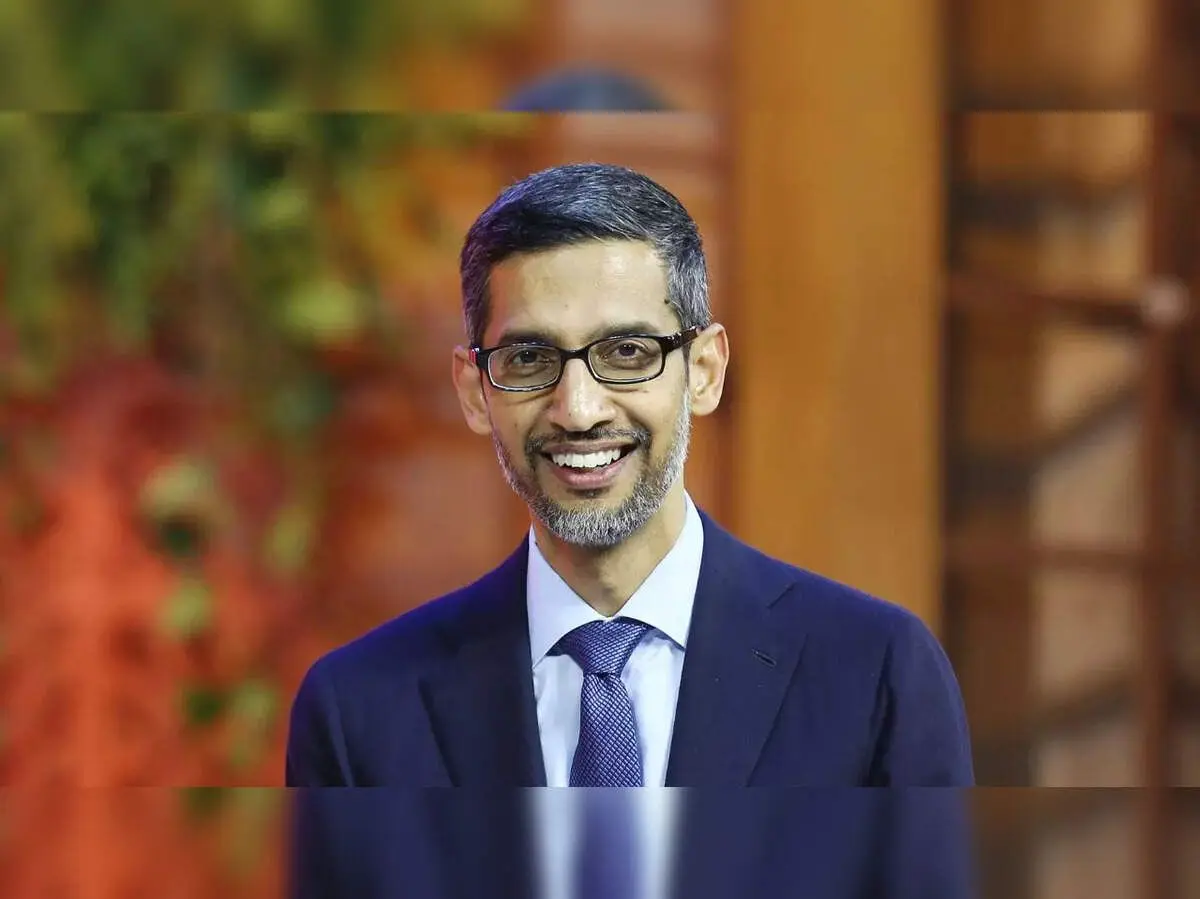
Source: ET
The announcement follows a strong fourth-quarter performance where Alphabet reported revenue of $113.83 billion, with annual revenue exceeding $400 billion for the first time. Pichai stated that 2026 capital expenditures are expected to range between $175 billion and $185 billion as the company continues to drive AI innovation.
2
Source: Benzinga
$15 billion AI hub in Vizag anchors infrastructure expansion
At the core of Google's commitment is the previously announced $15 billion AI hub in Vizag, which will include gigawatt-scale compute capacity and establish a new subsea cable gateway in Visakhapatnam. According to Brian Quigley, VP of Global Network Infrastructure at Google Cloud, the investment is foundational to preventing an AI divide.
2
The initiative will establish a new international subsea gateway in Visakhapatnam, providing a critical alternative to existing landings in Mumbai and Chennai. The project includes the development of three new subsea paths linking India to Singapore, South Africa, and Australia. On India's east coast, a direct fiber-optic path will connect Vizag to South Africa via Chennai, creating a redundant route from the U.S. East Coast when integrated with the existing Equiano and Nuvem systems. On the west coast, Google is constructing a path between Mumbai and Western Australia, which will link the U.S. West Coast to Mumbai.
2
$30 million AI for Science Impact Challenge targets global breakthroughs
Google announced a $30 million Google.org AI for Science Impact Challenge to support global researchers using AI to drive scientific breakthroughs, from quantum computing to extreme weather prediction. The initiative reflects Google's commitment to advancing frontier AI capabilities beyond commercial applications.
1
Google DeepMind will work with the Indian government to widen access to frontier AI capabilities for non-profit organisations, while expanding partnerships under its Global National Partnerships Programme with institutions such as IIT Madras.
1
Karmayogi Bharat mission brings AI-enabled learning to public servants
Google unveiled a partnership with Karmayogi Bharat to modernise civil service training and operations. As the primary cloud partner for the iGOT Karmayogi platform, Google Cloud will provide secure infrastructure for a platform serving more than 20 million public servants across 800 districts in 18 Indian languages. The partnership aims to digitize legacy training content and expand access to AI-enabled learning and digital skills, enhancing public sector capability.
1
2
These public sector partnerships represent a strategic effort to embed AI capabilities directly into government operations, potentially accelerating digital transformation across India's vast bureaucracy. The multilingual approach addresses India's linguistic diversity, ensuring that AI tools remain accessible across different regions and communities.
Skills and education initiatives target millions of students
Google announced a Google AI professional certificate programme to help individuals integrate AI into their work, collaborating with governments, educational institutions, employers and non-profits to scale the programme. In India, it is partnering with Wadhwani AI to reach students and early-career professionals. The certificate will initially be offered in English and Hindi, with additional Indian languages to follow.
1
Google is also partnering with Atal Tinkering Labs to bring generative AI assistance to over 10,000 schools and 11 million students, with a focus on robotics and coding education. The initiative aims to build AI literacy from an early age, preparing India's young demographic for future job markets.
1
Related Stories
Gemini expands across Indian languages as AGI remains years away
Google will soon roll out an enhanced model powering Search Lite, a real-time voice and camera-based search tool, allowing users to search what they see in their own language. Gemini, Google's AI assistant, is available in 10 Indian languages, with further expansion planned.
Speaking at a panel discussion, Google DeepMind chief executive Demis Hassabis defined Artificial General Intelligence (AGI) as systems capable of exhibiting the full range of human cognitive abilities, from creativity to long-term planning. While today's AI systems are impressive, he said true AGI remains at least five to ten years away. If developed responsibly, AGI could become "the ultimate enhancement tool" for scientists, entrepreneurs and young innovators, though it also raises risks around safety, job transitions and equitable distribution of benefits.
1
Addressing job displacement through task-based analysis
Addressing concerns about job losses, Google's senior vice president for technology and society James Manyika said policymakers must shift from viewing AI's impact in terms of whole occupations to analysing specific tasks within jobs. "Most jobs are a constellation of tasks," he said. Some tasks may be automated, others augmented, and entirely new roles may emerge through innovation ecosystems that generate new businesses and employment opportunities.
1
However, transitions will not happen simultaneously, creating temporary dislocations. To manage this lag, governments must invest heavily in skills and AI literacy, alongside investments in AI infrastructure. India's young demographic profile, Manyika suggested, could become a strength if skill development keeps pace with technological change.
1
Pichai framed India not just as a growth market, but as a pivotal partner in shaping the global AI era, saying he had "never been more excited about the future we are building together." The investments signal Google's recognition that subsea connectivity and compute capacity alone won't prevent an AI divide—skill development and equitable access to tools remain equally critical.
1
References
Summarized by

Navi
[1]
Related Stories
Google commits $8 million to India's AI centres, launches health and language initiatives
16 Dec 2025•Technology

Google unveils America-India Connect subsea cables to power $15 billion AI infrastructure push
18 Feb 2026•Technology

Google's $15 Billion AI Hub in India: A Game-Changer for Global AI Infrastructure
14 Oct 2025•Technology
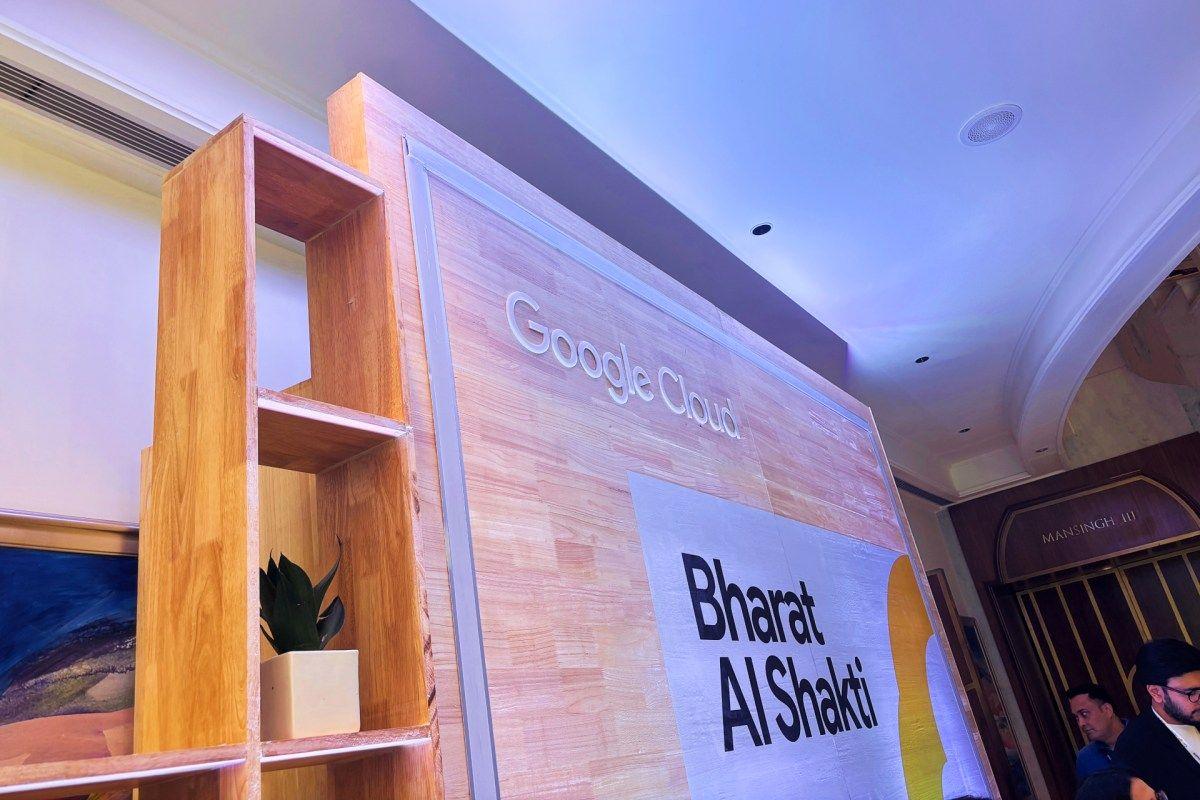
Recent Highlights
1
AI chatbots validate you too much, making you less kind to others, Stanford study reveals
Science and Research
2
Anthropic's Claude Code Source Leak Reveals Hidden AI Agent Plans and Extensive System Access
Technology

3
Judge blocks Pentagon from branding Anthropic a security risk over AI safety guardrails dispute
Policy and Regulation

Recent Highlights
Today's Top Stories




Your Daily Dose of Curated AI News
Don’t drown in AI news. We cut through the noise - filtering, ranking and summarizing the most important AI news, breakthroughs and research daily. Spend less time searching for the latest in AI and get straight to action.

