HP EliteBoard G1a brings Ryzen-powered AI PC inside a keyboard for enterprise workspaces


11 Sources
11 Sources
[1]
HP's EliteBoard G1a is a Ryzen-powered Windows 11 PC in a membrane keyboard
As a Windows system built inside of a functioning membrane keyboard, the HP EliteBoard G1a announced today is a more accessible alternative to other keyboard-PCs. The Commodore 64 made the keyboard-PC famous in the 1980s, but the keyboard-PC space has been dominated by the Raspberry Pi. In 2019, the single-board computer (SBC) maker released the Raspberry Pi 400, which is essentially a Raspberry Pi 4 SBC inside a case that also functions as a keyboard for the system. USB, HDMI, and Ethernet ports, plus a GPIO header and native Raspberry Pi OS Linux distribution add up to a low-end desktop computer experience that only costs $100. Then the Raspberry Pi 500 with a Pi 5 powered by a quad-core, 64-bit Arm Cortex-A76 inside, and the Pi 500+, which has NVMe SSD, instead of microSD, storage, and is built inside of a low-profile mechanical keyboard (it's also twice as expensive at $200). But Raspberry Pis largely appeal to tinkerers, DIYers, and Linux fans, making Pi-as-a-desktop a niche product with a substantial learning curve for newcomers. Alternatively, HP's EliteBoard will bring Windows and a more powerful x86 architecture to the keyboard-PC form factor. HP says the EliteBoard will support Windows 11 Pro for Business and an AMD Ryzen AI 300-series processor with up to 50 TOPs NPU. The device will be sold with a 32 W internal battery and is part of Microsoft's Copilot+ PC program. The EliteBoard is aimed at workplaces that would benefit from ultraportable computers that can be quickly set up, such as corporate offices where employees don't have assigned seats (also known as hot desking). In its announcement, HP said that the EliteBoard, which weighs 1.65 pounds, was built to "move, connect, and adapt to any workspace with ease." HP hasn't released further specs, but based on what we do know, the EliteBoard will have limited computing power, especially compared to other Windows 11 business PCs. Still, the unique system is set to bring new capabilities and a familiar interface to keyboard-PCs. It could garner deeper interest for the category from IT departments seeking easy hybrid workplace solutions, makers, and minimalists interested in experimenting, HP is demoing the keyboard-PC at CES 2026 in Las Vegas this week and plans to release it in March. It hasn't set a price yet.
[2]
HP Built a Full Windows PC Into a Keyboard Using Ryzen AI Hardware - General Chat
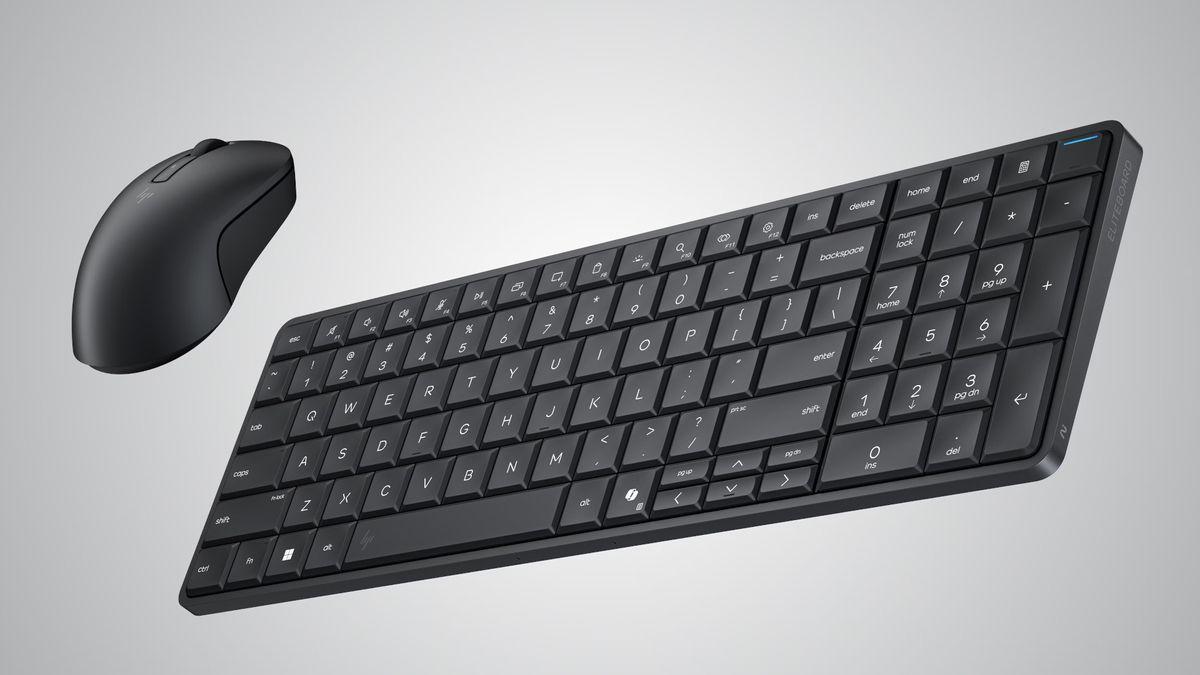
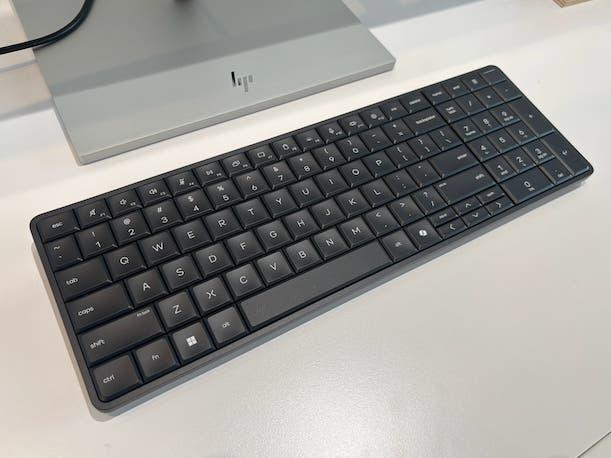
HP has revealed one of the more unusual PC form factors at CES 2026: a complete Windows PC built directly into a keyboard. The device is called the EliteBoard G1a Next Gen AI PC, and unlike novelty designs of the past, it is positioned as a serious enterprise workstation rather than an experiment. The EliteBoard G1a looks like a standard low-profile office keyboard. Inside, it houses an AMD Ryzen AI 300 Series processor, system memory, storage, connectivity, and optional battery hardware. There is no external box, no dock, and no separate compute unit. The keyboard is the computer.
[3]
HP's EliteBoard made me believe in keyboard computers again
For as long as I can remember, I've always wanted to have a keyboard computer -- that is, a computer where the entire machine was stuffed inside of a keyboard. Maybe I caught a glimpse of the Commodore 64 at an impressionable age, but for whatever reason, the idea has always intrigued me. Now HP is bringing the concept back with its new EliteBoard G1a "Next Gen AI PC." It's an IT administrator's dream: It looks a typical desktop keyboard, but it has the full power of a Copilot+ AI PC inside. You can equip it with Ryzen 5 or 7 CPUs and their embedded Radeon 800 GPUs, up to 64GB of RAM and as much as 2TB of NVMe SSD storage. All you need to do is add a monitor and a mouse, and you've got a full-fledged desktop setup. The more I think about it, the more sad I am that the arc of the computing industry trended towards standardized desktops and laptops. There was a brief spark of interest with the UMPC (ultra mobile PC) trend in the 2000's, which Engadget covered extensively as a young blog, as well as ASUS's Eee keyboard. But they couldn't survive the rise of the smartphone and tablet. It turns out putting an entire computer behind a screen was more compelling than stuffing them into a keyboard. I was able to test out an early EliteBoard prototype, and while the experience wasn't perfect, it's still an intriguing computing option. I had trouble setting it up initially because it only had two USB-C ports on its rear, which meant I had to find a way to power it through one port and pass a video signal through the other. Thankfully, my Anker USB-C charging hub was able to juice it up, and I also had a USB-C hub with an HDMI port, which allowed me to connect to my monitor. Sadly, the overall setup was a jumble of wires, and not the clean layout I expected from a keyboard PC. Once I was able to start up Windows though, I was less annoyed and more amazed that the keyboard contained an entire computer. I suppose I shouldn't be too surprised, as Intel's Compute Stick placed a functional PC in a much smaller case, but unlike the failed product, the EliteBoard actually felt usable. I was able to load up several browser windows with tabs, edit a few photos and even play a few light games, like Vampire Survivors. And yes, typing on it felt pretty great too. Since I was testing out prototype hardware, I agreed not to benchmark the EliteBoard. But from the performance I saw, it felt about the same an entry-level laptop. Basically, it's perfectly suited to its main task: Being a boring office computer. Back in my IT days, I certainly would have preferred deploying a few light keyboards instead of the tank-like Dell desktops we typically ordered. While the EliteBoard is targeted at commercial users, HP is considering it an experiment to see how people respond to a keyboard PC. There's a chance we could see one that's eventually meant for mainstream consumers. I'm not sure if that's exactly, necessary, though. The whole concept of a desktop PC mainly appeals to tinkerers and IT folks. And for anyone who wants to get their hands on an EliteBoard soon, there's really nothing stopping you.
[4]
HP's EliteBoard AI PC hides a full Ryzen system in a keyboard
Serving tech enthusiasts for over 25 years. TechSpot means tech analysis and advice you can trust. Editor's take: CES 2026 has made it abundantly clear that the hype around AI in PC products is far from over. HP, one of the more notorious purveyors of audacious commercial ideas, is now attempting to transform the traditional PC into an AI-enabled thin client that requires little more than a monitor... and maybe a power socket. After attempting to squeeze more revenue from inkless printers via firmware updates, HP is now busy laying off thousands of employees and stuffing AI into everything it touches. The company's latest creation is the EliteBoard G1a Next Gen AI PC, a somewhat powerful computer entirely hidden inside a functioning membrane keyboard. The EliteBoard G1a is a Copilot+ PC, allegedly designed to deliver desktop-level performance in an ultra-portable form factor. Unlike the Raspberry Pi 400 or the all-in-one keyboard PCs that were trendy decades ago, HP's system is a full x86 computer powered by the AMD Ryzen AI 300 series CPU. HP's latest packs a Radeon 800M GPU and a 50 TOPS NPU for accelerating local AI inference workloads. The package also includes a pre-paired wireless mouse, an optional 32 W internal battery, an optional integrated fingerprint sensor for secure login, and built-in speakers and microphones. HP claims the system is designed to withstand busy workspaces and occasional spills, noting that the keyboard is easy to clean. According to HP, the EliteBoard G1a is aimed at enterprise environments where traditional work setups are being reimagined. SVP Guayente Sanmartin said the company's goal is to remove outdated "complexities," such as a full desktop configuration. Ultimately, HP intends to help employees work faster while turning AI from an emerging novelty into a tangible business advantage. The keyboard PC weighs less than half of a traditional notebook and can easily support any type of display. The idea is that moving a single keyboard is far simpler than relocating an entire desktop setup, making the EliteBoard G1a a potentially ideal solution for companies adopting hot-desking arrangements. The HP EliteBoard G1a is expected to be available for purchase on HP.com in March. The company has yet to provide pricing details, though more information should emerge in the coming weeks.
[5]

There's a Ryzen PC hiding in this HP keyboard
Aggy is a veteran writer and editor in the technology and gaming space. Having served as a Managing Editor for high-traffic digital publications, alongside being an editor and consultant for over a dozen sites. Aggy's published work spans a wide and respected array of tech and gaming outlets, including WePC, Screen Rant, How-To Geek, Android Police, PC Invasion, and Try Hard Guides. Beyond editorial work, Aggy's direct experience in the tech sphere extends to app development. Aggy has published two games under Tales and is always eager to learn and do more. He also likes working on computers and researching in his spare time. He knows about Windows, Linux, Audio, Video, and much more. HP just revealed the EliteBoard G1a Next Gen AI PC at CES 2026, a device that crams a full AMD Ryzen AI 300 Series processor directly into a keyboard chassis. HP is calling this the world's first "AI PC built into a keyboard." This isn't just a mini PC that happens to sit under your monitor; the entire machine is the keyboard. It features an ultra-thin 12 mm profile and weighs only 750 grams, which is less than half the weight of many traditional notebooks. This should let you move your setup wherever you need to work, connecting easily to any display through a single cable. It even comes with built-in dual microphones and speakers, so you're ready for any meetings right out of the box. The EliteBoard G1a is designed to handle modern workloads, with a strong focus on local AI processing. This is a Copilot+ PC, and it uses its NPU that achieves over 50 TOPS. While I'm skeptical that most general users are going to immediately max out that NPU performance, having that dedicated neural processing unit should keep users happy. The system uses AMD's Auto State Management alongside HP Smart Sense to dynamically adjust performance, cooling, and battery life, which sounds useful, especially if you go for the optional built-in battery that lets you work untethered for a short while. Keyboards containing an entire computer are nothing new: early microcomputers like the Commodore 64, Atari 600XL, and Apple IIe did it. More recently, the Raspberry Pi 400 combined a Pi board into a chiclet keyboard. If you want a full x86-based PC with Windows in the same form factor, HP now has a keyboard to sell you. HP also unveiled the HP Series 7 Pro 4K Monitor to act as the visual hub for this new keyboard. This new panel technology is paired with new IPS Black panel capabilities, which means you're getting a massive 2,700:1 contrast ratio. That's double what you'd expect from a traditional IPS display, resulting in much deeper colors, darker shadows, and brighter highlights. The monitor has factory-calibrated color accuracy, which is great if you're a creator. You can even set custom user color profiles, though you'll need an external colorimeter or spectrometer to get that done. Connectivity is also impressive since the monitor has a 140W Thunderbolt 4 port, which supports data transfer speeds up to 40Gbps while handling video output simultaneously. This lets you connect the EliteBoard G1a with a single cable for both power and display. Subscribe for deeper coverage of the EliteBoard launch Get the newsletter for in-depth EliteBoard and monitor coverage -- hands-on reviews, detailed specs, security and performance analysis, pricing context, and buying guidance to help decide if this keyboard-PC setup fits your workflow. Subscribe By subscribing, you agree to receive newsletter and marketing emails, and accept Valnet's Terms of Use and Privacy Policy. You can unsubscribe anytime. This is a great find for anyone who is tired of having a tower and who doesn't want any of those mini PC boxes that are normally being offered. If you'd like to get your hands on this unique setup, HP expects both the EliteBoard G1a Next Gen AI PC and the Series 7 Pro 4K Monitor to be available on HP.com sometime in March. The company hasn't released official pricing yet, so we'll have to wait a little longer to see exactly how much this is going to cost. Source: HP
[6]

HP just squeezed a desktop computer into a keyboard - and it's powerful enough to be a Copilot+ PC
Typically, an all-in-one PC is a computer built into a monitor, but HP is doing things a bit differently with a twist on the formula at CES 2026, having unveiled a mini PC that's packed into a keyboard. As The Verge spotted, this is the HP EliteBoard G1a and, perhaps inevitably, it's branded as an 'AI PC' which, the PC maker boasts, provides "next-generation local AI power in a keyboard-sized form factor that moves at the speed of modern work". In short, this is a Copilot+ PC shoehorned into a compact keyboard that's 12mm thick, weighing 750 grams, so it's pretty trim given what the device contains. Obviously you should temper expectations with the spec of this device, but it does have an AMD Ryzen AI 300 series chip inside which boasts more than the requisite 40 TOPS (it has 50) to qualify as a Copilot+ PC (meaning you get access to exclusive AI features in Windows 11). More specifically on the CPU front, you get options from a baseline Ryzen AI 5 350 up to a Ryzen AI 7 370 Pro, backed with up to 64GB of system RAM (DDR5) and up to 2TB of storage. You also get built-in speakers and dual mics, so all you need is a monitor to hook up the keyboard with - or two, as the EliteBoard G1a is capable of driving dual 4K displays - plus a Bluetooth mouse for a full PC setup. (Or you could just run with a touchscreen monitor on its own, of course). There's Thunderbolt 4 connectivity, and this keyboard PC can optionally be configured with a fingerprint sensor for biometric logins, and a 35Wh battery providing a claimed 3.5 hours of juice (which is user replaceable). HP tells us that the EliteBoard G1a should be on sale in March 2026. A keyboard-based PC is not actually a first, of course. In fact, you could argue that these were around in the 1980s, and they were called Commodore Amigas (or you could take your retro computing pick, really - although the rival Atari ST was even bulkier). The key (no pun intended) difference is that unlike the Amiga 500 I owned as a teenager, HP's EliteBoard isn't a great chunky thing - it sounds enticingly compact, all in all. Even so, there are slimline takes on this formula that already exist, like the Raspberry Pi 500 (which, of course, takes the latter part of its name from the aforementioned classic Amiga). This is 23mm thick, so not as slim as HP's creation here, and neither does it pack the same power in its CPU (the Pi has a modest Arm chip). However, while we don't yet have a price, the EliteBoard is obviously not going to be nearly as cheap as the Pi 500, offering a much more powerful computing (Copilot+) experience. There's the rub, of course, because with the spiraling cost of RAM and storage, HP is launching this new keyboard in very trying market conditions (to say the least - especially as the EliteBoard packs DDR5 RAM). Consumers who fancy a slice of the PC keyboard action will doubtless find the cost difficult to stomach, though the primary target market of business users may get more palatable volume pricing. Still, I'd still expect the current memory headwinds to make life tricky for HP in terms of selling this machine down the line.
[7]

CES 2026: HP EliteBoard G1a is a keyboard with built-in computer
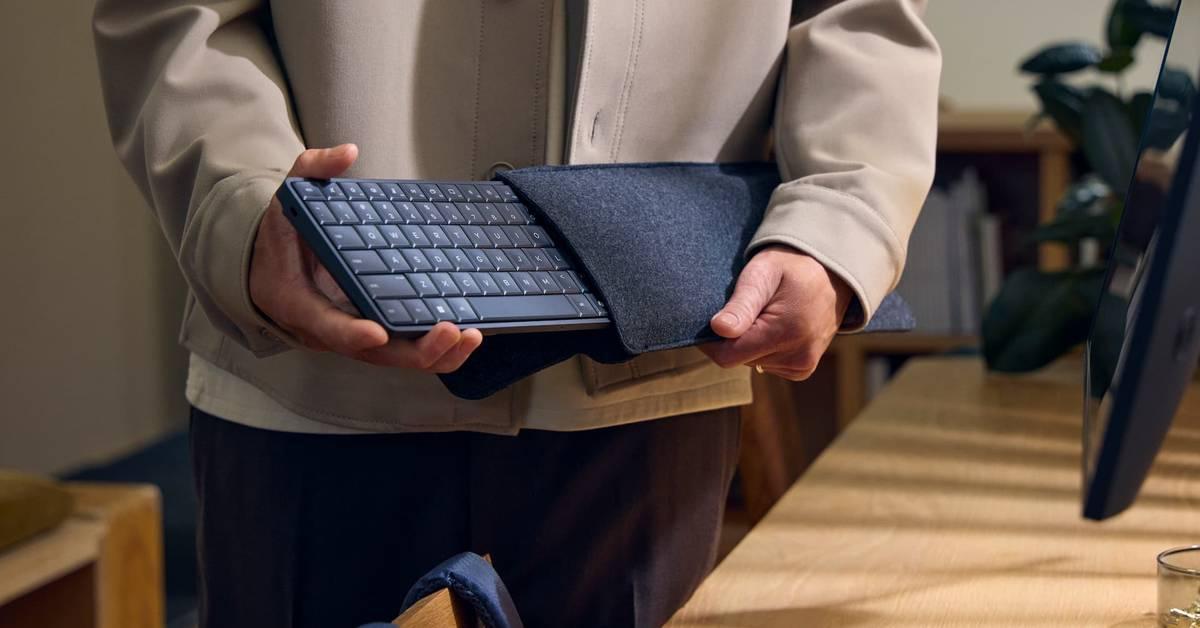
For CES 2026, HP is debuting the EliteBoard G1a, a keyboard with a modular business Copilot+ PC inside. And this isn't just vaporware; HP says the keyboard PC will hit the market this spring. The all-new HP EliteBoard G1a Next Gen AI PC houses an AMD Ryzen AI 300 Series processor, fans, and dual stereo mics and speakers. Keyboard computers have been around since the late 1970s, though they were far less advanced and geared toward education or 8-bit gaming (see: the Apple II, the BBC Micro, the Commodore 64, and the ZX Spectrum). More recently, the $70 Raspberry Pi 400 hit the market as an affordable home computer. However, the EliteBoard G1a marks a fresh form factor for modern all-in-one (AIO) PCs, which are usually monitors with integrated components. (The Apple iMac is one popular example.) Unlike traditional all-in-ones, the EliteBoard contains all the necessary hardware within the keyboard itself. Portable and minimalist, it measures 0.7 inches thin and starts at less than 1.5 pounds, fitting nicely inside a backpack. The EliteBoard G1a is also designed to be easily serviceable, with modular components that IT departments or users themselves can swap in minutes. You can remove the bottom cover to replace its RAM, SSD, speakers, battery, fans, or WiFi module. The top keyboard itself can also be switched out. HP promises that it doesn't sacrifice performance, either. The EliteBoard G1a can be configured with up to an AMD Ryzen AI 7 350 PRO chip for enterprise purposes, offering up to 50 TOPS of AI processing power. (That stands for Trillions of Operations Per Second, an AI performance metric.) It'll have an integrated AMD Radeon 800 Series graphics, up to 64GB of RAM, and up to 2TB of SSD storage. And it supports two daisy-chained 4K external displays. For everyday users with lesser needs, the EliteBoard G1a will start with an entry-level AMD Ryzen AI 5 330 processor and a mere 32GB of eMMC storage. The EliteBoard G1a's fans pull air into the device from a vent that covers most of its bottom case and push it out through a rear slit above its function row. HP says its thermal management system has been thoroughly tested to make sure the user never feels the heat of its internals on their fingertips. Its spec sheet notes that it has TUV certification for low noise, so it should run pretty quietly, too. The EliteBoard G1a can be configured with or without a built-in battery and an attached cable that plugs into an external monitor. The version with no battery and a detached cable weighs in at just 1.49 pounds. Adding both components increases its weight to 1.69 pounds, which makes it just over a pound lighter than a 13-inch MacBook Air. The battery models are rated to last for over 3.5 hours of active use, but they can go more than two days in idle mode before dying. The keyboard itself features a lattice-free design (meaning it lacks spaces between its keys), plus a full numpad, backlighting, and an optional fingerprint reader. It's spill-resistant and meets the U.S. MIL-STD 810 standard for military-grade durability. While HP hasn't announced pricing for the EliteBoard G1a yet, the company says it will be available on HP.com sometime this March. All variants will come in an Eclipse Gray finish and ship with a matching pre-paired wireless mouse. The battery models will have an extra canvas case.
[8]

HP's new keyboard PC wants to replace your desktop setup
The EliteBoard G1a puts a full Copilot+ AI PC into a 12mm keyboard, built to shift desks with you. CES 2026 Read and watch our complete CES coverage here Updated less than 6 minutes ago HP just revealed a new HP keyboard PC at CES 2026, and it's a weirdly practical idea. The computer is inside the keyboard, so you can carry your whole setup between desks without hauling a mini PC or a laptop dock. The device is called the HP EliteBoard G1a Next Gen AI PC. HP says it's the world's first full AI PC built into a keyboard, and it's pitching local on-device AI performance as the selling point, not cloud reliance. Recommended Videos HP also announced the HP Series 7 Pro 4K Monitor as the companion piece, aimed at people who live on big screens and bounce between devices. A desktop that travels HP says the EliteBoard G1a is 12 mm thick and weighs 750 g, with dual microphones and speakers integrated into the keyboard. You bring the keyboard, plug it into any display you can find, and get a desktop-style experience without a separate tower. For AI workloads, HP points to an AMD Ryzen AI 300 Series processor and an NPU rated at over 50 TOPS, plus Copilot+ PC positioning and EPEAT 2.0 Gold registration. It also calls out HP Smart Sense, AMD Auto State Management, and an optional built in battery to help balance performance, cooling, and power when you move around. What you gain and lose The clear win is simplicity for flexible work. If you hot desk, work across conference rooms, or split time between home and office, a keyboard PC could mean fewer boxes and fewer setup steps. Your monitor and peripherals can stay put, and your computer comes with you. The tradeoff is that you still need a screen wherever you land, and HP hasn't shared pricing yet. Without a price, it's hard to know if this replaces a small desktop, a business laptop, or a mix of both, especially for buyers outfitting teams. What to watch before March HP says the EliteBoard G1a and the Series 7 Pro 4K Monitor are expected on their website in March, with pricing closer to launch. That number will decide whether this is a smart tool for real workplaces or a neat concept that stays niche. Check out the best monitors out now if you're in the market for a monitor. Security is also central to the pitch. HP is bundling HP Wolf Security for Business and pushing hardware enforced protection for sensitive data and AI workflows, including defenses against emerging quantum threats. If the monitor matters to you, HP says it uses IPS black performance and Neo LED display tech in 4K, plus Thunderbolt 4 with up to 140W power delivery and 40Gbps data for a one cable desk. Before you buy, watch for final pricing and a full port list, as those two details will make or break the idea.
[9]

HP's new AI PC might look like a laptop that lost a fight with an angle grinder but it's compact and discreet as you could possibly get
Ask any tech vendor and they'll always tell you that smaller is better. CPUs and GPUs have never been tinier underneath the heatsink, but PCs themselves are still big and boxy. Not so HP's newly launched EliteBoard G1a range, because at under 780 grams in weight and 36 cm in length, it's possibly one of the smallest PCs around. Admittedly, the EliteBoard G1a is essentially a business laptop that's had the screen ripped off and the sides all chopped away. But even so, the remaining keyboard still sports a numpad (though the whole thing is too compact to be classed as full-sized) and the internal gubbins are respectable enough, if just not very potent. Not that HP is aiming the EliteBoard at gamers, of course. This is an AI PC for business users (the dedicated Copilot button really stands out), but if you got one with the best processor on offer, then you could do a spot of handheld-like gaming while pretending to juggle spreadsheets at work. The chip in question is an AMD Ryzen AI 7 350 Pro, which is a Kracken Point APU, with eight Zen 5 cores (4x Zen 5, 4x Zen 5c) and a Radeon 860M integrated GPU. That sports eight RDNA 3.5 compute units, which equate to 512 shaders. That's roughly the same as the Steam Deck's GPU, so it should give you an idea as to what kind of gaming you can do on it. HP also offers the EliteBoard G1a with a Ryzen AI 5 340 Pro (six CPU cores, four GPU compute units) or the miserable Ryzen 3 330 (four CPU cores, two GPU compute units), so if you were offered a G1a at work, I know which chip I'd be demanding. Naturally, for such a market, RAM options are limited to a maximum of 64 GB, in the form of two DDR5-5600 SODIMMS, and up to 2 TB of Gen 4 NVMe storage. For some reason that I can't fathom just yet, the Ryzen 7 350 variant comes with 32 GB of eMMC flash storage, whereas the others don't. Answers on a postcard as to what one can genuinely use that for. The whole caboodle requires a 65 W power supply to run, and you can provide that either via the provided adapter, or if you have a suitable monitor, you can use the same USB Type-C cable for sending the display signal. However, the EliteBoard G1a can be configured to house a 32 Wh battery. For connectivity options, it's barebones, I'm afraid: just two USB Type-C ports (USB4 and USB 3.2 10 Gbps), and either Wi-Fi 6E or Wi-Fi 7. Oh, and Bluetooth 5.3 or 6, depending on what Wi-Fi module you choose. There's no LAN port, SD card reader, or anything else. And yet, despite all its limitations, the EliteBoard G1a reminds me somewhat of the first home computers I used in the early 1980s. Those were very much the same thing: just a keyboard with a couple of sockets, plus a cable for the TV and one more for power. Even though they were incredibly basic, I enjoyed years of programming and gaming on them, and I dare say the same thing could happen with this svelte HP. Whether anyone outside of the world of business will do so is going to come entirely down to the price tag. The EliteBoard G1a isn't expected to make a retail appearance until March, but if you can't wait that long, you might want to give the Raspberry Pi 500 a look. That's just $100 at Digikey, and while it's only good for retro gaming and emulation, I reckon it's just as fun to use as HP's new G1a.
[10]

The HP EliteBoard G1a Fits an Entire Computer Inside a Keyboard - Phandroid
Remember the Commodore 64? HP's bringing that vibe back with a modern twist. The HP EliteBoard G1a crams a full Copilot+ AI PC into a keyboard form factor. This thing won a CES 2026 Innovation Award, and it's easy to see why. Weighing just 750g and measuring 12mm thick, it packs desktop power without the desk clutter. The HP EliteBoard G1a runs on AMD Ryzen AI 300-series processors with over 50 TOPS NPU for local AI tasks. You get up to a Ryzen AI 7 350 Pro CPU, integrated Radeon 800M graphics, up to 64GB DDR5 RAM, and 2TB SSD storage. All of this fits inside a scissor-switch keyboard with built-in fans, dual mics, and stereo speakers. There's even an optional 35Wh battery for about 3.5 hours unplugged. Setup is dead simple. Connect the HP EliteBoard G1a via single USB-C to any monitor. It supports dual 4K daisy-chain displays. Pair the included wireless mouse and you're set. User-replaceable RAM and SSD make it IT-friendly for businesses. HP Wolf Security defends against quantum threats and firmware attacks. The device earned EPEAT Gold certification with recycled plastics. This shrinks your entire setup to keyboard, monitor, and mouse. Perfect for hot-desking or travel situations. You can plug into a hotel TV for work without lugging a laptop around. Copilot AI handles local tasks like summaries fast without cloud lag. The minimalist vibe clears desk space for notes or coffee. HP pairs the HP EliteBoard G1a with its new Series 7 Pro 4K monitor. The 31.5-inch display features Neo:LED IPS Black technology with 120Hz refresh rate and 2700:1 contrast. It covers 99%+ Adobe RGB and P3 color spaces via Thunderbolt 4 connection. Ideal for pro color work. The device looks like a plain keyboard, which works great for shared desks. Admins love the easy upgrades, secure tethering, and zero screen bulk. It's ideal for call centers or secure kiosks. The optional battery plus HP Smart Sense auto-tunes power and cooling based on workload. The HP EliteBoard G1a launches in March 2026 on HP's website. Pricing isn't announced yet, but expect premium business rates. This signals a shift toward portable "desktops" over bulky all-in-ones. You can mix it with any display and peripherals for a truly modular future desk setup.
[11]

CES 2026: HP Launches An AI PC In A Keyboard With EliteBoard G1a
The PC giant is looking to blaze new trails by moving all of the compute from an all-in-one PC into the keyboard form factor. HP Inc. announced Monday it's looking to blaze new trails by moving all of the compute from an all-in-one PC into the keyboard form factor. The result is the HP EliteBoard G1a, announced Monday as the latest addition to the HP AI PC portfolio. [Related: HP Debuts EliteBook X G2 Series At CES 2026: 10 Big Things To Know] The PC giant also disclosed Monday it is making big strides to advance GenAI performance on its premium EliteBook X commercial notebooks with the launch of second-generation AI PC devices in the series. The announcements come in connection with the massive CES 2026 conference, taking place this week in Las Vegas. What follows are five key details to know about HP's EliteBoard G1a. New Design Approach The HP EliteBoard G1a represents a major reversal from past desktop PC design, according to HP. The new design moves the compute power that once had to be located within the all-in-one or tower form factor, and embeds it directly into the keyboard. By contrast, the traditional all-in-one PC design approach locks users into a single display (and working location, to some degree) for the life of the PC. With the EliteBoard, instead, the entire PC is housed within the keyboard chassis, HP said. Display Flexibility For users that might wish to change displays over time, this allows those users to choose any display configuration without replacing the device itself, according to HP. Notably, the approach also gives organizations and users more control over upgrade cycles and workspace customization, the company said. In addition to stationary workers seeking more flexibility, HP also built the EliteBoard G1a around users that might share a display, such as in the health care space, HP said. Device Options Two versions of the HP EliteBoard G1a will be available to accommodate the two types of use cases, according to HP. For users that need to share a display, one version of the device will offer a detachable cable and integrated battery, the company said. Meanwhile, the stationary configuration features a lockable cable designed for environments where devices must remain physically secured, HP said. Performance, Portability And Productivity On performance, HP also classifies the EliteBoard G1a as an AI PC, with an AMD Ryzen AI 300 Series chip powering the device. The device offers more than 50 trillion operations per second (TOPS) of neural processing unit (NPU) performance for highly responsive workloads, according to HP. On portability, meanwhile, the EliteBoard G1a measures 12mm (0.47 of an inch) in terms of thickness and weighs about 1.65 pounds, HP said. For productivity and collaboration, the keyboard-PC also includes dual mics and speakers, according to the company. Pricing And Availability The EliteBoard G1a Next Gen AI PC is expected to be available starting in March, HP announced Pricing was not immediately disclosed and will be provided "closer to availability," the company said in its news release.
Share
Share
Copy Link
HP unveiled the EliteBoard G1a Next Gen AI PC at CES 2026, cramming a full AMD Ryzen AI 300 Series processor directly into a keyboard chassis. Weighing just 1.65 pounds with a 50 TOPS NPU, this Copilot+ PC targets enterprise environments adopting hot-desking arrangements. The device launches in March with pricing yet to be announced.
HP EliteBoard G1a Revives the Keyboard PC Concept for Modern Workplaces
HP has announced the HP EliteBoard G1a Next Gen AI PC at CES 2026, positioning it as the world's first AI PC built into a keyboard
5
. Unlike the Commodore 64 that made the keyboard PC famous in the 1980s or the Raspberry Pi 400 that appeals primarily to tinkerers and Linux enthusiasts, the EliteBoard G1a brings a full Windows PC in a keyboard powered by x86 architecture1
. The device houses an AMD Ryzen AI 300 Series processor with system memory, storage, connectivity, and optional battery hardware directly inside what appears to be a standard low-profile office membrane keyboard2
.
Source: TechRadar
Powerful Specifications in an Ultra-Portable Form Factor
The HP EliteBoard G1a supports Windows 11 Pro for Business and features up to 50 TOPS NPU for accelerating local AI inference workloads
1
4
. As a Copilot+ PC, it can be equipped with Ryzen 5 or 7 CPUs and their embedded Radeon 800M GPU, up to 64GB of RAM, and as much as 2TB of NVMe SSD storage3
. The entire system weighs just 1.65 pounds and features an ultra-thin 12 mm profile at 750 grams, making it less than half the weight of many traditional notebooks1
5
. The device includes a 32 W internal battery option, built-in dual microphones and speakers for meetings, and comes with a pre-paired wireless mouse4
5
.
Source: How-To Geek
Designed for Enterprise Environments and Hot Desking
HP SVP Guayente Sanmartin stated the company's goal is to remove outdated complexities such as full desktop configurations, targeting enterprise environments where traditional work setups are being reimagined
4
. The EliteBoard G1a addresses the needs of corporate offices adopting hot desking arrangements, where employees don't have assigned seats and benefit from ultraportable computers that can be quickly set up1
. HP emphasizes that moving a single keyboard is far simpler than relocating an entire desktop setup, allowing the device to "move, connect, and adapt to any workspace with ease"1
4
. IT departments seeking easy hybrid workplace solutions could find this form factor particularly appealing for simplifying deployment compared to tank-like desktop towers3
.Related Stories


Real-World Performance and Practical Considerations
Engadget tested an early EliteBoard prototype and found it felt about the same as an entry-level laptop, perfectly suited to its main task of being a functional office computer
3
. The reviewer successfully loaded several browser windows with tabs, edited photos, and played light games like Vampire Survivors, noting that typing felt great3
. However, setup presented challenges, as the device only has two USB-C ports on its rear, requiring one for power and another for video signal, which resulted in a jumble of wires rather than the clean layout expected from a keyboard PC3
. The system uses AMD's Auto State Management alongside HP Smart Sense to dynamically adjust performance, cooling, and battery life5
.
Source: CRN
Market Positioning and Future Availability
While the HP EliteBoard G1a is positioned as a serious enterprise workstation rather than an experiment, HP is considering it a test to see how people respond to a keyboard PC, with a chance for a mainstream consumer version in the future
2
3
. The device represents a more accessible alternative to other keyboard-PCs like the single-board computer Raspberry Pi 400, which costs $100, or the Pi 500+ with NVMe SSD storage at $2001
. HP is demoing the keyboard PC at CES 2026 in Las Vegas and plans to release it on HP.com in March, though pricing details have not yet been announced1
4
5
. HP also unveiled the HP Series 7 Pro 4K Monitor with IPS Black panel technology offering a 2,700:1 contrast ratio and a 140W Thunderbolt 4 port that supports 40Gbps data transfer, allowing connection of the EliteBoard G1a with a single cable for both power and display5
. For minimalists, makers, and Microsoft Copilot+ users interested in experimenting with portability, this unique system could bring new capabilities to the category1
.References
Summarized by

Navi
[2]
[5]
Related Stories
Recent Highlights
1
Tennessee Teens Sue Elon Musk's xAI Over Grok AI-Generated Child Abuse Images
Policy and Regulation

2
Pentagon designates Palantir Maven AI as core US military system in major defense shift
Technology

3
Supermicro Co-Founder Indicted in $2.5 Billion Nvidia AI Chip Smuggling Scheme to China
Policy and Regulation
Recent Highlights
Today's Top Stories










Your Daily Dose of Curated AI News
Don’t drown in AI news. We cut through the noise - filtering, ranking and summarizing the most important AI news, breakthroughs and research daily. Spend less time searching for the latest in AI and get straight to action.

