HP's OmniBook Ultra 14 pushes AI boundaries with 85 TOPS chip and dual processor options


2 Sources
2 Sources
[1]
HP's new OmniBook Ultra 14 gets Panther Lake and Snapdragon X2 options inside -- exclusive variant of Qualcomm chip has 85 TOPS
HP is updating its top-of-the-line consumer productivity laptop, the OmniBook Ultra 14, with the latest silicon from both Qualcomm and Intel. At CES 2026, the company revealed a new design for the ultrabook, which the company claims is thinner than a MacBook Air. HP is putting most of its emphasis on the Qualcomm model, which uses an exclusive variant of the Qualcomm Snapdragon X2 Elite with an NPU capable of 85 TOPS. Until now, the Snapdragon X2 Elite had an 80 TOPS NPU on the high end. The Qualcomm model will start with the Snapdragon X2 Plus (X2P-64-100). Right now, HP is only saying that an Intel version with "Intel Next Gen AI" processors and graphics will exist, but is not naming specific chips. If the Intel models use Panther Lake, that would mean the NPU would go up to 50 TOPS on those models. All of this only matters, of course, if you're using local AI regularly. Both systems come in an anodized aluminum finish. The Qualcomm version comes in a subtle "stone blue" color, while the Intel models come in duller gray and "sand" options. HP says the new Ultra is 14% lighter than the previous generation laptop at 2.81 pounds, and also claims that this machine is thinner than the 13-inch MarBook Air, though that's specifically at one point on the rear of the laptop and doesn't include the hinge cap or rubber feet. Both options use a 2880 x 1800 OLED touchscreen that goes up to 120 Hz. They also have similar port layouts (the Intel models use Thunderbolt 4, the Qualcomm options use USB4), and they each feature Wi-Fi 7 and a 70 WHr battery. The designs continue HP's use of a lattice-free keyboard on high-end models (similar to Dell) and large trackpads. The chassis has passed 20 MIL-STD 810G tests for durability. HP says the Intel version will be released this month, starting at $1,549.99. As of this writing, HP tells me the Qualcomm version will launch in the spring and that pricing will be shared closer to release. Beyond the sleek new Ultra 14, HP is updating the entire OmniBook stack at CES, with a variety of sizes and processors from Qualcomm, Intel, and next-gen Ryzen AI chips. These include the OmniBookX, OmniBook 7, OmniBook 5, and OmniBook 3, which are set to launch throughout February and the spring. HP is also announcing updates to its Chromebook offerings, as well as its Elitebook lineup.
[2]
With the 2026 HP OmniBook Ultra 14, I See a New Bar Being Set for Copilot+ PCs
As the next-generation AI PC race heats up, HP's next play for the premium ultraportable laptop crown is an aggressive push. The newly unveiled HP OmniBook Ultra 14 laptop is a slim, productivity-focused machine that also makes a statement, aiming directly at premium industry leaders like the Apple MacBook Air and Microsoft Surface Pro. HP loaned me a pre-production model a few weeks ahead of its CES 2026 launch for an extended hands-on session with the system. While it may not make sense to benchmark a pre-production laptop, I can already see that the OmniBook Ultra 14 lives up to its "Ultra" moniker, with enough power (on paper) and a design that competes with Apple and Microsoft's standard-setting products. Design: Impressively Slim, Actively Cooled HP positions the OmniBook Ultra 14 as the peak of portable luxury. Its slim, light frame is forged anodized aluminum, weighing just 2.81 pounds and measuring only 0.55 inch thick, making it one of the lighter laptops today at its size. Despite that featherweight design, this OmniBook holds up well against flexing and hard typing without the bending you'd see on a cheaper system made of plastic. My hands-on unit's "Stone Blue" color looks deeply high-end with cool accents like the OmniBook name engraved on the bare metal of the laptop's rear hinge. The blue-toned finish is available on HP's Qualcomm-based models, while Intel configurations come in the exotically named "Eclipse Gray" and "Silk Sand" options. Plus, thanks to an anti-fingerprint finish, handling the laptop doesn't leave it noticeably smudged. HP streamlined connectivity on the laptop with a trio of USB-C ports. All of them are 40Gbps connections with USB power and DisplayPort connectivity, but only the Intel-powered models can claim true Thunderbolt 4 capability. The laptop also has a 3.5mm headphone jack. After seeing a few premium laptops opt for Bluetooth-only for headphones, I'm always happy to see a physical connection offered. Using the HP OmniBook Ultra 14: A Comfy Replaceable Keyboard, a Delightful Display In terms of hands-on experience, I genuinely enjoy the OmniBook Ultra's keyboard. HP has updated its new laptop designs to facilitate easier removal and replacement of the keyboard, but this is not immediately apparent based on the rigid design and comfortable typing feel. The accompanying haptic touchpad is also slick, complete with side-edge gestures that allow you to adjust audio volume and screen brightness with just a swipe. With an 1800p (2,880-by-1,800-pixel) OLED touch panel behind edge-to-edge Gorilla Glass, HP's screen lives up to the laptop's high-end luxury status. Again, it doesn't make sense to formally test a pre-production system, but HP claims excellent 500-nit brightness for standard content, and as many as 1,000 nits for HDR content. A variable refresh rate (up to 120Hz) also means that the display can handle more than the standard 60Hz of most content, though that's less of a factor on a system without a dedicated graphics chip inside. Spec Check: Built Explicitly for Mobile AI Leadership Under the hood, the Stone Blue model I tested features one of Qualcomm's Snapdragon X2 Elite X2E-90-100 processors, which has 18 cores and clock speeds of up to 5GHz. (It starts with a Snapdragon X2 Plus X2P-64-100 model.) The standout feature, however, is the updated Qualcomm Hexagon NPU, which can now handle a massive 85 trillion AI operations per second (TOPS) without needing support from a nearby server farm. This nearly doubles the previous generation's maximum capacity of 45 TOPS. The non-Qualcomm models will feature Intel's next-generation Core Ultra processors, but HP hasn't gone into specifics ahead of the laptops' CES 2026 reveal. To match this processing power, the laptop supports up to 64GB of LPDDR5x RAM and up to 2TB of PCIe Gen5 NVMe M.2 storage (starting with 16GB and 512GB, respectively). However, you should note that this memory is soldered onboard and cannot be upgraded after purchase. Such is the plight of system-on-chip processor designs with embedded memory modules. HP backs the Snapdragon's performance with a 70-watt-hour Li-ion polymer battery that supports fast charging, allowing the device to reach a 50% charge in roughly 45 minutes using the included compact 65W GaN adapter. HP hasn't yet made any battery-life claims, so we will have to wait and see about that in our eventual final review. To keep this high-performance silicon from throttling, HP has integrated its first compact vapor chamber in the OmniBook line, ensuring the laptop stays cool even during heavy multitasking or AI-intensive workloads. All of that processing power also drives some cool AI features. The OmniBook Ultra 14 is a Copilot+ PC, running Windows 11, so you'll get the full suite of on-device AI features, from text summaries and automatic audio translation to AI noise reduction and webcam enhancements. Some of the coolest new features include Look to Move, which uses the webcam to track head and eye movement to keep the cursor close to your point of focus for more intuitive control, or Camera Gesture, which allows you to pause and control media with simple gestures, never touching the touchpad or keyboard. The Takeaway: HP's Refined Answer to the Industry Greats The HP OmniBook Ultra 14 is a clear shot across the bow of the MacBook Air and Surface Pro. With a class-leading 85 NPU TOPS on the Qualcomm model and a 120Hz OLED panel as standard, HP has a more powerful and higher-fidelity hardware package for AI-intensive creative work. While the MacBook Air remains the king of refined simplicity, the OmniBook Ultra 14 is a more capable "niche powerhouse" for those who need a rugged (MIL-STD tested) and AI-first Windows environment. What I'm most curious to see in final testing is how the new vapor chamber performs. If it can keep the Snapdragon X2 Elite running at its 5GHz peak without hitting a thermal wall, this laptop could finally deliver the kind of efficiency-per-watt that Windows fans have been waiting for. The HP OmniBook Ultra 14 is expected to hit the market in early 2026, alongside half a dozen other OmniBook models ranging from Chromebooks to premium content creation laptops. We look forward to putting both the Qualcomm and Intel variants through our full suite of battery and NPU benchmarks to see which silicon truly sits atop "AI Mountain" this year.
Share
Share
Copy Link
HP unveiled the OmniBook Ultra 14 at CES 2026, featuring an exclusive Qualcomm Snapdragon X2 Elite variant with 85 TOPS—the highest NPU performance yet. The premium ultraportable laptop also offers Intel Panther Lake options, weighing just 2.81 pounds and measuring thinner than Apple's MacBook Air. Starting at $1,549.99, this Copilot+ PC targets professionals seeking robust AI capabilities in a lightweight design.
HP Introduces Enhanced OmniBook Ultra 14 With Record-Breaking AI Performance
HP has launched its updated OmniBook Ultra 14 at CES 2026, positioning the device as a direct competitor to Apple's MacBook Air and Microsoft's premium offerings. The company is emphasizing the Qualcomm model, which features an exclusive variant of the Qualcomm Snapdragon X2 Elite chip with an NPU capable of 85 TOPS—a significant leap from the standard 80 TOPS NPU on previous high-end models
1
. This represents nearly double the previous generation's maximum capacity of 45 TOPS, establishing new benchmarks for local AI processing capabilities in the premium ultraportable laptop category2
.
Source: PC Magazine
The Snapdragon X2 Elite model features 18 cores with clock speeds reaching up to 5GHz, while entry-level configurations start with the Snapdragon X2 Plus (X2P-64-100) processor. HP has also confirmed Intel Next Gen AI processors will be available, specifically Panther Lake options that would deliver up to 50 TOPS through their NPU
1
. These specifications matter most for users regularly engaging with AI-enhanced personal computers and requiring substantial on-device AI features without server dependency.Premium Design Meets Portability Standards
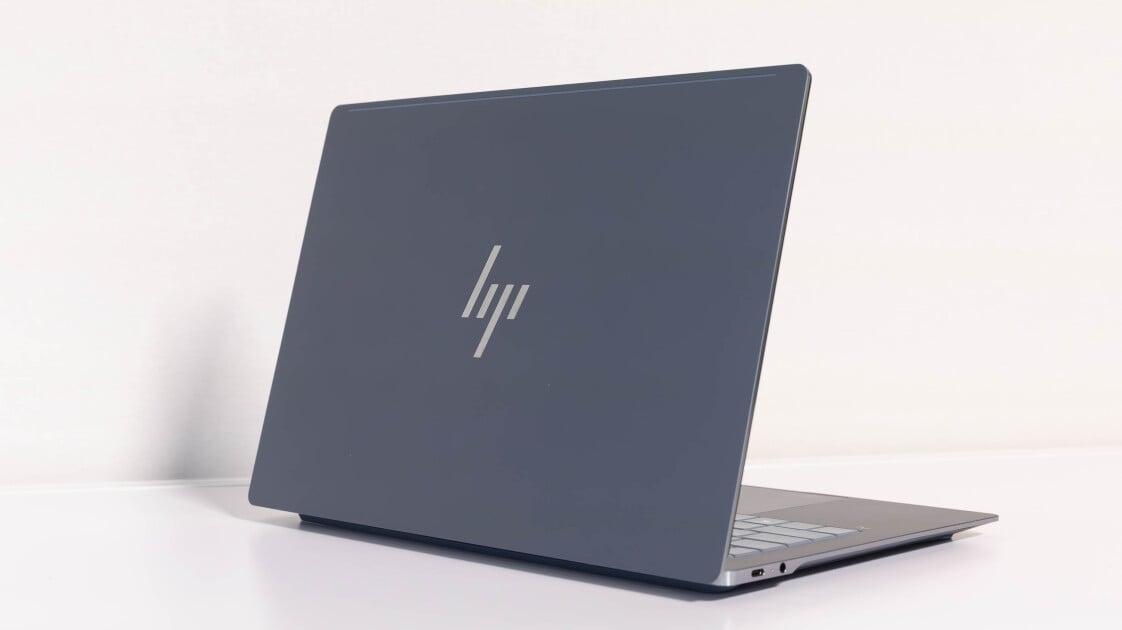
The OmniBook Ultra 14 showcases an anodized aluminum chassis that weighs just 2.81 pounds—14% lighter than its predecessor—and measures only 0.55 inch thick at specific points
1
2
. HP claims this ultrabook is thinner than the 13-inch MacBook Air, though this comparison applies to one point on the laptop's rear and excludes the hinge cap and rubber feet. The Qualcomm version comes in a distinctive "Stone Blue" finish with anti-fingerprint coating, while Intel models offer "Eclipse Gray" and "Silk Sand" color options2
.Despite its lightweight construction, the chassis has passed 20 MIL-STD 810G tests for durability, demonstrating resistance to flexing and hard typing
1
. HP integrated its first compact vapor chamber in the OmniBook line to manage thermal performance, ensuring the laptop maintains robust AI capabilities during intensive workloads without throttling2
.Display and Connectivity Features Target Professional Users
Both processor variants feature a 2880 x 1800 OLED touchscreen with variable refresh rates up to 120 Hz, protected by edge-to-edge Gorilla Glass. HP claims the display delivers 500-nit brightness for standard content and up to 1,000 nits for HDR content
2
. The laptop includes three USB-C ports offering 40Gbps connectivity with USB power and DisplayPort support, though only Intel models feature true Thunderbolt 4 capability while Qualcomm options use USB41
. A 3.5mm headphone jack provides physical audio connectivity, and Wi-Fi 7 support ensures future-proof wireless performance.The design incorporates HP's lattice-free keyboard with easier removal and replacement capabilities, though this engineering choice doesn't compromise the rigid design or typing comfort. The haptic touchpad includes side-edge gestures for adjusting audio volume and screen brightness
2
. Memory configurations support up to 64GB of LPDDR5x RAM and up to 2TB of PCIe Gen5 NVMe M.2 storage, starting with 16GB and 512GB respectively, though the memory is soldered onboard and cannot be upgraded after purchase2
.Related Stories


Copilot+ PC Capabilities and Market Positioning
As a Copilot+ PC running Windows 11, the OmniBook Ultra 14 delivers the full suite of on-device AI features including text summaries, automatic audio translation, AI noise reduction, and webcam enhancements
2
. The 70-watt-hour Li-ion polymer battery supports fast charging, reaching 50% capacity in approximately 45 minutes using the included compact 65W GaN adapter2
.HP plans to release the Intel version this month starting at $1,549.99, while the Qualcomm version will launch in spring with pricing to be announced closer to release
1
. Beyond the OmniBook Ultra 14, HP is updating its entire OmniBook lineup at CES with various sizes and processors from Qualcomm, Intel, and next-gen Ryzen AI chips, including the OmniBook X, OmniBook 7, OmniBook 5, and OmniBook 3 models set to launch throughout February and spring1
. This aggressive product strategy signals HP's intent to capture market share in the rapidly evolving AI PC segment, where processing power increasingly determines competitive advantage for professionals requiring local AI workflows.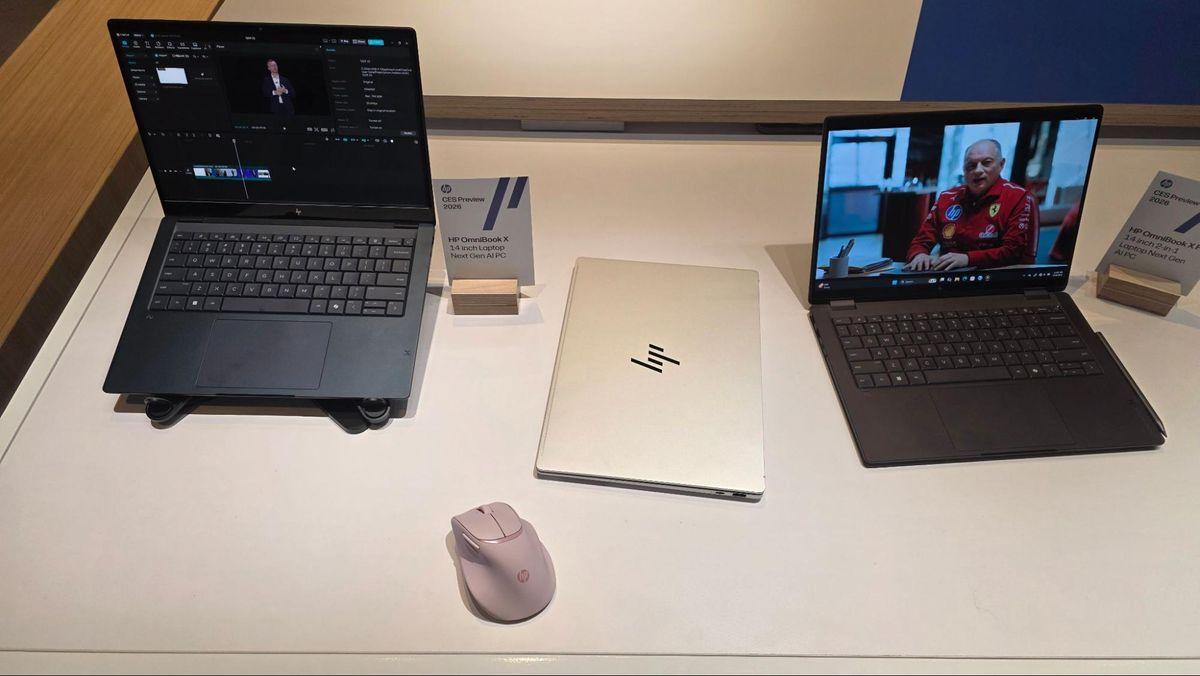
Source: Tom's Hardware
References
Summarized by

Navi
[1]
Related Stories
Recent Highlights


Recent Highlights
Today's Top Stories









Your Daily Dose of Curated AI News
Don’t drown in AI news. We cut through the noise - filtering, ranking and summarizing the most important AI news, breakthroughs and research daily. Spend less time searching for the latest in AI and get straight to action.

