Humans& Raises $480M to Build AI Models Designed for Coordination, Not Just Chat


9 Sources
9 Sources
[1]
Humans& thinks coordination is the next frontier for AI, and they're building a model to prove it
AI chatbots are getting better at answering questions, summarizing documents, and solving mathematical equations, but they still largely behave like helpful assistants for one user at a time. They're not designed to manage the messier work of real collaboration: coordinating people with competing priorities, tracking long-running decisions, and keeping teams aligned over time. Humans&, a new startup founded by alumni of Anthropic, Meta, OpenAI, xAI, and Google DeepMind, thinks closing that gap is the next major frontier for foundation models. The company this week raised a $480 million seed round to build a "central nervous system" for the human-plus-AI economy. The startup's "AI for empowering humans" framing has dominated early coverage, but the company's actual ambition is more novel: building a new foundation model architecture designed for social intelligence, not just information retrieval or code generation. "It feels like we're ending the first paradigm of scaling, where question-answering models were trained to be very smart at particular verticals, and now we're entering what we believe to be the second wave of adoption where the average consumer or user is trying to figure out what to do with all these things," Andi Peng, one of humans&'s co-founders and a former Anthropic employee, told TechCrunch. Humans&'s pitch centers on helping usher people into the new era of AI, moving beyond the narrative that AI will take their jobs. Whether or not that's just marketing speak, the timing is critical: Companies are transitioning from chat to agents. Models are competent, but workflows aren't, and the coordination challenge remains largely unaddressed. And through it all, people feel threatened and overwhelmed by AI. The three-month-old company, like several of its peers, has managed to raise its startling seed round off the back of this philosophy and the pedigree of its founding team. Humans& still doesn't have a product, nor has it been clear about what exactly it might be, though the team said it could be a replacement for multiplayer or multi-user contexts like communication platforms (think Slack) or collaboration platforms (think Google Docs and Notion). As for use cases and target audience, the team hinted at both enterprise and consumer applications. "We are building a product and a model that is centered on communication and collaboration," Eric Zelikman, co-founder and CEO of humans& and former xAI researcher, told TechCrunch, adding that the focus is on getting the product to help people work together and communicate more effectively -- both with each other and with AI tools. "Like when you have to make a large group decision, often it comes down to someone taking everyone into one room, getting everyone to express their different camps about, for example, what kind of logo they'd like," Zelikman continued, chortling with his team as they recalled the time-consuming tedium of getting everyone to agree on a logo for the startup. Zelikman added that the new model will be trained to ask questions in a way that feels like interacting with a friend or a colleague, someone who is trying to get to know you. Chatbots today are programmed to ask questions constantly, but they do so without understanding the value of the question. He says this is because they've been optimized for two things: How much a user immediately likes a response they're given, and how likely the model is to answer the question it receives correctly. Part of the lack of clarity around what the product is could be that humans& doesn't exactly have an answer for that yet. Peng said humans& is designing the product in conjunction with the model. "Part of what we're doing here is also making sure that as the model improves, we're able to co-evolve the interface and the behaviors that the model is capable of into a product that makes sense," she said. What is clear, though, is that humans& isn't trying to make a new model that can plug into existing applications and collaboration tools. The startup wants to own the collaboration layer. AI plus team collaboration and productivity tools are an increasingly hot field -- for example, the startup AI note-taking app Granola raised a $43 million round at a $250 million valuation as it launched more collaborative features. Several high-profile voices are also explicitly framing the next phase of AI as one of coordination and collaboration, not just automation. LinkedIn founder Reid Hoffman today argued that companies are implementing AI wrong by treating it like isolated pilots and that the real leverage is in the coordination layer of work -- that is, how teams share knowledge and run meetings. "AI lives at the workflow level, and the people closest to the work know where the friction actually is," Hoffman wrote on social media. "They're the ones who will discover what should be automated, compressed, or totally redesigned." That's the space where humans& wants to live. The idea is that its model-slash-product would act as the "connective tissue" across any organization -- be it a 10,000-person business or a family -- that understands the skills, motivations, and needs of each person, as well as how all of those can be balanced for the good of the whole. To get there requires rethinking how AI models are trained. "We're trying to train the model in a different way that will involve more humans and AIs interacting and collaborating together," Yuchen He, a humans& co-founder and former OpenAI researcher, told TechCrunch, adding that the startup's model will also be trained using long-horizon and multi-agent reinforcement learning (RL). Long-horizon RL is meant to train the model to plan, act, revise, and follow through over time, rather than just generate a good one-off answer. Multi-agent RL trains for environments where multiple AIs and/or humans are in the loop. Both of these concepts are gaining momentum in recent academic work as researchers push LLMs beyond chatbot responses toward systems that can coordinate actions and optimize outcomes over many steps. "The model needs to remember things about itself, about you, and the better its memory, the better its user understanding," He said. Despite the stellar crew running the show, there are plenty of risks ahead. Humans& will need endless large sums of cash to fund the expensive endeavor that is training and scaling a new model. That means it will be competing with the major established players for resources, including access to compute. The top risk, though, is that humans& isn't just competing with the Notions and Slacks of the world. It's coming for the Top Dogs of AI. And those companies are actively working on better ways to enable human collaboration on their platforms, even as they swear AGI will soon replace economically viable work. Through Claude Cowork, Anthropic aims to optimize work-style collaboration; Gemini is embedded into Workspace so AI-enabled collaboration is already happening inside the tools people are already using; and OpenAI has lately been pitching developers on its multi-agent orchestration and workflows. Crucially, none of the major players seem poised to rewrite a model based on social intelligence, which either gives humans& a leg up or makes it an acquisition target. And with companies like Meta, OpenAI, and DeepMind on the prowl for top AI talent, M&A is certainly a risk. Humans& told TechCrunch it has already turned away interested parties and is not interested in being acquired. "We believe this is going to be a generational company, and we think that this has the potential to fundamentally change the future of how we interact with these models," Zelikman said. "We trust ourselves to do that, and we have a lot of faith in the team that we've assembled here." This post was original published on January 22, 2026.
[2]
Humans&, a 'human-centric' AI startup founded by Anthropic, xAI, Google alums, raised $480M seed round
Humans&, a startup with a philosophy that AI should empower people rather than replace them, has raised $480 million in seed funding at a $4.48 billion valuation, reports The New York Times. Investors in the round include chipmaker Nvidia, Amazon founder Jeff Bezos, and VC firms SV Angel, Google Ventures and Laurene Powell Jobs's firm Emerson Collective. The megadeal for the three-month-old company follows a trend of investors throwing money at startups founded by breakaways of major AI labs. Humans&'s founders include Andi Peng, a former Anthropic researcher who worked on reinforcement learning and post-training of Claude 3.5 through 4.5; Georges Harik, Google's seventh employee who helped build its first advertising systems; Eric Zelikman and Yuchen He, two former xAI researchers who helped develop the Grok chatbot; and Noah Goodman, a Stanford professor of psychology and computer science. Humans&'s 20-odd employees also come from OpenAI, Meta, Reflection, AI2, and MIT, according to the company. The startup aims to use software to help people collaborate with each other - think an AI version of an instant messaging app. One of their goals is to use existing AI techniques to train AI in new ways, like programming chatbots to request information from the user and store it for later use. In order to build AI that serves "as a deeper connective tissue that strengthens organizations and communities," Humans& hopes to rethink "how we train models at scale and how people interact with AI," per the company's webpage. The startup cited a need for innovations in "long-horizon and multi-agent reinforcement learning, memory, and user understanding," as well as a tightly integrated focus on both science and product development. TechCrunch has reached out for comment.
[3]
Nvidia, SV Angel Set to Back Humans& at $4.48 Billion Valuation
Humans&, a new startup building a frontier artificial intelligence lab, has raised a $480 million seed funding round at a $4.48 billion valuation -- an unusually large haul for a young startup. The financing was led by SV Angel, a venture firm founded by serial investor Ron Conway, as well as Humans& co-founder Georges Harik, an investor and early Google employee. Other investors in the round include Jeff Bezos, Nvidia Corp. and GV, formerly Google Ventures. The San Francisco-based startup also said it will work with Nvidia on hardware and software. The company was started last year by Harik, xAI researchers Eric Zelikman and Yuchen He, Anthropic researcher Andi Peng, and former Google DeepMind research scientist Noah D. Goodman.
[4]
Humans& Raises Huge $480M Seed Round At $4.48B Valuation For 'Human-Centric AI Lab'
Humans&, a new company founded by top researchers from Google, Anthropic, xAI, OpenAI and Meta, among others, announced Tuesday that it has raised a massive $480 million seed round at a staggering $4.48 billion valuation. So far, not much is known about the company, founded in September 2025, which says its mission is to design an AI tool "around how people connect and work together, where collaboration and human insight remain central." The co-founders are former Anthropic researcher SV Angel 1 and co-founder Harik also led the round, which included participation from Nvidia, Jeff Bezos, GV (Google Ventures), Emerson Collective, Forerunner, S32, DCVC, Human Capital, Felicis 2 and CRV, among "many others," according to the company. The seed round was raised all cash unstructured. The startup says its AI lab aims to set "the standard for how AI supports human connection." Its tool, it adds, will act as a connective tissue to facilitate collaboration between people and intelligent systems. In a blog post, the company wrote: "No one changes the world alone. AI models are rapidly learning to reason better, code faster, and take actions in the world with increasing autonomy. But for humans, progress happens when we understand one another, build trust, make connections, and work together. That is where we believe the next chapter of AI should begin." Peng told Crunchbase News via email that humans& will spend the majority of the capital on compute for training models. Huge seed rounds for AI While huge funding rounds are not unusual in the artificial intelligence space, the Humans& raise is believed to be one of the largest seed rounds ever raised. The largest, however, was raised by Thinking Machines Lab last year. Launched and led by former OpenAI CTO Mira Murati, and joined by AI heavy hitters from Meta, OpenAI, Google and Mistral AI, the San Francisco-based company last year announced a $2 billion Andreessen Horowitz-led financing at a $10 billion valuation. It was by far the largest seed round in the Crunchbase dataset. Crunchbase data showed that seed investors poured money into AI startups in 2025 at an even more exuberant pace than in 2024, which was already record-setting. More than 41% of the $38.4 billion invested in global seed funding in 2025 went to companies in AI-focused industry categories, per Crunchbase data. That was up from 30% in 2024. The numbers also got bigger. Just over $15 billion had gone to AI-focused seed rounds as of Dec. 12, per Crunchbase, up about 50% from 2024. Below, we take a look at AI investment total and share for the past six years. It was also a record-setting year for really, really huge seed rounds. By this, we mean financings of $100 million or more -- once unheard of, but now not that uncommon. We kept the dataset of these deals to U.S. startups for simpler vetting. But even with this limit, the total was enormous -- topping $3.6 billion in 2025, as of Dec. 12, a new record.
[5]
Newly launched AI startup Humans& raises $480M round backed by Nvidia, GV - SiliconANGLE
Newly launched AI startup Humans& raises $480M round backed by Nvidia, GV Humans& Inc., a three-month-old artificial intelligence startup, today announced that it has closed a $480 million seed round at a $4.48 billion valuation. The investment was led by SV Angel and Georges Harik, one of the company's founders. Harik, an early Google LLC employee, helped develop several of the search giant's core services. Google parent Alphabet Inc. participated in the round through its GV fund alongside Nvidia Corp., Jeff Bezos and more than a half-dozen others. The initial Humans& team comprises about 20 AI experts. They joined the company from OpenAI Group PBC, Anthropic PBC, Meta Platforms Inc. and other major players in the AI market. Humans& says its researchers are developing neural networks that will make workers more productive. According to the New York Times, the company's models will speed up collaboration-related tasks and online research. They are also expected to automate "other tasks that suit machines." In a blog post, the company hinted that one of its goals is to equip its AI software with the ability to perform long-horizon activities. Those are complex tasks that take large language models hours or more to complete. Long-horizon processing is a major focus of machine learning researchers. Google, for example, recently revealed that it has developed an AI model design specifically optimized for long-horizon use cases. The architecture's flagship feature is a component called a metacontroller. When an AI model is given a long-horizon task, the metacontroller generates software modules that optimize the model's reasoning workflow. Humans& also plans to equip its software with support for multi-agent use cases. That means its AI models will be capable of collaborating with other neural networks on multistep tasks. Additionally, the company's models will proactively ask workers for the information necessary to complete a given task. Humans& plans to train its algorithms using reinforcement learning. That's a training approach commonly used by researchers to develop reasoning models. In a reinforcement learning project, an AI completes a set of training tasks and receives positive or negative feedback depending on how well it completes a given chore. The algorithm uses that feedback to hone its output quality. Unlike certain other development methods, reinforcement learning doesn't require researchers to enrich their training data with explanatory labels, which lowers costs. However, it can still be capital-intensive because of the large number of graphics cards often needed to train reasoning models. That might be one of the reasons Humans& has raised such a large seed round. The Times reported that the company plans to launch its first product early this year.
[6]

Bezos-backed startup says it wants to empower workers, not replace them
SAN FRANCISCO -- As a research scientist at Anthropic, one of the world's leading artificial intelligence companies, Andi Peng was part of a team that tried to make sure the company's technology didn't tell lies or damage the mental health of the people who used it. But she came to realize that there was a much larger problem: Like many other AI companies, Anthropic was trying to build technology that would systematically replace people in the workforce. Peng recently left Anthropic to help start a company with four other prominent technologists, including two researchers from Elon Musk's xAI and one of the first employees at Google. The new company, Humans&, has embraced the notion that AI should empower people rather than replace them. The founders said their goal was to build software that facilitated collaboration between people -- like an AI version of an instant messaging app -- while also helping with internet searches and other tasks that suit machines. "Anthropic is training its model to work autonomously. It loved to highlight how its models churned for eight hours, 24 hours, 50 hours by itself to complete a task," Peng said. "That was never my motivation. I think of machines and humans as complementary." Executives at other tech companies may chafe at the criticism that they are building systems meant to replace human workers. But a number of big thinkers in Silicon Valley believe that AI will replace millions of workers in the coming years. Others argue that the new technology will create jobs that haven't been imagined yet. Either way, the arrival of Humans& is a clear sign that the money being poured into AI startups shows little signs of slowing, even as many financial analysts and industry insiders warn of an AI bubble. The San Francisco startup has raised $480 million in seed funding from tech giants like Nvidia; Jeff Bezos, the founder of Amazon; and venture capital firms like SV Angel and Google Ventures. It is valued at $4.48 billion, even though it has only about 20 employees and launched just three months ago. "A lot of our investors are human, and they care where humanity is going," said another founder, Georges Harik, who helped build Google's first advertising systems as the seventh employee at the search giant. Other startups have also raised vast amounts of money in recent months. In the fall, a group of former OpenAI, Meta and Google researchers raised $300 million for an AI startup dedicated to scientific discovery. Bezos himself raised $6.2 billion for a similar effort where he serves as co-CEO. After leaving xAI in September, Eric Zelikman, the CEO of Humans&, assembled its founders, who also include a Stanford University professor, Noah Goodman, and another former xAI researcher, Yuchen He. The new company is part of a wider effort to build systems that complement rather than replace humans. In 2019, Stanford created a research lab that it calls the Institute for Human-Centered Artificial Intelligence. In the years since, the term "human-centric" has become a clarion call among researchers and entrepreneurs. "There are some pretty clear principles that designers are beginning to take that favor human-centered approaches," said Ben Shneiderman, a computer science professor at the University of Maryland who runs an online community dedicated to the approach. "It goes back to the fundamental principle of ensuring human control." Zelikman said that while chatbots were designed to answer questions, they were not good at asking them. The technology, he explained, does not make a big enough effort to understand what people want. "AI has enormous potential to allow people to do more together," said Zelikman, who was among the first employees at xAI, where he helped develop the Grok chatbot. "The current paradigm -- questioning and answering -- is not going to get us there." After hiring about 20 researchers and engineers, Humans& aims to use existing AI techniques to train AI in new ways. That's expensive, and is a main reason that the company has already raised hundreds of millions of dollars. The AI systems that drive chatbots are called neural networks. By pinpointing patterns in enormous amounts of text culled from across the internet, these systems learn to mimic the way people put words together. They can even learn to write computer programs and solve math problems. Zelikman and the others want to train their systems to be more interactive -- to request information from the user and store it for later use. Think of it as AI with both curiosity and memory. Imagine AI that slots seamlessly into a text messaging group with colleagues, friends or family. "No one really accomplishes anything alone," Harik said. "It is mostly teams of people collaborating who build amazing things."
[7]

An AI startup says it wants to empower workers, not replace them
Former Anthropic researcher Andi Peng left to cofound Humans&, rejecting AI that replaces workers. Backed by Nvidia and Jeff Bezos, the funded startup pursues human-centric systems that collaborate with users, signaling investor confidence in alternative AI visions despite bubble fears. As a research scientist at Anthropic, one of the world's leading artificial intelligence companies, Andi Peng was part of a team that tried to make sure the company's technology didn't tell lies or damage the mental health of the people who used it. But she came to realize that there was a much larger problem: Like many other AI companies, Anthropic was trying to build technology that would systematically replace people in the workforce. Peng recently left Anthropic to help start a company with four other prominent technologists, including two researchers from Elon Musk's xAI and one of the first employees at Google. The new company, Humans&, has embraced the notion that AI should empower people rather than replace them. The founders said their goal was to build software that facilitated collaboration between people -- like an AI version of an instant messaging app -- while also helping with internet searches and other tasks that suit machines. "Anthropic is training its model to work autonomously. It loved to highlight how its models churned for eight hours, 24 hours, 50 hours by itself to complete a task," Peng said. "That was never my motivation. I think of machines and humans as complementary." Executives at other tech companies may chafe at the criticism that they are building systems meant to replace human workers. But a number of big thinkers in Silicon Valley believe that AI will replace millions of workers in the coming years. Others argue that the new technology will create jobs that haven't been imagined yet. Either way, the arrival of Humans& is a clear sign that the money being poured into AI startups shows little signs of slowing, even as many financial analysts and industry insiders warn of an AI bubble. The San Francisco startup has raised $480 million in seed funding from tech giants like Nvidia; Jeff Bezos, the founder of Amazon; and venture capital firms like SV Angel and Google Ventures. It is valued at $4.48 billion, even though it has only about 20 employees and launched just three months ago. "A lot of our investors are human, and they care where humanity is going," said another founder, Georges Harik, who helped build Google's first advertising systems as the seventh employee at the search giant. Other startups have also raised vast amounts of money in recent months. In the fall, a group of former OpenAI, Meta and Google researchers raised $300 million for an AI startup dedicated to scientific discovery. Bezos himself raised $6.2 billion for a similar effort where he serves as co-CEO. After leaving xAI in September, Eric Zelikman, the CEO of Humans&, assembled its founders, who also include a Stanford University professor, Noah Goodman, and another former xAI researcher, Yuchen He. The new company is part of a wider effort to build systems that complement rather than replace humans. In 2019, Stanford created a research lab that it calls the Institute for Human-Centered Artificial Intelligence. In the years since, the term "human-centric" has become a clarion call among researchers and entrepreneurs. "There are some pretty clear principles that designers are beginning to take that favor human-centered approaches," said Ben Shneiderman, a computer science professor at the University of Maryland who runs an online community dedicated to the approach. "It goes back to the fundamental principle of ensuring human control." Zelikman said that while chatbots were designed to answer questions, they were not good at asking them. The technology, he explained, does not make a big enough effort to understand what people want. "AI has enormous potential to allow people to do more together," said Zelikman, who was among the first employees at xAI, where he helped develop the Grok chatbot. "The current paradigm -- questioning and answering -- is not going to get us there." After hiring about 20 researchers and engineers, Humans& aims to use existing AI techniques to train AI in new ways. That's expensive, and is a main reason that the company has already raised hundreds of millions of dollars. The AI systems that drive chatbots are called neural networks. By pinpointing patterns in enormous amounts of text culled from across the internet, these systems learn to mimic the way people put words together. They can even learn to write computer programs and solve math problems. Zelikman and the others want to train their systems to be more interactive -- to request information from the user and store it for later use. Think of it as AI with both curiosity and memory. Imagine AI that slots seamlessly into a text messaging group with colleagues, friends or family. "No one really accomplishes anything alone," Harik said. "It is mostly teams of people collaborating who build amazing things."
[8]
AI startup Humans& raises $480 million at $4.5 billion valuation in seed round
AI startup Humans& has secured a massive $480 million in seed funding. This significant investment values the company at $4.48 billion. The funding round was led by SV Angel and saw participation from Nvidia, Jeff Bezos, and Alphabet's GV. Humans& aims to develop advanced AI systems that can plan, learn, and collaborate over extended periods. AI startup Humans&, founded by former OpenAI, Alphabet and xAI researchers, has raised $480 million in a seed financing round, which values the company at $4.48 billion, it said on Tuesday. The outsized seed round highlights intense investor interest in next-generation AI labs founded by veteran researchers as companies race to build systems that go beyond chatbots and agentic tools. The round was led by Ron Conway's SV Angel and co-founder Georges Harik, while Nvidia, Jeff Bezos, Alphabet's VC arm, GV, among other venture capital investors, also participated. Nvidia has emerged as a key backer of AI startups as demand for its chips surges, taking stakes in companies that rely heavily on its computing hardware. Humans& said it intends to develop AI systems that can plan and learn over longer periods of time, work alongside other AI systems and remember past interactions while closely linking its research work with the products it builds. Its founding team includes researchers and engineers from major AI labs and institutions such as OpenAI, Anthropic, Google DeepMind and Meta. Harik was Google's seventh employee and played a central role in the company's early growth. He worked on the launch of Gmail, initiated Google Docs and led Google's acquisition of Android. Eric Zelikman, co-founder and CEO, previously worked at Elon Musk's xAI, where he contributed to training data for Grok-2. His research background includes work on reasoning-focused reinforcement learning methods.
[9]

AI startup Humans& raises $480 million at $4.5 billion valuation in seed round
Jan 20 (Reuters) - AI startup Humans&, founded by former OpenAI, Alphabet and xAI researchers, has raised $480 million in a seed financing round, which values the company at $4.48 billion, it said on Tuesday. The outsized seed round highlights intense investor interest in next-generation AI labs founded by veteran researchers as companies race to build systems that go beyond chatbots and agentic tools. The round was led by Ron Conway's SV Angel and co-founder Georges Harik, while Nvidia, Jeff Bezos, Alphabet's VC arm, GV, among other venture capital investors, also participated. Nvidia has emerged as a key backer of AI startups as demand for its chips surges, taking stakes in companies that rely heavily on its computing hardware. Humans& said it intends to develop AI systems that can plan and learn over longer periods of time, work alongside other AI systems and remember past interactions while closely linking its research work with the products it builds. Its founding team includes researchers and engineers from major AI labs and institutions such as OpenAI, Anthropic, Google DeepMind and Meta. Harik was Google's seventh employee and played a central role in the company's early growth. He worked on the launch of Gmail, initiated Google Docs and led Google's acquisition of Android. Eric Zelikman, co-founder and CEO, previously worked at Elon Musk's xAI, where he contributed to training data for Grok-2. His research background includes work on reasoning-focused reinforcement learning methods. (Reporting by Akash Sriram in Bengaluru; Editing by Shilpi Majumdar)
Share
Share
Copy Link
A three-month-old AI startup founded by alumni from Anthropic, xAI, and Google DeepMind just raised one of the largest seed rounds ever. Humans& secured $480 million at a $4.48 billion valuation to build foundation models designed for social intelligence and collaboration. The company argues that coordination between people and AI systems is the next frontier, moving beyond chatbots that serve one user at a time.
Humans& Secures $480 Million Seed Funding for New AI Vision
Humans&, an AI startup barely three months old, has closed a $480 million seed funding round at a $4.48 billion valuation, marking one of the largest seed raises in startup history
1
2
. The round was led by SV Angel and co-founder Georges Harik, Google's seventh employee who helped build its first advertising systems2
. Major investors include Nvidia, Jeff Bezos, GV (formerly Google Ventures), and Emerson Collective, signaling strong confidence in the company's vision for human-centric AI3
4
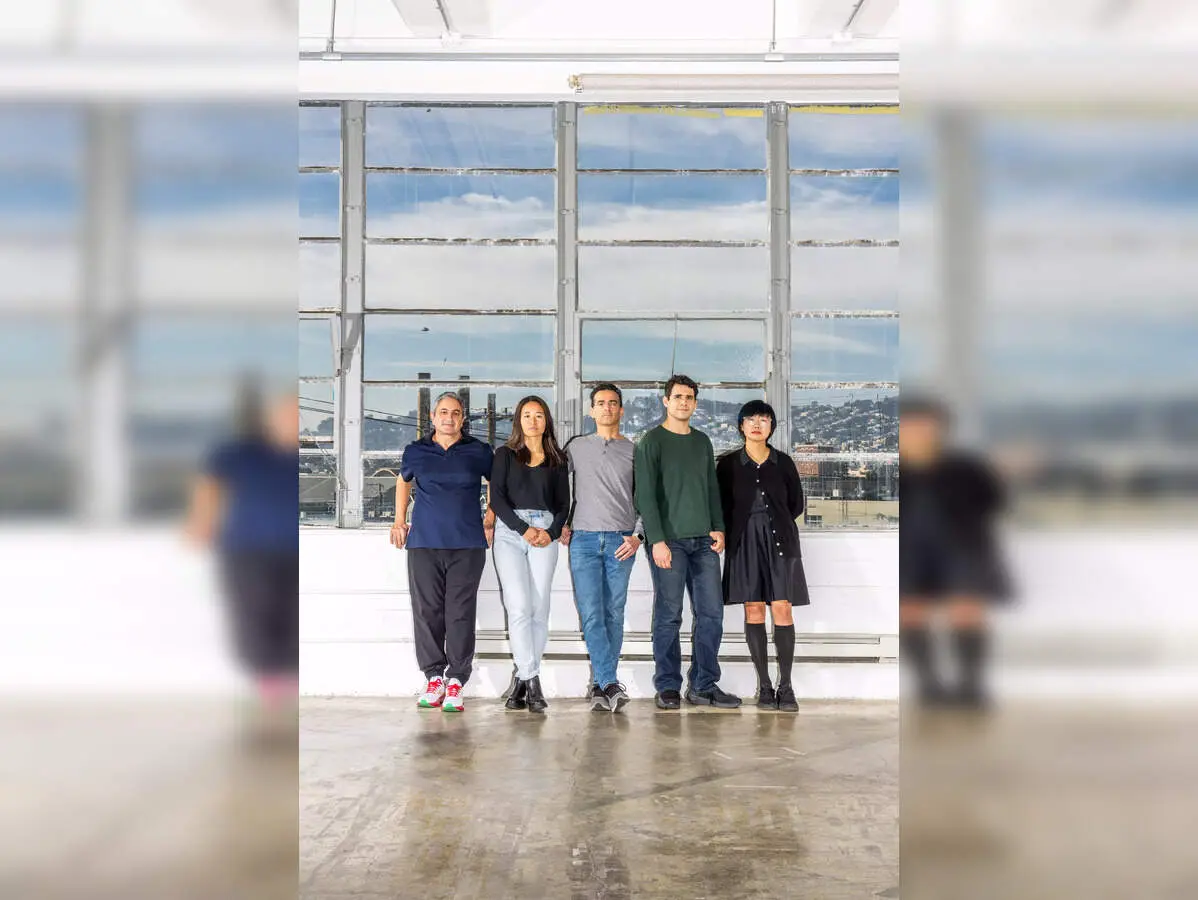
.The founding team brings formidable credentials from the AI industry's leading labs. Co-founders include Andi Peng, a former Anthropic researcher who worked on reinforcement learning and post-training of Claude 3.5 through 4.5; Eric Zelikman and Yuchen He, two former xAI researchers who helped develop the Grok chatbot; and Noah Goodman, a Stanford professor of psychology and computer science
2
. The startup's 20-person team also draws talent from OpenAI, Meta, Google DeepMind, and MIT2
5
.
Source: ET
Building Foundation Models for Social Intelligence
Humans& positions itself at what it calls the next major frontier for foundation models: AI collaboration designed for coordination rather than isolated assistance
1
. Current AI chatbots excel at answering questions and summarizing documents, but they function as helpful assistants for one user at a time. They lack the capability to manage the complex work of real collaboration—coordinating people with competing priorities, tracking long-running decisions, and keeping teams aligned over time1
."It feels like we're ending the first paradigm of scaling, where question-answering models were trained to be very smart at particular verticals, and now we're entering what we believe to be the second wave of adoption where the average consumer or user is trying to figure out what to do with all these things," Peng told TechCrunch
1
.The company aims to build what it describes as a "central nervous system" for the human-plus-AI economy, developing new foundation model architecture designed specifically for social intelligence for AI
1
. This represents a departure from models optimized primarily for information retrieval or code generation.
Source: SiliconANGLE
Rethinking How AI Interacts With Teams
CEO Eric Zelikman explained that the new model will be trained to ask questions in a way that feels like interacting with a friend or colleague, someone genuinely trying to understand you
1
. Current chatbots ask questions constantly but without understanding the value of those questions, he noted, because they've been optimized for two narrow metrics: how much a user immediately likes a response and how likely the model is to answer correctly1
.
Source: Market Screener
The company envisions its product as a potential replacement for multiplayer contexts like communication platforms such as Slack or collaboration platforms like Google Docs and Notion
1
. Rather than building a model that plugs into existing tools, Humans& wants to own the collaboration layer entirely1
.Technical Approach: Multi-Agent Reinforcement Learning
To achieve its vision for AI for collaboration, Humans& plans to train its algorithms using reinforcement learning, a training approach commonly used to develop reasoning models
5
. The company has identified the need for innovations in "long-horizon and multi-agent reinforcement learning, memory, and user understanding"2
.Long-horizon processing refers to complex tasks that take large language models hours or more to complete, representing a major focus area for machine learning researchers
5
. The startup also plans to equip its software with support for multi-agent systems, meaning its neural networks will be capable of collaborating with other AI models on multistep tasks5
.Peng told Crunchbase News that the majority of the capital will be spent on compute for training models
4
. The frontier AI lab will work with Nvidia on hardware and software to support this intensive computational work3
.Related Stories

Market Context and Growing Competition
The Humans& raise reflects a broader trend of massive seed funding flowing to AI startups founded by researchers from major labs. Crunchbase data shows that more than 41% of the $38.4 billion invested in global seed funding in 2025 went to companies in AI-focused industry categories, up from 30% in 2024
4
. Just over $15 billion went to AI-focused seed rounds, up about 50% from 20244
.The space for AI to enhance worker productivity through coordination is becoming increasingly competitive. The AI note-taking app Granola recently raised a $43 million round at a $250 million valuation as it launched more collaborative features
1
. LinkedIn founder Reid Hoffman has argued that companies are implementing AI wrong by treating it like isolated pilots, and that the real leverage is in the coordination layer of work—how teams share knowledge and run meetings1
.What Comes Next for the AI Startup
Humans& still doesn't have a product, and details remain scarce about what exactly it will be
1
. Peng explained that the company is designing the product in conjunction with the model: "Part of what we're doing here is also making sure that as the model improves, we're able to co-evolve the interface and the behaviors that the model is capable of into a product that makes sense"1
.The Times reported that the company plans to launch its first product early this year
5
. The team has hinted at both enterprise and consumer applications, though specific use cases remain undefined1
.The company's success will depend on whether it can deliver on its promise to rethink how foundation models are trained and how people interact with AI systems. As companies transition from chat to agents, the coordination challenge remains largely unaddressed, creating an opening for Humans& to establish itself as the standard for how AI supports human connection
1
4
.References
Summarized by

Navi
[1]
[2]
Related Stories
Mira Murati's Thinking Machines Lab Aims for Record-Breaking $2 Billion Seed Round
11 Apr 2025•Startups

Enterprise AI adoption reveals 6x productivity gap between power users and typical workers
10 Dec 2025•Business and Economy

OpenAI's Bold Claims on AGI and Superintelligence Spark Debate
06 Jan 2025•Technology

Recent Highlights
1
Apple Plans Major Siri AI Overhaul in iOS 27 With Third-Party Chatbot Integration
Technology

2
OpenAI shuts down Sora after six months, ending Disney's $1 billion licensing partnership
Technology

3
AI chatbots validate you too much, making you less kind to others, Stanford study reveals
Science and Research

Recent Highlights
Today's Top Stories



Your Daily Dose of Curated AI News
Don’t drown in AI news. We cut through the noise - filtering, ranking and summarizing the most important AI news, breakthroughs and research daily. Spend less time searching for the latest in AI and get straight to action.

