India AI push at Davos 2026: Infrastructure, sovereignty and real-world use cases take center stage


6 Sources
6 Sources
[1]
AI for Viksit Bharat at WEF Davos 2026: Infra, reforms, re-skilling, real use cases key
New-age technologies like AI are set to transform sectors such as agriculture and finance, boosting efficiency and innovation. However, experts say India must develop its own AI playbook to ensure inclusive, secure and sustainable growth. As India pushes to move artificial intelligence from aspiration into execution, scalable infrastructure, policy reforms, re-skilling and real-world use cases are becoming central to the country's growth, industry leaders said. AI is already transforming public administration, Maharashtra chief minister Devendra Fadnavis said at a panel discussion titled 'AI for Viksit Bharat' at the World Economic Forum, moderated by Sruthijith KK. "We (Maharashtra government) are now trying to embed AI in our entire processes, in our governance, in our service delivery." India's digital public infrastructure is an equaliser, Fadnavis said. "Now is the time when, with the use of AI, we can leverage this digital infrastructure for greater public good." Citing the state's agriculture initiatives, he added: "We have created the AgriStack...entire data digitised-land records, crop records, every single thing, for every farmer." Fadnavis also highlighted Maharashtra's plans to build a 200-acre innovation city, positioning it as a hub to attract AI-led investments, startups and talent. Bajaj Finserv chairman and managing director Sanjiv Bajaj called AI a disruptive but familiar technological shift. "Whenever there is any discontinuous innovation, and AI clearly is one, there is significant change...there is hype and fear initially," he said, drawing parallels with earlier transitions from steam to electricity and the rise of the internet. "Over these 200 years, the world has become more productive, more prosperous," he said. He outlined three stages of AI adoption-productivity, effectiveness and innovation-adding that AI-led call centres in some group companies have already delivered "a 30% improvement in productivity". At Bajaj Finserv, AI is already reshaping advertising, customer engagement and lending. "We do a few thousand marketing videos every year, and this is all being AI-created end-to-end," Bajaj said, citing a Diwali campaign where "in 15 days, we customised almost 300,000 individual ads" across stores. On lending, he said an AI bot now negotiates loans in Hindi, English and mixed languages. "Out of 4.5 million loans a month, we are already doing 30,000-40,000 loans end-to-end with the AI product," he said. While AI adoption is clearly accelerating, PwC India chairperson Sanjeev Krishan flagged a sharp gap between deployment and value creation, citing findings from a global report unveiled at Davos. "Only 12% CEOs say that they have gotten returns on both the top and bottom line with the use of AI, and a large part of that is because nobody is looking at it as a tool to revolutionise enterprise," he said. Krishan argued that disruption from AI is inevitable, but the real challenge lies in preparedness. "Humans will always outpace any kind of technology development...because at the end of the day, we are the ones who are innovating." The issue is not job loss, but whether people are being equipped with the right skills, he said. India must urgently rethink its education system if it wants to stay relevant in an AI-driven economy, Krishan said. "The higher education system has to go through a rehaul...if you want to be relevant to what comes next." PwC released the 'AI Edge for Viksit Bharat' report at ET House in Davos. Zerodha cofounder and investor Nikhil Kamath cautioned against applying traditional valuation metrics to AI companies. "There are no revenues in most AI companies really to warrant the kind of multiples that they're getting," except for firms such as Alphabet or Nvidia with established businesses, he said. "You can't value a company in AI today based on the revenue that they're earning today," Kamath added, calling current valuations an extrapolation of uncertain futures. "Anybody can bet because nobody knows," he said. Kamath said India should avoid replicating western AI models and instead focus on building applications above core models. "The mistake I don't think we should make is try and replicate what western companies are doing, which have a lot more risk capital at hand," he said. He also warned against platform dependence. "The time is ripe today to not get dependent on one platform," Kamath said, urging diversification. Looking ahead, he added: "Contrarian behaviour and nuance...becomes increasingly important," noting that originality is hard for models to replicate. (You can now subscribe to our Economic Times WhatsApp channel)
[2]
Bharat AI: Why India's AI Moment Is About Statecraft, Not Scale: By Dr Ritesh Jain
For much of the past decade, India's technology journey has carried an uncomfortable contradiction. We built digital systems at population scale -- payments, identity, public platforms -- yet remained structurally dependent on external intelligence layers. We digitised transactions, but outsourced cognition. Artificial intelligence is now forcing a reckoning with that imbalance. What is unfolding in Bharat today is not a startup cycle or a funding wave. It is a strategic moment -- one that will determine whether India becomes a true AI system-builder or remains an application economy riding on infrastructure it does not control. I have said this often in policy rooms and boardrooms alike: AI is no longer a feature layer. It is becoming economic infrastructure. And infrastructure, by definition, cannot remain externally dependent. India already sits at the centre of global AI usage. In 2024 alone, Indian users accounted for more than 177 million AI application downloads, making us the second-largest AI consumer market in the world. Yet the economic signal beneath that adoption is sobering. Consumer AI revenue in India remains under $12 million annually -- barely a few paise per user. This is not a failure of innovation. It is evidence that scale without embedded utility does not compound. Intelligence creates value only when it changes outcomes inside real workflows -- credit approvals, medical triage, subsidy delivery, fraud prevention -- not when it merely assists at the margins. This adoption-value gap exposes a deeper structural imbalance in our AI ecosystem. Nearly ninety percent of Indian AI startups funded since 2020 have been application-led, attracting close to $1.8 billion in capital. By contrast, AI infrastructure and foundation model development together account for a fraction of that investment. The ecosystem has been optimised for speed, not sovereignty. That approach worked when AI was peripheral. It becomes fragile when intelligence itself becomes the decision-making core of economies. From my experience advising governments, central banks, and global financial institutions, dependency at the intelligence layer is not an academic concern -- it is a strategic risk. When compute access tightens, when model governance becomes geopolitical, or when regulatory expectations fragment across jurisdictions, those who do not control their AI foundations inherit volatility they cannot price. This is why the IndiaAI Mission matters far more than its ₹10,300-crore headline allocation. The real significance of IndiaAI lies in how it reframes AI as shared national infrastructure rather than a zero-sum race for private advantage. By provisioning access to more than 38,000 GPUs at subsidised rates -- up to 60-80 percent cheaper than prevailing global cloud pricing -- the state is compressing the cost of experimentation precisely where Indian founders have historically been most disadvantaged. Compute is no longer the primary choke point. Failure is becoming affordable again. Iteration is no longer confined to a handful of capital-rich firms. Innovation does not die because ideas are weak. It dies because the cost of learning is too high. Equally important is the deliberate investment in Indian-context data and language systems. Initiatives such as AIKosh and BharatGen are not symbolic. They address a persistent blind spot in global AI: linguistic, cultural, and behavioural representation. India operates across 22 official languages, hundreds of dialects, and deeply informal economic structures shaped by cash-flow volatility and platform-mediated livelihoods. Models trained primarily on Western datasets struggle in this environment. Systems trained in Bharat's complexity, by contrast, tend to generalise better elsewhere. Complexity is not a handicap. It is a proving ground. This is already visible in the nature of AI startups emerging across the country -- particularly in regulated, high-impact sectors. In financial services, a new generation of Bharat-first AI companies is redefining credit and risk assessment by moving beyond bureau-centric models. Startups using cash-flow intelligence, GST data, invoice networks, and platform income signals are underwriting thin-file borrowers with a level of granularity that static scorecards never achieved. These systems are not built to replace human judgement; they are built to solve a time-lag problem humans alone cannot address. As I often emphasise in banking forums, modern credit risk is no longer about predicting default. It is about seeing stress early enough to intervene. The result is not just higher approval rates, but lower loss severity, improved capital efficiency, and better regulatory outcomes. Healthcare offers an even starker illustration of Bharat's AI advantage. Companies such as Qure.ai and Niramai are deploying AI-driven diagnostics at population scale, screening millions for tuberculosis, breast cancer, and other conditions where early detection materially alters outcomes. What makes these systems globally relevant is not just accuracy, but context. They operate in low-resource environments, handle noisy data, integrate into public health workflows, and withstand regulatory scrutiny. In settings where radiologists are scarce and delays cost lives, AI becomes infrastructure, not augmentation. In emerging markets, AI's greatest value is not intelligence. It is timeliness. GovTech remains the most underappreciated frontier of Bharat AI. Platforms such as Bhashini, AI-enabled grievance redressal systems, and agriculture advisory engines linked to Agristack are embedding intelligence directly into state capacity. These systems translate policy into execution -- ensuring subsidies reach the right beneficiaries, grievances are prioritised intelligently, and services scale without administrative collapse. Unlike consumer AI, where trust is optional, GovTech AI operates under continuous public scrutiny. Explainability, consent, and auditability are not features; they are prerequisites. Here, India's experience with digital public infrastructure provides a decisive advantage. Trust is not a soft value in AI. It is a hard economic constraint. The economic upside of getting this right is substantial. Multiple projections suggest AI could contribute up to $1.7 trillion to India's GDP by the mid-2030s. Enterprise AI alone is expected to grow from roughly $11 billion in 2025 to over $70 billion by 2030, driven not by frontier research labs but by deeply embedded deployments in BFSI, healthcare, manufacturing, agriculture, and public services. These are sectors where India already operates at global scale -- and where marginal improvements in decision quality translate into outsized economic gains. India's workforce economics further reinforce this opportunity. The country now has more than 600,000 AI professionals, growing at over 25 percent annually. The average AI engineer earns roughly $17,000 per year, nearly one-seventh of comparable US compensation. Cost arbitrage alone is not a strategy. But when combined with domain depth and regulatory literacy, it becomes a global export advantage -- particularly in regulated industries where governance and audit readiness matter as much as raw performance. What gives me cautious optimism is the behavioural shift now visible across enterprises and investors alike. Over 87 percent of Indian enterprises are actively experimenting with AI, and nearly half are moving multiple use cases into production. The language has changed. Conversations are no longer about pilots and proofs of concept, but about governance, explainability, and unit economics. Investors, too, are becoming more discerning, favouring startups that own decision loops rather than surface-level features. The ecosystem is quietly maturing. Regulation will be the decisive filter. India's emerging AI governance approach -- risk-based, principle-led, and sector-sensitive -- stands in contrast to both laissez-faire permissiveness and overly prescriptive regimes. The MeitY guidelines signal a clear intent to encourage innovation while insisting on accountability. In my experience, no regulator bans complexity. They ban undefended complexity. AI systems that cannot explain decisions, demonstrate consent, or reproduce outcomes under audit will not survive at scale. Those designed with governance in mind often discover that compliance itself becomes a competitive moat. The next five years -- from 2026 to 2030 -- will define India's AI incumbents. Categories will consolidate. Distribution will harden. Switching costs will rise. Founders who build now -- owning workflows end-to-end, embedding AI into institutional processes, and learning from live deployment -- will capture disproportionate value. Those who wait will enter markets where trust is already priced in and margins are thinner. India's AI moment is not about competing with Silicon Valley on model size or chasing narratives from Beijing. It is about something more fundamental: whether we can convert population-scale complexity into reliable, governable, production-grade intelligence. As I often remind policymakers, the future of AI will not be decided by who builds the smartest model, but by who builds the most trusted system. Bharat does not need the loudest AI narrative. It needs the most durable one. The future of AI belongs to those who turn intelligence into daily, dependable utility. On that measure, India is no longer late. It is early to what matters next.
[3]
The Commissioning Velocity: Inside the Curated Room of India's AI Sovereignty
As the global technology elite descend upon the Ambedkar International Centre in New Delhi this February for the India AI Impact Summit, the conversation is undergoing a fundamental shift. We are moving past the era of "AI potential" -- the glossy keynotes and speculative forecasts -- and entering the era of Commissioning Velocity. While public stages rightfully celebrate the visionary possibilities of Artificial Intelligence, a more rigorous, unscripted dialogue is needed to address the structural bottlenecks in the 2026 roadmap. And, this is the genesis of the ET AI Impact Forum: Democratising AI Resources. The session isn't for observers; it is a "Curated Room" for the stakeholders of sovereignty. To realise the goal of an AI-powered economy, India must clear the democratisation of compute -- the first and most formidable hurdle. We are replacing the model of GPU scarcity, where compute remains a luxury asset for the few, with a National Compute Utility. This transition demands more than capital; it requires synchronisation between infrastructure operators and the semiconductor giants who provide the silicon engines. In the Curated Room, the "Hard Talk" centres on how we accelerate the commissioning of hyperscale data centres that serve the "Bharat" SME as effectively as a global conglomerate. We no longer ask if we can build it, but how fast we can deploy it as a public utility. India's role in the global semiconductor value chain is evolving at breakneck speed. For decades, we served as the world's back office for chip design. However, the mandate for 2026 is "Silicon-to-System." The ET AI Impact Forum bridges the gap between Electronic Design Automation (EDA) leadership and localized physical fabrication. With global heads from the semiconductor and chip sectors in the room, we are focusing on a sovereign hardware stack. We are deliberating on hard timelines for the first locally designed and manufactured AI chips to hit the market, ensuring that Indian-designed silicon powers Indian AI intelligence. Democratization remains a hollow promise without accessible, high-quality data. The forum deliberates on the creation of "Data Rails" -- a high-speed, secure, and sovereign marketplace that allows Indian startups and SMEs to train models without the prohibitive costs of proprietary global silos. By applying the principles of India's successful DPI (Digital Public Infrastructure) to AI, we create a national exchange that protects intellectual property while fueling localized Large Language Models (LLMs). This infrastructure allows an AI developer in a Tier-2 city to compete on a global stage. Finally, we address the $100 billion question: Who funds the transition? The democratization of AI resources is an infrastructure-heavy endeavour. It requires a shift from the rapid-exit cycles of Venture Capital to the patient, institutional-grade capital of Sovereign Wealth Funds and Private Equity. The Curated Room brings together the Managing Directors of the world's most influential investment firms to build "Deep-Tech" funding pathways. We are securing the financial bedrock required to bridge the global AI divide and anchor India's position as a global AI superpower. The ET AI Impact Forum operates as an interactive sprint. We have eliminated the slides, the rehearsed keynotes, and the filters. By limiting the audience to a handpicked group of CXOs, founders, and industry folk, we ensure the dialogue remains peer-to-peer. In this room, the audience is as vital as the speakers. We have designed a space for "Productive Friction," where ET poses the provocations that industry leaders usually reserve for their boardrooms. On 18 February at 12:30 PM, at the Ambedkar International Centre, the mandate is clear: We are not just discussing the future of AI; we are commissioning it.
[4]
What Indian firms want from Budget 2026: AI infrastructure, ethics, equity
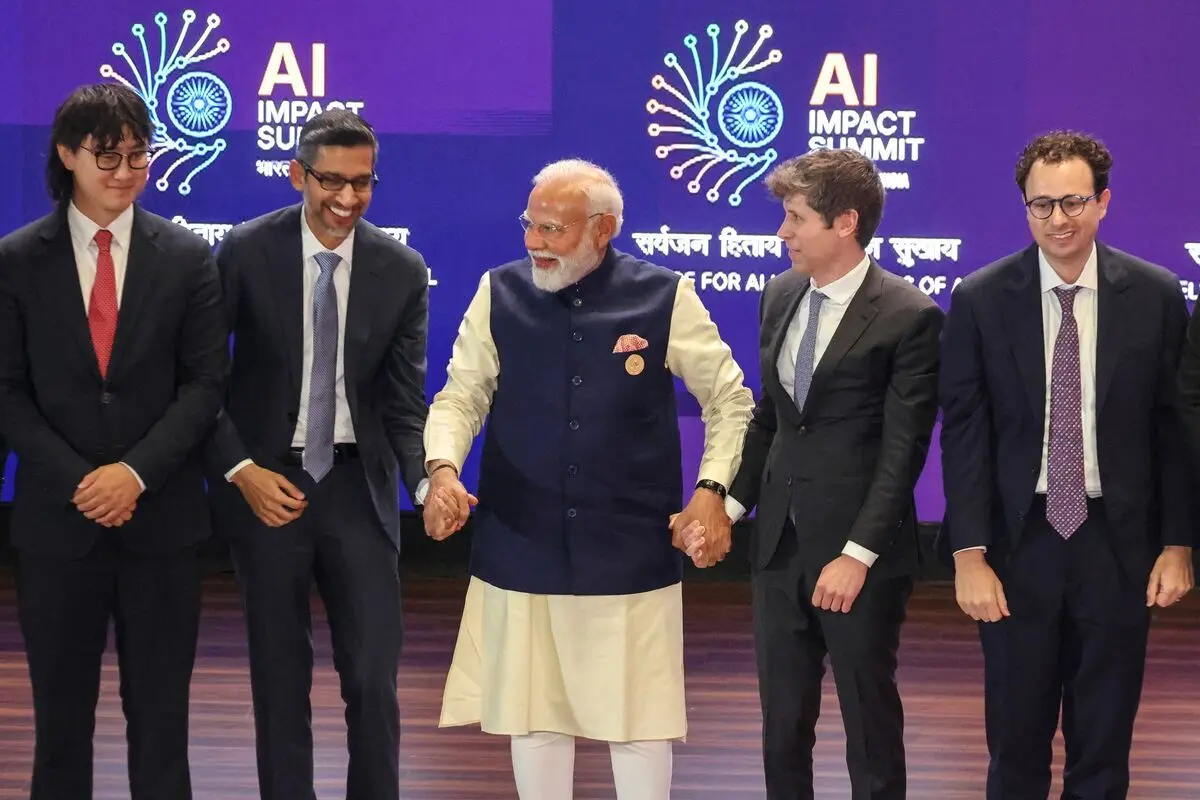
As Indian firms ramp up AI investment and datacenter operators expand their footprint to support the fast-growing generative AI workloads, the industry is seeking more policy intervention from the government to address the operational gaps that would help scale the AI economy. India is one of the fastest growing AI markets. According to IDC, domestic AI spending is expected to grow at 35% annually to reach $9.2 billion by 2028, while Gartner projects total IT spending in India to grow to $176 billion as the appetite for AI integrated applications and services grows. OpenAI CEO Sam Altman said last year that India is already their second largest market and is on track to even surpass the US in the near future. The government of India on its part has allocated ₹ 10,000 crore under the national AI mission to build sovereign AI models that can enhance public service delivery and governance. So far, 12 Indian firms have been selected under the mission to build India-centric large language models (LLMs) and voice AI systems. India is also set to host the AI Impact Summit next month. The event is expected to draw prominent industry leaders, including Nvidia CEO Jensen Huang, Google CEO Sundar Pichai, Anthropic CEO Dario Amodei, Google DeepMind CEO Demis Hassabis, and Accenture CEO Julie Sweet. Niti Aayog projects AI adoption to add $1.7 to $2 trillion to India's economy by 2035, while in Accenture's estimates generative AI alone can lead to 0.6% increase in GDP every year and an additional $675 billion in economic value for India by 2038. Akshay Chhabra, Chairman and MD of 1Point1 Solutions, is of the opinion that Budget 2026 presents an opportunity to move from adoption to scale by laying out a clear roadmap for AI industrialization. "Focused support for R&D, investment-linked incentives, and policies that encourage private capital participation will be critical," said Chhabra. Krupesh Bhat, Founder and CEO of Melento (formerly SignDesk), noted that the real bottleneck is not ideas, but deployment. "The opportunity is not to build the most models, but to build the most impact, and that requires policy alignment with operational realities. We need incentives that reward AI adoption in real business workflows, faster procurement pathways, and clearer regulatory guardrails so companies can scale with confidence," added Bhat. Bhat further said that capital support must also extend to mid-stage tech firms that are ready to grow globally but need patient, growth-oriented funding. Tarun Wig, CO-founder and CEO of Innefu Labs, concurs that the next phase of growth will depend on how effectively these emerging technologies can be scaled across sectors, especially among MSMEs, where the pace of adoption still lags behind large enterprises. He recommends targeted policy interventions in the form of tax incentives for AI-led solutions, enhanced access to secure cloud infrastructure, and a wider reach of skilling programs. This will "modernize operations of MSMEs, enhance their cybersecurity resilience, and create more employment," added Wig. Datacentres should be treated like national infra India's datacentre capacity is expected to reach 9.2GW by 2030 from the current capacity of 960MW, according to a government of India report, released last month. Gartner has projected datacentre spending in India to grow at 20.5% in 2026, outpacing all other segments of IT spending. Industry leaders believe that datacentres should be treated like a national infrastructure and its expansion is essential for India's AI and data sovereignty. Manoj Paul, MD of Equinix, expects faster fibre deployment, cleared regulations to improve network density and rescue cost of bandwidth. He also wants access to reliable and affordable power for energy-intensive AI workloads. "It requires long-term visibility on availability and pricing, with stronger support for renewable integration and grid stability. We hope this Budget would provide capital support for the power utility companies for increasing power generation and distribution capacities," said Paul. He added that infrastructure expansion must align with sustainability goals to reduce impact on the environment. Paul has a point. Industry estimates show that AI server racks are more power-dense and consume up to six times more energy than traditional servers due to the high compute requirements of generative AI models. Sachin Panicker, Chief AI Officer at Fulcrum Digital, agrees that the Budget should prioritize "strategic investments in foundational infrastructure -- particularly in world class datacentres, cloud ecosystems, and sustainable high-performance computing." He points out that the AI ecosystem is entering a phase where scale, trust and global competitiveness will define the next decade and India can be the global AI innovation hub with the right support from the government. To help India make the leap from a consumer of AI to a global AI creator, India needs "targeted incentives and support for R&D, early-stage AI ventures and domestic IP creation," he added. Under the India AI Mission, the government has also given AI firms access to local language datasets such as Bhashini and AI Kosh along with subsidized access to 38,000 GPUs for AI training. "While the India AI Mission has successfully set the stage, our primary expectation from this Budget is a clear focus on infrastructure sovereignty," said Sridhar Mantha, CEO of Generative AI Business Services (GBS) at Happiest Minds. Mantha noted that for generative AI to scale India needs policies that treat high performance indigenous hardware and data centers as essential utilities. "This includes extending Production Linked Incentive (PLI) schemes to new age tech sectors and providing tax holidays for datacenter developers committed to green energy," he added. Need for AI skilling and more R&D According to BCG, India accounts for 16% of the global AI talent, second highest after the US. Several big tech firms recently announced plans to develop AI ready talent in India. Last month, Microsoft announced a $17.5 billion investment to expand AI infrastructure and equip 20 million Indians with AI skills by 2030. Amazon too announced plans to invest $35 billion in India to benefit 15 million small businesses and to offer AI literacy programs for 4 million students by 2030. Khadim Batti, Co-founder and CEO, Whatfix, believes the significant constraint on return on investment from AI is no longer technology readiness but human readiness. "India must move beyond basic digital literacy and focus on enabling deep, domain-specific human-AI collaboration across the workforce," said Batti. Madhu Rajputra Peravalli, Co-founder of Troogue, concurs that training that doesn't lead to employability is just "expensive motivation" while urging the finance minister to consider funding platforms linking skilling to hiring. Prateek Shukla, Co-Founder and CEO, Masai, recommends building infrastructure for skill delivery at scale. "AI-driven personalized learning platforms, regional language content, low-bandwidth accessibility, these aren't nice-to-haves. They are how you reach Tier-2 and Tier-3 talent at scale. Budget 2026 should fund platforms that make quality outcome-driven skilling accessible across India, not concentrated in metros," said Shukla. Peravalli also stressed upon the need to democratize AI access for India to become a leader in AI-led innovation. "Strengthening R&D tax incentives for startups building original IP will boost innovation, create more jobs and foster an environment wherein startups thrive,' he added. In October 2025, Niti Aayog launched a roadmap to make AI accessible and affordable to workers in the informal sector. Under the Digital ShramSetu Mission, the government intends to develop an R&D ecosystem to build cutting edge technologies at lower cost and use strategic partnerships to achieve affordability and scale. Industry leaders believe that strong emphasis on talent that aligns with global enterprise needs will make India an attractive investment destination. Veena Khandke, SVP & Managing Director of Ensono India, noted that a strong focus on future-ready skills, platform engineering, AI operations and data engineering that align with global enterprise needs are important. "A forward-looking Budget that supports digital talent, strengthens the GCC ecosystem and enables technology-led growth will further cement India's role as a trusted global partner in the digital economy," said Khandke. According to a PWC CEO survey, released this month, India is among the top three international investment destinations after the US and alongside Germany for global CEOs. Around 13% of the 4,454 CEOs from 95 countries prefer India for investment, up from 7% a year ago. Regulatory clarity and AI safety Concerns around AI safety and ethics have been growing. The recent Grok incident which saw social media platform X flooded with explicit deepfake photos showed how quickly AI can be weaponized if they are released without safety measures and guardrails. In November 2025, India passed the AI Governance Guidelines, which emphasizes on the principle of "do no harm" and expects organizations to deploy AI that is transparent, accountable and serves human interests. The guidelines also recommend setting up governance institutions, India-specific risk frameworks, and making AI safety tools more accessible to the public. Batti points out that trust in AI is as important as access to compute. "Budget 2026 should support the development of a comprehensive, responsible AI framework that embeds ethical design, transparency, accountability, and user protection into large-scale deployment. Clear standards governing data use, model behaviour, auditability, and organizational accountability will reduce risk, strengthen public confidence, and enable faster enterprise decision-making," added Batti. Panicker also believes that more policy clarity and regulatory certainty on AI and data governance will accelerate private-sector investment and innovation. Last month, MeitY secretary S Krishnan said that the government would adopt a "light-touch" approach to regulate AI to avoid stifling innovation and introduce additional safeguards only if necessary.
[5]
India's AI-way seeks smooth infrastructure, backbone being built: Industry leaders at Davos
India's artificial intelligence growth depends on infrastructure, data quality, and organizational readiness. Industry leaders at Davos highlighted these crucial factors. CEOs are now directly involved in AI decisions, recognizing its importance for future business models. India's entrepreneurial spirit and focus on use cases offer a unique advantage in AI adoption and global export. India's ability to scale artificial intelligence will depend not only on ambition and talent, but also on addressing infrastructure, data quality and organisational readiness, industry leaders said at a panel discussion at the ET House at the World Economic Forum in Davos. Infrastructure has become a CEO-level concern, not merely a technological issue, said Sylvain Duranton, managing director of BCG X, the tech build and design unit of Boston Consulting Group. "Infrastructure is super critical at a company level to build the right infrastructure with the right partners," he said, pointing to divergent global approaches ranging from US-led stacks to national backbones. India, he added, is "starting to create AI backbones that will enable all models to work, to be accessible to many". Raju Vegesna, chairman and managing director of cloud and networks company Sify Technologies, argued that AI performance is inseparable from digital foundations. "An AI model can run only as well as the basic infrastructure," he said, adding that networks, data centres and cloud are non-negotiables. Chakri Gottemukkala, founder and CEO of AI-based business planning platform 09 Solutions, cautioned against a narrow focus on large language models. "Eighty percent of the work has to be done in the enterprise application layer," he said, arguing that pilots have underdelivered because companies tried to push too much value creation into LLMs while ignoring legacy systems and unstructured data. According to Duranton, power generation and equipment shortages are constraining AI infrastructure globally. Vegesna, however, said India has surplus power capacity and renewable energy growth and flagged policy clarity around data hosting, taxation and AI positioning as critical. "Is it consumption AI for India or does India want to be an AI services country," Vegesna asked. Talent is also a decisive variable. Gottemukkala pushed back against fears of AI eliminating engineering jobs. "Higher-level engineering talent is going to become more and more important," he said, stressing reskilling to create new value rather than automate old tasks. Duranton said India's entrepreneurial culture offered it an edge. "Time to usage is short in India," he said, noting that companies adopt and deploy technology faster in India than in many mature markets. On return on investment, a growing concern for CEOs, Vegesna said India must focus on use cases rather than expensive foundational models. "There is no other country than India that can give the use cases," he said, pointing to Aadhaar, UPI and healthcare applications where AI can deliver mission-critical outcomes. Duranton said CEOs globally are now taking direct ownership of AI. Citing a BCG survey, he said, "72% say I'm the ultimate decision-maker in AI," and that most are prepared to persist even if short-term RoI is elusive. "94% say, if I don't get the RoI in the next 12 months, I'll continue because I know this is so important for my company and my job," he said. Gottemukkala said early disappointment stemmed from misapplied pilots. "People were just going and doing a lot of point stuff. We have a shiny new tool that we are trying to apply," he said. The emerging lesson, he added, is to identify "where is the value leaking" and redesign organisations accordingly, a task squarely in the CEO's remit. As companies grapple with data, infrastructure and talent simultaneously, Vegesna warned against treating AI as a one-off project. "AI is not a project, it's a business model transformation," he said. On the country's strategic choices, Duranton described India as "intermediary" between AI superpowers and smaller markets. With 14% of the world's AI talent, he said, India should invest selectively, building national digital backbones while focusing on application layers where it can export scale to the world.
[6]
5 Pillars of India's Push to Build Sovereign AI Infrastructure at Scale
Over the past year, India has moved decisively from ambition to execution in building sovereign AI infrastructure at scale. What is emerging is not a fragmented set of initiatives, but a coherent full-stack strategy spanning compute, models, data, and hardware -- to secure long-term technological self-reliance. Here are the key pillars shaping this transformation: 1. A Quantum Leap in National AI Compute Capacity India's AI infrastructure journey began with a modest but critical target of 10,000 GPUs. In less than a year, that ambition has been decisively surpassed. * 38,000 GPUs are already deployed, marking a nearly four-fold increase. * This infrastructure, comprising high-end units such as NVIDIA A100s and H100s, is provided at subsidized rates of ₹65 per hour, facilitating cost-effective training and deployment of large-scale AI systems while minimizing dependence on overseas providers. * This rapid scale-up strengthens domestic capacity for training and deploying large-scale AI systems, reducing reliance on foreign compute providers. * Crucially, this compute backbone enables public sector, startup, and academic access -- anchoring AI development within national boundaries. 2. Backing Indian Firms to Build India-First LLMs Compute alone does not create sovereignty; models do. Recognizing this, the government is actively supporting 12 Indian companies to develop large language models tailored for India. * Through the IndiaAI Mission, authorities have backed 12 Indian entities -- including Sarvam AI, Tech Mahindra, Fractal Analytics, IIT Bombay's BharatGen consortium, and Avataar.ai -- to develop LLMs optimized for India's 22 official languages, local governance frameworks, and sector-specific needs like healthcare and agriculture. Selected in phases, with eight additional firms added in September 2025, these projects emphasize open-source elements and bias mitigation, as directed by the Ministry of Electronics and Information Technology (MeitY) in December 2025. * These efforts focus on Indian languages, contexts, governance needs, and societal priorities. The objective is not just competitive AI, but contextually aligned AI -- built by Indian firms, for Indian use cases. * This model ecosystem strengthens domestic innovation while preventing over-dependence on global foundation models. 3. India's First Sovereign AI Model by February 2026 A defining milestone is on the horizon. * A pivotal milestone in this trajectory is the impending launch of India's inaugural sovereign AI model, slated for unveiling at the AI Impact Summit on February 16-20, 2026, in New Delhi. * Developed by Sarvam AI under the IndiaAI Mission, this 120-billion-parameter open-source LLM will be trained exclusively on Indian datasets encompassing non-personal data from over 20 sectors and hosted on domestic servers to guarantee data sovereignty and compliance with local regulations. * This marks a strategic shift from consumption to ownership of critical AI capabilities.. Sovereign hosting ensures data security, regulatory alignment, and national control over upgrades, access, and governance. 4. Closing the Hardware Gap with India Semiconductor Mission 2.0 True AI sovereignty cannot exist without control over hardware. * ISM 2.0 prioritizes domestic chip manufacturing, targeting vulnerabilities in global semiconductor supply chains. * Launched to mitigate geopolitical risks in global supply chains, ISM 2.0 shifts focus from fab-centric investments to ecosystem-wide capabilities, including compound semiconductors, advanced packaging, and display fabrication, with four commercial-scale plants from partners like Micron, CG Power, and Kaynes Technology set to commence production in 2026. * By aligning AI ambitions with indigenous hardware production, India is working to close the loop of full-stack sovereignty from chips to models. This integration strengthens resilience, reduces geopolitical risk, and anchors advanced manufacturing within India. 5. Democratizing Innovation through AI Kosh Data is the fuel of AI, and access to it defines who can innovate. * AI Kosh has emerged as India's largest open data platform, lowering barriers to entry for researchers, startups, and students. * By December 2025, AI Kosh had amassed approximately 6000 datasets and 250 models spanning 20 domains, including agriculture, healthcare, and transportation, with projections for further growth to support multilingual and sector-tailored innovations. * By reducing costs and improving access, it ensures AI innovation is broad-based rather than elite-driven. This openness is central to building an inclusive AI ecosystem aligned with India's development priorities. The Bigger Picture Taken together, these initiatives signal a clear strategic intent: India is building AI sovereignty as public infrastructure, not private privilege. By synchronizing compute, models, data, and hardware, the country is laying the foundations for scalable, secure, and self-reliant AI growth -- positioning itself not just as a consumer of global AI, but as a shaper of its future.
Share
Share
Copy Link
India is moving from AI aspiration to execution as industry leaders at the World Economic Forum emphasize infrastructure, policy reforms, and re-skilling as critical to growth. The IndiaAI Mission's ₹10,300 crore investment aims to build sovereign AI capabilities with 38,000 GPUs at subsidized rates, while experts warn against replicating Western models and stress the need for India-specific applications.
India AI Takes Center Stage at Global Forums
India's artificial intelligence journey is entering a decisive phase, moving from theoretical potential to practical deployment. At the World Economic Forum in Davos, industry leaders and policymakers outlined a vision where India AI becomes synonymous with sovereign capability rather than dependency
1
. Maharashtra Chief Minister Devendra Fadnavis highlighted how AI is already transforming public administration, with the state embedding AI in governance and service delivery through initiatives like AgriStack, which digitizes land records, crop data, and farmer information1
. The state plans to build a 200-acre innovation city to attract AI-led investments and talent, signaling that AI Infrastructure development has become a strategic priority.IndiaAI Mission Reframes National AI Strategy
The IndiaAI Mission represents a fundamental shift in how India approaches AI sovereignty, with its ₹10,300 crore allocation focusing on shared national infrastructure rather than private competition
2
. By provisioning access to more than 38,000 GPUs at rates 60-80 percent cheaper than global cloud pricing, the government is compressing the cost of experimentation for Indian founders2
.
Source: ET
This democratization of compute addresses a persistent bottleneck where innovation died not from weak ideas but from prohibitive learning costs. The mission also invests in Indian-context data through initiatives like AIKosh and BharatGen, addressing the linguistic and cultural blind spots in global AI models trained primarily on Western datasets
2
. So far, 12 Indian firms have been selected to build India-centric Large Language Models (LLMs) and voice AI systems4
.AI Ecosystem Faces Deployment and Value Creation Challenges
While AI adoption is accelerating, a significant gap persists between deployment and value creation. PwC India chairperson Sanjeev Krishan revealed that only 12% of CEOs report returns on both top and bottom lines from AI use, largely because organizations fail to view it as a tool to transform enterprise fundamentally
1
. Bajaj Finserv demonstrates what's possible when AI integrates into real workflows: the company creates thousands of marketing videos annually using AI, customized 300,000 individual ads in 15 days for a Diwali campaign, and processes 30,000-40,000 loans monthly end-to-end through an AI bot that negotiates in Hindi, English, and mixed languages out of 4.5 million total monthly loans1
.
Source: ET
These use cases deliver a 30% improvement in productivity, illustrating how AI creates value when embedded in actual business processes.
Data Centers as National Infrastructure Demand Policy Intervention
India's datacenter capacity is expected to reach 9.2GW by 2030 from the current 960MW, with Gartner projecting datacenter spending to grow at 20.5% in 2026
4
. Industry leaders argue that data centers as national infrastructure should receive treatment equivalent to roads and power grids. Manoj Paul of Equinix expects faster fiber deployment, cleared regulations to improve network density, and access to reliable, affordable power for energy-intensive AI workloads, noting that AI server racks consume up to six times more energy than traditional servers4
. Raju Vegesna of Sify Technologies emphasized that India has surplus power capacity and renewable energy growth, but needs policy clarity around data hosting, taxation, and whether India positions itself as a consumption market or AI services country5
.Related Stories
AI Industrialization Requires Strategic Funding and Skilling Programs
The transition from AI adoption to AI industrialization demands a shift from rapid-exit Venture Capital cycles to patient, institutional-grade capital from Sovereign Wealth Funds and Private Equity
3
. The ET AI Impact Forum in February will bring together semiconductor giants and infrastructure operators to accelerate commissioning of hyperscale data centers that serve SMEs as effectively as global conglomerates3
.
Source: ET
On talent, Krishan stressed that India must urgently overhaul its higher education system to remain relevant in an AI-driven economy, while Chakri Gottemukkala of 09 Solutions pushed back against fears of job elimination, arguing that higher-level engineering talent will become increasingly important through re-skilling that creates new value rather than automating old tasks
1
5
.Building Bharat-Specific AI Models Over Western Replication
Zerodha cofounder Nikhil Kamath cautioned against replicating Western AI models, urging India to focus on building applications above core models rather than competing where risk capital is abundant
1
. Indian users accounted for more than 177 million AI application downloads in 2024, making India the second-largest AI consumer market globally, yet consumer AI revenue remains under $12 million annually2
. This adoption-value gap reveals that scale without embedded utility doesn't compound. Nearly 90% of Indian AI startups funded since 2020 have been application-led, attracting close to $1.8 billion in capital, while AI Infrastructure and foundation model development received a fraction of that investment2
. India operates across 22 official languages and hundreds of dialects with deeply informal economic structures, making models trained in Bharat's complexity better positioned to generalize globally. Financial services startups are already using cash-flow intelligence, GST data, and platform income signals to underwrite thin-file borrowers, while healthcare companies like Qure.ai deploy AI-driven diagnostics at population scale2
. Niti Aayog projects AI adoption to add $1.7 to $2 trillion to India's economy by 2035, with Accenture estimating generative AI alone could contribute an additional $675 billion by 20384
. With 14% of the world's AI talent, India should invest selectively in Digital Public Infrastructure while focusing on application layers where it can export scale globally5
.References
Summarized by

Navi
[2]
Related Stories
India bets on tax breaks and data centers to attract AI investment, but funding cuts raise concerns
02 Feb 2026•Policy and Regulation

India's Economic Survey 2025 Highlights AI's Impact on Jobs and Calls for Increased Private R&D Investment
31 Jan 2025•Business and Economy

India's AI Ambitions: Balancing Innovation, Accessibility, and Cultural Relevance
31 Jan 2025•Technology

Recent Highlights


Recent Highlights
Today's Top Stories









Your Daily Dose of Curated AI News
Don’t drown in AI news. We cut through the noise - filtering, ranking and summarizing the most important AI news, breakthroughs and research daily. Spend less time searching for the latest in AI and get straight to action.

