India positions itself as global AI development hub with Impact Summit 2026 and startup push


7 Sources
7 Sources
[1]
PM Modi Meets IndiaAI Mission Startups, Calls Them 'Co-Architects of India's Future' | AIM
'India now provides a strong and conducive environment for AI development, firmly establishing the country on the global AI stage.' Ahead of the India AI Impact Summit 2026, set to be held in Delhi next month, Prime Minister Narendra Modi said artificial intelligence should be used to create a meaningful impact for people and society. He was speaking at a roundtable with 12 Indian AI startups that have qualified for the AI for ALL: Global Impact Challenge at the Summit, held at his residence earlier on Thursday. At least two of these startups are expected to launch their large language models (LLMs) at the summit, Abhishek Singh, CEO of the IndiaAI Mission, had confirmed to AIM last month. Calling the startups and their founders the "co-architects of India's future," PM Modi said the country has the capacity for both innovation and large-scale implementation. He urged the founders to present a unique AI model to the world that reflected the spirit of "Made in India, Made for the World." "The emphasis was on AI's usability. The PM spoke at length about how AI models should be designed with actual impact in mind," said Abhishek Upperwal, CEO of Soket AI. He said the PM highlighted the need to put AI to practical use and to gauge its impact in terms of how it benefits people. Upperwal also said that the India AI Impact Summit would be key for the technology sector. AI startups, including Avataar, BharatGen, Fractal, GAN, Genloop, Gnani, Intellihealth, Sarvam, Shodh AI, Soket AI, and Tech Mahindra, participated in the discussion. The startups were working across diverse fields such as e-commerce, marketing, engineering simulations, material research, healthcare, medical research and more. Upperwal said Soket AI is building the model in two phases. The first phase is the math and code model, and the second focuses on defence and how opportunities are being built around leveraging the model for defence purposes. He said PM Modi stressed the need for ethical, unbiased, transparent Indian AI models rooted in data privacy. "The Prime Minister urged startups to pursue global leadership with affordable, inclusive AI and frugal innovation, and emphasised that Indian AI models should be unique, support regional languages, and promote indigenous content," Upperwal said. The founders noted that the gravity of artificial intelligence innovation and deployment is beginning to shift towards India. They believed that India now provides a strong and conducive environment for AI development, firmly establishing the country on the global AI stage.
[2]
Modi courts AI startups, pushes India-first models
Prime Minister Narendra Modi met with Indian AI start-ups. The government aims to make India a global hub for ethical AI. Start-ups are developing AI in Indian languages. India is set to host the AI Impact Summit next month. This event will highlight the nation's growing AI ambitions. Prime Minister Narendra Modi on Thursday held a roundtable with Indian artificial intelligence start-ups, signalling the government's push to position India as a global hub for ethical, inclusive and locally rooted AI development ahead of the India AI Impact Summit 2026. The meeting brought together founders and senior executives from 12 Indian AI start-ups that have qualified for the AI for All: Global Impact Challenge, where they showcased work spanning healthcare diagnostics, multilingual large language models, engineering simulations, material research and data analytics. Several companies are building AI tools in Indian languages, focusing on speech-to-text, text-to-video and generative content tailored for domestic and global users. Start-up leaders said India's AI ecosystem was expanding rapidly and argued that the centre of gravity for AI innovation and deployment was beginning to shift towards the country. They cited growing policy support, a deep talent pool and rising adoption across sectors as factors strengthening India's place on the global AI map. Modi described start-ups and AI entrepreneurs as co-architects of India's future and said the country had both the capacity to innovate and the ability to deploy technology at scale. He urged companies to develop AI models that reflect the ethos of "Made in India, Made for the World", while remaining affordable, inclusive and globally competitive. The roundtable was attended by executives from companies including Avataar, BharatGen, Fractal, Sarvam and Tech Mahindra, alongside Electronics and IT minister Ashwini Vaishnaw and minister of state Jitin Prasada. India will be hosting the AI Impact Summit next month, which officials say will showcase the country's growing ambitions in artificial intelligence.
[3]
India to showcase AI case studies to global leaders at upcoming Summit
The ministry of electronics and information technology (MeitY) has also released calls for proposals on priority areas such as education, agriculture, and disabilities, which will be presented by a host of academic institutions, startups and not-for-profit foundations from India. Hoping to set the agenda for global policymaking on artificial intelligence (AI) across multiple sectors, the government is working with multilateral organizations such as the World Health Organization, International Energy Agency, UN WOMEN, and the World Bank to showcase six compendiums on the use of artificial intelligence (AI) at the upcoming IndiaAI Impact Summit, officials said. The ministry of electronics and information technology (MeitY) has also released calls for proposals on priority areas such as education, agriculture, and disabilities, which will be presented by a host of academic institutions, startups and not-for-profit foundations from India. Leaders of as many as 20 countries including France, Brazil, Switzerland and the United Kingdom are slated to attend the flagship summit on 15-20 February, alongside 100 top executives from global and Indian technology companies. Officials believe the compendiums will show them high impact AI case studies from across the world, at a time when AI is drawing sharp voices both in favour and against its regulation. "Global policymaking in emerging areas of technology often suffer from knowledge gaps. The idea behind showcasing these practical, on ground applications of AI for public good to national and tech sector leaders from more than 100 countries is to challenge the assumption that AI opportunities and challenges are limited to certain jurisdictions. Subsequently, common ground can be created for policymaking," an official said. These are also expected to be discussed at a research symposium on AI and its impact that is set to be held during the summit, he added. The interdisciplinary forum brings together leading researchers and practitioners from India, and the wider international community, with a focus on the global south. A broad swathe of nations commonly identified as underdeveloped economies; the global south will be prominently featured at the symposium. AI researchers and authors from the region have submitted more than 250 entries, officials said. At the summit, exhibitions and an expo spread across 75,000 square metres will allow Indian startups, enterprises, and global entities to showcase AI solutions. ET last month reported the government's plans to showcase as many as 100 select homegrown AI applications with potential for global impact. MeitY has received more than 4650 proposals for AI applications across three separate global impact challenges launched in September, more than 20% of which are international.
[4]
AI Impact Summit 2026: Navigating workforce transitions and labour market evolution - The Economic Times
Subhodeep JashAuthor is VP, technology practice, The Asia Group (TAG)As New Delhi prepares to host India AI Impact Summit 2026 next month, an Oct 2025 Yale Budget Lab study, 'Evaluating the Impact of AI on the Labor Market: Current State of Affairs', finds that the broader labour market has not experienced a discernible disruption since OpenAI's ChatGPT was released in 2022. The study undercuts fears that AI-led automation is eroding demand for cognitive labour across the US economy. In Latin America and Africa, AI-powered platforms are actually enhancing informal work opportunities through multilingual tools, gig matching and verified work histories. Within Asia, countries like Singapore and Japan are pushing AI-driven lifelong learning. India is looking at targeted reskilling programmes to mitigate displacement risks. Europe and North America see high AI adoption in skilled roles, with Europe leveraging GenAI to address labour shortages and foster 'co-intelligent enterprises', where humans and AI collaborate in virtual simulation environments. Also read: India to set agenda for Global South through AI Summit The inaugural AI Safety Summit held at Bletchley Park, Britain, in Nov 2023, was largely focused on frontier AI risks -- preventing misuse, guarding against existential threats, and the need for international safety testing frameworks. Implications for workforce transitions received peripheral attention. While the summit featured Elon Musk's provocative vision of AI reshaping human labour, the Bletchley Declaration contained no concrete language on workforce impact. The focus was squarely on frontier model governance. With the second AI summit in Seoul in May 2024, the agenda expanded from considerations of safety to 'safety, innovation and inclusivity'. Workforce considerations garnered greater attention, with countries recognising the need to strengthen social safety nets with the rise of an AI economy. The summit envisioned AI adoption in key industrial sectors like manufacturing and logistics to revolutionise productivity by reducing employee burden while protecting rights and safety. The need for workforce development featured in the ministerial statement across several imperatives, such as R&D and IP protection, for the safe, secure and trustworthy deployment of AI. Also read: PM Modi to inaugurate AI Impact Summit, global leaders including Bill Gates confirmed: MeitY Secretary As the action shifted to Paris in Feb 2025, we saw a more substantive engagement on the theme of workforce transitions, with a dedicated working group established on the 'Future of Work'. The structural elevation was outlined by France's ambassador for digital affairs Henri Verdier, as the working group sought to explore AI's impact on employment and vocational training. An observatory network on AI's impact on work was launched as a voluntary platform to exchange knowledge and reinforce dialogue on the impact of AI. It included 11 countries -- India, Australia, France, Japan and Britain among them -- and was coordinated by the ILO and OECD. Companies also made a pledge for 'Trustworthy AI in the World of Work', aimed at promoting social dialogue, investing in human capital, and ensuring workplace safety and dignity. Narendra Modi urged the international community in Paris to 'prepare for workforce transition'. As part of India's AI Summit presidency, the human capital theme ('chakra') has an opportunity to advance an equitable workforce transition agenda in the age of AI. For India's AI stack articulated under its national AI mission, the talent layer has been a critical advantage, as evidenced in the Stanford AI Index report, where India ranks second only to the US in AI skill penetration and open-source AI project contributions on GitHub. Since 2016, India's AI talent pool has grown by over 250%, the highest of any country measured. Also read: From BRICS to Quad: India to host series of global summits in 2026 The AI Impact Summit offers an opportunity to critically evaluate three key levers: This can be seen in shifts from rule-based, one-time training to role-based, competency-driven learning frameworks. For example, India's Mission Karmayogi, a national capacity-building programme for government officials, aims to empower 30 mn civil servants to be future-ready. The observatory network from the Paris Summit could be taken forward, with voluntary obligations placed on companies to measure AI's impact on the labour force and share aggregate-level data and insights with governments. This can help augment evidence-based policy measures with role mapping and skills adjacency modelling fuelled by more granular insights. India's DPI approach has encompassed systems like digital identity (Aadhaar), payments and data exchange networks (account aggregators). It can be leveraged to build a micro-credentialling platform and help certify transferable skills and connect workers to real-time labour market intelligence. This could address information asymmetries. Governments, labour organisations and other key stakeholders increasingly recognise both benefits and challenges that AI brings to the future workforce. India's AI Summit provides a critical opportunity to embed equitable frameworks into AI deployment, protect vulnerable workers and extend social protections. The writer is VP, technology practice, The Asia Group (TAG)
[5]
India AI Impact Summit 2026 to Shape Global AI Policy Standards
The India AI Impact Summit in 2026 aims to ensure that everyone, including developing countries, can benefit from AI and access its technologies, preventing a situation where only a select few companies or nations control these advantages. 2. Where is the India AI Impact Summit 2026 taking place? The India AI Impact Summit 2026 is happening in New Delhi from February 15th to February 20th, 2026. It will bring together policymakers, global leaders, tech CEOs, researchers, innovators, and new AI startups to talk about how AI rules can affect people and society, and how AI is already making a difference in the real world. 3. Why has India chosen to host this global AI summit? India is hosting this major AI conference to set global AI standards that consider developing countries. The aim is to encourage growth across the AI sector for everyone and make sure developing nations can get their hands on this technology. It's also about creating rules that lead to social and economic advantages by making sure this technology is available to all fairly. 4. Who will be attending the summit? You can expect Prime Minister Narendra Modi, Bill Gates, and the heads of major companies like Google DeepMind, Anthropic, Adobe, Salesforce, Qualcomm, and FedEx to be there. Plus, there will be government officials and delegates from more than 100 countries. 5. How will the summit impact global AI policy? The goal of the summit is to get past just talking and actually get things done when it comes to AI policies. They'll be looking at how to make sure everyone can access data, computing power, and AI models. This should help countries use AI in a responsible way, making sure that new developments are also fair and good for the environment.
[6]
India to set agenda for Global South through AI Summit
The India-AI Impact Summit 2026 will be held in New Delhi on February 19-20, marking the first global artificial intelligence summit hosted in the Global South. With participation from 100 countries, the event aims to position India as a key voice in shaping AI priorities for developing economies, with a focus on inclusive growth, social development and people-centric innovation. The India-AI Impact Summit 2026, scheduled for February 19-20 in New Delhi - the first ever global artificial intelligence summit hosted in the Global South - will enable India to guide the future agenda for the developing economies. The summit will help chart a path towards a future where the transformative power of AI serves humanity, drives inclusive growth, fosters social development, and promotes people-centric innovations that protect the planet, officials said. The mega summit will have participation from 100 countries. While announcing the summit at the France AI Action Summit in Paris last February, Prime Minister Narendra Modi had outlined India's agenda. "Artificial Intelligence is already writing the code for humanity in this century and there is a need for democratising technology, creating people-centric applications and addressing concerns related to cyber security, disinformation, and deep fakes," he had said. The PM had also pitched for making technology available to the Global South. "Governance is also about ensuring access to all, especially in the Global South. It is where the capacities are most lacking - be it compute power, talent, data, or the financial resources." The Delhi summit will be anchored in three guiding sutras: people, planet, and progress, which define how AI should serve humanity, safeguard the environment, and drive inclusive economic and social growth, one of the officials cited above said. These sutras will be operationalised through seven thematic chakras, or working groups, that structure the summit's deliberations and outcomes, the official added. The Human Capital Chakra will focus on equipping people with skills and literacy required for an AI-driven future, emphasising reskilling and inclusive workforce transitions. Inclusion for Social Empowerment will address linguistic, cultural, and contextual representation in AI systems to ensure they are inclusive by design and locally relevant. The Safe and Trusted AI Chakra will seek to advance transparent, accountable, and technology-enabled governance frameworks that can be adopted across regions. Resilience, Innovation and Efficiency will prioritise frugal, energy-efficient, and sustainable AI solutions suited for resource-constrained environments. The Science Chakra will seek to expand inclusive AI research ecosystems and global scientific collaboration, particularly in the Global South. Democratising AI Resources will focus on equitable access to datasets, compute, and foundational models, while AI for Economic Growth and Social Good will aim to scale proven AI applications across sectors such as healthcare, education, and agriculture, the official said. The working group themes have been shaped through months of extensive consultations, including public engagement via the MyGov platform, which received over 600 citizen responses, stakeholder consultations involving more than 500 organisations, and multiple national and international brainstorming sessions held in cities such as Oslo, Tokyo, New York and Paris. Building on the momentum of leading international forums such as the UK AI Safety Summit, the AI Seoul Summit, the France AI Action Summit, and the Global AI Summit on Africa, the Delhi summit will help strengthen existing multilateral initiatives while advancing new priorities, deliverables, and cooperative frameworks -- moving from high-level political statements to demonstrable impact and tangible progress in global AI cooperation, an official said. As a strategic precursor, approximately 300 pre-summit events have been organised to bring in diverse perspectives and build momentum ahead of the summit. Out of these, 57 events have been held across 25+ countries. Further, a series of regional AI impact conferences are being organised to ensure India's AI roadmap is inclusive and rooted in the aspirations of a Viksit Bharat, officials said. Brazilian President Luiz Inácio Lula da Silva will get a state visit on the occasion of the AI summit.
[7]
Sundar Pichai, Jensen Huang, Cristiano Amon, Brad Smith may attend India AI Impact Summit 2026
Global technology titans are set to converge in New Delhi for the India AI Impact Summit 2026. Leaders from Google, Nvidia, Microsoft, and OpenAI are expected. The summit, from February 16-20, will focus on AI's impact on human development and sustainability. India aims to showcase its AI capabilities and promote equitable development. NEW DELHI: Several top executives and technology leaders worldwide such as Google CEO Sundar Pichai, Nvidia CEO Jensen Huang, and Qualcomm CEO Cristiano Amon are likely to attend the prestigious India AI Impact Summit 2026 in February this year, a top government official said. "We have got confirmations from almost all the major tech leaders like Google, Microsoft, Facebook and Microsoft. I think Brad Smith (Microsoft) is coming. We expect Google's Sundar Pichai and Nvidia's Jensen Huang to attend the AI summit," Abhishek Singh, additional secretary, Ministry of Electronics & IT (MeitY) told ET. Further, the official said that the top leadership of OpenAI is also expected in addition to an American artificial intelligence (AI) researcher and entrepreneur Dario Amodei. Invitees also include Qualcomm CEO Cristiano Amon, Salesforce CEO Marc Benioff, Adobe CEO Shantanu Narayen, and FedEx CEO Raj Subramaniam. Singh also said that some of the leading venture capitalists (VC) such as Vinod Khosla, Vishal Shikka and Vinod Dham would also attend the mega event. India has also extended an invitation to China, as a part of diplomatic efforts in improving bilateral relations between the two countries. New Delhi is hosting the India AI Impact Summit 2026, focussing on a shift from action to AI-led impact on human development, environmental sustainability, and equitable progress as well as bridging the global AI divide through multilateral actions. The Ministry of Electronics & IT (MeitY) is organising a five-day event from February 16-20th in New Delhi, to be inaugurated by the Prime Minister Narendra Modi. Nearly 50 heads of state and ministers are likely to fly down to take part in the distinguished AI showcase. The government is expecting a footfall of more than 50,000 individuals during the week-long event. "India will be highlighting the need for equitable development of AI, for democratising AI resources, and showcasing India's AI capabilities to the whole world," Singh added. During the exhibition, the multinationals will also showcase their AI-centric products and solutions. In 2025, Indian Prime Minister Narendra Modi and French President Emmanuel Macron co-chaired the (AI) Action Summit in Paris following the AI Seoul Summit 2024, and the AI Safety Summit 2023 at the UK's Bletchley Park. During the Paris summit, the European Union (EU) unveiled investments supporting AI development. The European Commission launched InvestAI, a €200 billion initiative, including €20 billion for building four AI gigafactories to train large and highly complex models. India is positioning itself to harness AI for economic growth, societal progress, and the long-term vision of Viksit Bharat 2047. It has also secured the 3rd position in AI competitiveness worldwide, according to a report by Stanford University's 2025 Global AI Vibrancy Tool.
Share
Share
Copy Link
Prime Minister Narendra Modi met with 12 Indian AI startups ahead of the India AI Impact Summit 2026, calling them 'co-architects of India's future.' The summit, scheduled for February 15-20 in Delhi, will bring together leaders from 20 countries and showcase India's growing AI ambitions through case studies, compendiums, and homegrown solutions focused on ethical and inclusive AI development.
India Positions Itself as Global AI Development Hub Through Strategic Summit
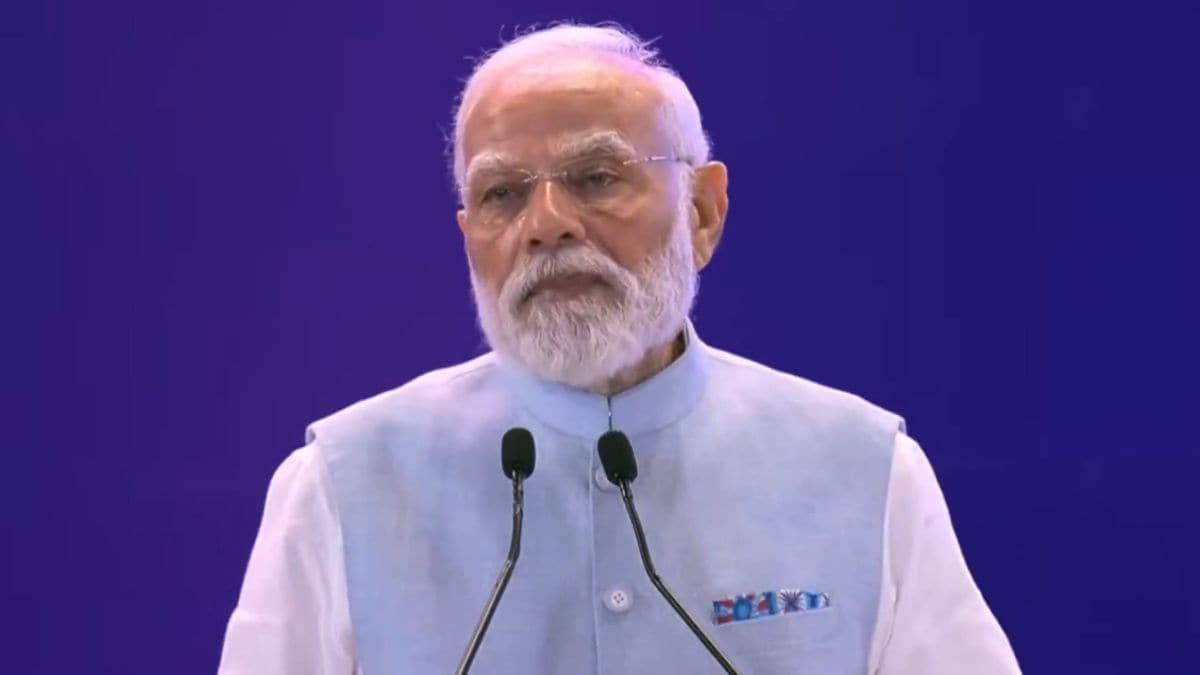
Prime Minister Narendra Modi convened a roundtable with 12 Indian AI startups at his residence on Thursday, signaling the government's intent to establish India as a global AI development hub for ethical and inclusive AI innovation. The meeting comes ahead of the India AI Impact Summit 2026, scheduled for February 15-20 in Delhi, where leaders from 20 countries and 100 top executives from global and Indian technology companies are expected to attend
2
3
. The AI startups participating in the roundtable—including Avataar, BharatGen, Fractal, GAN, Genloop, Gnani, Intellihealth, Sarvam, Shodh AI, Soket AI, and Tech Mahindra—have qualified for the AI for All: Global Impact Challenge and are working across diverse fields such as healthcare, e-commerce, engineering simulations, and material research1
.
Source: AIM
PM Modi Urges Startups to Build India-First AI Models
Calling the founders "co-architects of India's future," Narendra Modi emphasized that AI should create meaningful impact for people and society. He urged companies to develop a unique AI model reflecting "Made in India, Made for the World," while remaining affordable, inclusive, and globally competitive
1
. According to Abhishek Upperwal, CEO of Soket AI, the Prime Minister stressed the need for ethical, unbiased, transparent Indian AI models rooted in data privacy. "The emphasis was on AI's usability. The PM spoke at length about how AI models should be designed with actual impact in mind," Upperwal said1
. At least two of these AI startups are expected to launch their large language models at the summit, confirmed Abhishek Singh, CEO of the IndiaAI Mission1
. Several companies are building AI tools in Indian languages, focusing on speech-to-text, text-to-video, and generative content tailored for domestic and global users2
.AI Impact Summit to Showcase Case Studies and Set Global AI Policy Standards
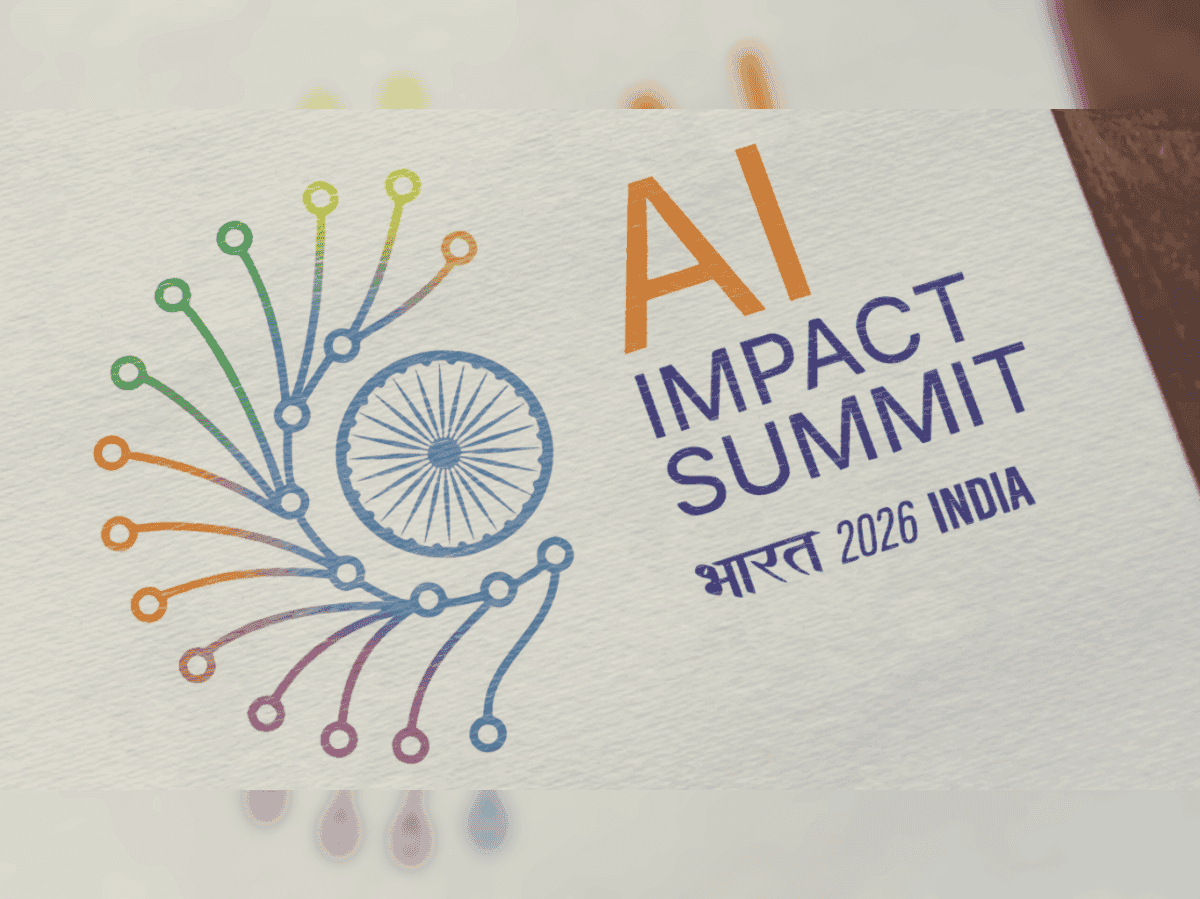
The government is working with multilateral organizations such as the World Health Organization, International Energy Agency, UN WOMEN, and the World Bank to showcase six compendiums on AI use at the India AI Impact Summit. These AI case studies from across the world will be presented to leaders from countries including France, Brazil, Switzerland, and the United Kingdom
3
. MeitY has released calls for proposals on priority areas such as education, agriculture, and disabilities, which will be presented by academic institutions, AI startups, and not-for-profit foundations from India3
. The ministry has received more than 4,650 proposals for AI applications across three separate global impact challenges launched in September, with more than 20% being international submissions3
. An interdisciplinary research symposium focusing on the Global South will feature more than 250 entries from AI researchers and authors from the region3
.
Source: ET
Related Stories

Workforce Transitions and Future of Work Take Center Stage
The AI Impact Summit builds on previous global AI summits, with workforce transitions receiving elevated attention. The Paris AI summit in February 2025 established a dedicated working group on the Future of Work, launching an observatory network on AI's impact on work that includes 11 countries—India, Australia, France, Japan, and Britain—coordinated by the ILO and OECD
4
. India's digital public infrastructure approach, encompassing systems like Aadhaar and account aggregators, can be leveraged to build micro-credentialling platforms that certify transferable skills and connect workers to real-time labour market intelligence4
. India's AI talent pool has grown by over 250% since 2016, the highest of any country measured, with the Stanford AI Index report ranking India second only to the US in AI skill penetration and open-source AI project contributions on GitHub4
.
Source: ET
India's Growing AI Ecosystem Attracts Global Attention
Startup leaders noted that the center of gravity for AI innovation and deployment is beginning to shift towards India. They cited growing policy support, a deep talent pool, and rising adoption across sectors as factors strengthening India's position on the global AI map
2
. The summit will feature exhibitions and an expo spread across 75,000 square meters, allowing Indian startups, enterprises, and global entities to showcase AI solutions3
. The government plans to showcase as many as 100 select homegrown AI applications with potential for global impact3
. The summit aims to ensure that everyone, including developing countries, can benefit from AI and access its technologies, creating rules that lead to social and economic advantages by making technology available to all fairly5
. High-profile attendees are expected to include Bill Gates and heads of major companies like Google DeepMind, Anthropic, Adobe, Salesforce, Qualcomm, and FedEx5
.References
Summarized by

Navi
[5]
Related Stories
India Positions Itself as Global Leader in Ethical AI Governance Framework
03 Nov 2025•Policy and Regulation
India bets on tax breaks and data centers to attract AI investment, but funding cuts raise concerns
02 Feb 2026•Policy and Regulation

India hosts massive AI Impact Summit drawing top tech CEOs and 20 world leaders to New Delhi
10 Feb 2026•Technology

Recent Highlights
1
Apple Plans Major Siri AI Overhaul in iOS 27 With Third-Party Chatbot Integration
Technology

2
OpenAI shuts down Sora after six months, ending Disney's $1 billion licensing partnership
Technology

3
AI chatbots validate you too much, making you less kind to others, Stanford study reveals
Science and Research
Recent Highlights
Today's Top Stories







Your Daily Dose of Curated AI News
Don’t drown in AI news. We cut through the noise - filtering, ranking and summarizing the most important AI news, breakthroughs and research daily. Spend less time searching for the latest in AI and get straight to action.

