India Proposes Mandatory Royalties for AI Training, Targeting OpenAI and Google Operations


7 Sources
7 Sources
[1]
India proposes charging OpenAI, Google for training AI on copyrighted content | TechCrunch
India has proposed a mandatory royalty system for AI companies that train their models on copyrighted content -- a move that could reshape how OpenAI and Google operate in what has already become one of their most important and fastest-growing markets globally. On Tuesday, India's Department for Promotion of Industry and Internal Trade released a proposed framework that would give AI companies access to all copyrighted works for training in exchange for paying royalties to a new collecting body composed of rights-holding organizations, with payments then distributed to creators. The proposal argues that this "mandatory blanket license" would lower compliance costs for AI firms while ensuring that writers, musicians, artists, and other rights holders are compensated when their work is scraped to train commercial models. India's proposal comes amid mounting concerns in global markets over how AI companies train their models on copyrighted material, a practice that has triggered lawsuits from authors, news organizations, artists, and other rights holders in the U.S. and Europe. Courts and regulators are still weighing whether such training qualifies as fair use, leaving AI firms operating under legal uncertainty and allowing them to rapidly expand their business without clear regulations. Unlike the U.S. and the European Union, where policymakers are debating transparency obligations and fair-use boundaries, India is proposing one of the most interventionist approaches yet by giving AI companies automatic access to copyrighted material in exchange for mandatory payment. The eight-member committee, formed by the Indian government in late April, argues the system would avoid years of legal uncertainty while ensuring creators are compensated from the outset. Defending the system, the committee says in a 125-page submission (PDF) that a blanket license "aims to provide an easy access to content for AI developers... reduce transaction costs... [and] ensure fair compensation for rightsholders," calling it the least burdensome way to manage large-scale AI training. The submission adds that the single collecting body would function as a "single window," eliminating the need for individual negotiations and enabling royalties to flow to both registered and unregistered creators. The committee also points to India's growing importance as a market for GenAI tools. Citing OpenAI CEO Sam Altman's remark that India is the company's second-largest market after the U.S. and "may well become our largest," it argues that because AI firms derive significant revenue from Indian users while relying on Indian creators' work to train their models, a portion of that value should flow back to those creators. That, it says, is part of the rationale for establishing a "balanced framework" that guarantees compensation. India's proposal lands amid intensifying legal battles worldwide over whether AI companies can lawfully use copyrighted material to train their models. In India, news agency ANI sued OpenAI in the Delhi High Court, arguing its articles were used without permission -- a case that has prompted the court to examine whether AI training is itself an act of reproduction or protected by "fair dealing." Courts in the U.S. and Europe are confronting similar disputes, with creators alleging that tech companies have built their models on unlicensed content. Not everyone is convinced by the Indian government's proposed model, though. Nasscom, the industry body representing technology firms including Google and Microsoft, filed a formal dissent arguing that India should instead adopt a broad text-and-data-mining exception that would allow AI developers to train on copyrighted content as long as the material is lawfully accessed. It warned that a mandatory licensing regime could slow innovation and said rightsholders who object should be allowed to opt out rather than force companies to pay for all training data. The Business Software Alliance, which represents global tech firms including Adobe, Amazon Web Services, and Microsoft, pressed the Indian government to avoid a purely licensing-based regime. It urged India to introduce an explicit text-and-data-mining exception, arguing that "relying solely on direct or statutory licensing for AI training data may be impractical and may not yield the best outcomes." Limiting AI models to smaller sets of licensed or public-domain material, BSA warned, could reduce model quality and "increase the risk that outputs simply reflect trends and biases of the limited training data sets," adding that a clear TDM exception would better balance innovation and rights holders' interests. The committee did not consider both a broad text-and-data-mining exception and an opt-out model, arguing that such systems either undermine copyright protections or are impossible to enforce. Instead, it proposed a "hybrid model" that would grant AI firms automatic access to all lawfully available copyrighted works while requiring them to pay royalties into the central collecting body that distributes the proceeds to creators. The Indian government has now opened the proposal for public consultation, giving companies and other stakeholders 30 days to submit their comments. After reviewing the feedback, the committee will finalize its recommendations before the framework is taken up by the government. OpenAI and Google did not respond to requests for comments.
[2]
India's government wants AI companies to pay for content
Proposes central body to collect royalties and dole out cash to creators The government of India wants AI companies to pay for accessing content they use to train models, but only once they start producing revenue. That idea emerged yesterday in a working paper [PDF] prepared by a Committee on Generative Artificial Intelligence and Copyright formed by India's Department of Promotion of Industry and Internal Trade. The paper notes that developers of AI models mostly didn't pay for copyrighted content, and the global debate about fair use exemptions to copyright law that followed. The Department concludes that free access to content - a "zero price license model" - is not appropriate because it "would undermine incentives for human creativity and could lead to long-term underproduction of human generated content." The Committee's members also found "access to large volumes of data and high-quality data is crucial for AI development" but fears negotiations to license that content could lead to "long negotiations and high transaction costs [which] can hold back innovation, particularly for startups and MSMEs." It therefore proposed a hybrid model that has the following three elements: The paper even suggests a name for the royalty collection organization - The Copyright Royalties Collective for AI Training (CRCAT) - and recommends it be a nonprofit organized by associations of rightsholders. It also proposes the establishment of a "Works Database for AI training royalties" that would invite content creators to register their works in order to be eligible to receive royalties from CRCAT. "By preserving the right of the copyright owners to receive royalties and administering it through a single umbrella organization made by the rightsholders and designated by the government, the model aims to provide an easy access to content for AI Developers for AI Training, simplify licensing procedures, reduce transaction costs, ensure fair compensation for rightsholders," the paper states. Precedents exist for the proposed arrangement. Several countries operate performing rights organizations that collect royalties from venues such as restaurants and retailers that play recorded music. Those royalties are pooled and disbursed to artists. Your correspondent is a member of an Australian scheme that charges royalties for reprints of news and other content and disburses them to creators who register their works. India's government has declared the nation will become a world leader in all aspects of AI, an ambition that sees it take a mostly friendly attitude towards tech giants as they address the local market. Tech giants, however, continue to argue fiercely for the right to train their models without first paying for content - but are also doing deals that cover their ongoing operations. India, however, poses a considerable challenge because the nation recognizes 22 scheduled languages, eight of which are spoken by over 50 million people, and has a huge and fragmented media and publishing ecosystem. This proposal may therefore go down well with Big Tech, if New Delhi makes royalty payments worth their while. ® I end up with a couple of hundred dollars a year but other journos I know - mostly those who work in finance media - have told me they can score thousands a year.
[3]
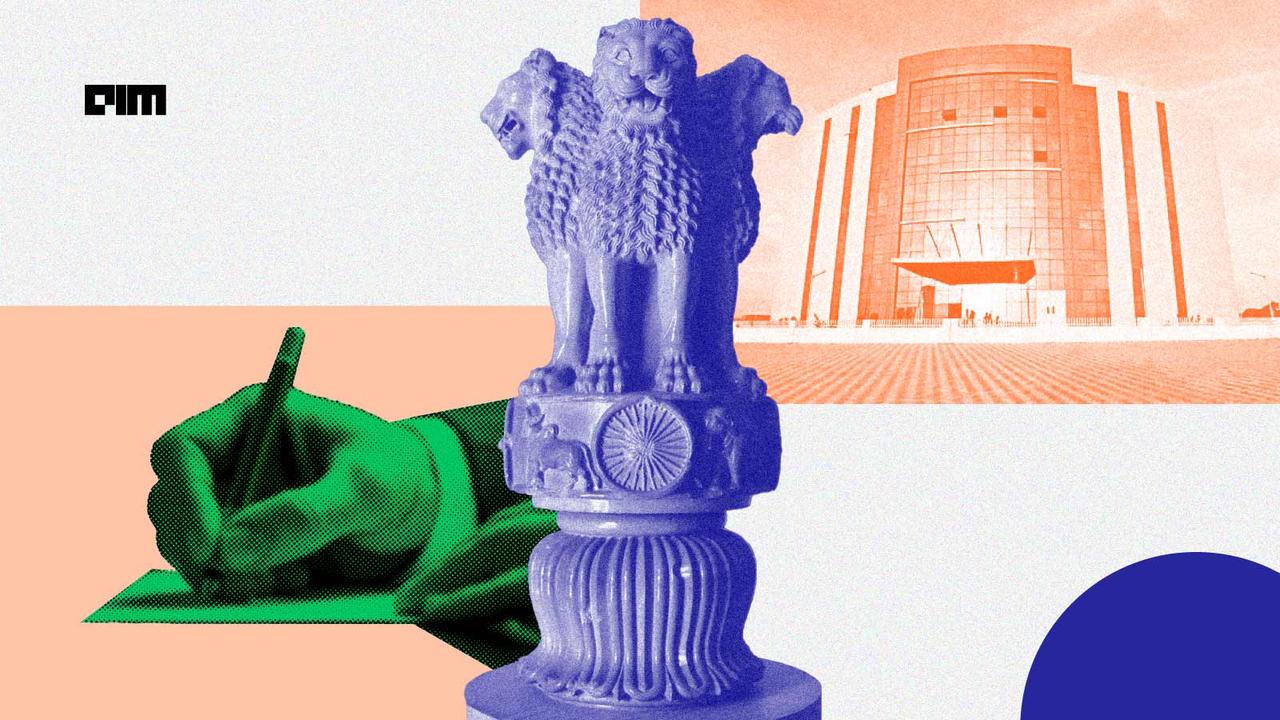
India Moves to Regulate AI Training by Google, OpenAI | AIM
Expert Committee sides with creator remuneration, rejecting opt-out nudge from industry groups pushing unrestricted text and data mining access. India has moved closer to creating a formal royalty regime for artificial intelligence (AI) developers, with a government committee recommending a blanket licensing system for training models on copyrighted work. The Department for Promotion of Industry and Internal Trade (DPIIT) has released a working paper on December 8 to that effect. The proposal marks a significant policy move on generative AI and copyright protection. The eight-member committee, chaired by Himani Pande, an additional secretary at DPIIT, was tasked with assessing the adequacy of India's copyright law in addressing AI-driven use of creative works. The committee sides firmly with creator remuneration and rejects the push by tech firms for unrestricted text and data mining (TDM). Safeguard
[4]
Indian AI royalty proposal targets data practices of OpenAI, Google
The step comes as governments worldwide are fast developing regulations to resolve AI-related copyright disputes, as AI companies say they are making fair use of material generated by content owners. An Indian government panel has proposed requiring AI companies to pay content creators a share of revenue for using their work to train models, a setback for companies such as OpenAI and Google that back free access to publicly available data. The step comes as governments worldwide are fast developing regulations to resolve AI-related copyright disputes, as AI companies say they are making fair use of material generated by content owners. AI firms should be able to access Indian content for training but should pay royalties to a central body representing copyright holders, the panel, set up in April, said in a report published on Monday. India's plan marks a sharp divergence from jurisdictions like the United States, where AI giants say training models on publicly available data constitutes "fair use" for which they should not be charged. AI firms such as OpenAI and Google Gemini, which count India among their top user markets, did not respond to requests for comment. No opt-out Industry and the public have 30 days to challenge the Indian plan, which faces review by government officials. OpenAI is locked in a court battle triggered by accusations from Indian news agency ANI over use of copyrighted content. The company has repeatedly denied wrongdoing and said its use of online content amounted to fair use. While Japan gives AI firms broad exemptions for use of such content, the European Union has stricter rules that allow content owners to opt out of such use. The Indian panel called the opt-out model ineffective, saying it unfairly forced creators to track down their own work in massive AI datasets. Instead, if their work is used by AI platforms, they can claim funds from the centralised royalty pool. Nasscom, an influential tech industry body that counts Google and Microsoft among its members, has formally dissented, telling the panel in comments that the mandatory fee amounts to a "tax or levy on innovation". The Motion Picture Association, which represents Netflix and Paramount, previously told the panel there should be no change in the copyright law, with efforts focused on licensing instead.
[5]

Indian panel proposes AI firms should pay royalties on data for training AI models
A panel of the Indian government has proposed requiring AI companies to pay content creators a share of revenue for using their work to train AI models, a potential setback for companies like OpenAI (OPENAI) and Alphabet's ( AI companies like OpenAI and Google may face new costs, as they would be required to pay royalties into a central body for using local content to train AI models. India wants mandatory royalties, unlike the U.S. fair use model, the EU's opt-out system, and Japan's broad fair use exemptions for AI. Nasscom and industry groups argue the royalties act as a 'tax on innovation' and some advocate for maintaining current copyright law and focusing on licensing instead.
[6]

Indian AI royalty proposal targets data practices of OpenAI, Google
NEW DELHI, Dec 9 (Reuters) - An Indian government panel has proposed requiring AI companies to pay content creators a share of revenue for using their work to train models, a setback for companies such as OpenAI and Google that back free access to publicly available data. The step comes as governments worldwide are fast developing regulations to resolve AI-related copyright disputes, as AI companies say they are making fair use of material generated by content owners. AI firms should be able to access Indian content for training but should pay royalties to a central body representing copyright holders, the panel, set up in April, said in a report published on Monday. India's plan marks a sharp divergence from jurisdictions like the United States, where AI giants say training models on publicly available data constitutes "fair use" for which they should not be charged. AI firms such as OpenAI and Google Gemini, which count India among their top user markets, did not respond to requests for comment. NO OPT-OUT Industry and the public have 30 days to challenge the Indian plan, which faces review by government officials. OpenAI is locked in a court battle triggered by accusations from Indian news agency ANI over use of copyrighted content. The company has repeatedly denied wrongdoing and said its use of online content amounted to fair use. While Japan gives AI firms broad exemptions for use of such content, the European Union has stricter rules that allow content owners to opt out of such use. The Indian panel called the opt-out model ineffective, saying it unfairly forced creators to track down their own work in massive AI datasets. Instead, if their work is used by AI platforms, they can claim funds from the centralised royalty pool. Nasscom, an influential tech industry body that counts Google and Microsoft among its members, has formally dissented, telling the panel in comments that the mandatory fee amounts to a "tax or levy on innovation". The Motion Picture Association, which represents Netflix and Paramount, previously told the panel there should be no change in the copyright law, with efforts focused on licensing instead. (Reporting Arpan Chaturvedi and Munsif Vengattil; Editing by Aditya Kalra and Clarence Fernandez)
[7]

India asks OpenAI and Google to pay creators for using their content: Report
Tech industry reactions are mixed, as the draft policy enters a 30-day feedback period before final decisions are made. India is preparing for a significant shift in how AI companies can use content created within the country, and the move feels like an attempt to set the rules before the rest of the world settles into its own version. A government-appointed panel has put forward a direct idea with huge consequences: if companies such as OpenAI or Google train their models on Indian content, they should pay for it. Not through vague commitments or symbolic gestures, but by sharing a portion of their earnings with the creators whose work forms the backbone of these AI systems. This position is clearly different from what we see in the United States, where "fair use" is often used as a blanket justification that lets companies rely on publicly available material without compensating anyone. India is leaning toward something more structured and more intentional. A central organisation would collect the money from AI companies and distribute it to creators, sparing individuals from the impossible task of tracking where their work ends up inside massive and often opaque datasets. The government has now invited the public and the industry to give their feedback over the next 30 days before anything is finalised. The panel, formed earlier this year in the month of April, made its stance unambiguous as it clearly stated that if AI models benefit from Indian content, the companies behind them should contribute to a dedicated fund. Creators would be compensated automatically, without needing to monitor usage or audit datasets. An opt-out system was rejected because it would be too difficult to enforce and too complicated to keep accurate. Also read: Microsoft announces USD 17.5 billion investment in India after Satya Nadella's meeting with PM Modi When you look at the global landscape, India's strategy stands apart, as in the United States, AI developers can use publicly accessible content without paying for it. Japan takes an even broader approach, allowing widespread use of material for AI training. The European Union gives creators the right to opt out entirely. However, India is looking forward to building a system where creators receive payment without having to chase down every instance where their work may appear. Also read: Samsung One UI 8.5 India release timeline, beta update, features, eligible devices and all other leaks Reactions from the tech industry are understandably mixed. Nasscom, which represents companies like Google and Microsoft, said that required royalties are like a "tax on innovation" and could slow down progress. The Motion Picture Association, which includes Netflix and Paramount, said that current copyright laws are enough and that licensing deals could solve many problems. AI companies like OpenAI and Google Gemini haven't commented publicly yet. Also read: US President Donald Trump says Nvidia can sell H200 chips in China, but there's a catch All of this is unfolding while OpenAI is reportedly facing a lawsuit from Indian news agency ANI for using copyrighted material without permission. If India decides to move ahead with this royalty-based system, it could become a model for other countries that are trying to figure out how to regulate the data that feeds modern AI models. However, as per the current reports, the policy is still in draft form, as the government will review the feedback, balance the priorities of creators and the tech sector, and decide how India wants to shape the future of AI content usage both within the country and across the world.
Share
Share
Copy Link
India's government has released a framework requiring AI companies to pay royalties for training models on copyrighted content. The proposal establishes a central collecting body to distribute payments to creators, marking a sharp departure from the U.S. fair use approach. Tech giants like OpenAI and Google face potential new costs in one of their fastest-growing markets.
India AI Regulation Introduces Mandatory Payment Framework
India has unveiled one of the world's most interventionist approaches to AI copyright, proposing a mandatory royalty system for AI companies that train their models on copyrighted content
1
. The Department for Promotion of Industry and Internal Trade (DPIIT) released a 125-page working paper on December 8 outlining a framework that would require OpenAI, Google, and other AI companies to pay for content used in training their models3
. The proposal comes as governments worldwide develop regulations to resolve AI-related copyright disputes, with AI firms arguing they are making fair use of publicly available material4
.
Source: TechCrunch
The eight-member committee, formed in late April and chaired by Himani Pande, an additional secretary at DPIIT, argues this blanket licensing system for AI would lower compliance costs while ensuring content creators receive compensation when their work is scraped to train commercial models
1
. This marks a sharp divergence from jurisdictions like the United States, where AI giants say training models on publicly available data constitutes fair use for which they should not be charged4
.
Source: AIM
Central Body for Royalty Payments to Streamline Compensation
The proposal establishes a central body to collect and distribute revenue for using work to train AI models. The committee suggests naming this organization the Copyright Royalties Collective for AI Training (CRCAT), which would function as a nonprofit organized by associations of rightsholders
2
. The working paper also recommends establishing a "Works Database for AI training royalties" that would invite content creators to register their works to receive royalties from CRCAT2
.This single-window system aims to eliminate the need for individual negotiations and enable royalties to flow to both registered and unregistered creators
1
. The committee argues that a blanket license "aims to provide an easy access to content for AI developers... reduce transaction costs... [and] ensure fair compensation for rightsholders," calling it the least burdensome way to manage large-scale AI training1
. Crucially, AI companies would only be required to pay creators for training AI models once they start producing revenue2
.Tech Industry Pushback Against Mandatory Royalty System for AI
Nasscom, the influential tech industry body representing Google and Microsoft, has formally dissented from the proposal, arguing that the mandatory fee amounts to a "tax or levy on innovation". The organization filed a formal dissent arguing that India should instead adopt a broad text and data mining exception that would allow AI developers to train on copyrighted content as long as the material is lawfully accessed
1
.
Source: Digit
The Business Software Alliance, representing global tech firms including Adobe, Amazon Web Services, and Microsoft, pressed the Indian government to avoid a purely licensing regime. It urged India to introduce an explicit text-and-data-mining exception, warning that relying solely on direct or statutory licensing for AI training data may be impractical
1
. The Motion Picture Association, which represents Netflix and Paramount, previously told the panel there should be no change in copyright law, with efforts focused on licensing instead4
.Related Stories
Why India Matters for Generative AI Companies
The committee points to India's growing importance as a market for generative AI tools to justify its interventionist approach. Citing OpenAI CEO Sam Altman's remark that India is the company's second-largest market after the U.S. and "may well become our largest," it argues that because AI firms derive significant revenue from Indian users while relying on Indian creators' work to train their models, a portion of that value should flow back to those creators
1
.OpenAI is currently locked in a court battle triggered by accusations from Indian news agency ANI over use of copyrighted content
4
. The company has repeatedly denied wrongdoing and said its use of online content amounted to fair use. The Delhi High Court is examining whether AI training is itself an act of reproduction or protected by "fair dealing"1
.Rejecting the Opt-Out Model for Creator Remuneration
The committee firmly rejected the opt-out model advocated by some tech firms, calling it ineffective. While the European Union has stricter rules that allow content owners to opt out of such use, the Indian panel said this approach unfairly forced creators to track down their own work in massive AI datasets
4
. Instead, if their work is used by AI platforms, they can claim funds from the centralized royalty pool4
.The committee sides firmly with creator remuneration and rejects the push by tech firms for unrestricted text and data mining
3
. Industry and the public have 30 days to challenge the Indian plan, which faces review by government officials4
. AI companies like OpenAI and Google may face new costs as they would be required to pay royalties into a central body for using local content to regulate AI training on copyrighted content5
.References
Summarized by

Navi
[1]
[2]
Related Stories
India proposes mandatory AI training licence with central royalty body to balance innovation and copyright
09 Dec 2025•Policy and Regulation
Hollywood and Bollywood Unite to Protect Content from AI in India
08 Oct 2025•Policy and Regulation
India Forms Expert Panel to Review Copyright Law Amid AI Challenges
07 May 2025•Policy and Regulation
Recent Highlights
1
AI chatbots validate you too much, making you less kind to others, Stanford study reveals
Science and Research

2
Anthropic's Claude Code Source Leak Reveals Hidden AI Agent Plans and Extensive System Access
Technology

3
Judge blocks Pentagon from branding Anthropic a security risk over AI safety guardrails dispute
Policy and Regulation
Recent Highlights
Today's Top Stories




Your Daily Dose of Curated AI News
Don’t drown in AI news. We cut through the noise - filtering, ranking and summarizing the most important AI news, breakthroughs and research daily. Spend less time searching for the latest in AI and get straight to action.

