Intel and AMD face severe CPU shortages as AI demand strains global chip supply chain


5 Sources
5 Sources
[1]
Intel, AMD server CPUs reportedly suffering from supply shortages in China, leading to increased prices -- sources say orders could be delayed by as much as 6 months
Is the AI infrastructure build out now demanding for server CPUs? Both Intel and AMD are reportedly running into supply issues when it comes to their server CPUs in China. According to Reuters, multiple customers received warnings from both chip makers, saying that deliveries will be delayed by several months. Sources cited in the report say that AMD has notified its customers that some of its CPUs will have delivery lead times of eight to 10 weeks, while Intel is warning of much longer delays of up to six months. These shortages mean that prices for server CPUs have started rising, with reports of Intel's Xeon chips getting a 10% price bump, although the final cost may still depend on the customer contract. The AI race and the accompanying massive infrastructure build out is pushing many chip fabs to their limits. It's been said that data centers will consume 70% of memory chips in 2026, driven by the massive demand for HBM. This resulted in massive price increases for consumer memory as manufacturers allocated their production lines to more lucrative products sold to price-insensitive industries. Aside from that, everything that requires memory chips -- from RAM kits and consumer GPUs, to smartphones, smart TVs, and automobiles -- has been hit by the shortage, and their manufacturers are struggling to find suppliers. Some people say that customers have started buying completely new servers earlier than expected to avoid getting hit with the worst of the memory shortage. This led to an unexpected rise in demand that Intel and AMD are struggling to meet. Aside from that, the rise of agentic AI systems is further fueling demand for traditional servers. Although AI agents still need GPUs to "think," they also need CPUs to "act." So, aside from just buying thousands of AI GPUs for training and inference, hyperscalers are also increasing their CPU purchases so that they can accommodate the demands of agentic AI. Intel told Reuters, "Inventory [is] at [its] lowest level in Q1, but we are addressing aggressively and expect supply improvement in Q2 through 2026." AMD also said in a statement to the publication, "We remain confident in our ability to meet customer demand globally based on our strong supplier agreements and supply chain, including our partnership with TSMC." But as both companies ramp up their production, customers have no choice but to delay their plans and wait until their orders get delivered.
[2]
Both Intel and AMD have warned Chinese customers of delays on server CPU shipments, report says, as AI demand begins to eat into the processor market
Both Intel and AMD have notified Chinese customers of supply shortages affecting their respective server CPUs, according to a Reuters report, with up to a six-month lead time on Intel chips. While much noise has been made regarding AI GPUs and their effect on the memory market in recent months, server CPUs are also in high demand as the AI boom continues to bear fruit. In the case of Intel, the Chinese market alone is said to account for 20% of its overall revenue. Reuters' sources say that Intel currently has a substantial backlog of unfulfilled orders for its fourth and fifth-generation Xeon server chips, and that the company is currently rationing deliveries. In a statement to the outlet, Intel said that the rapid adoption of AI had led to strong demands for "traditional compute", and that the company expects "inventory at [its] lowest level in Q1, but we are addressing aggressively and expect supply improvement in Q2 through 2026." While AI is driving such heavy demand for all sorts of computing components, chip manufacturers appear to be struggling to keep up. Intel's fourth and fifth generation Xeon chips are built on its own Intel 7 process node, while AMD's server chips are outsourced to TSMC. Intel's struggles to ramp up its own chip manufacturing efforts in recent years are well documented, while TSMC looks to have been prioritising AI GPUs above, well, everything else. Even the current king of the AI revolution, Nvidia CEO Jensen Huang, has recently been pushing for TSMC to expand its capability for yet more AI-munching hardware, asking it to "work very hard this year because I need a lot of wafers". There's only so much chip manufacturing capability to go around, and current demands are pushing the supply chain to its limits, it's no surprise that certain markets are already beginning to miss out. As for the global consumer market, it's difficult not to think that this unprecedented demand might have a knock-on effect for our beloved gaming CPUs at some point. While server CPUs and regular CPUs are different markets in many ways, there's a significant amount of crossover in the supply chains. Reports at the end of last year suggested AMD was looking at raising the price of its desktop chips, although some sources claimed otherwise. Given the price of *gestures around the room* everything to do with components seems destined to go up in these uncertain times, I certainly wouldn't rule out consumer CPU price rises in the near future. We'll just have to wait and see, I suppose.
[3]
Intel, AMD notify customers in China of lengthy waits for CPUs
The supply constraints have driven up prices for Intel's server products in China by more than 10% generally, although pricing varies by customer contract, according to one of the people. Intel and AMD have notified Chinese customers of supply shortages for server central processing units (CPUs), with Intel warning of delivery lead times of up to six months, people with knowledge of the delays said. The supply constraints have driven up prices for Intel's server products in China by more than 10% generally, although pricing varies by customer contract, according to one of the people. Booming investment in artificial intelligence infrastructure has created a frantic rush not only for AI-specific chips, but also other parts of the supply chain - most acutely in memory chips, prices of which continue to soar. These latest notices to Chinese customers, which the sources said were made in recent weeks, indicate that CPU shortages have also intensified. That could compound challenges for AI companies as well as many other manufacturers. Backlogs of unfulfilled orders In China, which accounts for more than 20% of Intel's overall revenue, its fourth- and fifth-generation Xeon CPUs are in particularly short supply, with Intel rationing deliveries, two of the people said. Intel has a substantial backlog of unfulfilled orders for these models, with delivery times extending as long as six months, they added. AMD has also informed clients of supply constraints, said one of the people and a third source. Delivery lead times for some AMD products have been pushed out to eight to 10 weeks, the third source said. The extent of the supply contraints in China is being reported by Reuters for the first time. Intel, which flagged CPU supply constraints in its earnings call in January, said in a statement to Reuters that the rapid adoption of AI had led to strong demand for "traditional compute". The company expects "inventory at lowest level in Q1, but we are addressing aggressively and expect supply improvement in Q2 through 2026," the statement said. AMD reiterated remarks in its earnings call that it has boosted its supply capabilities to cope with strong demand. "We remain confident in our ability to meet customer demand globally based on our strong supplier agreements and supply chain, including our partnership with TSMC," it said in a statement to Reuters. Dominant market share for CPUs The two companies together dominate the global server CPU market. Intel has seen its market share decline from over 90% in 2019 to about 60% in 2025, while AMD's share has climbed from around 5% in 2019 to more than 20% last year, according to a UBS report in January. In China, clients include major server manufacturers and cloud computing providers such as Alibaba and Tencent. The CPU shortages stem from multiple factors. Intel has struggled to ramp up production amid persistent manufacturing yield challenges. AMD outsources production to Taiwan's TSMC, the world's top contract foundry, which has prioritized AI chip manufacturing and left limited capacity for CPUs. Additionally, the shortage of memory chips - also a key server component - has played a role. When memory prices began rising late last year in China, customers accelerated purchases of CPUs to lock in lower prices for memory, said the third source, a distributor who sells both server CPUs and memory products. Surging demand for agentic AI systems - which perform complex, multi-step operations beyond simple chatbot functionality - has further strained supply. These advanced applications require significantly more CPU processing power than traditional workloads.
[4]
Intel, AMD Warn China Customers Of Months-Long CPU Delays - Advanced Micro Devices (NASDAQ:AMD), Intel (NASDAQ:INTC)
Intel Corp. (NASDAQ:INTC) and Advanced Micro Devices Inc. (NASDAQ:AMD) are facing tightening server CPU supplies in China as booming AI infrastructure demand strains the global chip pipeline. The companies have warned Chinese customers about tightening supplies of server CPUs. Intel cautioned that delivery lead times could stretch up to six months. The shortages have pushed prices for Intel's server products in China up more than 10% in many cases, Reuters reported on Friday, citing sources familiar with the matter. AI Boom Drives Crunch In Traditional Chips Booming investment in AI infrastructure has fueled intense demand not only for AI chips but also for traditional computing components, with memory prices surging and the CPU crisis aggravating in recent weeks. In China, which contributes more than 20% of Intel's revenue, fourth- and fifth-generation Xeon processors have become especially scarce, prompting Intel to ration shipments and leaving a backlog of unfilled orders. AMD has also alerted customers to supply constraints, with some delivery lead times extending to eight to ten weeks, sources said. Intel expects supply conditions to improve starting in the second quarter of 2026. AMD said it has expanded supply capabilities through deals with Taiwan Semiconductor Manufacturing Co (NYSE:TSM). Analyst Sees AI Server Demand Supporting Both Chipmakers Recently, KeyBanc analyst John Vinh raised his outlook on AMD and Intel, citing strong AI-driven server demand as a key tailwind. The analyst noted that December cloud data showed a slight pullback in traditional server instances as providers retired older systems, but overall compute demand still grew year-over-year. Vinh said near-term cloud momentum favored Intel, highlighting a surge in Granite Rapids deployments on Amazon.com Inc. (NASDAQ:AMZN) Amazon Web Services, while other new Intel server chips also posted steady gains. He viewed the tracker's implications as positive for Intel and more neutral for AMD, with AMD holding flat month over month but still showing solid growth from Turin and Genoa rollouts across major cloud providers. AMD stock gained 74% in the last 12 months. Intel gained 148% during the period. Price Action: Advanced Micro Devices shares were up 3.74% at $199.70 during premarket trading on Friday, according to Benzinga Pro data. Intel shares were up 2.32% at $49.36. Photo by Tada Images via Shutterstock Market News and Data brought to you by Benzinga APIs To add Benzinga News as your preferred source on Google, click here.
[5]

Intel and AMD CPU Shortages Continue to Worsen as Delivery Times in China Exceed Six Months, Driving Widespread Price Hikes
The AI frenzy is now coming for CPUs, as a new Reuters report says both Intel and AMD are struggling to meet enterprise demand, which has driven up prices. The broader tech supply chain is currently under significant pressure, courtesy of the infrastructure buildout, as we have seen over the past few quarters, DRAM, NAND, and semiconductors are experiencing massive shortages. This has ultimately created an adverse impact not just on consumers alone, but also on manufacturers like Intel and AMD, as according to a new report by Reuters, Intel's server CPU products in China are seeing extensive price hikes, as the demand from professional markets has made delivery lead times extend over six months. The report mentions that apart from Intel, AMD is also facing similar supply constraints as well, given that Team Red does depend on TSMC for its EPYC lineup of processors, and since the Taiwan chip giant currently caters to the demand of the entire AI supply chain, the manufacturing times have signifcantly increased in the past few weeks. Interestingly, Intel's CEO, Lip-Bu Tan, discussed this situation during the Q4 earnings call, where it was revealed that Team Blue failed to meet hyperscaler demand due to supply constraints on server CPUs. Now, this situation is another trouble for gamers out there, given that several hyperscalers are in the process of replacing older server equipment, which involves upgrading to newer x86 architectures, and this is driving a whole new wave of demand in the server CPU segment. Similar to what we saw with consumer GPUs, it's fair to say that both Intel and AMD will prioritize fulfilling enterprise demand over the client segment, which could mean CPUs are in short supply and drive prices in the retail market. There isn't any PC segment that isn't affected by the current AI infrastructure buildout, and modern-day CPUs, RAMs, and GPUs are now reported to witness massive price hikes in the near future. We do hope that the situation smoothens out for gamers, but for now, we are in for a difficult time.
Share
Share
Copy Link
Intel and AMD are warning Chinese customers of major server CPU supply constraints, with delivery delays stretching up to six months. The AI infrastructure boom is driving unprecedented demand for traditional computing components, pushing Intel's server chip prices up more than 10% in China. Supply constraints stem from manufacturing challenges and TSMC's prioritization of AI chips.
Intel and AMD Warn of Extended Delivery Delays
Both Intel and AMD have notified customers in China of significant supply shortages affecting their server CPUs, marking a new phase in the AI-driven chip crisis. Intel is warning of delivery lead times extending up to six months for its fourth and fifth-generation Xeon processors, while AMD has informed clients that some products face delivery delays of eight to 10 weeks
1
3
. These CPU shortages represent a critical expansion of supply constraints beyond AI-specific chips into traditional computing infrastructure.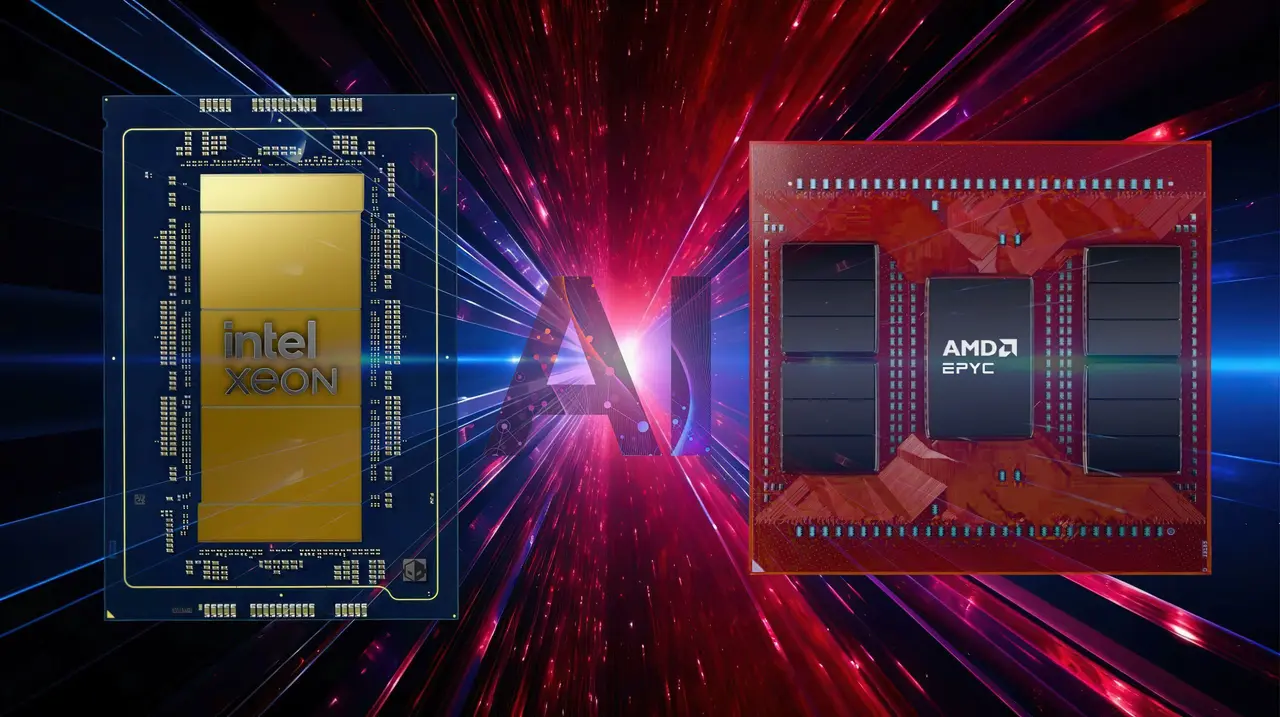
Source: Wccftech
In China, which accounts for more than 20% of Intel's overall revenue, the company has a substantial backlog of unfulfilled orders and is now rationing deliveries to manage the crisis
3
. The supply shortages in China have driven increased prices for Intel's server products by more than 10% generally, although final pricing varies by customer contract3
. Clients affected include major server manufacturers and cloud computing providers such as Alibaba and Tencent.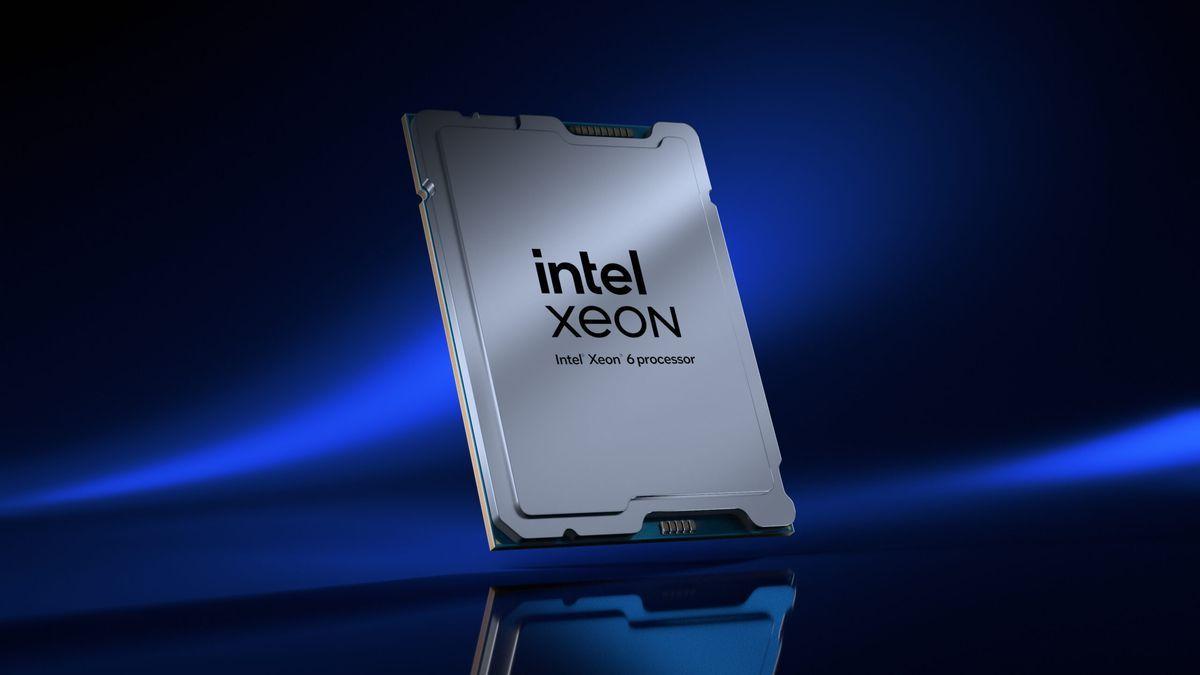
Source: Tom's Hardware
AI Infrastructure Build-Out Strains Chip Supply Chain
The AI boom is creating unprecedented pressure across the entire chip supply chain, with AI demand now consuming resources far beyond GPU manufacturing. Intel told Reuters that the rapid adoption of AI has led to strong demand for "traditional compute," with inventory expected to reach its lowest level in Q1
1
. The company expects supply improvement starting in Q2 through 2026, but customers must delay their plans in the meantime.The rise of agentic AI systems is further fueling demand for server CPUs beyond traditional AI workloads. While AI agents need GPUs to "think," they also require CPUs to "act," forcing hyperscalers to increase CPU purchases alongside their massive AI GPU orders
1
. These advanced applications require significantly more CPU processing power than traditional workloads, intensifying supply constraints3
.
Source: ET
Manufacturing Challenges Compound Supply Issues
The delivery delays stem from multiple factors affecting both chipmakers. Intel has struggled to ramp up production amid persistent manufacturing yield challenges with its Intel 7 process node
3
. AMD, which outsources production to TSMC, faces a different bottleneck as the Taiwan-based foundry has prioritized AI chip manufacturing, leaving limited capacity for server CPUs2
3
.AMD stated it remains "confident in our ability to meet customer demand globally based on our strong supplier agreements and supply chain, including our partnership with TSMC"
1
. However, TSMC's prioritization of AI GPUs has created a capacity crunch, with Nvidia CEO Jensen Huang recently pushing TSMC to "work very hard this year because I need a lot of wafers"2
.Related Stories

Memory Shortage Accelerates CPU Demand
The AI infrastructure build-out is expected to consume 70% of memory chips in 2026, driven by massive demand for HBM
1
. This memory crisis has created a cascade effect on CPU demand. When memory prices began rising late last year in China, customers accelerated purchases of CPUs to lock in lower prices for memory, according to distributors3
. Some customers started buying completely new servers earlier than expected to avoid getting hit with the worst of the memory shortage, leading to an unexpected rise in demand that Intel and AMD are struggling to meet1
.KeyBanc analyst John Vinh recently raised his outlook on AMD and Intel, citing strong AI-driven server demand as a key tailwind
4
. The analyst noted that near-term cloud momentum favored Intel, highlighting a surge in Granite Rapids deployments on Amazon Web Services4
. Several hyperscalers are replacing older server equipment and upgrading to newer x86 architectures, driving a new wave of demand in the server CPU segment5
.Consumer Market Faces Potential Spillover Effects
The supply constraints affecting enterprise markets raise concerns about potential impacts on consumer CPU pricing and availability. There is significant crossover in the supply chains between server CPUs and consumer chips, suggesting that delivery delays and increased prices could eventually affect gaming CPUs
2
. Both Intel and AMD will likely prioritize fulfilling enterprise demand over the client segment, which could mean CPUs are in short supply and drive prices in the retail market5
.The two companies together dominate the global server CPU market, with Intel's market share declining from over 90% in 2019 to about 60% in 2025, while AMD's share has climbed from around 5% in 2019 to more than 20% last year
3
. As both companies work to address supply constraints aggressively, the broader tech industry watches to see whether manufacturing capacity can catch up with the relentless pace of AI-driven demand.References
Summarized by

Navi
Related Stories
CPU shortage intensifies as AI demand diverts Intel and AMD processors to data centers
25 Mar 2026•Business and Economy
AMD and Intel report unprecedented CPU demand surge driven by agentic AI and inference workloads
04 Mar 2026•Business and Economy
Intel prioritizes Xeon processors over PC chips as AI demand strains foundry capacity
23 Jan 2026•Business and Economy
Recent Highlights



Recent Highlights
Today's Top Stories







Your Daily Dose of Curated AI News
Don’t drown in AI news. We cut through the noise - filtering, ranking and summarizing the most important AI news, breakthroughs and research daily. Spend less time searching for the latest in AI and get straight to action.

