Intel prioritizes Xeon processors over PC chips as AI demand strains foundry capacity


7 Sources
[1]
Intel prioritizes Xeons over client chips to meet AI demand
CFO David Zinsner says foundry capacity should improve starting in Q2 If you notice PC prices creeping up over the next few months, the rising cost of memory won't be the only reason, because on Thursday Intel said it is reallocating foundry capacity from client chips to meet surging demand for
[2]
Intel says it's selling every chip it can produce, so it's feeding AI servers first
Serving tech enthusiasts for over 25 years. TechSpot means tech analysis and advice you can trust. Intel's fourth-quarter results reflected rising demand for its AI and data center products, offset by persistent supply constraints that continue to pressure its consumer segment. The semiconductor
[3]
Intel shares tumble as supply chain snarls hamper turnaround
Intel's stock dropped significantly after it failed to meet high demand for its data-center chips. The company faced supply issues for crucial AI components. This setback comes as investors had shown renewed interest in Intel's turnaround efforts. A surge in memory chip prices also impacted its PC
[4]
Intel Expects CPU Shortage To Peak Before April As AI Boom Drives Server Chip Demand
Intel CFO David Zinsner indicates on the company's fourth-quarter earnings call that server CPU demand over the past two quarters caught the chipmaker off guard, particularly when it comes to the company's hyperscaler customers. Intel said Thursday it expects a shortage of its CPUs to peak in the
[5]
Intel struggles to meet AI data center demand as PC chip squeezes margins
The forecast underscores the difficulties faced by Intel in predicting global chip markets, where the company's current products are the result of decisions made years ago. The company, whose shares have risen 40% in the past month, recently launched a long-awaited laptop chip designed to reclaim
[6]

Intel shares plunge as chipmaker suffers manufacturing woes,...
Intel shares plunged by as much as 17% on Friday after the chipmaker admitted it was struggling to meet demand for its high-powered AI chips. The Santa Clara, Calif.-based firm, which makes chips needed for data centers, is in the midst of a turnaround effort as it looks to capitalize on surging
[7]

Intel shares tumble as supply chain snarls hamper turnaround
Jan 23 (Reuters) - Intel's shares plunged 12% before the bell on Friday after the company struggled to meet strong artificial intelligence-driven demand for data-center chips due to supply constraints, disappointing investors betting on its turnaround. After years of sitting out the AI boom that
Share
Copy Link
Intel is reallocating manufacturing resources from consumer processors to data center chips as unexpected AI infrastructure demand creates supply bottlenecks. The company admits hyperscaler customers caught it off guard with surging orders, forcing difficult choices that could impact PC availability and pricing through early 2026.
Intel Caught Off Guard by Surging Server Chip Demand
Intel is shifting foundry capacity away from client chips to meet explosive AI demand for its Xeon processors, a strategic pivot that could reshape PC availability and pricing in coming months. During the company's Q4 earnings call, CFO David Zinsner acknowledged that Intel misjudged data center market signals, leading to severe supply constraints that prevented the chipmaker from capturing available revenue
1
. The semiconductor giant reported $13.7 billion in revenue for Q4 2025, down 4 percent year over year, with annual revenue sliding slightly to $52.9 billion2
.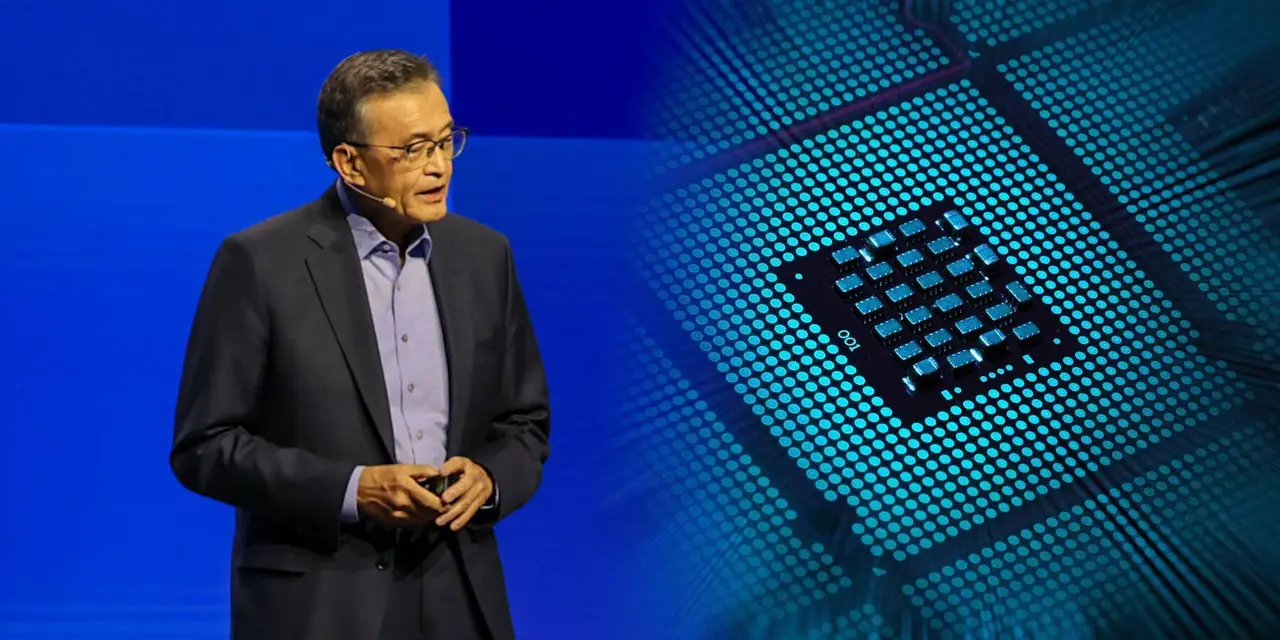
Source: The Register
The supply crunch emerged after hyperscaler customers dramatically reversed course on their purchasing plans. Six months ago, every major cloud provider signaled they would order fewer high-core count processors, but demand for Xeon processors surged considerably throughout Q3 and Q4
1
. Intel's Xeon 6 platform serves as the host CPU in GPU systems like Nvidia's DGX B200 and B300, as well as AMD Instinct-based configurations, positioning it at the heart of AI infrastructure buildouts1
.Prioritizing Xeon Processors Over Consumer Market
Facing capacity limitations, Intel is "shifting as much as we can over to the data center," Zinsner explained during the earnings call. The company won't abandon its client business completely but is focusing on mid-and-high-end processors while deprioritizing low-end products
1
. This means cheap PCs packing budget Intel processors may become harder to find as the company allocates scarce manufacturing resources to higher-margin Core-series parts and data center chips1
.The AI data center boom is placing unprecedented strain on chip production. Intel's Data Center and AI segment posted quarterly revenue growth of 9 percent to $4.7 billion, representing the fastest sequential growth the division has seen this decade
4
. CEO Lip-Bu Tan noted that revenue would have been "meaningfully higher" with additional supply capacity2
.CPU Shortage Expected to Peak in Q1 2026
Intel expects the CPU shortage to reach its worst point during the first quarter of 2026 before conditions improve
4
. Zinsner indicated that supply constraints should ease beginning in Q2 as the company improves yields and brings additional tooling online across its Intel 7, Intel 3, and 18A process nodes1
. The ramp of Core Ultra 3-series processors, codenamed Panther Lake, should provide some relief as these chips utilize Intel's 18A process node more heavily1
.Production challenges with the 18A process node have contributed to supply bottlenecks. Reports from mid-2025 indicated only about 10 percent of early 18A wafers met quality thresholds, though Intel says yields are improving by 7 to 8 percent monthly
2
. Tan acknowledged that while yields align with internal plans, they remain "below what I want them to be"5
.
Source: TechSpot
Related Stories

Rising Memory Chip Prices Compound PC Market Outlook Challenges
The PC market outlook faces additional headwinds from rising memory chip prices, which have more than tripled in recent months. Major memory vendors including Micron, SK Hynix, and Samsung are shifting advanced manufacturing capacity to high-margin DRAM and high-bandwidth memory products used in AI servers and accelerators
1
. Zinsner warned that "rising component pricing is a dynamic we continue to watch closely, especially relative to the client market, and could limit our revenue opportunity this year"1
.There's little incentive to allocate foundry capacity to client processors if PC buyers are deterred by inflated prices driven by memory costs. Intel's Client Computing Group saw revenue decline 7 percent for the quarter and 3 percent for the year
2
. The company expects available memory supply to hit its lowest levels in Q1 before improving in Q2.Market Reaction and Turnaround Efforts Under Scrutiny
Intel shares tumbled 12 percent following the earnings report, erasing approximately $31 billion in market value as investors absorbed the supply constraint reality
3
. The decline came despite Intel's stock gaining 84 percent in 2025 and rising 47 percent in January 2026 alone, fueled by high-profile investments from Nvidia, SoftBank, and the U.S. government3
.Analysts at Bernstein noted that "the server cycle seems real, but the company appears to have woefully misjudged it with its capacity footprint caught massively off guard"
3
. The situation highlights ongoing challenges for turnaround efforts under CEO Lip-Bu Tan, who replaced Pat Gelsinger and has focused on cutting costs, eliminating management layers, and championing a fresh product roadmap3
.Intel forecast Q1 2026 revenue between $11.7 billion and $12.7 billion, representing an 11 percent sequential decline and missing analyst expectations
4
. Despite posting a $591 million loss for Q4, the company's full-year 2025 loss of $267 million marked substantial improvement from the $18.8 billion loss in 20241
. Tan expressed disappointment about not fully meeting market demand, stating his team is "working tirelessly to drive efficiency and more output from our fabs"4
.References
Summarized by

Navi
[1]
Related Stories
Intel's Resurgence: AI Demand Drives Supply Shortages and Strategic Shifts
24 Oct 2025•Technology

Intel bets on AI inference to restore CPUs to center of compute as Q1 revenue beats expectations
23 Apr 2026•Business and Economy

Intel Faces AI Challenges Amid Leadership Transition and Market Competition
31 Jan 2025•Business and Economy

Recent Highlights



Recent Highlights
Today's Top Stories






Don’t drown in AI news. We cut through the noise - filtering, ranking and summarizing the most important AI news, breakthroughs and research daily. Follow topics that matter to you and stay ahead.


