Intel hires chief GPU architect to challenge Nvidia's dominance in AI and data center markets


6 Sources
6 Sources
[1]
Intel is moving into GPUs and has hired a chief architect, CEO Lip-Bu Tan says
Lip-Bu Tan, chief executive officer of Intel Corp., departs following a meeting at the White House in Washington, DC, US, on Monday, Aug. 11, 2025. Intel CEO Lip-Bu Tan said Tuesday that the chipmaker has appointed a new chief architect to build out graphics processing units, or GPUs. The chips, made by the likes of Nvidia and Advanced Micro Devices, power large language models and have skyrocketed in demand as companies race to build out artificial intelligence infrastructure and data centers. Tan told the audience at the Cisco AI Summit that it took "some persuasion" to convince the new executive to join the chipmaker. Tan did not name the new hire. Intel's stock has rallied over the last year as investors gain optimism about the company's foundry business, but the company is primarily making chips for itself. Over the past few years, the embattled American chipmaker has fallen behind major semiconductor players that have seen a boost from the AI data center buildout. Earlier this month, production snags and supply troubles overshadowed the chipmaker's better-than-expected quarterly results. Investors had also been hoping for more clarity on an anchor customer for its foundry segment.
[2]
Intel is set to build GPUs and has recruited top engineers to lead the team
Eric Demers joins Intel from Qualcomm as a key technical figure in GPU development Intel chief executive Lip-Bu Tan has publicly confirmed internal work on graphics hardware remains active, directly addressing questions about whether the company intends to stay involved in that segment. Speaking during the recent Cisco AI Summit, Tan said upcoming products will be built internally and that Intel's manufacturing arm will also support production at scale. When asked if Intel is going to build GPUs, Tan said, "I just hired the chief GPU architect, and he's very good. I'm very delighted he joined me, and it takes some persuasion." Tan's comments makes clear Intel is deliberately expanding beyond its traditional CPU focus to challenge Nvidia in the GPU market. The company does not intend to rely solely on external suppliers for these chips, and it wants tighter control over development and manufacturing. As part of its efforts to produce GPUs, Intel recently hired Eric Demers, recruited from Qualcomm after more than a decade there. While Demers is a central technical figure in the renewed graphics effort, broader oversight reportedly lies with data center executive Kevork Kechichian, who joined during a restructuring. The addition of experienced leadership signals Intel's seriousness about entering high-performance GPU markets, where Nvidia currently dominates both consumer and AI-focused workloads. These appointments suggest that the company is trying to rebuild internal capability rather than simply rebrand older designs. Analysts note that Intel's approach could influence Nvidia's strategy, especially as AI tools and accelerators continue to drive demand for specialized graphics hardware. Intel's renewed GPU push highlights the stakes in the market for AI and gaming accelerators, areas where Nvidia has maintained a strong lead. GPUs are now central to both gaming and AI workloads, and Intel's in-house effort positions it to compete directly in this high-margin segment. By combining GPU development with internal manufacturing and leveraging its CPU ecosystem, Intel could offer integrated platforms attractive to enterprise and AI-focused customers. While results are uncertain, Tan's hiring choices suggest a sustained, deliberate push rather than a short-term experiment. Investors and competitors are watching closely, as Intel's entry may pressure Nvidia on pricing, product cycles, and ecosystem dominance. Although Intel intends to be a long-term player in the GPU market, execution and performance will determine whether these plans alter competitive dynamics or remain a technical demonstration.
[3]
Intel CEO says the company is committed to GPUs as it hires a new Chief GPU Architect
TL;DR: Intel confirms ongoing commitment to the GPU market despite shelving the Arc B770 gaming card, hiring former Qualcomm executive Eric Demmers as Chief GPU Architect. The focus shifts toward AI and data center GPUs, while gaming GPU development continues amid industry-wide memory supply challenges. Even though it looks like Intel's highly anticipated Arc B770 graphics card for PC gaming has effectively been canceled, Intel CEO Lip-Bu Tan has confirmed that the company isn't backing out of the GPU market anytime soon. In fact, the company has hired a new Chief GPU Architect, and the segment is "very important" to Team Blue. During the company's recent AI Summit, Intel CEO Lip-Bu Tan was asked the straightforward question, 'Does Intel build GPUs in the future?' The answer was also a simple 'Yes,' with Lip-Bu Tan adding that they've hired a new Chief GPU Architect. "I'm very delighted he joined, and it took some persuasion," Lip-Bu Tan said. "I told him that it's not just CPUs, GPUs are also very important for different application workloads. And you have to really optimize." According to Reuters, the new GPU lead at Intel is former Qualcomm executive Eric Demmers, and the focus will be on data centers. This focus makes sense in light of the recent rumor that the Intel Arc B770 has been shelved in favor of a workstation- and AI-focused Intel Arc Pro B70 model, and the gradual consumer shift toward integrated Arc graphics in new APUs like the Panther Lake-powered Core Ultra 300 Series. That said, even with a focus on AI, that doesn't rule out Intel continuing to develop and release gaming GPUs, and the company's gaming-focused Arc graphics architecture has continued to evolve and improve over the years. And even though Intel's Arc series of desktop graphics cards hasn't managed to make a dent in NVIDIA's dominance in the discrete GPU market, the recent shelving of the Arc B770 probably has more to do with the ongoing memory crisis affecting all corners of the consumer tech market.
[4]
Intel CEO Tan announces GPUs to rival Nvidia
At the Cisco AI Summit on Tuesday, Intel CEO Lip-Bu Tan announced that the company will begin producing graphics processing units, or GPUs, which rival Nvidia currently dominates. GPUs serve as specialized processors, differing from the central processing units, or CPUs, that Intel has traditionally manufactured. These chips support applications such as gaming and the training of artificial intelligence models. TechCrunch contacted Intel for additional details on the announcement. The GPU project falls under the oversight of Kevork Kechichian, executive vice president and general manager of Intel's data center group. Reuters reported on Kechichian's role in this effort. Intel hired Kechichian in September as part of multiple new hires focused on engineering expertise. Intel brought on Eric Demers in January to contribute to the GPU initiative. Demers spent more than 13 years at Qualcomm, where he most recently held the position of senior vice president of engineering. The effort remains in relatively early stages. Tan stated that Intel plans to develop its strategy around customer demands and needs. Nvidia did not invent the GPU, yet this type of chip has contributed substantially to the company's achievements. Nvidia's GPUs designed for AI systems stand out for their advanced capabilities and widespread adoption, securing the chipmaker a commanding lead in the market.
[5]

Intel Shows No Signs of Leaving the GPU Business, as CEO Lip-Bu Tan Reiterates Commitment, Saying Future Lineups Will Be Built Internally
Intel's GPU business has always been a mystery, not just on the consumer front, but also in the datacenter segment, but it appears Tan has a plan in mind. Intel has been in a struggling position ever since Lip-Bu Tan took over, given that the company still hasn't defined a clear roadmap for where it is heading with AI. When you look at Team Blue's accelerator plans, the only thing we know about is the 'inference-focused' Crescent Island, since progress around Jaguar Shores is still uncertain. On the consumer front, well, the company launched Battlemage SKUs at the end of 2024, and Pro variants in H2 2025, but the launches were an indicator of Intel's potential, not its commitment. Speaking at the Cisco AI summit, Intel's CEO Lip-Bu Tan is still working on GPUs internally, and when asked about the involvement of the foundry division to produce upcoming lineups "at scale", Tan affirmed this angle. He also revealed that the company's latest executive hire from Qualcomm, Eric Demers, is part of a broader strategy to return to the GPU segment, indicating that Team Blue isn't leaving the consumer/AI markets behind.' Question: So Intel is gonna build GPUs, CPUs, have their own foundries to build them, and going to have foundries to build at scale for other manufacturers, and will make sure you partner with other GPU providers. Intel's CEO: That's right. I just hired the chief GPU architect, and he's very good. I'm very delighted he joined me, and it takes some persuasion At the Intel Tech Tour, Intel announced that it is adopting an annual product cadence, disclosing development on Crescent Island and the next-gen Jaguar Shores lineup, indicating that the company is looking towards the AI accelerator TAM. However, given how tough the competition has become in a segment dominated by NVIDIA/AMD and Intel, Intel's re-entry would need to nail execution across TCOs, scale, and infrastructure offerings. Yet again, Intel's next step should be to develop a well-defined roadmap, whether for gamers or for enterprise. On the consumer front, we saw Intel achieve massive success with the launch of Xe3 'Celestial' iGPUs with Panther Lake, with the Arc B390 showing performance levels rivaling AMD's Strix Halo in many cases. As far as the discrete GPU segment is concerned, we are still expecting a Battlemage model, the Arc B770, which could see an unveiling at this year's Computex. Overall, it is safe to say that Intel's GPU business is still alive, but whether it can sustain itself is something future releases will decide.
[6]

With Investments from Nvidia, Intel to Start Making GPUs for the AI Market
This news comes at a time when Nvidia is facing its own challenges around GPUs that OpenAI and others claim are low on inference capabilities Last September, the Trump administration threw a lifeline to Intel by acquiring a 10% stake in the company that was fast losing ground. Others like Nvidia joined hands by making a significant $5 billion investment late last year to co-develop products that meet AI datacentre demand. Now, the company plans to start making the GPUs in a market dominated by the very same Nvidia. Nvidia had pumped in all that money for a roughly 4% stake in Intel as it saw an opportunity to access the legacy chipmaker's manufacturing capability while also hoping to enhance its offering in the AI-driven PCs and datacentre solutions. Now Intel CEO Lip-Bu Tan has confirmed that his company would soon start producing GPUs. The announcement came at the CISCO AI Summit where he highlighted the importance of being future ready given the fast pace of AI advancements. He expressed satisfaction that customers continued to engage with Intel but underscored that his company was "also focused on the 14A node, that will be very important to us. This is the most advanced node. We're going to be in risk production in 2028." GPUs, which are used for gaming and training AI models, are considerably more specialized processors than the traditional CPUs Intel has made all these years. A report by Reuters said the project would be overseen by EVP and general manager Kevork Kechichian, who is part of several other top engineers that the company hired in September. Tan revealed that the initiative was kickstarted only recently and Intel would develop its strategy around customer needs and demands. He noted that the AI wave was sucking up a lot of memory and if there is anything that could potentially slow down the AI march, it was going to be memory. This is the reason Intel needs to overcome any production challenges of processing capacity as compute is now very important. "We also want to find new ways of liquid cooling because air cooling is not cutting it anymore. Data centres need a lot of power - so the question becomes, how can we scale?" he asked. Tan also confirmed that Intel would be looking at different materials in its process of building CPUs and GPUs required for AI expansion. There needs to be a different outlook now with lots of innovation. But it is important to remain curious and think of the outcomes we want and then go back to the foundation, the Intel chief said during a session at the AI Summit. It was at the CES 2026 that we first heard of Intel's GPU dreams. At the annual even, Lip-Bu Tan highlighted out the company's Panther Lake Core Series 3 processors would be ideal for the gaming industry. Panther Lake chips are the first built by the company on their 18A manufacturing process that went into production sometime in 2025. Now Tan is talking about the 14A node, given that Intel had originally committed to consolidating and focusing on its core business when he had just taken over as CEO last March. We can only wonder whether this shift has the tacit approval of Nvidia, given that the company itself is facing a challenge around its GPUs lacking the necessary inference power for AI expansion.
Share
Share
Copy Link
Intel CEO Lip-Bu Tan confirmed the chipmaker is actively developing GPUs with newly hired chief architect Eric Demers from Qualcomm. The move signals Intel's commitment to compete in the lucrative AI and data center GPU market, where Nvidia currently dominates. Intel plans to manufacture these chips internally through its foundry business.
Intel GPUs Signal Major Push Into AI and Data Center Markets
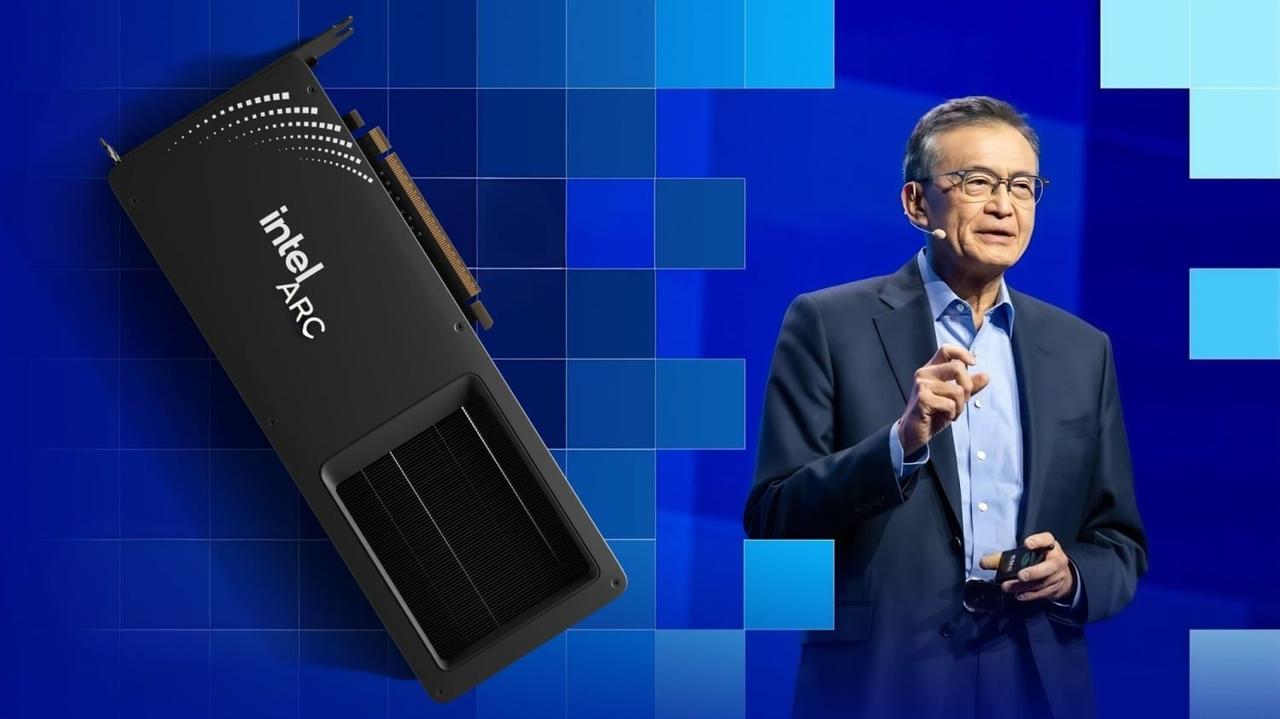
Intel CEO Lip-Bu Tan confirmed at the Cisco AI Summit that the chipmaker is actively developing Intel GPUs, marking a decisive move to challenge Nvidia's dominance in the Graphics Processing Unit market
1
. The announcement comes as demand for GPUs has skyrocketed, with these specialized chips powering large language models and artificial intelligence infrastructure across the tech industry. Tan revealed that Intel has appointed a new chief architect to lead GPU development, stating it took "some persuasion" to bring the executive on board2
.
Source: TweakTown
Eric Demers Joins Intel as Talent Acquisition Accelerates
The new chief architect is Eric Demers, recruited from Qualcomm after spending more than 13 years at the company, where he most recently served as senior vice president of engineering
4
. Demers represents a central technical figure in Intel's renewed graphics effort, though broader oversight reportedly lies with data center executive Kevork Kechichian, who joined Intel in September as part of multiple engineering-focused hires2
. The talent acquisition signals Intel's seriousness about entering high-performance GPU markets where Nvidia currently dominates both consumer and AI-focused workloads.Focus on AI and Data Center Applications Over Gaming
Intel's GPU strategy centers on AI and data center applications rather than primarily targeting the discrete GPU market for gaming
3
. This focus aligns with recent reports that Intel shelved the Arc B770 gaming card in favor of workstation and AI-focused models. Tan emphasized that GPUs are "very important for different application workloads" and stressed the need for optimization across various use cases3
. The GPU project falls under Kevork Kechichian, executive vice president and general manager of Intel's data center group4
.
Source: TechRadar
Manufacturing Strategy Leverages Foundry Business
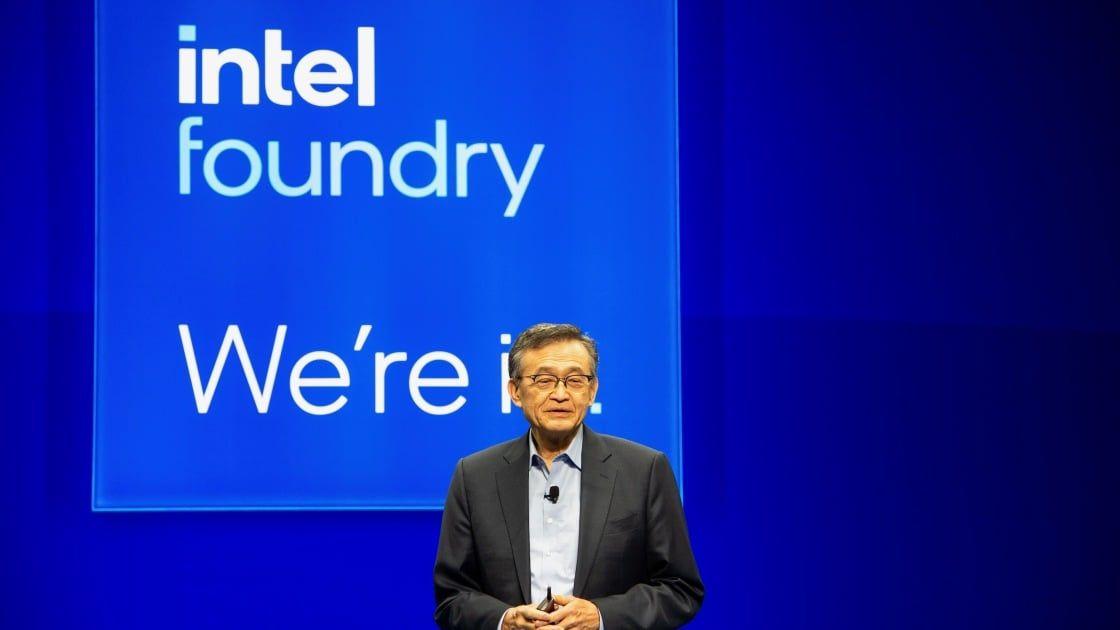
When asked whether Intel plans to build GPUs internally and use its foundry business to produce them at scale, Tan confirmed both aspects of the strategy
5
. This approach represents a departure from relying on external suppliers, giving Intel tighter control over development and manufacturing. By combining GPU development with internal manufacturing and leveraging its CPU ecosystem, Intel could offer integrated platforms attractive to enterprise and AI-focused customers2
. Intel's stock has rallied over the last year as investors gain optimism about the foundry business, though the company primarily manufactures chips for itself1
.Related Stories

Nvidia Faces New Competition in Lucrative Segment
GPUs have become central to training AI models and running AI accelerators, areas where Nvidia has maintained commanding market dominance. While Nvidia did not invent the GPU, this chip type has contributed substantially to the company's achievements, with its AI-focused GPUs standing out for advanced capabilities and widespread adoption
4
. Analysts note that Intel's approach could influence Nvidia's strategy, especially as AI tools continue to drive demand for specialized graphics hardware2
. Investors and competitors are watching closely, as Intel's entry may pressure Nvidia on pricing, product cycles, and ecosystem control.Execution Challenges Remain for Embattled Chipmaker
The effort remains in relatively early stages, with Tan stating Intel plans to develop its strategy around customer demands and needs
4
. Over the past few years, the embattled American semiconductor company has fallen behind major players that have benefited from the AI data center buildout1
. Earlier this month, production snags and supply troubles overshadowed better-than-expected quarterly results, with investors hoping for more clarity on an anchor customer for its foundry segment1
. Intel's re-entry into the high-performance GPU segment would need to nail execution across total cost of ownership, scale, and infrastructure offerings in a market dominated by Nvidia and AMD5
.References
Summarized by

Navi
[4]
Related Stories
Eric Demers, father of Radeon and Adreno GPUs, joins Intel to accelerate AI chip development
17 Jan 2026•Technology
Intel's New CEO Unveils Homegrown AI Strategy to Challenge Nvidia's Dominance
25 Apr 2025•Business and Economy

Intel Unveils Crescent Island: A New AI-Focused GPU for Data Centers
14 Oct 2025•Technology
Recent Highlights



Recent Highlights
Today's Top Stories









Your Daily Dose of Curated AI News
Don’t drown in AI news. We cut through the noise - filtering, ranking and summarizing the most important AI news, breakthroughs and research daily. Spend less time searching for the latest in AI and get straight to action.

